
What Is Kitchen Safety Basics
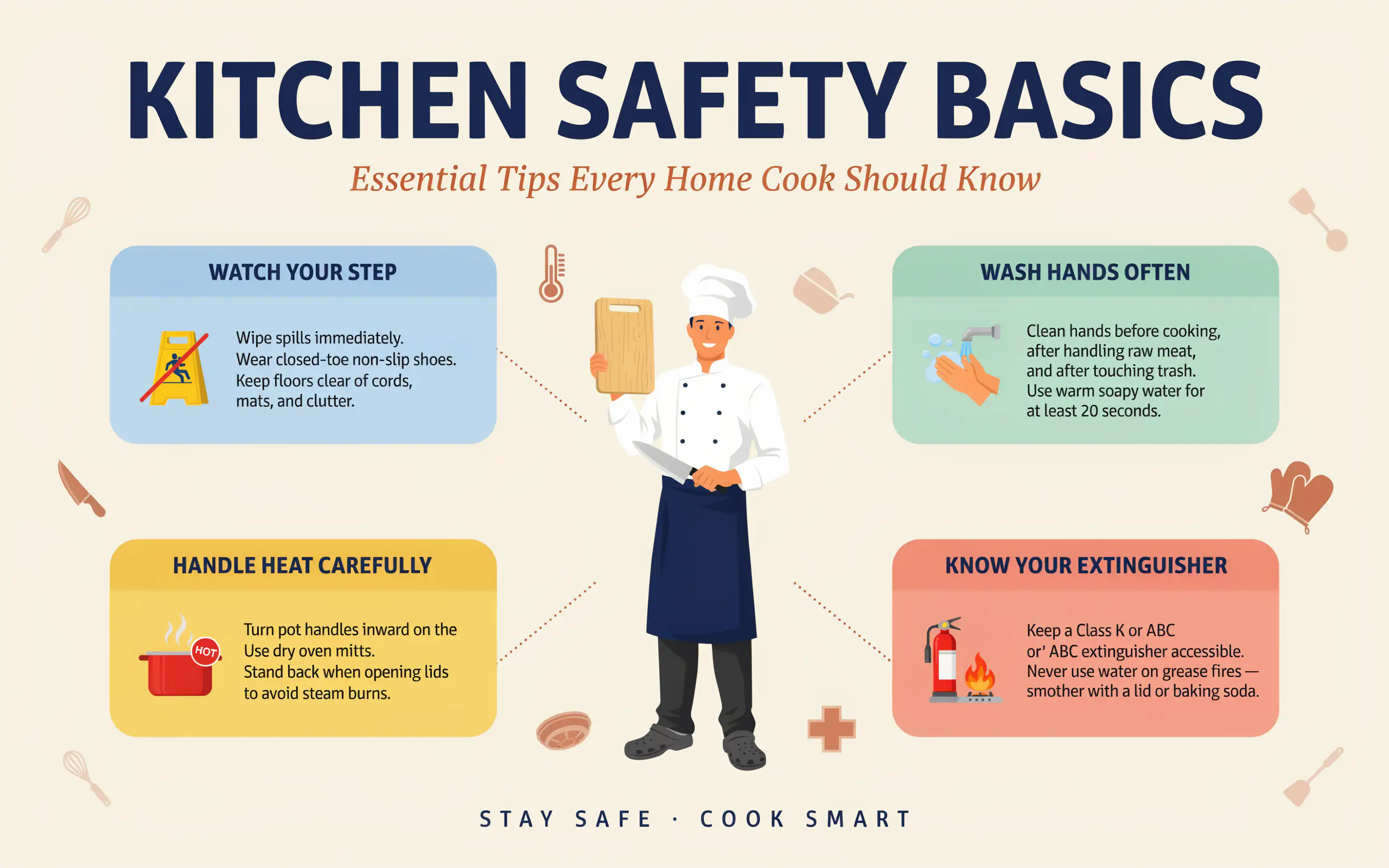
Learn what kitchen safety basics are essential for every home cook. This guide covers knife handling, fire prevention, burn care, food hygiene, and cleanup rules to keep your family safe.
Cooking at home is one of life’s simple joys. You get to make tasty meals, save money, and share food with people you love. But the kitchen can also be a place where accidents happen. Hot stoves, sharp knives, and slippery floors can cause injuries if you are not careful. The good news is that most kitchen accidents are easy to prevent. Once you learn a few simple rules, you can cook with confidence and keep everyone safe.
I remember when I first started cooking. I cut my finger while chopping onions because I held the knife the wrong way. I also once left a dish towel too close to the gas burner. That towel caught fire fast. Luckily, I put it out quickly, but I learned my lesson. Since then, I have made safety my first step before any recipe. You can do the same.
In this guide, I will walk you through everything you need to know. I will answer the question “what is kitchen safety basics” in plain English. You will get clear steps, useful tables, and answers to common questions. Let us get started.
A Simple Truth About Cooking Safely
Many people think kitchen safety is just about not cutting yourself. But there is more to it than that. Safety in the kitchen means thinking ahead, staying clean, and knowing what to do when something goes wrong. It is not hard. It just takes a little attention and practice.
“Safety in the kitchen starts with respect for your tools and your space. A moment of carelessness can ruin a meal or cause harm.” — Ruth Reichl, food writer and former editor of Gourmet magazine
When you make safety a habit, cooking becomes more fun. You do not have to worry. You can focus on flavors, textures, and trying new recipes. So let us break down exactly what these safety rules look like.
What Exactly Are Kitchen Safety Basics?
Kitchen safety basics are a set of simple habits and rules that prevent accidents, injuries, and illnesses while cooking. These include how you handle knives, use the stove, store food, clean surfaces, and respond to emergencies. Think of them as the foundation of every good cook’s skill set.
If you search online for “what is kitchen safety basics,” you will find many long lists. But the core ideas fit into five main areas: knife safety, burn and fire prevention, food hygiene, fall prevention, and proper cleaning. Learn these five, and you will avoid most common kitchen problems.
Let me give you an example. Say you are frying chicken. You need to use a sharp knife to cut the chicken, a hot pan with oil, and your hands to coat the pieces. Without safety basics, you could drop the knife, splash hot oil on your skin, or spread raw chicken germs to your counter. With safety basics, you know to cut away from your body, add food gently to oil, and wash your hands after touching raw meat. See the difference? Small actions make a big impact.
The Core Rules You Need to Follow
Now let us go deeper into each main area. I will give you clear actions you can take starting today.
Rule 1: Handle Knives With Respect
A dull knife is more dangerous than a sharp one. Why? Because you have to push harder, and the blade can slip. A sharp knife cuts easily and follows your control. So keep your knives sharp. You can use a honing steel before each use and get them professionally sharpened once or twice a year.
Always cut on a stable cutting board. Place a damp paper towel under the board to stop it from sliding. Hold the food with a claw grip: tuck your fingertips under and use your knuckles to guide the knife. Never try to catch a falling knife. Just step back and let it drop.
After you use a knife, wash it by hand with soap and water. Do not leave it in a sink full of soapy water where someone might reach in and get cut. Dry it and put it away in a knife block or on a magnetic strip.
Here is a quick table to remember safe knife habits:
| Do This | Avoid This |
|---|---|
| Use a sharp knife | Using a dull, hard-to-cut knife |
| Cut on a stable, non-slip board | Cutting on a wet or moving surface |
| Hold food with a claw grip | Holding food with fingers flat and exposed |
| Wash and dry knives right away | Leaving knives in a soapy sink |
Rule 2: Prevent Burns and Scalds
Hot surfaces, boiling water, and sizzling oil can burn you badly in seconds. Kitchen safety basics teach you to treat every hot thing as dangerous. Turn pot handles toward the center of the stove so you do not bump them. Use oven mitts, not thin kitchen towels, to grab hot pans. Towels can catch fire or let heat through if they are damp.
When you open a hot lid, tilt it away from your face. The steam that rushes out can burn your eyes and skin. Keep pot holders and oven mitts dry. Wet fabric conducts heat and can cause a serious steam burn.
If you get a minor burn, run cool (not cold) water over it for 10 to 15 minutes. Do not put ice, butter, or toothpaste on a burn. Those old tricks can make the injury worse. Cover the burn with a clean, dry bandage. For large or deep burns, see a doctor.
“Most kitchen burns happen not from fire but from steam and hot liquids. Respect the steam. It is hotter than you think.” — Jacques Pépin, chef and cookbook author
Rule 3: Stop Fires Before They Start
Grease fires are scary. If you are frying food and the oil catches fire, never throw water on it. Water makes grease fires explode. Instead, turn off the heat and slide a lid over the pan. Leave the lid on until the pan cools completely. Keep baking soda nearby to smother small fires. Never use flour or sugar, as those can burn or explode.
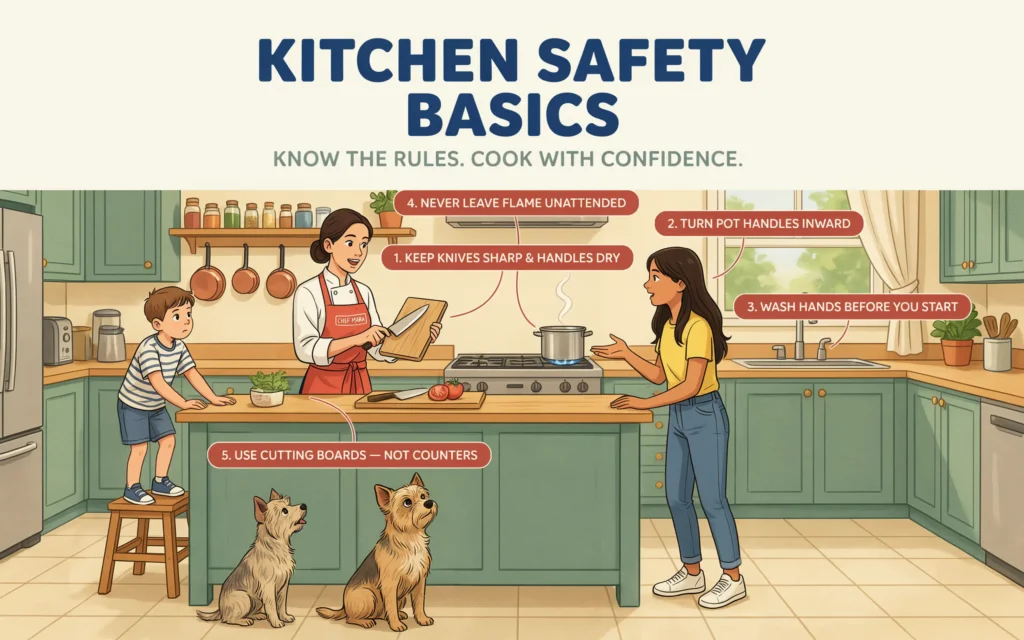
Also keep anything flammable away from your stove. That means dish towels, paper towels, wooden spoons, and curtains. Do not wear loose long sleeves while cooking. Roll them up or push them back. Keep a fire extinguisher in your kitchen, ideally near the exit, not right next to the stove where you would have to reach over a fire to grab it.
Test your smoke alarms every month. Change the batteries once a year. If a fire gets out of control, get everyone out of the house and call emergency services right away.
Rule 4: Keep Food Safe From Germs
Food poisoning is another kitchen danger. Germs like salmonella and E. coli live on raw meat, poultry, seafood, and eggs. Kitchen safety basics include washing your hands with soap and warm water for at least 20 seconds before and after touching raw foods.
Use separate cutting boards for raw meat and for produce or cooked food. I use a red board for meat and a green board for veggies. This stops cross contamination. Wash all boards, knives, and countertops with hot soapy water after each use.
Keep your fridge at or below 40°F (4°C). Put leftovers away within two hours. If the room is hot (above 90°F), do it within one hour. Thaw frozen meat in the fridge, not on the counter. Germs grow fast at room temperature.
When in doubt, throw it out. If food smells strange, looks slimy, or has mold, do not taste it to check. Just toss it.
Rule 5: Clean As You Go
A messy kitchen is an unsafe kitchen. Spills on the floor can make you slip and fall. Crumbs on the counter can attract bugs. Dirty dishes pile up and create hiding spots for bacteria. The simple fix is to clean as you cook.
Keep a bowl for food scraps next to your cutting board. Wipe down counters between steps. Wash and put away tools when you finish using them. Take out the trash before it overflows. These small actions keep your workspace clear and safe.
Here is a table of cleaning tasks to do during and after cooking:
| During Cooking | After Cooking |
|---|---|
| Wipe spills immediately | Wash all dishes and tools |
| Keep raw meat juices away from other foods | Sanitize countertops and cutting boards |
| Take out garbage when full | Sweep or mop the floor |
| Put used knives in a safe place | Store leftover food in sealed containers |
Common Kitchen Dangers and How to Avoid Them
Beyond the main rules, there are a few other risks you should know about. Let us look at slips, electrical issues, and chemical dangers.
Slips and Falls
Wet floors cause many kitchen injuries. A drop of water or a splash of oil can make the floor very slippery. Keep a mat with a non-slip backing in front of your sink and stove. If you spill something, dry it right away. Do not walk away to grab a towel while leaving a puddle on the floor. Wear shoes with good grip. Socks or bare feet on a wet floor are a fall waiting to happen.
Also keep cupboard doors and drawers closed. An open drawer at hip level can hurt you badly if you walk into it. And do not stand on a chair or a wobbly stool to reach high shelves. Use a sturdy step ladder instead.
Electrical Hazards
Your kitchen likely has many appliances: toaster, blender, microwave, mixer, and more. Each one uses electricity near water. That is a shock risk if you are careless. Keep appliance cords away from the sink and the stove. Do not plug too many things into one outlet. That can overload the circuit and start a fire.
Unplug small appliances when you are done using them. Check cords for cracks or fraying. If a cord looks damaged, stop using that appliance. Get it fixed or buy a new one. Keep your hands dry when you plug or unplug anything. A wet hand on a plug can give you a shock.
Chemical Safety
Cleaning products are helpful but also dangerous. Keep bleach, oven cleaner, and dishwasher pods away from food. Store them in a high cabinet that children cannot reach. Never put cleaning products into old food containers. Someone might mistake it for juice or broth.
Always read the label before using any cleaner. Some products should not mix. For example, bleach and ammonia create toxic gas. Use separate cloths for cleaning counters versus cleaning up raw meat spills. Mark them so you know which is which.
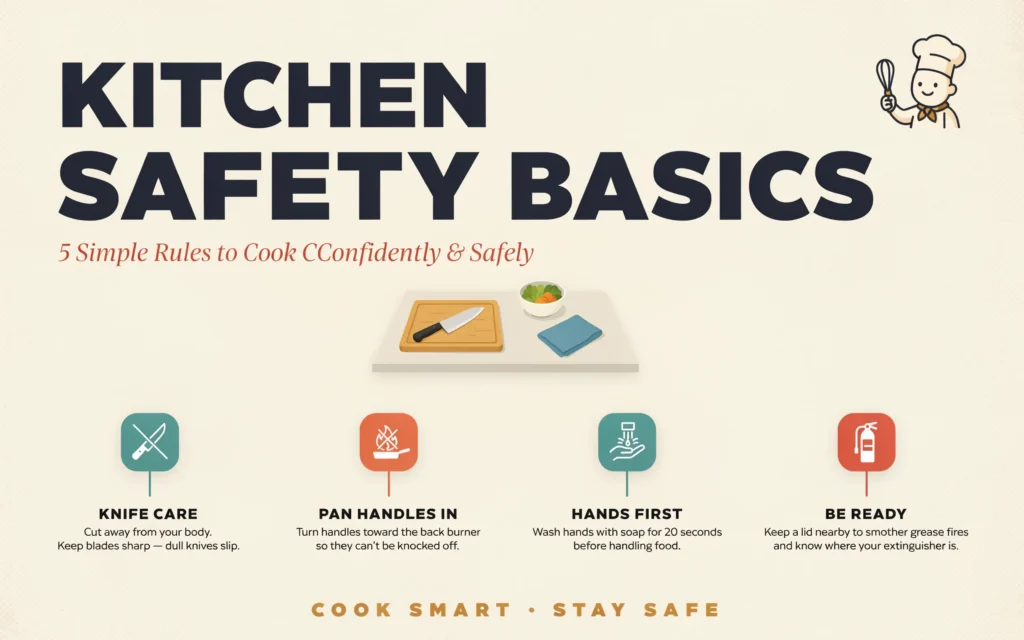
Teaching Kitchen Safety Basics to Kids and Guests
Cooking with children is wonderful. They learn skills and make happy memories. But children need clear rules. Before you let a child help in the kitchen, teach them kitchen safety basics in a way they can understand.
For young kids, start with simple jobs like washing veggies or mixing dry ingredients. Show them that the stove is hot and they must stay back. Keep pot handles turned away from the edge so little hands cannot grab them. Put knives and sharp tools out of reach.
For older kids, teach knife safety one on one. Let them practice cutting soft foods like bananas or zucchini with a small, sharp knife. Always watch them closely. Set the rule: no running, no horseplay, and always ask before using an appliance.
If you have guests who want to help in your kitchen, do not assume they know your safety habits. Say something friendly like, “I keep my knives in this block. Please use a cutting board and let me know if you need anything.” Most people appreciate clear guidance.
“The kitchen is a classroom. When you teach a child to cook safely, you give them a gift that lasts a lifetime.” — Alice Waters, chef and food activist
A Quick Reference Checklist
Let me give you a short checklist you can print or save on your phone. Use it to double check your kitchen before you start cooking.
- Knives are sharp and clean.
- Cutting board has a non-slip surface or damp towel under it.
- Pot handles face inward on the stove.
- Oven mitts are dry and within reach.
- Fire extinguisher is visible and accessible.
- No towels or paper near the burners.
- Hands are washed with soap for 20 seconds.
- Raw meat and produce have separate cutting boards.
- Floor is dry and free of spills.
- Appliance cords are away from water.
If you can check all these boxes, you are ready to cook safely.
Frequently Asked Questions
1. What is the most common kitchen injury?
Cuts from knives are very common. Burns from hot surfaces and liquids are also frequent. Most happen because people rush or get distracted.
2. How often should I replace my kitchen fire extinguisher?
Check the pressure gauge once a month. Replace it every 10 to 12 years, or sooner if it has been used or looks damaged.
3. Can I use the same cutting board for meat and vegetables?
You should not. Use separate boards. If you only have one board, wash it with hot soapy water and sanitize it between uses. But getting two boards is safer and easier.
4. What should I do if I cut myself while cooking?
Stop cooking. Wash the cut with cool water and mild soap. Apply pressure with a clean cloth to stop bleeding. Cover with a sterile bandage. If the cut is deep, won’t stop bleeding, or was made by a dirty knife, see a doctor.
5. Is it safe to put metal in a microwave?
No. Metal objects cause sparks and can start a fire. Use only microwave-safe glass, ceramic, or plastic containers.
6. How do I know if my kitchen towels are safe to use near heat?
Only use dry, thick cotton towels as pot holders. Never use a damp towel. Better yet, buy proper oven mitts designed for high heat.
7. What are the first signs of food poisoning?
Nausea, vomiting, diarrhea, stomach cramps, and fever. Symptoms can start hours or days after eating bad food. Drink water and rest. See a doctor if symptoms are severe or last more than two days.
8. How can I stop my cutting board from sliding?
Place a damp paper towel or a non-slip shelf liner under the board. You can also buy cutting boards with rubber feet.
9. Should I unplug my toaster when not in use?
It is a good habit. Unplugging saves energy and removes any risk of electrical short or fire. Same for other small appliances.
10. What is kitchen safety basics for someone who is new to cooking?
Start with three things: keep your knife sharp and cut away from your body; turn pot handles inward; wash your hands often. Once you master those, add the other rules step by step.
Conclusion
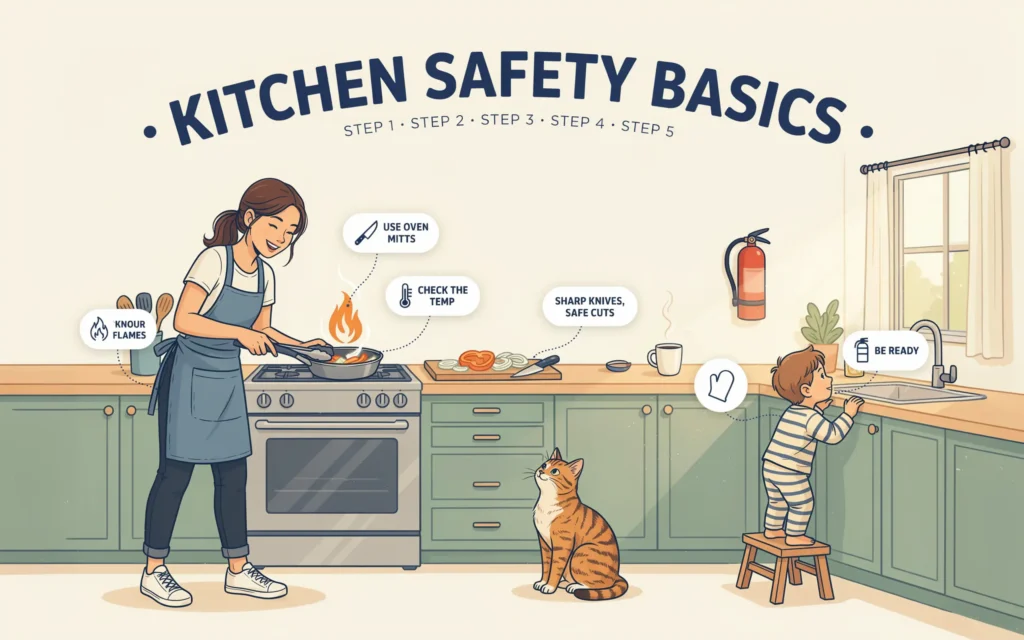
Now you know the answer to “what is kitchen safety basics” and how to use these rules every day. Kitchen safety basics are not difficult or time consuming. They are small habits that protect you, your family, and your home. A sharp knife, a clean counter, a dry floor, and a focused mind are all it takes.
Start with one change today. Maybe you will finally sharpen that dull knife. Or you will buy a second cutting board. Or you will show a child how to wash their hands before helping with dinner. Each step you make turns your kitchen into a happier, safer place.
Cooking should bring joy, not injuries. You deserve to cook without fear. So take these lessons, share them with others, and enjoy every meal you make from a place of safety and confidence. Happy cooking.
Related posts
 Why Do Dogs Stare at Walls? Common Causes and When to Worry
Wondering why do dogs stare at walls? Discover the sensory, behavioral, and medical reasons behind this behavior, and learn when to contact your veterinarian. When you…
 How to Test Car Wiring for Continuity Using a Multimeter
Learn how to test car wiring for continuity safely. Find broken automotive wires, check connector ports, and diagnose electrical issues with a multimeter. Testing car wiring…
 Why Organizing Space Reduces Stress: The Mental Clarity Connection
Discover why organizing space reduces stress. Learn how a tidy environment lowers cortisol, improves focus, and creates a sense of calm in your daily life. Organizing…