
Why Is My Cat Scratching Furniture
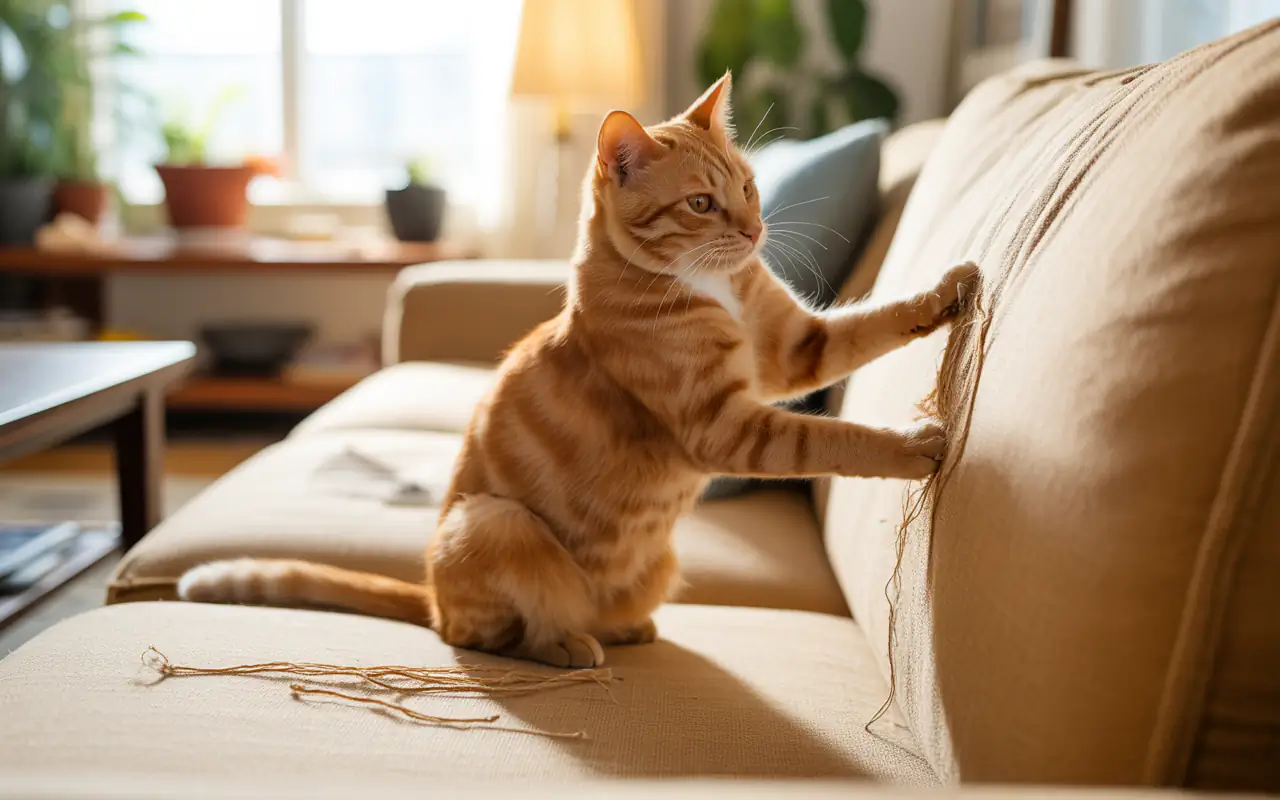
Are you stressed about my cat scratching furniture? This article explains 5 real reasons like marking territory, nail health, stress, boredom, and habit. Learn simple fixes to save your sofa.
You love your cat. But you do not love the shredded corners of your couch. Every day, you come home to more torn fabric. You ask yourself, “Why is my cat scratching furniture?” This is a very common problem. Many cat owners feel the same way. The good news is that scratching is normal cat behavior. It is not done to make you angry. Your cat has real needs. Once you know these needs, you can fix the issue. This article will help you understand the five main reasons behind my cat scratching furniture. You will also get simple, kind solutions. Let us start.
What Is Normal Scratching Behavior?
Cats scratch for many reasons. It is part of their nature. Wild cats scratch trees. House cats scratch sofas. The action is the same. Scratching helps a cat feel safe and healthy. Before we look at why my cat scratching furniture happens, let us see what normal scratching looks like.
Cats usually scratch in certain spots. They may scratch after waking up. They may scratch before playing. They often scratch near where they sleep or eat. If your cat scratches the same sofa leg every day, that is a habit. If your cat scratches many different things, that may mean something else.
Here is a simple table to help you see normal scratching signs.
| Behavior | What It Means |
|---|---|
| Scratching one spot often | Marking territory |
| Scratching after sleep | Stretching muscles |
| Scratching before eating | Excitement or habit |
| Scratching new objects | Curiosity or stress |
Now, let us look at the first big reason.
Reason 1: Marking Territory
Cats are very territorial. They do not like sharing their space. When my cat scratching furniture happens, your cat may be saying, “This is mine.” Cats have scent glands in their paws. When they scratch, they leave a smell. Humans cannot smell it. But other cats can. This smell tells other animals to stay away.
Your cat scratches to make the home feel safe. If you have more than one cat, scratching gets even more common. Each cat wants to claim its own area. Even single cats do this. Your sofa becomes a sign post. It says, “I live here.”
How to Help With Territory Scratching
Give your cat its own things. A scratching post works great. Place it near the sofa. Your cat may choose the post over the couch. Also, clean scratched areas with an enzyme cleaner. This removes the old scent marks. Then your cat will not feel the need to refresh the smell.
“Scratching is not destruction. It is a cat’s way of writing its name on the world.” – Jackson Galaxy, cat behavior expert
Reason 2: Nail Health and Maintenance
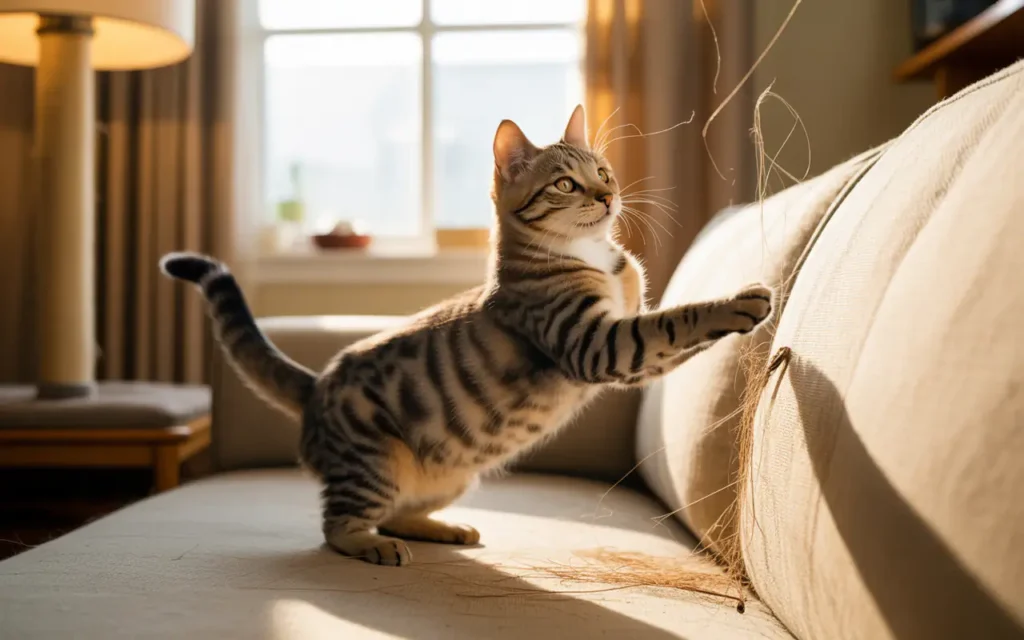
A cat’s nails grow like ours do. But cats cannot file their nails. They need to scratch. Scratching pulls off the old, dead outer layer of the nail. Underneath is a sharp, new nail. When my cat scratching furniture happens, your cat is just grooming itself. It is like you clipping your nails.
If a cat does not scratch, its nails can grow too long. Long nails curl and hurt the paw. They can get stuck in carpet or fabric. So scratching is a health need. Your cat is not being bad. It is taking care of its body.
What You Can Do
Trim your cat’s nails every two weeks. This will not stop scratching, but it will reduce damage. Shorter nails tear less fabric. Also, give your cat rough surfaces to scratch. Sisal rope, cardboard, and wood work best. Soft surfaces like cushions are less helpful for nail health.
Here is a quick look at nail care tools.
| Tool | Best For |
|---|---|
| Nail clippers (guillotine type) | Quick trims |
| Cardboard scratch pad | Daily nail shedding |
| Sisal scratching post | Strong scratching action |
| Cat nail file (soft) | Smoothing rough edges |
Reason 3: Stress or Anxiety
Cats feel stress just like we do. A new baby, a new pet, or even moving a chair can upset a cat. When a cat feels anxious, scratching goes up. My cat scratching furniture may be a sign of worry. The cat scratches to release tension. It is like a person tapping their foot or biting a pen.
Other stress signs include hiding, eating less, or meowing more. If your cat scratches more than before, look for changes in the home. Did you start working from home? Did you get a new dog? Did you move the litter box? Small changes feel big to a cat.
Calming Ideas for a Stressed Cat
First, find the stress cause. Then fix it if you can. Use a Feliway diffuser. This releases calming cat scents. Give your cat high places to sit, like a cat tree. High spots make cats feel safe. Play with your cat every day. Play lowers stress a lot.
“A scratching cat is often an anxious cat. Give them safe spaces, and the scratching will drop.” – Pam Johnson-Bennett, certified cat behavior consultant
Reason 4: Boredom or Lack of Play
Cats need activity. A bored cat finds its own fun. Sadly, that fun is often your furniture. When my cat scratching furniture happens with no clear reason, boredom may be the answer. Your cat has too much energy. It has no toys. It has no one to play with. So it scratches the couch for entertainment.
Indoor cats get bored fast. They do not hunt. They do not climb real trees. Their whole world is your home. If that world has no fun things, the cat makes its own fun. Scratching feels good. It passes the time.
How to Stop Boredom Scratching
Buy or make simple cat toys. A feather on a string works great. A cardboard box with holes is fun too. Rotate toys every week so they feel new. Set up a window perch. Your cat can watch birds outside. That is free entertainment. Also, play with your cat for 15 minutes, two times a day. A tired cat scratches less.
Reason 5: It’s Just a Habit
Sometimes, my cat scratching furniture is simply a habit. Your cat did it once. It felt good. So it did it again. And again. Now it is a routine. Cats love routines. They do the same things at the same times. If your cat always scratches the sofa at 5 PM, that is a habit. Habits are hard to break, but not impossible.
Changing a Bad Habit
You need to replace the habit, not just stop it. Put a scratching post right next to the sofa. When your cat goes for the sofa, gently move it to the post. Give a treat when it uses the post. Do this every time for two weeks. The new habit will form. Also, cover the sofa spot with double sided tape. Cats hate sticky paws. They will look for a better spot. That better spot should be the scratching post.
“Habits take time to change. Be patient. Your cat is not stubborn. It just learned the wrong thing first.” – Mieshelle Nagelschneider, cat behaviorist
How to Stop My Cat Scratching Furniture for Good
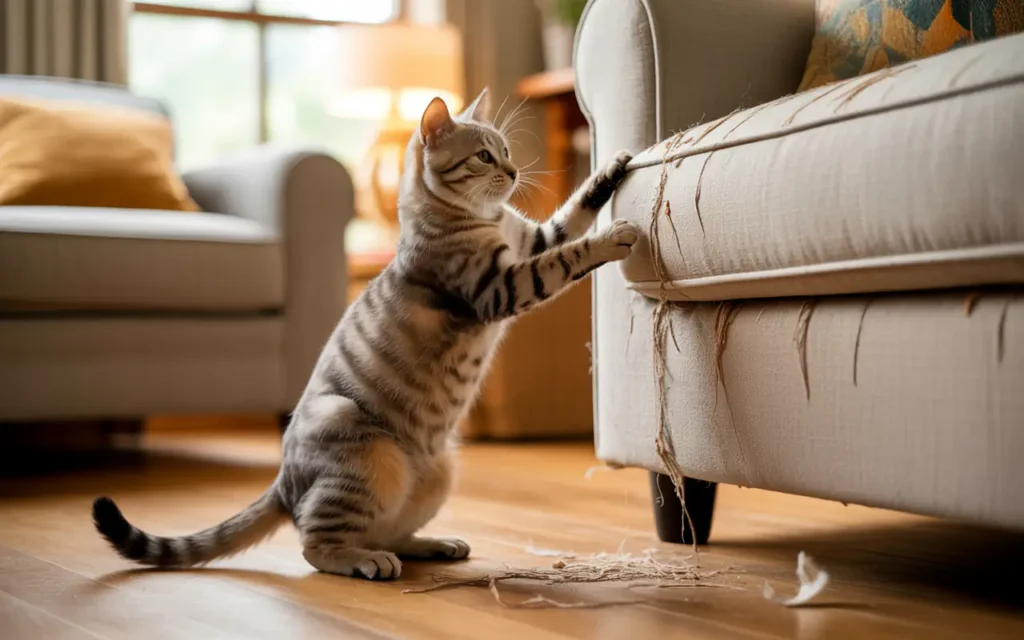
Now you know the five reasons. Let us put them together into a plan. Here is how to stop my cat scratching furniture without yelling or punishment. Yelling does not work. It only scares your cat. Your cat will scratch more from fear.
Step 1: Give Better Options
Buy at least two scratching posts. One tall one for stretching. One flat one on the floor. Put them near the furniture your cat likes. Use catnip on the posts to make them fun.
Step 2: Make Furniture Less Fun
Cover sofa corners with smooth packing tape or a plastic shield. Use a spray bottle with water? No, that scares your cat. Instead, use a citrus scent spray. Cats dislike citrus. Spray it on the sofa. Your cat will stay away.
Step 3: Trim Nails Weekly
Short nails do less harm. If you cannot trim nails, ask your vet. Some cats need a groomer. Soft nail caps are another choice. They cover the nail tip. Your cat can still scratch, but no damage happens.
Step 4: Play More
Set a timer for two play sessions each day. Use a wand toy. Let your cat catch it at the end. This mimics hunting. A happy, tired cat does not need to scratch your sofa.
Here is a helpful table for daily actions.
| Do This | Avoid This |
|---|---|
| Give a scratching post | Yelling at your cat |
| Play for 15 minutes twice daily | Punishing with water sprays |
| Trim nails every two weeks | Removing all scratching options |
| Use catnip on the post | Covering every surface in plastic |
Frequently Asked Questions
1. Why is my cat scratching furniture even with a scratching post?
Your cat may not like the post. Try a different material. Some cats love cardboard. Others love sisal rope. Also, check the post height. It should be tall enough for your cat to stretch fully. Move the post closer to the spot your cat scratches now.
2. Will my cat stop scratching furniture when it gets older?
Not always. Older cats still scratch. They scratch more for nail health. But older cats may have arthritis. Scratching hurts. So they scratch less. Do not wait for age to fix the problem. Train good habits now.
3. Is it okay to declaw my cat to stop my cat scratching furniture?
No. Declawing is very bad. It removes the last bone of each toe. It is like cutting off your finger tips. The cat feels pain for life. It cannot walk right. Many countries ban declawing. Use nail trims and scratching posts instead. That is kind and safe.
4. How long does it take to change scratching behavior?
Most cats change in two to four weeks. Be consistent every day. If you skip play or move the post away, your cat goes back to the sofa. Keep going. The results are worth it.
5. Does catnip really stop my cat scratching furniture?
Catnip does not stop scratching. But it attracts cats to the right spot. Rub catnip on the scratching post. Your cat will want to go there. Once your cat uses the post, it may forget the sofa. Use catnip as a helper, not a cure.
Conclusion
My cat scratching furniture is not a crime. It is a natural cat behavior. Your cat is not trying to upset you. It is marking territory, caring for nails, easing stress, fighting boredom, or following a habit. Now you know the five reasons. You also have simple, kind solutions.
Stop using punishment. Start using play, posts, and patience. Trim those nails. Give your cat better things to scratch. In a few weeks, your sofa will look much better. Your cat will feel happier too. Remember, a scratching cat is a normal cat. You just need to guide that energy to the right place. You can do this. Your cat is counting on you to understand, not to get angry. Good luck, and happy scratching (on the post, not the couch).
Related posts
 Buy Dog Toys Online: Top 2026 Picks for Every Play Style
Looking to buy dog toys online? Explore our 2026 guide to the best durable chews, interactive balls, and plush favorites to keep your pup happy and…
 Buy Dog Food Online: Top 2026 Selections for Every Breed
Looking to buy dog food online? Explore our top 2026 recommendations for dry and wet formulas tailored to different breed sizes, sensitivities, and nutritional needs. Choosing…
 Buy a Dog Harness Online in 2026
Looking to buy a dog harness online? Explore our 2026 guide to finding the right fit, style, and control features for your dog's daily walks. Finding…