
What Is Dishwasher Safe Cookware? Materials, Care, and Real-World Limits

Dishwasher safe cookware refers to pots, pans, and baking sheets engineered to withstand the harsh environment of a residential dishwasher. This environment includes water temperatures reaching up to 150 degrees Fahrenheit, high-pressure water jets, and highly alkaline detergents that can easily degrade sensitive metals and coatings.
To earn this designation, manufacturers construct these kitchen tools from resilient materials like high-grade stainless steel, ceramic, or specially treated nonstick compounds. However, a dishwasher-safe label does not mean the cookware is completely immune to wear. Over time, the abrasive nature of machine washing can dull finishes and gradually weaken nonstick surfaces.
If you want to minimize kitchen cleanup time, choosing the right materials is essential. Understanding what happens behind the closed door of your dishwasher will help you decide when to use the machine and when to spend a few minutes washing by hand.
| Topic | When it helps | What to keep in mind |
|---|---|---|
| Stainless Steel | Home cooks looking for maximum durability and low-maintenance cleanup. | Harsh detergents can sometimes leave water spots or a white, cloudy film on the surface. |
| Dishwasher-Safe Nonstick | Quick everyday meals like eggs and delicate foods where easy cleanup is a priority. | The nonstick properties will degrade faster in the machine than with gentle hand washing. |
| Ceramic Coated | Eco-conscious cooks who want a non-toxic, easy-to-clean surface. | Rapid temperature changes can crack the ceramic glaze; let pans cool completely before washing. |
The Science of the Dishwasher: Why Standard Cookware Fails
A dishwasher is a harsh environment for metalware. Unlike hand washing, which uses mild soap and a soft sponge, a dishwasher relies on chemical energy and heat to dissolve grease. Dishwasher detergents are highly alkaline, often containing phosphates, carbonates, and enzymes designed to break down organic matter. This high alkalinity chemically attacks sensitive metals.
Furthermore, the water in a dishwasher is sprayed at high pressure for up to two hours. This constant spraying can cause lightweight pans to shift and knock against the plastic-coated wire racks, leading to chips, scratches, and structural warping. Below is a breakdown of how common cookware materials react to this environment.
Putting an uncoated aluminum baking sheet in the dishwasher, only to have it emerge with a dull, dark grey residue that rubs off on your hands.
Assuming all metal pans are tough enough to handle machine washing.
| Material | Dishwasher Compatibility | What Happens in the Machine |
|---|---|---|
| Cast Iron | Strictly No | The detergent strips the protective seasoned oil layer, causing immediate rust. |
| Copper | Strictly No | The harsh chemicals tarnish the metal, turning it dull and causing pitting. |
| Uncoated Aluminum | No | Oxidizes rapidly, turning black or grey and leaving a powdery residue. |
| High-Quality Stainless Steel | Yes | Resists chemical attack, though minor cosmetic spotting may occur. |
| Hard-Anodized Aluminum | Only if specified | Standard anodized surfaces will discolor; treated versions survive. |
How to Identify Truly Dishwasher Safe Cookware
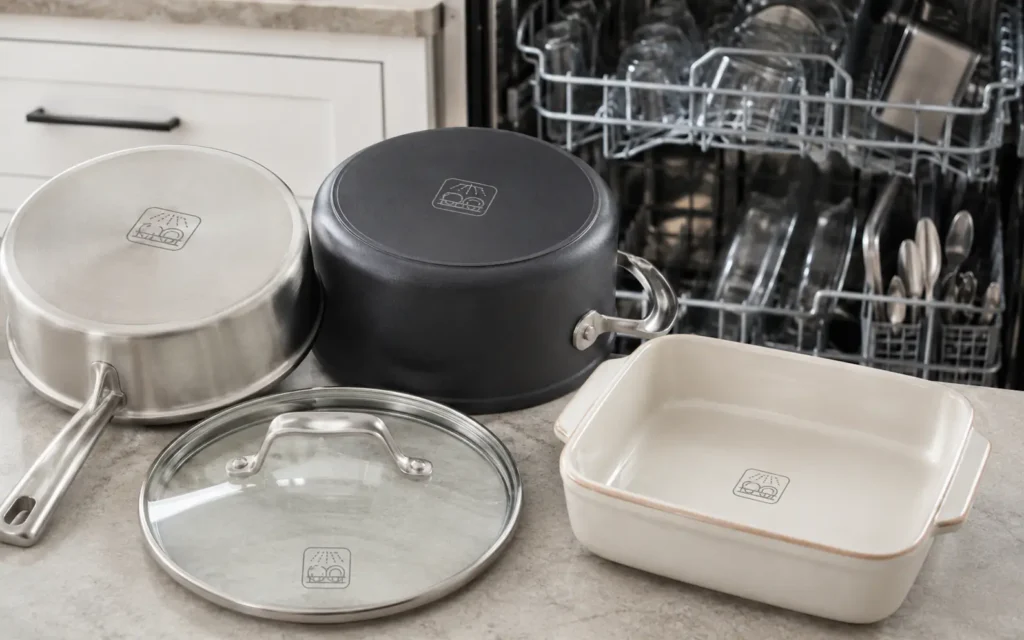
Before loading your pots and pans into the bottom rack, you need to verify their compatibility. Manufacturers usually make this easy, but you have to know where to look. The most reliable indicator is a physical stamp on the underside of the cookware.
If the packaging is gone, you can look for common industry symbols. These symbols are not universally standardized, but they generally depict a grid pattern representing a dishwasher rack with water droplets spraying down from above.
Flipping a pan over to find a stamped icon of a dishwasher or a plate with water droplets before loading it.
Relying solely on the weight of a pan to judge its durability; heavy pans like cast iron are completely unsafe for the machine.
- Check the bottom stamp: Look for the words ‘Dishwasher Safe’ engraved directly into the metal base.
- Inspect the rims: For multi-ply or clad cookware, ensure the stainless steel layers completely wrap around the aluminum core to prevent edge corrosion.
- Review the handle attachments: Avoid pans with wooden handles, glued parts, or plastic knobs that cannot tolerate high heat.
- Consult the manual: When buying a new set, keep the care guide or check the manufacturer’s website for specific washing instructions.
The Hidden Risks of Machine Washing ‘Safe’ Pans
Even when cookware is labeled dishwasher safe, frequent machine washing can take a toll. The most common hidden issue affects clad or tri-ply stainless steel pans. These pans feature an aluminum core sandwiched between layers of stainless steel for superior heat distribution. If the rim of the pan is not fully sealed, the dishwasher detergent will slowly eat away at the exposed aluminum edge, leaving a sharp groove.
For nonstick and ceramic pans, the high heat of the drying cycle can dry out the coating, making it less effective over time. If you choose to use the dishwasher, there are a few habits you can adopt to minimize this wear and tear.
A high-end stainless steel pan developing a sharp, rough edge along the rim after a year of daily dishwasher cycles.
Using abrasive powder detergents or tablets containing bleach on nonstick surfaces.
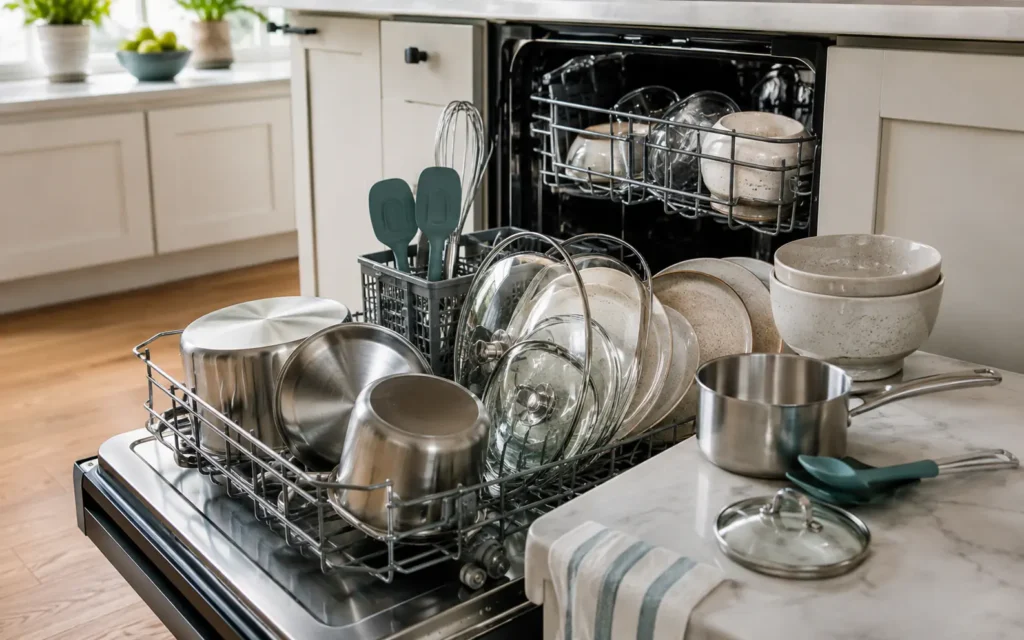
- Use gentle cycles: Select a normal or light wash cycle rather than a heavy-duty pots-and-pans cycle.
- Skip the heated dry: Let your cookware air dry or dry it by hand to avoid exposing the coatings to extreme heat.
- Space items carefully: Ensure metal handles do not rub against nonstick surfaces during the wash cycle.
- Use liquid detergent: Liquid or gel detergents are generally less abrasive than powder packs or tablets.
Safety checks
- Dishwasher-safe cookware is built to withstand high heat, high water pressure, and harsh detergents.
- High-quality stainless steel and specially treated nonstick or ceramic pans are the most common safe options.
- Uncoated aluminum, cast iron, and copper should never go in the dishwasher.
- Even labeled cookware can degrade over hundreds of cycles due to abrasive detergents.
- Checking for sealed rims on clad cookware prevents core erosion.
Define dishwasher-safe cookware list the
Stainless Steel. High-Grade Stainless Steel Cookware
Uncoated stainless steel is naturally resistant to rust, corrosion, and scratching. It easily tolerates the high heat and moisture of a dishwasher cycle without structural damage. However, cheap stainless steel or pans with exposed aluminum cores can suffer from rim erosion over time.
- Home cooks looking for maximum durability and low-maintenance cleanup.
- Harsh detergents can sometimes leave water spots or a white, cloudy film on the surface.
- Look for premium brands that feature sealed or rolled rims to protect the inner aluminum core from detergent contact.
- Durability – Excellent
- Heat Resistance – Very High
- Detergent Sensitivity – Low
Dishwasher-Safe Nonstick. Specially Formulated Nonstick Cookware
Traditional nonstick pans quickly peel and flake in the dishwasher. Modern dishwasher-safe nonstick cookware uses reinforced PTFE or multi-layer coatings designed to resist the abrasive action of dishwasher tablets. While more resilient, these coatings still have a shorter lifespan when machine-washed regularly.
- Quick everyday meals like eggs and delicate foods where easy cleanup is a priority.
- The nonstick properties will degrade faster in the machine than with gentle hand washing.
- Use liquid detergents rather than highly abrasive powder tablets to extend the life of the coating.
- Durability – Moderate
- Heat Resistance – Medium
- Detergent Sensitivity – High
Ceramic Coated Cookware
Ceramic cookware uses a silica-based gel coating that is naturally free of PTFE and PFOA. High-quality ceramic pans can handle the dishwasher, provided they do not have hand-painted designs or delicate metal accents. The hard surface resists scratching from water pressure but can chip if clattered against other dishes.
- Eco-conscious cooks who want a non-toxic, easy-to-clean surface.
- Rapid temperature changes can crack the ceramic glaze; let pans cool completely before washing.
- Ensure the pan is loaded securely so it does not knock against ceramic plates or heavy glassware during the cycle.
- Durability – Moderate to High
- Heat Resistance – High
- Detergent Sensitivity – Medium
FAQs
What cookware is absolutely not dishwasher safe?
Cast iron, carbon steel, copper, uncoated aluminum, and cookware with wooden handles or accents should never go in the dishwasher. The machine will strip seasoning, cause rust, tarnish finishes, and warp wood.
How do I know if a pan is dishwasher safe?
Look at the bottom of the pan for a stamped ‘Dishwasher Safe’ label or an icon showing a dishwasher rack with water droplets. If there is no label and the material is aluminum, copper, or cast iron, assume it is not safe.
Why shouldn’t you put stainless steel pots in the dishwasher?
While high-quality stainless steel is generally safe, cheap stainless steel can rust, and clad pans with exposed aluminum rims can suffer from core erosion. Additionally, harsh detergents can leave cosmetic water spots or a dull film.
Can I put nonstick pans in the dishwasher if they say they are safe?
Yes, but doing so will shorten the lifespan of the nonstick coating. The abrasive detergents and high heat will gradually degrade the nonstick properties faster than gentle hand washing with a soft sponge.
Conclusion
Dishwasher safe cookware offers a convenient shortcut for busy home cooks, but it comes with a few trade-offs. While materials like high-grade stainless steel and treated ceramic can withstand the heat and chemicals of a machine cycle, they will always last longer if washed by hand.
To get the best of both worlds, reserve the dishwasher for your durable stainless steel pots and everyday baking sheets. For expensive nonstick pans or delicate heirloom pieces, a quick hand wash with mild soap and a soft sponge remains the best way to protect your investment for years to come.
Related posts
 Why Pest Control Is Important at Home: Protecting Health and Property
Discover why pest control is important at home. Learn how regular pest management protects your family’s health, prevents property damage, and secures your food. Understanding why…
 How to Test a Car Ground Connection: Step-by-Step Multimeter Methods
Learn how to test a car ground connection using a digital multimeter. Follow our step-by-step guide to diagnose voltage drops, resistance, and bad grounds. A car…
 Why Do Dogs Stare at Walls? Common Causes and When to Worry
Wondering why do dogs stare at walls? Discover the sensory, behavioral, and medical reasons behind this behavior, and learn when to contact your veterinarian. When you…