
What Causes Engine Overheating
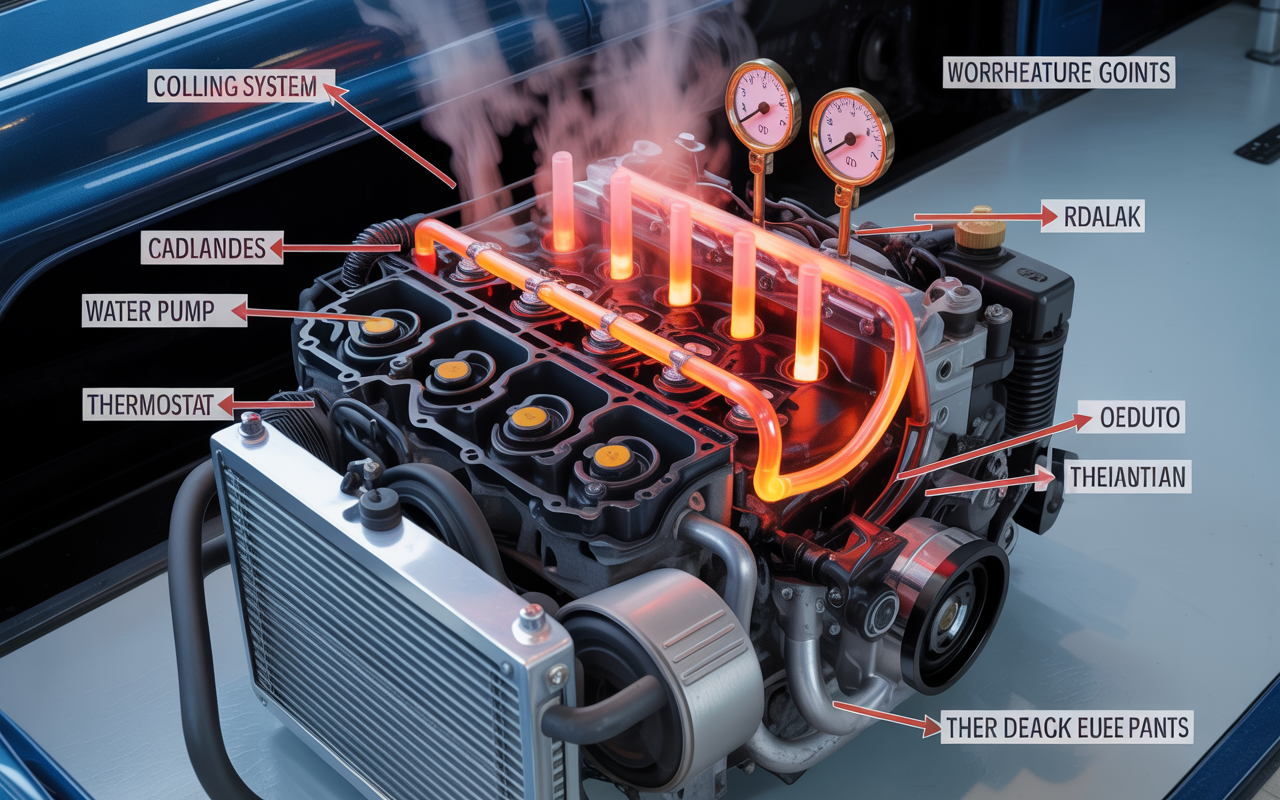
Wondering what causes engine overheating? Low coolant, a stuck thermostat, or a broken water pump are often the main issues. This guide covers the signs, solutions, and simple fixes to keep your car safe on the road.
Picture this. You are driving down a busy road on a warm afternoon. Suddenly, you see steam rising from under your hood. A red temperature light flashes on your dashboard. Your heart sinks. You know something is wrong.
Engine overheating is scary. But it is also something you can prevent. Most car owners face this problem at least once. The good news is that learning what causes engine overheating can save you time, money, and stress. In this guide, I will explain the common reasons in plain English. You do not need to be a mechanic to understand this.
I have helped many friends fix their cars. I also learned from professional mechanics over the years. So let me share what I know. By the end, you will feel more confident about your car’s health.
The Short Answer: What Causes Engine Overheating?
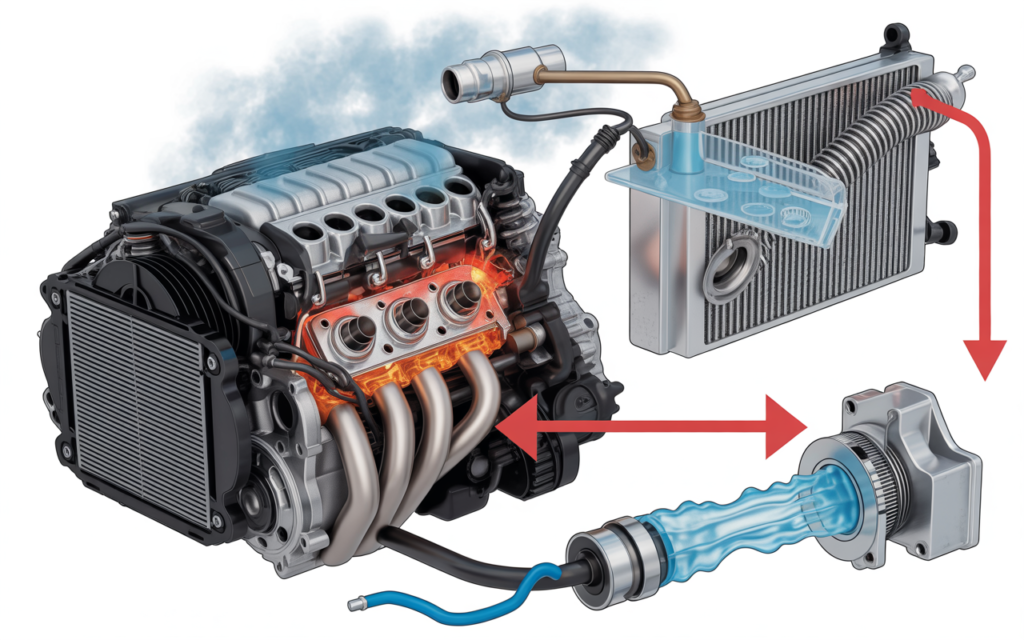
Simply put, what causes engine overheating is a failure in the cooling system. Your engine creates a lot of heat when it runs. The cooling system’s job is to remove that heat. If any part of that system breaks, heat builds up. The temperature rises. And your engine gets too hot.
But there are many specific reasons. Some are simple, like low fluid. Others are more serious, like a broken water pump. Let me walk you through each one.
“Most engine overheating problems start with a small leak or a neglected part. Regular checks can stop 80% of these issues before they happen.”
— Robert L. Santos, ASE Certified Master Technician
7 Common Causes of Engine Overheating
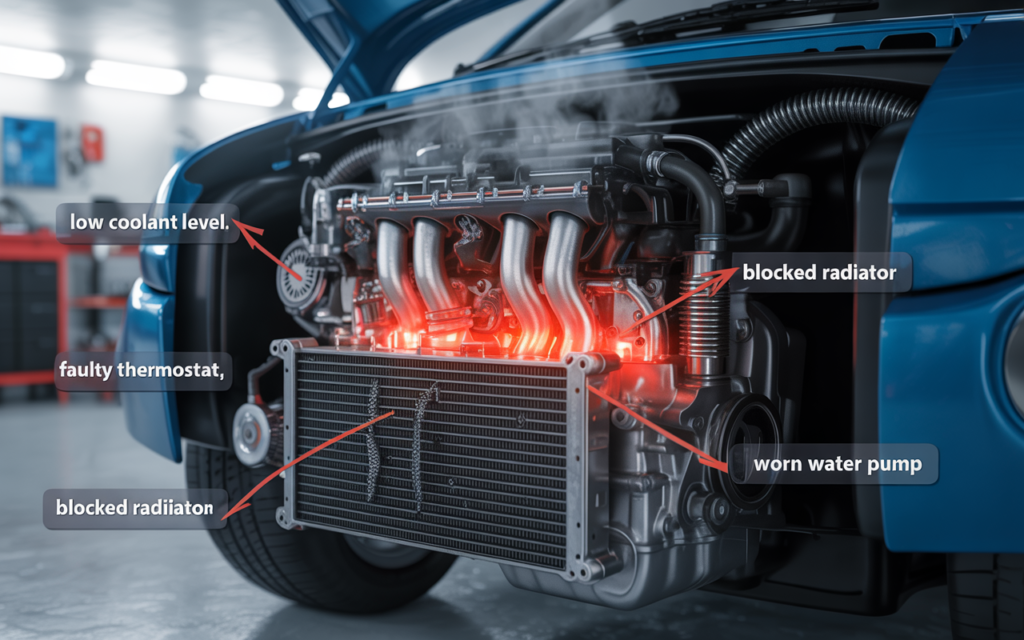
1. Low Coolant Level
Coolant is also called antifreeze. It is a liquid that flows through your engine. It picks up heat and moves it to the radiator. When the coolant level drops, there is not enough fluid to carry heat away.
Why does coolant get low? Leaks are the main reason. A small crack in a hose, a loose clamp, or a damaged radiator cap can let coolant escape. Sometimes the coolant evaporates slowly over time. If you never check the level, it can fall too low.
How do you know? Look for puddles under your car. Check the coolant reservoir tank. If it is below the “minimum” line, you need to add more. This is one of the most common answers to what causes engine overheating on older cars.
2. A Stuck or Broken Thermostat
The thermostat is a small valve. It opens and closes to control coolant flow. When the engine is cold, the thermostat stays closed. This helps the engine warm up fast. When the engine reaches normal temperature, the thermostat opens. Coolant starts flowing through the radiator.
If the thermostat gets stuck closed, coolant cannot reach the radiator. The heat stays inside the engine. The temperature climbs quickly. This can happen suddenly. One day your car is fine. The next day, the gauge shoots into the red zone.
A stuck open thermostat is less common but also bad. It makes your engine run too cold. That hurts fuel economy and performance. But for overheating, a stuck closed thermostat is a top culprit.
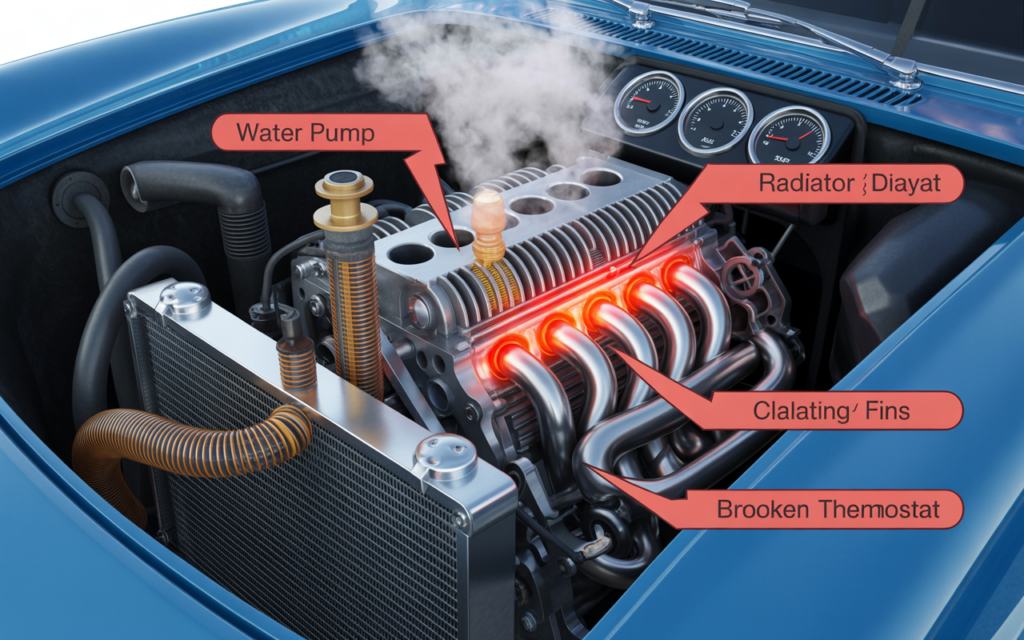
3. Water Pump Failure
The water pump is the heart of your cooling system. It pushes coolant through the engine, hoses, and radiator. Without a working pump, coolant just sits in place. It cannot move heat away.
Water pumps fail in a few ways. The bearing inside can wear out. The seal can start leaking. Sometimes the impeller (a small fan inside the pump) breaks. You might hear a grinding noise from the front of your engine. Or you might see coolant dripping near the pump.
When the water pump fails, what causes engine overheating becomes clear. No circulation means no cooling. This repair can cost a few hundred dollars. But ignoring it can cost you a whole engine.
4. Radiator Problems
The radiator is like a heat exchanger. Hot coolant flows through many small tubes. Air passes over the tubes and cools the liquid. If the radiator is blocked or damaged, it cannot cool the coolant.
Common radiator issues include:
- Clogged tubes from old coolant or rust
- Bent or broken cooling fins
- External dirt and bugs blocking airflow
- Leaks in the radiator body
A clogged radiator often builds up slowly. Your car may run fine for short trips. But on long drives or hot days, the temperature creeps up. Cleaning or replacing the radiator fixes this.
5. Cooling Fan Issues
Most cars have one or two electric fans near the radiator. These fans pull air through the radiator when the car is stopped or moving slowly. At highway speeds, natural airflow does the job. But in traffic or at stoplights, the fans are essential.
If a cooling fan stops working, air does not move across the radiator. The coolant stays hot. Your engine temperature rises. This is a very common answer to what causes engine overheating in city driving.
Why do fans fail? The fan motor can burn out. The fan relay or fuse can blow. A temperature sensor might stop sending the signal to turn the fan on. Sometimes a broken wire is the only problem.
6. Leaks in Hoses or Gaskets
Hoses carry coolant from the engine to the radiator and back. They also connect to the heater core and water pump. Rubber hoses get old. They crack, swell, or soften. A small leak might only drip a little. But over time, you lose coolant. Low coolant leads to overheating.
A more serious leak is a blown head gasket. The head gasket seals the engine block and cylinder head. When it fails, coolant can enter the combustion chamber or mix with engine oil. You may see white smoke from the exhaust. Or your coolant may look like milky coffee.
A blown head gasket is a big repair. It is also a dangerous answer to what causes engine overheating because it can ruin your engine quickly.
“I tell every customer: check your hoses before a long trip. A five dollar hose can save a five thousand dollar engine.”
— Maya Johnson, Owner of Johnson’s Auto Repair
7. Oil Problems
Engine oil does more than lubricate. It also helps remove heat. Oil flows through passages inside the engine. It carries heat away from pistons, bearings, and other moving parts. Low oil level or old, dirty oil cannot do this job well.
If your oil is low, add more. If it is old, change it. Thick, sludge-like oil traps heat instead of moving it. This makes your engine run hotter. In some cases, using the wrong oil viscosity can also cause overheating.
So when someone asks what causes engine overheating, do not forget the oil. It is an easy fix that many people overlook.
Quick Reference Table: Causes and Signs
| Common Cause | What You Might Notice |
|---|---|
| Low coolant level | Temperature gauge rises, steam from hood, sweet smell |
| Stuck thermostat | Gauge swings high, no heat from vents, upper hose cold |
| Bad water pump | Grinding noise, coolant leak at pump area, overheating at idle |
| Clogged radiator | Overheating on highways or hills, poor heater output |
| Broken cooling fan | Overheats in traffic but cools down on open road |
| Hose or gasket leak | Visible coolant puddles, white exhaust smoke, milky oil |
| Oil issues | Low oil pressure light, dark thick oil, ticking noise |
What to Do When Your Engine Overheats
You are driving. You see the temperature gauge climbing. What now? Follow these steps calmly.
Step 1: Turn off the air conditioner. AC puts extra load on the engine. Turn it off. Turn your heater on full blast. This pulls heat away from the engine into the cabin. It will be uncomfortable, but it helps.
Step 2: Pull over safely. Find a wide shoulder or parking lot. Do not keep driving. Overheating can warp your cylinder head or crack the engine block.
Step 3: Turn off the engine. Let it cool for at least 15 minutes. Do not open the hood right away. Hot steam can burn your skin badly.
Step 4: Check coolant level. Once cool, open the hood carefully. Look at the coolant reservoir. If it is low, add water or coolant. Do not open the radiator cap while hot.
Step 5: Call for help. If you cannot find an obvious fix, call a tow truck. Driving with an overheated engine is risky.
“The worst thing you can do is keep driving when your car is overheating. Ten extra minutes on the road can turn a 200 dollar repair into a 4000 dollar one.”
— David Chen, Automotive Engineer and Instructor
How to Prevent Engine Overheating
Prevention is easier than repair. Here are simple habits to avoid ever asking what causes engine overheating again.
Check your coolant every month. Look at the reservoir when the engine is cold. Keep it between the minimum and maximum lines.
Look for leaks. After parking, glance under your car. Any colored puddles? Green, orange, or pink liquid is coolant.
Watch your temperature gauge. Get to know where your needle normally sits. If it moves higher than usual, investigate.
Change coolant on schedule. Most cars need a coolant flush every 30,000 to 50,000 miles. Old coolant becomes acidic and damages parts.
Replace hoses and belts every few years. Rubber does not last forever. A cracked hose can burst without warning.
Do not ignore small issues. A tiny leak today becomes a big leak tomorrow. Fix small problems early.
Another Helpful Table: Preventive Maintenance Checklist
| Maintenance Task | How Often |
|---|---|
| Check coolant level | Every month |
| Inspect hoses for cracks | Every oil change |
| Test radiator cap seal | Once a year |
| Flush and replace coolant | Every 2 to 3 years |
| Replace thermostat | Every 50,000 miles |
| Check cooling fan operation | Before summer season |
| Change engine oil regularly | As per owner’s manual |
Frequently Asked Questions
Q: Can driving without a thermostat cause engine overheating?
No. Driving without a thermostat usually makes the engine run cold. But it can cause other problems. The engine may not reach proper temperature. This hurts fuel efficiency and increases wear. It is better to install a working thermostat.
Q: How long can I drive with an overheating engine?
You should not drive at all if the temperature gauge is in the red. Even one minute of severe overheating can damage your engine. Pull over immediately.
Q: Is it safe to add water to my coolant?
Yes, in an emergency. Water cools better than pure coolant. But water lacks anti-corrosion additives and lowers the boiling point. Add coolant as soon as you can. Do not use only water for months.
Q: What causes engine overheating only on hills?
This often points to a clogged radiator or a weak water pump. When you go uphill, your engine works harder. It needs more cooling. A restricted system cannot keep up.
Q: Can a bad battery cause engine overheating?
Rarely. But a failing battery can make the cooling fan run poorly. Some fans need steady voltage. If the battery or alternator is weak, the fan may spin too slowly. Check your electrical system if overheating happens with other electrical issues.
Q: What causes engine overheating after a coolant flush?
Sometimes air gets trapped in the system after a flush. Air pockets block coolant flow. The mechanic may need to “burp” the system to remove air. Also check if the correct coolant type was used.
Q: Is engine overheating worse in summer?
Yes. Hot outside air makes it harder for the radiator to cool the coolant. Your cooling system works much harder on 95 degree days than on 50 degree days. That is why summer is the peak season for overheating problems.
Final Thoughts
Now you know what causes engine overheating. Low coolant, a stuck thermostat, a broken water pump, radiator clogs, fan failures, leaks, and oil problems are the main reasons. Most of these are preventable with simple checks.
I hope this guide helps you feel more prepared. Your car’s cooling system is not mysterious. It just needs your attention now and then. Look at your coolant level. Listen for strange noises. Watch your temperature gauge. These small habits can save you from a broken engine and a big repair bill.
Take care of your car, and it will take care of you. Drive safely.
Related posts
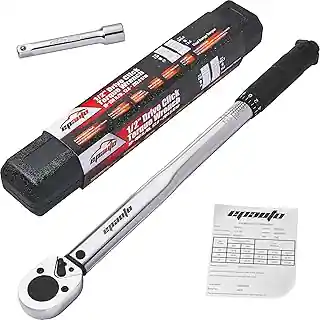 2026 Torque Wrench Reviews: Choosing the Right Tool for Precision Fastening
Explore our 2026 torque wrench reviews to find the right tool for your automotive, bike, or gunsmithing projects. Compare top models for accuracy and value. Finding…
 Top Automotive Tools for Beginners: Essential Gear for 2026
Discover the top automotive tools for beginners in 2026. Compare essential pry kits, wrench sets, and repair gear to start your DIY car maintenance journey. Starting…
 Top Rated Mechanic Tool Brands for 2026
Explore top rated mechanic tool brands for 2026. Compare reliable socket sets and hand tools to find the right equipment for your home garage or auto…