
How To Prevent Kitchen Odors

Do you want to know how to prevent kitchen odors without using harsh chemicals? This guide shares 18 simple habits, natural solutions, and cleaning routines to keep your home smelling fresh and clean every day.
There is nothing quite like walking into a home that smells amazing. But when you cook a lot, you know that the kitchen can quickly become a source of less pleasant smells. Sometimes, those smells linger long after dinner is over. That is a common problem for many people. The good news is that you can easily fix this. You do not need expensive gadgets or strong chemical sprays.
Learning how to prevent kitchen odors is actually very simple. It is about changing a few daily habits and using items you already have at home. Whether you are dealing with last night’s fish dinner, the smell of burnt toast, or the strange odor coming from the garbage bin, there is a natural solution ready for you. This guide will give you practical, easy-to-follow steps that really work. Let us explore these simple methods together.
Understanding Why Kitchens Smell
Before we look at the solutions, it helps to know why odors happen in the first place. Kitchens are full of different smells. When you cook, tiny particles of food and oil float in the air. These particles land on your walls, cabinets, and even your curtains. Over time, these build up. That is why some kitchens have a permanent “greasy” smell, even when nothing is cooking.
Another reason is moisture. Steam from boiling water or cooking food creates a humid environment. This moisture can trap smells. It makes them heavier and harder to get rid of. This is why the air in a kitchen feels “thick” sometimes. Also, bacteria love warm, moist places. When food scraps sit in your garbage or sink, bacteria grow. They produce gases, and these gases are what we smell as “stinky.”
So, to prevent kitchen odors, you need to focus on three main things: removing airborne particles, controlling moisture, and stopping bacteria growth.
The Science of Smell and Your Kitchen
Your nose is very sensitive. It can detect smells in tiny amounts. When you cook, you release volatile organic compounds (VOCs). These are fancy words for smelly molecules. These molecules float through your kitchen and your whole house. They stick to fabric, like your clothes and towels. That is why your jacket might smell like garlic after you cook.
To really prevent kitchen odors, you need to trap those molecules or break them down. Ventilation does this by pulling them outside. Natural solutions like vinegar and baking soda do this by neutralizing the molecules. It is a chemical reaction that changes the smelly stuff into something that does not smell. It is science working for you in your home.
Starting with Daily Habits to Prevent Kitchen Odors
The easiest way to prevent kitchen odors is to stop them before they start. Here are some routines to follow every single day.
1. Open a Window for Fresh Air
This is the simplest thing you can do. When you cook, open a window. Even if it is just a crack, it changes the air pressure in your home. This lets the smelly air go outside and brings fresh air in. It is your first and best defense. Many people forget this simple step. But it costs nothing and works instantly. If you cannot open a window, use a fan to blow the air out of the kitchen.
2. Use Your Exhaust Fan
Most kitchens have a range hood or exhaust fan. Make sure you turn it on before you start cooking. Let it run while you cook and for about 15 minutes after you finish. This pulls the greasy, smelly particles out of the air. Many people only turn it on when something is burning. That is too late. Use it every time you use the stovetop. This simple habit will help you prevent kitchen odors from getting into your furniture and carpets.
3. Clean Dishes Immediately
Leaving dirty plates and pans in the sink is a major cause of bad smells. The leftover food starts to break down. It only takes a few hours for the smell to start. Make it a rule to clear your plates right after eating. If you cannot wash them, at least scrape the food scraps into the trash. Rinse them with water. This removes the fuel that bacteria need to create odors.
Natural Ways to Absorb Odors
Sometimes, you need something extra to catch the smells in the air. Here are some natural tools that work as odor magnets.
1. Baking Soda: The Natural Purifier
Baking soda is amazing at absorbing smells. It neutralizes acidic and basic odor molecules. This means it does not just cover up the smell; it gets rid of it.
How to Use:
- Place an open box of baking soda in your refrigerator.
- Sprinkle it on the bottom of your trash can.
- Mix it with water to create a paste to scrub your cutting boards.
- Put a small bowl of it on your kitchen counter to catch food smells.
It is cheap, safe, and effective. This is one of the best ways to prevent kitchen odors cheaply.
2. White Vinegar: The Neutralizer
White vinegar is another powerhouse. It is acidic, so it neutralizes alkaline odors (like fish or old grease). You can use it to clean surfaces or leave a bowl of it on the counter overnight to absorb airborne smells.
How to Use:
- Wipe down your counters with a vinegar-water solution.
- Boil a small pot of vinegar and water on the stove. The steam will deodorize the air.
- Place a cup of vinegar in the fridge to absorb odors.
3. Activated Charcoal
You might know this from fish tank filters. Activated charcoal is great for absorbing odors. It is different from baking soda because it traps particles in its tiny pores. You can buy activated charcoal air purifier bags. Place them near your trash bin or in your pantry. They can last for months, and you just need to put them in the sun to “recharge” them.
4. Coffee Grounds
Used coffee grounds are not just for the garden. They have a strong smell and they absorb other odors. Put a small bowl of dry coffee grounds in the fridge. Or, if you burn something in the oven, place bowls of coffee grounds around the kitchen. They will soak up the smoke smell quickly.
Simple Cleanup Routines
Keeping your surfaces clean is a big part of the solution. Grease and grime hold onto smells. If you wipe them away, the smells go with them.
1. Wipe Down the Stove
Every time you cook, you get splatters. Even if you cannot see them, they are there. These tiny drops of oil can start to smell rancid. After cooking, take a damp cloth and wipe down the stovetop and the wall behind it. This only takes a minute, but it stops those grease smells from building up.
2. Wash Your Dish Towels and Sponges
Your dish towel is a magnet for bacteria. It gets wet and dirty. That is a perfect place for germs to grow. Change your dish towel daily. Wash them in hot water with vinegar to kill the smell. Sponges are even worse. They harbor lots of bacteria. Microwave a wet sponge for one minute to sanitize it, or put it in the dishwasher. Do this every few days. This is a critical step to prevent kitchen odors from your cleaning tools.
3. Clean the Sink Drain
The sink drain is a common source of bad smells. Food particles get stuck in the drain and start to rot.
Quick Fix:
- Pour a cup of baking soda down the drain.
- Pour a cup of white vinegar down the drain.
- Let it fizz for 10 minutes.
- Flush with hot boiling water.
Do this once a week. It will kill the bacteria and remove the slime that builds up in your pipes.
4. Empty the Trash Often
Do not wait until the trash is overflowing. The smell from a trash can is strong. It can fill the whole kitchen. Try to take the trash out every day if you cook often. If you can, take it out at night. This stops the bacteria from sitting and growing overnight. Also, make sure to clean the actual trash can once a month. Use soap and warm water or a vinegar solution.
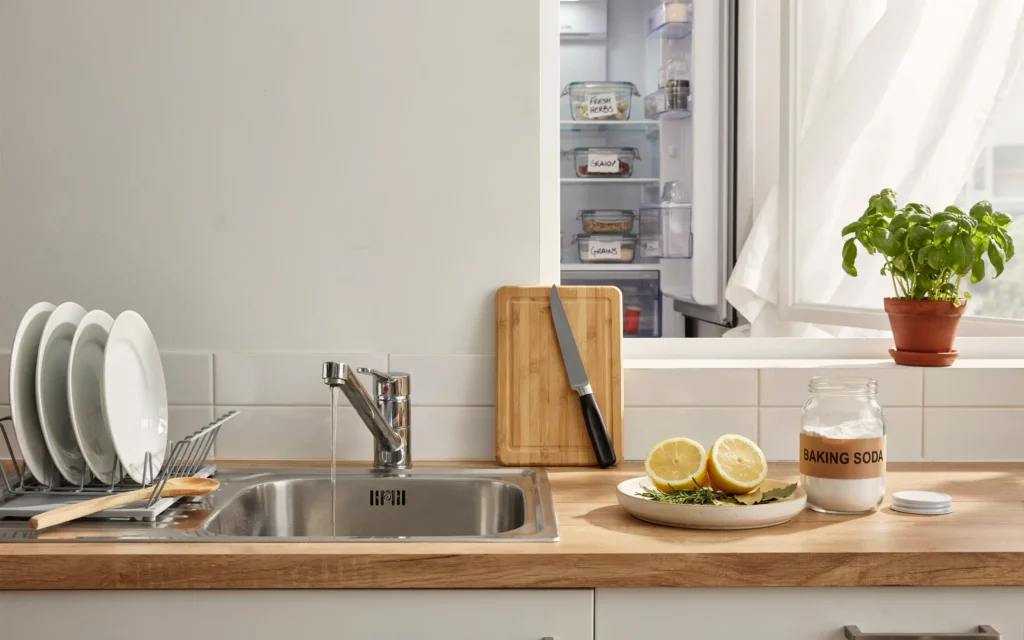
Smart Cooking Practices
The way you cook affects how your kitchen smells. These tips will help you minimize odors while you are in the middle of cooking.
1. Use a Lid
When you fry something, the oil pops and releases smell into the air. Putting a lid on your pan traps the heat and the smell inside. It also speeds up the cooking process. For things that splatter a lot, like bacon, a splatter screen is great. It stops the grease from flying into the air and onto your surfaces. This is a very simple way to prevent kitchen odors from escaping.
2. Manage Cooking Smells with a Fan and Exhaust
We already talked about using the exhaust fan. Make sure you are using it correctly. If you can, open a window at the same time. You want to create a flow of air. The fan pulls the smoky air up, and the window lets fresh air in. This creates a draft that takes the odor away. It will help prevent kitchen odors from spreading to the rest of your house.
3. Boil Cinnamon and Citrus
Instead of using a chemical air freshener, make a natural one. Boil a pot of water with some cinnamon sticks, orange peels, and cloves. The steam will fill your kitchen with a wonderful, warm scent. It also helps to purify the air. This is a lovely trick to use when you are expecting guests.
4. Clean While You Cook
Don’t wait until the end to clean up. As you cook, wash the bowls, knives, and cutting boards you are done with. The less time food sits out, the less it smells. If you are finished with a pan, wash it or soak it right away. This is called “clean-as-you-go.” It makes your job easier after dinner, and it helps prevent kitchen odors from lingering.
Dealing with Specific Odors
Sometimes, a certain meal leaves a very specific smell. Here are some targeted ways to deal with that.
1. The Garlic and Onion Smell
We love the taste, but not the smell. After chopping garlic or onions, rub your hands on a stainless steel spoon under cold water. This helps remove the odor from your hands. To prevent the smell from filling your kitchen, cook these aromatics with a little bit of fat (like oil) at a low temperature. Higher heat burns them and makes a harsher smell.
2. The Fish Smell
Fish can be one of the toughest smells to get rid of. The best thing you can do is cook it with an open window and a strong fan. You can also add a bit of vinegar to the pan. Some people add milk to the water when poaching fish. But the strongest solution is to simply take the trash out immediately after cooking. Any fish bones or skin left in the bin will smell quickly.
3. The Burnt Food Smell
We all burn something sometimes. If you burn food, do not panic. Turn off the heat. Open all the windows. Put a fan in the window pointing outward. Put a bowl of vinegar or coffee grounds out. Boil a pot of water with lemon slices. This will help absorb the heavy smoke smell.
Solutions for Your Fridge and Freezer
Your refrigerator is a closed space. Odors get trapped inside. When you open the door, those smells come out.
1. The Baking Soda Box
Put a new, open box of baking soda in the fridge. It will absorb odors for about three months. Write the date on the box so you remember to change it. This is the most common trick, but it works.
2. Keep Foods Covered
Do not put an uncovered bowl of leftovers in the fridge. The food will dry out, and the smell will get into the whole fridge. Use plastic wrap, reusable containers, or lids. This prevents the air in the fridge from becoming a mix of different smells. It also prevents the spread of bacteria.
3. Wipe Up Spills
Spills in the fridge happen. A bit of juice or sauce might drip. If you ignore it, it will smell. Clean up spills immediately. Use a damp cloth with a bit of mild soap. Make it a habit to check your fridge for old food once a week. Throw away things that are past their prime. This is a big way to prevent kitchen odors coming from inside the appliance.
Cleaning the Big Appliances
The oven and microwave can be hidden sources of odor. Here is how to keep them fresh.
1. Oven Cleaning
When food spills in the oven, it burns at high temperatures. This creates smoke and bad smells. To clean it, you can use the self-cleaning feature. But this also creates a lot of smoke and a strong smell. An easier way is to use baking soda.
Method:
- Mix baking soda with water to make a paste.
- Spread it on the inside of the oven (avoid the heating elements).
- Leave it on overnight.
- Wipe it off with a damp cloth in the morning.
- Rinse well.
2. Microwave Freshening
The microwave can get food splatters that smell. To freshen it up:
- Place a bowl of water with lemon slices in the microwave.
- Run it for 3 minutes until the water boils.
- The steam will loosen the grime.
- Let it sit for 5 minutes.
- Wipe it clean with a cloth.
This removes the food particles and leaves a lemon scent.
3. The Dishwasher Cleaner
Your dishwasher can get a musty smell. Clean it once a month. You can buy a cleaner at the store. Or, put a cup of vinegar in a bowl on the top rack and run the hot cycle. This will wash away the food residue and soap scum.
Better Storage Solutions
What you store and how you store it affects your kitchen air. Here are some tips for a fresher pantry.
1. Use Airtight Containers
Storing food in its original plastic bag often leads to odors. The smell can leak out. Put things like coffee, flour, spices, and onions in airtight containers. Glass jars or plastic containers with tight lids are great. This traps the smell inside. It also keeps bugs out and keeps your food fresh longer.
2. Keep the Pantry Dry and Cool
Moisture and heat make food go bad faster. Keep your pantry well-ventilated. Do not store potatoes and onions together. They release gases that make each other spoil faster. Use a basket for onions and a separate bin for potatoes. Check your pantry often for rotting produce.
3. The Garbage Disposal
If you have a garbage disposal, it can get smelly. Here is a simple way to keep it fresh:
- Put ice cubes in the disposal.
- Add some lemon or orange peels.
- Run the disposal with cold water.
The ice helps clean the blades, and the citrus peels leave a nice smell. Do not put grease or oil down the drain. It will solidify and cause a smell later.
Quick Fixes for Immediate Odors
Sometimes you just need a quick solution. Here are things you can do in a minute.
| Problem | Quick Fix |
|---|---|
| Smell from the trash | Sprinkle baking soda in the bottom of the bag. |
| Strong cooking smell | Boil a pot of water with a tablespoon of vinegar. |
| Smoke in the air | Put a bowl of coffee grounds on the counter. |
| Sink smell | Pour boiling water down the drain. |
Weekly Checklist to Prevent Kitchen Odors
Following a weekly schedule helps you stay on top of things. This routine will ensure you prevent kitchen odors all week long.
| Day | Task |
|---|---|
| Monday | Wipe down the inside of the microwave. |
| Tuesday | Clean the sink drain with vinegar and baking soda. |
| Wednesday | Take out all trash and recycling, even if not full. |
| Thursday | Wipe down cabinet fronts and handles. |
| Friday | Change kitchen towels and sponges. |
| Saturday | Clean the stovetop thoroughly. |
| Sunday | Check the fridge for old food. |
“The cleanliness of the kitchen is the first step to a healthy home.” – Isabella Beeton
“Good cooking is an act of love, but cleaning up is an act of self-respect.” – Julia Child
A clean kitchen is the foundation of a happy home.” – Unknown Chef
Why Prevention is Better Than Masking
Many people buy plug-in air fresheners to hide bad smells. But these products do not remove the odor. They mix with it. This can create an even worse smell. It is like adding perfume to dirty laundry. It does not fix the problem.
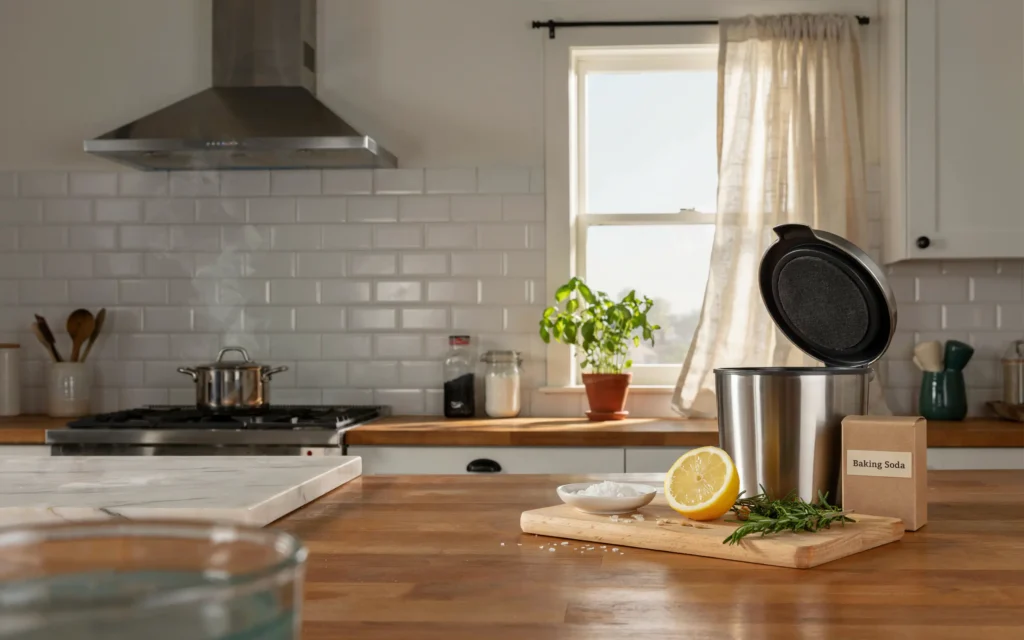
When you prevent kitchen odors, you are getting rid of the actual cause. You are reducing the bacteria, the grease, and the moisture. This is better for your air quality. It is also better for your health. Breathing in clean air is important. Instead of masking, use these natural methods to truly neutralize the smell.
Using Plants to Freshen the Air
Some houseplants can help purify your kitchen air. They absorb some pollutants and can even reduce odors. They also look nice and make the space feel calm. Plants like spider plants, peace lilies, and English ivy are known for their air-cleaning properties. They work slowly, but they are a lovely addition to your home. They also add oxygen to the room.
Kitchen Ventilation for Long-Term Freshness
If you have a serious problem with odors, check your ventilation system. The exhaust fan over your stove is key. Make sure it is clean. A greasy, dirty filter cannot do its job well. The filter will just trap the grease and make the smell worse.
Cleaning the Filter:
- Take the filter down.
- Soak it in hot water and dish soap.
- Scrub it gently.
- Rinse it and let it dry.
You should do this every month. Good ventilation is a main way to prevent kitchen odors and keep your home’s air clean.
Maintaining Your Air Fryer or Small Appliances
Air fryers, slow cookers, and toaster ovens can also be a source of smell. Clean them after every use. The residue from food can burn later and release a bad smell. For air fryers, make sure you scrub the basket with soap and water. A clean appliance is a happy appliance. When they are clean, they do not release that “old oil” smell into your kitchen. This is especially important if you keep them on your counter.
Long-Term Habits for a Fresh Kitchen
Over time, your kitchen can absorb odors into the walls, cabinets, and ceiling. To prevent this, you need to regularly clean the high surfaces and walls. Wipe them down with a degreaser or a vinegar solution a few times a year. This stops the yellow residue from building up. Also, if you have curtains in your kitchen, wash them. Fabric is one of the biggest smell holders in the house. If you change these habits, you will see a big difference.
Let us look at a bigger picture routine that covers everything we have discussed.
The 4-Step Daily Routine:
- Morning: Open the kitchen window for 10 minutes to air it out.
- During Cooking: Use the exhaust fan. Wipe spills as they happen.
- After Cooking: Clean your dishes. Wipe your counters and stove.
- Nighttime: Take out the trash. Clean the sink drain with hot water.
This simple plan will help you prevent kitchen odors every single day.
Frequently Asked Questions
How can I remove the smell of cooking from my house naturally?
You can use natural solutions like boiling vinegar and water on the stove to neutralize smells. Put out bowls of baking soda or coffee grounds to absorb the odors from the air. Opening windows and using exhaust fans is also the best natural way to remove cooking smells.
Why does my kitchen smell even when I clean it?
The smell might be coming from hidden places. These include the sink drain, the garbage disposal, your sponge, or a dirty trash can. Sometimes, the odor is trapped in your cabinets or curtains. Wash your kitchen towels often and deep clean your drain to solve this issue.
Can baking soda absorb odor from a whole room?
Yes, baking soda can absorb odor from a whole room, but it works best in small, enclosed spaces like the fridge or a small pantry. For a large kitchen, you would need to use a lot of it. It is better to use it on specific sources, like the bottom of the trash can or on the counter near the stove to catch smells.
Is it better to use an air purifier or an exhaust fan?
An exhaust fan is designed to push smells and moisture out of the house. This is the best method to remove the odor. An air purifier cleans the air that is already in the house by trapping particles. A combination of both is the most effective way to prevent kitchen odors.
How do I stop my kitchen sink from smelling?
To stop your sink from smelling, use the baking soda and vinegar method. Pour baking soda and vinegar down the drain. Let it fizz for 10 minutes, then pour boiling water down the drain. This will clean the pipes and kill the bacteria that cause the smell.
What are the worst smells in the kitchen and how to fix them?
The worst smells are often from fish, garlic, and burnt food. Fish smells can be managed with strong ventilation and immediate trash removal. Garlic and onion smells can be handled by cooking them gently. Burnt food smells need fresh air, coffee grounds, and quick action to remove the burnt food.

Conclusion
Learning how to prevent kitchen odors is about building simple, daily habits. It is not hard work. It is just being mindful. By using the ventilation in your home, keeping surfaces clean, and using natural odor absorbers, you can have a fresh, pleasant kitchen. You don’t need expensive sprays. You just need a little baking soda, some vinegar, and the common sense to open a window when you cook. Your kitchen is the heart of your home. It should smell like good food, not like old grease and garbage.
Start with just one or two of these steps today. Open a window. Clean your sink drain. Put a box of baking soda in your fridge. Over time, these small actions will become a natural part of your routine. Your kitchen will be a place where you love to cook and spend time. The feeling of walking into a clean, fresh-smelling kitchen is wonderful. It makes your whole home feel better. Start your journey to a fresh kitchen today, and enjoy the peace of mind that comes with a clean, odor-free home.
Related posts
 Best Gas Stove Safety Devices for 2026: Child and Pet Proofing Solutions
Keep your kitchen secure with our 2026 guide to the best gas stove safety devices. Compare top-rated knob covers for child and pet proofing your home.…
 Top Water Purifier for Kitchen Choices in 2026
Looking for the top water purifier for kitchen use? Explore our 2026 guide to the best faucet-mount, pitcher, and under-sink systems for cleaner drinking water. Finding…
 Top Kitchen Tissue for Daily Cleaning: 2026 Buyer Guide
Find the top kitchen tissue for daily cleaning in 2026. We compare five popular paper towel options to help you choose the right strength and value…