
Is Laser Pointer Safe For Cats
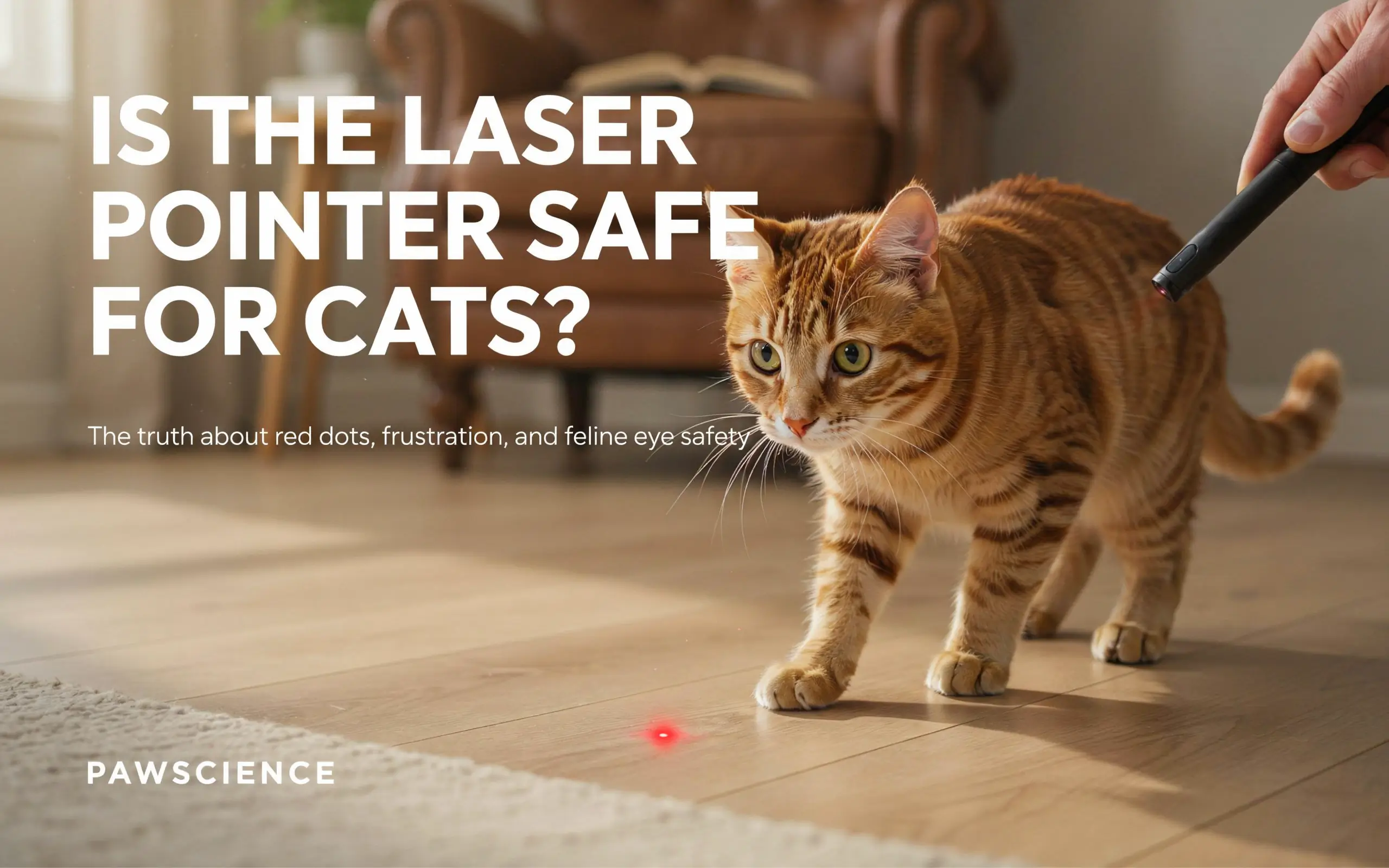
Wondering is laser pointer safe for cats? Learn the real risks of eye damage and frustration, plus vet-approved tips for safe play. Discover better alternatives for your feline friend.
If you have a cat, you have probably seen how excited they get when a little red dot appears on the floor. They pounce, they sprint, they slide across the carpet. It is funny to watch, and it seems like harmless fun. But many cat owners ask the same question: is laser pointer safe for cats?
The answer is not a simple yes or no. Laser pointers can be safe if you use them the right way. But they can also cause problems if you are not careful. This article will help you understand the risks, the benefits, and exactly how to play safely with your cat using a laser pointer.
Let us get straight to the point. You love your cat, and you want to keep them happy and healthy. So let us talk about what the experts say about laser pointers and cats.
Why Do Cats Love Laser Pointers So Much?
Cats are natural hunters. Even if they live indoors and have never caught a mouse in their lives, their instincts are still there. Their brains are wired to chase small, fast-moving things. A laser dot moves quickly and changes direction in unpredictable ways. This looks just like a bug or a small animal running away.
According to Dr. Gary Landsberg, a veterinary behaviorist, a typical cat would engage in many sessions of chasing and killing small prey each day in the wild. Indoor cats do not get that chance, so laser pointers give them a way to use those hunting instincts.
The movement of the light triggers something deep in your cat’s brain. They cannot help but chase it. It is not that they are silly or easily fooled. It is simply what their nature tells them to do. For many cats, this is the most exciting part of their day.
But here is the thing. The excitement is real, but the reward is not. And that is where the trouble can start.
The Main Risks: What Can Go Wrong?
When you ask is laser pointer safe for cats, you need to look at two big areas of concern. One is physical harm to the eyes. The other is psychological stress and behavior problems. Both are serious, and both need your attention.
Eye Damage: A Real Danger
Laser pointers can hurt your cat’s eyes. This is the first thing any vet will tell you. Even low-powered lasers can cause damage if the beam hits the eye directly.
The problem is that cats often look up while chasing the dot. They may stare right at the light source without meaning to. If the laser hits their eye, it can burn the retina. This is the part of the eye that lets them see. Once damaged, it does not heal.
Some laser pointers sold online are much more powerful than they should be. A safe laser for cats should have a power of 5 milliwatts or less. But many cheap lasers are much stronger. Some are 50 milliwatts or even more. These can cause serious eye damage in a split second.
Dr. Pamela J. Perry from Cornell University says it is important to never point the light directly at the cat’s face to avoid eye injury. This seems like common sense, but accidents happen. Cats move fast, and the laser moves fast too. One wrong move can cause permanent harm.
The Frustration Problem
There is another risk that many people do not think about. It is not about the eyes. It is about the mind.
When a cat chases a laser dot, they never catch it. There is nothing to grab, nothing to bite, nothing to eat. The hunt always ends with nothing. This is not how hunting works in nature. In the wild, a successful hunt ends with catching and killing the prey.
Dr. John Ciribassi explains that the problem with laser pointers is that they lack an endpoint. Nothing is ever physically caught. This can cause some cats to develop compulsive disorders. Instead of normal activities, these cats spend a large part of their day chasing shadows or reflections.
A study published in 2021 found a link between laser pointer play and abnormal repetitive behaviors in cats. Cats that played with lasers often were more likely to become obsessed with lights and shadows. This is sometimes called “laser pointer syndrome.”
Some cats get so frustrated that they start acting out. They may bite or scratch their owners. They may groom themselves too much. They may pace back and forth or meow constantly.
How to Use a Laser Pointer Safely
Now that you know the risks, you might be wondering if you should throw away your laser pointer. Not necessarily. Many vets say that laser pointers can be used safely if you follow some simple rules.
The key is to use the laser pointer as a tool, not as the only toy your cat ever sees. Here is what the experts recommend.
Choose the Right Laser Pointer
Not all laser pointers are the same. You need to pick one that is safe for pets. Look for a laser that is clearly labeled as a cat toy. These usually have a power of 1 to 5 milliwatts.
Avoid buying cheap lasers from unknown sellers. Many of these are too powerful. They might not have proper safety labels. If you are not sure, ask your vet for a recommendation.
Dr. Landsberg says that laser pointers sold for use as cat toys should be safe, even if they are accidentally shone briefly into a cat’s eye. But he also warns that not all lasers are up to code. So check the label carefully.
Never Shine It in the Eyes
This should go without saying, but it is worth repeating. Never shine a laser pointer directly into your cat’s eyes. Do not shine it at anyone’s eyes, human or animal.
Also, be careful about reflective surfaces. Mirrors, glass, and shiny floors can bounce the laser back into your cat’s eyes. Avoid pointing the laser at these surfaces.
Keep Play Sessions Short
Do not play with the laser for hours. Keep each session short, around 5 to 10 minutes. This is enough to give your cat exercise without overstimulating them.
Watch your cat for signs that they are getting tired or frustrated. If they start panting, lying down, or seem overly worked up, stop the game.
Let Your Cat “Win”
This is the most important tip. At the end of each laser session, let your cat catch something real.
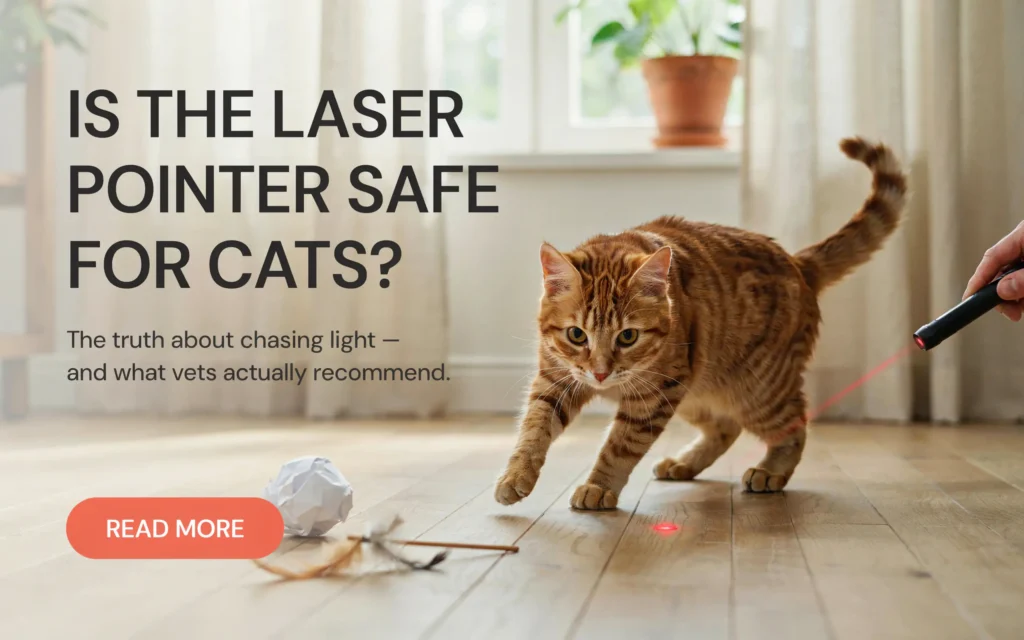
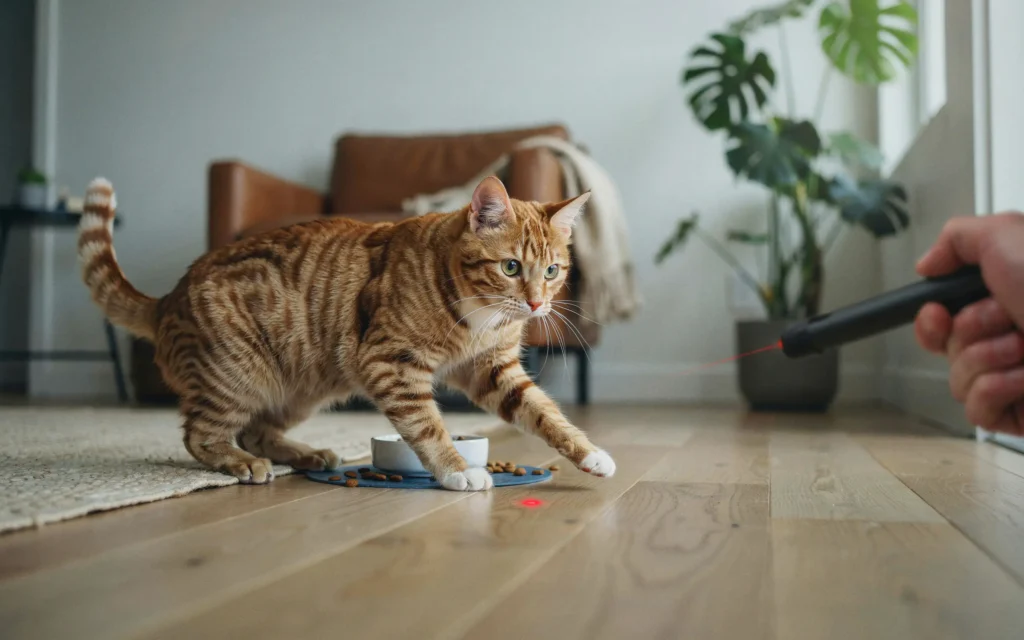
Move the laser dot onto a physical toy, like a stuffed mouse or a feather wand. Let your cat pounce on it. Then give them a treat.
This completes the hunting cycle. Your cat gets the satisfaction of catching something. They also get a reward. This helps prevent frustration and keeps the game fun instead of stressful.
Dr. Ciribassi suggests using a clicker to train your cat. When they “catch” the laser light, you click and give a treat. This way, the cat knows they have won and something good is coming.
Use Other Toys Too
A laser pointer should not be your cat’s only toy. Mix it up with other kinds of play. Wand toys, puzzle feeders, and balls are all great options.
This gives your cat different kinds of stimulation. It also reduces the risk of them becoming obsessed with lights and shadows.
Signs That Laser Play Is Not Right for Your Cat
Not every cat can handle laser pointer play. Some cats get too worked up. Others become anxious or obsessive.
Here are some signs that laser play might not be good for your cat:
| Sign to Watch For | What It Means |
|---|---|
| Your cat keeps searching for the laser long after the game ends | They may be developing an obsession |
| Your cat seems anxious or hides during play | The game is stressing them out |
| Your cat bites or scratches during or after laser sessions | They are overstimulated or frustrated |
| Your cat starts chasing shadows or reflections obsessively | This can be a sign of compulsive behavior |
If you notice any of these signs, stop using the laser pointer. Try other toys instead. Some cats simply do better with physical toys they can actually catch and bite.
Better Alternatives to Laser Pointers
If you decide that laser pointers are not the best choice for your cat, do not worry. There are plenty of other toys that are just as fun and much safer.
| Alternative Toy | Why It Works |
|---|---|
| Feather wands | Mimics birds, lets your cat catch and bite |
| Puzzle feeders | Engages the brain, rewards with food |
| Toy mice | Satisfies the hunting instinct with a physical object |
| Crinkle tunnels | Provides hiding and pouncing opportunities |
| Interactive treat balls | Combines play with a tasty reward |
These toys allow your cat to complete the hunting cycle. They can catch, bite, and feel satisfied. This is better for their mental health in the long run.
As one expert put it, “Laser pointers can be a good interactive tool as long as you design a perfect ending so the cat gets exercise and satisfies their hunting needs”.
What the Experts Say
Many veterinarians and animal behaviorists have weighed in on this topic. Their advice is clear: use caution.
Dr. Pamela J. Perry says, “A lot of cats enjoy playing with elusive laser lights. There is debate, however, on whether they are a safe way to entertain kitties”.
She recommends limiting playtime and always letting the cat catch something real at the end.
Dr. Gary Landsberg points out that laser play can be a productive way to offer short bursts of chase for some cats, but warns that some felines may develop problems when they cannot effectively catch the dot.
The ASPCA notes that laser pointers can provide mental stimulation and physical exercise for indoor cats, but they also caution that overstimulation is possible.
The message from experts is consistent. Laser pointers are not inherently bad, but they require careful, thoughtful use.
Frequently Asked Questions
Can laser pointers cause permanent eye damage in cats?
Yes, they can. If a laser beam shines directly into your cat’s eye, it can burn the retina and cause permanent vision loss. This is why you should never point a laser at your cat’s face. Even low-powered lasers can be dangerous if used carelessly.
Is laser pointer safe for cats if I use it only sometimes?
Using a laser pointer occasionally and with proper safety measures can be safe. Keep sessions short, never shine it in the eyes, and always let your cat catch a physical toy at the end. But if your cat shows signs of frustration or obsession, stop using it.
What power laser is safe for cats?
Look for a laser with 5 milliwatts or less of power. These are considered safer for pet use. Avoid high-power lasers, especially those over 5 milliwatts, as they pose a much higher risk of eye damage.
Why does my cat keep looking for the laser after I put it away?
This can be a sign of frustration or obsession. Your cat may not understand why the hunt ended without a catch. To prevent this, always end laser play with a physical toy and a treat. If your cat keeps searching for the light, consider using the laser less often or not at all.
What are the best toys to use instead of a laser pointer?
Feather wands, toy mice, puzzle feeders, and crinkle tunnels are all great alternatives. These toys allow your cat to catch something physical, which completes the hunting cycle and reduces frustration.
Can laser pointers cause behavior problems in cats?
Yes, they can. Some studies have found a link between laser pointer play and compulsive behaviors like chasing shadows or lights obsessively. Cats may also become frustrated or anxious if they never get to catch anything.
How long should I play with my cat using a laser pointer?
Keep sessions to about 5 to 10 minutes. This is enough time for exercise without causing overstimulation. Watch your cat for signs of tiredness or frustration, and stop if they seem too worked up.
Conclusion
So, is laser pointer safe for cats? The answer depends on how you use it. A laser pointer can be a fun way to give your cat exercise and mental stimulation. But it comes with real risks, both to the eyes and to your cat’s mental well-being.
The key is to use it responsibly. Choose a low-power laser made for pets. Never shine it in your cat’s eyes. Keep play sessions short. Always let your cat catch a physical toy at the end, and give them a treat. Mix laser play with other kinds of toys so your cat gets a variety of experiences.
If your cat shows signs of frustration, anxiety, or obsession, stop using the laser pointer. Try other toys instead. Your cat’s health and happiness are more important than any toy.
Every cat is different. Some cats can enjoy laser pointers without any problems. Others cannot handle them at all. Pay attention to your cat’s behavior and adjust your play style accordingly.
At the end of the day, you know your cat best. Trust your instincts. If something does not feel right, it probably is not. Play safely, play often, and enjoy the time you spend with your furry friend.
Related posts
 How to Train Without Hurting Joints: Safe Exercise Methods
Learn how to train without hurting joints. Discover safe exercise methods, low-impact options, and smart strategies to protect your body while staying active. Training without hurting…
 Why Kitchen Ventilation is Crucial for Health and Home
Discover why kitchen ventilation is crucial for health removing pollutants, controlling odors, preventing grease buildup, and ensuring a healthier, safer home environment. Kitchen ventilation is crucial…
 Why Motivation Fades After Weeks: Understanding and Rekindling Your Drive
Feeling Why Motivation Fades After Weeks ? Discover common reasons why motivation wanes and practical strategies to reignite your drive and stay on track. It’s a…