
How To Use a Blender Safely
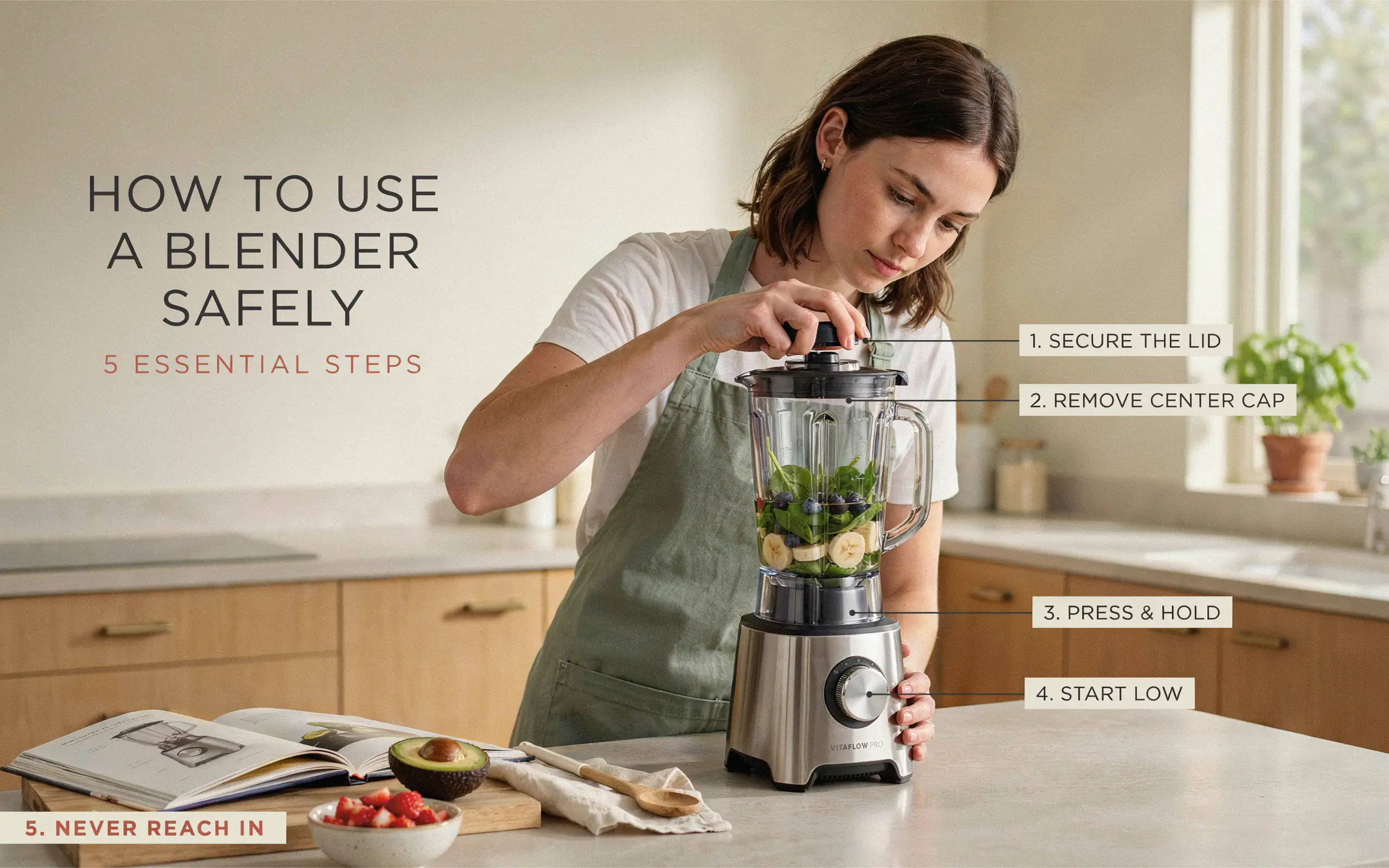
Learn how to use a blender safely with these essential tips. This guide covers lid security, hot liquids, cleaning, and more to help you use a blender safely every time.
Blenders are wonderful kitchen helpers. They make smoothies, soups, sauces, and so much more. But like any appliance with sharp blades and a powerful motor, they can cause harm if you don’t treat them with care. The good news is that most blender accidents are easy to prevent. You just need to know a few basic rules. This article will show you exactly how to use a blender safely, so you can enjoy all your favorite blended foods without worry.
I have spent many years in the kitchen, and I have seen plenty of blender mishaps. From soup explosions to cut fingers, these accidents happen more often than you might think. The good news is that they are almost always avoidable. By following some simple guidelines, you can protect yourself and your family.
Let’s get started with the most important safety practices.
Why Blender Safety Matters More Than You Think
A blender might look harmless sitting on your counter. But those blades spin at incredible speeds. Some high-powered models can reach over 25,000 revolutions per minute. That kind of force can send food flying, cause burns, or even break the glass pitcher.
Dr. Sanjeev Kakar, a hand surgeon at Mayo Clinic, says, “I’ve seen patients actually cut the tip of the finger off, even with the blender.” This shows that blender injuries are real and can be serious.
The good news is that most injuries happen because of simple mistakes. People get in a hurry. They forget to check the lid. Or they don’t realize that hot liquids can create dangerous pressure. By learning a few key safety habits, you can avoid these problems completely.
Always Check the Lid Before You Start
This might sound obvious, but it is one of the most common mistakes people make. You should never operate a blender unless you are fully confident that the lid is securely in place.
Many people think that if they are only blending a small amount, they don’t really need the lid. This is not true. The blades spin so fast that even a few ingredients can splatter everywhere. You could end up with a sticky mess on your walls, cabinets, and yourself.
Here is what you should do every single time:
- Place the lid on the pitcher
- Press or snap it until you hear it click
- Give it a gentle tug to make sure it is locked
Some blender brands include a safety feature that prevents the motor from running unless the lid and other components are locked securely in place. If your blender has this feature, do not try to bypass it. It is there for your protection.

What About the Center Cap?
Most blender lids have a removable center cap. This cap serves two purposes. First, it lets you add ingredients while the blender is running. Second, it provides a way for steam to escape when you are blending hot foods.
When you are blending cold ingredients, keep the center cap in place. But when you are blending hot liquids, you need to remove it. We will talk more about this in the next section.
| Safe Practice | Unsafe Practice |
|---|---|
| Lock the lid securely before blending | Blending with the lid loose or missing |
| Check that the lid is snapped into place | Assuming the lid is fine without checking |
| Use the center cap for adding ingredients | Forgetting to replace the center cap |
| Remove the center cap for hot liquids | Leaving the center cap on with hot liquids |
Be Very Careful With Hot Liquids
This is the most dangerous mistake people make with blenders. Putting very hot liquids into a sealed blender can cause a serious accident.
Here is what happens. Hot liquids create steam. When you put that liquid into a closed blender and start the motor, the steam has nowhere to go. Pressure builds up inside the pitcher. Eventually, that pressure can force the lid to pop off. Hot soup or sauce can spray all over you and your kitchen.
Chef Chris Valdes explains: “One of the biggest mistakes I see home cooks make is blending very hot liquids in a sealed blender without allowing steam to escape.”
The blender manual for many models specifically warns against this. One manual states: “The heat from the ingredients can cause pressure to build up in the sealed containers, causing possible expulsion of hot ingredients which may cause personal injury or property damage.”
How to Blend Hot Liquids Safely
You do not need to give up on making creamy soups or hot sauces. You just need to follow these steps:
- Let the liquid cool first. This is the safest option. Let your soup or sauce cool for at least 10 to 15 minutes before you put it in the blender.
- Remove the center cap. If your blender has a removable cap in the lid, take it out. This gives steam a way to escape.
- Cover the opening with a towel. Place a clean kitchen towel over the hole. This will catch any splashes while still letting steam escape.
- Do not fill the blender too full. Leave plenty of room at the top. The hot liquid will expand as it blends. Some blenders have a max-fill line for hot liquids. Follow that indicator.
- Start on the lowest speed. Begin blending at the lowest setting. This helps prevent sudden pressure changes. You can gradually increase the speed once everything is moving smoothly.
- Blend in batches. If you have a large amount of soup, blend it in smaller batches. This reduces the pressure inside the pitcher.
One reader on the Mayo Clinic Connect forum shared a story about cutting her finger with an immersion blender. She said, “I cut my finger with an immersion blender (post run failure to engage my brain) and at the ER the guy sewing it up asked me if I was on blood thinners.” This is a good reminder that even immersion blenders require care.
Never Overfill the Blender
It can be tempting to fill the blender to the top. You might think that the ingredients will compress as they blend, so it will be fine. But this is a mistake.
When you overfill a blender, you put extra pressure on the lid. The ingredients cannot move around freely. The blades have to work much harder. This can cause the motor to overheat or even burn out.
Overfilling also increases the chance that the lid will pop off. As the blades spin, the ingredients push upward. If there is no room for them to move, they can force the lid open.
The simple rule is this: never add ingredients above the max-fill line on your blender pitcher. Every blender has this line. It might be marked with a “MAX” label or a line on the side of the jar.
If you need to blend a large batch, do it in two or three smaller batches. It takes a little more time, but it is much safer for you and your blender.
Respect the Blades
The blades inside your blender are extremely sharp. They need to be sharp to chop through ice, frozen fruit, and tough vegetables. But that sharpness also means they can cut you.
Many blender injuries happen during cleaning, not during blending. People reach into the pitcher to wipe out leftover food. They forget that the blades are still sharp, even when the blender is unplugged.
Marissa Stevens, a recipe developer, says: “Respect the blades. Food processor blades are sharper than they look, so treat them like knives when loading and cleaning.”
Safe Blade Handling Tips
- Never put your hand inside the blender pitcher. Use a spatula or a spoon to remove food.
- Use a soft-bristled brush to clean around the blades. This keeps your fingers away from the sharp edges.
- If you need to remove stuck food, use a tool. Some people recommend using chopsticks to move food that is stuck under the blades. Just make sure the blender is turned off and unplugged first.
- Pay attention when washing the pitcher by hand. The blades can cut you even when you are just rinsing the jar.
Clean Your Blender the Right Way
Cleaning a blender is not just about keeping it looking nice. It is also about safety. Food residue can build up around the blades and the gasket. This can attract bacteria like Salmonella, E. coli, yeast, and mold.
A dirty blender can also become a fire hazard. Food particles can get into the motor base or around the blade shaft. Over time, this buildup can cause the motor to overheat.
Professional chef Lynne Just explains: “Bits of food can get dried around the blades, and, when these aren’t cleaned well, it becomes a food-safety issue for the next time you use the blender. A clean blender is a food-safe blender.”

Step-by-Step Cleaning Guide
- Unplug the blender before you start cleaning. This is the most important safety step.
- Take the pitcher apart. Remove the lid, the blade assembly, and any other removable parts.
- Wash the parts in hot, soapy water. Use a soft-bristled brush to clean around the blades. Do not use steel wool or abrasive cleaners. These can scratch the plastic or glass and leave behind harmful chemicals.
- Rinse everything thoroughly. Make sure there is no soap residue left behind.
- Dry all parts completely before you put the blender back together.
- Wipe down the motor base with a damp cloth. Never submerge the base in water. The motor and electrical parts can be damaged by water.
Quick Cleaning Method Between Uses
If you are making multiple batches of the same food, you can clean the pitcher quickly without taking it apart.
Add about two cups of warm water and a drop of dish soap to the blender jar. Secure the lid and run the blender on high for 10 to 20 seconds. Rinse thoroughly before using it again.
Important: This quick method should not be used if the blender contains eggs, dairy, or meat products. For food safety, you need to do a full cleaning after using these ingredients.
| Cleaning Method | Best For | Safety Notes |
|---|---|---|
| Hand wash with soap and brush | Deep cleaning after every use | Unplug first, avoid touching blades |
| Blend with warm water and soap | Quick clean between batches | Not for eggs, dairy, or meat |
| Vinegar and water soak | Removing tough stains and odors | Rinse very well afterward |
| Dishwasher (if safe) | Convenience | Heat can damage seals over time |
Electrical Safety Basics
Your blender runs on electricity. That means you need to follow basic electrical safety rules.
- Keep the blender away from water. Do not place it near the sink or use it with wet hands.
- Check the cord regularly. Look for frayed wires or damaged plugs. If you see any damage, stop using the blender and get it repaired or replaced.
- Unplug the blender when you are not using it. This prevents accidental starts and saves energy.
- Do not use the blender if it feels hot. If the motor base feels unusually warm, turn it off and let it cool down.
- Place the blender on a flat, stable surface. A wobbly countertop can cause the blender to tip over.
- Do not overload your electrical circuits. Avoid running multiple high-powered appliances on the same outlet at the same time.
David Nance, an electrical safety expert, recommends that all electrical appliances be NRTL-listed. This means they have been tested by an independent third party for safety. Look for a certifying logo on the packaging or in the manual.
Common Mistakes to Avoid
Let us go over some of the most common blender mistakes. Avoiding these will help you use a blender safely every time.
Blending Dry Ingredients Without Liquid
Blending dry ingredients like flour, spices, or powdered sugar can create a fine dust. This dust can get into the motor or the blade shaft. It can also create an uneven mixture.
If you need to blend dry ingredients, add a small amount of liquid. Or use a spice grinder instead of your blender.
Blending Ice the Wrong Way
Blenders can handle ice, but you need to be careful. Using too many ice cubes at once can strain the motor or damage the blades.
Use the pulse feature to break up large ice chunks first. Then blend on a higher speed. This puts less stress on the motor.
Pushing Food Down While the Blender Is Running
You might be tempted to use a spatula to push food down toward the blades while the blender is running. This is dangerous. The spatula could get caught in the blades and break. Or your hand could slip and touch the blades.
Instead, turn off the blender, unplug it, and then use a spatula to move the food. Then put the lid back on and continue blending.
Shaking the Blender While It Is Running
Some people shake the blender back and forth to help the ingredients mix. This is not a good idea. It can cause the blender to tip over or the lid to come loose.
If your ingredients are not blending well, try adding more liquid or using the pulse feature. Do not shake the blender.
What Not to Put in Your Blender
Not everything belongs in a blender. Some foods can damage the blades or create dangerous situations.
- Extra-hot liquids: We already talked about this. Let them cool first.
- Potatoes: They can turn into a gluey paste that clogs the blades.
- Dried fruit: They can be too tough and damage the blades.
- Super-frozen foods: They can be too hard for the blades to handle.
- Whole spices: They can scratch the pitcher and dull the blades.
- Coffee beans: They are too hard and can damage the motor.
- Bones: They can break the blades or the pitcher.
- Pits and hard seeds: Remove these from fruits before blending.
Special Considerations for Different Types of Blenders
Immersion Blenders
Immersion blenders, also called hand blenders, have their own safety rules. You use them directly in the pot or bowl.
- Always turn off the blender before you lift it out of the liquid.
- Keep your fingers away from the blade at the bottom.
- Do not use an immersion blender in a non-stick pot. The blade can scratch the coating.
- Be careful when blending hot liquids directly in the pot. Splashes can still burn you.
Personal Blenders
Personal blenders are small and convenient. But they have powerful motors.
- Make sure the cup is securely attached to the base before you start.
- Do not overfill the cup. Leave room for the ingredients to move.
- Be careful when removing the cup from the base. Some models have blades that stay attached to the cup, which means the blades are exposed.
In 2023, the BlendJet 2 portable blender was recalled because of safety issues. The blades could break off, and the blenders could overheat or catch fire. This shows that even small blenders can have serious safety problems. Always check for recalls on your appliances.
Teach Your Family About Blender Safety
If you have children or other family members who use the blender, take time to teach them the safety rules.
- Show them how to lock the lid properly.
- Explain why hot liquids are dangerous.
- Remind them never to put their hands inside the pitcher.
- Make sure they know to unplug the blender before cleaning.
Children should not use a blender without adult supervision. The blades are sharp, and the motor is powerful. Even older children need guidance.
Mayo Clinic warns that blenders can be a problem both when in use and when they are not in use. People have cut themselves while cleaning a blender that was unplugged. So the risk is there even when the blender is off.
Final Thoughts on Blender Safety
Using a blender is mostly about common sense. Check the lid. Watch the temperature. Keep your hands away from the blades. Clean it properly. These simple habits will keep you safe.
I have been using blenders for many years. I have made mistakes along the way, and I have learned from them. The most important lesson I have learned is to never rush. Take a few extra seconds to make sure everything is set up correctly. That small amount of time can prevent a big accident.
Remember, a blender is a tool. It is a very helpful tool, but it deserves respect. When you use it with care, it will serve you well for many years.

Frequently Asked Questions
Can I put hot soup directly into a blender?
No, you should not put very hot soup directly into a blender. The heat creates steam, which builds up pressure and can force the lid off. Let the soup cool for 10 to 15 minutes first. If you must blend it while still warm, remove the center cap from the lid and cover the opening with a towel.
How do I know if my blender lid is secure?
After you place the lid on the pitcher, press down or twist it until you hear a click or snap. Then give it a gentle tug to make sure it is locked in place. Some blenders have a locking mechanism that prevents the motor from starting unless the lid is secure.
What should I do if my blender starts smoking?
If you see smoke coming from your blender, turn it off immediately and unplug it. Do not try to continue blending. The smoke could mean that the motor is overheating or that food has gotten into the motor base. Let the blender cool down completely before you inspect it.
Can I put my blender pitcher in the dishwasher?
Some blender pitchers are labeled as dishwasher safe. But many experts recommend against using the dishwasher. The heat and moisture can damage the seal at the base of the jar, which can cause leaks. Hand washing is usually the safer option.
How often should I clean my blender?
You should clean your blender after every use. This prevents food from drying around the blades and becoming a food safety issue. At a minimum, rinse it out right away and do a full wash with soap and warm water.
Is it safe to blend ice in my blender?
Yes, most blenders can handle ice. But you need to use the pulse feature first to break up the ice into smaller pieces. Then you can blend on a higher speed. Do not overload the blender with too many ice cubes at once.
What should I do if the lid pops off while blending?
If the lid pops off while the blender is running, turn off the blender immediately. Unplug it. Wait for the blades to stop completely before you touch anything. Then clean up the mess carefully. If hot liquid was involved, be very careful to avoid burns.
Conclusion
Learning how to use a blender safely is not complicated. It just takes a little awareness and a few simple habits. Always check the lid before you start. Be careful with hot liquids. Never put your hands near the blades. Clean the blender properly after each use. And follow the basic electrical safety rules.
These practices will protect you from burns, cuts, and other injuries. They will also help your blender last longer. A well-cared-for blender can serve you for many years.
So the next time you reach for your blender, take a moment to think about safety. Check the lid. Make sure the ingredients are at the right temperature. Keep your hands away from the blades. It only takes a few seconds, and it can make all the difference.
Enjoy your smoothies, soups, and sauces. And remember, a safe kitchen is a happy kitchen.
Related posts
 Best Under Sink Organizers Kitchen 2026: Practical Storage Solutions
Find the best under sink organizers kitchen in 2026. Compare top-rated pull-out bins, L-shaped racks, and protective mats to maximize your cabinet space. The space under…
 Best Kitchen Cabinet Storage Solutions for 2026
Organize your kitchen efficiently with our Best Kitchen Cabinet Storage Solutions. Compare the best organizers for lids, pans, and spices to maximize your space. A cluttered…
 Top Rated Kitchen Shelf Organizers for 2026
Discover the top rated kitchen shelf organizers for 2026. Compare durable racks, magnetic shelves, and tiered storage to maximize your pantry and counter space. A cluttered…