
How To Potty Train A Stubborn Puppy
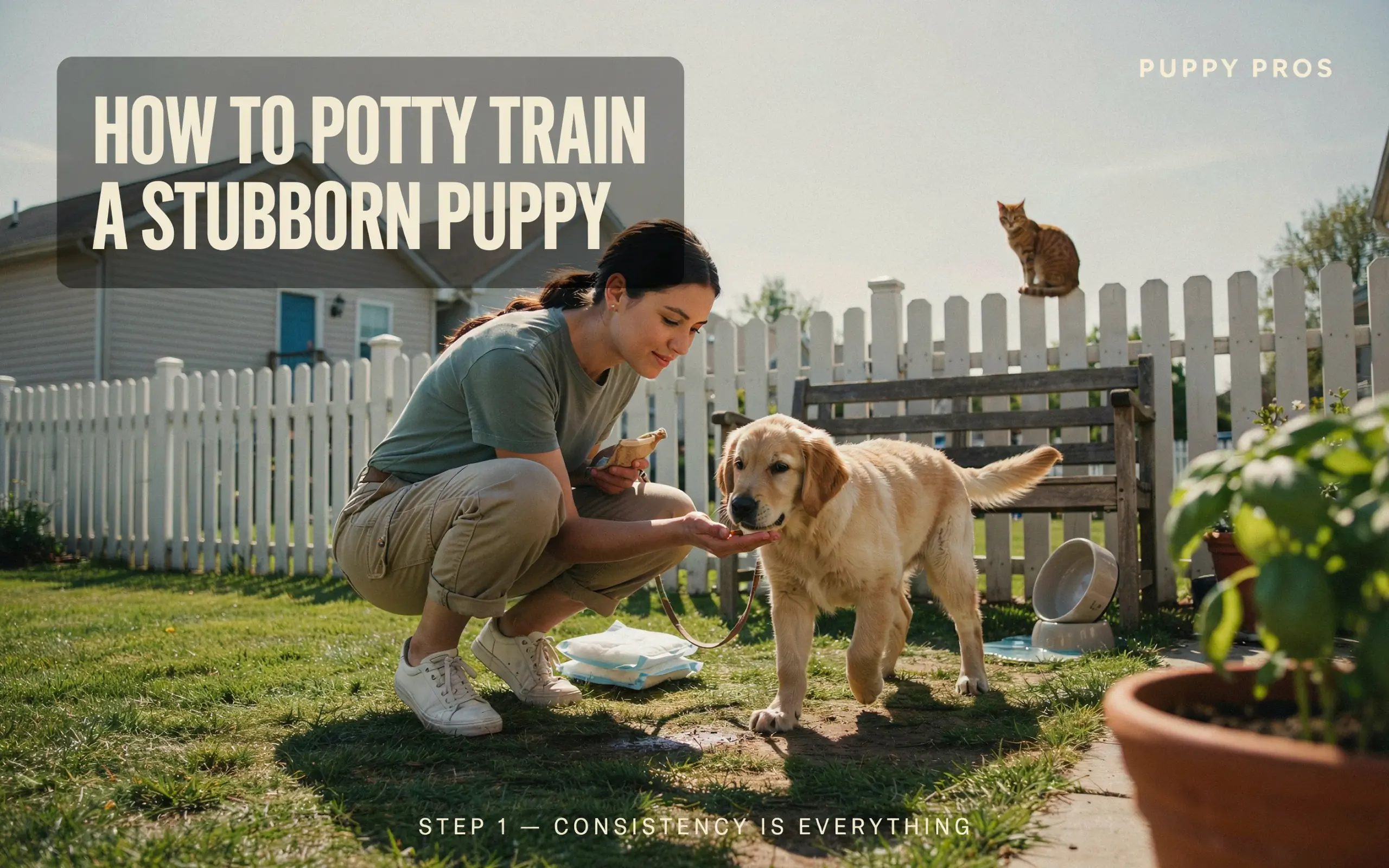
Do you want to potty train a stubborn puppy but feel like you are getting nowhere? This guide shares simple steps, positive methods, and real solutions to help your pup learn faster.
Bringing a new puppy home is one of life’s greatest joys. Those tiny paws, floppy ears, and curious eyes can melt any heart. But then reality hits. You find a little puddle on the floor. Then another. And another. You start to wonder if your pup will ever learn. If you are dealing with a puppy that seems extra difficult, you are not alone. Some dogs just take longer to get the hang of things. The good news is that every puppy can learn. You just need the right plan.
This article will show you exactly how to potty train a stubborn puppy using simple, kind, and effective methods. We will look at why some puppies are harder to train, what you can do differently, and how to stay patient when things get messy.
Understanding Why Some Puppies Are Stubborn
Before you can fix a problem, you need to understand where it comes from. Stubbornness in puppies is not about being naughty or trying to annoy you. Puppies do not think that way. There are several real reasons why a puppy might resist potty training.
Breed Tendencies
Some breeds are naturally more independent and harder to convince. Dachshunds, for example, are known for their strong will. Beagles, Siberian Huskies, and Basset Hounds can also be challenging. These dogs were bred to work on their own, making decisions without waiting for human direction. That independence shows up during potty training too.
Age and Bladder Control
Young puppies have very little control over their bodies. A 2-month-old puppy might need to pee every two to three hours. Their bladders are small, and their muscles are not fully developed. Expecting a baby puppy to hold it for hours is like expecting a human toddler to do the same. It just is not fair.
Previous Experiences
Rescue dogs or puppies that spent time in poor conditions might have bad habits already set. They may have learned to go potty wherever they happened to be. Breaking that habit takes extra time and care.
Fear or Anxiety
Some puppies are scared of the outdoors. Loud noises, strange smells, or even the feeling of grass on their paws can make them nervous. A scared puppy will not want to go outside, no matter how much you try.
Knowing these reasons helps you feel less frustrated. Your puppy is not being difficult on purpose. They are just being a puppy.
The Foundation: Routine and Schedule
If you want to know how to potty train a stubborn puppy, the answer starts with a solid routine. Puppies are creatures of habit. They feel safe when they know what comes next. A good schedule removes guesswork for both of you.
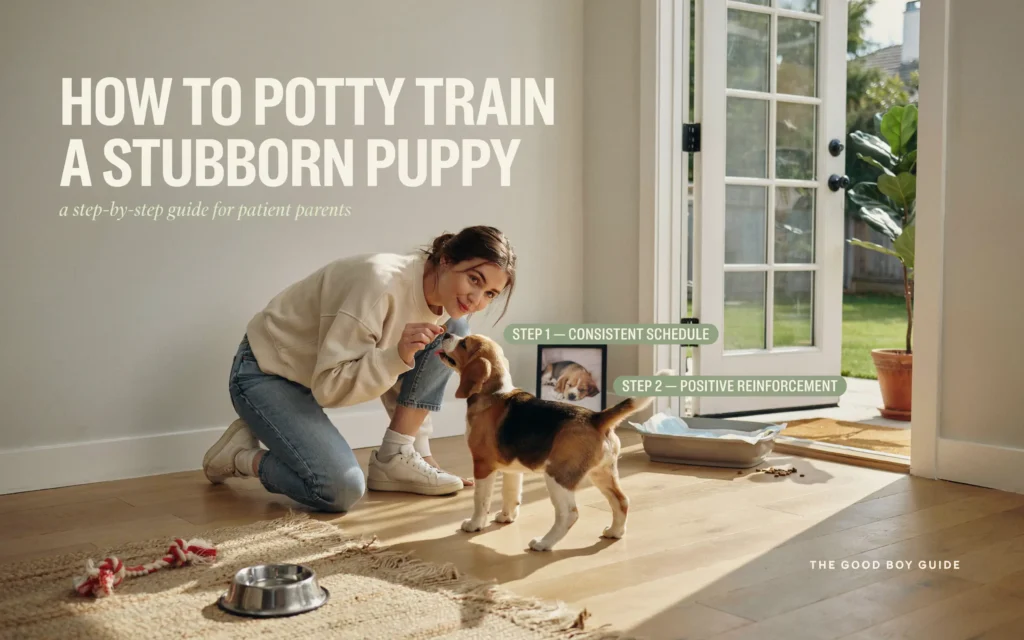
Set Regular Meal Times
Feed your puppy at the same times every day. This makes their digestion predictable. What goes in on a schedule comes out on a schedule. Most puppies will need to poop soon after eating. Take them out right after meals to catch that natural urge.
Take Them Out Frequently
Do not wait for your puppy to tell you they need to go. By then, it is often too late. Take them out first thing in the morning, after every nap, after play sessions, and before bed. For young puppies, this might mean going outside every 30 to 60 minutes.
Use the Same Potty Spot
Dogs are drawn to smells. If you always take your puppy to the same spot in the yard, the scent will remind them what to do. Choose a quiet area away from distractions. If cars, other dogs, or kids are always passing by, your puppy will have a hard time focusing.
Sample Daily Schedule
| Time | Activity |
|---|---|
| 7:00 AM | Wake up and go outside immediately |
| 7:15 AM | Breakfast |
| 7:45 AM | Outside for potty break |
| 8:00 AM | Playtime or short walk |
| 8:30 AM | Crate time or supervised indoor time |
| 10:00 AM | Outside potty break |
| 12:00 PM | Lunch and outside potty break |
| 2:00 PM | Outside potty break |
| 4:00 PM | Outside potty break |
| 6:00 PM | Dinner and outside potty break |
| 8:00 PM | Outside potty break |
| 10:00 PM | Last potty break before bed |
This kind of structure helps a stubborn puppy understand what is expected. When you repeat the same actions day after day, your puppy starts to predict what comes next.
Positive Reinforcement: The Kind Way to Train
Punishment does not work for potty training. Yelling, rubbing noses in messes, or hitting will only make your puppy afraid of you. Fear does not teach. It just creates anxiety. If your puppy is scared, they might hide to go potty, making things even worse.
Positive reinforcement is the best way to potty train a stubborn puppy. This means rewarding the behavior you want to see and ignoring or quietly cleaning up the mistakes.
Reward Immediately
The moment your puppy finishes going potty outside, give them a treat and lots of praise. The reward must happen right away. If you wait even a minute, your puppy will not connect the treat to the action. Keep treats in your pocket so you are always ready.
Use High-Value Treats
For a stubborn puppy, ordinary biscuits might not be exciting enough. Use something special. Small pieces of chicken, cheese, or hot dog work wonders. Save these treats only for potty training. When your puppy realizes that going outside brings the best snacks, they will want to do it more often.
Add a Verbal Cue
Say a word like “go potty” or “hurry up” every time your puppy starts to eliminate. Over time, your puppy will learn what that word means. Then you can use it to encourage them to go when you are in a hurry.
Praise, Praise, Praise
Dogs love to please their people. Along with treats, use a happy, excited voice to tell your puppy they did a great job. Clap your hands. Smile big. Your puppy will feed off your energy and want to repeat the behavior that made you so happy.
As dog trainer Adrienne Farricelli says, “Potty training is more about patience and consistency than math or secret formulas”. Keep that in mind when you feel like giving up.
Crate Training: A Powerful Tool
Crate training is one of the most effective ways to potty train a stubborn puppy. Dogs have a natural instinct not to soil their sleeping area. You can use this instinct to your advantage.
Choose the Right Size Crate
The crate should be big enough for your puppy to stand up, turn around, and lie down comfortably. If the crate is too big, your puppy might use one end as a bathroom and sleep in the other. If it is too small, your puppy will feel cramped and uncomfortable.
Introduce the Crate Slowly
Never force your puppy into the crate. Make it a happy place. Put soft bedding inside, leave the door open, and let your puppy explore on their own. Toss treats inside to create positive feelings. Feed meals in the crate so your puppy associates it with good things.
Use the Crate for Short Periods
Young puppies cannot stay in a crate for too long. A general rule is one hour per month of age. A 2-month-old puppy should not be crated for more than two hours during the day. Overnight, a puppy might need a potty break in the middle of the night.
Take Them Out Right Away
When you let your puppy out of the crate, go straight outside. Do not stop to play or cuddle first. The first thing your puppy will want to do is relieve themselves.
Crate Training Schedule Example
| Time | Crate Activity |
|---|---|
| 7:00 AM | Out of crate, straight outside |
| 8:00 AM | Back in crate for rest |
| 10:00 AM | Out for potty and play |
| 11:00 AM | Crate time |
| 1:00 PM | Out for potty and lunch |
| 2:00 PM | Crate time |
| 4:00 PM | Out for potty and play |
| 5:00 PM | Crate time |
| 7:00 PM | Out for potty and dinner |
| 10:00 PM | Last potty break, then crate for night |
Remember that the crate is not a punishment. It is a safe space where your puppy can relax without having accidents.
Managing Accidents the Right Way
Accidents will happen. Even with the best plan, you will find messes. How you handle these moments matters a lot when you potty train a stubborn puppy.
Stay Calm
When you find a puddle, take a deep breath. Your puppy does not know they did something wrong. If you yell or act angry, your puppy will not understand why. They will just learn to be scared of you.
Clean Thoroughly
Dogs are drawn to spots where they have gone before. The smell tells them it is okay to go there again. Regular cleaners do not remove the scent completely. Use an enzymatic cleaner made for pet messes. These products break down the proteins in urine and eliminate the odor.
Watch for Signs
Most puppies give clues before they need to go. They might sniff the floor, circle, whine, or head toward the door. Learn your puppy’s signals. When you see them, get outside fast. The more you catch these moments, the fewer accidents you will have.
Do Not Punish
Punishing your puppy for accidents is one of the biggest mistakes you can make. It does not teach them where to go. It only teaches them to hide from you when they need to go. If your puppy is scared to go in front of you, they will find secret spots in the house. That makes training much harder.
Trainer and author Ian Dunbar once said, “Punishing a dog for inappropriate elimination is like punishing a baby for wetting its diaper.” Keep this in mind when you feel frustrated.
Common Mistakes That Slow Down Training
Many people accidentally make potty training harder than it needs to be. Avoiding these mistakes will help you potty train a stubborn puppy much faster.
Giving Too Much Freedom Too Soon
This is one of the most common errors. You bring your puppy home, and they seem so sweet. You let them wander around the living room. Then you find a mess behind the couch. Puppies should not have free run of the house until they are fully trained. Keep them in one room or on a leash with you so you can watch them.
Inconsistent Schedules
If you take your puppy out at different times every day, they will get confused. Consistency is key. Stick to the same routine even on weekends. Yes, it is hard to wake up early on Saturday. But it will pay off in the long run.
Using the Wrong Crate Size
A crate that is too big gives your puppy room to potty in one corner and sleep in another. A crate that is too small is uncomfortable and cruel. Measure carefully and get the right size.
Not Supervising Enough
When your puppy is out of the crate, you need to watch them. If you are busy with your phone or the TV, you will miss the signs. Keep your puppy within sight at all times.
Expecting Perfection Too Soon
Some puppies learn in a few weeks. Others take months. That is normal. Do not compare your puppy to someone else’s. Every dog is different. Your job is to stay patient and keep going.
What If Nothing Seems to Work?
Sometimes you try everything and still feel stuck. Your stubborn puppy keeps having accidents. You start to wonder if they will ever learn. Do not lose hope. There are a few more things you can try.
Go Back to Basics
If training is not working, start over. Take your puppy out more often than you think is necessary. Reward every single success. Clean every accident perfectly. Sometimes going back to square one is the fastest way forward.
Check for Medical Issues
If your puppy was doing well and suddenly starts having accidents, see a vet. Urinary tract infections, bladder stones, or other health problems can cause potty issues. A quick check can rule out medical causes.
Reduce Distractions Outside
Some puppies get outside and forget all about pottying. They want to sniff, chase leaves, or explore. Keep things calm. Stand still and ignore your puppy for a few minutes. Let them focus on the task. If they still do not go, bring them inside and try again in 10 minutes.
Try a Different Surface
Some puppies develop strong preferences for certain surfaces. If your puppy was raised on grass, they might not want to go on gravel or pavement. If you are in an apartment with a balcony potty patch, your puppy might need time to adjust.
Get Professional Help
If you have been trying for months with no progress, consider hiring a certified dog trainer. A professional can spot things you might be missing and give you personalized advice.
Keeping Your Sanity During Training
Potty training a stubborn puppy can test your patience. There will be days when you feel like you are cleaning up messes all the time. That is okay. It happens to everyone.
Take breaks when you need them. Put your puppy in a safe space and step away for a few minutes. Remind yourself that this phase will not last forever. Your puppy is not trying to make you angry. They are just learning.
Celebrate the small wins. When your puppy goes outside, even if it took 10 tries, that is a victory. Each success builds on the last one. Before you know it, your puppy will be fully trained, and all this hard work will feel worth it.
Frequently Asked Questions
How long does it take to potty train a stubborn puppy?
It can take anywhere from a few weeks to six months or more. Some puppies pick it up quickly, while others need extra time. The important thing is to stay consistent and patient. If your puppy has no accidents for a full month, they are considered fully trained.
What is the best age to start potty training?
You can start as soon as you bring your puppy home, usually around 8 weeks old. At this age, puppies have limited bladder control, so expect frequent trips outside. Veterinarians often recommend starting between 12 and 16 weeks, when bladder control is better.
Should I use puppy pads or go straight outside?
It depends on your situation. If you live in an apartment or have limited outdoor access, puppy pads can be helpful. However, pads can confuse some puppies. They learn that it is okay to go inside on a soft surface, which can make the transition to outdoors harder. If possible, start with outdoor training from day one.
What should I do if my puppy has an accident in the crate?
First, do not punish your puppy. Clean the crate with an enzymatic cleaner to remove the smell. Then think about why it happened. Was the crate too big? Was your puppy left in there too long? Adjust your approach and try again. Some puppies need more frequent breaks than others.
Can I potty train a stubborn puppy without a crate?
Yes, you can. Crate training is helpful but not required. Without a crate, you will need to supervise your puppy constantly. Keep them on a leash attached to you or in a small puppy-proofed room. Take them out very frequently. It takes more effort, but it can work.
Why does my puppy go outside and then come inside and go potty?
This is a common problem. Your puppy might be too distracted outside to focus on the task. Stay outside longer and keep things calm. If your puppy does not go, bring them inside and keep them in a small space or on a leash. Try again in 10 minutes. Repeat until they go outside.
Is it okay to use treats for potty training forever?
You do not need to give treats forever. Once your puppy is reliably going outside, you can start phasing out the treats. Keep using praise and affection as rewards. If your puppy has a setback, bring the treats back for a while to reinforce the behavior.
Conclusion
Learning how to potty train a stubborn puppy takes time, patience, and a good plan. There is no magic trick that works overnight. But with a consistent schedule, positive reinforcement, and the right tools like crate training, you can help your puppy succeed.
Remember that every puppy is different. Some learn fast. Others take months. That does not mean you are doing anything wrong. It just means your puppy needs a little more time to figure things out.
Stay calm when accidents happen. Clean them up without anger. Reward every success with treats and praise. Watch for your puppy’s signals and get them outside before they have a chance to go indoors.
Most of all, be kind to yourself. Potty training is hard work. It is messy and frustrating some days. But it is also temporary. Your puppy will get there. And when they do, you will have a clean house and a happy, well-trained dog.
As dog behaviorist Patricia McConnell once wrote, “Training is not about forcing a dog to comply. It is about building a relationship based on trust and clear communication.” That relationship is what makes all the effort worthwhile.
So take a deep breath, grab some treats, and keep going. You have got this. Your stubborn puppy is counting on you to show them the way. And one day soon, you will look back at this time and smile.
Related posts
 Why Do Dogs Stare at Walls? Common Causes and When to Worry
Wondering why do dogs stare at walls? Discover the sensory, behavioral, and medical reasons behind this behavior, and learn when to contact your veterinarian. When you…
 How to Test Car Wiring for Continuity Using a Multimeter
Learn how to test car wiring for continuity safely. Find broken automotive wires, check connector ports, and diagnose electrical issues with a multimeter. Testing car wiring…
 Why Organizing Space Reduces Stress: The Mental Clarity Connection
Discover why organizing space reduces stress. Learn how a tidy environment lowers cortisol, improves focus, and creates a sense of calm in your daily life. Organizing…