
How To Brush Cat Teeth At Home

Learn how to brush cat teeth at home with this easy, step-by-step guide. Discover the right supplies, training tips, and routines to keep your feline’s smile healthy and bright.
Taking care of your cat’s teeth is one of those things that many pet owners know they should do, but few actually do. It feels like a challenge, right? You might picture a wrestling match with a furry tornado, complete with scratches and a whole lot of frustration. But here is the good news: learning how to brush cat teeth at home is not as hard as it seems. With a little patience, the right tools, and a gentle approach, you can turn this into a positive experience for both you and your cat. In fact, regular brushing is the single most effective thing you can do to prevent painful dental diseases, save money on vet bills, and keep your cat healthy for years to come.
Why Brushing Your Cat’s Teeth Matters More Than You Think
How To Brush Cat Teeth At Home. Many people do not realize that dental disease is one of the most common health problems in cats. Studies show that 50% to 90% of cats over four years old have some form of dental issue. Even more surprising, up to 70% of cats will develop periodontal disease by the time they are just two years old if they do not receive proper dental care. That is a lot of cats with sore mouths.
When plaque builds up on your cat’s teeth, it hardens into tartar. This can lead to gingivitis, which is gum inflammation, and eventually periodontal disease. These conditions are painful. Cats are experts at hiding pain, so they may keep eating even when their mouths hurt. But the pain is real, and it affects their quality of life. Beyond the mouth, bacteria from dental disease can enter the bloodstream and cause problems in other organs, including the heart and kidneys. That is why brushing your cat’s teeth is not just about fresh breath. It is about their overall health.
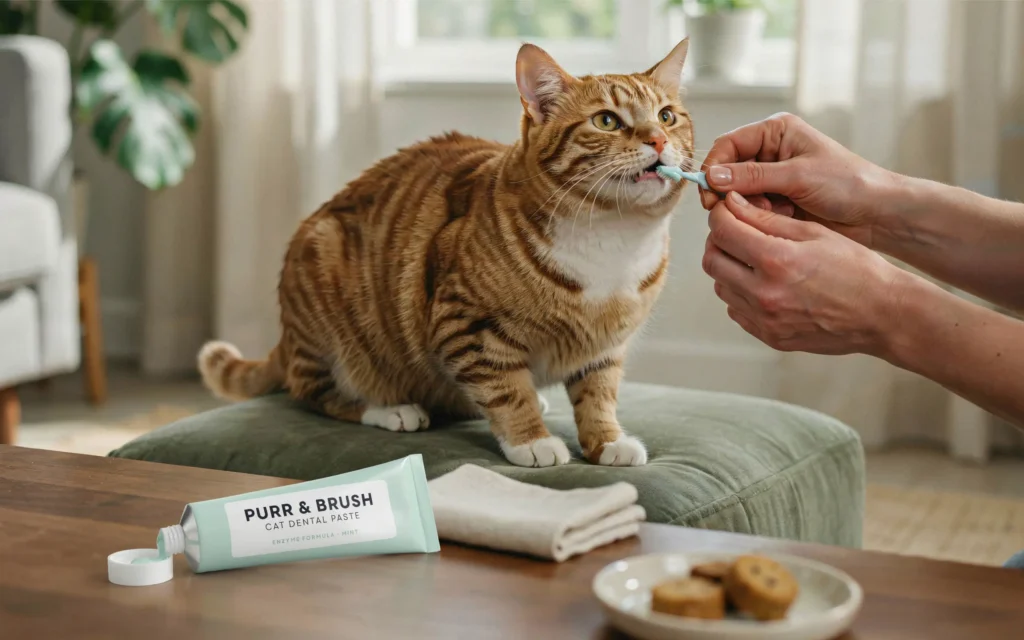
What You Need to Brush Cat Teeth at Home
Before you start, you need to gather the right supplies. Using the wrong products can be harmful to your cat.
Cat-Specific Toothbrush
You have a few options here. A small, soft-bristled toothbrush made for cats is a good choice. Some people prefer a finger toothbrush, which fits over your fingertip. This gives you more control and can feel less scary for your cat. You can also use a piece of gauze wrapped around your finger to start with. Whatever you choose, make sure the bristles are soft so you do not hurt your cat’s gums.
Cat-Safe Toothpaste
How To Brush Cat Teeth At Home. Never use human toothpaste for your cat. Human toothpaste contains fluoride and other ingredients that can upset your cat’s stomach or even be toxic. Cat toothpaste comes in flavors like chicken, fish, or beef that cats actually like. These toothpastes often contain enzymes that help break down plaque. You can find toothpastes with the Veterinary Oral Health Council (VOHC) seal, which means they have been proven to reduce plaque and tartar.
Treats for Rewards
Positive reinforcement is key. Have some of your cat’s favorite treats ready to reward them for good behavior during and after each brushing session.
A Quiet Space
Choose a calm, quiet spot where you and your cat can relax. This could be a familiar room where your cat feels safe.
| Supply | Why It Matters |
|---|---|
| Soft Cat Toothbrush | Removes plaque gently without hurting gums. |
| Cat Toothpaste (Enzymatic) | Safe to swallow; comes in tasty flavors cats enjoy. |
| Finger Brush or Gauze | Good for starting out or for sensitive cats. |
| Treats | Rewards help your cat build a positive association. |
Step-by-Step Guide: How to Brush Cat Teeth at Home
Now, let us get into the actual process. The secret to success is to go slowly. Do not expect to do a full brush on the first day. Think of this as a training process that could take a few weeks.
Step 1: Get Your Cat Comfortable with Touch
Start by simply touching your cat’s face and head while they are relaxed. Gently pet them around their mouth, lift their lips for a second, and then stop. Give them a treat and lots of praise. Do this for a few days until your cat is completely fine with you handling their mouth.
Step 2: Introduce the Toothpaste
Put a tiny bit of cat toothpaste on your finger and let your cat lick it off. This helps them get used to the taste and see it as something good. You can do this for a few days. Some cats will love the flavor right away. If your cat does not seem interested, try a different flavor.
Step 3: Let Them Investigate the Toothbrush
Let your cat sniff the toothbrush and chew on it a little. You can put a small amount of toothpaste on it and let them lick it off. The goal is to make the toothbrush a familiar, non-scary object.
Step 4: Start Touching Teeth with the Brush
Put a little toothpaste on the brush and gently touch your cat’s teeth with it. Do not brush yet, just touch. Focus on the front teeth first. Give treats and praise. Do this for a short time, maybe 10 seconds, and then stop.
Step 5: Begin the Actual Brushing
Now you are ready to actually brush. Gently pull back your cat’s lip to expose the teeth. Angle the brush at about 45 degrees toward the gum line. Use small, circular motions to brush the outer surfaces of the teeth. You do not need to brush the inside surfaces of the teeth. The back teeth are where most plaque builds up, so try to reach those areas as your cat allows.
How To Brush Cat Teeth At Home. Start with just a few seconds of brushing and gradually increase the time. Work up to about 30 seconds on each side of the mouth. Daily brushing is ideal, but even brushing every other day can make a big difference.
Step 6: End on a Positive Note
Always end each session with a treat and lots of praise. This helps your cat associate tooth brushing with positive things. If your cat gets upset, stop and try again later. Do not force it.
| Stage | What to Do | How Long |
|---|---|---|
| Desensitization | Touch face and mouth; let cat lick toothpaste. | A few days to a week |
| Introduction | Let cat investigate toothbrush; touch teeth with brush. | A few days |
| Brushing | Gently brush outer surfaces with circular motions. | Start with seconds; work up to 30 sec per side |
Tips for a Successful Brushing Routine
Choose the Right Time
Pick a time when your cat is calm and relaxed. Many people have success right after a meal or when their cat is sleepy. Try to brush at the same time each day to build a routine.

Be Patient
Some cats take to brushing quickly, while others need more time. Do not rush the process. If your cat is stressed, you are moving too fast. Slow down and make the sessions shorter.
Use Gentle Handling
Hold your cat’s head gently but securely. You can position them in your lap or on a stable surface. Speak to them in a calm, soothing voice throughout the process.
Focus on the Outside
You only need to brush the outside surfaces of your cat’s teeth, where the teeth meet the gums. The inside surfaces are cleaned by your cat’s tongue.
Try Different Positions
Some cats do better when they are sitting on a counter, while others prefer your lap. Experiment to find what works best for you and your cat.
Dr. Sarah Wooten, a well-known veterinarian, says, “Daily toothbrushing is the gold standard for preventing dental disease in cats. It is the most effective way to remove plaque before it turns into tartar.”
What If Your Cat Resists Brushing?
It is completely normal for a cat to resist at first. Here are some things you can try if your cat is not cooperating.
Use a Finger Brush
Some cats find a finger brush less intimidating than a regular toothbrush. It gives you more control and feels more like petting to your cat.
Try Dental Wipes
If your cat absolutely will not tolerate a brush, you can use dental wipes. These are textured cloths that you can rub on your cat’s teeth to remove some plaque. They are not as effective as brushing, but they are better than nothing.
Consider Other Products
How To Brush Cat Teeth At Home. There are water additives and dental gels that can help reduce plaque. These products can be added to your cat’s water or applied directly to their teeth. They can be helpful supplements to brushing, but they do not replace the mechanical action of a toothbrush.
Ask Your Vet for Help
Your veterinarian can show you how to brush your cat’s teeth safely. They can also recommend products and give you tips specific to your cat’s needs.
“Never use human toothpaste on your cat,” warns Dr. Mark Johnson, a feline dental specialist. “It can cause serious stomach upset and contains ingredients that are not safe for cats.”
Frequently Asked Questions
How often should I brush my cat’s teeth?
Daily brushing is the best way to prevent plaque buildup. However, brushing even two to three times a week can still provide significant benefits. Consistency is more important than perfection.
Can I use human toothpaste for my cat?
No, never use human toothpaste for your cat. It contains fluoride and other ingredients that are toxic to cats. Always use toothpaste specially formulated for cats.
What if my cat has bad breath?
Persistent bad breath is often a sign of dental disease. If your cat has bad breath, schedule a check-up with your vet before starting a brushing routine.
My cat is older; can I still start brushing?
Yes, you can introduce tooth brushing at any age. It just takes more patience. Start slowly and make sure your cat is comfortable with each step before moving on.
What if my cat has red or bleeding gums?
If your cat’s gums are red, swollen, or bleeding, do not start brushing. These are signs of dental disease, and brushing could be painful. Take your cat to the vet for an examination first.
Do I need to brush the inside of my cat’s teeth?
No, you only need to brush the outside surfaces of your cat’s teeth. The inside surfaces are naturally cleaned by your cat’s tongue.
How to Brush Cat Teeth at Home: Troubleshooting Common Problems
My cat bites the toothbrush
This is actually a good sign! It means your cat is curious. Let them chew on the brush a little. It helps get the toothpaste onto their teeth. Just be gentle and do not force the brush.
My cat won’t stay still
Try brushing when your cat is sleepy. You can also wrap them in a towel (like a burrito) to keep them calm and prevent scratching. This is called “towel wrapping” and it works for many cats.
My cat drools a lot during brushing
Some cats drool when they taste the toothpaste or when they are nervous. This is normal. Just wipe the drool away with a cloth and keep going.
I cannot reach the back teeth
Do not worry about reaching all the teeth at first. Focus on the front teeth and the big teeth in the back (the carnassial teeth) as your cat allows. Even partial brushing helps.
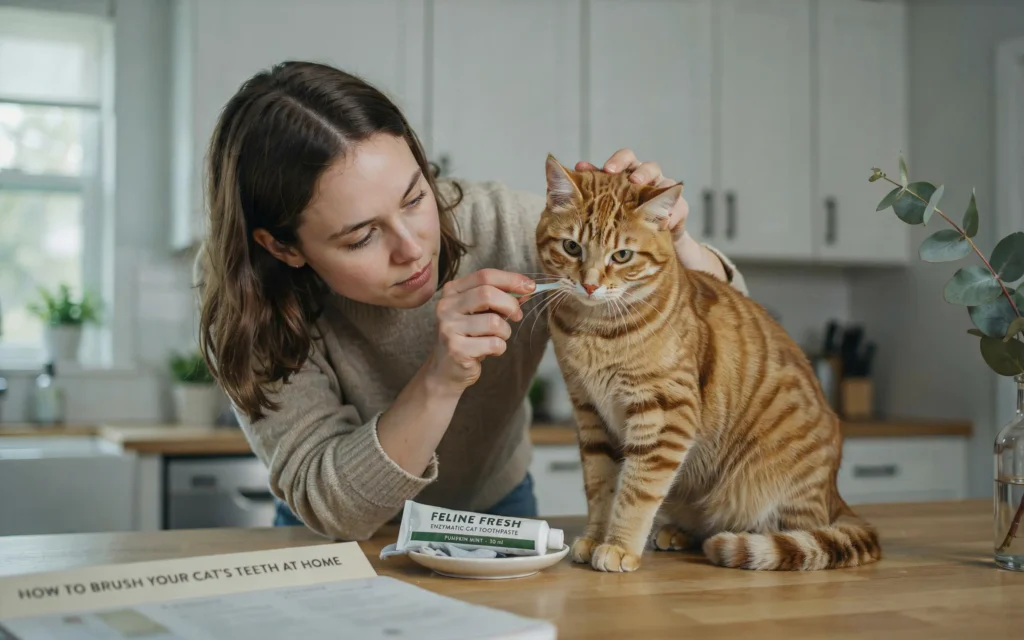
Building a Lifetime Habit
The key to success is to make tooth brushing a normal part of your cat’s routine. Just like feeding and playing, brushing should be something your cat expects. Consistency is your best friend here. If you miss a day, do not worry. Just get back on track the next day.
How To Brush Cat Teeth At Home. You might be wondering if professional cleanings are still necessary. The answer is yes. Even with the best home care, most cats will need a professional dental cleaning under anesthesia at some point. Your vet can check for problems that you cannot see at home, like issues below the gum line. But regular brushing at home can make these professional cleanings less frequent and less invasive.
Dr. Emily Carter, a veterinary dentist, notes, “The most important thing is to start. Many owners are intimidated by the idea, but with patience and the right approach, most cats can learn to accept tooth brushing. It is one of the best gifts you can give your cat.”
Conclusion
How To Brush Cat Teeth At Home. Learning how to brush cat teeth at home is a valuable skill that can add years to your cat’s life and keep them comfortable and happy. It is not about being perfect. It is about being consistent and patient. Start slowly, use the right tools, and always reward your cat for their cooperation.
Remember, you are not alone in this. Many cat owners have successfully taught their cats to enjoy tooth brushing. It takes time, but the rewards are worth it. A healthy mouth means a healthy cat, and that is something we all want for our furry friends.
So, grab your supplies, find a quiet spot, and start today. Your cat’s smile will thank you for it.
This article is for informational purposes only and does not constitute medical advice. Always consult with your veterinarian for professional guidance on your cat’s health.
Related posts
 Buy Dog Toys Online: Top 2026 Picks for Every Play Style
Looking to buy dog toys online? Explore our 2026 guide to the best durable chews, interactive balls, and plush favorites to keep your pup happy and…
 Buy Dog Food Online: Top 2026 Selections for Every Breed
Looking to buy dog food online? Explore our top 2026 recommendations for dry and wet formulas tailored to different breed sizes, sensitivities, and nutritional needs. Choosing…
 Buy a Dog Harness Online in 2026
Looking to buy a dog harness online? Explore our 2026 guide to finding the right fit, style, and control features for your dog's daily walks. Finding…