
How To Fix Stripped Threads
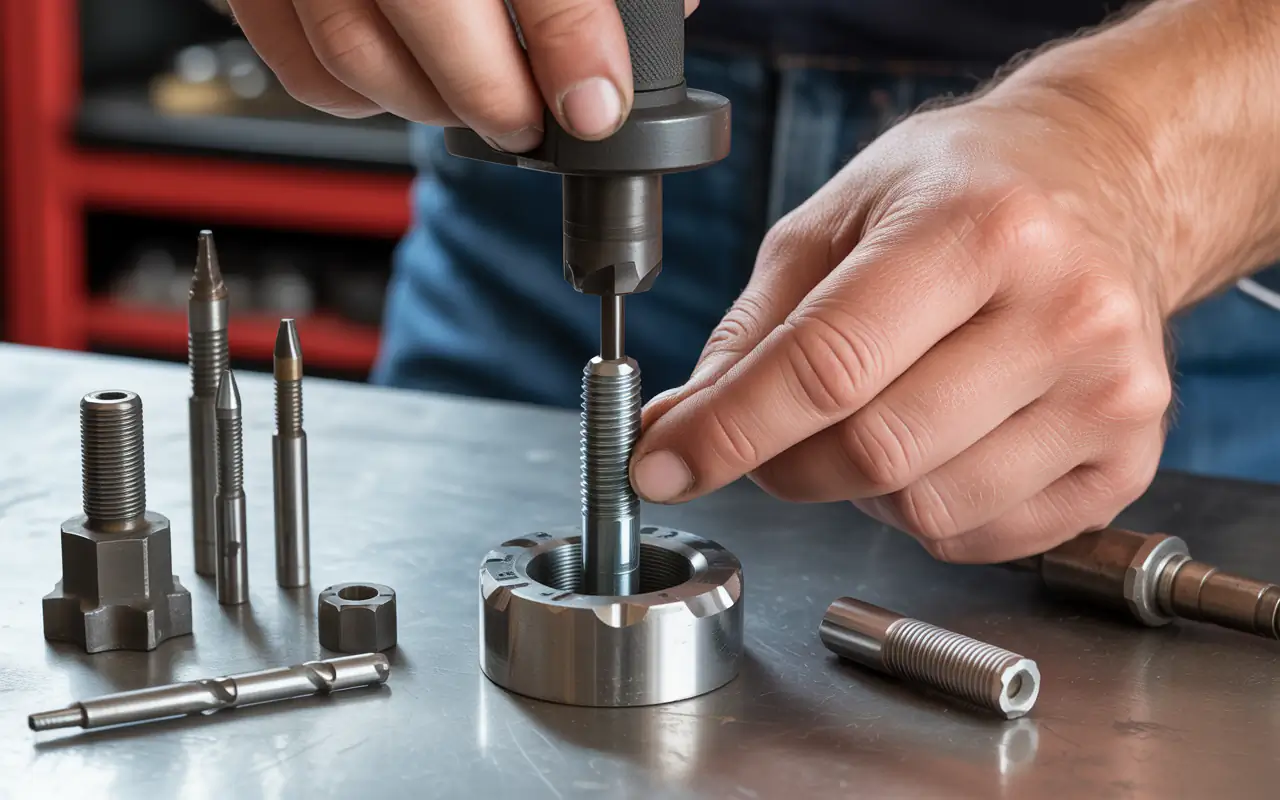
Learn how to fix stripped threads using a tap and die set, helicoil inserts, or a thread repair kit. These easy steps to fix stripped threads work on bolts, screws, and nuts. No special skills needed.
Have you ever turned a screw or a bolt and felt it spin loosely without gripping? That annoying, useless motion means you have stripped threads. It happens to everyone. A stripped thread can ruin a project or break a machine. But do not worry. You can learn how to fix stripped threads with common tools from your garage. This guide shows you simple and cheap ways to repair them. You do not need to be a professional mechanic. A little patience and the right steps will bring back a tight, strong hold.
I remember the first time I stripped a bolt hole on my bicycle. The pedal arm kept wobbling. I thought I needed a whole new part. Then a friend showed me a trick. We used a simple tool called a tap. In ten minutes, the pedal was solid again. That experience taught me that most stripped threads are not a disaster. They are a small problem with a clear solution. This article shares those solutions. You will learn how to fix stripped threads in metal, wood, and plastic. Let us get started.
“Take your time and use the correct tool. A rushed repair always fails.” – Norm Abram
What Does It Mean When Threads Get Stripped?
Threads are the spiral ridges on a screw, bolt, or inside a nut or hole. They work like a spiral staircase. When you turn a bolt, the threads slide against each other and pull the bolt inward. Stripped threads happen when those ridges become flat, broken, or worn down. The bolt then cannot grip anymore. It just spins. Inside a hole, stripped threads mean the metal or wood has lost its shape. The screw has nothing to bite into.
You can see stripped threads on bolts as shiny, flat spots where the ridges used to be. On nuts or threaded holes, you might see metal dust or feel no resistance when you turn the bolt. This problem is common in car engines, furniture, door hinges, and plumbing fixtures. The good news is that you can often fix stripped threads without buying a new part.
Common Causes of Stripped Threads
Most stripped threads come from simple mistakes. Here are the usual reasons:
- Cross-threading: You start a bolt at an angle. The threads do not line up. As you force it, the metal shaves off.
- Over-tightening: You turn a bolt too hard. The threads stretch or break. This happens a lot with soft metals like aluminum.
- Worn tools: Using a rusty or damaged bolt can wear out the threads inside a nut or hole.
- Corrosion: Rust and dirt build up. When you force a rusty bolt out, the threads tear.
- Wrong size: Using a metric bolt in an inch hole, or the opposite, will strip the threads quickly.
Table 1: Signs of Stripped Threads vs. Normal Wear
| Condition | What You Feel | What You See |
|---|---|---|
| Normal threads | Smooth resistance, no wobble | Sharp, even ridges with no flat spots |
| Stripped threads | Spinning freely, rough or skipping feeling | Flat or missing ridges, metal dust or shavings |
| Worn but usable | Slight looseness but still grips | Some shine on thread tops but shape remains |
How to Fix Stripped Threads: 5 Simple Methods
You have several ways to fix stripped threads. The best method depends on the material (metal, wood, or plastic) and how much space you have. Below are five practical methods. Each one works for common situations. I will explain each method clearly so you can choose the right one.
Method 1: Use a Thread Chaser or Tap
A thread chaser is a tool that cleans and reshapes existing threads without cutting new ones. A tap does something similar but for holes. This method works best when the threads are only slightly damaged. You can buy a thread chaser set or a tap and die set at any hardware store for about 20 to 40 dollars.
To use a tap, first choose the correct size. Match it to your bolt or screw. Then put a few drops of cutting oil on the tap. Insert the tap straight into the hole. Turn it slowly clockwise half a turn, then back a quarter turn. This breaks the metal chips. Keep going until the tap goes all the way through. Then clean the hole with a brush or compressed air. Try your bolt. It should turn smoothly and hold tight.
This method is one of the easiest ways to fix stripped threads because it keeps the original size. You do not need a bigger bolt.
Method 2: Install a Helicoil Insert
A helicoil is a spiral wire coil that acts as new threads. You drill out the stripped hole to a larger size, cut new threads with a special tap, and screw in the helicoil. Then the inner part of the helicoil matches your original bolt size. This method is very strong. Car mechanics use it to fix stripped threads in engine blocks.
First, buy a helicoil kit that matches your bolt size. The kit includes a drill bit, a special tap, the coils, and an installation tool. Drill the hole to the size shown in the instructions. Then tap the hole with the included tap. Clean the hole. Screw the helicoil onto the installation tool. Turn it into the hole until it sits just below the surface. Break off the small tang at the bottom using a punch. Now your hole has new steel threads. You can use your original bolt again.
“A helicoil repair is stronger than the original threads. It is worth the extra steps.” – Tom Silva
Method 3: Try a Thread Repair Kit
Thread repair kits are simpler than helicoils. They come in two common types: solid inserts and epoxy-based molds. Solid inserts work like thin threaded sleeves. You tap the hole to a bigger size and screw in the insert. Epoxy kits are for very soft materials like plastic or wood. You mix a putty, press it into the stripped hole, and then turn a greased bolt into the putty. After it hardens, you unscrew the bolt. The putty becomes new threads.
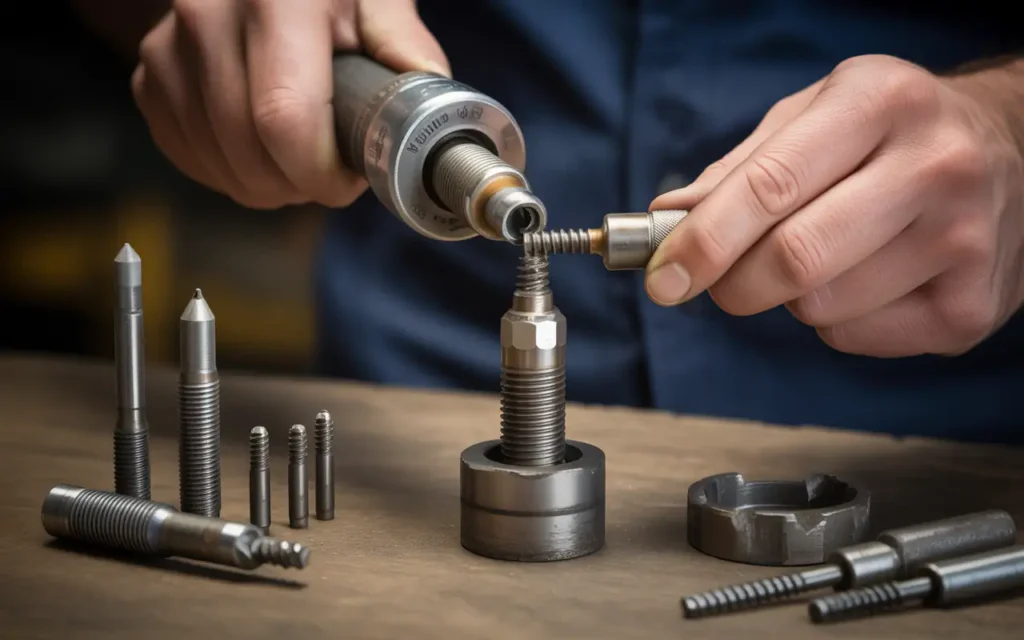
For metal, look for a brand like Recoil or E-Z Lok. For wood, use a product like Thread-Crafting Putty. Follow the package instructions. These kits are great for beginners because they come with clear steps. They are also cheap, usually under 30 dollars.
Method 4: Fill and Redrill for Wood Screws
Wood screws strip their holes often, especially in soft woods like pine or particleboard. The fix is simple. You fill the old hole with a material that can hold new threads. Use a wooden dowel and wood glue. First, drill the stripped hole to a clean round shape. Cut a dowel that fits tightly. Coat the dowel with glue and tap it into the hole. Let it dry overnight. Then cut the dowel flush with the surface. Drill a new pilot hole that is smaller than your screw. Now drive the screw. It will bite like new.
Another quick fix for wood is to use a golf tee or a matchstick. Cover a wooden golf tee with glue and hammer it into the stripped hole. Break it off and drive your screw. This trick works for door hinges and cabinet handles.
Method 5: Use a Nut and Bolt or Larger Fastener
Sometimes the fastest way to fix stripped threads is to bypass the old threads entirely. If a bolt spins in a threaded hole, you can drill through the hole and use a nut on the other side. For example, on a lawnmower handle, drill the stripped hole straight through. Then put a longer bolt through the hole and fasten a nut on the back. This creates a brand new independent hold.
If you cannot add a nut, use a larger bolt. Drill the stripped hole to the next standard size. Then tap new threads for the larger bolt. You will need a new bolt, but this method is very permanent. It works well for thick metal parts like engine mounts or trailer hitches.
Tools You Need to Fix Stripped Threads
Before you start, gather these common tools. Most are already in a home toolbox.
- Tap and die set (for cutting or cleaning threads)
- Helicoil kit (for serious metal repairs)
- Drill and drill bits (various sizes)
- Cutting oil or motor oil (to lubricate taps)
- Pliers or tap wrench (to turn taps smoothly)
- Wood glue and wooden dowels (for wood repairs)
- Thread repair putty (for plastic or soft metal)
- Safety glasses and gloves (always protect your eyes)
You can find these items at any hardware store. A basic tap and die set costs about 25 dollars. A helicoil kit for one size is around 30 dollars. Investing in these tools saves you hundreds of dollars in replacement parts.
Step-by-Step Guide to Fix Stripped Threads in Metal
Metal is the most common material for stripped threads. Here is a complete walkthrough using the tap method. This works for engine parts, bike frames, appliance casings, and many other items.
Step 1: Identify the size. Look at the bolt that should fit. It has a number stamped on the head, like 10-24 or M8x1.25. This tells you the thread size.
Step 2: Choose the right tap. Find a tap with the same size. If the threads are only dirty or slightly worn, use a thread chaser. If they are badly stripped, use a regular tap.
Step 3: Lubricate. Put three drops of cutting oil on the tap. Oil stops the tap from breaking and gives a clean cut.
Step 4: Align straight. Place the tap vertically into the hole. Turn it by hand for the first two turns to make sure it is straight.
Step 5: Turn and reverse. Use a tap wrench. Turn the tap clockwise two half-turns. Then reverse half a turn to break the chip. Repeat this pattern.
Step 6: Clean. After the tap goes through, unscrew it. Blow out the hole with a can of compressed air or wipe it with a rag.
Step 7: Test. Insert the original bolt. It should turn easily by hand and then tighten firmly with a wrench. If it still feels loose, you may need a helicoil.
“A clean hole and sharp tap make all the difference. Do not skip the oil.” – Amy Matthews
How to Fix Stripped Threads in Plastic and Wood
Plastic and wood are softer. They need different methods. Do not use metal taps on plastic because they will crack the part. Instead, try these two approaches.
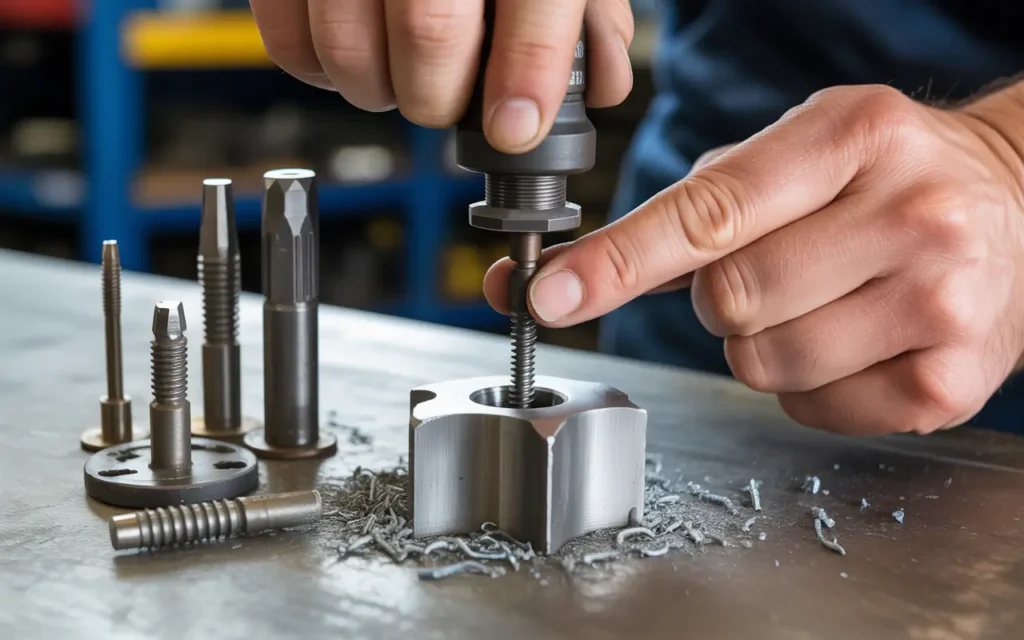
For plastic screw holes: Use a two-part epoxy putty. Mix the putty until it is a uniform color. Press a small ball of putty into the stripped hole. Then grease a bolt with petroleum jelly or wax. Carefully turn the greased bolt into the putty. Do not turn it all the way through. Let the putty harden for 24 hours. Then unscrew the bolt. The putty now has perfect threads. This works for plastic toys, appliance knobs, and car interior panels.
For wood screw holes: Use the dowel method described earlier. For a faster but less permanent fix, stuff the hole with steel wool or toothpicks coated in wood glue. Then drive the screw. The glue holds everything together. This works for furniture like chairs and tables.
Table 2: Quick Comparison of Thread Repair Methods
| Material | Best Method | Difficulty | Time Needed |
|---|---|---|---|
| Metal (slightly damaged) | Thread chaser | Easy | 5 minutes |
| Metal (badly stripped) | Helicoil insert | Medium | 20 minutes |
| Wood | Wooden dowel and glue | Easy | Overnight |
| Plastic | Epoxy putty mold | Easy | 24 hours |
| Thin sheet metal | Nut and bolt | Very easy | 10 minutes |
Tips to Prevent Stripped Threads
Fixing is good, but prevention is better. Follow these simple habits to keep your threads healthy.
- Start bolts by hand. Always turn the bolt counterclockwise first until you feel it click into the thread start. Then turn clockwise. This prevents cross-threading.
- Use a torque wrench. Over-tightening is the number one cause of stripped threads. Look up the correct torque for your bolt.
- Clean threads before assembly. Use a wire brush or a thread chaser to remove rust and dirt.
- Replace worn bolts. A rusty bolt will ruin a good nut. Spend 50 cents on a new bolt.
- Apply anti-seize lubricant. On bolts that get hot or wet, a little anti-seize stops corrosion and galling.
I learned these tips after stripping three different bolt holes in my old truck. Now I always use a torque wrench on engine parts. It takes an extra minute but saves an hour of repair.
Frequently Asked Questions (FAQ)
Can I fix stripped threads without any tools?
Not really. You need at least a tap or a thread repair kit. However, for wood, you can use a wooden golf tee and glue. For plastic, you can use epoxy putty. Both require minimal tools.
Is it safe to fix stripped threads in a car engine?
Yes, if you use a helicoil. Many professional mechanics use helicoils on cylinder head bolt holes and spark plug threads. Follow the instructions carefully. Use the correct drill depth. Or ask a mechanic if you feel unsure.
How much does it cost to fix stripped threads?
A tap and die set costs 20 to 40 dollars. A helicoil kit costs about 30 dollars. Wood glue and dowels cost under 10 dollars. Compared to buying a new part, which could be 100 dollars or more, fixing is very cheap.
Can stripped threads be fixed permanently?
Yes. A helicoil or a solid thread insert is permanent. A tapped hole with a larger bolt is also permanent. The repair often lasts longer than the original because inserts are made of harder steel.
What if the bolt head is stripped too?
That is a different problem. Use a bolt extractor set or a pair of locking pliers to remove the bolt first. Then fix the threads in the hole. Replace the bolt with a new one.
Can I use super glue to fix stripped threads?
No. Super glue is too brittle. It will crack when you turn the bolt. Use epoxy putty or a proper thread repair kit for plastic. For metal, never use glue. Always use mechanical repairs like taps or inserts.
How do I know which tap size to use?
Look at the bolt. The size is often stamped on the head. For example, “1/4-20” means a quarter-inch diameter with 20 threads per inch. Metric bolts say “M6x1” (6mm diameter, 1mm pitch). Buy a tap that matches exactly.
Conclusion
You now know how to fix stripped threads using five different methods. Whether you work with metal, wood, or plastic, there is a solution that fits your skill level and tools. A simple thread chaser can clean up minor damage in five minutes. A helicoil insert can save an expensive engine part. A wooden dowel and glue can bring a wobbly chair back to life.
Do not throw away parts just because of stripped threads. Try to fix stripped threads first. You will save money, learn a useful skill, and feel proud of your repair. Grab a tap set or a repair kit from your local store. Follow the steps above. Take your time, use lubrication, and always start bolts by hand. With a little practice, you will handle any stripped thread with confidence. Now go fix that loose screw.
Remember: every fix you make adds to your experience. Soon you will be the person friends call when their furniture wobbles or their bike pedal falls off. Happy repairing.
Related posts
 Best Wire Crimping Tool for Automotive Wiring in 2026
Find the best wire crimping tool for automotive wiring. We compare five top-rated hand tools to help you choose the right fit for your vehicle projects.…
 Best Budget Automotive Tools for 2026 DIY Maintenance
Discover the best budget automotive tools for 2026. We compare essential diagnostic scanners, trim kits, and pliers to help you save on car repairs. Maintaining your…
 Best Automotive Work Light Options for 2026
Find the best automotive work light for your garage or roadside repairs. We compare top-rated hands-free, magnetic, and heavy-duty lighting solutions for 2026. Finding the best…