
Can Cats Eat Cooked Chicken
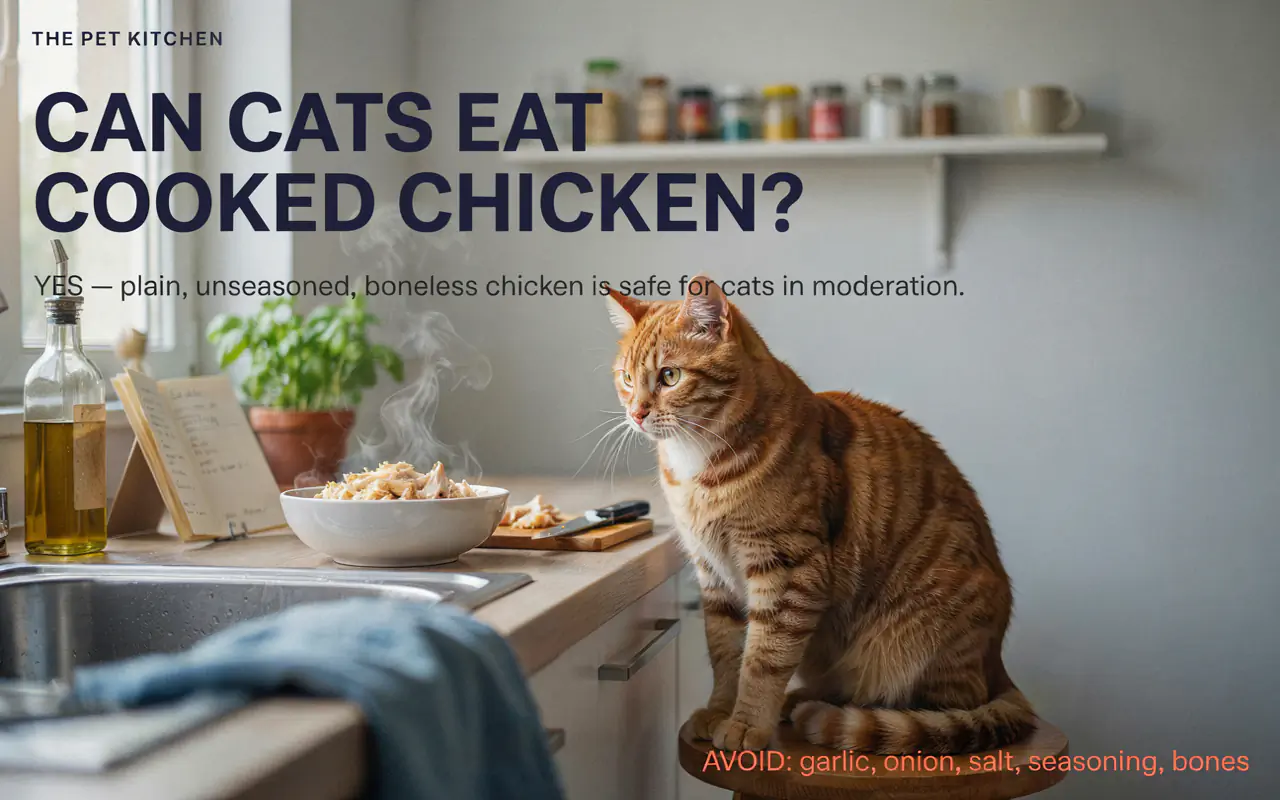
Wondering if cats eat cooked chicken safely? Yes, plain boiled or baked chicken without bones or seasoning is a healthy treat. Learn serving sizes, risks, and preparation tips.
If you have ever been in the kitchen cooking dinner and felt a pair of feline eyes watching your every move, you know exactly how much cats love the smell of chicken. That gentle meow, the soft paw on your leg, the hopeful look that says “please share” – it is hard to resist. But before you drop a piece of that juicy chicken breast into your cat’s bowl, you need to know the answer to an important question: can cats eat cooked chicken?
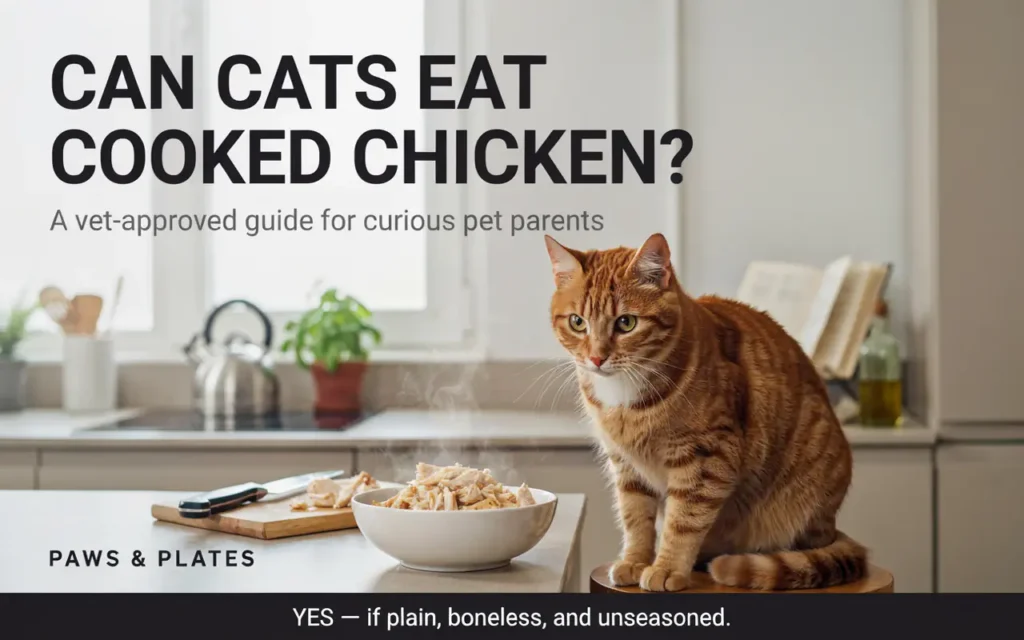
The short answer is yes. Cooked chicken is generally safe and even healthy for cats when you prepare it the right way. Cats are obligate carnivores, which means their bodies are built to digest and use nutrients from animal sources. Chicken provides high-quality protein and essential amino acids that support your cat’s muscles, coat, and overall health. However, there is a right way and a wrong way to share this popular protein with your furry friend.
This guide will walk you through everything you need to know about feeding cooked chicken to your cat. We will cover the benefits, the risks, the correct preparation methods, serving sizes, and what to avoid. Whether you want to give your cat a special treat or you are looking for a bland food option for a sick kitty, this article has you covered.
Is Chicken Good for Cats? The Nutritional Benefits
Chicken is more than just a tasty treat for your cat. It offers real nutritional value that can complement your cat’s regular diet.
High-Quality Protein for Strong Muscles
Cats need protein to survive and thrive. Chicken is packed with high-quality animal protein that helps build and maintain strong muscles. Protein also supports healthy skin, a shiny coat, and proper organ function. Unlike many human snacks that are full of empty calories, chicken provides nutrients that actually benefit your cat’s body.
Essential Amino Acids Like Taurine
One of the most important nutrients in chicken for cats is taurine. Taurine is an essential amino acid that cats cannot produce on their own. They must get it from their food. A lack of taurine can lead to serious health problems, including heart disease and vision issues. Chicken is a natural source of this vital nutrient, making it a smart choice for a cat treat.Vitamins and Minerals
Cooked chicken also contains important vitamins and minerals that support your cat’s health. These include B vitamins like niacin and vitamin B6, which help with energy production and nervous system function. Phosphorus and selenium are also present and contribute to strong bones and a healthy immune system.
Hydration Support
Cooked chicken has a high moisture content, especially when you boil it. This can help keep your cat hydrated, which is particularly beneficial for cats who do not drink enough water on their own. Proper hydration supports kidney function and prevents urinary tract issues.
The Golden Rule: Plain, Cooked, and Boneless
When it comes to feeding chicken to your cat, there is one simple rule to remember: it must be plain, fully cooked, and completely boneless. Let us break down each part of this rule.
Why Cooked Chicken Is Safer Than Raw
Some people wonder if cats can eat raw chicken since they are carnivores. The truth is that raw chicken carries serious health risks. Raw poultry can contain harmful bacteria like Salmonella and Campylobacter. These bacteria can make your cat sick and can also be passed on to you and your family.
Cooking chicken thoroughly kills these dangerous pathogens. Boiling or baking the chicken until it is fully cooked ensures that it is safe for your cat to eat. While wild cats do eat raw meat, domestic cats are better off with cooked food to avoid foodborne illnesses.
Never Feed Chicken Bones
This point cannot be stressed enough. Chicken bones are extremely dangerous for cats. Cooked bones become brittle and can splinter into sharp shards that can puncture your cat’s mouth, throat, or digestive tract. They can also cause choking or create life-threatening blockages in the intestines.
Raw bones are somewhat softer but still pose a choking hazard and can cause injuries. The safest approach is to remove every single bone before giving any chicken to your cat. As Dr. Angela Beal, DVM, notes, “Bones can be a choking hazard, while the skin and fat can cause stomach upset”.
No Seasonings, No Sauces, No Extras
You might love your chicken seasoned with garlic, onion powder, salt, pepper, or a rich sauce. But these additions can make your cat very sick. Onions and garlic are toxic to cats and can damage their red blood cells. Salt and other spices can upset your cat’s stomach and lead to more serious health issues.
The only safe chicken for your cat is plain chicken. No butter, no oil, no breading, and no seasoning. Just the meat itself, cooked simply.
How to Prepare Cooked Chicken for Your Cat
Preparing chicken for your cat is simple and does not take much time. Here is a step-by-step guide to doing it safely.
Step 1: Choose the Right Cut
Boneless, skinless chicken breast is the best choice for your cat. It is lean, easy to digest, and free from excess fat that could upset your cat’s stomach. You can also use chicken thighs, but remove all the skin and visible fat before cooking.
Step 2: Cook It Simply
Boiling or baking are the best cooking methods for cat-friendly chicken. Boil the chicken in plain water until it is fully cooked and there is no pink left inside. Alternatively, you can bake it in the oven without any oil or seasoning. Avoid frying, as fried chicken is high in fat and often contains breading and spices that are not safe for cats.
Step 3: Let It Cool
After cooking, let the chicken cool down completely before serving it to your cat. Hot food can burn your cat’s mouth and throat. Once it is at room temperature, you can shred or chop it into small, bite-sized pieces that are easy for your cat to eat.
Step 4: Store It Properly
If you make extra chicken, store it in an airtight container in the refrigerator for up to three days. You can also freeze portions for later use. Always check that the chicken has not spoiled before giving it to your cat.
How Much Cooked Chicken Can a Cat Eat?
Moderation is key when it comes to feeding any human food to your cat. Even though chicken is healthy, too much of it can cause problems.
Serving Size Guidelines
Veterinarians recommend that treats, including cooked chicken, should make up no more than 10 percent of your cat’s daily calorie intake. For a kitten under six months old, that means about two teaspoons of plain cooked chicken per day. For a cat over six months old, you can offer up to two tablespoons per day.
How Often Can Cats Eat Cooked Chicken?
You can give your cat cooked chicken as an occasional treat, but it should not be an everyday occurrence. Feeding chicken too often can lead to nutritional imbalances because chicken alone does not provide all the nutrients your cat needs. A balanced commercial cat food is specifically formulated to meet all of your cat’s dietary requirements.
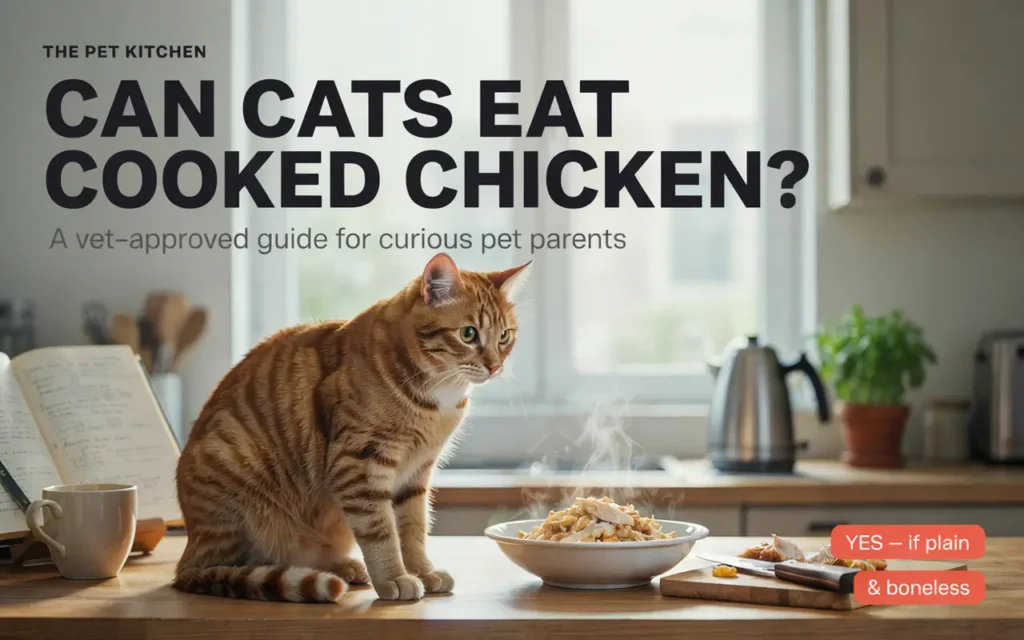
Dr. Jennifer Coates, a veterinary advisor, explains that “chicken shouldn’t make up more than 10% of the calories your kitty eats per day. Overfeeding or exclusively feeding chicken to your cat can cause nutritional deficiencies”.
Safe vs. Unsafe Chicken Preparations for Cats
| Safe for Cats | Not Safe for Cats |
|---|---|
| Plain boiled chicken breast | Fried chicken |
| Plain baked chicken breast | Chicken with garlic or onion |
| Shredded, boneless, skinless chicken | Chicken with salt or spices |
| Homemade chicken broth (no salt) | Store-bought seasoned broth |
| Small portions as treats | Chicken bones of any kind |
| Fully cooked chicken | Raw or undercooked chicken |
Risks and Precautions When Feeding Cooked Chicken
While cooked chicken is generally safe, there are some risks you need to be aware of. Being informed helps you keep your cat healthy and happy.
Choking and Obstruction Hazards
The biggest danger with chicken is bones. Even small bones can get stuck in your cat’s throat or digestive tract. If your cat swallows a bone fragment, it could cause internal injuries that require emergency surgery. Always double-check that every piece of chicken you offer is completely bone-free.
Digestive Upset
Some cats have sensitive stomachs. Introducing any new food too quickly can cause vomiting or diarrhea. Start with a very small amount of cooked chicken to see how your cat reacts. If your cat shows signs of digestive distress, stop feeding chicken and consult your veterinarian.
Nutritional Imbalances
Chicken is high in protein but lacks many other essential nutrients that cats need, such as certain vitamins, minerals, and fatty acids. If you feed too much chicken and not enough complete cat food, your cat could develop deficiencies over time. Chicken should always be a supplement to, not a replacement for, a balanced diet.
Allergic Reactions
Although rare, some cats can be allergic to chicken. Signs of a food allergy include itching, skin rashes, ear infections, or gastrointestinal issues. If you notice any of these symptoms after giving your cat chicken, stop feeding it and talk to your vet.
Can Cats Eat Cooked Chicken Every Day?
This is a common question among cat owners. The answer is yes, but with important conditions. Your cat can eat a small amount of plain cooked chicken every day as long as it fits within the 10 percent treat rule. However, chicken should never become the main part of your cat’s diet.
A diet consisting only of chicken would lack taurine, calcium, and other essential nutrients that cats need to stay healthy. Commercial cat foods are carefully balanced to provide complete nutrition. Think of chicken as a special addition to your cat’s regular meals, not the meal itself.
When Cooked Chicken Is Especially Helpful
There are certain situations where cooked chicken can be particularly beneficial for your cat.
For Sick or Recovering Cats
Veterinarians often recommend plain boiled chicken as part of a bland diet for cats with digestive upset. If your cat has diarrhea or vomiting, a small amount of plain chicken can be gentle on the stomach while providing some nutrition. Always follow your vet’s advice on how much and how often to feed it.
For Picky Eaters
Some cats are finicky and may refuse to eat their regular food. Adding a few shreds of cooked chicken on top of their kibble or canned food can make it more appealing. The smell and taste of chicken often encourage picky eaters to finish their meals.
For Cats with Kidney Disease
Cats with chronic kidney disease often need diets that are lower in phosphorus. Chicken is a good source of low-phosphorus protein that can be included in a kidney-friendly diet. However, you must work with your veterinarian to create a proper meal plan for a cat with kidney issues.
Nutritional Profile of Plain Cooked Chicken Breast (3 oz / 85g)
| Nutrient | Amount |
|---|---|
| Protein | 24 grams |
| Fat | 3 grams |
| Carbohydrates | 0 grams |
| Vitamin B3 (Niacin) | Significant |
| Vitamin B6 | Moderate |
| Selenium | Moderate |
| Phosphorus | Moderate |
| Taurine | Present |
Source: Darwin’s Natural Pet Products
What About Chicken Broth?
Chicken broth can be a tasty and hydrating treat for your cat, but you need to be careful. Many store-bought broths contain high amounts of salt, onion, garlic, or other seasonings that are harmful to cats.
If you want to give your cat chicken broth, make it yourself. Simply boil chicken in water with no added salt or seasonings. Strain out the bones and any solids, let it cool, and offer a small amount to your cat. Homemade broth is a great way to add moisture to your cat’s diet, especially for cats who do not drink enough water.
Can Cats Eat Canned Chicken?
Canned chicken is convenient, but it is not the best option for your cat. Most canned chicken contains added salt and sometimes spices. If you are in a pinch and want to use canned chicken, choose a plain, unflavored variety and rinse it thoroughly under water to remove as much sodium as possible. Even then, it should only be a very occasional treat.
Frequently Asked Questions
Can cats eat cooked chicken bones?
No, never. Cooked chicken bones are brittle and can splinter into sharp pieces that can choke your cat or puncture their digestive tract. Always remove all bones before giving chicken to your cat.
Can cats eat cooked chicken skin?
It is best to avoid giving chicken skin to your cat. The skin is high in fat and can cause digestive upset or pancreatitis. Stick to lean, skinless chicken meat.
Can cats eat cooked chicken with seasoning?
No. Seasonings like garlic, onion, salt, and pepper can be toxic or harmful to cats. Only offer plain, unseasoned chicken.
How much cooked chicken can I give my cat?
Kittens under six months can have up to two teaspoons per day. Adult cats can have up to two tablespoons per day. Treats should make up no more than 10 percent of your cat’s daily calories.
Can cats eat cooked chicken everyday?
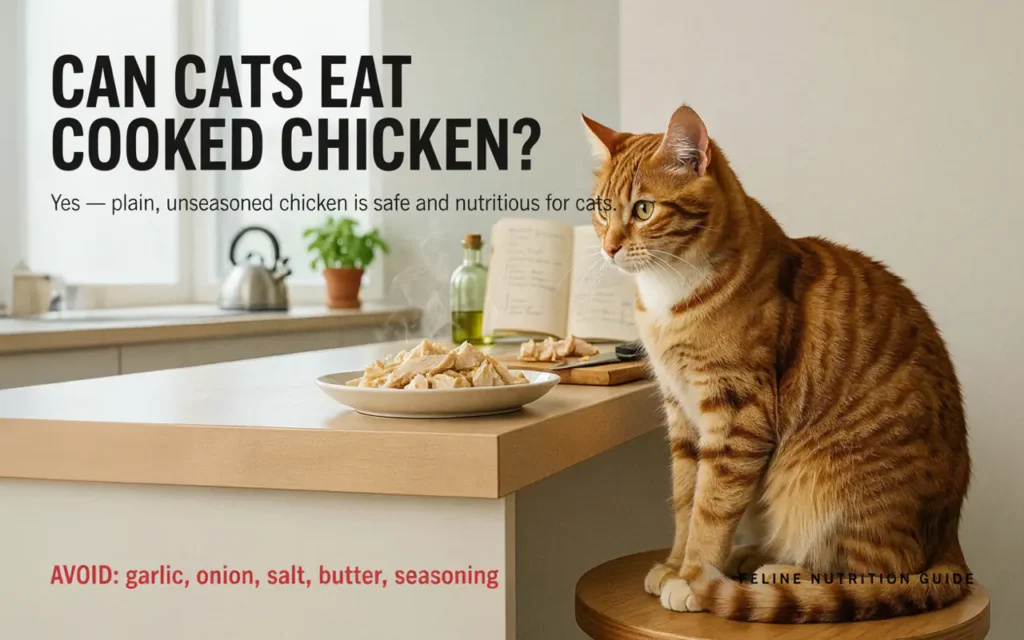
Yes, in small amounts as part of a balanced diet. However, chicken should not replace your cat’s regular food, as it lacks certain essential nutrients.
Is boiled or baked chicken better for cats?
Both are good options as long as they are plain and fully cooked. Boiling preserves moisture, while baking is also fine. Avoid frying.
What should I do if my cat eats a chicken bone?
Contact your veterinarian immediately. Do not try to induce vomiting. Watch for signs of choking, pain, or difficulty defecating.
Can cats eat raw chicken?
It is not recommended. Raw chicken can contain harmful bacteria like Salmonella and Campylobacter that can make your cat and your family sick.
Can cats eat chicken nuggets?
No. Chicken nuggets are breaded, fried, and often contain seasonings and additives that are not safe for cats.
Is chicken good for cats with sensitive stomachs?
Plain, boiled chicken is often recommended for cats with digestive issues because it is gentle and easy to digest. Always introduce it slowly and in small amounts.
Conclusion
So, can cats eat cooked chicken? The answer is a clear yes, provided you follow some simple but important rules. Plain, fully cooked, boneless, and skinless chicken is a healthy and delicious treat that most cats absolutely love. It provides high-quality protein, essential amino acids like taurine, and important vitamins and minerals that support your cat’s overall health.
However, chicken should always be an occasional treat, not a meal replacement. Your cat’s main diet should come from a nutritionally balanced commercial cat food that meets all of their dietary needs. Too much chicken can lead to nutritional deficiencies and health problems over time.
Remember to keep it simple. Boil or bake the chicken with no seasonings, no oil, and no extras. Remove every bone and all the skin. Let it cool, cut it into small pieces, and offer it in moderation. Your cat will thank you with purrs and happy meows.
As Dr. Lisa Pierson, a veterinarian specializing in feline nutrition, wisely puts it, “The best treat for a cat is one that is both safe and nutritionally appropriate. Plain cooked chicken fits that description perfectly when given in the right amounts.”
Feeding your cat cooked chicken can be a wonderful way to bond with your pet and add variety to their diet. Just be safe, be smart, and always prioritize your cat’s health. Your furry friend deserves nothing but the best.
Related posts
 How to Strengthen Weak Nails: A Practical Guide to Daily Care
Learn how to strengthen weak nails with simple daily habits, protective care, and targeted hydration. Restore your natural nail strength today. Weak, peeling, or brittle nails…
 What Sounds Do Cats Dislike? 7 Noises That Stress Your Pet
Discover what sounds do cats dislike and why. Learn how to protect your cat’s sensitive hearing from stressful household noises and high-frequency hums. Cats dislike sounds…
 Restoring Faded Black Clothing: Practical Methods and Reality Checks
Can you restore faded black clothing? Learn the difference between temporary color revival and permanent redyeing, plus how to prevent future fading. You can restore the…