
How to Avoid Overtraining: Practical Habits for Sustainable Progress
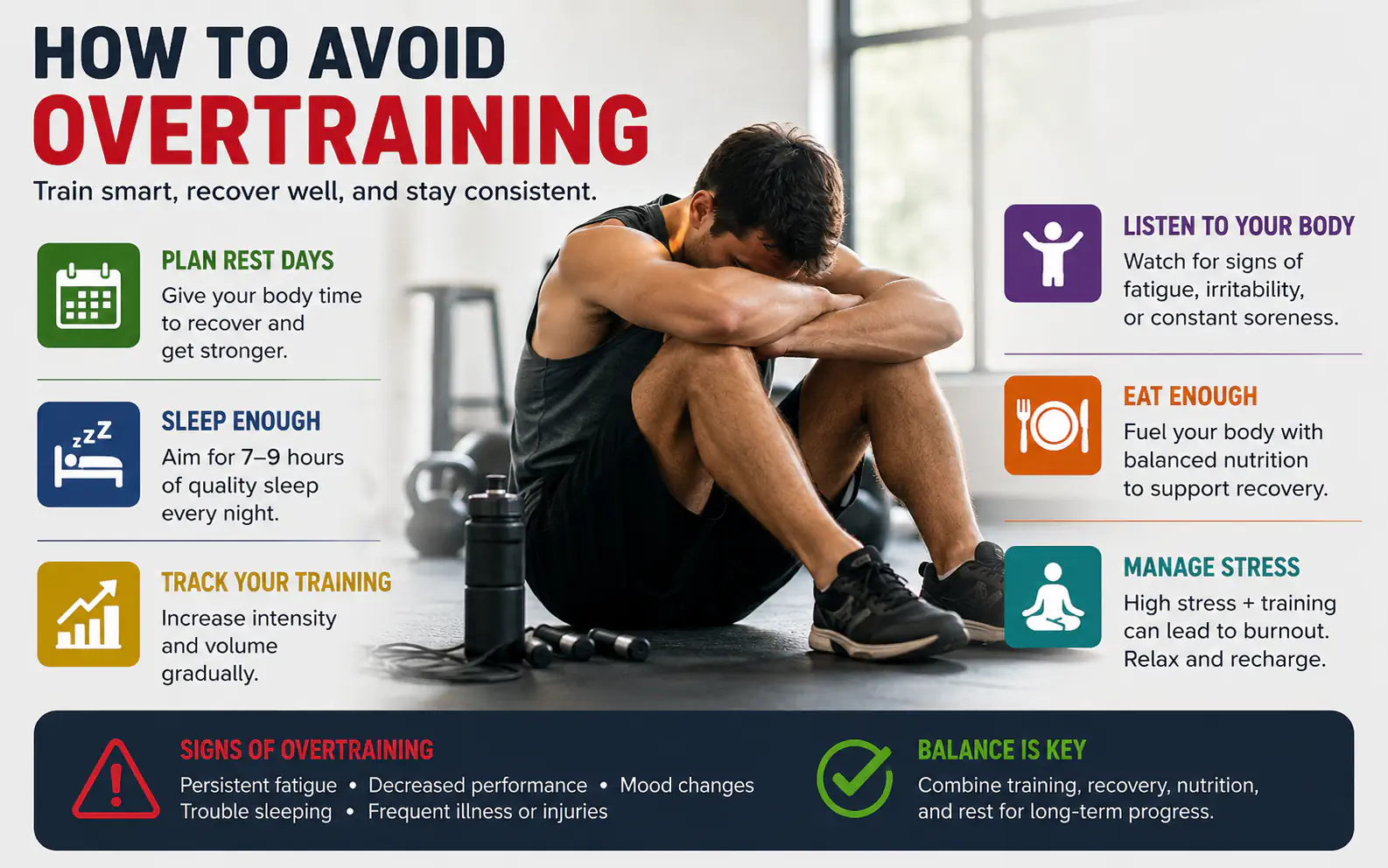
Avoiding overtraining requires treating your recovery days with the same discipline as your workout days. When you push your body beyond its ability to repair, you stop building strength and start accumulating fatigue that leads to injury.
To avoid this, you must balance your training load with adequate rest, fuel, and sleep. If you feel constantly drained, unmotivated, or notice your performance plateauing, it is time to scale back your volume and focus on active recovery.
| Topic | When it helps | What to keep in mind |
|---|---|---|
| The 10 Percent Rule | Runners, lifters, and endurance athletes. | Avoid ‘weekend warrior’ spikes where you try to make up for missed sessions. |
| Active Recovery | Days following high-intensity sessions. | Do not mistake ‘active recovery’ for a light workout; keep the heart rate low. |
| Sleep Hygiene | Anyone training more than 3 days per week. | Inconsistent sleep schedules negate the benefits of a good training program. |
| Nutrition Support | High-volume training phases. | Do not rely on caffeine to mask low energy levels caused by poor nutrition. |
Common Overtraining Mistakes
Many athletes fall into the trap of thinking that more is always better. This mindset often leads to skipping rest days or increasing intensity too quickly when they feel a temporary boost in performance.
Another frequent error is failing to adjust for life stress. If you are going through a difficult time at work or home, your body’s capacity to recover from exercise is significantly reduced.
Trying to ‘push through’ a sharp pain in a joint instead of stopping.
Ignoring the difference between muscle soreness and joint pain.
- Skipping scheduled rest days because you feel ‘fine’.
- Adding extra sets or miles when you are already feeling fatigued.
- Ignoring persistent irritability or sleep disturbances.
- Training at high intensity every single session.
| Indicator | Action Required |
|---|---|
| Persistent muscle soreness | Take 1-2 extra rest days |
| Elevated resting heart rate | Reduce intensity by 50% |
| Loss of motivation | Take a full week of deloading |
| Sharp or localized pain | Stop activity and consult a professional |
Monitoring Your Progress
To avoid overtraining, you need objective data. A simple training log can help you spot patterns before they become injuries. If your performance is dropping despite consistent effort, your body is telling you it needs a break.
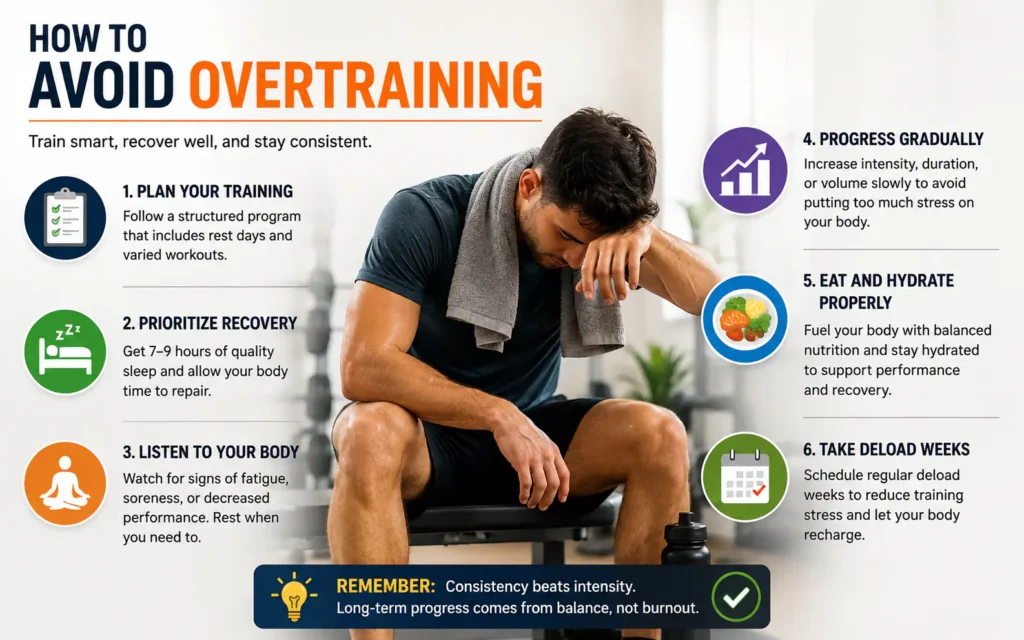
Pay attention to your resting heart rate. If it is consistently higher than your normal baseline, it is a strong indicator that your nervous system is still under stress from previous workouts.
Relying on ‘gut feeling’ alone when you are already deep in a fatigue cycle.
Keeping a simple log of your morning heart rate and mood.
- Track your resting heart rate every morning.
- Note your mood and energy levels before each workout.
- Record the total time or distance of your sessions.
- Schedule a ‘deload’ week every 4 to 6 weeks where you reduce volume by 30-50%.
Safety checks
- Recovery is an active part of training, not a break from it.
- Never increase total weekly volume by more than 10 percent.
- Sleep and nutrition are the primary drivers of physical repair.
- Persistent fatigue or mood changes are signals to reduce intensity immediately.
Focus on training load management
The 10 Percent Rule. Limit Weekly Progression
Never increase your total weekly training volume-whether in miles, weight, or time-by more than 10 percent compared to the previous week.
- Runners, lifters, and endurance athletes.
- Avoid ‘weekend warrior’ spikes where you try to make up for missed sessions.
- If you ran 20 miles last week, do not exceed 22 miles this week.
- Metric – Volume
- Limit – 10% increase
Active Recovery. Prioritize Low-Impact Movement
On rest days, engage in light movement like walking, stretching, or yoga to promote blood flow without adding stress to your central nervous system.
- Days following high-intensity sessions.
- Do not mistake ‘active recovery’ for a light workout; keep the heart rate low.
- If you can’t hold a conversation while moving, you are working too hard.
- Intensity – Low
- Goal – Blood flow
Sleep Hygiene. Protect Your Repair Window
Sleep is when your body repairs muscle tissue and regulates hormones. Aim for 7–9 hours of quality sleep to ensure your body can handle training stress.
- Anyone training more than 3 days per week.
- Inconsistent sleep schedules negate the benefits of a good training program.
- If you are consistently waking up tired, reduce your training volume until your sleep quality improves.
- Duration – 7-9 hours
- Impact – Hormonal recovery
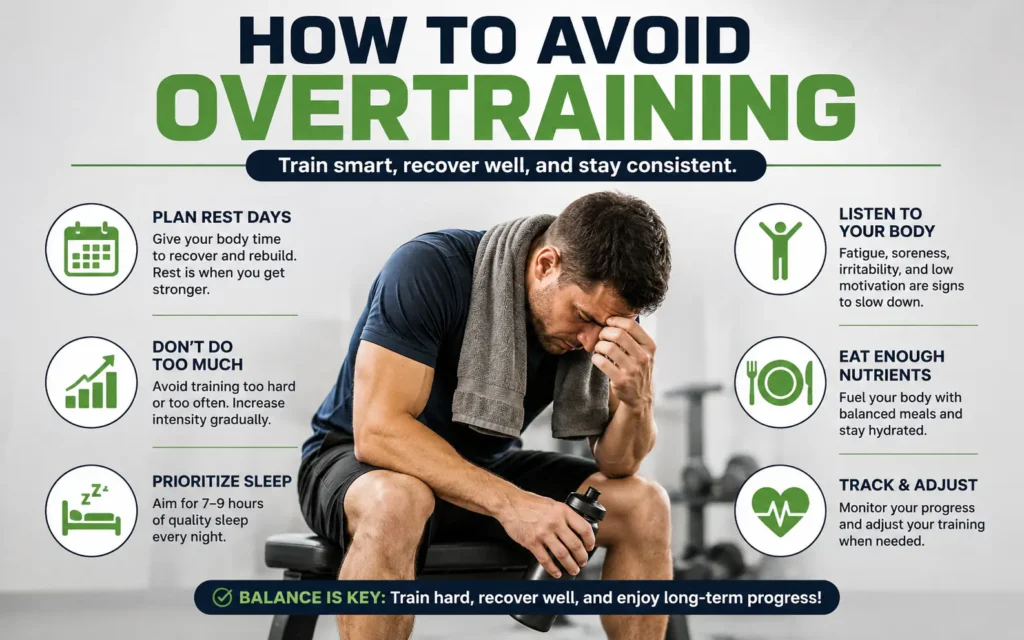
Nutrition Support. Fuel for the Workload
Ensure you are consuming enough calories and protein to support the energy you expend. Chronic under-fueling is a leading cause of early burnout.
- High-volume training phases.
- Do not rely on caffeine to mask low energy levels caused by poor nutrition.
- Track your energy levels throughout the day; if you crash mid-afternoon, you may need more complex carbohydrates.
- Focus – Protein/Carbs
- Timing – Pre/Post workout
FAQs
What are the most common symptoms of overtraining?
Common signs include persistent fatigue, irritability, increased resting heart rate, frequent illness, and a noticeable decline in performance despite continued effort.
Is 4 hours of working out too much?
It depends on the intensity and your fitness level. For a professional athlete, 4 hours might be normal. For most people, 4 hours of high-intensity training in a single day is excessive and significantly increases the risk of injury.
How can I overcome overtraining if I’ve already hit a wall?
Stop all high-intensity training immediately. Take a full week of complete rest or very light activity, focus on high-quality sleep, and increase your caloric intake. Only return to training once your energy levels and motivation have fully returned.
How many rest days do I need per week?
Most people benefit from at least 1 to 2 full rest days per week. If you are training at a high intensity, you may need more to allow your muscles and nervous system to fully recover.
Conclusion
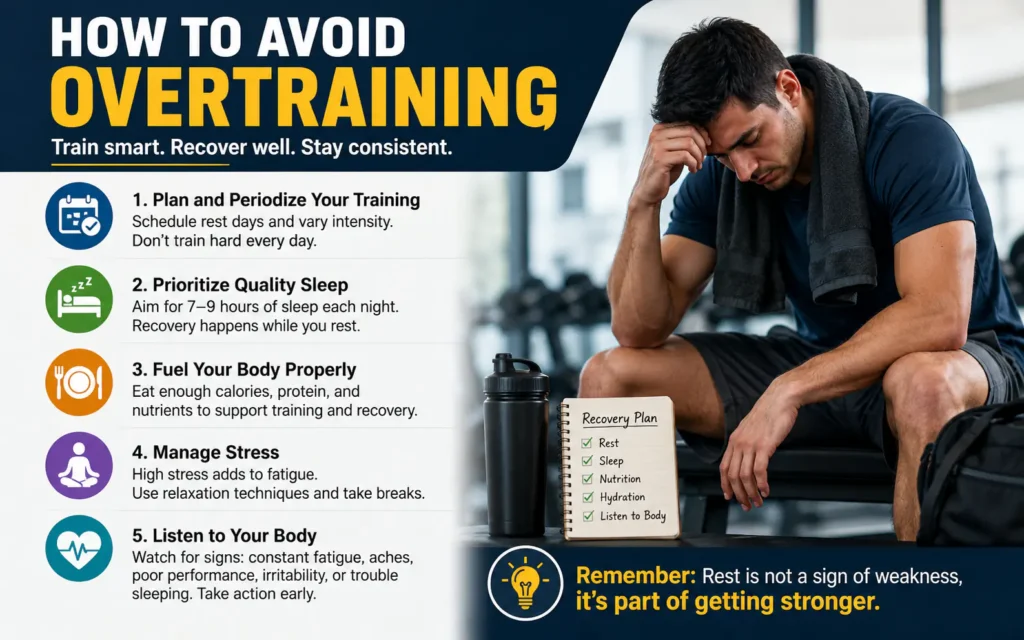
Avoiding overtraining is about playing the long game. By respecting your body’s need for recovery, you ensure that every workout you do contributes to progress rather than just adding to your fatigue debt.
Start by applying the 10 percent rule to your next week of training and prioritize your sleep tonight. If you feel the signs of burnout, do not hesitate to take an extra day off; your future performance will thank you.
Related posts
 How to Strengthen Weak Nails: A Practical Guide to Daily Care
Learn how to strengthen weak nails with simple daily habits, protective care, and targeted hydration. Restore your natural nail strength today. Weak, peeling, or brittle nails…
 What Sounds Do Cats Dislike? 7 Noises That Stress Your Pet
Discover what sounds do cats dislike and why. Learn how to protect your cat’s sensitive hearing from stressful household noises and high-frequency hums. Cats dislike sounds…
 Restoring Faded Black Clothing: Practical Methods and Reality Checks
Can you restore faded black clothing? Learn the difference between temporary color revival and permanent redyeing, plus how to prevent future fading. You can restore the…