
How to Keep White Clothes Looking Bright: A Practical Laundry Routine

Keeping white clothes looking bright starts with how you sort and wash them. The most common reason whites turn gray or yellow is the buildup of body oils, sweat, and leftover detergent residue that traps dirt in the fabric fibers.
To keep your whites brilliant, you should adopt a dedicated laundry routine that prioritizes separating whites from colors, using the right water temperature, and avoiding the temptation to over-dose on detergent. By following these simple habits, you can prevent dinginess before it starts.
Sorting by color
- Always wash whites separately to prevent dye transfer.
- Use the hottest water safe for the fabric to remove body oils.
- Avoid excessive detergent, which leaves a residue that attracts dirt.
- Use natural boosters like baking soda or vinegar to maintain brightness.
- Dry white items in the sun when possible for natural whitening.
| Topic | When it helps | What to keep in mind |
|---|---|---|
| Step 1 | All white garments and linens. | Don’t assume ‘light’ colors are safe; even a light gray sock can dull a white shirt. |
| Step 2 | Cotton towels, bed sheets, and sturdy white shirts. | Check labels for heat-sensitive synthetic fabrics that might shrink. |
| Step 3 | Restoring brightness to slightly dingy items. | Do not mix vinegar and bleach, as this creates harmful fumes. |
| Step 4 | Cotton shirts, pillowcases, and socks. | Don’t leave items in the sun for too long, as it can eventually weaken fibers. |
Focus on sorting washing techniques
Step 1. Strict Sorting Habits
Never mix white items with colored clothes, even if the colors seem light. Dyes can bleed during the wash, causing a subtle tint that builds up over time.
- All white garments and linens.
- Don’t assume ‘light’ colors are safe; even a light gray sock can dull a white shirt.
- If you don’t have enough whites for a full load, wait until you do rather than mixing them with light pastels.
- Frequency – Every wash
- Difficulty – Easy
Step 2. Optimize Water Temperature
Use the hottest water setting recommended on the garment’s care label. Hot water is more effective at breaking down body oils and sweat that cause yellowing.
- Cotton towels, bed sheets, and sturdy white shirts.
- Check labels for heat-sensitive synthetic fabrics that might shrink.
- If the tag says ‘cold wash only,’ prioritize a high-quality detergent over temperature.
- Effectiveness – High
- Risk – Low (if checked)
Step 3. Use Natural Brightening Boosters
Add half a cup of baking soda to your detergent or a cup of white vinegar during the rinse cycle to help strip away mineral deposits and residue.

- Restoring brightness to slightly dingy items.
- Do not mix vinegar and bleach, as this creates harmful fumes.
- Use baking soda in the wash for cleaning and vinegar in the rinse for softening and brightening.
- Cost – Low
- Safety – High
Step 4. Harness the Power of Sunlight
Drying white clothes in direct sunlight acts as a natural bleaching agent. The UV rays help break down stains and brighten the fabric naturally.
- Cotton shirts, pillowcases, and socks.
- Don’t leave items in the sun for too long, as it can eventually weaken fibers.
- Hang whites outside on a sunny day for the best results.
- Effectiveness – Very High
- Effort – Moderate
Common Laundry Mistakes That Dull Whites
Many people believe that more soap equals cleaner clothes, but the opposite is often true. Excess detergent stays in the fabric, creating a sticky residue that attracts dust and dirt.
Another common error is overloading the machine. When clothes are packed too tightly, they cannot move freely, meaning they don’t get rinsed properly and dirt remains trapped in the fibers.
Using too much detergent creates a soapy film that acts like a magnet for dirt, making clothes look gray after just a few washes.
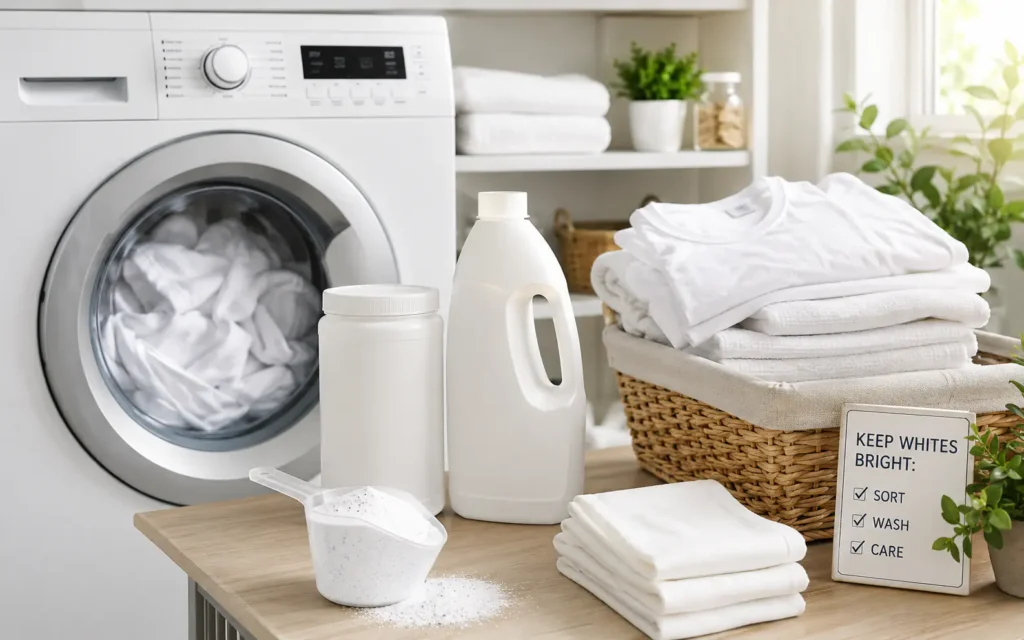
Using too much detergent.Overloading the washing machine.Using too much detergent.Washing whites with light-colored items.Ignoring the care label’s temperature instructions.
| Mistake | Result |
|---|---|
| Overloading | Poor rinsing and trapped dirt |
| Excess Detergent | Sticky residue buildup |
| Mixing Colors | Subtle color transfer |
| Low Temp Wash | Body oils remain in fabric |
Maintaining Your Whites Over Time
Consistency is the key to keeping whites bright. Instead of waiting for clothes to look dingy, incorporate a brightening booster into every third or fourth wash cycle.
Treat stains immediately. The longer a stain sits, the more likely it is to set into the fabric, making it nearly impossible to remove without harsh chemicals later.
If a shirt starts looking slightly yellow, perform a pre-soak in a mixture of water and a small amount of oxygen-based cleaner before the regular wash.
Waiting until clothes are visibly gray to address the issue.
- Pre-treat stains as soon as they happen.
- Use oxygen-based cleaners for periodic deep cleans.
- Clean your washing machine regularly to prevent mold and residue buildup.
- Store whites in a cool, dry place away from direct light when not in use.
FAQs
Does OxiClean really brighten white clothes?
Yes, oxygen-based cleaners like OxiClean are effective at breaking down organic stains and brightening whites without the harshness of chlorine bleach.
How do I get dingy white clothes bright white again?
Try a long soak in a basin of warm water mixed with an oxygen-based cleaner for several hours, then wash as normal with a high-quality detergent.
Is it better to use bleach or vinegar for white clothes?
Vinegar is a safer, natural maintenance tool for brightening and softening. Bleach is a powerful chemical that should be used sparingly, as it can yellow fabrics over time if overused.
Why do my white clothes turn yellow?
Yellowing is often caused by a buildup of body oils, sweat, or the reaction of certain fabrics to chlorine bleach. Using hot water and ensuring a thorough rinse can help prevent this.

Conclusion
Keeping your white clothes bright doesn’t require expensive products or complicated chemistry. By focusing on proper sorting, using the right water temperature, and avoiding the common trap of using too much detergent, you can maintain the brilliance of your favorite pieces.
Start by adjusting your next laundry load to include only whites and try a natural booster like baking soda. Consistent care is the most effective way to ensure your whites stay crisp and clean for the long haul.
Related posts
 How to Strengthen Weak Nails: A Practical Guide to Daily Care
Learn how to strengthen weak nails with simple daily habits, protective care, and targeted hydration. Restore your natural nail strength today. Weak, peeling, or brittle nails…
 What Sounds Do Cats Dislike? 7 Noises That Stress Your Pet
Discover what sounds do cats dislike and why. Learn how to protect your cat’s sensitive hearing from stressful household noises and high-frequency hums. Cats dislike sounds…
 Restoring Faded Black Clothing: Practical Methods and Reality Checks
Can you restore faded black clothing? Learn the difference between temporary color revival and permanent redyeing, plus how to prevent future fading. You can restore the…