
What is the Safest Cookware Material? A Guide to Healthy Choices
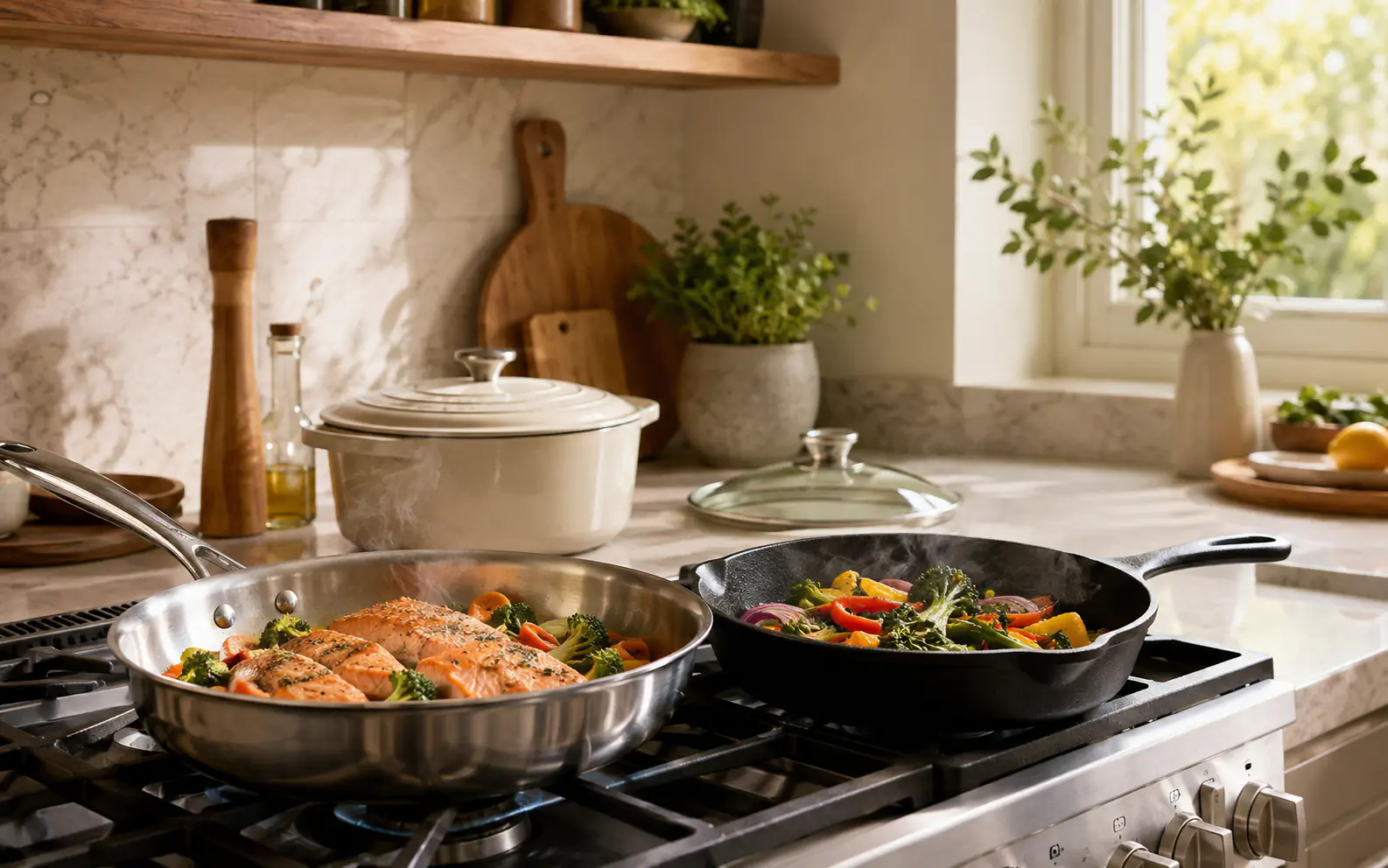
When considering the safest cookware material, the answer isn’t a single item but rather a few reliable options that minimize chemical leaching and reactiveness with food. Generally, well-maintained stainless steel, seasoned cast iron, 100% ceramic, and glass are among the top choices for health-conscious cooking.
Each material offers unique benefits and requires specific care, but they share a common advantage: they are largely non-reactive and do not release harmful substances into your food under normal cooking conditions. Understanding the nuances of each can help you select the best fit for your kitchen and cooking habits.
| Topic | When it helps | What to keep in mind |
|---|---|---|
| Option 1 | Everyday cooking, high-heat searing, acidic foods, and those seeking low-maintenance, long-lasting cookware. | Lower-quality stainless steel might contain more nickel, which some individuals are sensitive to. |
| Option 2 | Searing, frying, baking, slow cooking, and those who appreciate a naturally non-stick surface and don’t mind the maintenance. | Requires regular seasoning and specific cleaning methods to maintain its non-stick properties and prevent rust. |
| Option 3 | Gentle cooking, delicate foods, low-to-medium heat applications, and those seeking a lightweight, easy-to-clean non-stick surface. | 100% ceramic can be brittle and prone to breaking if dropped. |
| Option 4 | Baking, roasting, casseroles, microwave use, and food storage. | Glass is not suitable for stovetop cooking (unless specifically designed for it, like some glass-ceramic stovetop lines) or high-heat searing. |
Understanding Cookware Safety: What ‘Safe’ Really Means
What is the Safest Cookware Material. The term ‘safest’ in cookware refers to materials that are least likely to leach harmful chemicals, heavy metals, or other undesirable substances into your food, especially when exposed to heat or acidic ingredients. It also considers materials that don’t release toxic fumes when overheated.
Beyond avoiding known toxins, safety also encompasses durability and stability. A material that degrades quickly or scratches easily might expose underlying layers or become less hygienic over time.
When a pan is labeled ‘non-toxic,’ it typically means it’s free from specific harmful chemicals like PFOA or PTFE.
Don’t assume ‘non-stick’ automatically means ‘safest.’ Many older non-stick coatings contained chemicals now known to be problematic.
Making Your Decision: Factors to Consider
Choosing the safest cookware material isn’t just about identifying the ‘best’ option; it’s about finding the best ‘best for you’ option. Your cooking style, budget, and willingness to maintain the cookware all play a significant role in this decision.
For instance, if you prioritize convenience and minimal upkeep, stainless steel or modern ceramic-coated pans might be ideal. If you’re a dedicated home chef who enjoys the ritual of cooking and seasoning, cast iron could be a rewarding and safe choice.
If you frequently cook acidic tomato sauces, a non-reactive material like stainless steel or glass is a better choice than cast iron, which can react and impart a metallic taste if not perfectly seasoned.
Don’t buy a material solely because it’s labeled ‘safest’ without considering if it fits your cooking habits.
- Cooking Style: Do you sear, simmer, bake, or fry most often?
- Maintenance Level: Are you willing to season cast iron or prefer dishwasher-safe options?
- Budget: High-quality materials often come with a higher upfront cost but can last longer.
- Heat Source: Ensure the material is compatible with your stovetop (induction, gas, electric).
Materials to Approach with Caution
While many cookware materials are safe, some warrant a more cautious approach due to potential health concerns or specific usage limitations. Understanding these can help you make more informed decisions when purchasing or evaluating existing pieces in your kitchen.
Traditional non-stick cookware, often coated with PTFE (Teflon), has been a subject of concern. While the finished product itself is generally considered safe at normal cooking temperatures, overheating can cause the coating to break down and release fumes.
If you have an old non-stick pan with visible scratches or flaking, it’s time to replace it.
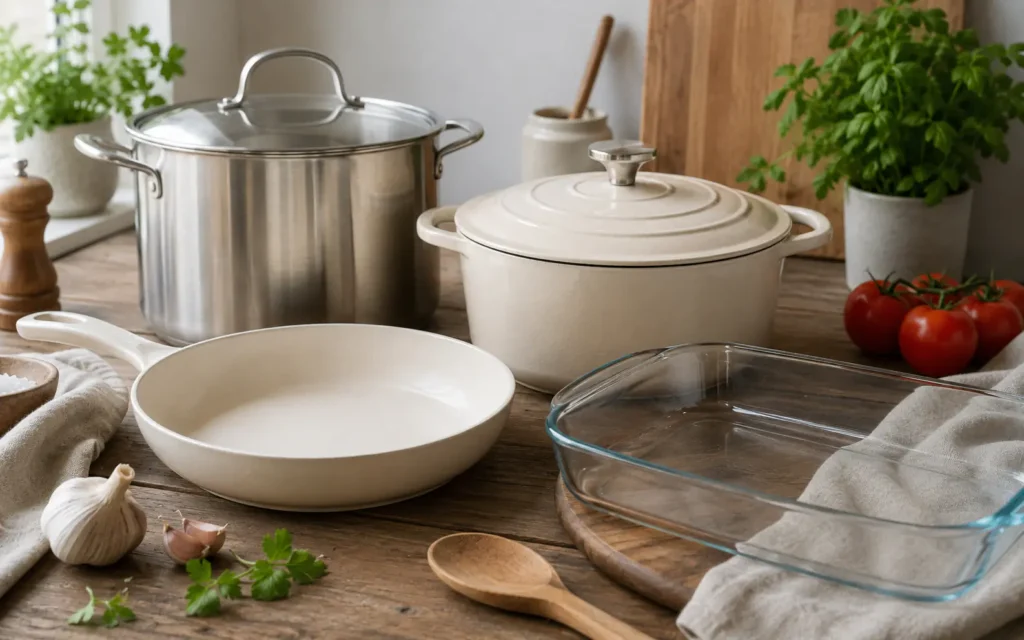
Don’t continue using non-stick pans once their coating is visibly damaged or peeling.
| Material | Primary Concern | Recommendation |
|---|---|---|
| Traditional Non-Stick (PTFE). | Fumes when overheated, PFOA in older manufacturing. | Replace if scratched; avoid overheating; look for PFOA/PTFE-free alternatives. |
| Uncoated Aluminum. | Reacts with acidic foods, potential aluminum leaching. | Opt for anodized aluminum or other non-reactive materials. |
| Unlined Copper. | Leaches copper into food, toxic in high amounts. | Only use lined copper cookware; replace if lining is damaged. |
Safety checks
- No single cookware material is universally ‘perfect’; choices involve trade-offs between safety, performance, and maintenance.
- Stainless steel and seasoned cast iron are generally considered highly safe and durable options for most cooking.
- When choosing ceramic, prioritize 100% ceramic or ceramic-coated options explicitly labeled PFOA/PTFE-free.
- Understanding your cooking style and maintenance willingness is key to selecting the best safe material for you.
The article will focus on
Option 1. Stainless Steel: Durable and Non-Reactive
Stainless steel is a popular choice due to its durability, resistance to rust, and non-reactive surface. It’s an alloy of iron, chromium, and sometimes nickel.
- Everyday cooking, high-heat searing, acidic foods, and those seeking low-maintenance, long-lasting cookware.
- Lower-quality stainless steel might contain more nickel, which some individuals are sensitive to.
- Invest in multi-ply (tri-ply or five-ply) stainless steel for even heat distribution and better cooking performance.
- Reactivity – Very low.
- Durability – High.
- Maintenance – Low to moderate.
Option 2. Seasoned Cast Iron: Natural Non-Stick and Fortifying
Traditional cast iron cookware, when properly seasoned, creates a natural non-stick surface without synthetic chemicals. The seasoning is a layer of polymerized oil baked onto the surface, which also prevents rust.
- Searing, frying, baking, slow cooking, and those who appreciate a naturally non-stick surface and don’t mind the maintenance.
- Requires regular seasoning and specific cleaning methods to maintain its non-stick properties and prevent rust.
- Ensure you understand how to season and care for cast iron before purchasing.
- Reactivity – Low (when seasoned).
- Durability – Very high.
- Maintenance – Moderate to high.
Option 3. 100% Ceramic & Modern Ceramic-Coated: Non-Toxic Surfaces
True 100% ceramic cookware, made from natural clay and fired at high temperatures, is completely inert and non-reactive, making it one of the safest options. Ceramic-coated cookware, on the other hand, features a non-stick layer derived from sand (silica) applied over a metal base.
- Gentle cooking, delicate foods, low-to-medium heat applications, and those seeking a lightweight, easy-to-clean non-stick surface.
- 100% Ceramic can be brittle and prone to breaking if dropped.
- For ceramic-coated, use silicone or wooden utensils and avoid metal to prolong the coating’s life.
- Reactivity – None.
- Durability – Moderate (coating) / High (100% ceramic, but brittle).
- Maintenance – Low.
Option 4. Glass Cookware: Inert and Transparent
Glass cookware, typically made from borosilicate glass, is completely non-reactive and non-porous. It won’t leach chemicals into your food, nor will it absorb odors or flavors.
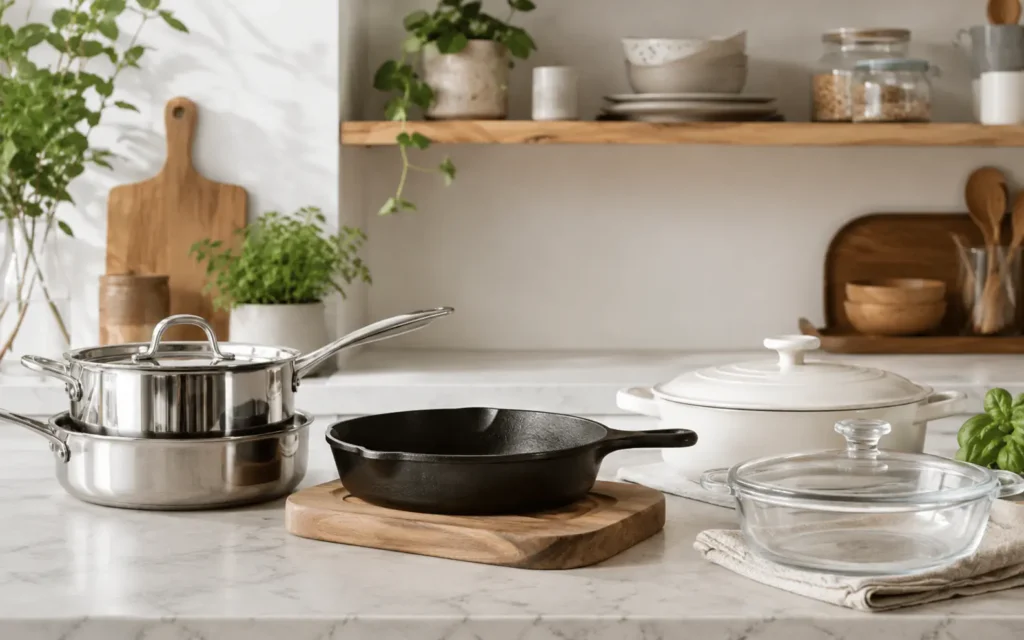
- Baking, roasting, casseroles, microwave use, and food storage.
- Glass is not suitable for stovetop cooking (unless specifically designed for it, like some glass-ceramic stovetop lines) or high-heat searing.
- Always check if glass cookware is oven-safe and avoid placing hot glass directly on cold surfaces or vice-versa to prevent thermal shock.
- Reactivity – None.
- Durability – Moderate (prone to breakage).
- Maintenance – Low.
FAQs
Are certain cookware materials linked to health risks?
Yes, some older or poorly maintained cookware materials can be linked to health risks. For example, scratched traditional non-stick coatings (PTFE) can release chemicals, and unlined copper or uncoated aluminum can leach metals into.
Is ceramic safer than stainless steel?
Both 100% ceramic and high-quality stainless steel are considered very safe. 100% ceramic is completely inert.
What cookware materials should I be cautious about?
Exercise caution with traditional non-stick pans if the coating is scratched or if they are overheated. Also, be wary of unlined copper and uncoated aluminum, as they can react with food and potentially leach.
How does proper cookware care impact safety?
Proper care significantly impacts cookware safety. For instance, maintaining the seasoning on cast iron prevents rust and keeps it non-stick.
Can I mix and match different safe cookware materials?
Many home cooks find it beneficial to have a variety of cookware materials to suit different cooking tasks. For example, a cast iron skillet for searing, a stainless steel pot for sauces, and a.
Conclusion
Choosing the safest cookware material is a key step toward a healthier kitchen. While no single material is perfect for every task, options like high-quality stainless steel, well-seasoned cast iron, 100% ceramic, and glass offer excellent, non-reactive surfaces for your cooking.
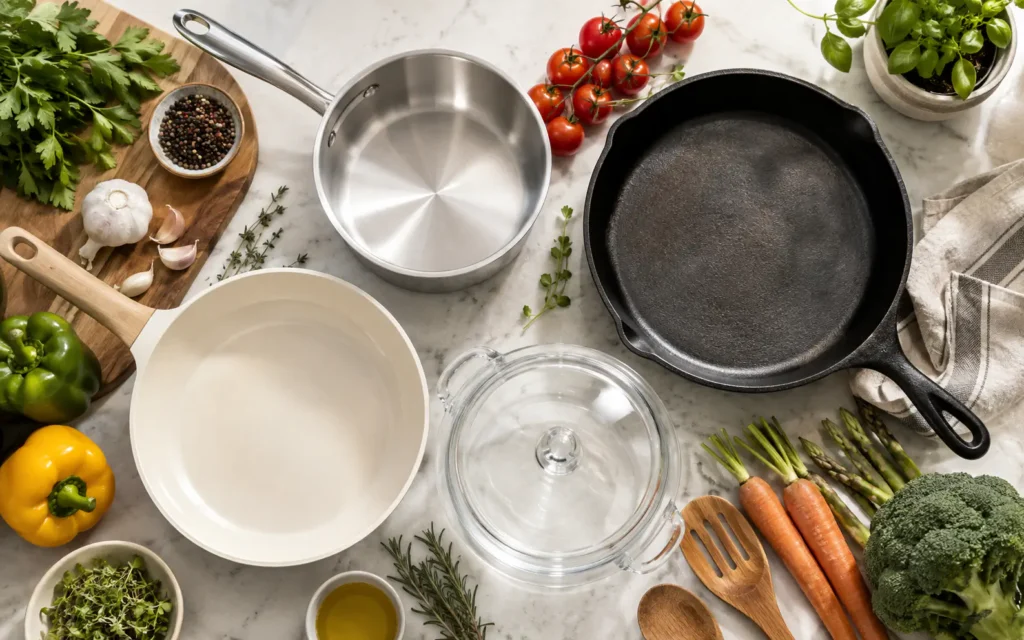
The best choice ultimately depends on your individual cooking style, maintenance preferences, and specific health considerations. By understanding the properties of each material and being mindful of potential concerns with others, you can confidently select cookware that supports your well-being.
Related posts
 How to Strengthen Weak Nails: A Practical Guide to Daily Care
Learn how to strengthen weak nails with simple daily habits, protective care, and targeted hydration. Restore your natural nail strength today. Weak, peeling, or brittle nails…
 What Sounds Do Cats Dislike? 7 Noises That Stress Your Pet
Discover what sounds do cats dislike and why. Learn how to protect your cat’s sensitive hearing from stressful household noises and high-frequency hums. Cats dislike sounds…
 Restoring Faded Black Clothing: Practical Methods and Reality Checks
Can you restore faded black clothing? Learn the difference between temporary color revival and permanent redyeing, plus how to prevent future fading. You can restore the…