
How to Maintain Automotive Tools for Longevity and Performance
Maintaining your automotive tools is crucial for their longevity, performance, and your safety. Just like the vehicles they work on, tools benefit from consistent care.
Effective automotive tool maintenance centers on a few key practices: regular cleaning to remove grease and grime, proactive rust prevention, proper storage to protect them from the elements, and routine inspection to catch wear or damage early. By integrating these habits into your routine, you ensure your tools remain reliable and ready for any task.
Safety checks
- Clean tools immediately after every use to prevent grime buildup.
- Implement proactive rust prevention methods, especially for metal tools.
- Store tools in a dry, organized environment to protect them from damage and elements.
- Regularly inspect tools for wear, damage, or loose parts.
| Topic | When it helps | What to keep in mind |
|---|---|---|
| Step 1 | All hand tools, power tools (after disconnecting power), and air tools. | Do not use harsh solvents on plastic grips or painted surfaces unless specifically recommended by the manufacturer, as they can degrade materials. |
| Step 2 | All metal tools, especially those exposed to moisture or corrosive chemicals. | Never use abrasive methods (like grinding) on precision tools or those with calibrated markings, as this can damage them. |
| Step 3 | Any tool with hinges, pivots, gears, or internal mechanisms. | Over-lubrication can attract dirt and dust, creating a gritty paste. |
| Step 4 | All tools, from hand tools to larger equipment like jacks and stands. | Avoid storing tools directly on concrete floors, as moisture can wick up and cause rust. |
| Step 5 | All tools, especially those under high stress like wrenches, sockets, and lifting equipment. | Never use a damaged tool, especially if it’s cracked, bent, or has a compromised handle. |
Focus on practical hands-on maintenance
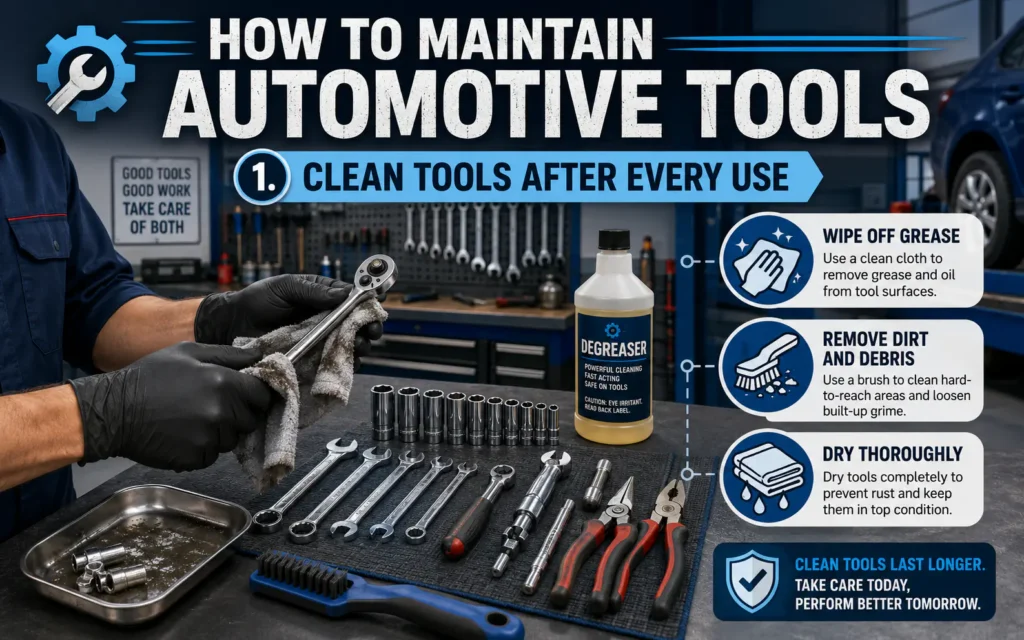
Step 1. Clean Tools Immediately After Every Use
How to Maintain Automotive Tools. Wiping down your tools right after you finish a task is the most fundamental step in maintenance. This prevents oil, grease, dirt, and corrosive fluids from drying and hardening on surfaces, which can lead to rust and impaired function.
- All hand tools, power tools (after disconnecting power), and air tools.
- Do not use harsh solvents on plastic grips or painted surfaces unless specifically recommended by the manufacturer, as they can degrade materials.
- Keep a dedicated rag and a mild degreaser or cleaner near your workspace for quick cleanups.
- Frequency – After every use.
- Materials – Clean rag, mild degreaser/cleaner.
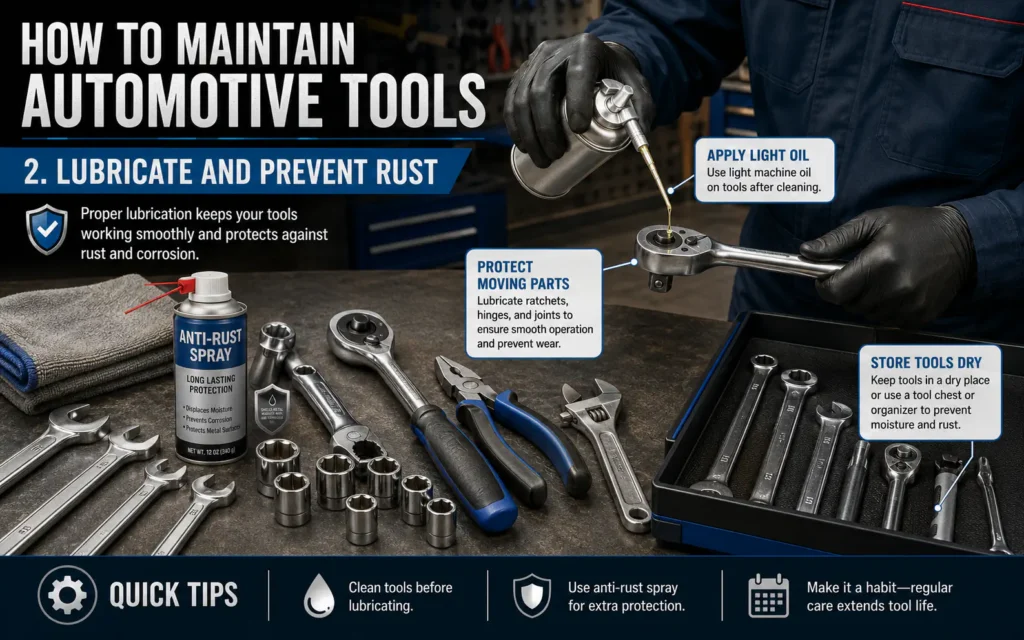
Step 2. Implement Thorough Cleaning and Rust Prevention
Beyond daily wipes, tools need periodic deep cleaning to remove stubborn grime and active rust. Rust is the enemy of metal tools, weakening them and hindering their operation.
- All metal tools, especially those exposed to moisture or corrosive chemicals.
- Never use abrasive methods (like grinding) on precision tools or those with calibrated markings, as this can damage them.
- Consider a rust-inhibiting spray or a light coat of oil (like 3-in-1 oil or specialized tool oil) on bare metal surfaces after.
- Frequency – Periodically, or when visible grime/rust appears.
- Materials – Wire brush, rust remover, protective oil/spray.
Step 3. Ensure Proper Lubrication for Moving Parts
How to Maintain Automotive Tools. Tools with moving components, such as ratchets, pliers, adjustable wrenches, and air tools, require lubrication to operate smoothly and prevent wear. Lubrication reduces friction, prevents seizing, and protects internal mechanisms from rust.
- Any tool with hinges, pivots, gears, or internal mechanisms.
- Over-lubrication can attract dirt and dust, creating a gritty paste.
- For ratchets, apply a small amount of light machine oil or specialized ratchet grease to the internal gears.
- Frequency – As needed, or every few months for frequently used tools.
- Materials – Light machine oil, specialized tool grease, pneumatic tool oil.
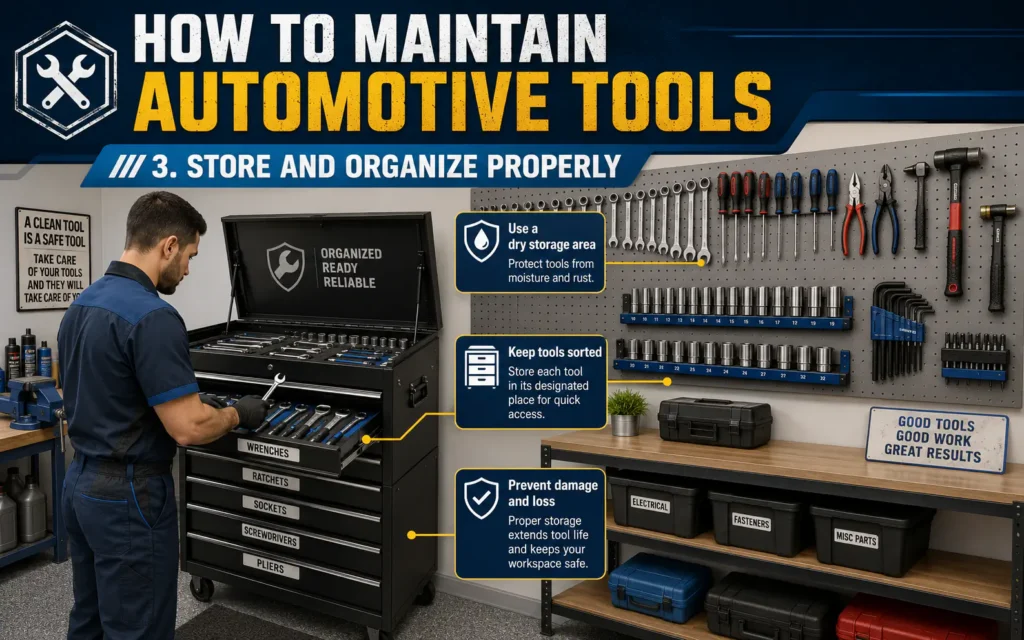
Step 4. Store Tools Strategically and Safely
How you store your tools significantly impacts their condition. Proper storage protects them from physical damage, theft, and environmental factors like humidity that lead to rust.
- All tools, from hand tools to larger equipment like jacks and stands.
- Avoid storing tools directly on concrete floors, as moisture can wick up and cause rust.
- Invest in a good quality toolbox, cabinet, or wall-mounted system.
- Location – Dry, organized, secure.
- Equipment – Toolbox, cabinet, wall organizer, drawer liners.
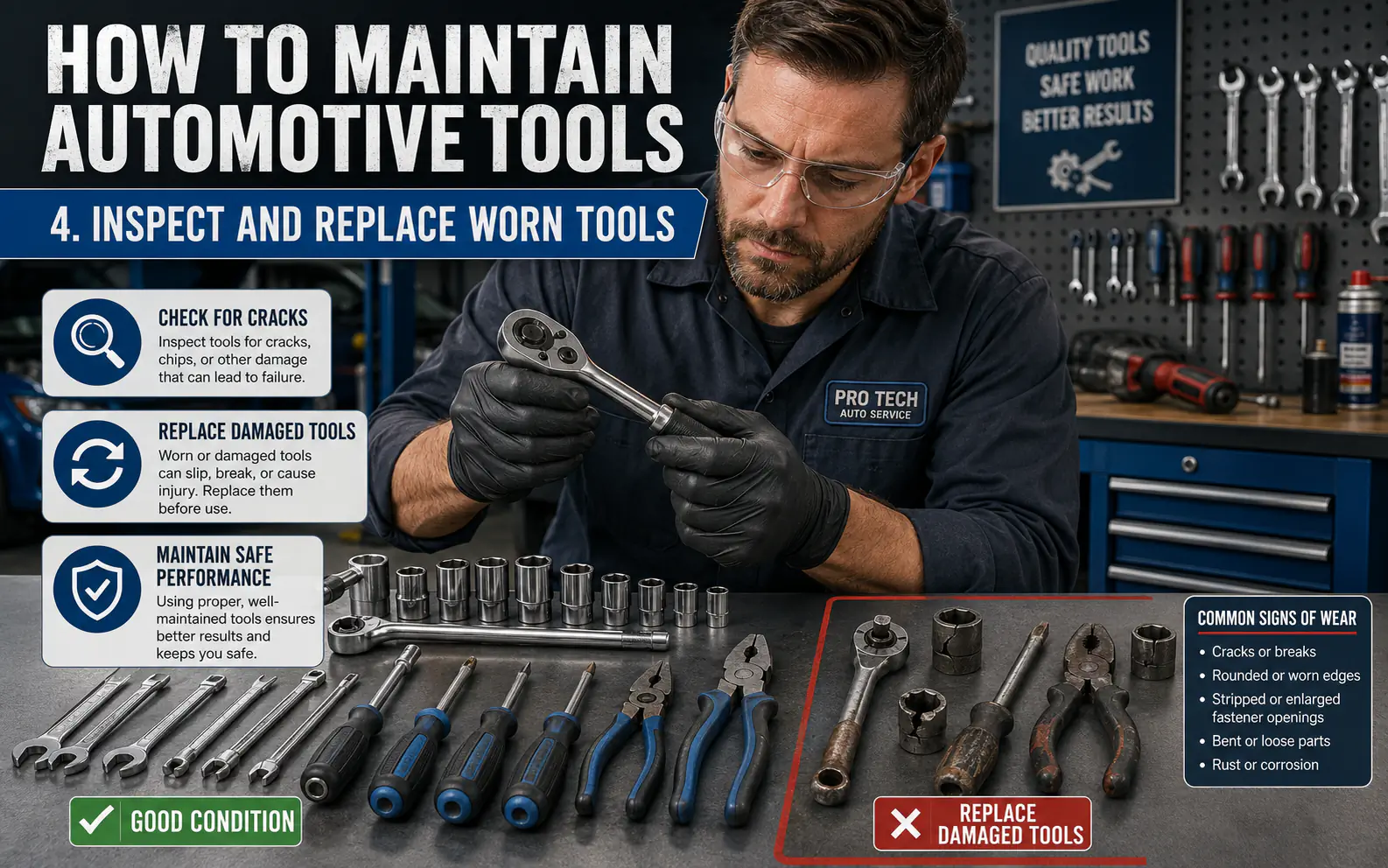
Step 5. Conduct Regular Inspection and Timely Repair
Periodically inspecting your tools allows you to identify wear, damage, or potential failures before they become a problem. Addressing issues promptly can prevent further damage to the tool, or more importantly, prevent accidents during use.
- All tools, especially those under high stress like wrenches, sockets, and lifting equipment.
- Never use a damaged tool, especially if it’s cracked, bent, or has a compromised handle.
- Before starting a major project, do a quick visual check of the tools you plan to use.
- Frequency – Before and after major projects, or monthly.
- Focus – Cracks, bends, wear, loose parts, functionality.
The Foundation: Clean Tools After Every Use
The simplest and most effective maintenance step for any automotive tool is cleaning it immediately after use. This isn’t just about aesthetics; it’s about preventing the buildup of corrosive substances like oil, grease, brake fluid, and road salt that can quickly degrade tool materials.
A quick wipe-down with a clean rag is often enough for light grime. For heavier residue, a rag dampened with a mild degreaser or an all-purpose cleaner works well.
After changing your car’s oil, wipe down your wrenches and oil filter pliers with a shop rag and a squirt of degreaser.
Leaving tools covered in grease, oil, or brake fluid overnight.
Battling Rust and Grime: Deep Cleaning Techniques
How to Maintain Automotive Tools. Sometimes, a quick wipe isn’t enough, or you might inherit tools with existing rust. Deep cleaning involves more targeted methods to tackle stubborn grime and actively remove rust.
Rust removal can range from simple household remedies to specialized chemical treatments. After any rust removal process, it’s critical to thoroughly dry the tool and apply a protective coating to prevent rust from returning.
If a wrench has light surface rust, soak it in white vinegar overnight, then scrub with a wire brush.
Using steel wool or overly aggressive abrasives on chrome-plated tools, as this can scratch the finish and expose the underlying metal to future rust.
| Rust Removal Method | Best For | Watch Out For |
|---|---|---|
| White Vinegar Soak. | Light to moderate surface rust on solid metal tools. | Can etch some finishes; requires thorough rinsing and drying. |
| Baking Soda Paste. | Minor rust spots, gentle on finishes. | Less effective on heavy rust; requires scrubbing. |
| Commercial Rust Remover. | Heavy rust, faster action. | Follow safety instructions carefully; can be corrosive to skin and other materials. |
| Wire Brush/Wheel. | Heavy, flaky rust on durable tools. | Can scratch finishes; wear eye protection; not for precision tools. |
Protecting Your Investment: Smart Storage Solutions
The environment where your tools are stored plays a huge role in their maintenance. High humidity is a primary culprit for rust, while extreme temperature fluctuations can also be detrimental.
Beyond environmental control, organization is key. Tools that are neatly arranged in a toolbox, cabinet, or on a pegboard are less likely to get damaged from banging against each other.
In a humid garage, store sensitive tools like micrometers or electronic diagnostic equipment in airtight containers with desiccant packets (silica gel) to absorb moisture.
Leaving tools exposed to the elements (rain, direct sun, high humidity) or in disorganized piles where they can get scratched, bent, or lost.
- Use toolboxes or cabinets with drawers to keep tools separated and protected.
- Consider drawer liners or foam inserts to prevent tools from shifting and scratching.
- For tools stored in open garages, use rust-inhibiting drawer liners or vapor corrosion inhibitor (VCI).
- Hang frequently used hand tools on a pegboard for easy access and visibility.
Beyond Cleaning: Lubrication, Inspection, and Repair
How to Maintain Automotive Tools. While cleaning and proper storage are foundational, true tool maintenance extends to ensuring all moving parts function as intended and that the tool itself is structurally sound. Lubrication is vital for tools with hinges, pivots, or internal mechanisms, reducing friction and preventing seizing.
Regular inspection is your last line of defense against tool failure and potential injury. Before and after each significant use, take a moment to visually inspect your tools.
Before using your floor jack, check the hydraulic fluid level and inspect the seals for leaks.
Ignoring squeaky or stiff moving parts, which indicates a lack of lubrication and can lead to premature wear or tool failure.
- For ratchets and adjustable wrenches, apply a small amount of light machine oil to the.
- Air tools require specialized pneumatic tool oil to be added to the air inlet before.
- Check handles for cracks, splinters, or looseness. Replace damaged handles or secure them tightly.
- Inspect sockets and wrenches for rounded edges or cracks, which can lead to stripping fasteners.
FAQs
Is WD-40 good to clean and protect automotive tools?
WD-40 can be effective for cleaning light grime and displacing moisture, making it useful for initial wipe-downs and rust prevention. However, it’s a penetrant and water displacer, not a long-term lubricant.
How often should I deep clean my automotive tools?
The frequency depends on usage and exposure. Tools used daily in harsh conditions (e.g., exposed to road salt, brake fluid) might need deep cleaning monthly.
What’s the best way to remove rust from delicate or precision tools?
For delicate or precision tools, avoid abrasive methods. Instead, opt for chemical rust removers designed for sensitive metals, or a gentle soak in white vinegar followed by careful scrubbing with a soft brush (like.
Can I use regular motor oil to lubricate my tools?
While motor oil can provide some lubrication, it’s generally not ideal for most hand tools. It can be too thick, attract dirt, and potentially leave a sticky residue.
How do I prevent rust on tools stored in a humid garage?
In humid environments, focus on moisture control. Store tools in sealed toolboxes or cabinets.
Conclusion
How to Maintain Automotive Tools. Consistent maintenance is the cornerstone of a reliable automotive tool collection. By adopting simple habits like cleaning tools after every use, proactively preventing rust, ensuring proper lubrication, and storing them correctly, you’re not just preserving metal and plastic; you’re safeguarding your investment and ensuring your.
Regular inspection and timely repairs are equally vital, catching small issues before they become major problems or safety hazards. Treat your tools with the care they deserve, and they will serve you reliably for years to come, making every repair and maintenance job smoother and.
Related posts
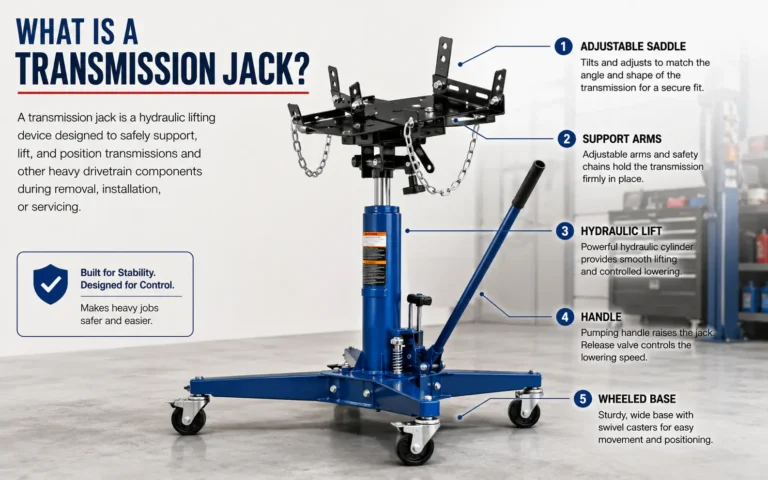 What is a Transmission Jack? Purpose, Types, and Use Explained
Learn what is a transmission jack , its purpose in automotive repair, and the different types available. Essential for safely removing and installing vehicle transmissions. A…
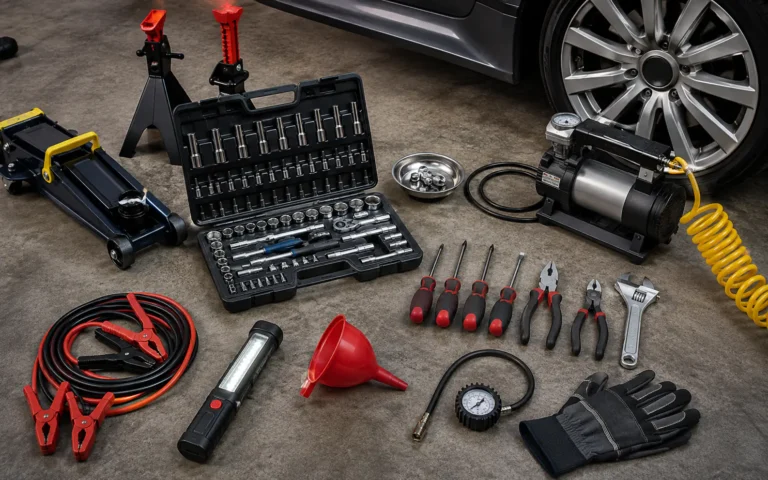 Must-Have Tools for Car Maintenance: Your Essential Toolkit
Discover must-have tools for car maintenance owner needs for routine maintenance and minor repairs. Build your car maintenance toolkit for confidence and savings. To effectively maintain…
 How to Lift a Car Safely with Jack Stands: A Step-by-Step Guide
Learn how to lift a car safely using a jack and secure it with jack stands. Follow clear, step-by-step instructions to perform under-car work with confidence.…