
How to Lift a Car Safely with Jack Stands: A Step-by-Step Guide
Lifting a car safely with jack stands is a fundamental skill for any DIY mechanic or car owner, allowing you to perform maintenance and repairs underneath your vehicle. The process involves using a floor jack to raise the car, then securely positioning jack stands to support its weight, ensuring a stable and safe working environment.
The key to this task is meticulous attention to safety at every step. Rushing or skipping precautions can lead to serious injury or damage.
Safety checks
- Always consult your car’s owner’s manual for specific jack and jack stand points.
- Never work under a car supported only by a jack; always use jack stands.
- Ensure your workspace is level, firm, and clear of obstructions.
- Perform thorough stability checks before getting under the vehicle.
- Use wheel chocks on the wheels that remain on the ground.
| Topic | When it helps | What to keep in mind |
|---|---|---|
| Step 1 | Any car lifting scenario, ensuring a safe foundation. | Never work on gravel, dirt, or sloped surfaces, as this can cause instability. |
| Step 2 | Ensuring structural integrity during the lift. | Never place the jack under suspension components, plastic trim, or the oil pan, as these can be damaged or fail, leading to a collapse. |
| Step 3 | Creating clearance for under-car access. | Do not lift the car higher than necessary. |
| Step 4 | Transferring weight from the jack to the stands. | Never drop the car quickly onto the stands. |
| Step 5 | Verifying the car is secure before working underneath. | Never skip this step. |
| Step 6 | Returning the vehicle to the ground safely. | Do not remove jack stands while the car’s weight is still on them. |
The article must cover the
Step 1. Prepare Your Workspace and Vehicle
Before you begin, ensure your work area is flat, firm, and free of debris. Park the car on a level, paved surface, engage the parking brake, and place wheel chocks behind the wheels that will remain on the ground.
- Any car lifting scenario, ensuring a safe foundation.
- Never work on gravel, dirt, or sloped surfaces, as this can cause instability.
- Check the weight rating of your jack and jack stands to ensure they exceed your vehicle’s weight.
- Tools – Floor jack, jack stands, wheel chocks.
- Environment – Flat, firm surface.
Step 2. Locate Jack Points and Position the Jack
Consult your vehicle’s owner’s manual to identify the specific jack points. These are reinforced areas designed to withstand the car’s weight.
- Ensuring structural integrity during the lift.
- Never place the jack under suspension components, plastic trim, or the oil pan, as these can be damaged or fail, leading to a collapse.
- If lifting the front or rear of the car, look for a central jacking point, often on the subframe or differential, to raise two wheels at once.
- Reference – Owner’s manual.
- Placement – Reinforced jack points.
Step 3. Lift the Vehicle and Place Jack Stands
Slowly pump the floor jack handle to raise the vehicle. As the car lifts, keep an eye on the jack’s stability and ensure it remains centered under the jack point.
- Creating clearance for under-car access.
- Do not lift the car higher than necessary.
- If your jack point is also the ideal jack stand point (e.g., a pinch weld), you may need to lift one side slightly, place a stand, then move.
- Action – Slow, controlled lift.
- Support – Jack stands locked.
Step 4. Lower the Vehicle onto Jack Stands
Once the jack stands are correctly positioned and locked, slowly release the pressure on the floor jack, allowing the vehicle to gently settle onto the jack stands. Ensure the car’s weight is fully resting on the stands and that they are stable.
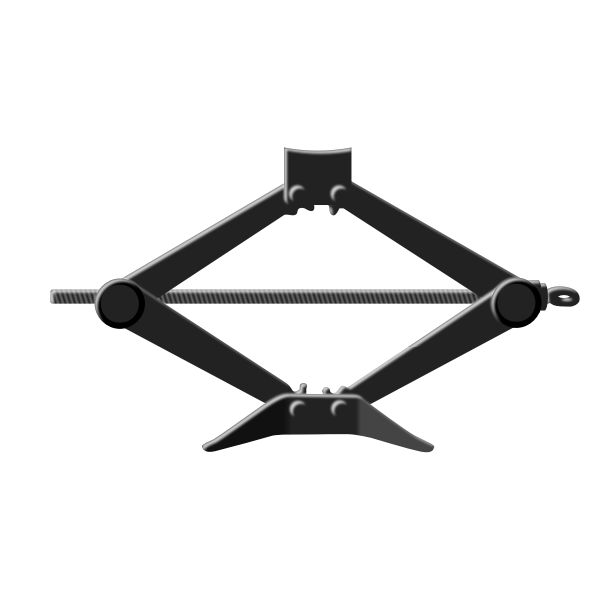
- Transferring weight from the jack to the stands.
- Never drop the car quickly onto the stands.
- Double-check that the car’s contact points are centered and fully seated in the saddles of the jack stands.
- Weight Transfer – Slow and controlled.
- Backup – Jack remains in place.
Step 5. Perform Stability Checks
Before getting under the car, perform a crucial stability check. Gently try to rock the vehicle from side to side and front to back.
- Verifying the car is secure before working underneath.
- Never skip this step.
- If you have any doubt about the car’s stability, err on the side of caution.
- Verification – Rock test.
- Priority – Safety first.
Step 6. Safely Lower the Vehicle
When your work is complete, reverse the process. Use the floor jack to lift the car slightly off the jack stands.
- Returning the vehicle to the ground safely.
- Do not remove jack stands while the car’s weight is still on them.
- Lower the car slowly to prevent damage to suspension components or a sudden drop that could be dangerous.
- Reversal – Lift, remove, lower.
- Final Step – Store equipment.
Essential Safety Gear and Preparation
Before you even think about lifting your car, proper preparation is non-negotiable. This isn’t just about having the right tools; it’s about creating a safe environment for yourself and your vehicle.
Your workspace is just as important as your tools. A flat, solid surface like concrete or asphalt is crucial.
Finally, prepare your vehicle. Park it on the chosen level surface, engage the parking brake firmly, and if your car is an automatic, put it in ‘Park’.
Before starting, check your floor jack for leaks or bent components, and ensure your jack stands have intact locking pins.
Working on an uneven driveway or soft ground.
| Safety Item | Purpose | Check Before Use |
|---|---|---|
| Floor Jack. | Raises vehicle off ground. | No leaks, smooth operation, correct weight rating. |
| Jack Stands. | Supports vehicle weight. | No bends/cracks, locking pins functional, correct weight rating. |
| Wheel Chocks. | Prevents vehicle roll. | Solid, non-slip material, placed firmly. |
| Owner’s Manual. | Identifies jack points. | Accessible and understood. |
Step-by-Step: Lifting Your Car onto Jack Stands
With your workspace and vehicle prepared, you’re ready to begin the actual lifting process. Remember to move slowly and deliberately, constantly checking your setup.
The most critical part of this stage is identifying the correct jacking and jack stand points. Your owner’s manual is the definitive source for this information.
As you lift the car, observe the jack’s movement and the vehicle’s response. It should rise smoothly.
When locating jack points, look for the reinforced metal seams (pinch welds) along the rocker panels, often marked with small arrows or notches.
Using the car’s suspension arms, exhaust pipes, or plastic body panels as jacking points.
Confirming Stability and Lowering Safely
Once your car is resting on the jack stands, your work isn’t done. The next crucial step is to confirm its stability.
After confirming stability, you can proceed with your maintenance or repair. When you’re finished, the process of lowering the car is essentially the reverse of lifting it, but with the same emphasis on caution and control.
With the car safely on the ground, remove the wheel chocks and store all your equipment properly. A clean workspace is a safe workspace, and well-maintained tools are ready for the next job.
After the car is on the stands, gently push down on the front bumper, then the rear, and then try to rock the car side-to-side.
Removing the jack stands before the car is lifted off them by the floor jack.
The Importance of the ‘Wiggle Test
The ‘wiggle test’ or ‘rock test’ is a simple yet vital step. After the car is fully resting on the jack stands, give it a firm but gentle push on various points – the fenders, bumpers, and even the tires.
FAQs
Can I lift a car with just a jack stand?
No, you cannot lift a car with just a jack stand. Jack stands are designed to support a vehicle’s weight once it’s lifted, not to lift it.
How safe is a car on jack stands?
A car is very safe on jack stands when they are used correctly. This means placing them on a level, firm surface, using the vehicle’s designated jack stand points, ensuring they are properly locked, and performing a stability check before working underneath.
Where exactly do I place jack stands?
Always consult your car’s owner’s manual for the precise jack stand points. Generally, these are reinforced areas on the vehicle’s frame, often near the wheels, such as pinch welds, subframe points, or solid axle tubes.
What if my jack point is also where the jack stand needs to go?
This is a common situation. If your primary jack point (e.g., a pinch weld) is also the ideal jack stand point, you have a few options: 1) Use a central jacking point (like a subframe or differential) to lift the entire front.
Do I need to use wheel chocks if I’m using jack stands?
Wheel chocks should always be used on the wheels that remain on the ground (e.g., the rear wheels if you’re lifting the front). This provides an extra layer of safety by preventing the vehicle from rolling forward or backward while it’s partially.
Conclusion
Lifting a car with jack stands is a routine task for many, but it’s one that demands respect and meticulous attention to detail. By prioritizing safety through proper preparation, correct equipment use, and thorough stability checks, you create a secure environment for any under-car work.
Remember, your car’s owner’s manual is your most reliable guide for specific jack and jack stand points. Never take shortcuts, and always err on the side of caution.
Related posts
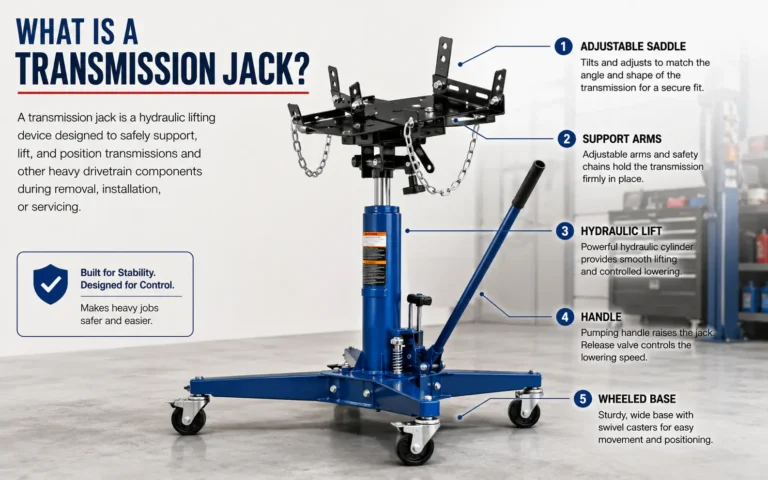 What is a Transmission Jack? Purpose, Types, and Use Explained
Learn what is a transmission jack , its purpose in automotive repair, and the different types available. Essential for safely removing and installing vehicle transmissions. A…
 How to Maintain Automotive Tools for Longevity and Performance
Learn how to maintain automotive tools. Discover essential steps for cleaning, rust prevention, proper storage, and inspection to extend their lifespan. Maintaining your automotive tools is…
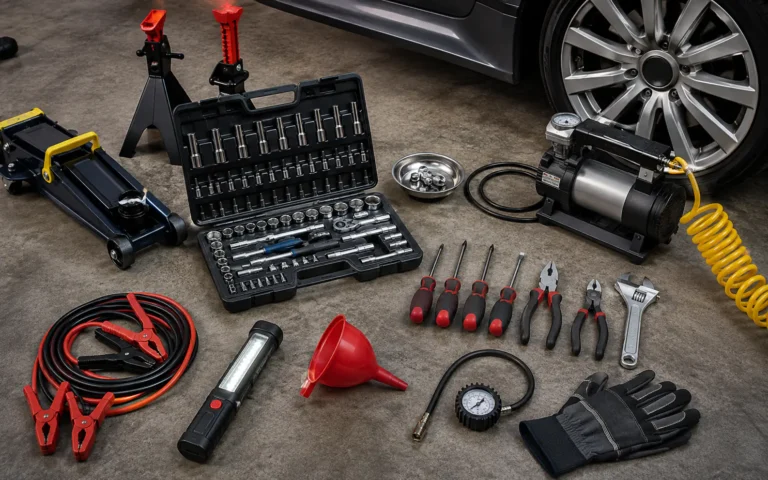 Must-Have Tools for Car Maintenance: Your Essential Toolkit
Discover must-have tools for car maintenance owner needs for routine maintenance and minor repairs. Build your car maintenance toolkit for confidence and savings. To effectively maintain…