
What Happens If You Overfill Engine Oil
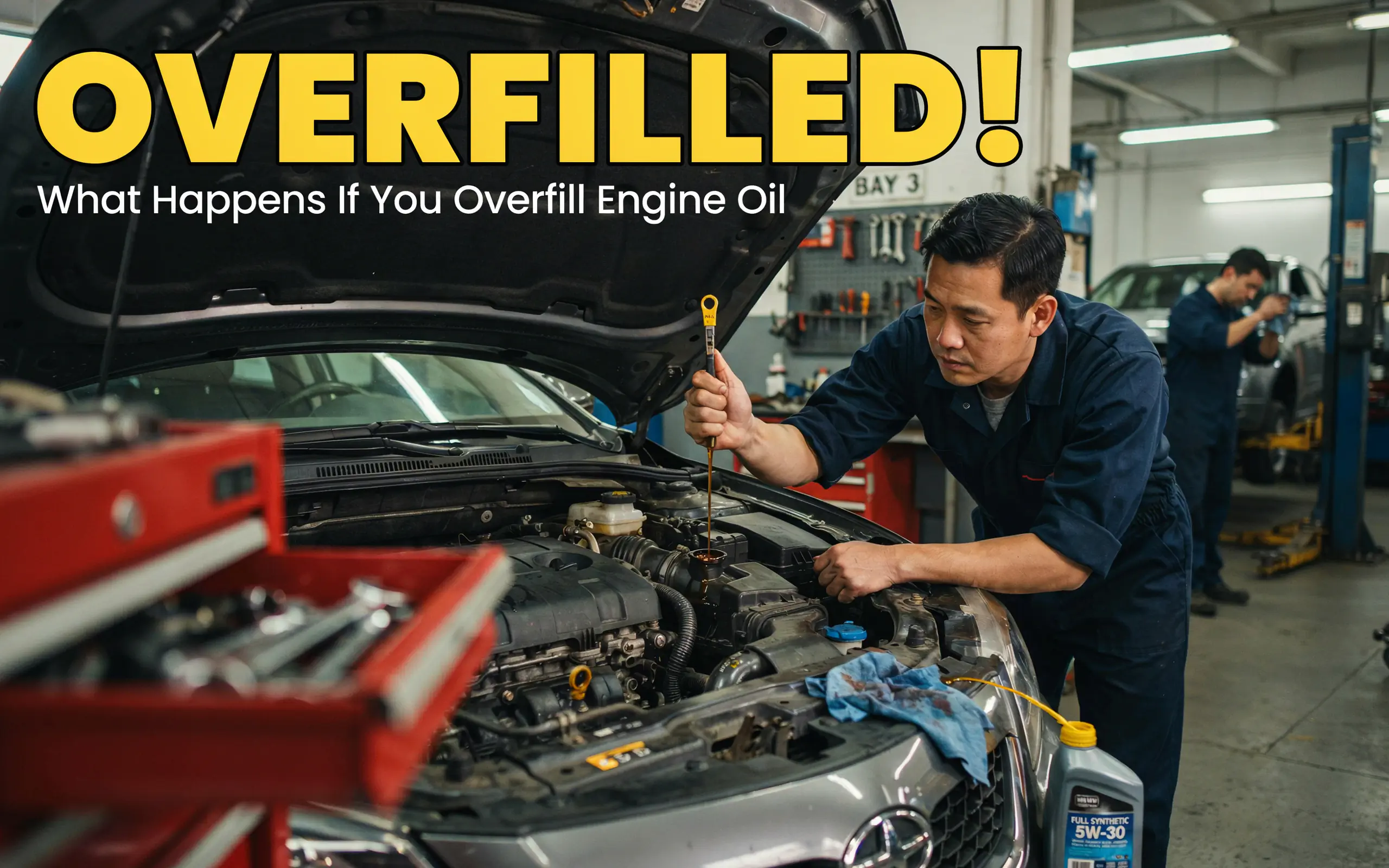
Overfilling your engine oil can lead to a cascade of problems that can severely damage your vehicle’s engine. When there’s too much oil in the crankcase, the rapidly spinning crankshaft can dip into the excess oil, essentially ‘whipping’ it into a frothy, aerated mixture.
Beyond poor lubrication, excess oil creates increased pressure within the engine. This pressure can force oil past seals and gaskets, leading to leaks and potential damage to critical components like the catalytic converter.
Safety checks
- Overfilling engine oil can cause serious damage, primarily through aeration and increased pressure.
- Recognizing symptoms like smoke, strange noises, or leaks is crucial for early intervention.
- Immediate action, often involving draining excess oil, is necessary to prevent further harm.
- Always check your oil level correctly and consult your owner’s manual for precise capacity.
- When in doubt, it’s safer to have slightly underfilled oil than significantly overfilled.
Why Overfilling Engine Oil is Harmful
What Happens If You Overfill Engine Oil. The primary danger of overfilling engine oil stems from the crankshaft. This vital engine component spins at high speeds, and in a properly filled engine, it clears the oil level in the oil pan.
Foamy, aerated oil is a poor lubricant. Air bubbles reduce the oil’s ability to form a protective film between moving parts, leading to increased friction, heat, and wear.
Additionally, excess oil can increase internal engine pressure. This pressure can stress and damage seals and gaskets, leading to oil leaks.
Imagine a blender trying to mix too much liquid; it creates foam and struggles to blend properly.
Assuming a little extra oil is harmless.
Signs You’ve Overfilled Your Engine Oil
Identifying an overfilled engine oil situation often involves a combination of visual checks, auditory cues, and changes in vehicle performance. The most straightforward sign is a visual check of the dipstick.
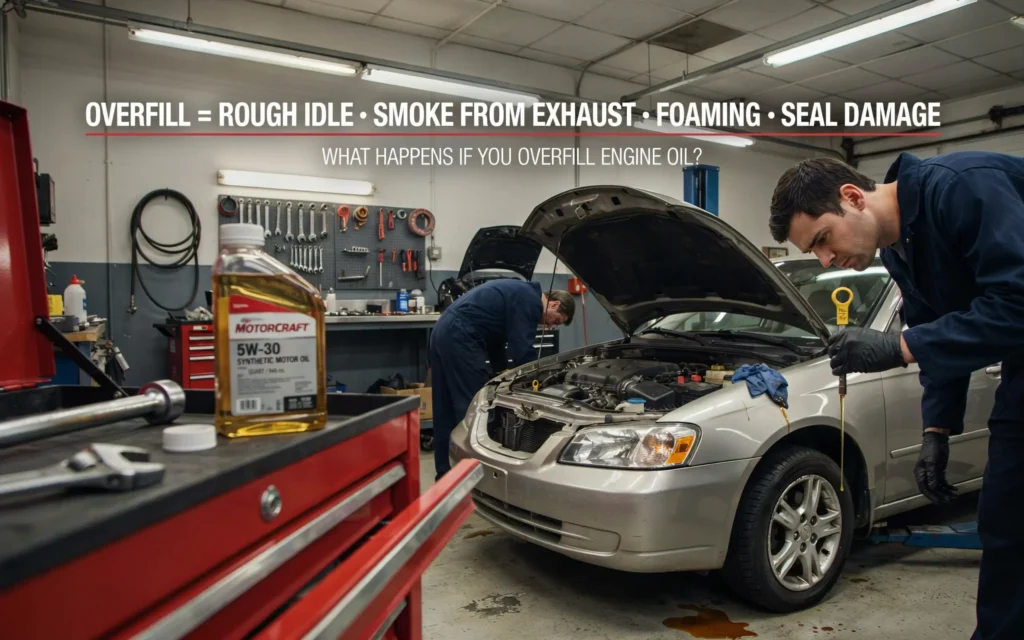
Beyond the dipstick, your engine might give you other warnings. A burning oil smell, often accompanied by blue or white smoke from the exhaust, can indicate that excess oil is being burned off or leaking onto hot engine parts.
Performance-wise, an overfilled engine can feel sluggish or run rough. The increased internal pressure and aerated oil can lead to reduced engine power, poor fuel economy, and even a ‘ticking’ or ‘knocking’ sound as components struggle with inadequate lubrication.
After an oil change, you notice a burning smell and a faint blue smoke from the exhaust, or your engine sounds rougher than usual.
Ignoring subtle symptoms like a burning smell or slight performance changes, attributing them to other issues.
- Oil level significantly above the ‘full’ mark on the dipstick.
- Burning oil smell or blue/white smoke from the exhaust.
- Visible oil leaks around engine seals or gaskets.
- Engine running rough, sluggish performance, or reduced fuel economy.
- Unusual engine noises, such as ticking or knocking.
What to Do If You Overfill Your Engine Oil
If you discover you’ve overfilled your engine oil, the most important thing is to address it promptly. Do not drive the vehicle if the oil level is significantly above the full mark, especially if you notice any of the symptoms mentioned earlier.
What Happens If You Overfill Engine Oil. For a slight overfill (e.g., a quarter to half an inch above the full mark), you might be able to drain a small amount yourself. Place a drain pan under the oil pan, loosen the drain plug just enough to allow oil to trickle out, and then quickly tighten it.
If the overfill is substantial (e.g., more than an inch above the full mark) or if you’re uncomfortable performing the drain yourself, it’s best to have the vehicle towed to a trusted mechanic. They have the right tools and expertise to safely remove the excess oil without creating a mess or causing further issues.
If you just finished an oil change and the dipstick shows the oil is an inch above the full mark, your immediate step should be to locate the drain plug and carefully release a small amount of oil into a suitable container.
Driving the vehicle for an extended period or at high speeds after discovering an overfill.
| Overfill Severity | Recommended Action | Considerations |
|---|---|---|
| Slight (1/4″-1/2″ above max). | Carefully drain a small amount yourself. | Requires a drain pan and basic tools. |
| Moderate (1/2″-1″ above max). | Drain yourself or seek professional help. | Risk of draining too much. |
| Significant (over 1″ above max). | Tow to a mechanic. | High risk of immediate engine damage. |
Preventing Engine Oil Overfill
The best way to deal with overfilled engine oil is to prevent it from happening in the first place. Accurate oil level checking is crucial.
When adding oil, do so gradually. Add about three-quarters of the recommended amount, then wait a few minutes for the oil to settle in the pan.
Ensure your vehicle is parked on a level surface when checking the oil. An incline can give a false reading.
When checking your oil, park your car on a level surface, wait 5-10 minutes after turning off the engine for oil to settle, and wipe the dipstick clean before reinserting for an accurate reading.
Checking oil on an uneven surface, immediately after driving, or not wiping the dipstick clean.
- Always refer to your vehicle’s owner’s manual for exact oil capacity.
- Park your vehicle on a level surface for accurate dipstick readings.
- Allow the engine to cool for 5-10 minutes before checking the oil.
- Add oil gradually, checking the dipstick frequently after each small addition.
- Aim for the oil level to be between the ‘min’ and ‘max’ marks, not necessarily right at the.
FAQs
Can I drive my car with too much oil in it?
It’s generally not recommended to drive with overfilled engine oil, especially if the level is significantly above the ‘full’ mark or if you notice symptoms like smoke or strange noises. Even a slight overfill can lead to issues over time.
How long does it take for overfilled oil to damage an engine?
The time it takes for damage to occur varies greatly depending on the extent of the overfill, engine design, and driving conditions. Minor overfills might cause gradual wear over thousands of miles, while significant overfills can cause noticeable damage, such as seal.
What happens if I overfill my oil by 2 quarts?
Overfilling by 2 quarts (or liters) is a significant amount and can cause rapid and severe engine damage. This much excess oil will almost certainly lead to crankshaft whipping, extensive oil aeration, high internal pressure, and likely blow out seals or gaskets.
Is it better to have too much or too little oil?
Neither is ideal, but if forced to choose, a slightly underfilled engine (just below the ‘min’ mark) is generally less immediately damaging than a significantly overfilled one. An underfilled engine might eventually starve for oil, but an overfilled engine can cause aeration.
Will overfilled oil cause my engine to smoke?
Yes, overfilled engine oil can cause your engine to smoke. Excess oil can be forced past seals and gaskets into the combustion chamber, where it burns, producing blue or white smoke from the exhaust.
Conclusion
Overfilling your engine oil is a common mistake that carries significant risks, from reduced lubrication and increased wear to damaged seals and costly catalytic converter issues. Understanding the mechanisms of damage, recognizing the warning signs, and knowing how to respond quickly are crucial for protecting your engine.
What Happens If You Overfill Engine Oil. Always prioritize accuracy when checking and adding engine oil. Take your time, consult your owner’s manual, and add oil in small increments to ensure the level stays within the recommended range.
Related posts
 2026 Torque Wrench Reviews: Choosing the Right Tool for Precision Fastening
Explore our 2026 torque wrench reviews to find the right tool for your automotive, bike, or gunsmithing projects. Compare top models for accuracy and value. Finding…
 Top Automotive Tools for Beginners: Essential Gear for 2026
Discover the top automotive tools for beginners in 2026. Compare essential pry kits, wrench sets, and repair gear to start your DIY car maintenance journey. Starting…
 Top Rated Mechanic Tool Brands for 2026
Explore top rated mechanic tool brands for 2026. Compare reliable socket sets and hand tools to find the right equipment for your home garage or auto…