
How To Keep Fruits Fresh Longer
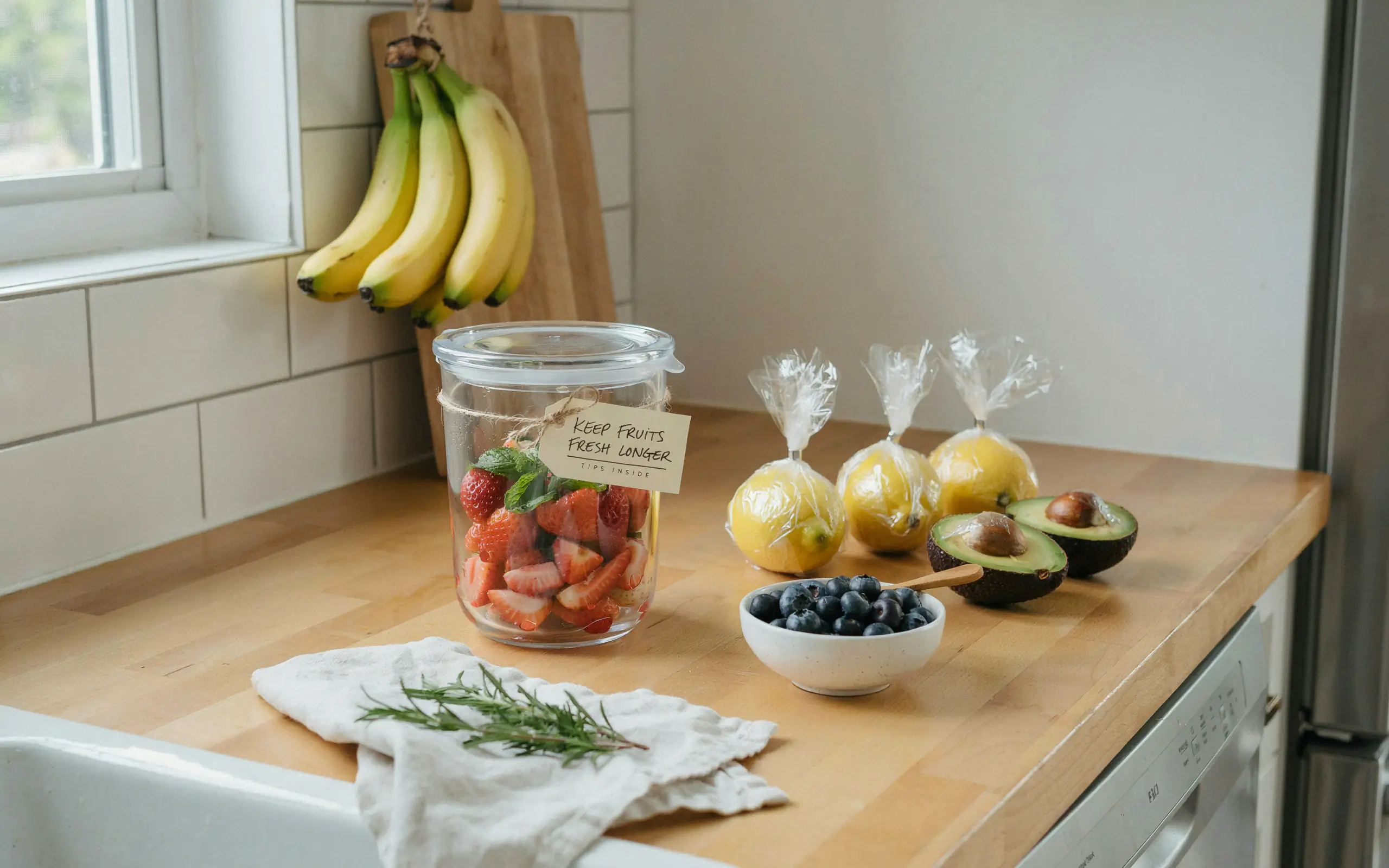
Want to know how to keep fruits fresh longer? This complete guide shares simple storage rules, ethylene gas facts, and fridge tips to reduce waste and save money.
We have all been there. You buy a bag of beautiful berries or a bunch of ripe bananas with the best intentions. A few days later, you find them soft, bruised, or covered in mold. It feels like throwing money straight into the trash.
The good news is that you can change this. You can learn how to keep fruits fresh longer with a few simple changes. It is not about magic. It is about understanding what your fruit needs.
Fresh produce is a big part of a healthy diet. Fruits give us vitamins, fiber, and natural sweetness. But they are also living things. Even after we pick them, they continue to breathe and change. This is why they do not last forever.
I want to share practical tips that really work. These are methods I use in my own kitchen. They come from food scientists and experts who study this every day. By the end of this guide, you will know exactly how to store different fruits. You will waste less food and save more money.
Let us get started.
Why Do Fruits Spoil So Fast?
Before we talk about solutions, it helps to know the problem. Fruits spoil for a few main reasons.
First, they respire. This means they use their stored energy and release moisture and gases. This process continues after harvest.
Second, they release a natural gas called ethylene. This is a plant hormone that triggers ripening. Some fruits produce a lot of it. Others are very sensitive to it. When these two types are stored together, the sensitive ones ripen and rot much faster.
Third, moisture and microbes play a big role. Mold and bacteria love damp places. If you wash your fruit and store it wet, you are inviting mold to grow. Damaged or bruised fruit also spoils faster because the skin protects the inside.
Understanding these factors is the first step. Once you know why fruit goes bad, you can take action to stop it.
The Golden Rules of Fruit Storage
There are a few basic rules that apply to almost all fruit. Follow these, and you will be well on your way.
Rule 1: Do Not Wash Until You Eat
This is one of the most important tips. Washing adds moisture. Moisture leads to mold. Most fruit you buy has already been washed commercially. Keep it dry until you are ready to enjoy it.
Rule 2: Separate Ethylene Producers from Sensitive Items
This is a big one. Some fruits give off a lot of ethylene gas. Others are hurt by it. Keep them apart. I will give you a full list in the next section.
Rule 3: Use the Right Temperature
Not all fruit belongs in the fridge. Some need to ripen at room temperature first. Others should go straight into the cold. Knowing which is which makes a huge difference.
Rule 4: Let Air Flow
Many fruits need good air circulation. Storing them in a sealed plastic bag can trap moisture and speed up decay. Use perforated bags or open containers for best results.
Understanding Ethylene Gas: The Ripening Hormone
Ethylene is a natural gas that fruits produce. It acts like a signal that tells fruit to ripen. This is a helpful process, but it can also cause problems.
Some fruits are high producers. They create a lot of ethylene. These include:
Other fruits are sensitive to ethylene. They will ripen too fast and spoil if they are near high producers. These include:
The solution is simple. Keep these two groups separate. Do not store apples next to your berries. Do not put bananas in the same bowl as your grapes. This one change can help you keep fruits fresh longer than you thought possible.
The Fridge vs. The Counter: Where to Store What
This is where many people get confused. Should you put everything in the fridge? The answer is no.
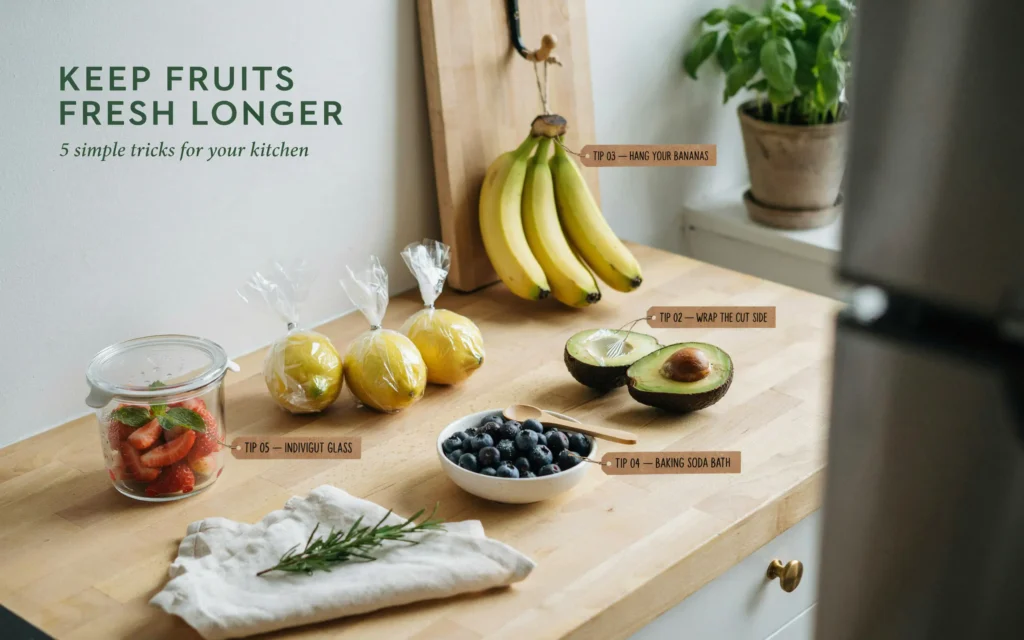
Fruits That Ripen on the Counter
Some fruits need warm room temperature to develop their full flavor and sweetness. Put these on your counter:
Once these fruits are ripe, you can move them to the fridge. This will slow down the ripening process and give you a few extra days.
Kristin Kirkpatrick, a registered dietitian at Cleveland Clinic, explains that bananas should not be in the same bowl as other fruits because they emit a gas that can make everything ripen faster.
Fruits That Belong in the Fridge
Some fruits do best in the cold from the start. Put these in the fridge:
- Apples
- Berries (strawberries, blueberries, raspberries)
- Cherries
- Grapes
- Citrus fruits (oranges, lemons, limes)
Apples actually fare best when stored in a plastic bag or airtight container inside the refrigerator. They can last for weeks this way.
Quick Storage Guide for Common Fruits
| Fruit | Storage Place | Ripening Tips |
|---|---|---|
| Apples | Fridge | Store in a plastic bag. They produce ethylene. |
| Bananas | Counter | Keep away from other fruits. Move to fridge when ripe. |
| Berries | Fridge | Do not wash. Store in a jar with a paper towel. |
| Avocados | Counter then Fridge | Ripen on the counter. Refrigerate once soft. |
| Citrus | Fridge | They stay juicy longer in the cold. |
| Peaches | Counter then Fridge | Ripen at room temperature. Refrigerate when soft. |
| Tomatoes | Counter | Never refrigerate whole tomatoes. It ruins their texture. |
Specific Tips for Common Fruits
Let us look at some popular fruits in more detail. Each one has its own needs.
How to Keep Berries Fresh Longer
Berries are delicious but fragile. They are also very sensitive to moisture and mold.
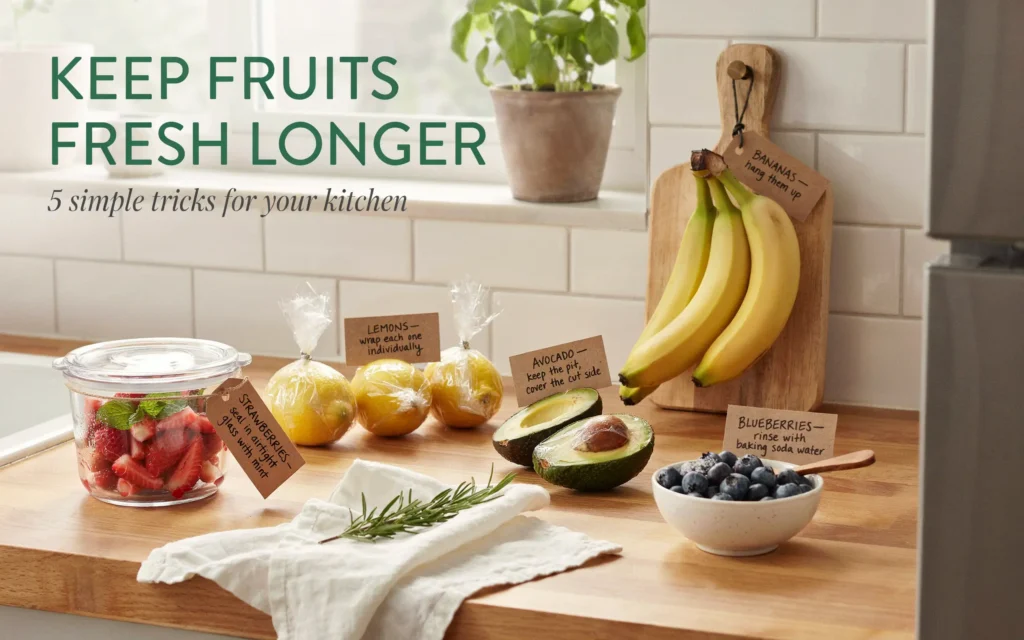
The best way to store berries is in a glass jar in the fridge. Place a paper towel at the bottom of the jar. This absorbs extra moisture. Do not wash them first. Only wash them right before you eat them.
If you see one berry with mold, remove it immediately. It can release spores that spread to the others.
How to Store Bananas
Bananas are tricky. They produce a lot of ethylene gas. This makes them ripen quickly and also affects nearby fruits.
Keep bananas on the counter, away from other produce. If you buy a bunch, you can separate them. This slows down the ripening process because they are not all touching.
Once bananas are fully ripe, you can put them in the fridge. The skin will turn brown, but the inside will stay good for several more days.
How to Keep Apples Crisp
Apples are best stored in the refrigerator. They can last for weeks or even months in the cold.
Put them in a plastic bag with some holes for air. This helps maintain moisture without trapping too much gas. Remember that apples are ethylene producers. Keep them away from sensitive vegetables and fruits.
How to Store Avocados
Avocados are unique. They do not ripen on the tree. They ripen after they are picked.
Leave unripe avocados on the counter until they yield to gentle pressure. Once they are ripe, move them to the fridge. They can last up to five days there.
If you only use half an avocado, leave the pit in the other half. Sprinkle it with lemon juice and wrap it tightly in plastic. This prevents browning.
How to Store Citrus Fruits
Oranges, lemons, and limes do best in the fridge. Many people keep them in a bowl on the counter. This is fine for a few days, but they will last much longer in the cold.
The refrigerator helps them retain their juiciness and firm skin. They can stay fresh for up to three weeks in the fridge.
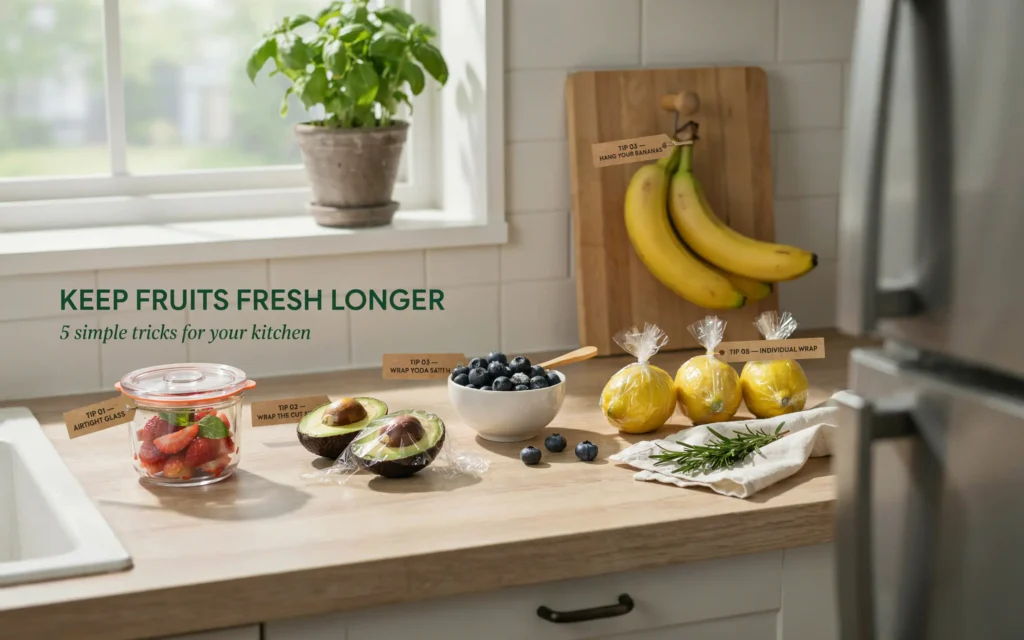
How to Keep Cut Fruit Fresh
Once you cut a fruit, its shelf life becomes much shorter. The protective skin is gone. Now it is exposed to air and bacteria.
To keep cut fruit fresh longer, store it in an airtight container in the fridge. This reduces exposure to air and slows spoilage.
For fruits that brown quickly, like apples and pears, add a little lemon juice. This stops the browning process. You can also use a mixture of honey and water. Soak the cut fruit for about 30 seconds.
The Role of Humidity in Your Fridge
Your refrigerator likely has a crisper drawer. Many of these drawers have a humidity setting. This is a helpful feature.
The low-humidity setting is best for fruits. It helps prevent fruit from ripening too fast. This setting allows ethylene gas to escape.
The high-humidity setting is better for vegetables. It keeps them crisp and prevents wilting.
If your fridge has two drawers, use one for fruit and one for vegetables. This keeps ethylene gas away from sensitive veggies.
Ethylene Producers and Sensitive Fruits
| Ethylene Producers (Keep Separate) | Ethylene Sensitive (Keep Away) |
|---|---|
| Apples | Berries |
| Bananas | Broccoli |
| Avocados | Cucumbers |
| Peaches | Grapes |
| Pears | Leafy Greens |
| Tomatoes | Watermelon |
| Mangoes | Peppers |
Using the Freezer to Save Fruit
Freezing is one of the best ways to preserve fruit. It stops the ripening process completely.
You can freeze almost any fruit. Berries, bananas, mangoes, and peaches all freeze well.
Here is how to do it right:
- Wash and dry the fruit.
- Remove any pits or stems.
- Spread the fruit in a single layer on a baking sheet.
- Freeze until solid.
- Transfer to an airtight container or freezer bag.
Frozen fruit is perfect for smoothies, baking, or making jams. It is a great way to use fruit before it goes bad.
Common Storage Mistakes to Avoid
Even with good intentions, we all make mistakes. Here are some common ones to avoid.
Mistake 1: Storing Everything Together
This is the biggest mistake. Mixing ethylene producers with sensitive fruits causes early spoilage. Keep apples and bananas away from berries and leafy greens.
Mistake 2: Washing Before Storing
I have said this before, but it is worth repeating. Moisture causes mold. Only wash fruit right before you eat it.
Mistake 3: Using Airtight Bags for Everything
Some fruits need air. Apples can go in a bag with holes. But many fruits will rot faster in a sealed bag. Use containers that allow some airflow.
Mistake 4: Overcrowding the Fridge
Your fridge needs good air circulation to work properly. If it is packed too tight, the cold air cannot flow. This creates warm spots where fruit spoils faster.
Advanced Tips to Keep Fruits Fresh Longer
Once you have mastered the basics, you can try some extra steps.
Use Produce Preserving Tools
There are products that absorb ethylene gas. One example is the Bluapple Produce Saver. It can be placed in your fridge or fruit bowl to absorb ethylene. This is a simple way to keep fruits fresh longer.
Check Your Fruit Regularly
Inspect your fruit every day or two. Remove any pieces that are starting to spoil. One bad apple really can spoil the whole bunch.
Buy What You Need
This sounds simple, but it is important. Buy only as much fruit as you can eat in a few days. This is especially true for delicate fruits like berries and peaches.
Frequently Asked Questions
Can I store bananas in the fridge?
Yes, but only after they are fully ripe. The skin will turn dark brown, but the inside will stay fresh and firm for several more days. Do not put green bananas in the fridge. They will not ripen properly.
Should I wash berries before storing them?
No. You should never wash berries before storing them. The extra moisture encourages mold growth. Only wash them right before you eat them.
How do I keep cut apples from turning brown?
Sprinkle cut apples with lemon juice or soak them in a mixture of honey and water. This stops the oxidation process that causes browning. Store them in an airtight container in the fridge.
What fruits should not be stored together?
Fruits that produce ethylene gas should not be stored with ethylene-sensitive fruits. Keep apples, bananas, and avocados away from berries, grapes, and leafy greens.
How long can fruit last in the fridge?
It depends on the fruit. Apples can last for weeks. Berries may only last a few days. Citrus fruits can last for two to three weeks. Always check your fruit regularly and remove any spoiled pieces.
Is it better to store fruit in plastic or glass?
Glass jars are excellent for berries. Plastic bags with holes work well for apples. The key is to control moisture and allow some airflow. Avoid completely sealed plastic bags for most fruits.
Conclusion
Learning how to keep fruits fresh longer is a skill that saves money and reduces waste. It starts with understanding why fruit spoils. Ethylene gas, moisture, and temperature are the main factors.
The simple rules are easy to follow. Keep ethylene producers away from sensitive fruits. Do not wash fruit before storing it. Use the right temperature for each type of fruit. Move ripe fruit to the fridge.
These small changes make a big difference. You will enjoy fresher, tastier fruit for days longer. You will throw away less food. Your grocery budget will stretch further.
As food safety specialist Christi Evans from Oklahoma State University Extension says, “Proper storage makes a difference and results in less wasted food”.
Start with one or two of these tips today. You will see results right away. Your fruit will thank you.
Related posts
 Why Do Dogs Stare at Walls? Common Causes and When to Worry
Wondering why do dogs stare at walls? Discover the sensory, behavioral, and medical reasons behind this behavior, and learn when to contact your veterinarian. When you…
 How to Test Car Wiring for Continuity Using a Multimeter
Learn how to test car wiring for continuity safely. Find broken automotive wires, check connector ports, and diagnose electrical issues with a multimeter. Testing car wiring…
 Why Organizing Space Reduces Stress: The Mental Clarity Connection
Discover why organizing space reduces stress. Learn how a tidy environment lowers cortisol, improves focus, and creates a sense of calm in your daily life. Organizing…