
Why Do Nails Have Ridges
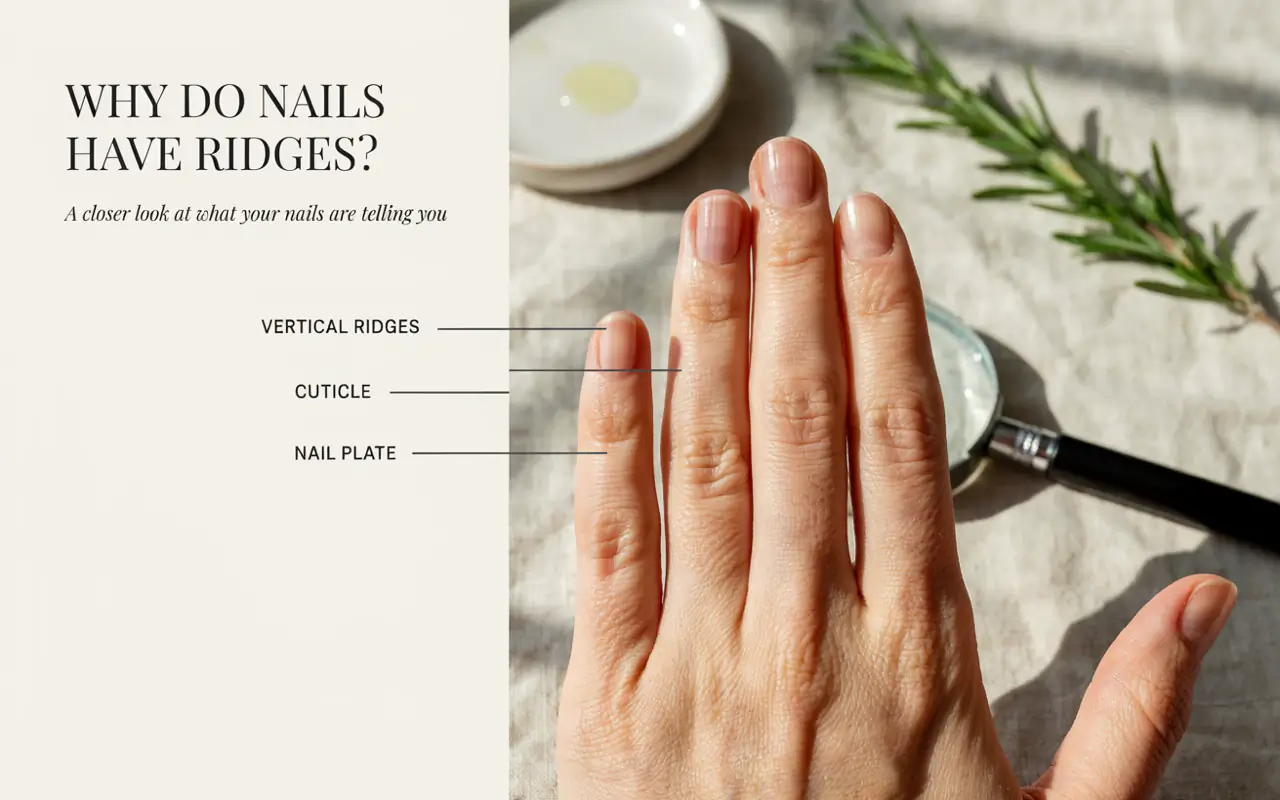
Vertical ridges are common with age, but why do nails have ridges in other cases? Learn about causes from nutrient gaps to health conditions, plus simple care tips for smoother nails.
Have you ever looked at your fingernails and noticed tiny lines running up and down? Maybe you have grooves that go across from one side to the other. You are not alone. Many people see these marks and wonder why do nails have ridges. The short answer is that ridges can come from many things. Some are harmless signs of getting older. Others may point to a lack of certain vitamins or even a health issue that needs attention.
Your nails can tell you a lot about your overall health. They grow from a area under your cuticle called the nail matrix. This part of your finger works like a factory that produces new nail cells. When something interrupts this process, ridges can form. The good news is that most ridges are not dangerous. But it helps to know what they mean and what you can do about them.
In this article, we will look at the different types of ridges, what causes them, and when you should talk to a doctor. We will also share simple tips to keep your nails looking smooth and healthy.
Vertical vs. Horizontal Ridges: What’s the Difference?
Not all ridges are the same. They come in two main types. Each type has different causes and meanings.
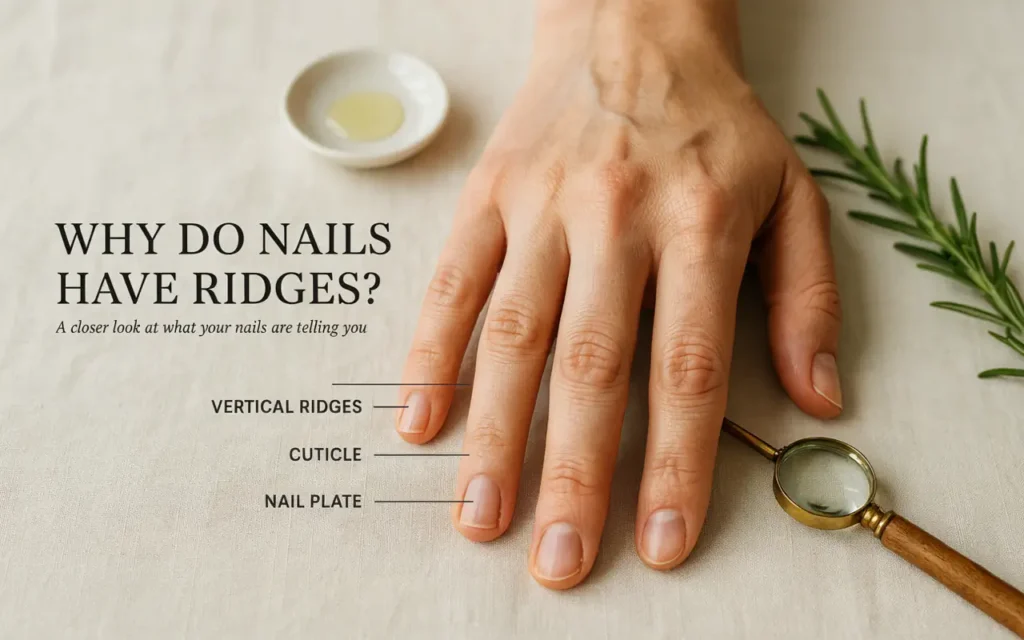
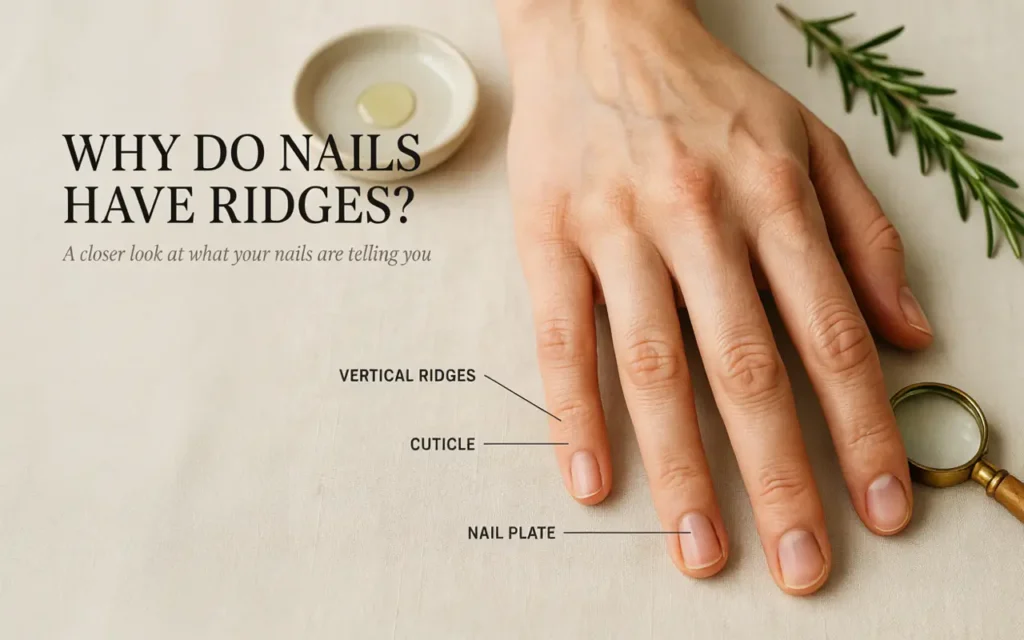
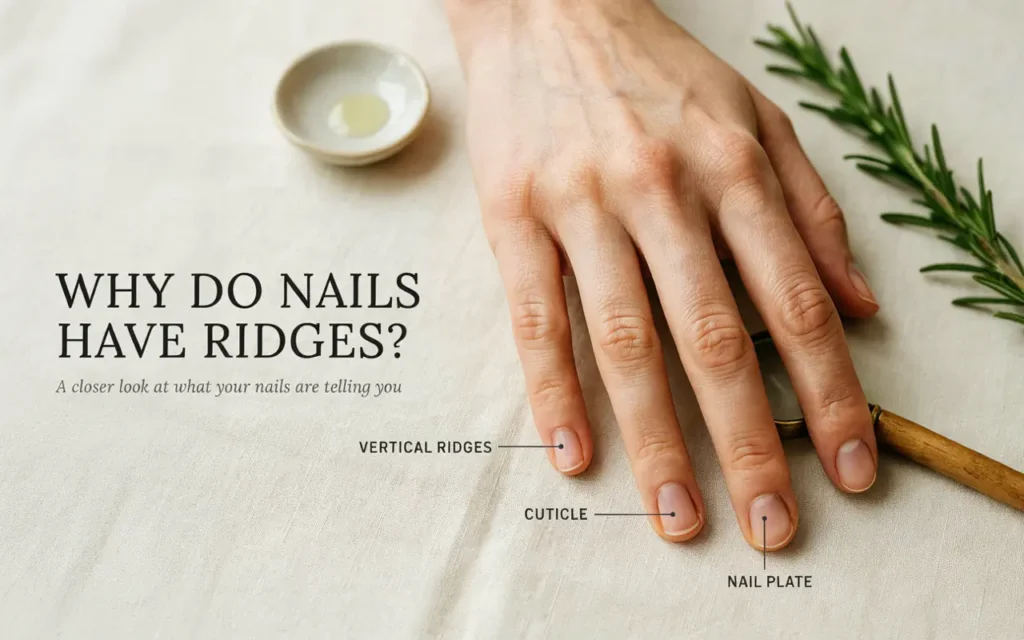
Vertical ridges run from your cuticle to the tip of your nail. They look like long, thin lines going up and down. These are the most common type. Most people get them as they grow older. Horizontal ridges go across your nail from one side to the other. These are less common and often point to something that stopped your nail from growing normally for a while.
Here is a quick comparison to help you understand the difference.
| Feature | Vertical Ridges | Horizontal Ridges |
|---|---|---|
| Direction | Run from cuticle to nail tip | Run across the nail width |
| Common name | Longitudinal ridges, onychorrhexis | Beau’s lines |
| Typical cause | Aging, minor nutritional gaps | Illness, injury, severe stress |
| How serious | Usually harmless | May need a doctor’s check |
| Do they grow out? | Stay, may become more with age | Grow out as the nail grows |
Vertical ridges are often a normal part of life. As we age, our nail matrix slows down its cell production. This leads to those fine lines that many of us see. Horizontal ridges, on the other hand, are different. They appear when your nail growth stops for a short time. This can happen after a high fever, a bad infection, or even a very stressful event.
Common Reasons Why Do Nails Have Ridges
Now let us get into the specific reasons why do nails have ridges. We will break them down so you can see which one might apply to you.
The Aging Process
This is the number one reason for vertical ridges. As we get older, our bodies change. Our nails grow more slowly. The cells that make up the nail plate become less organized. This creates those fine lines that run from the cuticle to the tip. Dr. Miest from the Mayo Clinic notes that these ridges are actually completely fine and just a part of normal aging. If you are over 40 and notice these lines, it is likely just your nails showing their age. There is no need to worry.
Nutritional Gaps
What you eat shows up in your nails. Your body needs a range of nutrients to build strong, smooth nails. When you do not get enough of certain vitamins or minerals, ridges can appear.
Iron is a key player. Low iron levels can cause vertical ridges to form. Iron helps carry oxygen to your nail matrix. Without enough oxygen, your nails cannot grow properly. Other nutrients matter too. A lack of protein, zinc, or B vitamins can also lead to ridges. Some people see ridges when they are not eating a balanced diet. Others may have trouble absorbing nutrients due to digestive issues.
Physical Trauma and Nail Injury
Have you ever shut your finger in a door or dropped something heavy on your toe? That kind of injury can leave a mark on your nail. Trauma to the nail matrix can cause a ridge to form. This is often a horizontal ridge or a dent. It may take weeks or months for the damaged area to grow out. Once the healthy nail grows back, the ridge usually disappears.
Other forms of trauma are less obvious. Repeated pressure from typing or playing an instrument can cause ridges. Even aggressive manicures or using acrylic nails for a long time can damage the nail bed. If you pick at your cuticles or bite your nails, you are also putting stress on the nail matrix. This can lead to permanent ridges over time.
Skin Conditions
Your skin and nails are closely connected. Skin problems like eczema and psoriasis can affect your nails. These conditions cause inflammation that can change how your nails grow. Vertical ridges may appear as a result. Another condition called trachyonychia makes nails look rough and dull. It causes many small vertical ridges that feel like sandpaper. This condition is more common in children but can affect people of all ages.
Thyroid and Other Health Issues
Sometimes ridges are a sign of something going on inside your body. Hypothyroidism, or an underactive thyroid, can make your nails brittle and ridged. Your thyroid controls your metabolism. When it slows down, your nails may become dry and develop vertical lines. Rheumatoid arthritis can also cause nail changes, including longitudinal ridging known as onychorrhexis.
More serious conditions like heart disease or liver problems can affect your nails too. When your blood circulation is poor, your nails may not get the nutrients they need. This can lead to ridges and other changes. While these causes are less common, they show why it is important to pay attention to your nails.
Other Contributing Factors
Some medications can cause ridges as a side effect. Chemotherapy drugs are known to interrupt nail growth. Long-term use of certain acne medications can also affect your nails. Repeated exposure to water, harsh soaps, or nail polish remover with acetone can dry out your nails and make ridges more visible.
When Should You See a Doctor?
Most of the time, ridges are nothing to fear. Vertical ridges are usually just a cosmetic issue. But there are times when you should see a healthcare provider. Here are some signs that you need a checkup.
- Sudden changes: If your nails develop ridges quickly or become much worse, see a doctor.
- Horizontal ridges: These can point to a past illness or a current health problem. Do not ignore them.
- Color changes: If your nails turn yellow, green, or black, something may be wrong.
- Pain or swelling: If your nails hurt or the skin around them is red and swollen, get help.
- Other symptoms: If you have ridges along with fatigue, weight changes, or other issues, talk to a professional.
Your doctor can look at your nails and ask about your health history. They may run blood tests to check for vitamin deficiencies or thyroid problems. Catching a problem early makes it easier to treat.
How to Reduce the Look of Nail Ridges
If you do not like the look of ridges, there are things you can try. Some methods help smooth the surface. Others work on the root cause. Here are some practical steps.
At-Home Care Tips
Keeping your nails moisturized is a big help. Dry nails make ridges more noticeable. Use a hand cream or cuticle oil every day. Look for products with jojoba oil or almond oil. These oils are rich in vitamins and fatty acids that nourish your nails. Apply the oil before bed and let it soak in overnight.
You can also gently buff your nails. Buffing smooths out the surface and makes ridges less visible. Do this sparingly, though. Too much buffing can thin your nails and make them weak. Use a fine-grit buffer and move in one direction. Stop when the surface feels even.
Soaking your nails in warm water with a little Epsom salt can help too. This softens the nail and makes it easier to care for. Just do not soak for too long, as too much water can dry out your nails.
Dietary Changes
What you put on your plate matters for your nails. If you think a nutrient gap is causing your ridges, try adding more of these foods to your diet.
| Nutrient | Why It Helps | Food Sources |
|---|---|---|
| Iron | Carries oxygen to nail matrix | Red meat, spinach, lentils |
| Zinc | Supports protein and keratin production | Seafood, pumpkin seeds, nuts |
| Biotin | Strengthens nails and prevents brittleness | Eggs, nuts, salmon |
| Protein | Builds the keratin that makes up nails | Chicken, fish, beans, tofu |
| Vitamin B12 | Helps with cell production | Meat, dairy, fortified cereals |
Dr. Rhett Drugge, editor-in-chief of The Electronic Textbook of Dermatology, points out that low thyroid and B12 deficiency are two medical problems that can cause nail ridges. If you think you may have a deficiency, consider a blood test. Your doctor can tell you what you need.
Protect Your Nails
Prevention is better than treatment. Wear gloves when you wash dishes or use cleaning products. This protects your nails from harsh chemicals. Avoid using acetone-based nail polish removers. They can dry out your nails and make ridges worse. Give your nails a break from acrylics and gel manicures from time to time. Let your natural nails breathe and recover.
Frequently Asked Questions
Q: Can stress cause ridges in nails?
Yes. Severe emotional stress can cause horizontal ridges called Beau’s lines. When you go through a very stressful time, your body puts energy toward more important functions. Nail growth slows or stops. This creates a line across your nail. The ridge will grow out as your nail grows.
Q: Are ridges in nails a sign of vitamin deficiency?
They can be. Iron deficiency is a common cause of vertical ridges. Lack of zinc, protein, or B vitamins can also lead to ridges. Eating a balanced diet with plenty of nutrients can help prevent this.
Q: Why do nails have ridges as we get older?
As we age, our nail matrix produces new cells more slowly. The cells are also less organized. This leads to vertical ridges that run from the cuticle to the tip. This is a normal part of aging and not a cause for concern.
Q: Can I buff out ridges on my nails?
Yes, you can gently buff your nails to smooth out ridges. Use a fine-grit buffer and go in one direction. Do this only once in a while. Buffing too often can thin your nails and make them weak.
Q: When should I worry about ridges in my nails?
You should see a doctor if you notice sudden changes, horizontal ridges, color changes, or pain. These signs can point to an underlying health condition that needs treatment.
Q: Do horizontal ridges go away?
Yes, horizontal ridges usually grow out as your nail grows. This can take a few months. Once the cause of the ridge is gone, your nail will return to normal.
Q: Can ridges in nails be a sign of thyroid problems?
Yes. Hypothyroidism can cause thick, brittle nails with vertical ridges. If you have other symptoms like fatigue or weight gain, talk to your doctor.
Conclusion
So, why do nails have ridges? The answer depends on the type of ridge and your personal health. Vertical ridges are often a normal sign of aging. They are harmless and do not need treatment. Horizontal ridges, however, can point to a past illness, injury, or a nutrient shortfall. While most ridges are not dangerous, they can sometimes be a clue that something else is going on in your body.
The best approach is to pay attention to your nails. Keep them moisturized and protected. Eat a diet rich in iron, zinc, protein, and vitamins. If you notice sudden changes or other symptoms, do not hesitate to see a doctor. Your nails are a small but helpful window into your overall health. Taking care of them is a simple way to take care of yourself.
Related posts
 Why Do Dogs Stare at Walls? Common Causes and When to Worry
Wondering why do dogs stare at walls? Discover the sensory, behavioral, and medical reasons behind this behavior, and learn when to contact your veterinarian. When you…
 How to Test Car Wiring for Continuity Using a Multimeter
Learn how to test car wiring for continuity safely. Find broken automotive wires, check connector ports, and diagnose electrical issues with a multimeter. Testing car wiring…
 Why Organizing Space Reduces Stress: The Mental Clarity Connection
Discover why organizing space reduces stress. Learn how a tidy environment lowers cortisol, improves focus, and creates a sense of calm in your daily life. Organizing…