
Can I Gain Muscle At Home

Wondering ‘can I gain muscle at home’? Absolutely. With bodyweight exercises, resistance bands, and progressive overload, you can build significant muscle without a gym. This guide shows you exactly how.
You want to get stronger. You want to see your muscles grow. But you do not have a gym membership. Maybe you do not like crowded workout spaces. Or perhaps you just feel more comfortable training in your own living room.
So you ask yourself: can I gain muscle at home?
The answer is yes. A clear and strong yes. Many people think you need heavy barbells and fancy machines. They think muscle growth only happens in a gym. That is simply not true.
Your body does not know if you are in a basement or a fitness center. It only knows tension, effort, and recovery. Give your muscles a reason to grow, and they will grow. Where you train matters far less than how you train.
This article walks you through every step. You will learn the science, the exercises, the tools, and the food. By the end, you will have a full plan. And you will feel confident that can I gain muscle at home is a question you no longer need to ask.
The Short Answer to “Can I Gain Muscle at Home?”
Yes, you can. But let me be clear. It takes work. It takes consistency. And it takes a smart approach.
Many people start home workouts with high hopes. They do twenty pushups and call it a day. Then they wonder why nothing changes. That is not how muscle growth works.
To build muscle, you need three things. First, you need enough resistance to challenge your muscles. Second, you need to add more challenge over time. Third, you need proper food and rest.
The good news is you can get all three at home. You do not need a squat rack or a cable machine. Your own body weight works great. So do resistance bands, a few dumbbells, or even jugs of water.
So the next time someone says you cannot grow muscle at home, you can smile. You know the truth. And you will have the results to prove it.
“Consistency beats intensity every time. A so-so workout you do every day beats a perfect workout you do once a month.” – Mark Rippetoe
What Science Says About Home Muscle Growth
Let us look at the facts. Muscle growth happens when you create mechanical tension. That is a fancy way of saying your muscles work hard against a force. That force can be a weight, a band, or your own body.
Studies show that you can grow muscle with loads as light as thirty percent of your max effort. You just need to take each set close to failure. That means you push until you cannot do another clean rep.
Home workouts fit this perfectly. A set of deep bodyweight squats can bring your legs close to failure. Pushups can do the same for your chest and arms. Pullups on a doorframe bar work your back hard.
| Factor | Gym Training | Home Training |
|---|---|---|
| Equipment variety | Many machines and free weights | Bodyweight, bands, basic dumbbells |
| Progressive overload | Easy with plate weights | Requires creativity but very possible |
| Distractions | Can be high (people, noise) | Usually low (your space) |
| Cost | Monthly fees, travel | Minimal or one-time purchases |
| Time efficiency | Travel time included | Start anytime, no commute |
The table shows home training has clear benefits. You save time and money. You control your environment. And you can still apply all the key rules of muscle growth.
So when you ask can I gain muscle at home, science says yes. You just need to follow the same principles gym goers use. No magic. No shortcuts. Just smart work.
How to Build Muscle Without Equipment
You do not need any gear to start. Your body alone is enough. But you must know which exercises work best and how to make them harder over time.
Bodyweight Exercises That Work
Some bodyweight moves are better than others. You want exercises that use large muscle groups. You also want ones that allow you to add difficulty as you get stronger.
Here are the top five bodyweight exercises for home muscle growth:
- Pushups – Works chest, shoulders, triceps, and core.
- Pullups or bodyweight rows – Works back and biceps. (Use a doorframe bar or a sturdy table for rows.)
- Squats – Works quads, hamstrings, and glutes.
- Lunges – Works legs and improves balance.
- Plank to downward dog – Works shoulders and core while adding range.
These five moves hit your whole body. You can mix them into a full routine. And you can adjust them to match your current strength level.
Progressive Overload at Home
Progressive overload means making your workout harder over time. Without it, your muscles stop growing. They adapt to the same stress and say, “We got this. No need to get bigger.”
At a gym, you add five pounds to the bar. At home, you need other methods. Here are six ways to increase difficulty without weights:
- Do more reps in each set.
- Do more sets total.
- Rest less between sets.
- Slow down the movement. Take three seconds to lower, then explode up.
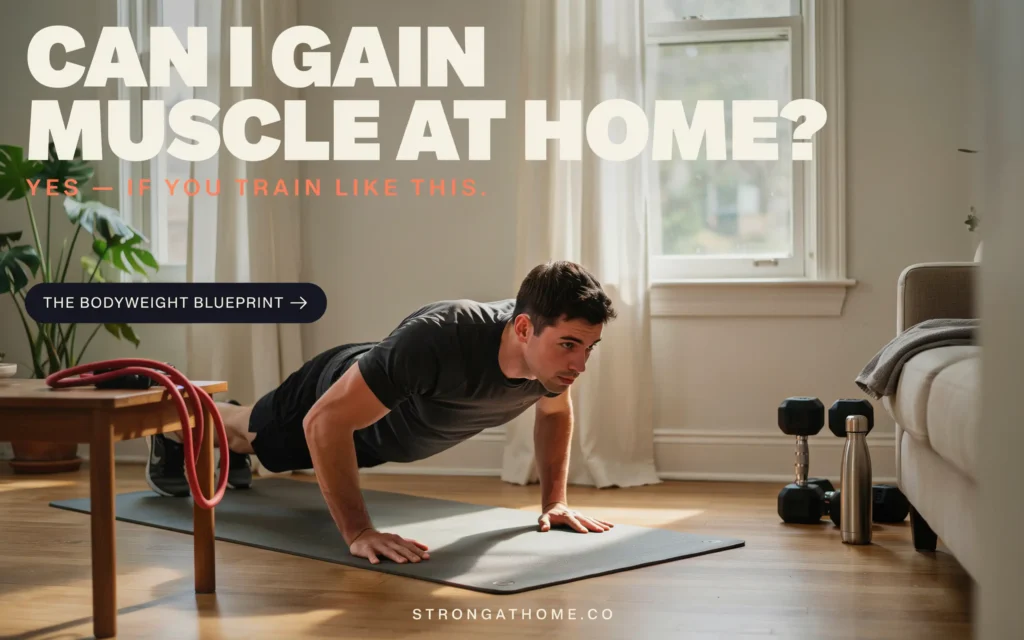
- Change your leverage. For pushups, move your hands closer together or lift your feet.
- Add pauses. Hold the hardest part of the move for two seconds.
These methods work. A slower pushup with a pause at the bottom feels much harder than a fast one. Your muscles do not know the difference between a heavier weight and a harder version of the same move.
“The resistance you create at home can be just as effective as any machine. It is about intention, not equipment.” – Bret Contreras
Using Simple Tools for Better Results
Bodyweight alone can take you far. But a few cheap tools make home muscle growth easier and faster. You do not need much. Even one or two items open up many new exercises.
Resistance Bands
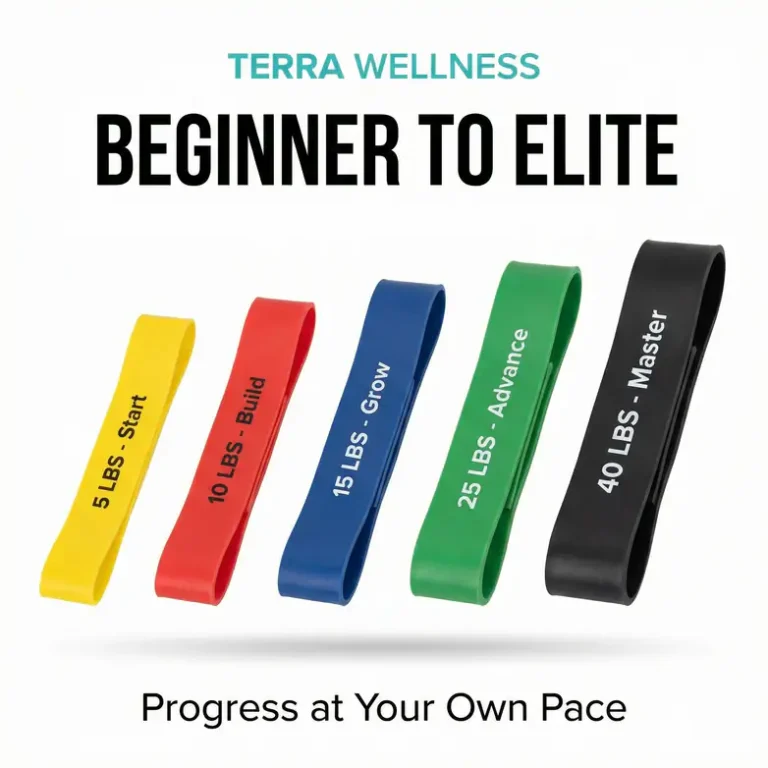
Bands are small, cheap, and powerful. They take up almost no space. Yet they add real resistance to your moves.
You can use bands for:
- Banded pushups (wrap band across your back and hold ends in hands)
- Band squats (stand on band, hold handles on shoulders)
- Band rows (loop band around a pole, pull toward chest)
- Band curls (stand on band, curl handles up)
Bands also let you add resistance to the hardest part of a move. That is very helpful for pullups or dips. And you can easily change the band thickness to make the exercise harder or easier.
Dumbbells and Household Items
A pair of adjustable dumbbells is a great investment. But you can start with things you already own.
Gallon water jugs weigh about eight pounds each. Backpacks filled with books work well for rows or squats. A heavy cast iron skillet can become a weight for lunges. Get creative.
If you decide to buy equipment, keep it simple. One or two kettlebells or a set of resistance bands is enough. You do not need a full gym. Many strong people built their bodies with very little.
| Day | Workout Focus | Example Exercises | Approx Time |
|---|---|---|---|
| Monday | Upper body | Pushups, band rows, pike pushups, band curls | 30 min |
| Tuesday | Lower body | Squats, lunges, glute bridges, calf raises | 30 min |
| Wednesday | Rest | Light walking or stretching | 15-20 min |
| Thursday | Upper body | Diamond pushups, pullups (or rows), triceps dips, band face pulls | 30 min |
| Friday | Lower body | Bulgarian split squats, step ups, reverse lunges, band leg curls | 30 min |
| Saturday | Full body | Burpees, mountain climbers, planks, band deadlifts | 25 min |
| Sunday | Rest | Complete rest or gentle yoga | – |
This table gives you a simple week. Adjust it to your schedule. The key is showing up and pushing hard on work days.
Nutrition and Rest Matter Just as Much
You can do perfect workouts every day. But if you eat poorly and sleep little, your muscles will not grow. Recovery is when your body repairs and builds new tissue.
Protein Needs for Home Training
Protein gives your muscles the building blocks they need. Without enough protein, your body struggles to add size.
A good target for most people is about 0.7 to 1 gram of protein per pound of body weight. For a 150 pound person, that means 105 to 150 grams of protein each day.
Good home friendly protein sources include:
- Eggs and egg whites
- Greek yogurt or cottage cheese
- Chicken, turkey, or lean beef
- Canned fish like tuna or salmon
- Lentils, beans, and tofu
- Protein powder (whey or plant based)
Spread your protein across three to four meals. This keeps a steady supply for your muscles. And do not forget carbohydrates and healthy fats. Carbs give you energy for hard workouts. Fats help your hormones stay balanced.
Sleep and Stress
Sleep is when most muscle repair happens. Aim for seven to nine hours each night. If you sleep less, your body releases more stress hormones. Those hormones break down muscle tissue.
Speaking of stress, try to keep your daily stress low. High stress over long periods hurts muscle growth. Simple things like deep breathing, short walks, or listening to music help a lot.
“Progressive overload is the secret, no matter where you train. Add a rep, shorten a rest period, or slow a movement. Just do more than last time.” – Dr. Brad Schoenfeld
Common Mistakes When Trying to Gain Muscle at Home
You now know the right way to do things. But let us look at common errors. Avoid these, and you will see much better results.
Not Increasing Difficulty
This is the number one mistake. People do the same workout for months. Thirty pushups, twenty squats, ten lunges. They feel good because they can do it easily. But easy workouts do not grow muscle.
If your last set does not feel very hard, you are not growing. You must push close to failure. And you must keep adding reps, slowing down, or reducing rest.
Skipping Leg Day
Many home trainees hate leg exercises. Squats and lunges feel uncomfortable. They make you breathe hard. So people skip them or do very few.
But your legs are half your muscle mass. Big leg muscles boost your whole body’s growth signals. Plus, strong legs help every other lift. Do not skip leg day. Ever.
Not Tracking Your Workouts
You cannot know if you are improving without writing things down. Use a notebook or a simple phone app. Write the date, exercises, sets, reps, and how hard each set felt.
Next week, look at your notes. Try to beat one thing. One more rep. One more set. Five seconds less rest. Small wins add up fast.
Poor Form
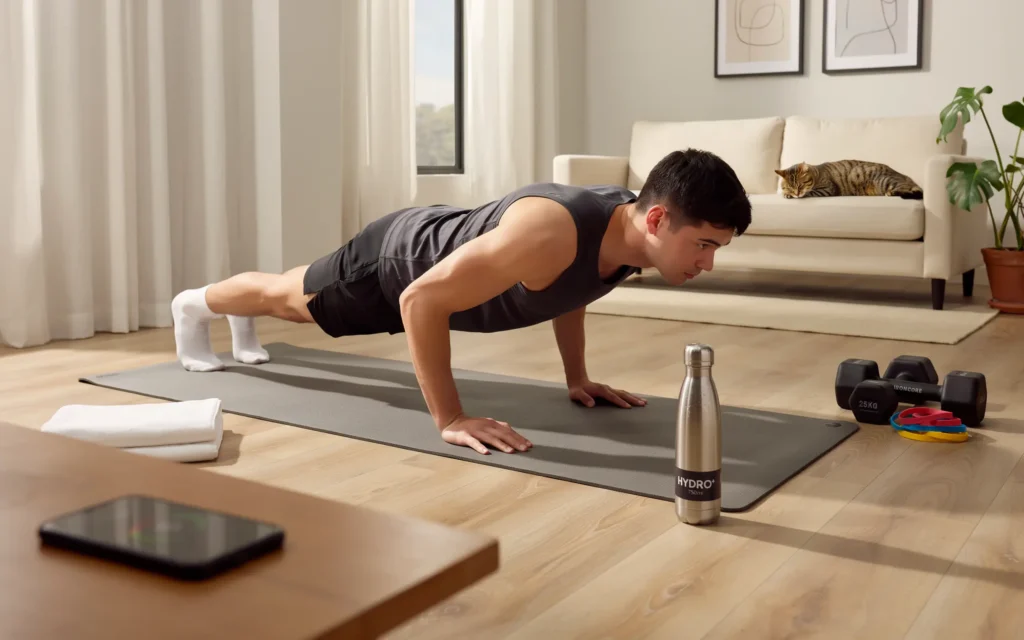
At home, no one watches you. That makes it easy to use bad form. Rushed pushups with a sagging back. Half squats that barely bend your knees. These do very little for muscle growth and can hurt your joints.
Slow down. Watch yourself in a mirror or record your phone video. Compare your form to trusted online tutorials from physical therapists or certified trainers.
Sample Home Workout Routine
Let me give you a full routine you can start tomorrow. This uses only bodyweight and a resistance band. If you do not have a band, use the bodyweight variations.
Upper Body Day (Monday and Thursday)
Do three rounds of this circuit. Rest 60 seconds between rounds.
- Pushups – 8 to 15 reps. Go slow on the way down.
- Band rows – 10 to 15 reps. Squeeze your back at the top.
- Pike pushups – 6 to 10 reps. These build shoulders.
- Band curls – 12 to 15 reps. Keep your elbows still.
- Triceps dips (use a chair) – 8 to 12 reps.
Lower Body Day (Tuesday and Friday)
Do four rounds. Rest 75 seconds between rounds.
- Bodyweight squats – 15 to 25 reps. Go as deep as you can.
- Reverse lunges – 10 to 15 reps per leg.
- Glute bridges – 15 to 20 reps. Squeeze hard at the top.
- Band leg curls (anchor band low) – 12 to 15 reps per leg.
- Calf raises – 20 to 30 reps. Do them on a step if possible.
Full Body Day (Saturday)
Do as many rounds as you can in 20 minutes. Rest only when needed.
- Burpees – 5 to 8 reps
- Mountain climbers – 20 reps total
- Band deadlifts – 12 reps
- Plank hold – 20 to 40 seconds
Start with this routine. After four weeks, add more reps or slow down the movements. When bodyweight squats become too easy, try Bulgarian split squats. Keep pushing.
Frequently Asked Questions
Can I gain muscle at home without any weights?
Yes, absolutely. Bodyweight exercises like pushups, squats, lunges, and pullups can build significant muscle. You just need to use progressive overload. Slow down your reps, add pauses, or do more sets. Many soldiers and gymnasts build impressive physiques using only bodyweight.
How long does it take to see muscle growth at home?
Most people see small changes in 4 to 6 weeks. Noticeable size differences often take 8 to 12 weeks of consistent training. Take progress photos every two weeks. The mirror can lie, but photos do not.
Can I gain muscle at home if I am a beginner?
Yes. Beginners actually grow faster than advanced lifters. Your body is ready to respond to any new training stimulus. Start with easier versions of each exercise. Knee pushups instead of regular pushups. Assisted squats using a chair. Build up slowly.
Do I need to eat more to gain muscle at home?
It depends on your current body fat. If you are lean, yes, eat slightly more than your maintenance calories. If you have extra body fat, you can eat at maintenance or a small deficit. But always eat enough protein. Muscle needs protein even when you lose fat.
What if I cannot do a single pushup or pullup?
No problem. Start with incline pushups. Put your hands on a sturdy table or stairs. The higher your hands, the easier the pushup. For pullups, do negative reps. Jump up to the top position and lower yourself as slowly as possible. In a few weeks, you will get your first full rep.
Is it better to train every day or take rest days?
Rest days are essential. Your muscles grow when you rest, not when you train. Train three to five days per week. Take at least two full rest days. On rest days, light walking or gentle stretching is fine.
Conclusion
So let us go back to your first question. Can I gain muscle at home? Yes, you can. And now you know exactly how.
You learned that muscle growth needs tension, not a gym. You learned how to use your body weight, resistance bands, and simple household items. You learned to apply progressive overload by adding reps, slowing moves, or reducing rest. You saw a full weekly routine you can start today.
Can I gain muscle at home without spending much money? Yes. A few bands or dumbbells help, but you can start with zero equipment.
Can I gain muscle at home if I have limited space? Yes. A small corner of a room is enough. You do not need a garage or a basement.
Can I gain muscle at home while also losing fat? Yes. Eat enough protein and keep a small calorie deficit. Train hard. Your body will change.
The only thing left is action. Pick two or three exercises from this guide. Do them tomorrow. Write down your reps. Then do them again two days later. Make each workout a little harder than the last.
You have everything you need. Your body does not care about the fancy gym. It only cares about hard work, smart progression, and good recovery. Start now. Your stronger self is waiting.
Related posts
 Buy Home Workout Sliders: 2026 Guide to Core Fitness Tools
Looking to buy home workout sliders? Compare top-rated gliding discs and core trainers to find the right equipment for your 2026 fitness routine. Adding core sliders…
 Best Resistance Bands for Beginners: 2026 Buyer Guide
Looking for the best resistance bands for beginners? Compare top-rated loop and handle sets to find the right home gym equipment for your fitness goals. Starting…
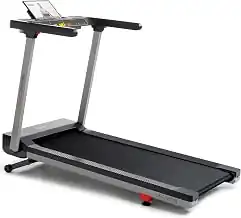 Best Treadmill for Home Use: 2026 Buyer Guide
Finding the best treadmill for home use in 2026. Compare top-rated compact, folding, and incline models to fit your space, budget, and fitness goals. Choosing the…