
How To Train A Puppy To Pee Outside
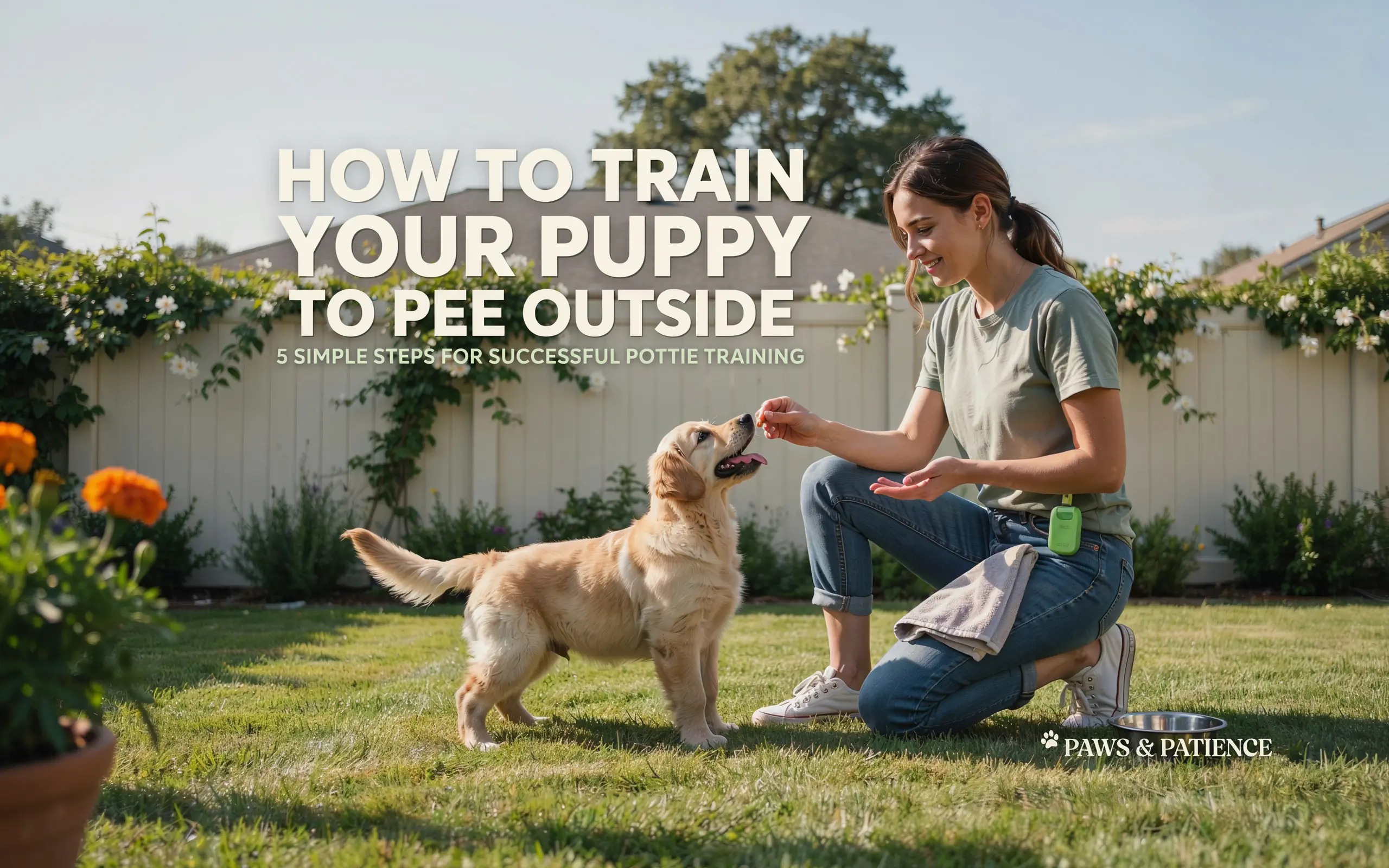
Learn exactly how to train a puppy to pee outside with this complete step-by-step guide. Get a proven schedule, expert tips, and solutions for common problems to make house training faster and easier.
Bringing a new puppy home is one of the most exciting experiences in life. Those tiny paws, floppy ears, and curious eyes can melt anyone’s heart. But then reality hits. You find a small puddle on your rug, and you realize that your adorable new family member has no idea where the bathroom is.
Learning how to train a puppy to pee outside is one of the first and most important skills you will teach your dog. It takes patience, consistency, and a good plan. But do not worry. Every puppy owner has been where you are right now. With the right approach, you can get through this phase and enjoy a clean, happy home with your furry friend.
In this guide, I will share everything you need to know about potty training. You will learn a simple schedule, the best techniques, what to avoid, and how to handle setbacks. Let us get started.
Understanding Your Puppy’s Bladder and Needs
Before you start any training, it helps to know what is going on inside your puppy’s body. Puppies are not born with full bladder control. They simply cannot hold it for very long. This is not their fault. It is just biology.
A general rule is that a puppy can hold their bladder for about one hour for every month of their age. So a two-month-old puppy can hold it for about two hours. A four-month-old puppy might manage four hours. But keep in mind that this is the maximum. During active play, after eating, or when excited, they will need to go much more often.
Most puppies do not gain reliable bladder control until they are around six months old. Even then, occasional accidents are normal up to a year of age. This does not mean you cannot train them early. It just means you need to be realistic about what they can do.
Certified dog trainer Brett Reynolds explains, “Puppies usually have much faster metabolisms, so what goes in must go out fairly rapidly”. They also have smaller bladders and less awareness of their body’s needs. This is why they need so many bathroom breaks throughout the day.
The key point is this: to train a puppy to pee outside, you must take them out frequently enough that they succeed more often than they fail. Every success builds good habits. Every accident sets training back a little.
Essential Supplies You Will Need
Having the right tools makes the whole process smoother. Here is what you should gather before you start:
Get these items before you bring your puppy home. Being prepared saves you stress later.
The Step-by-Step Process: How to Train a Puppy to Pee Outside
Now let us get into the actual training. Follow these steps closely, and you will see progress.
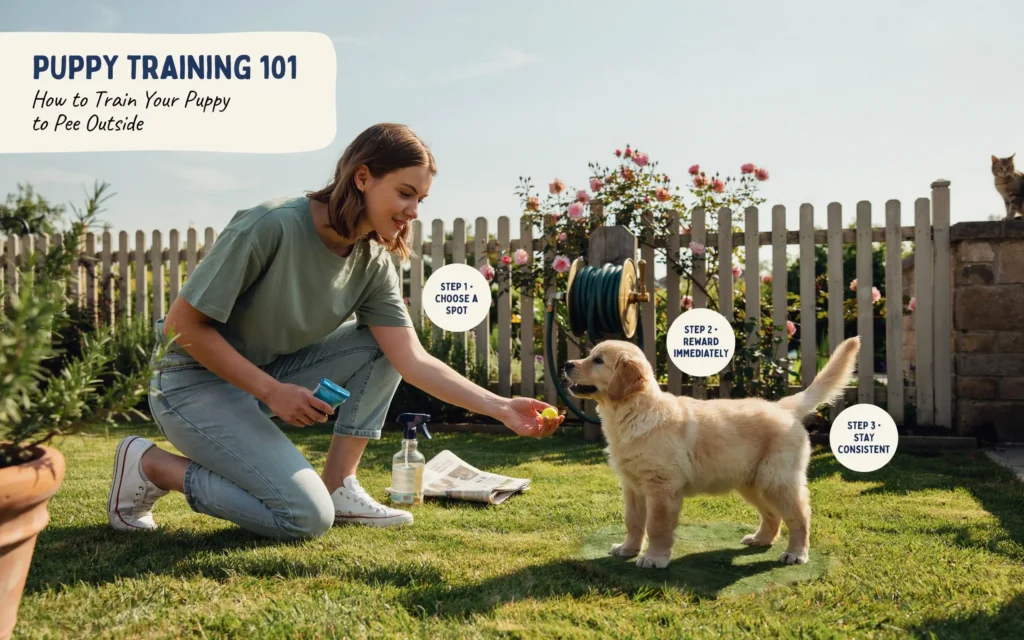
Step 1: Choose a Designated Potty Spot
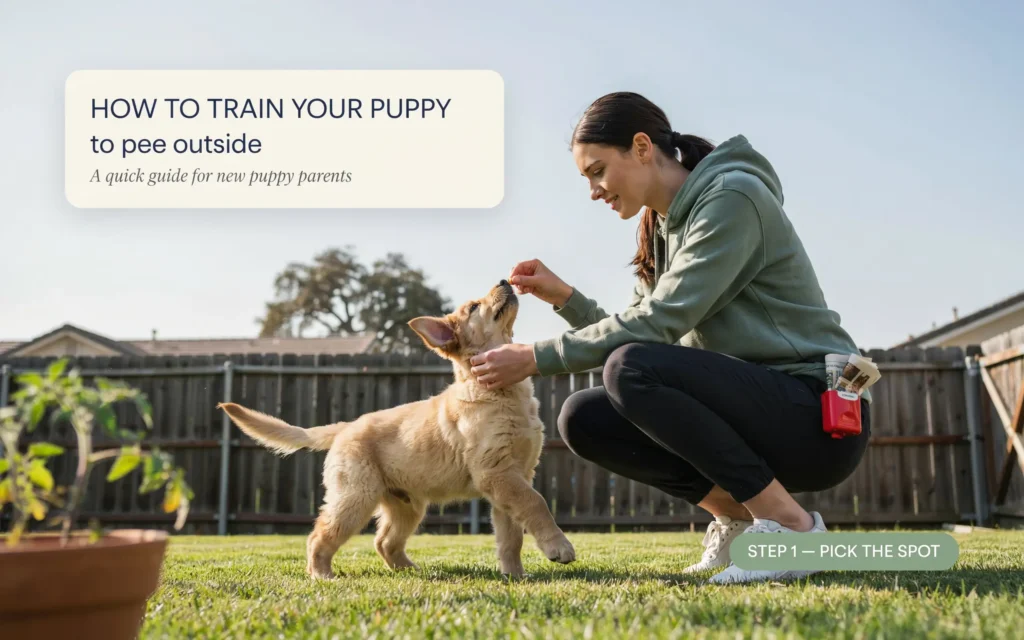
Pick one specific area outside where you want your puppy to go. This should be easy to reach from your door. Take your puppy to this same spot every single time you go out for a potty break.
Dogs are creatures of habit. The smell of previous visits tells your puppy, “This is the right place.” Consistency here is very important. If you keep changing the spot, your puppy gets confused.
Step 2: Take Your Puppy Out Frequently
This is the most important part of how to train a puppy to pee outside. You cannot expect your puppy to hold it for hours. Take them out:
- First thing in the morning
- After every meal
- After every nap
- After play sessions
- Before bedtime
- Every 1 to 2 hours during the day for young puppies
For very young puppies, some experts recommend going out every 30 minutes when they are awake. This might feel like a lot, but it works. The more opportunities your puppy has to go in the right place, the faster they learn.
Step 3: Use a Leash Every Time
Even if you have a fenced yard, put your puppy on a leash for potty breaks. This keeps them from running off to play instead of doing their business. It also helps you stay close so you can reward them immediately when they go.
AKC GoodDog Helpline Trainer Caroline Currie says, “One thing I stress to the puppy owners in my AKC STAR Puppy class is to take their puppies out to potty on leash, even if they have a fenced in backyard”. This also gets your puppy used to going potty while on a leash, which is very useful for walks and travel.
Step 4: Use a Potty Cue Word
Pick a simple word or phrase like “go potty,” “hurry up,” or “do your business.” Say this cue calmly as your puppy starts to eliminate. Over time, your puppy will associate the word with the action. Eventually, you can use this cue to encourage them to go when you are in a hurry or in a new place.
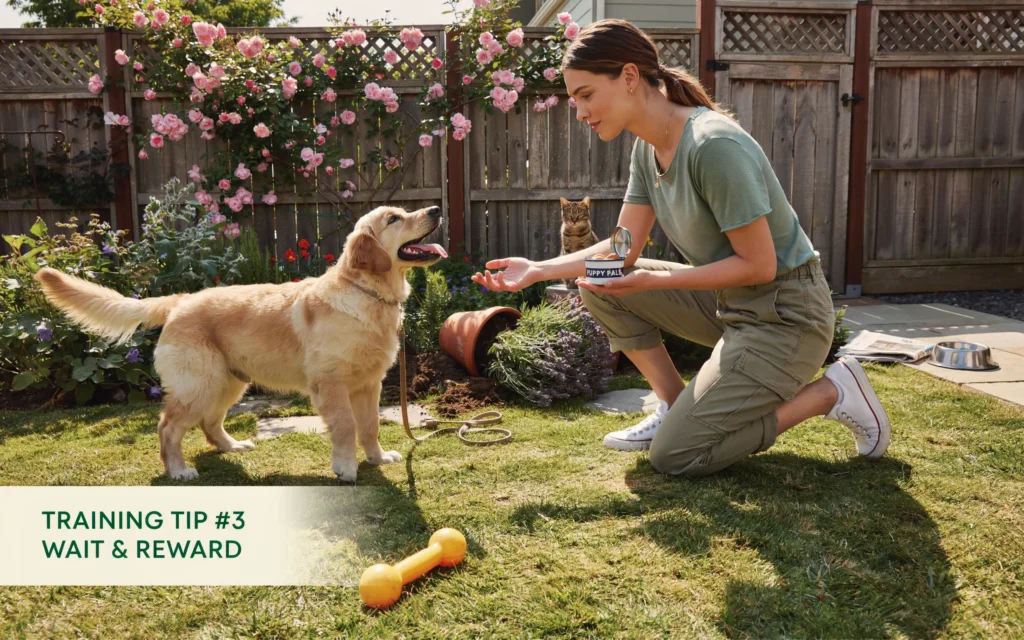
Step 5: Reward Immediately
The moment your puppy finishes peeing or pooping outside, give them praise and a treat. Do this right away, within two or three seconds. This is how your puppy learns that going outside is a good thing.
Use high-value treats that your puppy really loves. Save these special treats just for potty training. This makes the reward even more exciting. You can also use praise, petting, or a quick play session as rewards.
Step 6: Supervise Inside
When your puppy is inside, keep them where you can see them. Close doors to rooms you do not want them in. Watch for signs that they need to go. If you cannot watch them closely, put them in their crate or a safe confined area.
Step 7: Watch for Warning Signs
Puppies usually give signals before they go. Learn to recognize these signs:
If you see any of these signs, take your puppy outside immediately. Do not wait.
Step 8: Handle Accidents Calmly
Accidents will happen. It is part of the process. When you find an accident, do not yell or punish your puppy. Punishment only creates fear and confusion. Your puppy does not know they did something wrong.
Simply clean it up thoroughly with an enzymatic cleaner. This removes the smell so your puppy is not attracted back to that spot. Then remind yourself to take them out more often.
A Sample Puppy Potty Training Schedule
A consistent schedule is the backbone of successful training. Here is a sample schedule you can follow:
| Time | Activity |
|---|---|
| 6:30 AM | Wake up, take puppy outside to potty |
| 6:45 AM | Breakfast |
| 7:15 AM | Take puppy outside to potty |
| 8:30 AM | Potty break |
| 10:00 AM | Potty break |
| 11:30 AM | Potty break |
| 12:00 PM | Lunch |
| 12:30 PM | Take puppy outside to potty |
| 2:00 PM | Potty break |
| 3:30 PM | Potty break |
| 5:00 PM | Dinner |
| 5:30 PM | Take puppy outside to potty |
| 7:00 PM | Potty break |
| 9:00 PM | Potty break |
| 10:30 PM | Last potty break before bed |
Adjust this schedule based on your puppy’s age. A two-month-old puppy will need more frequent breaks than a four-month-old.
Using a Crate to Help with Potty Training
Crate training is one of the most effective tools for house training. Dogs naturally avoid soiling their sleeping area. A crate uses this instinct to help your puppy learn to hold it.
Choose the right size crate. It should be big enough for your puppy to stand up, turn around, and lie down comfortably. But it should not be so big that they can pee in one corner and sleep in another.
Make the crate a happy place. Put soft bedding inside. Give your puppy treats and toys in the crate. Never use the crate as punishment. Your puppy should see it as their safe den.
Limit crate time. Young puppies should not be left in a crate for more than a couple of hours during the day, except at night. At night, puppies can usually hold it longer, but very young puppies may still need a middle-of-the-night break.
Take your puppy straight outside when you open the crate. This is a key moment. Your puppy has been holding it, so they will likely need to go right away. This is a great opportunity to train a puppy to pee outside successfully.
Common Problems and How to Solve Them
Even with the best plan, you may run into issues. Here are some common problems and what to do about them.
My Puppy Refuses to Go Outside in Bad Weather
Some puppies do not like rain, snow, or cold. To help them, take them out on a leash to their usual spot. Do not stand under cover. Go to the actual spot. Use your potty cue word. If they go, give them extra praise and a big reward. If they do not go within five minutes, bring them inside, put them in their crate for 10 to 15 minutes, and try again.
My Puppy Keeps Having Accidents in the Same Spot
This usually means the smell is still there. Regular cleaners do not remove the enzymes in dog urine. Only enzymatic cleaners break down these proteins and remove the scent. Get a good enzymatic cleaner and use it thoroughly on every accident spot.
My Puppy Goes Outside but Also Pees Inside
This is common in early training. Your puppy has not yet learned that outside is the only place to go. Go back to basics. Take them out more often. Watch them more closely inside. Reward every single outdoor success. With time and consistency, they will get it.
My Puppy Will Not Go on a Leash
Some puppies are used to going off-leash in a yard. They do not understand that they can go while on a leash. To fix this, always take your puppy out on a leash for potty breaks. Stand still in their potty spot. Give them time. Do not walk around. Eventually, they will go, and you can reward them heavily. Soon they will learn that the leash is part of the bathroom routine.
My Puppy Is Older and Still Not Trained
Do not give up. Adult dogs can learn too. The process is the same. Start fresh with a consistent schedule, frequent trips outside, and lots of rewards. If your older dog has never learned to go outside, you may need to be extra patient. But it is absolutely possible.
Mistakes to Avoid When You Train a Puppy to Pee Outside
Many new puppy owners make the same mistakes. Knowing what to avoid can save you a lot of frustration.
Mistake 1: Being Inconsistent
“Dogs thrive on routine, and inconsistency can lead to accidents,” says dog trainer Dimit. If you take your puppy out at different times each day, or if different family members use different rules, your puppy gets confused. Stick to the same schedule. Make sure everyone in your home follows the same plan.
Mistake 2: Waiting Too Long Between Breaks
Remember the rule about one hour per month of age. If you wait longer than that, you are asking for an accident. Young puppies need frequent breaks. Do not expect them to hold it longer than they are physically able.
Mistake 3: Punishing Accidents
This is one of the most common and harmful mistakes. Punishing your puppy for accidents does not teach them where to go. It only teaches them to be afraid of you. It can also make them hide when they need to go, which makes training even harder.
Mistake 4: Not Supervising Inside
If your puppy has free run of the house, they will have accidents. You cannot train a puppy to pee outside if you are not watching them inside. Keep them in the same room as you. Use baby gates to block off areas. If you cannot watch them, put them in their crate.
Mistake 5: Bringing Your Puppy Straight Back Inside After They Go
This is a subtle but important mistake. If you take your puppy inside immediately after they potty, they learn that going potty ends their outdoor fun. Then they may start holding it longer to stay outside longer. Instead, give them a few minutes of gentle outdoor time after they go. Let them sniff around a little. This way, going potty does not mean the fun ends right away.
Mistake 6: Giving Too Much Freedom Too Soon
Your puppy has to earn their freedom. Start with a small area. Gradually give them access to more rooms as they prove they can be trusted. If you give them the whole house on day one, accidents are almost guaranteed.
How Long Does It Really Take?
Every puppy is different. But here is what you can generally expect.
Most puppies can be reliably house trained within four to six months of age. However, this depends on many factors. Your consistency, the puppy’s age, breed, and even their personality all play a role.
Certified dog trainer Brett Reynolds says, “If forced to make a general statement, I would say that it takes approximately two to three weeks of consistent observation, management, and reinforcement to house train a puppy”. But he also notes that some puppies take longer. He adds that training “failures” are almost always due to human error, such as lack of consistency.
The most important thing is to be patient. Do not compare your puppy to someone else’s. Focus on your own progress. Celebrate the small wins. Every successful trip outside is a step in the right direction.
Transitioning from Puppy Pads to Outside
Some people start with puppy pads and then want to switch to outdoor training. This transition can be tricky, but it is possible.
Start by moving the pad closer to the door. Move it a little each day. Then move the pad just outside the door. Eventually, remove the pad altogether and take your puppy directly to their outdoor spot.
Be prepared for some accidents during this transition. Your puppy is used to going on a soft surface inside. Going on grass or dirt outside is a new experience. Take them out very frequently during this time. Reward them heavily when they go outside.
If you can, it is often easier to skip the pads entirely and train a puppy to pee outside from the start. But if you already started with pads, do not worry. The transition just takes a little extra patience.
Building a Lifetime Habit
Once your puppy is reliably going outside, keep reinforcing the habit. Continue to take them out on a schedule. Continue to praise them when they go in the right place.
As your puppy grows, they will be able to hold it longer. You can gradually extend the time between breaks. But always pay attention to their signals. Even an adult dog will need to go out after eating, after waking up, and before bed.
Remember that those early potty habits stick with your dog for life. The effort you put in now pays off for years to come.
Frequently Asked Questions
How do I train a puppy to pee outside if I live in an apartment?
Living in an apartment adds some challenges, but it is still very doable. The key is to be prepared. Keep a leash by the door. Take your puppy out very frequently. Use the elevator or stairs and go straight to your potty spot. If you have a balcony, you can use a grass patch as a potty area. Just be consistent about taking them to the same spot every time.
What if my puppy does not go when I take them outside?
If your puppy does not go within five minutes, bring them back inside. Put them in their crate or a confined area for 10 to 15 minutes. Then take them outside again. Repeat this until they go. When they finally do, give them a big reward. This teaches them that going outside gets them treats and freedom.
Should I use puppy pads or train outside directly?
Most experts recommend training directly outside if possible. Puppy pads can confuse your puppy because they teach them that going inside is sometimes okay. If you use pads, you will eventually have to transition them to outside, which adds an extra step. However, pads can be useful for people who live in high-rise apartments or have mobility issues. If you use them, have a clear plan for transitioning to outdoor training.
Can I train an older dog to pee outside?
Yes, absolutely. Adult dogs can learn new habits. The process is the same as with a puppy. Start with a consistent schedule. Take them out frequently. Reward them for going outside. Be patient. It may take longer with an adult dog who has years of bad habits, but it is definitely possible.
Why does my puppy pee inside right after coming inside?
This usually happens because your puppy did not fully empty their bladder outside. They may have been distracted or just did not finish. When they come inside and start moving around, the urge hits again. To prevent this, stay outside a little longer. Walk around with them to encourage them to go again. Also, make sure you are rewarding them immediately when they go outside so they learn to fully empty their bladder.
What should I do about nighttime accidents?
Nighttime accidents are common with young puppies. Their bladders are small, and they cannot hold it all night. For very young puppies, you may need to set an alarm and take them out once or twice during the night. As they get older, they will be able to sleep through the night. Limit water intake about two hours before bedtime. And always take them out right before you go to sleep.
Conclusion
Learning how to train a puppy to pee outside is one of the most important things you will do as a new dog owner. It takes time, patience, and consistency. But the reward is a clean home and a happy, well-adjusted dog who knows the rules.
Remember the key points. Take your puppy out frequently. Use a leash. Choose a specific potty spot. Reward every success. Watch for signs that they need to go. Clean accidents properly. And most importantly, be patient with your puppy and with yourself.
Every puppy learns at their own pace. Some catch on in a few weeks. Others take a few months. That is normal. Focus on progress, not perfection. Celebrate the days with fewer accidents. Know that setbacks are temporary.
The bond you build with your puppy during this process is invaluable. You are teaching them not just where to go, but how to communicate with you. You are learning to read their signals. You are building trust.
So take a deep breath. Gather your supplies. Make your plan. And start training. Before you know it, your puppy will be running to the door when they need to go. And you will look back on these early days and feel proud of what you and your puppy accomplished together.
This guide is based on expert advice from certified dog trainers and veterinary professionals. Always consult your veterinarian if you have concerns about your puppy’s health or behavior.
Related posts
 Buy Dog Toys Online: Top 2026 Picks for Every Play Style
Looking to buy dog toys online? Explore our 2026 guide to the best durable chews, interactive balls, and plush favorites to keep your pup happy and…
 Buy Dog Food Online: Top 2026 Selections for Every Breed
Looking to buy dog food online? Explore our top 2026 recommendations for dry and wet formulas tailored to different breed sizes, sensitivities, and nutritional needs. Choosing…
 Buy a Dog Harness Online in 2026
Looking to buy a dog harness online? Explore our 2026 guide to finding the right fit, style, and control features for your dog's daily walks. Finding…