
What Are Essential Kitchen Tools
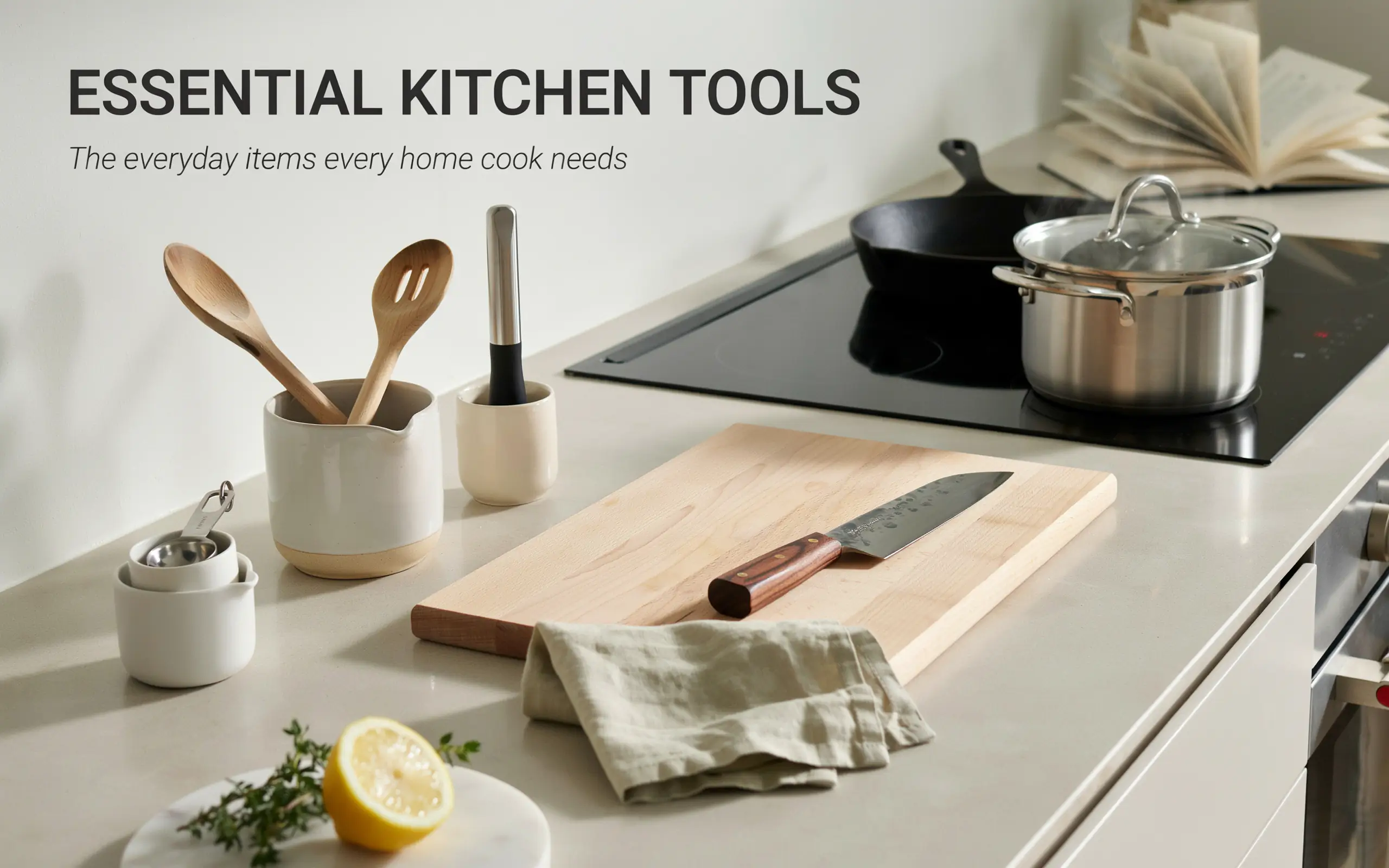
Wondering what are essential kitchen tools for a functional home kitchen? This guide covers the must-have knives, pans, utensils, and gadgets every cook needs. Get started with the right essential kitchen tools today.
Walking into a kitchen store can feel like stepping into a maze. Rows upon rows of spatulas, peelers, graters, and gadgets stare back at you. It is easy to get overwhelmed and wonder what you actually need. The truth is, you do not need dozens of fancy appliances to cook good food. You just need a solid collection of essential kitchen tools that do the job well.
I have spent years cooking in my own kitchen, testing different products, and learning what works and what does not. I have also talked to professional chefs, home cooks, and food writers to understand which tools truly matter. Based on that experience, I have put together this list of the most important essential kitchen tools for anyone who wants to cook with confidence.
Whether you are setting up your first apartment, upgrading your current kitchen, or buying a gift for someone who loves to cook, this guide will help you make smart choices. Let us walk through each tool, why it matters, and what to look for when buying one.
The Foundation: Knives That Do the Heavy Lifting
Good knives are the heart of any kitchen. You can have the best pans and the freshest ingredients, but without a sharp, reliable knife, cooking becomes a struggle. Professional chefs agree that investing in quality knives is one of the smartest decisions you can make.
Senior Development Chef John advised, “The kitchen utensil everyone should have is an eight-inch chef’s knife. It’s worth spending good money from a good brand as it will last you a lifetime.”
Chef’s Knife
A chef’s knife is the workhorse of the kitchen. It handles about 80 percent of all cutting tasks, from chopping vegetables to slicing meat. Most home cooks prefer an 8-inch blade because it offers a good balance between control and cutting power. The blade should feel comfortable in your hand, and the weight should be evenly distributed.
When you hold a chef’s knife, your grip should feel natural. The knife should not feel too heavy or too light. Look for a high-carbon stainless steel blade because it holds an edge well and resists rust. You will use this knife every single day, so choose one that feels like an extension of your hand.
Paring Knife
A paring knife is a small knife with a blade around 3 to 4 inches long. It is perfect for tasks that require precision, like peeling apples, removing seeds from peppers, or trimming fat from meat. Many cooks use their paring knife for jobs that feel awkward with a larger blade. It is one of those essential kitchen tools that you will reach for more often than you expect.
Serrated Knife
A serrated knife, often called a bread knife, has a saw-like edge that cuts through foods with a hard exterior and soft interior. Bread, tomatoes, and citrus fruits are all easier to cut with a serrated blade. The teeth grip the surface and slice cleanly without crushing the food. This knife fills an important gap that your chef’s knife cannot cover.
Cutting Boards: The Surface That Protects Your Knives
A good cutting board protects your countertops and keeps your knives sharp. Cutting on hard surfaces like stone or glass will dull your blades quickly. Wood and plastic boards are the best choices for everyday use.
Wooden boards are gentle on knife edges and look beautiful on your counter. They are great for chopping vegetables, fruits, and bread. However, wood can absorb juices and harbor bacteria, so it is best to use a separate board for raw meat. Plastic or silicone boards are non-porous and easy to sanitize, making them ideal for meat and fish.
Choose a board that is large enough to work comfortably. A board that is too small will make chopping feel cramped and increase the risk of accidents. Many cooks keep two boards: one large wooden board for vegetables and one smaller plastic board for meat.
Cookware: Pans and Pots for Every Meal
Cookware is where the magic happens. The right pan can turn a simple recipe into a delicious meal. You do not need a full set of expensive pots and pans. A few well-chosen pieces will cover almost everything you want to cook.
Nonstick Frying Pan
A nonstick frying pan is a lifesaver for delicate foods. Eggs, pancakes, fish fillets, and crepes all cook beautifully on a nonstick surface. The coating prevents food from sticking, so you can flip and slide your food with ease. This pan also requires less oil, which makes it a healthier choice for everyday cooking.
When buying a nonstick pan, look for one with a sturdy base and a comfortable handle. Avoid using metal utensils on the surface because they will scratch the coating. Silicone, wood, or plastic tools are much safer.
Cast Iron Skillet
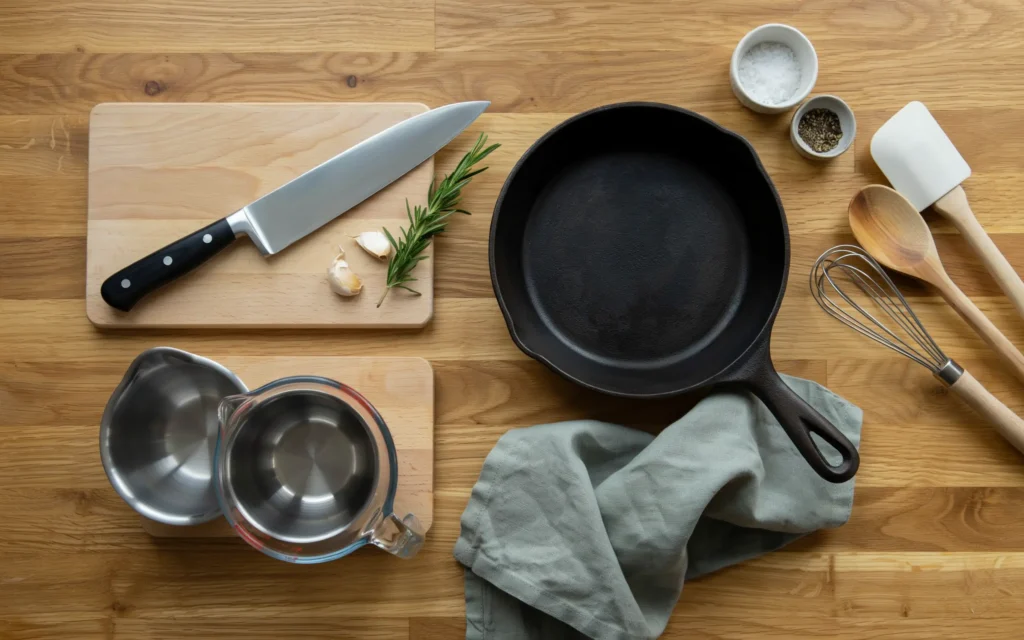
A cast iron skillet is one of the most durable and versatile essential kitchen tools you can own. It can go from stovetop to oven, and it works for frying, sautéing, braising, and even baking. Cast iron retains heat exceptionally well, which gives you a beautiful sear on meat and a crispy crust on cornbread.
The best part about cast iron is that it improves with use. Each time you cook with it, the seasoning builds up, creating a natural nonstick surface. With proper care, a cast iron skillet can last for generations.
Saucepan
A saucepan is a medium-sized pot with a long handle. It is perfect for heating liquids, cooking grains, boiling eggs, and making sauces. A 2-quart or 3-quart saucepan is a good size for most home kitchens. Look for one with a tight-fitting lid and a handle that stays cool during cooking.
Dutch Oven
A Dutch oven is a heavy pot with a tight lid. It is excellent for soups, stews, braised meats, and even baking bread. The thick walls distribute heat evenly, and the lid traps moisture, which keeps your food tender and flavorful. Many cooks consider a Dutch oven one of the most essential kitchen tools for slow-cooked meals.
Utensils: The Tools That Bring It All Together
Utensils are the bridge between you and your food. They help you stir, flip, serve, and taste. Having the right utensils makes cooking smoother and more enjoyable.
Wooden Spoon
The wooden spoon is a classic tool that has been used in kitchens for centuries. It is strong enough to scrape up caramelized bits from the bottom of a pan, but soft enough that it will not damage your nonstick cookware. Wood does not conduct heat as quickly as metal, so you can stir a pot of hot soup without burning your hand.
Wooden spoons also add a touch of warmth and tradition to your cooking. “No tool in the kitchen can replace the humble wooden spoon,” according to the experts at Blue Apron. Keep one or two wooden spoons in your utensil drawer, and you will find yourself reaching for them constantly.
Tongs
Tongs are like an extra pair of hands in the kitchen. You can use them to flip meat, toss salads, serve pasta, and grab hot items from a pan. A good pair of tongs with silicone tips gives you a firm grip without scratching your cookware. Many cooks prefer tongs that are 9 to 12 inches long for better control.
Spatula
The word spatula covers several different tools. A flat metal spatula, sometimes called a fish spatula, is great for flipping pancakes, fish fillets, and burgers. A silicone spatula is perfect for scraping every last bit of batter or sauce from a bowl. Both versions are essential kitchen tools that serve different purposes.
Whisk
A whisk is a simple tool that does an important job. It blends ingredients quickly and introduces air into mixtures. You will use a whisk for beating eggs, making vinaigrettes, combining dry ingredients for baking, and creating smooth sauces. A sturdy balloon whisk with stainless steel wires will last for years.
Ladle
A ladle makes it easy to transfer liquids from one container to another. Whether you are serving soup, pouring sauce, or spooning broth over a dish, a ladle gives you control and reduces mess. Look for a ladle with a deep bowl and a long handle that keeps your hands away from heat.
Measuring Tools: Precision for Better Results
Cooking is part art and part science. Measuring tools help you get consistent results, especially when you are baking or trying a new recipe.
Measuring Cups and Spoons
Dry measuring cups and liquid measuring cups serve different purposes. Dry measuring cups are designed to be filled to the brim and leveled off. Liquid measuring cups have a spout and markings on the side so you can see the level at eye height. Measuring spoons are used for small amounts of both dry and liquid ingredients.
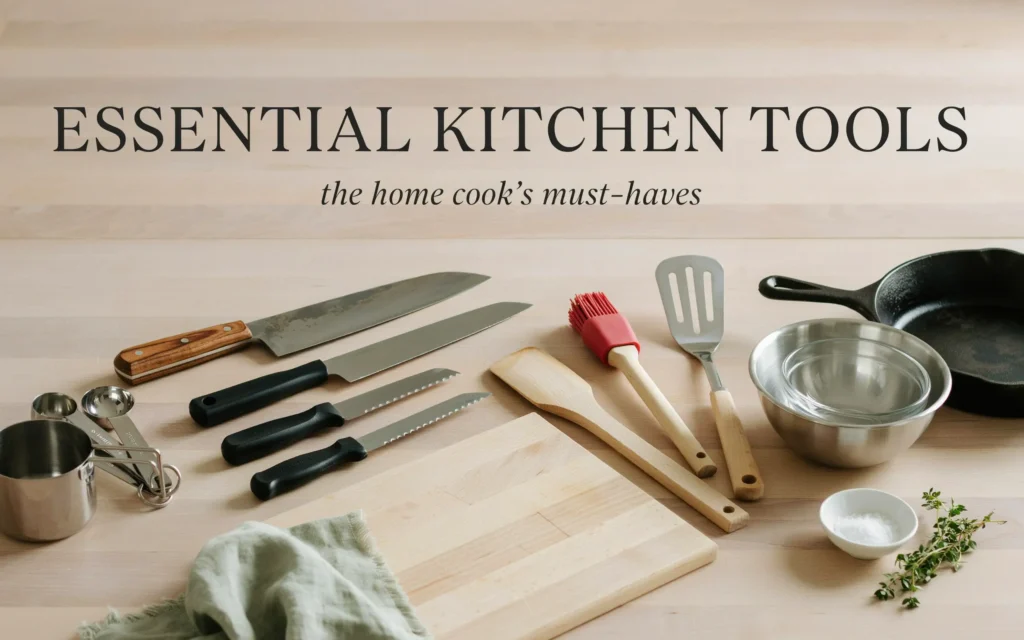
Having a complete set of measuring cups and spoons is one of the most basic essential kitchen tools. They help you follow recipes accurately and avoid disappointing results.
Kitchen Scale
A kitchen scale takes the guesswork out of measuring. Many professional bakers prefer weighing ingredients because it is more accurate than using cups. A digital scale is easy to use and gives you precise measurements for flour, sugar, butter, and other ingredients. If you bake often, a scale is well worth the small investment.
Bakeware: Sheets and Pans for Oven Cooking
Baking sheets and pans expand what you can do in your kitchen. They are not just for cookies and cakes. You can roast vegetables, bake chicken, and make one-pan dinners with the right bakeware.
Baking Sheet
A baking sheet, also called a sheet pan, is one of the most versatile essential kitchen tools you can own. Use it for roasting vegetables, baking cookies, cooking sheet pan dinners, and even toasting nuts. A half-sheet pan is the standard size for most home ovens. Choose a heavy-duty aluminum pan because it heats evenly and will not warp.
Cooling Rack
A cooling rack allows air to circulate around baked goods so they cool evenly. It also works well for roasting meat because the elevated surface lets fat drip away. You can place a cooling rack right on top of a baking sheet for easy cleanup.
Small Gadgets That Make a Big Difference
Some tools are small but incredibly useful. They save time, reduce waste, and make cooking more enjoyable.
Microplane or Fine Grater
A Microplane grater creates fine, fluffy shreds of cheese, citrus zest, garlic, and ginger. It adds bright flavors to dishes without much effort. Many cooks use their Microplane every day for grating Parmesan, zesting lemons, or making garlic paste.
Vegetable Peeler
A good vegetable peeler removes the skin from potatoes, carrots, apples, and other produce with ease. Look for a peeler with a sharp blade and a comfortable grip. A Y-shaped peeler gives you more control and works well on both round and oblong vegetables.
Kitchen Shears
Kitchen shears are heavy-duty scissors that can cut through meat, poultry, herbs, and even pizza. They are easier and faster than a knife for many tasks. You can use them to snip fresh herbs directly into a dish or cut open packaging without reaching for a separate tool.
Colander
A colander is essential for draining pasta, washing vegetables, and rinsing beans. Choose a colander with sturdy handles and a stable base so it does not tip over. Metal colanders are durable, while plastic ones are lightweight and affordable.
Two Quick Reference Tables
Must-Have Knives and Cutting Surfaces
| Tool | Purpose | What to Look For |
|---|---|---|
| Chef’s Knife | Chopping, slicing, dicing | 8-inch blade, comfortable grip, high-carbon steel |
| Paring Knife | Precision tasks like peeling | 3-4 inch blade, sharp point |
| Serrated Knife | Bread, tomatoes, citrus | Saw-like edge, long blade |
| Cutting Board | Protecting knives and counters | Wood for vegetables, plastic for meat |
Essential Cookware and Utensils
| Tool | Purpose | What to Look For |
|---|---|---|
| Nonstick Pan | Eggs, pancakes, delicate foods | Sturdy base, scratch-resistant coating |
| Cast Iron Skillet | Searing, frying, baking | Heavy construction, pre-seasoned surface |
| Saucepan | Heating liquids, cooking grains | 2-3 quart size, tight-fitting lid |
| Dutch Oven | Soups, stews, braised meats | Thick walls, heavy lid |
| Wooden Spoon | Stirring, scraping | Smooth finish, heat-resistant |
| Tongs | Flipping, tossing, serving | Silicone tips, comfortable spring action |
Building Your Collection Without Breaking the Bank
You do not need to buy everything at once. Start with the most important essential kitchen tools and add more as you go. A chef’s knife, cutting board, nonstick pan, saucepan, and wooden spoon will get you through most meals. From there, you can expand based on the foods you enjoy cooking most.
Many experts recommend starting small and prioritizing multipurpose items. A frying pan that also works as a sauté pan saves both money and storage space. A set of measuring cups and spoons covers all your measuring needs. Think about your cooking habits and choose tools that match your style.
If you are on a budget, look for utensil sets or cookware bundles. They often cost less than buying each piece separately. You can also find quality tools at thrift stores or through online marketplaces. The goal is to build a collection that works for you, not to impress anyone with fancy brands.
What Professional Chefs Say About Essential Kitchen Tools
Professional chefs have strong opinions about the tools they use every day. Their advice can help you make better choices for your own kitchen.
Samin Nosrat, author of “Salt, Fat, Acid, Heat,” recommends starting with three basic knives: a chef’s knife, a serrated knife, and a paring knife. She also keeps a carbon steel pan, fish spatula, Microplane, and immersion blender in her kitchen for everyday use.
Karla Tatiana Vasquez, a cookbook author, depends on her Salvadoran clay comal every day. She uses it to prepare tortillas, grill vegetables, toast bread, and reheat foods. Her example shows that essential kitchen tools can vary based on your cultural background and cooking style.
Shayma Owaise Saadat, a recipe developer, collects mortar and pestles for different purposes. She uses a large granite mortar for chutneys and a brass one for grinding saffron. Her collection reminds us that the right tool for one cook might be different for another.
Frequently Asked Questions
What are the absolute minimum tools for a functional kitchen?
A chef’s knife, cutting board, 10- to 12-inch skillet, 2- to 3-quart saucepan, wooden spoon, tongs, measuring cups and spoons, and a colander will cover most basic cooking needs. With these essential kitchen tools, you can prepare a wide variety of meals.
Should I buy a knife set or individual knives?
Most experts recommend buying individual knives rather than a set. Sets often include knives you will never use. A good chef’s knife, a paring knife, and a serrated knife are all you really need. Spend your money on quality rather than quantity.
What is the best material for cookware?
It depends on what you are cooking. Stainless steel is durable and works for most tasks. Cast iron is excellent for searing and baking. Nonstick is best for eggs and delicate foods. Many cooks keep one of each type.
How often should I replace my nonstick pan?
Nonstick pans typically last 3 to 5 years with regular use. Replace your pan when the coating starts to flake or peel. Using silicone or wooden utensils will help extend the life of your nonstick cookware.
Do I really need a kitchen scale?
A kitchen scale is not essential for every cook, but it is very helpful for baking. Weighing ingredients gives you more accurate and consistent results than measuring by volume. If you bake often, a scale is a worthwhile investment.
What is the best way to care for my knives?
Hand wash your knives with mild soap and dry them immediately. Do not put them in the dishwasher because the heat and detergent can damage the blade and handle. Store them in a knife block, on a magnetic strip, or with blade guards to protect the edges.
Conclusion
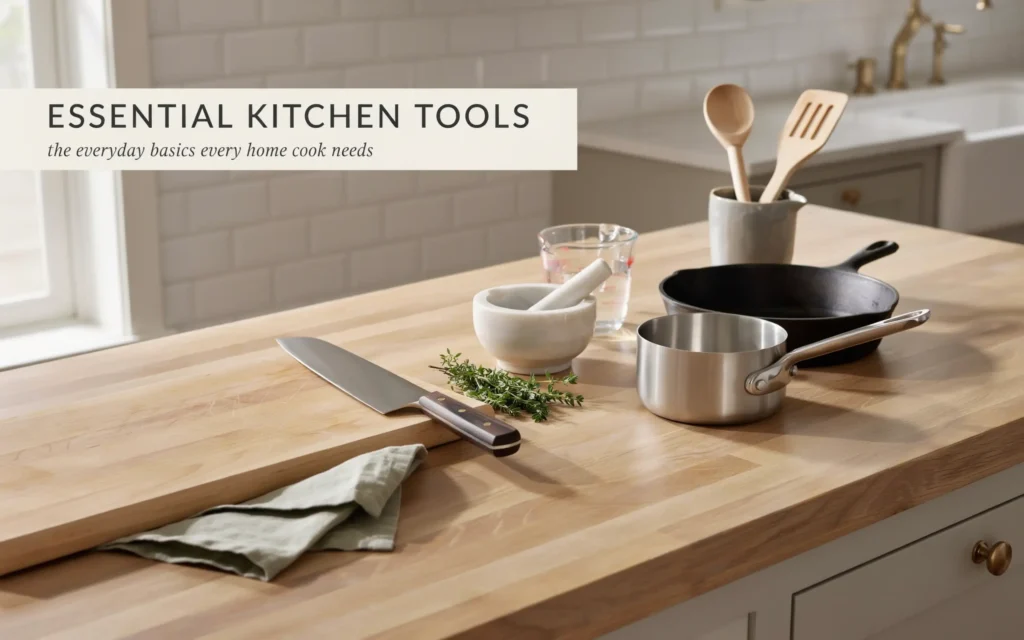
Knowing what are essential kitchen tools makes a huge difference in your cooking experience. You do not need a kitchen full of gadgets to make delicious meals. A sharp chef’s knife, a sturdy cutting board, a reliable nonstick pan, and a few basic utensils will take you a long way. Add a cast iron skillet, a Dutch oven, and some measuring tools, and you can cook almost anything.
The best essential kitchen tools are the ones you actually use. Start with the basics, cook often, and pay attention to what you reach for again and again. Over time, your collection will grow to match your personal cooking style. Remember that quality matters more than quantity. A few well-made tools will serve you better than a drawer full of cheap gadgets.
Cooking should be enjoyable, not frustrating. Having the right tools makes the process smoother, faster, and more fun. Whether you are a beginner or a seasoned home cook, this list gives you a solid foundation. Equip your kitchen wisely, and you will look forward to every meal you prepare.
Related posts
 Best Under Sink Organizers Kitchen 2026: Practical Storage Solutions
Find the best under sink organizers kitchen in 2026. Compare top-rated pull-out bins, L-shaped racks, and protective mats to maximize your cabinet space. The space under…
 Best Kitchen Cabinet Storage Solutions for 2026
Organize your kitchen efficiently with our Best Kitchen Cabinet Storage Solutions. Compare the best organizers for lids, pans, and spices to maximize your space. A cluttered…
 Top Rated Kitchen Shelf Organizers for 2026
Discover the top rated kitchen shelf organizers for 2026. Compare durable racks, magnetic shelves, and tiered storage to maximize your pantry and counter space. A cluttered…