
How To Detect Vacuum Leaks
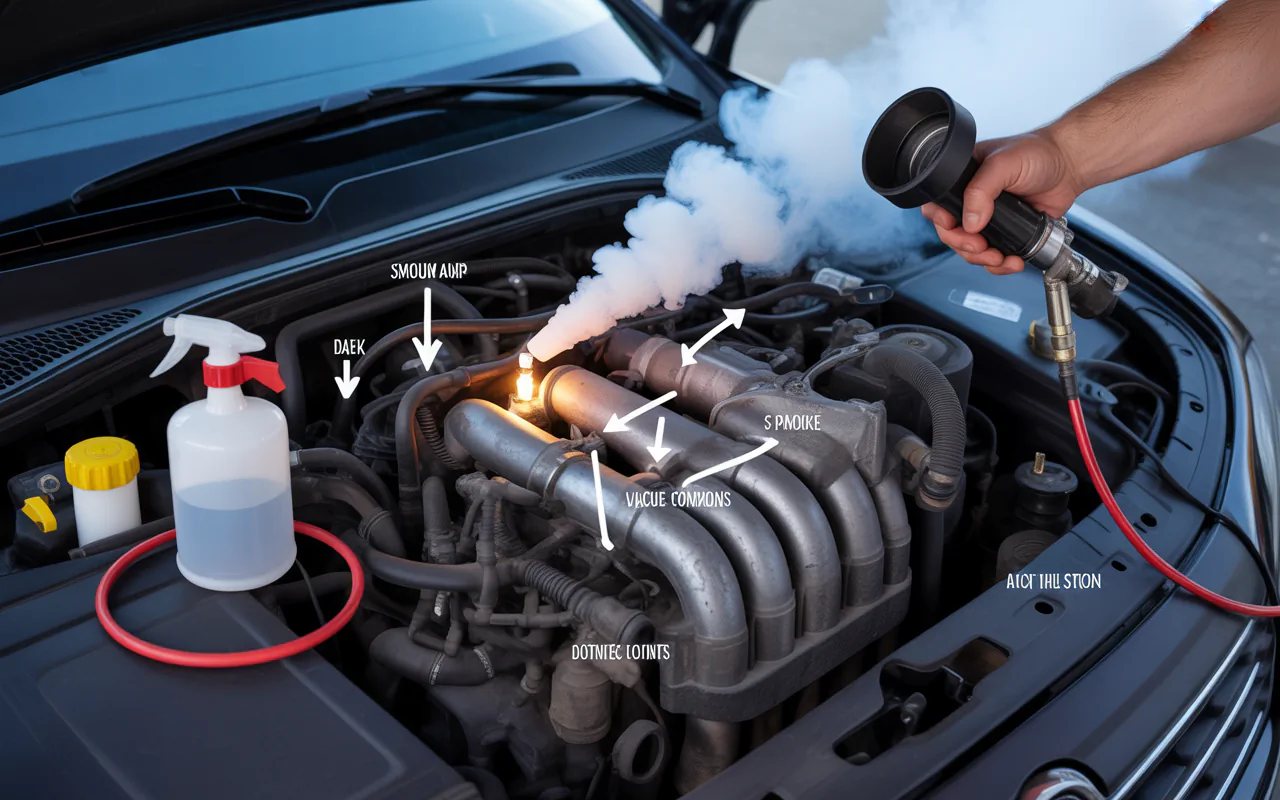
Learn how to detect vacuum leaks in your car or home appliances. This simple guide gives you easy steps to find air leaks fast and fix them without stress.
Have you ever heard a strange hissing noise from your car engine? Or maybe your idle feels rough, and you cannot figure out why. The problem could be a vacuum leak. These small air leaks cause big trouble. But here is the good news. You can learn how to detect vacuum leaks with simple tools and a little patience. This article will show you exactly what to do. No fancy equipment needed. Just clear steps and friendly advice.
I have fixed many cars over the years. And I know how frustrating vacuum leaks can be. They hide in small hoses, gaskets, and connections. But once you know where to look, you will find them fast. Let me help you save time and money. You do not need to be a mechanic to fix this problem.
“A vacuum leak is like a tiny hole in a straw. You lose power and efficiency. Finding it early saves your engine.” – Frank Miller, ASE Certified Mechanic
What Is a Vacuum Leak and Why Does It Matter?
A vacuum leak happens when extra air enters your engine or vacuum system through an unintended gap. Your engine expects a specific mix of air and fuel. Too much air makes that mix wrong. The engine then runs poorly. You may notice rough idling, higher fuel use, or even stalling.
In simple words, your engine breathes through a set of sealed pipes and hoses. When one of them cracks or comes loose, the engine sucks in extra air. That extra air confuses the computer that controls the engine. The computer tries to fix the problem by adding more fuel. But that only hides the issue. Your car still runs bad, and you waste gas.
So why does learning how to detect vacuum leaks matter so much? Because ignoring a vacuum leak leads to bigger damage. Your engine may overheat. Your oxygen sensors may fail. Your catalytic converter could break. That repair costs thousands of dollars. But finding the leak early costs almost nothing.
Every car owner should know the basics of vacuum leak detection. It is one of those skills that pays off again and again.
Common Signs You Have a Vacuum Leak
Before you start testing, look for these clues. They tell you if a vacuum leak is likely. Here is a simple table to help you match symptoms to possible problems.
| Symptom | What It Feels Like |
|---|---|
| Rough idle | Engine shakes or vibrates while stopped |
| Hissing noise | A soft whistle or air sound from the engine bay |
| High idle | Engine stays at high RPMs even when warm |
| Check engine light | Computer detects an air-fuel mixture error |
| Poor acceleration | Car feels sluggish when you press the gas |
If you notice any of these signs, you likely need to detect vacuum leaks in your system. Do not wait. Small leaks get bigger over time.
Another common sign is stalling. Your car may start fine, then die at a red light. Or you may find it hard to start the engine at all. These problems often point to a vacuum leak near the intake manifold or the brake booster hose.
“Most of my customers are surprised how often a simple vacuum leak causes major driveability issues. Always check for leaks first.” – Linda Cheng, Automotive Diagnostic Specialist
How to Detect Vacuum Leaks: 5 Proven Methods
Now we get to the main part. I will show you five ways to find vacuum leaks. Some methods are very simple. Others need a few basic tools. Pick the one that fits your situation best. Each method works well when done correctly.
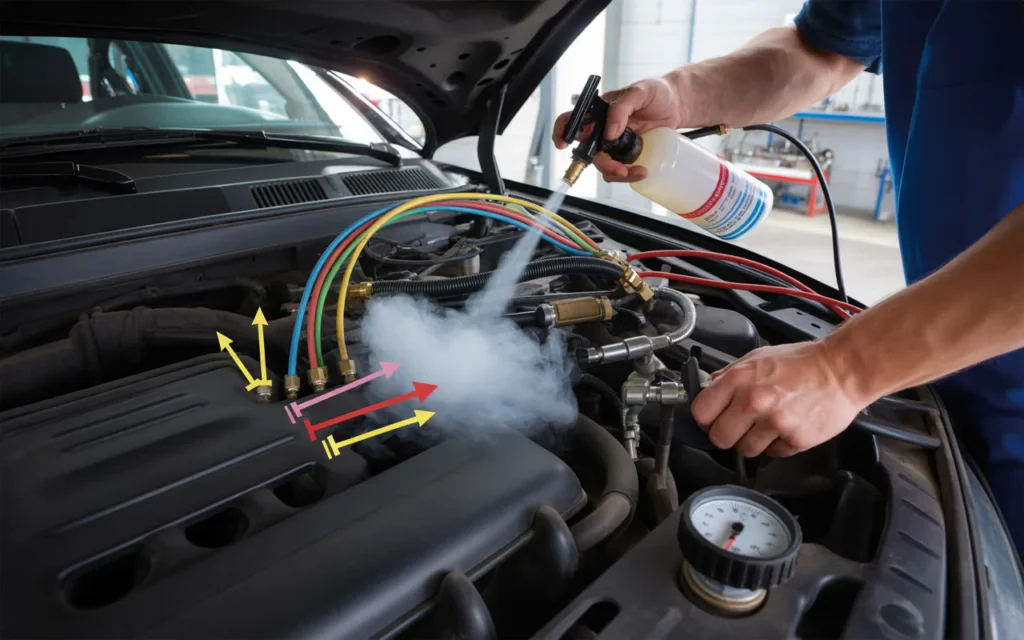
Method 1: Listen for Hissing Sounds
This is the easiest way to start. Open your hood while the engine runs. Listen closely. A vacuum leak makes a hissing or sucking noise. The sound is like air escaping from a tire, but softer. Move your ear around the engine. Pay attention to rubber hoses, plastic connectors, and where parts meet.
The hiss may be loud near the leak. But sometimes it is very faint. If you cannot hear anything, try using a piece of rubber hose as a stethoscope. Hold one end to your ear. Move the other end near hoses and gaskets. The sound gets louder when you get close to the leak.
This method works best for larger leaks. Small leaks may not make enough noise. But it is free and takes only a few minutes.
Method 2: Spray Water or Carb Cleaner
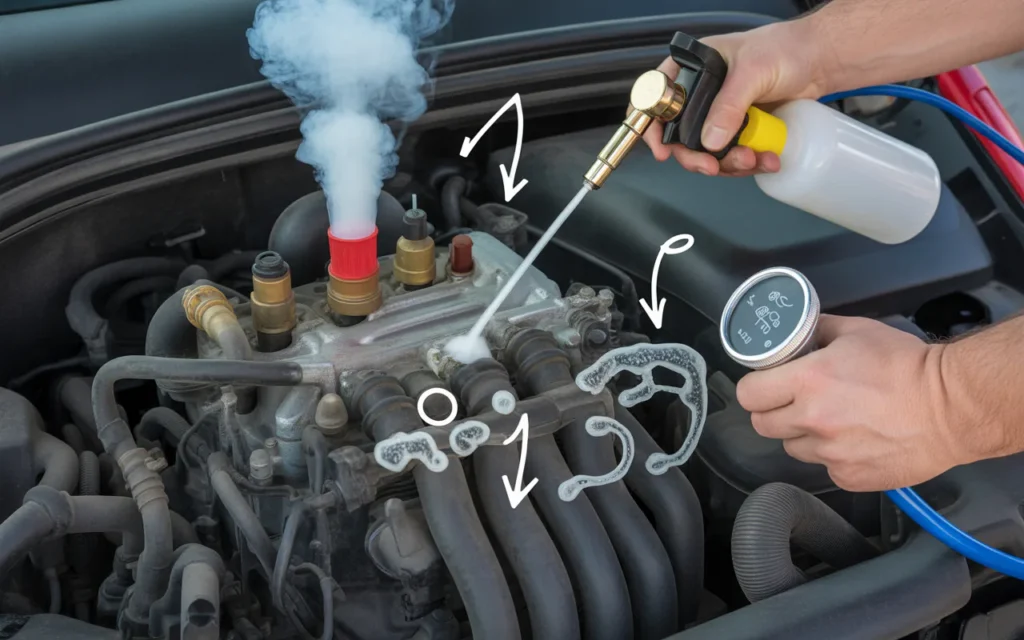
Here is a classic trick. Get a spray bottle filled with plain water. Or use a can of carburetor cleaner. Start the engine. Then carefully spray small amounts onto vacuum hoses, connections, and gaskets. Watch the engine’s idle speed.
If you spray a spot and the engine idle changes (goes up or down), you found the leak. The liquid temporarily seals the gap. The engine then runs better for a second. That change tells you exactly where the leak is.
Be careful with carb cleaner. It is flammable. Do not spray near hot exhaust parts. Water is safer. But water works slower. Both methods let you detect vacuum leaks without special tools.
Spray one small area at a time. Wait a few seconds. Then move to the next spot. Keep a fire extinguisher nearby when using any spray near a running engine.
Method 3: Use a Smoke Tester
A smoke tester is a professional tool. It pushes smoke into the vacuum system. Then you watch where smoke comes out. That spot is your leak. You can buy a simple smoke tester for home use for about 50 to 100 dollars. Or you can make one with a jar, a soldering iron, and baby oil.
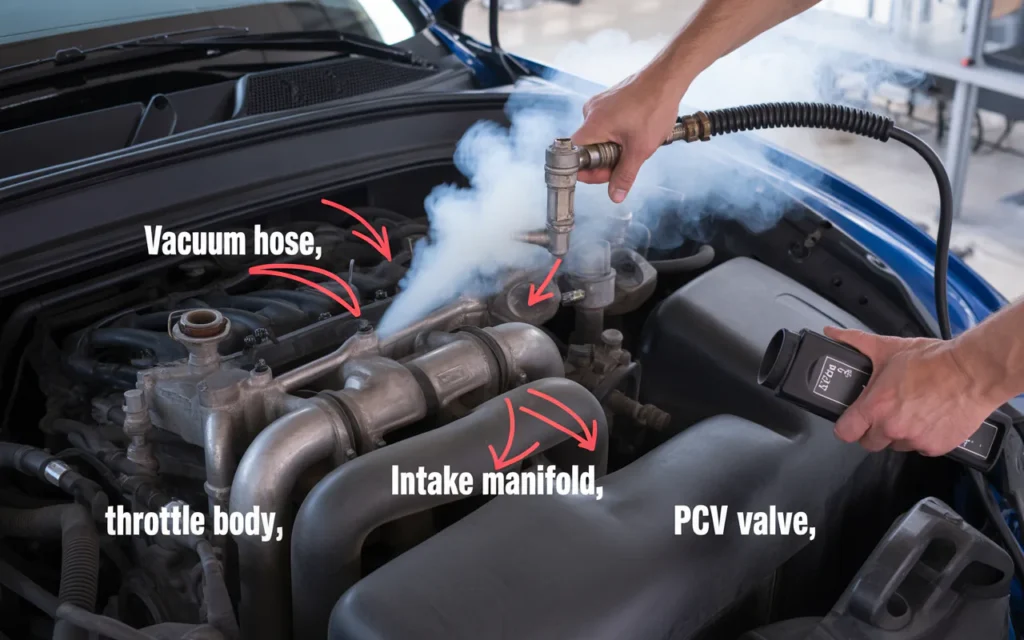
Using smoke is very accurate. Even tiny leaks show up clearly. You do not need the engine running. Just connect the smoke tester to a vacuum line. Pump smoke in. Look for white or gray smoke escaping from hoses, gaskets, or seals.
This is one of the best ways to detect vacuum leaks. It works on cars, but also on home systems like vacuum cleaners or HVAC lines. Many shops use smoke testers as their first choice.
Method 4: Use a Vacuum Gauge
A vacuum gauge connects to your engine’s intake manifold. It measures the pressure inside. A normal engine shows steady vacuum between 17 and 22 inches of mercury (inHg). If the needle jumps around or stays low, you have a leak.
This method does not tell you exactly where the leak is. But it confirms you need to look for one. Use the gauge as a first test. Then use one of the other methods to find the actual spot.
To use a vacuum gauge, find a vacuum port on your intake manifold. Attach the gauge hose. Start the engine. Watch the needle. A steady but low reading means a constant leak. A needle that vibrates fast means a leak in a single cylinder or valve issue.
Method 5: Use an Evap Smoke Machine
EVAP smoke machines are for modern cars with complex emission systems. They work like regular smoke testers but are made for sealed fuel systems. You connect the machine to the EVAP service port. Smoke fills the system. Then you look for smoke escaping.
This method is very accurate for detecting vacuum leaks in EVAP lines. These lines run from your gas tank to the engine. A leak there also turns on your check engine light. Many auto parts stores rent EVAP smoke machines for a small fee.
Here is a quick comparison of these five methods.
| Method | Difficulty | Cost | Accuracy |
|---|---|---|---|
| Listening | Easy | Free | Low for small leaks |
| Spraying | Easy | Low (spray bottle or carb cleaner) | Medium |
| Smoke tester | Medium | Medium (50−100) | High |
| Vacuum gauge | Medium | Low (20−40) | Medium (confirms leak but not location) |
| EVAP smoke machine | Medium to Hard | High rental or purchase | Very High |
Step-by-Step Guide to Find Vacuum Leaks Safely
Now let me walk you through a full process. Follow these steps one by one. You will learn how to detect vacuum leaks like a pro. Work in a well-ventilated area. Let the engine cool down before touching anything hot.
Step 1: Check the easy things first. Look at all rubber hoses under the hood. Are any cracked, loose, or disconnected? Pay special attention to the brake booster hose and the PCV valve hose. These are common leak spots. Squeeze the hoses gently. Old hoses feel hard or sticky.
Step 2: Listen while the engine idles. Start the car. Let it warm up for a minute. Then lean over the engine and listen. Move your head slowly from side to side. If you hear a hiss, follow the sound. Touch nothing that moves. Keep your hair and clothes away from belts and fans.
Step 3: Try the spray method. Get a spray bottle of water. Mist it onto hoses and where the intake manifold meets the engine block. Watch for idle changes. Do this in short bursts. Write down any spots that make the engine smooth out or stumble.
Step 4: Use a vacuum gauge if you have one. Connect it to a manifold vacuum port. Read the gauge. A reading below 17 inHg means a leak. A bouncing needle means you need a deeper check.
Step 5: Move to smoke testing. If you still cannot find the leak, use a smoke tester. Disconnect the air intake tube. Block it off with a rag. Connect the smoke tester to a vacuum line. Turn on the smoke. Watch everywhere. Smoke will pour out of the leak point.
Step 6: Fix what you find. Once you know where the leak is, repair it. Replace cracked hoses. Tighten loose clamps. Change bad gaskets. Most fixes cost less than 20 dollars.
“The difference between a frustrated car owner and a confident one is knowing the right order to check things. Start simple, then get detailed.” – Robert Hayes, Engine Repair Instructor
Tools You Need to Detect Vacuum Leaks
You do not need a full workshop to find these leaks. Here is a simple list of tools that help. Many you already own.
- Spray bottle with water – free if you have one at home
- Carburetor cleaner – about 6 dollars at any auto store
- Vacuum gauge – 20 to 30 dollars online
- Smoke tester – 50 dollars for a basic DIY unit
- Rubber hose (3 feet long) – 2 dollars, used as a listening tool
- Flashlight – to see dark areas behind the engine
- Gloves and safety glasses – protect yourself from hot parts and sprays
You can detect vacuum leaks with just the spray bottle and your ears. The other tools just make the job faster and more exact. If you work on older cars often, buy a vacuum gauge first. It helps with many engine problems, not just leaks.
How to Prevent Vacuum Leaks in the Future
Once you fix a leak, you want to avoid new ones. Prevention is easy. Check your rubber hoses every oil change. Look for soft spots, cracks, or swelling. Replace any hose that feels greasy or brittle.
Do not use cheap rubber hoses. Buy good quality silicone or reinforced vacuum hose. They last longer and handle engine heat better. Also, keep your engine clean. Dirt and oil slowly eat away rubber seals and gaskets.
When you change your spark plugs or air filter, take an extra minute to inspect all vacuum connections. Poke them gently. Wiggle them. If a connector moves too easily, replace it. A small clamp costs very little.
If you drive a car older than ten years, consider replacing all vacuum hoses at once. This is a weekend job. Buy a roll of vacuum hose by the foot. Cut each new hose to match the old one. This one-time fix saves you from chasing leaks for years.
Frequently Asked Questions
Can I drive my car with a vacuum leak?
You can drive short distances, but you should not ignore it. A small leak gets bigger. It also makes your engine run poorly and waste gas. Fix the leak as soon as you can. That is the best way to protect your car.
How do I detect vacuum leaks without any tools?
Use your ears and a spray bottle of water. Listen for hissing. Then spray water on hoses and connections. Watch for idle changes. This works well for most leaks. You just need patience.
What is the fastest way to detect vacuum leaks?
A smoke tester is the fastest method. It shows leaks in seconds. You can rent one from an auto parts store for about 30 dollars a day. Or buy a cheap one online. Smoke testing works every time.
How much does it cost to fix a vacuum leak?
If you do it yourself, most fixes cost under 20 dollars. A hose is a few dollars. A gasket is 10 to 30 dollars. If you pay a mechanic, expect 100 to 200 dollars for labor. That is why learning how to detect vacuum leaks yourself saves real money.
Can a vacuum leak cause my check engine light to come on?
Yes, very often. The oxygen sensor detects too much air in the exhaust. The computer logs a trouble code like P0171 (system too lean). That code almost always points to a vacuum leak or a dirty mass air flow sensor.
Do diesel engines get vacuum leaks?
Diesel engines do not use intake vacuum like gas engines. But they have vacuum systems for brakes, turbocharger controls, and other parts. So yes, diesel vehicles can also have vacuum leaks. Use the same testing methods.
How to detect vacuum leaks in home appliances?
Your vacuum cleaner can lose suction from a leak. Check the hose for cracks. Run your hand along the hose while the vacuum runs. Feel for air sucking in. Also check where the hose connects to the body. Use the listening method here too.
Conclusion
Learning how to detect vacuum leaks is a basic skill that every car owner should know. It saves you from expensive repairs and frustrating breakdowns. You do not need special training. Just follow the steps in this guide. Listen for hissing. Spray water on hoses. Use a smoke tester for hard cases. And always fix leaks as soon as you find them.
Now you have five clear methods to choose from. Start with the easiest one. Work your way up. Each time you successfully find and fix a vacuum leak, you get better. You also save money. A ten dollar hose is much cheaper than a tow truck or a new catalytic converter.
Remember to check your hoses regularly. Prevention is always easier than repair. Keep a spray bottle in your garage. Buy a vacuum gauge next time you see one on sale. These small tools give you big confidence under the hood.
So go ahead. Open your hood. Listen closely. You now know exactly how to detect vacuum leaks and fix them fast. Your engine will thank you with smoother idling, better gas mileage, and fewer warning lights. Happy fixing.
Related posts
 2026 Torque Wrench Reviews: Choosing the Right Tool for Precision Fastening
Explore our 2026 torque wrench reviews to find the right tool for your automotive, bike, or gunsmithing projects. Compare top models for accuracy and value. Finding…
 Top Automotive Tools for Beginners: Essential Gear for 2026
Discover the top automotive tools for beginners in 2026. Compare essential pry kits, wrench sets, and repair gear to start your DIY car maintenance journey. Starting…
 Top Rated Mechanic Tool Brands for 2026
Explore top rated mechanic tool brands for 2026. Compare reliable socket sets and hand tools to find the right equipment for your home garage or auto…