
Why Cookware Material Matters
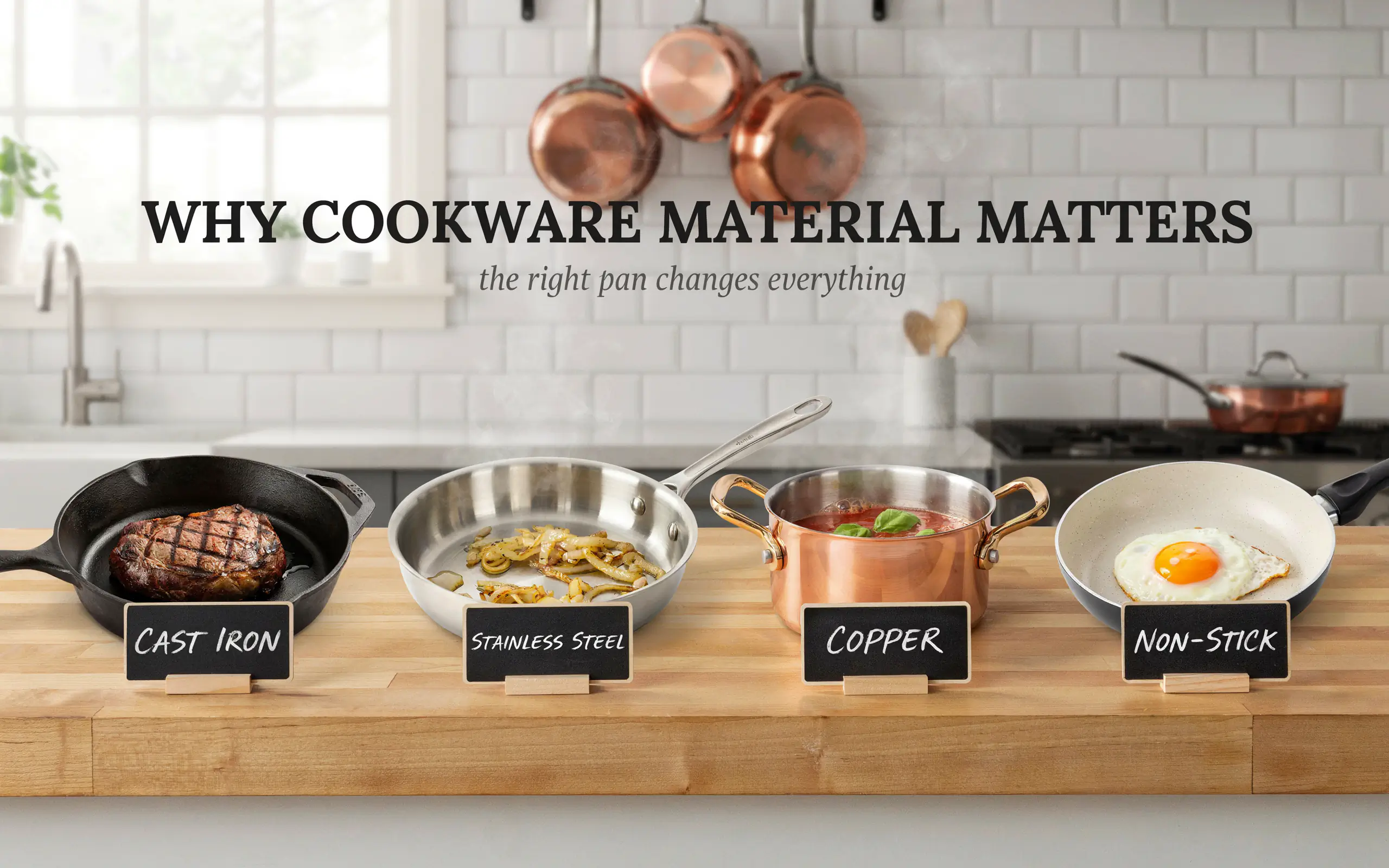
This article explains why cookware material matters for your health, your budget, and the taste of your food. Learning why cookware material matters helps you choose safe, durable pans that make cooking easier and more enjoyable.
Have you ever stood in the kitchen aisle, staring at rows of shiny pots and pans, feeling completely lost? You see stainless steel, nonstick, cast iron, ceramic, and copper. The price tags vary wildly. The brands promise the world. But you are left wondering: does it really make a difference? The simple answer is yes. Understanding why cookware material matters is one of the most important things you can learn for your kitchen.
The material of your pan changes everything. It changes how your food cooks, how safe your meals are, and how long your equipment lasts. It even affects the taste of your dinner. Many people buy cheap sets without thinking about this. They struggle with food sticking, burning, or cooking unevenly. They waste money replacing pans every year. I have been there too. I bought a cheap nonstick set and wondered why my eggs always stuck. The pan had hot spots that burned my omelets in one spot while leaving them raw in another. It was frustrating. That is when I started to research why cookware material matters. What I learned changed my entire cooking experience for the better.
We must treat our cookware like an investment, not a random purchase. The material sits between your heat source and your dinner. It acts as a bridge for heat. It also interacts with your food on a chemical level. Some materials are inert and safe. Others can leach chemicals into your food. Some conduct heat like a dream. Others create hot spots that ruin your sauce. Today, we will break it all down. We will look at the science, the safety, and the practical side. By the end, you will know exactly how to choose the right pan for your needs. Let us start with the basics.
The Core Reasons Why Cookware Material Matters
Before we look at specific materials, we need to understand the main reasons behind the question. Why cookware material matters is not just about fancy terminology. It impacts your everyday life in three significant ways.
1. Heat Conductivity and Cooking Performance
Different materials handle heat differently. This is the first reason why cookware material matters. Copper and aluminum conduct heat brilliantly. They heat up fast and spread heat evenly across the pan. This means your onions cook at the same rate. You get a consistent result every time. Stainless steel, on the other hand, is a terrible heat conductor on its own. It tends to have hot spots. If you heat a stainless steel pan, the center gets hot first, but the edges stay cool. This leads to uneven cooking. That is why high-quality stainless steel pans have aluminum or copper cores bonded inside the base. These cores fix the conductivity problem.
| Material Type | Heat Conductivity |
|---|---|
| Copper | Excellent |
| Aluminum | Excellent |
| Cast Iron | Good (but slow) |
| Stainless Steel | Poor (needs a core) |
2. Chemical Reactivity and Food Safety
Reactivity is a huge factor. It is another reason why cookware material matters for your health. Some materials react with acidic or alkaline foods. For instance, aluminum can react with tomatoes. This causes a metallic taste and a discolored sauce. It also may cause aluminum to leach into your food, which is a health concern. Unseasoned cast iron also reacts with acids. It can make your food taste metallic and rusty. Stainless steel is wonderful because it is non-reactive. It does not change the flavor of your food. It does not leach harmful chemicals. Ceramic and enamel coatings are also non-reactive.
3. Durability and Long-Term Value
Have you ever had a nonstick pan that lasted only six months? I have. That is frustrating. This brings us to the third reason why cookware material matters. The material decides how long your pan will last. Cast iron is essentially indestructible. It can last for generations. Stainless steel is also very durable. It resists dents, warping, and rust. Nonstick coatings, however, are fragile. They scratch easily. They degrade over time. You must replace them regularly. Choosing the right material helps you save money in the long run. You buy once and use it for decades.
Exploring the Most Common Cookware Materials
Now that we know the three key reasons, let us look at the specific materials. I want to share my experience with each one. This way, you can understand the pros and cons.
The Case for Stainless Steel
Stainless steel is the workhorse of most professional kitchens. I love my stainless steel pans. They are shiny, modern, and look great in the kitchen. The main thing to know is that stainless steel is an alloy. It is made of iron, chromium, and nickel. The chromium creates a protective layer that prevents rust.
Why it cooks well: As I mentioned earlier, pure stainless steel is not a good heat conductor. But manufacturers solve this. They use a “tri-ply” or “multi-ply” construction. This means they sandwich a layer of aluminum or copper between layers of stainless steel. The core spreads the heat evenly. The exterior stays strong and durable.
Safety: This is a big win. High-quality stainless steel is safe. It does not react with food. It will not leach chemicals. You can cook tomatoes, vinegar, or lemon juice without worry.
Durability: These pans are tough. I have dropped mine. I have scrubbed them hard. They still look great. They do not scratch easily. They do not warp.
The Learning Curve: Stainless steel is sticky. This is the downside. If you have only used nonstick, you will be shocked. Eggs will glue themselves to the pan. But, there is a trick. You must learn to heat the pan correctly. You heat the pan until a drop of water dances on the surface. Then, you add your oil. Then, you add your food. If you do this, you get a great sear. The food releases naturally. It takes practice, but it is worth it.
The Cast Iron Classic
Cast iron is the old faithful of cooking. I inherited a cast iron skillet from my grandmother. It is over 70 years old. It still cooks perfectly. This is why why cookware material matters is so important for legacy and longevity.
Heat Retention: Cast iron is heavy. It is dense. It takes a long time to heat up. But once it is hot, it stays hot. This is excellent for searing steaks. You get a deep brown crust. When you add cold food, the pan does not lose all its heat instantly. This gives you a better sear.
Seasoning: Cast iron needs “seasoning.” This is a baked-on layer of oil. Seasoning is the magic. It protects the pan from rust. It also creates a natural nonstick surface. You can build this layer yourself. You cook with oil, and the coating improves over time.
What to know about health: Cookware material matters because raw cast iron can be reactive. If you cook tomatoes in it, your dish might taste metallic. The acid strips the seasoning. However, a well-seasoned pan is safe. It adds a tiny amount of iron to your food, which is actually good for you.
Care: Do not soak cast iron in water. That is a cardinal rule. It will rust. You scrub it gently. You dry it immediately. Then, you rub a little oil on it.
The Nonstick Debate
Nonstick pans have revolutionized cooking. They are incredibly convenient. The coating is usually made of polytetrafluoroethylene (PTFE), which is often known by the brand name Teflon.
The Upside: The huge upside is ease of use. You cook eggs. They slide right off. You cook pancakes. They flip perfectly. You use very little oil. This is helpful for people trying to lower their fat intake.
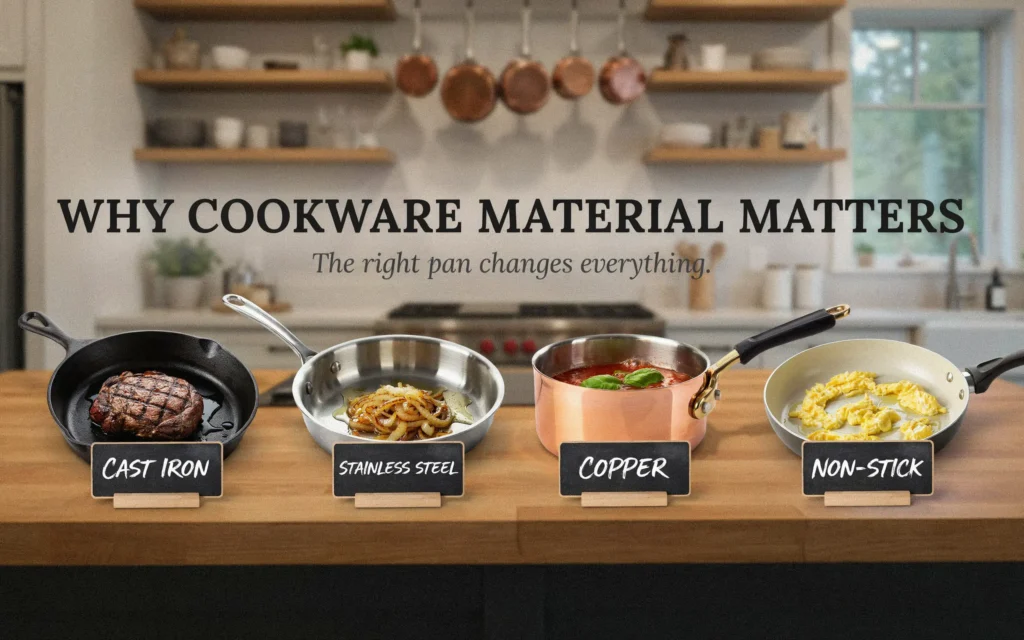
The Downside: Here is where why cookware material matters becomes a safety issue. Nonstick pans are fragile. The coating scratches easily. If you use metal utensils, you ruin the pan. The coating can also flake off. If the pan gets too hot (above 500°F), it can release fumes. These fumes are harmful to birds. They can make you sick with “polymer fume fever.” While modern pans are safer, durability is still a problem. The nonstick coating degrades over time. Even the best nonstick pans last only a few years with heavy use.
The Ceramic and Enamel Trend
Ceramic cookware has gained popularity. It is promoted as a healthy, green alternative to traditional nonstick.
The Basics: These are not like stainless steel. They are made with a silica (sand) coating or are pure ceramic. “Enamel” means a glass coating over a metal base like cast iron.
The Good: They are non-reactive. They are safer if you are worried about chemicals. They do not release toxic fumes. They come in bright, beautiful colors.
The Bad: My experience with ceramic is mixed. They are decent at nonstick initially. But the nonstick property fades fast. They are often less durable than stainless steel or cast iron. They are prone to chipping. They can also stain over time. They also have poor heat retention.
The Copper Premium
Professional chefs love copper cookware. Why? Because of conductivity. Copper heats up instantly. It also cools down instantly. This gives you precise control.
The Looks: Copper pans are beautiful. They look like art.
The Cost: They are expensive. They are also heavy.
The Reality: Copper is reactive. It must be lined with tin or stainless steel. You cannot cook acidic foods directly on bare copper. It can also tarnish. You need to polish it to keep it shiny.
Addressing Health Concerns and Safety
We have touched on this. But let us focus heavily on health. This is a huge reason why cookware material matters. You are what you eat. You are also what you cook with.
The Teflon Scare
For years, people worried about PFOA. This was a chemical used to make Teflon. It was linked to health issues. Manufacturers have now removed PFOA. They advertise “PFOA-free.” This is good. However, the new coatings still contain PTFE. If you overheat the pan, it still breaks down. The fumes are still a risk. For safety, I use nonstick only for specific tasks, like eggs. I never use it for high-heat searing.
Aluminum Worries
Aluminum cookware is lightweight. It heats evenly. But aluminum is a soft metal. It can scratch. It can leach into food. The connection between aluminum and Alzheimer’s disease is still debated. But I prefer to avoid risk. If you use aluminum, choose anodized aluminum. Anodization hardens the metal and creates a non-reactive surface. This is much safer.
Lead and Cadmium in Ceramic
This is a hidden danger. Some cheap ceramic glazes use lead or cadmium. These are toxic. They can leach into acidic food. When you buy ceramic cookware, check the safety rating. Make sure it is certified as lead-free and cadmium-free. This is a perfect example of why cookware material matters for your family’s health.
| Material | Safety Rating | Reactivity |
|---|---|---|
| Stainless Steel (18/10) | Excellent | Non-Reactive |
| Cast Iron (Seasoned) | Good | Low Reactivity |
| Nonstick (PTFE) | Moderate | Non-Reactive |
| Aluminum (Raw) | Poor | Highly Reactive |
| Ceramic (Quality) | Good | Non-Reactive |
The Science of Heat: Why It Matters
Let’s talk about physics for a minute. You might not think physics matters in the kitchen. But it does. It is central to why cookware material matters.
Heat Capacity
Heat capacity is the ability to hold heat. Cast iron has high heat capacity. It acts like a battery. It stores heat. When you sear a steak, the cold steak hits the pan. The pan stays hot because it has stored so much energy. This creates the brown crust. Stainless steel has lower heat capacity. If you put a cold steak in it, the pan cools down quickly. This can cause the steak to steam instead of sear.
Thermal Conductivity
This is the speed of heat. Copper and aluminum win here. They are fast. If you need to make a sauce and reduce it quickly, copper is great. If you need to melt butter carefully, aluminum works well. But with high conductivity, you must pay attention. The pan heats up fast. It can burn your food if you walk away.
Thermal Expansion
This is a fancy term. It means metal expands when heated. Different metals expand at different rates. This matters for “clad” pans. If the core is aluminum and the outer layer is stainless steel, they expand differently. They need to be bonded perfectly. If not, the pan can warp or the layers can separate. This is why buying quality cookware matters.
Practical Scenarios: Which Pan For Which Job?
Now, let’s get practical. You have a specific dish in mind. Which pan should you use? This will show you why why cookware material matters in real life.
Scenario 1: The Perfect Omelet
You want a fluffy, perfect omelet. It is a delicate task.
- Best Choice: Nonstick pan.
- Why: Eggs are sticky. A nonstick surface lets you roll the omelet easily without it tearing. You only need a little butter.
- Reminder: Keep the heat low to medium. This protects the nonstick coating. Do not use a fork on it. Use silicone or wooden utensils.
Scenario 2: The Perfect Steak
You want a steak with a nice crust. You want a charred exterior with a pink center.
- Best Choice: Cast iron skillet.
- Why: Cast iron holds heat brilliantly. It gives you that brown crust. You can also put it in the oven. You can start it on the stove and finish it in the oven.
- Reminder: Make sure the pan is smoking hot before you add the steak.
Scenario 3: The Perfect Sauce
You are making a tomato sauce or a reduction.
- Best Choice: Stainless steel.
- Why: It is non-reactive. Tomatoes are acidic. They will ruin the seasoning on cast iron. They will taste metallic in raw aluminum. Stainless steel preserves the flavor of your sauce. It also allows you to deglaze the pan. You can add wine, and scrape up the browned bits. This makes the sauce richer.
Scenario 4: Deep Frying
You are frying chicken or donuts.
- Best Choice: Cast iron or Enameled Cast Iron.
- Why: You need a heavy pot to maintain oil temperature. When you drop cold chicken into hot oil, the oil temperature drops. Cast iron holds enough heat to bring the temperature back up quickly. This makes your food crispy, not greasy.
Maintenance and Care
I have learned that maintenance is directly tied to performance. If you treat your cookware poorly, it will fail. This is a simple part of why cookware material matters.
For Stainless Steel: Wash with soap and water. Use a scrubbing pad for stuck-on food. But if you get water spots, a little vinegar removes them.
For Cast Iron: Please, do not use soap often. Soap strips the seasoning. Instead, use a scrub brush and hot water. I often boil a little water in the pan to loosen stuck bits. Then, I scrub. I dry it on a low heat on the stove. Then, I wipe a thin layer of oil on it. It keeps it looking great.
For Nonstick: Be gentle. Do not use high heat. Hand wash it. Never put it in the dishwasher. The harsh detergent degrades the coating. Also, do not stack other pans on top of it. They will scratch it.
For Ceramic: These are dishwasher safe, usually. But hand washing extends their life.
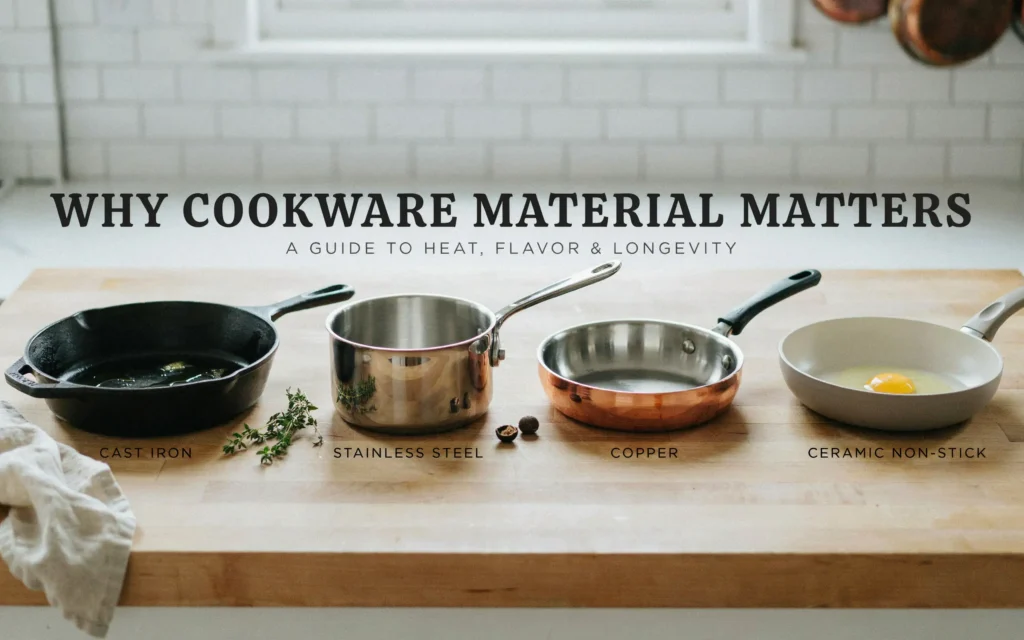
Which Cookware Is The Best?
“Best” is a subjective word. I get asked this question often. There is no single “best” pan. The true answer to why cookware material matters is that you must know what fits your style.
If you ask me, I have three go-to pans. I use a 12-inch stainless steel skillet. I use a 10-inch cast iron skillet. I use an 8-inch nonstick pan for eggs. That covers 90% of my cooking. I do not buy those huge sets with 20 pieces. You use the stockpot twice a year. You use the small saucepans occasionally. You mostly use skillets and saute pans.
Consider Your Budget
- Budget: If you are on a budget, carbon steel is a cheap alternative to cast iron. It is lighter and performs similarly.
- Mid-Range: For mid-range, look at tri-ply stainless steel. You can get Tramontina or Cuisinart. They are good quality and last a long time.
- High-End: High-end is All-Clad or Demeyere. They have superior bonding and handle design. They are lifetime purchases.
Consider Your Cooking Style
- The New Chef: If you are a new chef, choose a nonstick. It helps you build confidence. You will not get frustrated by stuck food.
- The Ambitious Chef: If you want to improve your skills, choose stainless steel. It forces you to learn heat control. Once you master stainless steel, you can cook anything.
- The Fried Food Fan: If you love fried food, choose cast iron.
Consider Your Physical Health
This goes back to safety. If you are worried about chemicals, buy stainless steel, cast iron, or carbon steel. They are the most natural and safe materials. They have stood the test of time.
The Environmental Impact
We live in a world where we must think about sustainability. Choosing cookware has an environmental impact.
Cheap Nonstick: This is the bad guy. It often comes in plastic packaging. It breaks down quickly. You throw it away every year. This contributes to waste. The manufacturing process also uses chemicals.
Cast Iron: This is the hero. It is made from iron, which is abundant. It lasts forever. You rarely need to replace it. If you care for it, it remains in use for decades.
Stainless Steel: This is also very recyclable. High-quality pans last a lifetime. They are a sustainable choice because they reduce consumption.
When you understand why cookware material matters, you also see why it matters for the planet. Buying one quality cast iron pan beats buying five cheap nonstick pans over ten years.
Sustainability and Your Wallet
Let’s talk about money. I used to buy a cheap nonstick pan at the grocery store. It cost around $20. It lasted six months. That is $40 a year. In three years, I spent $120. I could have bought a high-quality stainless steel pan for $80. That pan is still in my kitchen three years later. It still works perfectly.
Investing in the right material saves you money in the long run. It reduces waste. This is a practical aspect of why cookware material matters. It is an investment in your future cooking.
What to Look For When Buying
When you go to the store, do not just look at the brand. Flip the pan over. Read the label. Look at the base. Check the rivets. Here is what I look for:
- Weight: A heavy pan is usually built better.
- Handle: Is the handle comfortable? Is it secure? Is it oven-safe? If the handle is made of a different material, check the maximum temperature.
- Core: If it is stainless steel, look for “tri-ply” or “clad.” Ensure it is fully clad, not just a disc on the bottom. A fully clad pan cooks more evenly.
- Flaking: Look for signs of flaking or peeling in nonstick or ceramic pans.
- Safety: Check for “PFOA-free,” “Lead-free,” and “Cadmium-free.”
Quote by J. Kenji López-Alt: “The best pan is the one that gets the job done and fits your budget. A cheap cast iron skillet will outlast a hundred expensive nonstick pans if you treat it right.”
This quote perfectly reflects why you should care about material.
Adapting to Different Stovetops
Your stove also dictates your choice.
Gas Stoves: All materials work on gas. Gas flames work well with cast iron and stainless steel.
Electric Coils: Electric coils are slower. You need a pan with a flat base. Cast iron is excellent because it holds the heat.
Glass and Induction: This is a crucial part of why cookware material matters for induction users. If you have an induction cooktop, your pan must be magnetic. This means it must be ferrous (contain iron). Cast iron works. Stainless steel works (if it is magnetic). Copper and aluminum do NOT work on induction unless they have a magnetic base. So, if you have induction, skip the full copper and raw aluminum.
Common Mistakes to Avoid
Let’s look at some common mistakes. These show why people get frustrated.
Mistake 1: Using Metal Utensils on Nonstick.
I see this all the time. People use forks to flip eggs in a nonstick pan. They are scraping the coating. They are eating the coating. Stop. Use a rubber spatula.
Mistake 2: Washing Cast Iron with Soap.
As I mentioned, soap is the enemy of seasoning. If you do this, your pan is ruined and will rust. It can be fixed, but it is a hassle.
Mistake 3: Overheating Nonstick.
People use nonstick for searing meat. They put it on high heat. This burns the oil and releases fumes. Nonstick is not for high heat. Use cast iron or stainless for searing.
Mistake 4: Buying Sets.
I know it is convenient to buy a set. But you usually pay for pans you do not need. You are better off buying two or three quality pans individually.
Quote by Julia Child: “With enough butter, anything is good.” While she was joking, the point is that the pan helps you use that butter effectively.
From a Nutritionist’s Perspective
I spoke to a nutritionist friend. She told me that why cookware material matters is often overlooked in dietary advice. She points out that if you eat burnt food because your pan has hot spots, you are consuming carcinogens. If your pan leaches aluminum, you are adding heavy metals to your diet. She recommends stainless steel and cast iron. They are inert and safe. This reinforces the safety aspect we have discussed.
Quote by Dr. Mark Hyman: “We need to think about what we cook with as much as what we eat. Toxic chemicals from cookware can disrupt our hormones and metabolism.”
His point highlights the health angle.
Summary of Recommendations
Let’s wrap up the choices.
- For Eggs and Pancakes: Buy a nonstick pan. Use low to medium heat. Replace it every 2 to 3 years.
- For Steaks and Baking: Buy a cast iron pan. It is cheap and durable. It lasts forever.
- For Sauces and General Cooking: Buy a stainless steel pan. It is safe and versatile.
- For Soup and Stock: Use a stainless steel stockpot. It is large and easy to clean.
Frequently Asked Questions
1. Why is cookware material important for cooking?
The material affects heat distribution. It determines how evenly your food cooks. It also decides if your food sticks to the pan. It controls how quickly the pan responds to temperature changes.
2. Can bad cookware affect the taste of food?
Yes, it can. Reactive materials like aluminum and unseasoned cast iron can make food taste metallic. This is especially true with acidic foods like tomatoes, lemon juice, and vinegar. Non-reactive materials like stainless steel and enamel preserve the true flavor.
3. Is nonstick cookware safe to use every day?
Yes, if you use it properly. Do not overheat it. Do not use metal utensils on it. Do not use it when the coating is flaking. If you follow the rules, it is safe. However, it is fragile and not a lifelong pan.
4. Which cookware material lasts the longest?
Cast iron and stainless steel are the winners. They are almost indestructible. With proper care, cast iron can last for multiple generations. Stainless steel resists scratching and rusting.
5. What should I know about copper cookware?
Copper cooks fast and precisely. It looks beautiful. But it is expensive. It must be lined with another metal, or you risk copper toxicity. It needs regular maintenance and polishing.
6. What is the easiest cookware to clean?
Nonstick is the easiest to clean. Food slides right off. Ceramic is also relatively easy. Stainless steel can be harder to clean because food can stick and burn to the surface. But you can use a metal scrubber on stainless steel.
7. Can I put cast iron in the dishwasher?
No. Do not do this. The dishwasher will strip the seasoning. It will cause rust. Always wash cast iron by hand. Dry it immediately.
8. Does a more expensive pan mean better quality?
Not always. You pay for brand recognition and design. However, a more expensive pan usually has better construction and materials. It has better handles. It has a better core. But a cheap cast iron pan is often just as good as an expensive one.
9. Is ceramic cookware better than Teflon?
Ceramic is better if you want to avoid chemicals. It does not release fumes at high temperatures. However, ceramic loses its nonstick properties faster than Teflon. It is less durable.
10. How do I know if my pan is induction compatible?
Take a magnet. Place it on the bottom of the pan. If the magnet sticks, it is induction compatible. If it doesn’t, it will not work on an induction cooktop.
Conclusion
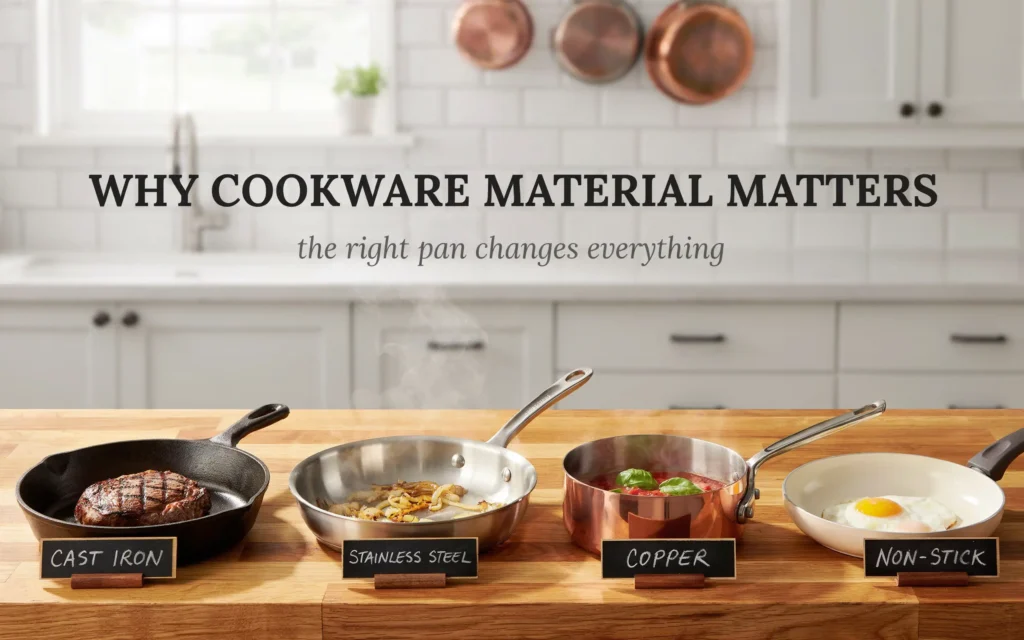
I hope this deep dive has helped you. We have covered a lot of ground. We looked at heat, safety, durability, and cleaning. We looked at different materials. We looked at which pans to use for which jobs.
Remember, why cookware material matters is a question of your health and happiness. A good pan makes cooking fun. A bad pan makes it a chore. I have seen people quit cooking because they had cheap, sticky, warped pans. They thought they were the problem. But it was the pan.
Do not let that happen to you. You do not need to spend a fortune. But you need to be thoughtful. Start with a good stainless steel skillet. Maybe add a cast iron pan. Keep a small nonstick for eggs. That is the winning combination. Your food will taste better. You will feel safer. Your money will stay in your pocket.
Next time you walk down that aisle, you will see the pans differently. You will not just see a shiny object. You will see science. You will see safety. You will see potential.
Choose wisely. Cook happily. Eat well.
Related posts
 Why Do Dogs Stare at Walls? Common Causes and When to Worry
Wondering why do dogs stare at walls? Discover the sensory, behavioral, and medical reasons behind this behavior, and learn when to contact your veterinarian. When you…
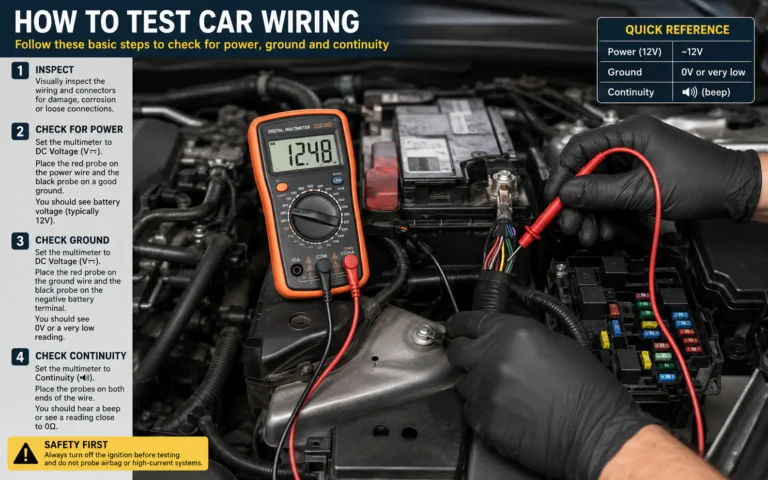 How to Test Car Wiring for Continuity Using a Multimeter
Learn how to test car wiring for continuity safely. Find broken automotive wires, check connector ports, and diagnose electrical issues with a multimeter. Testing car wiring…
 Why Organizing Space Reduces Stress: The Mental Clarity Connection
Discover why organizing space reduces stress. Learn how a tidy environment lowers cortisol, improves focus, and creates a sense of calm in your daily life. Organizing…