
How To Build Core Strength At Home
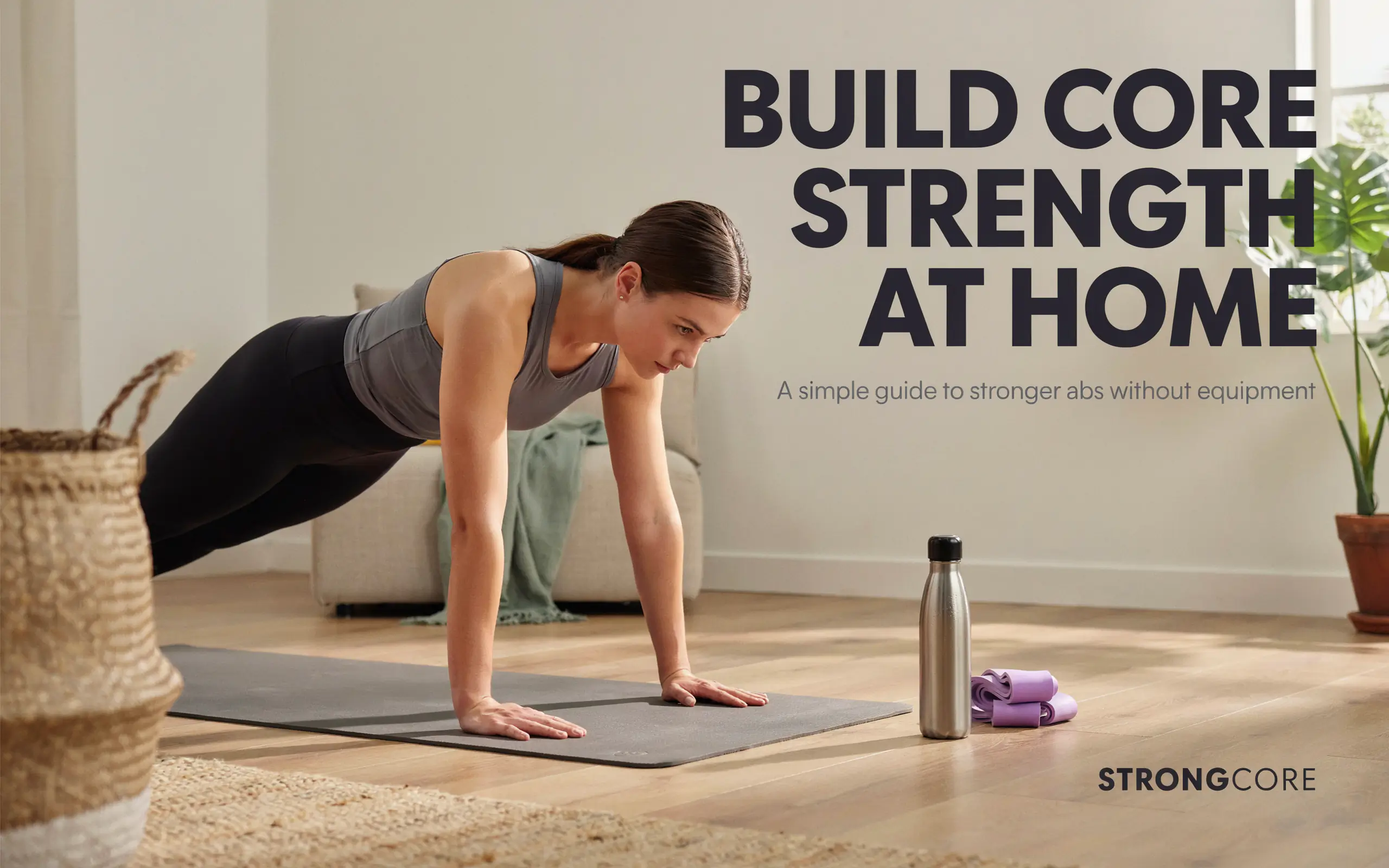
Learn how to build core strength at home with these simple, no-equipment exercises. This guide covers planks, dead bugs, and bird dogs to improve stability, posture, and reduce back pain. Start today!
Your core is the foundation of your body. It helps you stand tall, bend down to pick up your kids, carry heavy grocery bags, and even maintain good posture while sitting at your desk. The good news is that you don’t need an expensive gym membership or fancy equipment to build core strength at home. In fact, you can start right now in your living room with just your body weight.
Building core strength at home is simpler than you think. The key is consistency and using the right exercises that target all the muscles in your midsection. Your core is not just your six-pack muscles. It includes the deep abdominal muscles, the muscles along your spine, your pelvic floor, and even your hips. When you build core strength at home, you are strengthening this entire network of muscles that work together to support your body.
Many people think they need to do hundreds of crunches to see results. But crunches only target one small part of your core. To truly build core strength at home, you need a variety of exercises that challenge your stability, rotation, and endurance. This is where exercises like planks, dead bugs, and bird dogs come in. These moves are backed by science and have been shown to activate multiple core muscles at once.
As Stephen Marcotte, a certified strength and conditioning specialist, explains: “When you realize that a plank isn’t just about your abs but also engages other areas, you start to focus on activating those muscles.” This is the mindset shift that helps you build core strength at home effectively.
Why You Should Build Core Strength at Home
Before we get into the exercises, let’s talk about why you should build core strength at home. A strong core does more than give you a toned stomach. It improves your balance and stability, which is important whether you are playing sports or just walking on an uneven sidewalk. Core exercises train the muscles in your core to work together, leading to better steadiness in all your daily activities.
A strong core also helps protect your lower back. Research shows that strengthening your core muscles may help back pain get better and lower the risk of falls. When your core is weak, other muscles have to work harder to compensate, which can lead to poor posture, fatigue, and injuries. By choosing to build core strength at home, you are investing in your long-term health and mobility.
Another benefit is that you can build core strength at home without any equipment. You do not need dumbbells, resistance bands, or expensive machines. Your body weight is enough to challenge your core muscles. This makes it accessible for everyone, regardless of age or fitness level.
The Muscles That Make Up Your Core
To build core strength at home, it helps to understand which muscles you are targeting. Your core includes more than just your abdominal muscles. Here is a simple breakdown:
| Muscle Group | Function |
|---|---|
| Rectus Abdominis | The “six-pack” muscle that helps you bend forward |
| Transverse Abdominis | The deepest abdominal muscle that acts like a corset to stabilize your spine |
| Internal and External Obliques | The muscles on the sides of your waist that help you twist and bend sideways |
| Erector Spinae | The muscles along your spine that help you stand up straight |
| Multifidus | Small muscles that stabilize each vertebra in your spine |
| Pelvic Floor Muscles | The muscles that support your pelvic organs |
When you build core strength at home, you want exercises that engage all these muscles, not just the ones in the front. This is why a well-rounded routine is so important.
Essential Exercises to Build Core Strength at Home
Here are the best exercises to build core strength at home. These moves require no equipment and can be done in a small space.
1. The Plank
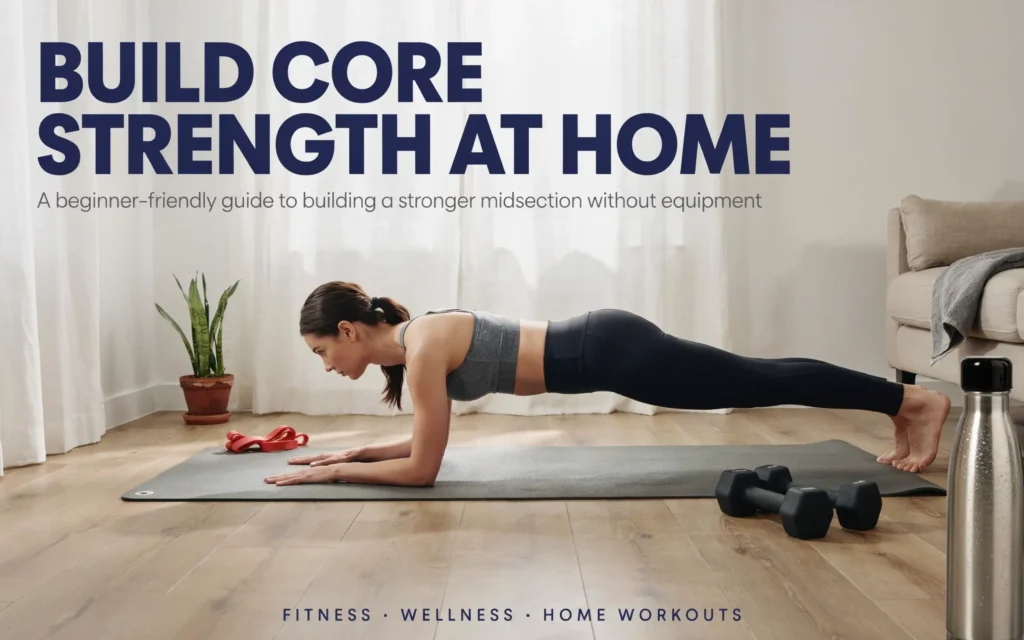
The plank is one of the most effective exercises to build core strength at home. It is an isometric exercise, meaning you hold a position without moving. The plank activates your entire core musculature, including the rectus abdominis, transverse abdominis, and external obliques.
How to do it: Start in a forearm position with your elbows directly under your shoulders and your feet hip-width apart. Engage your core, glutes, and quadriceps. Keep your body in a straight line from your head to your heels. Avoid letting your hips sag or stick up in the air. Hold this position for 20 to 60 seconds, depending on your ability. Repeat for 3 sets.
The plank is great because it imposes less spinal load than traditional sit-ups while engaging a broader range of stabilizer muscles. If you want to build core strength at home, the plank should be a staple in your routine.
2. The Dead Bug
The dead bug is a safe and effective exercise that teaches your core to stay stable while your arms and legs move independently. It targets your deep core muscles and trains you to prevent your lower back from arching during movement. This is a vital skill for preventing injury.
How to do it: Lie on your back with your arms extended straight up toward the ceiling and your knees bent at a 90-degree angle, with your shins parallel to the floor. Press your lower back gently into the floor and brace your core. Slowly lower your right arm overhead toward the floor while simultaneously straightening and lowering your left leg a few inches. Move slowly and with control. Pause when your arm and leg are just above the floor. Return to the start and repeat on the opposite side. Perform 8 to 12 slow reps per side.
As physical therapist Yasaman Zarbafian notes: “In comparison, the dead bug works all the abdominal muscles, even the deep transversus abdominis.” This makes it an excellent choice to build core strength at home.
3. The Bird Dog
The bird dog is a slow, controlled stability exercise done on all fours. It improves coordination and spinal control. This exercise strengthens your core, hips, and back by engaging stabilizer muscles like the erector spinae, rectus abdominis, glutes, and hamstrings.
How to do it: Begin on all fours in the tabletop position. Place your knees under your hips and your hands under your shoulders. Maintain a neutral spine by engaging your abdominal muscles. Raise your right arm and left leg, keeping your shoulders and hips parallel to the floor. Hold this position for a few seconds, then lower back down. Repeat on the opposite side. Do 2 to 3 sets of 8 to 12 repetitions.
The bird dog is particularly good for people with back pain because it stabilizes the spine without loading it excessively. It is a must-have exercise to build core strength at home safely.
4. Side Plank
The side plank isolates the obliques and challenges lateral stability, which is crucial for spinal health and rotational movement. It also engages the gluteus medius and minimus, contributing to pelvic stability.
How to do it: Lie on one side with your legs stacked and your forearm beneath your shoulder. Lift your hips so your body forms a straight line. Keep your head in line with your spine. Hold for 20 to 45 seconds per side. Repeat for 2 to 3 sets.
According to EMG data, the side plank elicits greater activation of the external obliques than the front plank. Including side planks in your routine helps you build core strength at home more evenly.
5. Bicycle Crunch
The bicycle crunch combines trunk rotation with alternating knee movements to train several core muscle groups. It is effective for rotational strength and coordination.
How to do it: Lie on your back with your hands lightly supporting your head, elbows wide, and knees bent. Lift your head, neck, and shoulders slightly off the ground and bring your knees up to tabletop position. Extend your right leg out while bringing your left knee toward your chest. Simultaneously rotate your torso so your right elbow moves toward your left knee. Switch sides in a smooth, controlled motion. Perform 20 to 30 alternating reps at a controlled tempo.
Slow, intentional movements are important with this exercise. When you build core strength at home, focus on quality over quantity.
6. Russian Twist
The Russian twist is an effective core exercise that involves rotating your torso from side to side while seated on the floor. It challenges the obliques, rectus abdominis, transverse abdominis, and erector spinae.
How to do it: Sit on the floor with your knees bent and feet flat on the ground. Lean your upper body back at a 45-degree angle. Engage your core and rotate your arms to one side of your body, then rotate them to the opposite side. For an extra challenge, lift your feet off the ground.
As Peloton instructor Emma Lovewell says: “Russian twists are an effective core exercise that involves rotating your torso from side to side while seated on the floor.” Adding Russian twists to your routine is a great way to build core strength at home.
How to Structure Your Core Workout at Home
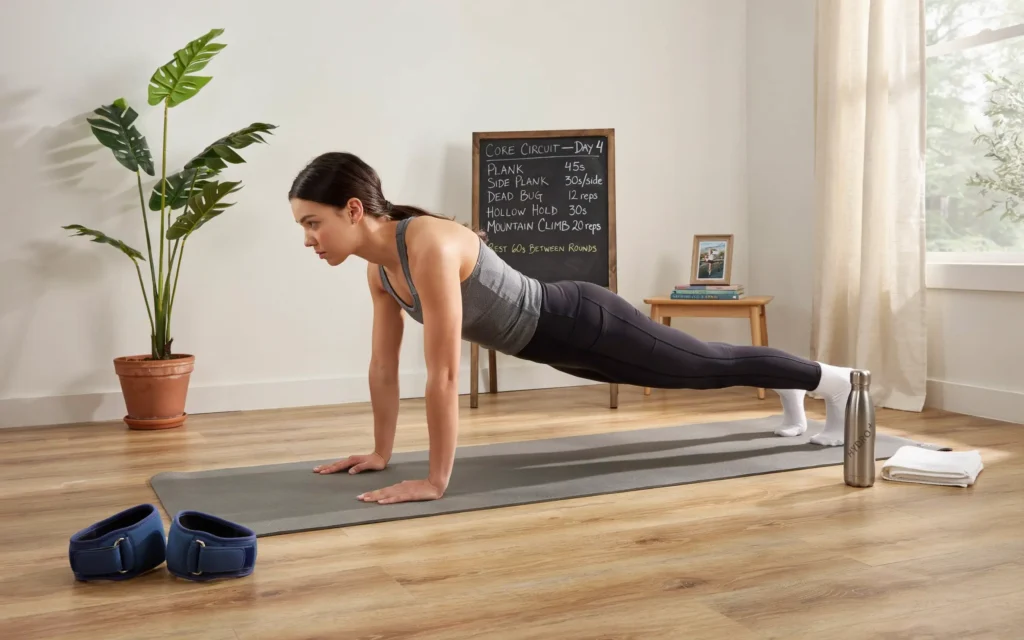
Now that you know which exercises to do, let’s talk about how to put them together into a workout. You can build core strength at home with just 10 to 15 minutes a day, three to four times a week.
Here is a sample routine you can follow:
| Exercise | Duration / Reps | Rest |
|---|---|---|
| Plank | 30-60 seconds | 30 seconds |
| Dead Bug | 10 reps per side | 30 seconds |
| Bird Dog | 10 reps per side | 30 seconds |
| Side Plank | 30 seconds per side | 30 seconds |
| Bicycle Crunch | 20 reps total | 30 seconds |
| Russian Twist | 20 reps total | 30 seconds |
Perform this circuit 2 to 3 times through. Start with one round if you are a beginner and gradually increase as you get stronger.
Remember to warm up before your workout. A simple warm-up could include shoulder rolls, seated knee lifts, and gentle torso twists. Cooling down with stretches is also important to help your muscles recover.
Tips to Build Core Strength at Home Effectively
Building core strength at home is not just about doing the exercises. Here are some tips to help you get the most out of your efforts.
Focus on form over speed. Moving slowly and with control is more important than rushing through the movements. When you build core strength at home, quality matters more than quantity.
Breathe properly. Exhale during the harder part of each move and inhale as you reset or lower. Proper breathing helps you engage your core more effectively.
Be consistent. Consistency is the key to seeing results. Even 10 minutes a day can make a big difference over time. As the team at CoreLife Healthcare puts it: “You don’t need a gym to make progress. You just need consistency, self-kindness, and a plan that works with your body, not against it.”
Listen to your body. If an exercise causes pain, stop and adjust your form. It is normal to feel a burn in your muscles, but you should never feel sharp pain. Building core strength at home should be a positive experience, not a painful one.
Progress gradually. As you get stronger, you can make the exercises more challenging. For the plank, try holding it for longer. For the dead bug, try extending your arm and leg closer to the floor. For the bird dog, try adding a resistance band. Small progressions add up over time.
Common Mistakes to Avoid
When you build core strength at home, it is easy to make mistakes that reduce the effectiveness of your workout or even lead to injury. Here are some common pitfalls to watch out for.
Arching your lower back. In exercises like the plank and dead bug, it is crucial to keep your lower back flat or in a neutral position. Arching your back puts unnecessary stress on your spine and reduces the engagement of your core muscles.
Holding your breath. Many people hold their breath during core exercises. This is a mistake. Breathing helps you maintain stability and prevents unnecessary tension in your body.
Using momentum. Swinging your body to complete a rep is not effective. Slow, controlled movements are what build strength. When you build core strength at home, think about quality, not speed.
Neglecting the back muscles. Your core includes your back muscles. Make sure your routine includes exercises like the bird dog and side plank that target the muscles along your spine.
Doing the same exercises every day. Your muscles need time to recover and grow stronger. Aim to do core exercises three to four times a week, not every single day.
Frequently Asked Questions
How long does it take to build core strength at home?
You may start to feel stronger within a few weeks of consistent training. Visible changes in muscle tone can take longer, depending on your starting point and diet. The key is to stay consistent and gradually increase the difficulty of your exercises.
Can I build core strength at home without equipment?
Yes, absolutely. All the exercises in this guide require no equipment. Your body weight provides enough resistance to challenge your core muscles effectively.
How often should I do core exercises to build core strength at home?
Aim for three to four sessions per week. This gives your muscles time to recover while still providing enough stimulus to build strength. You can do core exercises on the same days as your other workouts or on separate days.
Is the plank better than crunches for building core strength at home?
The plank is generally considered more effective because it engages more core muscles and puts less stress on your spine. Crunches only target the rectus abdominis and can strain your neck and lower back. For a well-rounded core, planks are a better choice.
Can older adults build core strength at home safely?
Yes. Exercises like the dead bug and bird dog are low-impact and suitable for older adults. Always start slowly, focus on form, and listen to your body. If you have any concerns, consult with a healthcare professional before starting a new exercise program.
Do core exercises help with back pain?
Strengthening your core muscles may help back pain get better. A strong core provides better support for your spine, which can reduce the strain on your lower back. Exercises like the bird dog are particularly good for back health.
Conclusion
Building core strength at home is one of the best things you can do for your overall health and well-being. You do not need a gym membership, expensive equipment, or hours of free time. All you need is a small space, your body weight, and a commitment to showing up for yourself.
The exercises in this guide, including planks, dead bugs, bird dogs, and Russian twists, are scientifically proven to target all the muscles in your core. When you build core strength at home consistently, you will notice improvements in your balance, posture, and daily activities. You will also reduce your risk of back pain and injury.
Start small. Pick two or three exercises and do them for a few minutes each day. As you get stronger, add more exercises and increase your workout time. Remember, progress is progress, no matter how small. Every time you choose to build core strength at home, you are investing in a healthier, stronger future.
As Dr. Stuart McGill, a renowned spine expert, has shown in his research, exercises like the bird dog are among the best for spinal health and stability. Incorporate these movements into your routine and feel the difference they make.
So, what are you waiting for? Find a spot on your floor, set a timer, and start building your core strength at home today. Your body will thank you.
Related posts
 Why Do Dogs Stare at Walls? Common Causes and When to Worry
Wondering why do dogs stare at walls? Discover the sensory, behavioral, and medical reasons behind this behavior, and learn when to contact your veterinarian. When you…
 How to Test Car Wiring for Continuity Using a Multimeter
Learn how to test car wiring for continuity safely. Find broken automotive wires, check connector ports, and diagnose electrical issues with a multimeter. Testing car wiring…
 Why Organizing Space Reduces Stress: The Mental Clarity Connection
Discover why organizing space reduces stress. Learn how a tidy environment lowers cortisol, improves focus, and creates a sense of calm in your daily life. Organizing…