
How To Prevent Kitchen Accidents
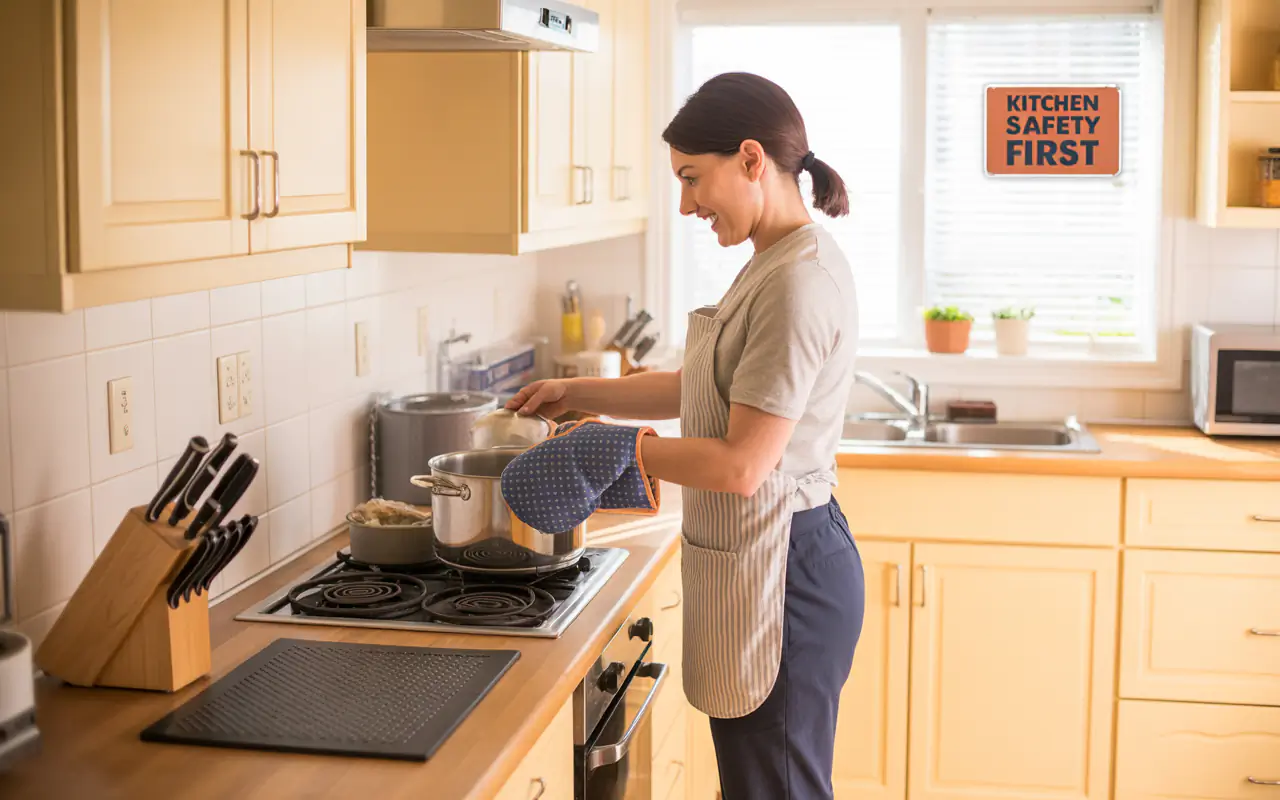
Learn how to prevent kitchen accidents with these 12 practical safety tips. This guide covers fire prevention, knife safety, fall protection, and childproofing to keep your family safe.
The kitchen is often called the heart of the home. It’s where we gather, share meals, and create memories. But it’s also a place where injuries can happen in a split second. Every year, thousands of people end up in emergency rooms because of kitchen-related injuries. The good news is that most of these accidents are avoidable.
Whether you are an experienced cook or just starting out, knowing how to prevent kitchen accidents is a skill everyone needs. This guide will walk you through simple, effective ways to keep yourself and your loved ones safe while cooking. Let’s explore practical steps that can make your kitchen a safer place.
Understanding Common Kitchen Hazards
Before we dive into safety measures, it helps to know what we are dealing with. The most common kitchen accidents include burns, cuts, falls, and fires. According to a study of kitchen workers, burn injuries accounted for 34% of reported accidents, followed by cuts at 27.1% and slips at 26.4%.
Cooking fires remain the number one cause of accidental house fires. In many cases, these fires start because someone left food unattended or placed flammable items near the stove. Understanding these risks is the first step to preventing them.
Fire Safety: Your First Line of Defense
Fire is one of the most dangerous threats in any kitchen. But with a few simple habits, you can greatly reduce the risk.
Never Leave Cooking Unattended
This is the most important rule of kitchen safety. If you are frying, grilling, or broiling food, stay in the kitchen. The National Fire Protection Association reports that unattended cooking is a leading cause of home cooking fires. Even a quick trip to another room can be enough time for a small flame to turn into a big problem.
If you need to step away, turn off the stove or ask someone else to watch it for you. Use a timer to remind yourself that you have something on the stove.
Keep Flammable Items Away from the Stove
Many kitchen fires start because something flammable got too close to a heat source. Dish towels, paper towels, wooden utensils, and food packaging should all stay at least three feet away from the stove.
Mark Warwick, group manager at Lancashire Fire and Rescue Service, warns: “We’re continuing to see too many fires caused by people placing shopping bags, washing baskets, chopping boards, or even paper towels on top of the hob”. His advice is simple: keep your hob clear at all times, not just when you are cooking.
Know What to Do If a Fire Starts
If a small fire breaks out in a pan, do not panic. Turn off the heat and carefully slide a lid over the pan to smother the flames. Never use water on a grease fire. Water will cause the hot oil to splatter and spread the fire.
Keep a fire extinguisher in or near your kitchen. Make sure it is an ABC-rated extinguisher and learn how to use it before you need it. Also, install smoke alarms on every level of your home and test them monthly.
Table 1: Fire Safety Quick Reference
| Do’s | Don’ts |
|---|---|
| Stay in the kitchen while cooking | Leave food unattended on the stove |
| Keep flammable items away from the stove | Store items on top of the hob |
| Use a lid to smother small pan fires | Use water on a grease fire |
| Keep a fire extinguisher nearby | Ignore smoke alarms or disable them |
| Clean grease build-up regularly | Wear loose clothing while cooking |
Knife Safety: Sharp Tools Require Careful Handling
Knives are essential tools in the kitchen, but they can also cause serious injuries if not used properly. The key to preventing cuts is to treat knives with respect and follow some basic rules.
Keep Your Knives Sharp
It may seem strange, but a sharp knife is actually safer than a dull one. A dull knife requires more force to cut, which increases the chance of it slipping and cutting you. Sharpen your knives regularly to keep them in good condition.
Use the Right Technique
Always cut away from your body. Keep your fingers curled under and use your knuckles as a guide to protect your fingertips. Make sure your cutting board is stable. You can place a damp cloth underneath it to prevent it from sliding around.
Store Knives Properly
Never leave knives loose in a drawer where they can cause injury when you reach for something else. Use a knife block, magnetic strip, or a drawer insert designed specifically for knives.
Dr. Sharon Henry, a critical care surgeon, advises: “Avoid a ‘BRI (Bagel-Related Injury)’ or ‘Avocado Hand’ by always slicing away from your body and cutting on a stable surface”.
Wash Knives Separately
Do not place knives in a sink full of soapy water. Someone reaching into the water could get cut by a hidden blade. Wash knives separately by hand and dry them immediately.
Preventing Burns and Scalds
Burns and scalds are among the most common kitchen injuries. Hot liquids, steam, and hot surfaces can cause serious damage in an instant. But you can prevent kitchen accidents involving heat with some simple habits.
Use Oven Mitts and Pot Holders
Always use dry oven mitts or pot holders when handling hot cookware. A wet or damp mitt will create steam and can cause severe burns. Make sure your mitts are in good condition and offer enough protection.
Turn Pot Handles Inward
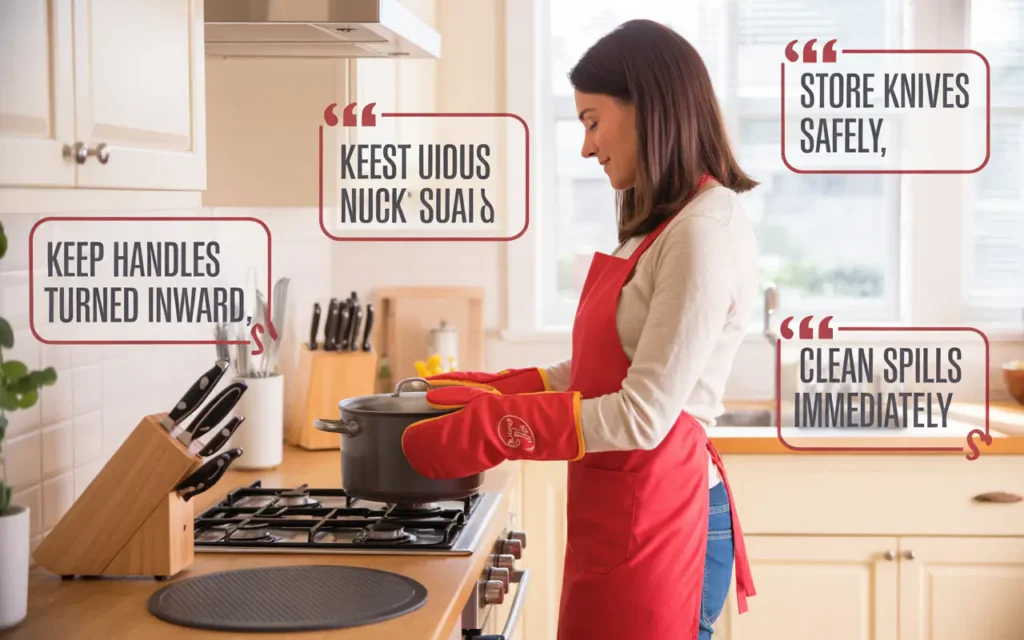
When cooking on the stove, always turn pot handles inward so they do not stick out over the edge of the stove. This prevents someone from accidentally bumping into the handle and spilling hot contents. It also keeps handles out of reach of children.
Lift Lids Away from Your Face
When you lift a lid from a hot pot, do it away from your face. The steam that escapes can cause serious burns to your face and hands. Tilt the lid so the steam releases in a safe direction.
Dress for Safety
Wear close-fitting clothing when cooking. Loose sleeves can catch fire or get caught in appliances. Tie back long hair to keep it away from flames and hot surfaces. Wear non-slip shoes to prevent falls in case you spill something.
Preventing Falls in the Kitchen
Falls might not be the first thing you think of when it comes to kitchen safety, but they happen more often than you might expect. Slippery floors, clutter, and reaching for high items can all lead to falls.
Clean Up Spills Immediately
This is one of the easiest and most effective ways to prevent kitchen accidents. Whenever you spill water, oil, or any other liquid, wipe it up right away. A wet floor is a slipping hazard that can cause serious injury.
Keep Pathways Clear
Do not leave bags, shoes, or other items on the kitchen floor. Keep the area where you walk clear of obstacles. Make sure you can move around freely without tripping over anything.
Use a Sturdy Step Stool
When you need to reach something on a high shelf, use a sturdy step stool or ladder. Do not use a chair or other unstable object. Chairs can tip over easily and cause a fall.
Practice Proper Lifting
When lifting heavy pots or containers, bend your knees and use your leg muscles. Do not try to lift more than you can handle. If something is too heavy, ask for help.
Electrical Safety in the Kitchen
Kitchen appliances make cooking easier, but they also come with electrical risks. Knowing how to use them safely is an important part of learning how to prevent kitchen accidents.
Unplug Appliances When Not in Use
Small appliances like toasters, blenders, and coffee makers should be unplugged when you are not using them. This reduces the risk of electrical fires caused by faulty connections or malfunctions.
Keep Appliances Away from Water
Never use electrical appliances near water. Keep your hands dry when plugging in or unplugging appliances. Do not place appliances like toasters near the sink where they could get splashed.
Check Cords and Outlets
Regularly inspect appliance cords for fraying or damage. Replace or repair damaged items right away. Do not overload electrical outlets by plugging too many appliances into one outlet.
Clean Appliances Regularly
Clean the crumb tray in your toaster and remove any food particles that get stuck. Keep your stovetop and oven free of grease build-up. Grease can catch fire and cause serious damage.
Food Safety: Preventing Illness
While physical injuries are a major concern, foodborne illness is another risk in the kitchen. Proper food handling is essential for keeping your family healthy.
Wash Your Hands Often
Wash your hands with soap and warm water before and after handling food. This is especially important after touching raw meat, poultry, or seafood.
Use Separate Cutting Boards
Use different cutting boards for raw meat and fresh produce. This prevents cross-contamination and the spread of harmful bacteria.
Cook Food to Safe Temperatures
Use a food thermometer to make sure meat, poultry, and fish are cooked to the proper internal temperature. Do not guess. A thermometer gives you accurate information.
Refrigerate Leftovers Promptly
Put leftovers in the refrigerator within two hours of cooking. This prevents bacteria from growing and keeps your food safe to eat.
Childproofing Your Kitchen
If you have young children, your kitchen requires extra attention. Kids are naturally curious, and the kitchen is full of things that can hurt them. Taking steps to childproof your kitchen is a key part of how to prevent kitchen accidents.
Install Safety Locks
Put childproof locks on cabinets and drawers that contain sharp objects, cleaning supplies, or heavy appliances. This keeps dangerous items out of little hands.
Use Stove Knob Covers
Install covers on your stove knobs so children cannot accidentally turn on the burners. This is a simple and effective safety measure.
Create a Child-Free Zone
Establish a three-foot “child-free zone” around the stove. Keep children and pets away from the cooking area to prevent burns and spills.
Supervise Children at All Times
Never leave a child alone in the kitchen while cooking is happening. Assign age-appropriate tasks if you are cooking together. Teach children about kitchen safety and the dangers of hot surfaces and sharp objects.
Be Prepared for Emergencies
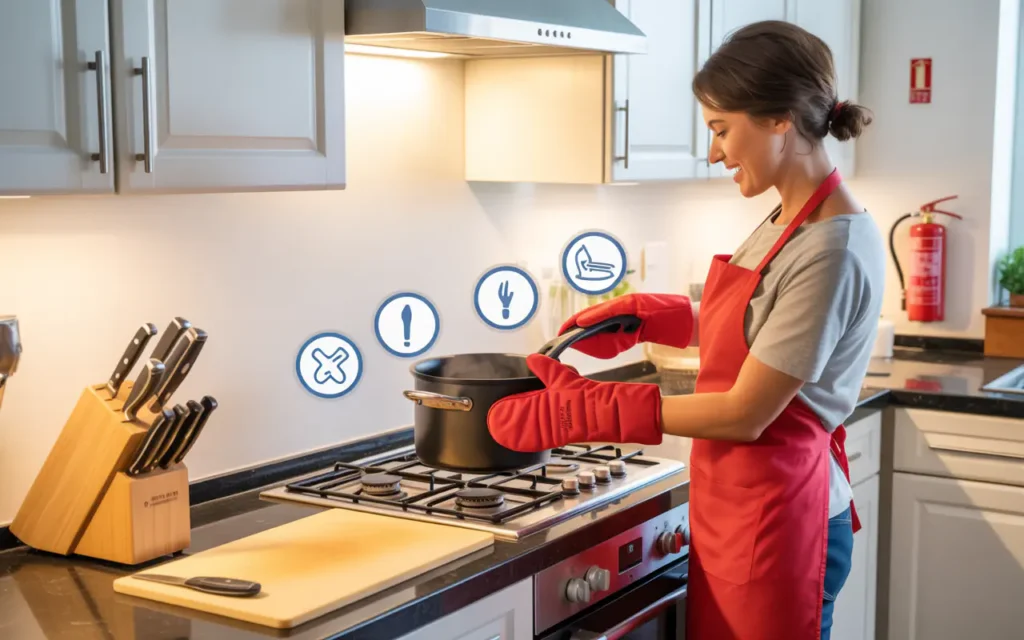
Even with the best precautions, accidents can still happen. Being prepared can make a big difference in how things turn out.
Keep a First Aid Kit Handy
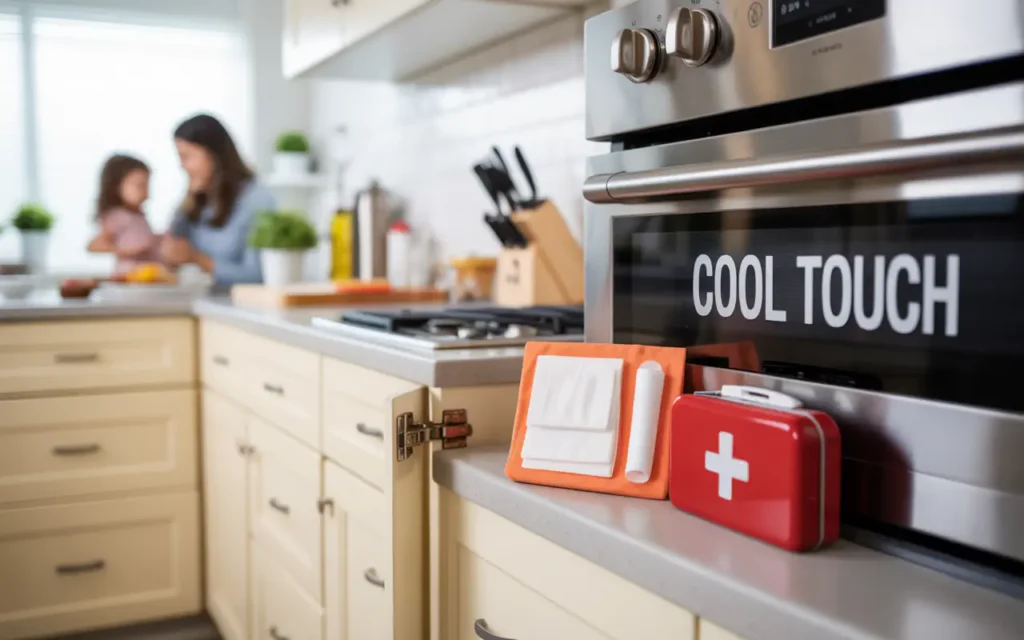
Have a well-stocked first aid kit in or near your kitchen. It should include bandages, antiseptic wipes, burn cream, and other basic supplies.
Know Basic First Aid
Learn how to treat minor cuts, burns, and other injuries. For serious injuries, call for emergency help immediately. Dr. Sharon Henry recommends keeping emergency numbers handy and knowing basic first aid.
Keep a Fire Extinguisher Accessible
Make sure your fire extinguisher is easy to reach and that everyone in your home knows where it is and how to use it. Check it regularly to make sure it is in good working order.
Table 2: Emergency Preparedness Checklist
| Item | Action |
|---|---|
| First aid kit | Keep stocked and accessible |
| Fire extinguisher | Place near kitchen exit, check regularly |
| Smoke alarms | Test monthly, replace batteries every 6 months |
| Emergency numbers | Post near phone or save in your mobile |
| Fire escape plan | Practice with your family |
Smart Habits for a Safer Kitchen
Beyond specific safety measures, developing good habits can go a long way in preventing accidents. These small practices become second nature over time and keep your kitchen safe.
Stay Focused
Distraction is a major cause of kitchen accidents. Do not cook when you are tired or under the influence of alcohol. Save the wine for after dinner. Stay alert and pay attention to what you are doing.
Keep Your Kitchen Organized
A cluttered kitchen is an accident waiting to happen. Clear your countertops before you start cooking. Put ingredients and tools back in their places after using them. An organized workspace makes cooking safer and more enjoyable.
Clean As You Go
Do not wait until the end of your meal to clean up. Wipe down surfaces, wash dishes, and put things away as you cook. This keeps your workspace tidy and reduces the risk of spills and falls.
Maintain Your Appliances
Regular maintenance can prevent many accidents. Keep your oven, stovetop, and rangehood clean and free of grease. Check your appliances for signs of wear and replace them when necessary.
Frequently Asked Questions
1. What are the most common kitchen accidents?
The most common kitchen accidents are burns, cuts, slips and falls, and fires. Burn injuries are the most frequently reported, followed by cuts and slips. Cooking fires are also a major concern and a leading cause of house fires.
2. How can I prevent kitchen fires?
Never leave cooking unattended, keep flammable items away from the stove, and clean grease build-up regularly. Keep a fire extinguisher nearby and know how to use it. If a small fire starts in a pan, cover it with a lid and turn off the heat. Never use water on a grease fire.
3. How do I prevent cuts when using knives?
Keep your knives sharp, cut away from your body, and use a stable cutting board. Store knives in a knife block or magnetic strip. Never place knives in a sink full of water where they cannot be seen.
4. How can I make my kitchen safe for children?
Install safety locks on cabinets and drawers, use stove knob covers, and create a child-free zone around the stove. Never leave children alone in the kitchen while cooking.
5. What should I do if I get a burn while cooking?
Run cool (not cold) water over the burn for several minutes. Do not apply ice or butter. Cover the burn with a clean, dry cloth. Seek medical attention for serious burns.
6. How often should I test my smoke alarms?
Test your smoke alarms monthly and replace the batteries every six months. Install smoke alarms on every level of your home and outside each sleeping area.
7. What is the best way to prevent slips and falls in the kitchen?
Clean up spills immediately, keep floors clear of clutter, and wear non-slip shoes. Use a sturdy step stool to reach high items instead of a chair.
Conclusion
The kitchen is a wonderful place where meals are made and memories are shared. But it can also be a place where accidents happen. The good news is that by following simple safety practices, you can prevent kitchen accidents and keep your family safe.
Remember to stay focused while cooking, keep your workspace clean and organized, and handle knives and heat with care. Never leave cooking unattended, and always be prepared for emergencies. These habits do not take much time or effort, but they can save you from serious injury.
“Keep safety in mind every time you cook,” advises Dr. Sharon Henry. That is the best advice anyone can give. Whether you are making a simple breakfast or a holiday feast, taking a few moments to think about safety can make all the difference.
Start implementing these tips today. Your kitchen will become a safer, more enjoyable place for everyone. After all, the best meals are the ones made with love and care, and that includes caring about safety. Stay safe, cook with confidence, and enjoy the time you spend in your kitchen.
Related posts
 Best Under Sink Organizers Kitchen 2026: Practical Storage Solutions
Find the best under sink organizers kitchen in 2026. Compare top-rated pull-out bins, L-shaped racks, and protective mats to maximize your cabinet space. The space under…
 Best Kitchen Cabinet Storage Solutions for 2026
Organize your kitchen efficiently with our Best Kitchen Cabinet Storage Solutions. Compare the best organizers for lids, pans, and spices to maximize your space. A cluttered…
 Top Rated Kitchen Shelf Organizers for 2026
Discover the top rated kitchen shelf organizers for 2026. Compare durable racks, magnetic shelves, and tiered storage to maximize your pantry and counter space. A cluttered…