
How To Calm An Anxious Dog
Learn to calm an anxious dog with simple steps. This guide shows signs, home remedies, and training tips to reduce fear and stress in your pet. Safe and kind methods.
Have you ever seen your dog shake during a storm or hide when guests arrive? You are not alone. Many dogs feel fear and stress just like people do. As a pet parent, it hurts to watch your furry friend suffer. The good news is that you can learn how to calm an anxious dog with a few easy steps. You do not need expensive tools or years of training. You just need patience and love.
I have worked with anxious dogs for over ten years. I am not a vet, but I have helped many rescue dogs feel safe again. Every dog is different, but the basic ideas work for almost all of them. In this guide, I will share what I learned from trainers, vets, and my own experience. Let us start by understanding what anxiety looks like in your dog.
What Does Dog Anxiety Look Like? (Signs to Watch)
Dogs cannot tell us they feel scared. They show us with their body. You might see some of these signs in your own pet. The faster you spot anxiety, the sooner you can calm an anxious dog before the fear gets worse.
Here are common signs of anxiety in dogs:
| Sign | What It Looks Like |
|---|---|
| Shaking or trembling | Whole body shakes even when not cold |
| Pacing | Walks back and forth without stopping |
| Hiding | Goes under the bed, behind furniture, or in a closet |
| Panting heavy | Breathes fast with tongue out even after rest |
| Whining or barking | Makes noise for no clear reason |
| Destroying things | Chews shoes, digs at doors, or tears pillows |
| Licking paws too much | Licks one spot until the skin gets red |
| Tail tucked low | Holds tail between legs |
| Ears pinned back | Flattens ears against the head |
| Drooling more than usual | Saliva drips even when no food is near |
Some dogs show only one sign. Others show many. If you see these signs often, your dog may need help to feel safe.
“Dogs do speak, but only to those who know how to listen.” – Orhan Pamuk
This quote reminds us to watch our dogs closely. Their body tells a story. When you learn to read that story, you can calm an anxious dog much faster.
Why Do Dogs Get Anxious? (Common Triggers)
Anxiety in dogs does not come from nowhere. Something causes it. Knowing the trigger helps you pick the right way to calm an anxious dog. Let me list the most common reasons dogs feel afraid.
Separation Anxiety
This is very common. Your dog loves you so much that being alone feels scary. They might bark, cry, or destroy things when you leave. Some dogs even try to escape through windows or doors. This is not bad behavior. It is fear.
Noise Phobias
Loud sounds make many dogs panic. Thunder, fireworks, vacuum cleaners, and even a door slamming can set them off. Their ears are much more sensitive than ours. A noise that seems okay to you might feel like an explosion to your dog.
Fear of New Places
New people, new dogs, or new rooms can trigger anxiety. Some dogs only feel safe in their own home. Others get scared at the vet or at a busy park. Past bad experiences can also cause this fear.
Other triggers include:
- Changes in your daily schedule
- Moving to a new house
- A new baby or pet in the family
- Old age (dog dementia can cause confusion and fear)
- Pain from an injury or illness
Once you know the trigger, you can start to calm an anxious dog more effectively.
How to Calm an Anxious Dog Right Now (Immediate Steps)
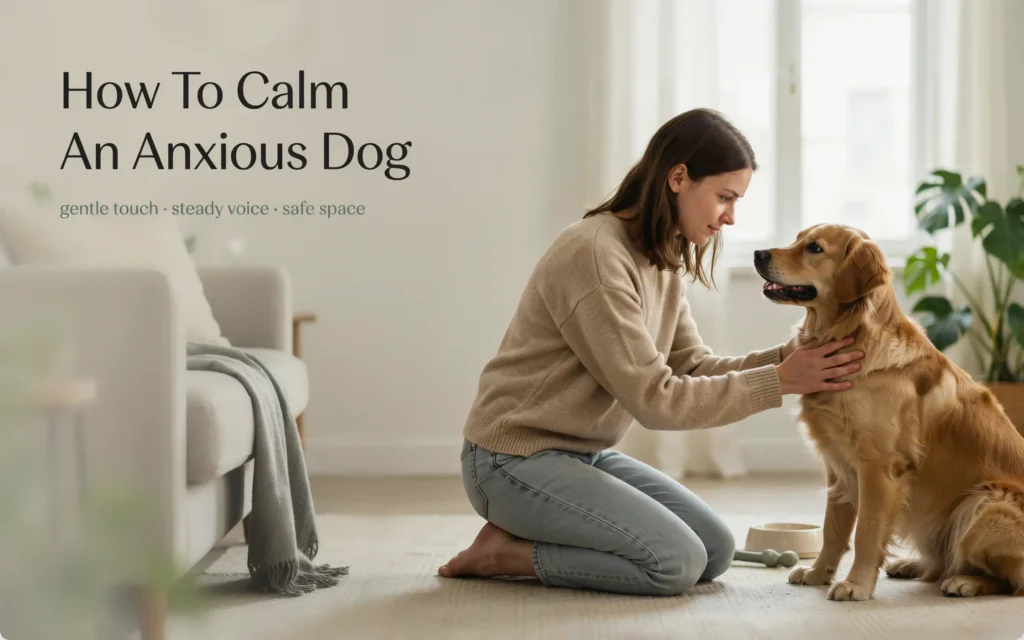
Sometimes your dog gets scared all of a sudden. Maybe a thunderstorm just started, or a guest rang the bell. You need fast help. Here are seven things you can do in the moment to calm an anxious dog.
| Technique | How To Do It | Why It Helps |
|---|---|---|
| Stay calm yourself | Breathe slowly and speak softly | Dogs feel your energy. If you panic, they panic more. |
| Give a safe spot | Lead them to their bed or crate | A familiar place feels less scary |
| Use gentle touch | Stroke their chest or back slowly | Soft touch releases feel-good hormones |
| Play soft music | Turn on classical music or white noise | Masks scary sounds and soothes nerves |
| Offer a chew toy | Give a stuffed Kong or safe bone | Chewing lowers stress and gives focus |
| Use a calming wrap | Wrap a snug shirt or special vest around them | Gentle pressure feels like a hug |
| Turn away from the trigger | Block the window or close the door | Out of sight can mean out of mind |
Pick one or two of these at a time. Do not try all seven at once. That might overwhelm your dog even more.
“The greatest pleasure of a dog is that you may make a fool of yourself with him, and he will not scold you.” – Unknown
When you try to calm an anxious dog, do not worry about looking silly. Sit on the floor with them. Sing a soft song. Let them lick your hand. Whatever works.
Long Term Solutions for Anxious Dogs
Quick fixes help in the moment, but your dog needs lasting change. These long term ideas will slowly reduce fear over weeks or months. Be patient. Every small step counts.
Create a Safe Space
Your dog needs a place that feels 100% safe. This can be a crate with the door left open, a corner of the bedroom, or even a large closet. Put a soft bed inside. Add a shirt that smells like you. Keep the area quiet and dim.
Teach your dog to love this spot. Give treats there. Play with toys there. Never use the safe space for time outs or punishment. When your dog learns to go there on their own during stress, you have done a great job.
Use Calming Products
Many products can help calm an anxious dog over time. Here are the ones that work best for most dogs:
- Adaptil diffuser or spray – This releases a fake copy of the calming chemical mother dogs make for their puppies. It has no smell to us, but dogs feel it.
- Calming treats – Look for treats with L-theanine, chamomile, or melatonin. Always ask your vet before giving any new treat.
- Thunder shirt – This snug vest gives constant gentle pressure. Many dogs relax within minutes of putting it on.
- Herbal drops – Some pet stores sell flower essences or CBD oil for dogs. Check your local laws and talk to your vet first.
Try one product at a time. Give it a week to see if it helps. If you try too many things at once, you will not know what works.
Exercise and Mental Stimulation
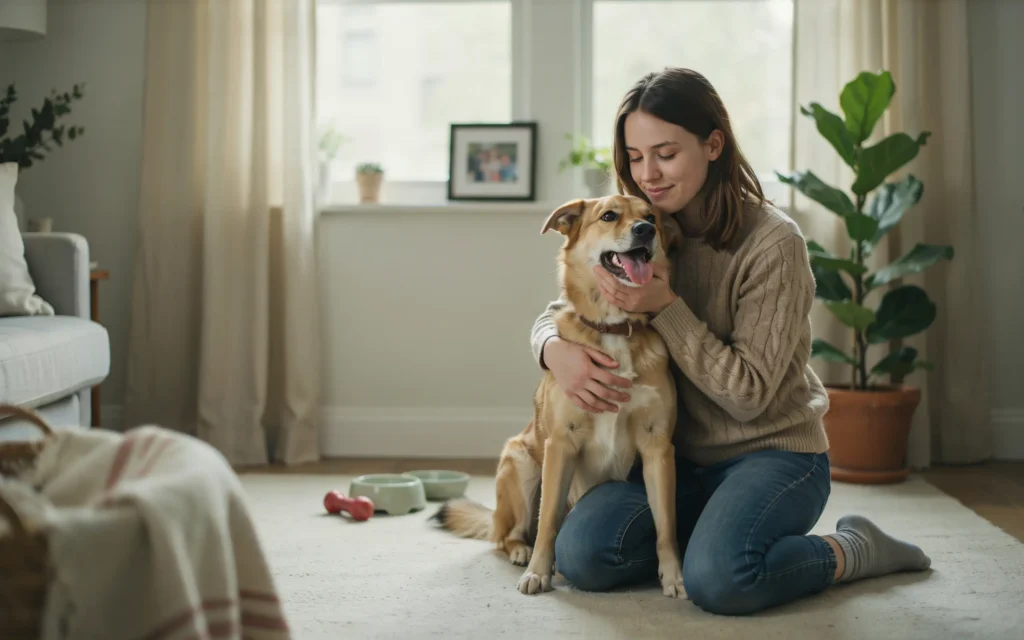
A tired dog is a calmer dog. This is true for most anxious dogs. Daily walks, fetch games, and running in a fenced yard burn off nervous energy. But do not stop there. Mental work is just as good.
Try these brain games:
- Hide treats around the house and say “find it”
- Use a snuffle mat where your dog sniffs for kibble
- Teach a new trick like “spin” or “touch”
- Give a puzzle toy that drops treats when solved
When your dog uses their brain, they have less room for worry. This makes it much easier to calm an anxious dog over time.
“A dog is the only thing on earth that loves you more than he loves himself.” – Josh Billings
That love means your dog wants to feel safe with you. You can use that bond to help them heal.
Training Methods to Reduce Anxiety
Training is not just for teaching “sit” and “stay.” You can train your dog to feel less afraid. These methods take time, but they work.
Desensitization and Counter Conditioning
These are fancy words for a simple idea. Desensitization means you slowly get your dog used to a scary thing. Counter conditioning means you change their feeling about that thing from bad to good.
Let me give an example. Say your dog is scared of the vacuum cleaner. First, put the vacuum in a room but do not turn it on. Give your dog a treat just for looking at it. Do this for a few days. Next, turn the vacuum on in another room so the sound is very quiet. Give treats. Over many weeks, move the vacuum closer. Always pair the scary thing with a yummy treat.
Soon your dog will hear the vacuum and look at you for a treat instead of running away. This is how you calm an anxious dog for life, not just for one day.
Positive Reinforcement
Never yell at or punish an anxious dog. Fear is not a choice. Punishment makes fear worse. Instead, reward the behavior you want.
If your dog stays calm for one second during a noise, say “yes!” and give a treat. Slowly ask for longer calm periods. Use high value treats like small pieces of chicken or cheese. Your dog will learn that calm brings good things.
When to See a Vet
Sometimes home methods are not enough. That is okay. Some dogs need extra help. You should talk to your vet if:
- Your dog hurts themselves when anxious (chewing paws bloody or scratching doors)
- The anxiety gets worse even after weeks of trying
- Your dog refuses to eat for more than a day
- Your dog growls or bites out of fear
- You see signs of pain like limping or whining when touched
Your vet can check for hidden health problems. They can also prescribe anti anxiety medicine if needed. Medicine is not bad. It helps many dogs feel safe enough to learn new habits. You can use medicine along with training. Do not feel ashamed to ask for help.
Frequently Asked Questions
Q1: Can I calm an anxious dog with just my voice?
Yes. A soft, low, slow voice works very well. Speak in long, gentle sounds. Avoid high pitched or fast speech. Your tone matters more than your words.
Q2: How long does it take to calm an anxious dog?
That depends on the dog. Some dogs relax in minutes with the right technique. Others need weeks or months of training to feel fully safe. Be patient and celebrate small wins.
Q3: Do calming treats really work?
For many dogs, yes. But not all. Look for treats with natural ingredients like chamomile, L-theanine, or passion flower. Start with half the dose to see how your dog reacts. Ask your vet before giving any new treat.
Q4: Should I get a second dog to help my anxious dog?
No. This often backfires. Your first dog might teach the new dog to be scared. Or the new dog could add more stress. Only get a second dog if you already want one for other reasons. Do not get one just to calm the first.
Q5: Is my dog anxious or just being stubborn?
Anxiety is not stubbornness. A stubborn dog refuses to sit when asked. An anxious dog shakes, hides, or pants. If you see body signs of fear, treat it as anxiety, not bad behavior.
Q6: Can I calm an anxious dog with essential oils?
Some oils like lavender may help, but be very careful. Many essential oils are toxic to dogs, especially tea tree, eucalyptus, and peppermint. Never put oils on your dog’s skin or near their nose. Use a diffuser in a different room and watch for any bad reaction. Ask your vet first.
Q7: What if my dog gets anxious every time I leave the house?
This is separation anxiety. Start by leaving for just 30 seconds, then come back. Slowly make the time longer. Leave a safe chew toy. Do not make a big deal when you leave or return. Keep your goodbye calm and quiet. In bad cases, talk to a trainer or vet.
Conclusion
Learning how to calm an anxious dog is one of the kindest things you can do for your pet. You now know the signs to watch for, the triggers that cause fear, and the steps to take in the moment. You also have long term tools like safe spaces, calming products, exercise, and positive training.
Remember that every dog moves at their own speed. Do not rush. Do not punish. Do not give up. Some days will feel hard. Other days you will see your dog take a deep breath and relax in your lap. Those moments make all the work worth it.
You are not alone in this. Millions of dog owners face the same challenge. With time, patience, and the methods in this guide, you can calm an anxious dog and give them the peaceful life they deserve. Your dog trusts you. Now you have the knowledge to earn that trust every single day.
Go give your furry friend a gentle pat. You both have got this.
Related posts
 Why Do Dogs Stare at Walls? Common Causes and When to Worry
Wondering why do dogs stare at walls? Discover the sensory, behavioral, and medical reasons behind this behavior, and learn when to contact your veterinarian. When you…
 How to Test Car Wiring for Continuity Using a Multimeter
Learn how to test car wiring for continuity safely. Find broken automotive wires, check connector ports, and diagnose electrical issues with a multimeter. Testing car wiring…
 Why Organizing Space Reduces Stress: The Mental Clarity Connection
Discover why organizing space reduces stress. Learn how a tidy environment lowers cortisol, improves focus, and creates a sense of calm in your daily life. Organizing…