
How To Stop Cat Spraying Indoors
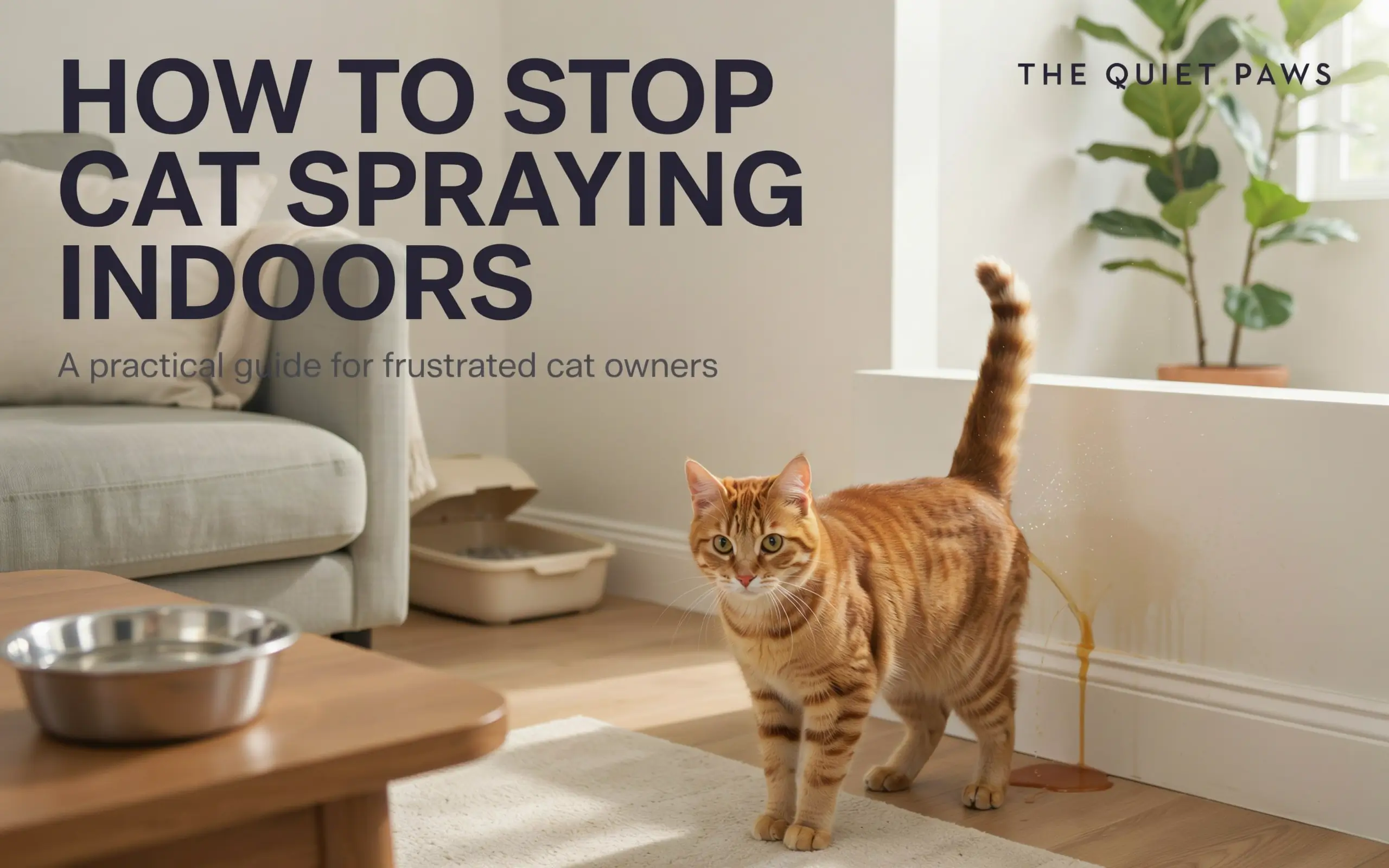
To stop cat spraying indoors, start with a vet visit to rule out health problems. Then reduce stress, clean messes with enzyme spray, and add vertical spaces. These steps stop the behavior humanely.
You love your cat. But that smell. That awful, sharp smell of cat spray on your curtains, your sofa, or your bedroom wall. It makes you feel frustrated, confused, and even a little angry. You ask yourself, “Why is my cat doing this?” I have been there. My own cat, a sweet tabby named Milo, started spraying inside for no clear reason. I felt lost. But I learned the right way to fix this problem. And I want to help you do the same.
The good news is that spraying is not a sign of a “bad” cat. It is a natural behavior. Cats spray to leave messages. They do it when they feel scared, stressed, or threatened. The bad news is that punishing your cat will not work. It often makes things worse. So what does work? You need a clear plan. You need to learn how to stop cat spraying indoors without yelling or scaring your pet.
This guide gives you that plan. I will explain why cats spray. I will show you simple, vet-approved steps to fix the problem. You will learn about cleaning, stress relief, and home changes that really work. By the end, you will feel hopeful again. Let us get started.
What Is Cat Spraying and How Is It Different From Peeing?
Many people mix up spraying with normal urination. But they are not the same thing. When a cat pees, they squat on a flat surface. They release a large amount of urine. They do this because they need to empty their bladder. Spraying is different. A spraying cat stands up. They back up to a vertical surface like a wall, a chair leg, or a door. Their tail may quiver. They release a small amount of urine on that surface. The smell is also stronger. That is because spraying urine has extra chemicals called pheromones.
Why does this matter? Because you cannot treat spraying the same way you treat a litter box problem. A cat that pees outside the box may have a medical issue or hate the litter. A cat that sprays is sending a social message. Understanding this difference is the first step to fix the behavior.
Here is a simple table to help you tell them apart.
Table 1: Spraying vs. Peeing – Key Differences
| Feature | Spraying | Peeing |
|---|---|---|
| Position | Standing up, tail quivering | Squatting low |
| Surface | Vertical (walls, furniture sides) | Horizontal (floor, rug, bed) |
| Amount | Small amount | Large puddle |
| Smell | Very strong, sharp | Normal urine smell |
| Reason | Marking territory or stress | Full bladder or medical issue |
If you see your cat backing up to a wall and leaving a small wet mark, that is spraying. Now you know what you are dealing with. So let us look at why cats do this.
Why Do Cats Spray Indoors? Common Causes
Cats do not spray to be mean or spiteful. They spray because of a trigger. Something in their life makes them feel unsafe. Finding that trigger helps you stop cat spraying indoors for good. Here are the most common reasons.
Medical Issues
Pain or sickness can cause spraying. For example, a cat with a bladder infection may feel a burning sensation. They might spray to try to feel better. Other health problems like kidney disease or diabetes can also change how a cat pees. That is why the first step is always a vet check. Do not skip this. Your cat could be suffering in silence.
Territorial Behavior
Cats are very protective of their space. They see your home as their territory. If another cat comes near, even outside a window, your cat may spray to say, “This is mine.” Indoor cats often spray near doors or windows. They do this to mark their border. This behavior is more common in male cats that are not fixed. But female cats can also spray for territorial reasons.
Stress and Anxiety
Cats love routine. Any change can stress them out. New furniture. A new baby. A new pet. Even you working from home instead of going to the office. Stress makes cats feel out of control. Spraying gives them back a sense of control. They leave their own smell on things. That smell feels safe and familiar. Think of it like a child holding a favorite blanket. The spray is their comfort signal.
“Spraying is a cat’s way of self-soothing when they feel anxious. It is not defiance. It is fear.” – Dr. Sarah Ellis, feline behavior specialist
Changes in the Home Environment
Have you moved recently? Did you bring home a new sofa? Did a roommate leave? These changes matter to your cat. Cats rely on scent to understand their world. When you change their environment, you remove familiar smells. Spraying puts those smells back. Even small changes like rearranging a room can trigger spraying for sensitive cats.
Understanding the cause is half the battle. Now let us get to the real work. Here are the proven methods to stop cat spraying indoors.
7 Effective Ways to Stop Cat Spraying Indoors
I will share seven steps. Each step is easy to do. You do not need expensive tools or special skills. You just need patience and consistency. Follow all seven steps, not just one or two. This complete approach gives you the best chance to stop cat spraying indoors forever.
1. Visit the Vet First
Before you try anything else, call your vet. Make an appointment for a full checkup. Tell the vet about the spraying. Ask them to test your cat’s urine for infection or crystals. Also ask about blood work to check for kidney or thyroid issues. If the vet finds a medical problem, treating that problem often stops the spraying right away. Do not guess. Let the vet help you.
If your cat is not neutered, ask the vet about fixing them. Neutering stops spraying in about 90% of male cats. It also helps female cats. Even if your cat is already fixed, the vet can check for leftover hormone issues. A simple exam could be the answer you need.
2. Clean Accidents Properly
This step is very important. Normal household cleaners do not remove cat spray completely. Your nose might think the smell is gone. But your cat’s nose is much stronger. They can still smell the old spray. And that old smell tells them, “This is a good spot to spray again.”
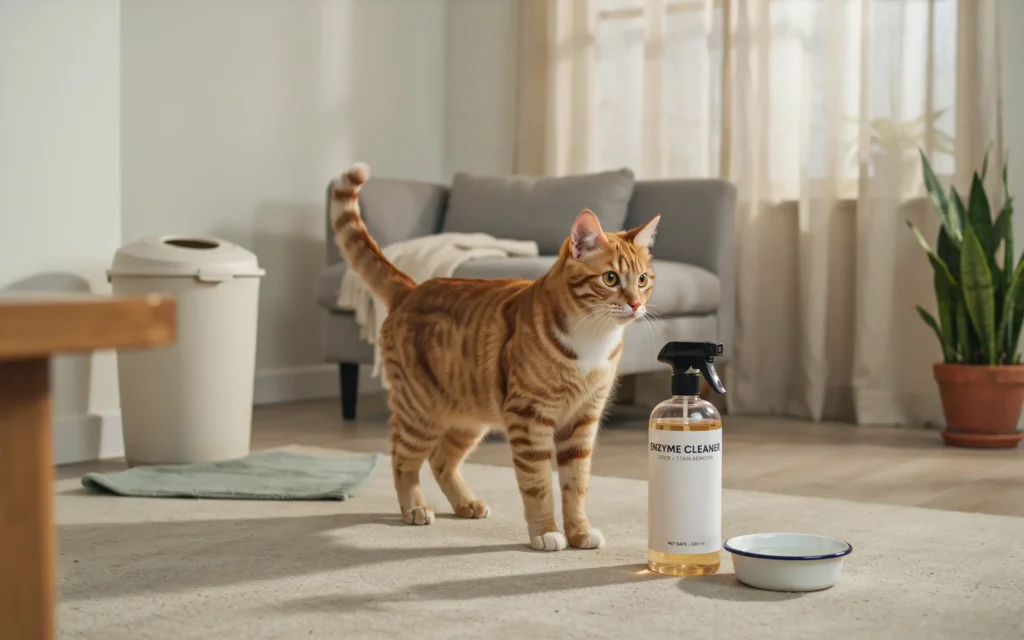
You need an enzymatic cleaner. These cleaners break down the proteins in cat urine. They remove the smell for real. Here is how to clean a spray spot.
First, soak up as much wet spray as you can with paper towels. Press down firmly. Do not rub. Rubbing spreads the urine. Next, spray the enzymatic cleaner on the spot. Cover it fully. Let it sit for 10 to 15 minutes. Then blot it dry. For walls or furniture, let the cleaner air dry. Do not use steam cleaners or ammonia. Ammonia smells like urine to cats. It will make them spray more.
Table 2: Cleaning Product Types – What Works and What Does Not
| Product Type | Does It Work? | Why? |
|---|---|---|
| Enzymatic cleaner | Yes | Breaks down urine proteins completely |
| Vinegar and water | Partially | Removes smell for humans, not cats |
| Bleach | No | Dangerous fumes, does not remove proteins |
| Ammonia-based cleaner | No | Smells like urine to cats |
| Soap and water | No | Only removes surface dirt |
Use an enzymatic cleaner from a pet store. Follow the bottle directions. Clean every spray spot you can find. A black light can help you see old spots that are invisible in normal light.
3. Reduce Stress with Pheromones
Remember how cats use smell to feel safe? You can use that to your advantage. Synthetic pheromone diffusers plug into your wall like an air freshener. They release a smell that mimics a cat’s natural “friendly” pheromones. This smell tells your cat, “You are safe here. This is home.”
I used a pheromone diffuser for Milo. Within two weeks, his spraying went down by half. These diffusers do not work for every cat. But they are safe and easy to try. Put one in the room where your cat sprays the most. Also put one near doors or windows where your cat sees outdoor animals. Replace the refill every 30 days. You can also buy pheromone sprays. Spray those on your cat’s bedding or on vertical surfaces.
4. Add More Litter Boxes
This might sound strange. What do litter boxes have to do with spraying? A lot. Cats are clean animals. They do not like sharing a dirty box. The general rule is one litter box per cat, plus one extra. So if you have one cat, you need two boxes. If you have two cats, you need three boxes.
Place these boxes in different areas of your home. Do not put them next to each other. Do not put them near loud machines like washers or dryers. Use unscented litter. Many cats hate strong smells. Scoop the boxes every day. Wash the boxes with mild soap once a week. A clean, private bathroom makes a cat feel secure. A secure cat is less likely to spray.
5. Create Vertical Spaces
Cats feel safer when they are up high. From a high perch, they can see everything. They can watch for threats. They can relax without fear. If your home has no high spots, your cat may feel trapped. That trapped feeling can lead to spraying.
Add cat trees, shelves, or perches. Put them near windows so your cat can look outside. Make sure the perches are stable. A wobbly shelf is scary, not safe. You do not need to spend a lot of money. A simple wall shelf with a soft blanket works great. Give your cat at least two or three high resting spots. You will see a difference in their confidence.
Vertical space is as important as food and water for indoor cats. Without it, they live in a state of low-grade fear.” – Jackson Galaxy, cat behaviorist
6. Block Views of Outdoor Cats
Does your cat stare out the window and then run to spray the wall? An outdoor cat or other animal is probably visiting your yard. Your indoor cat sees this intruder and feels threatened. Spraying is their way of saying, “Go away!”
You can block this trigger. Close your blinds or curtains. Use frosted window film on lower windows. This film lets light in but blocks the view. You can also place a tall plant or a piece of furniture in front of the window. If you have a sliding glass door, cover the bottom half with peel-and-stick paper. Your cat cannot spray what they cannot see. This simple fix stops many spraying problems.
7. Use Positive Reinforcement
Never yell at, hit, or scare your cat for spraying. Punishment does not work. It only adds more stress. And more stress leads to more spraying. Instead, reward your cat when they act well. Give treats, petting, or playtime when your cat uses the litter box. Give them attention when they relax on their new high perch. When you see your cat sniff a wall without spraying, click and treat.
Positive reinforcement teaches your cat what you want. It builds trust. It lowers stress. Keep a small bag of treats near the spots where your cat used to spray. Every time your cat walks past those spots calmly, give a treat. Over time, your cat will learn that calm behavior gets rewards. Spraying gets no attention at all.
What Not to Do When You Stop Cat Spraying Indoors
I want to warn you about a few common mistakes. These mistakes make spraying worse. Avoid them completely.
First, do not use ammonia to clean. Ammonia smells like cat pee. Your cat will think another cat sprayed there. They will spray on top of it. Second, do not rub your cat’s nose in the spray. This is cruel and useless. Your cat will not understand. They will only fear you. Third, do not lock your cat in a small room. Isolation increases anxiety. An anxious cat sprays more.
Fourth, do not give up after one week. Changing cat behavior takes time. You may see results in a few days. Or it may take a few months. Be patient. Fifth, do not add a new cat or dog while you are fixing spraying. New pets create more stress. Wait until your current cat is calm for at least two months.
“Punishing a cat for spraying is like punishing a child for crying. Both are forms of communication, not misbehavior.” – Pam Johnson-Bennett, certified cat behavior consultant
Frequently Asked Questions (FAQ)
Q1: Can you stop cat spraying indoors without a vet visit?
No. A vet visit is the first and most important step. Medical problems like bladder infections cause spraying. Treating those problems often stops the spraying right away. Always see the vet first.
Q2: Will neutering stop my cat from spraying?
Neutering stops spraying in about 90% of male cats. It works best if you neuter before six months of age. But even older cats often stop after neutering. Female cats also spray less after spaying.
Q3: How long does it take to stop cat spraying indoors?
It depends on the cause. A medical fix can work in days. Behavioral changes may take two to three months. Most owners see a big improvement within four weeks of following all seven steps.
Q4: Does vinegar stop cats from spraying?
Vinegar removes the smell for humans. But cats can still smell the urine proteins. Use an enzymatic cleaner instead. Vinegar alone will not stop a cat from spraying again in the same spot.
Q5: Will my cat spray if I leave for vacation?
Some cats spray when their routine changes. A vacation means a new person feeding them or less attention. This stress can trigger spraying. Ask a pet sitter to visit twice a day. Leave pheromone diffusers on. Keep the blinds closed so your cat does not see outdoor animals.
Q6: Is cat spray dangerous for people?
Cat spray is not usually dangerous for healthy people. But the smell is very strong. Pregnant women and people with weak immune systems should avoid cleaning cat spray. Wear gloves and open windows when you clean.
Conclusion
You now have a complete plan to stop cat spraying indoors. Start with a vet visit. Rule out any medical issues. Then clean every old spray spot with an enzymatic cleaner. Add pheromone diffusers to calm your cat. Provide more litter boxes and vertical spaces. Block the view of outdoor cats. Use treats and praise to reward calm behavior. And never punish your cat.
Remember that your cat is not your enemy. They are not trying to make you angry. They are scared, stressed, or sick. They need your help, not your anger. With patience and the right steps, you can fix this problem. I fixed it with my cat Milo. You can fix it with yours.
Take a deep breath. Buy an enzymatic cleaner and some pheromone diffusers. Call your vet today. One small step leads to a fresh, clean home. You and your cat both deserve that peace.
Related posts
 Best Beds for Large Dogs 2026: Top Comfort and Support Picks
Finding the right best beds for large dogs is essential for comfort. Compare top-rated orthopedic, elevated, and washable options for your pet in 2026. Choosing the…
 Best Pet Supplies Online: 2026 Essentials for Every Companion
Discover the best pet supplies online for 2026. We review top-rated toys, grooming tools, and walking gear to help you make the right choice for your…
 Best Pet Care Products for Beginners in 2026
Discover the best pet care products for beginners to keep your home clean and your pets comfortable. Simple, effective solutions for daily grooming and hygiene. Welcoming…