
Food Safety Guidelines At Home
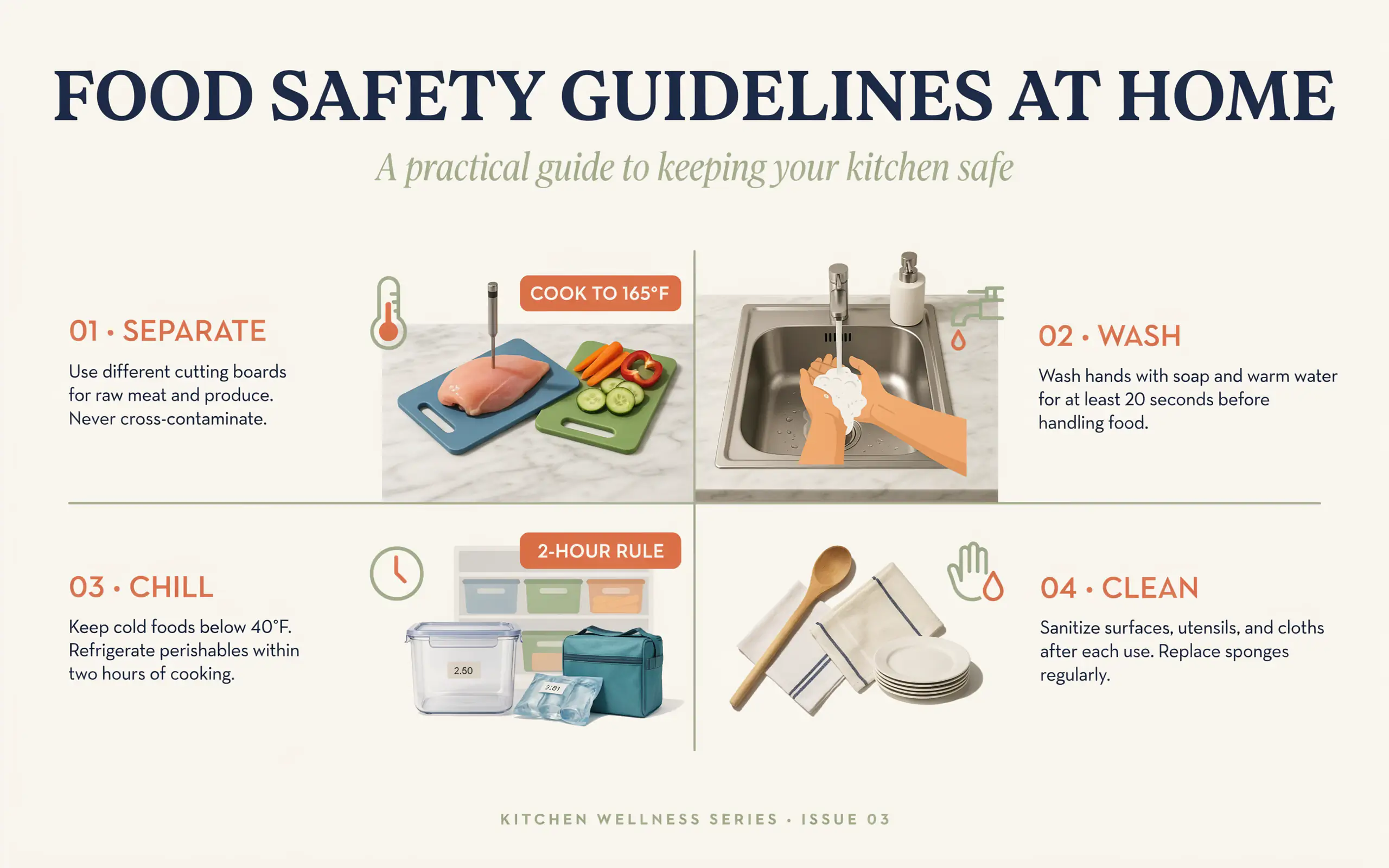
Follow these food safety guidelines at home to prevent illness. Learn proper handwashing, storage temperatures, cross-contamination prevention, and cooking times. Keep your kitchen safe every day.
You love cooking for your family. The smell of fresh food fills your kitchen, and everyone gathers around the table. But have you ever thought about the tiny germs that might be hiding in your food? They can cause sickness, and no one wants that. The good news is that you can stop them. By following simple food safety guidelines at home, you protect everyone you care about.
Every year, millions of people get sick from food they eat at home. The Centers for Disease Control and Prevention says that one in six Americans gets food poisoning each year. Many of these cases happen because of small mistakes in the kitchen. The good part? You can avoid almost all of them. You just need to learn a few basic rules and make them a habit.
This article will walk you through everything you need to know. We will talk about cleaning, separating foods, cooking to the right temperatures, and storing food properly. We will also cover shopping, thawing, leftovers, and special tips for pregnant women, older adults, and young kids. By the end, you will feel confident that your kitchen is a safe place. Let us get started.
“Food safety is not just about following rules. It is about building trust with the people you feed.” – Dr. Ruth Petran, Food Safety Scientist
Why Following Food Safety Guidelines at Home Matters
You might think a little dirt or a warm fridge is no big deal. But bacteria like Salmonella, E. coli, and Listeria grow very fast. They do not always change the taste or smell of food. So you cannot rely on your senses alone. That is why we need clear food safety guidelines at home.
When you follow these guidelines, you stop harmful germs before they reach your plate. You also save money by not wasting spoiled food. And you avoid the pain and danger of food poisoning. For some people, like young children or grandparents, food poisoning can lead to a hospital stay.
Think of food safety as a shield. Each step you take adds another layer of protection. Washing your hands adds a layer. Keeping raw meat away from lettuce adds another. Cooking chicken to 165°F adds a strong layer. And putting leftovers in the fridge within two hours adds the final shield. Together, these simple actions keep your family safe every single day.
Clean: The First Step in Food Safety Guidelines at Home
The very first rule is cleaning. Germs live on your hands, your countertops, your sponges, and even your phone. If you do not clean these surfaces, germs jump onto your food.
Wash Your Hands the Right Way
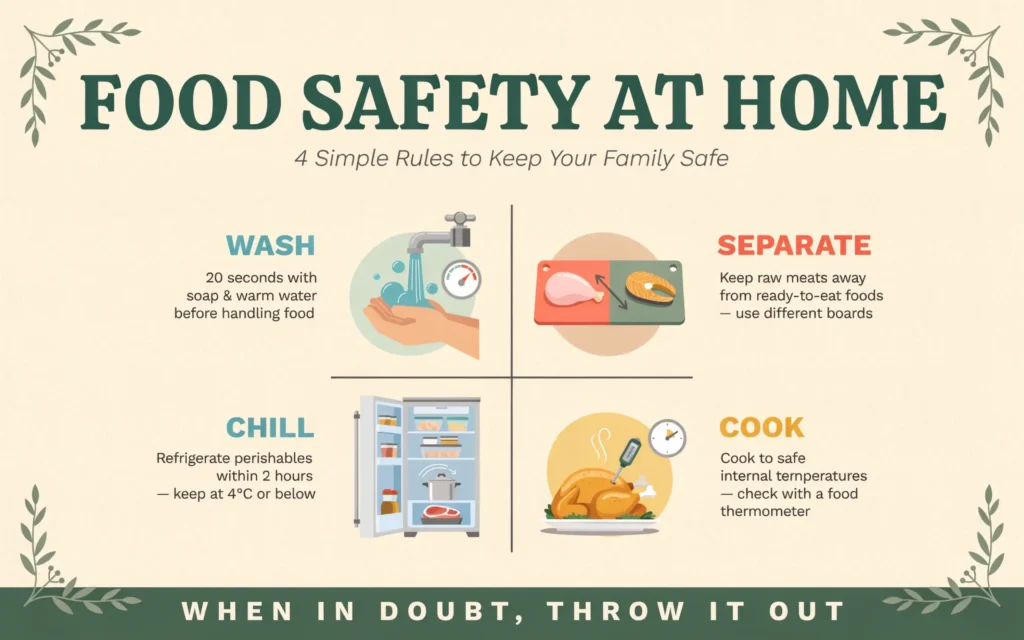
Many people just rinse their hands with water for a few seconds. That is not enough. You need soap and warm water. Scrub for at least 20 seconds. That is about as long as singing the “Happy Birthday” song twice. Make sure to clean between your fingers and under your nails.
Here is a simple table to help you remember when to wash:
| When to Wash Your Hands | Why It Matters |
|---|---|
| Before cooking or eating | Removes germs from your hands before they touch food |
| After touching raw meat, poultry, or seafood | Stops germs from spreading to other foods |
| After using the bathroom | Prevents fecal bacteria from getting into your kitchen |
| After sneezing, coughing, or touching your face | Reduces the chance of passing respiratory germs |
| After handling trash or pets | Keeps bacteria from trash or animal dander off your food |
Clean Surfaces and Tools
Your kitchen counters need a good cleaning before and after you cook. Use hot soapy water. Then use a sanitizing solution. You can make one at home with one tablespoon of unscented bleach mixed with one gallon of water. Spray it on surfaces and let it sit for a few minutes before wiping.
Do not forget your cutting boards, knives, and sponges. Sponges are a big problem because they stay wet and trap food bits. Replace your sponge every week or two. You can also microwave a wet sponge for one minute to kill germs, but only if it has no metal.
A clean kitchen is the first line of defense against foodborne illness. Most outbreaks start with a dirty surface.” – Dr. Janell Smith, Public Health Expert
Separate: Stop Cross Contamination
Cross contamination is a fancy term for a simple problem. It happens when germs from raw meat get onto foods you eat raw, like salads or fruits. This is very common at home.
Use Different Cutting Boards
The best way to prevent cross contamination is to use separate cutting boards. Get two different colors. Use one board for raw meat, poultry, and fish. Use the other board for vegetables, fruits, and cooked foods. Never mix them.
If you only have one board, wash it with hot soapy water after each use. But even better, buy a second board. Plastic boards are easier to sanitize than wooden ones. However, wooden boards are fine if you wash and dry them well.
Store Meat Properly in the Fridge
In your refrigerator, always keep raw meat on the bottom shelf. This way, if juices drip, they do not fall on other foods. Put raw meat in a tray or a sealed container. Keep it away from ready-to-eat foods like cheese, yogurt, and leftovers.
The same rule applies when you shop. Put raw meat packages in a plastic bag before placing them in your shopping cart. This stops juices from leaking onto other items.
Do Not Rinse Raw Chicken
Many people wash raw chicken in the sink. Do not do this. When you rinse chicken, water splashes everywhere. Those splashes carry bacteria to your counter, your clothes, and your other dishes. Cooking chicken to 165°F kills all germs. So washing is not needed. It only spreads germs around your kitchen.
Cook: Reaching Safe Temperatures
Cooking makes food safe. Heat kills harmful bacteria. But you need enough heat for enough time. Guessing is not safe. You need a food thermometer.
Use a Food Thermometer
A food thermometer is a small tool that gives you an exact temperature. It costs less than ten dollars. Insert it into the thickest part of the meat. Avoid touching bone or fat.
Many people think they can tell if meat is done by looking at the color or checking the juices. That is not reliable. For example, ground beef can turn brown before it reaches 160°F. And some burgers stay pink even when fully cooked. So trust the thermometer, not your eyes.
Here is a table with safe minimum internal temperatures:
| Food Type | Safe Minimum Temperature |
|---|---|
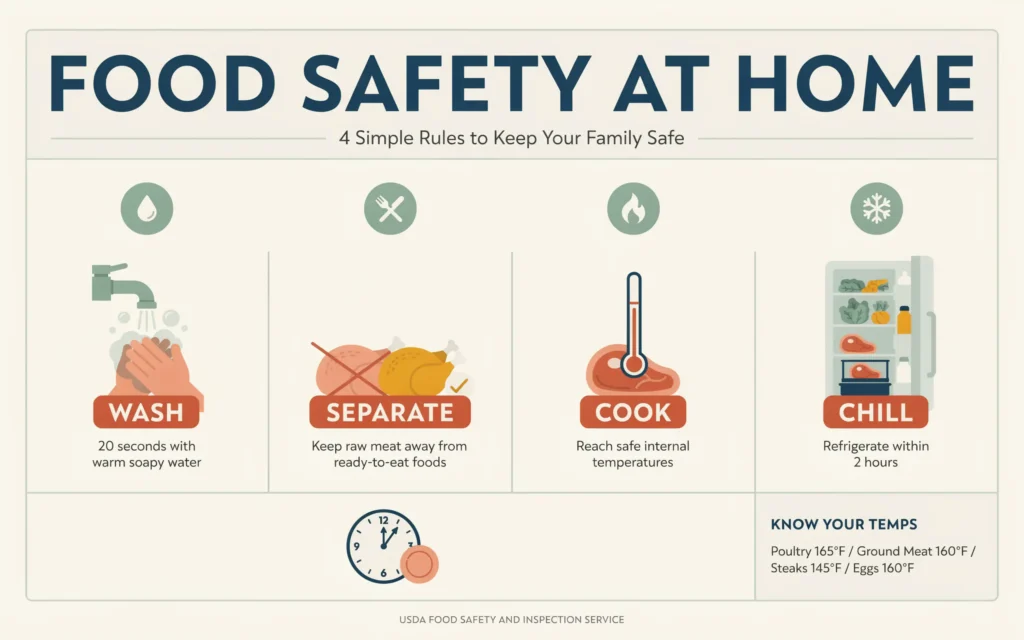
| Whole cuts of beef, pork, lamb, veal | 145°F (then rest for 3 minutes) |
| Ground meats (beef, pork, lamb, veal) | 160°F |
| Poultry (chicken, turkey, duck) | 165°F |
| Fish and seafood | 145°F |
| Eggs | Cook until yolk and white are firm (160°F for dishes) |
| Leftovers and casseroles | 165°F |
Keep Hot Food Hot
Once you cook food, keep it hot until you serve it. Use a warming tray or a slow cooker on the warm setting. Hot food should stay above 140°F. If food sits out for more than two hours, bacteria can grow. After two hours, either eat it or put it in the fridge.
“Cooking kills bacteria, but only if you reach the right temperature. Never guess. Always use a thermometer.” – Chef Ann Cooper, The Renegade Lunch Lady
Chill: Proper Storage and Fridge Rules
Chilling slows down bacteria growth. Cold temperatures keep germs from multiplying quickly. But your fridge must be cold enough. Set your refrigerator to 40°F or below. Your freezer should be at 0°F.
The Two Hour Rule
This is one of the most important food safety guidelines at home. Never leave perishable food out of the fridge for more than two hours. If the room is hotter than 90°F (like a summer picnic), reduce that time to one hour.
After you finish a meal, pack leftovers right away. Put them in shallow containers so they cool faster. A big pot of soup takes too long to cool in the middle. Shallow containers let heat escape quickly.
How Long Can You Store Food?
Most leftovers stay good for three to four days in the fridge. After that, throw them away or freeze them. When in doubt, throw it out. It is better to waste a little food than to get sick.
Your freezer keeps food safe for much longer. But the quality may drop after a few months. Here are some general freezer times:
- Cooked meats: 2 to 3 months
- Raw ground meat: 3 to 4 months
- Raw whole chicken: 1 year
- Soups and stews: 2 to 3 months
- Vegetables: 8 to 12 months
Label everything with a date. Use masking tape and a marker. This helps you remember what is inside and when you put it there.
Smart Shopping and Thawing
Food safety starts at the grocery store. You can bring germs home with you if you are not careful.
Shopping Tips
- Pick up refrigerated and frozen foods last. This keeps them cold longer.
- Check expiration dates. Do not buy anything past its date.
- Look for damaged cans. Bulging or leaking cans can signal botulism.
- Put raw meat in a plastic bag. Keep it separate from other items.
- Use insulated bags for cold items, especially in summer.
Safe Thawing Methods
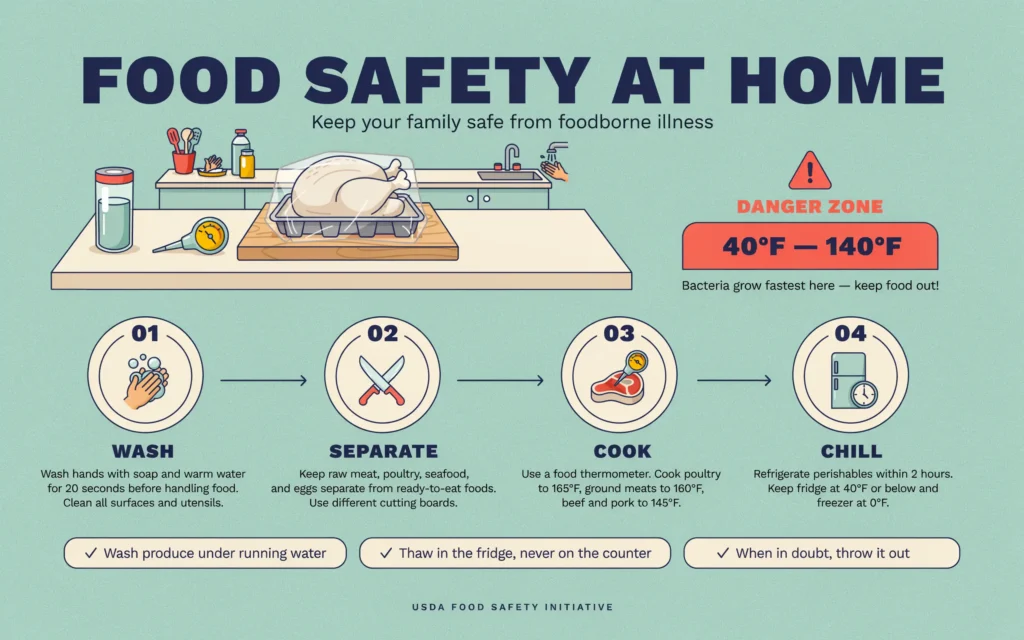
Never thaw food on the counter. As the outside warms up, bacteria start to grow. The inside may still be frozen, but the outer layer is in the danger zone (40°F to 140°F).
Use one of these safe methods instead:
- In the fridge: Plan ahead. A small package takes about 12 hours. A large turkey takes one day for every 4 to 5 pounds.
- In cold water: Put the food in a leak-proof plastic bag. Submerge it in cold tap water. Change the water every 30 minutes. Cook immediately after thawing.
- In the microwave: Use the defrost setting. Cook the food right away because some parts may start to cook.
You can also cook frozen food without thawing. Just add about 50% more cooking time.
Handling Leftovers and Reheating
Leftovers save time and money. But they need care. Follow these food safety guidelines at home to enjoy them without worry.
Cooling Leftovers Quickly
Hot food should not go straight into the fridge? Actually, it can. Putting hot food into the fridge is safe as long as you use shallow containers. A large pot of hot chili can raise the fridge temperature if placed directly. So divide it into smaller portions. Let them cool on the counter for no more than 30 minutes, then refrigerate.
Do not stack containers while they are still warm. Leave space between them so air can flow. Once cooled, you can stack them.
Reheating to 165°F
When you reheat leftovers, make sure they reach 165°F all the way through. Use a food thermometer to check. Sauces, soups, and gravies should be brought to a rolling boil.
Only reheat what you will eat. If you take out a portion, do not put uneaten part back in the fridge. That introduces bacteria from your plate into the main container.
“Leftovers are a blessing, but only if you cool them fast and reheat them hot. Respect the clock and the thermometer.” – Harold McGee, Author of On Food and Cooking
Special Tips for High Risk Groups
Some people are more likely to get severe food poisoning. These include pregnant women, young children, older adults (over 65), and anyone with a weak immune system. If you or someone in your home falls into these groups, take extra care.
For Pregnant Women
Avoid raw or undercooked meat, poultry, seafood, and eggs. Do not eat unpasteurized dairy products or soft cheeses like Brie, Camembert, and queso blanco unless labeled “made with pasteurized milk.” Also avoid deli meats and hot dogs unless reheated until steaming hot.
For Older Adults
As we age, our immune system slows down. Always use a food thermometer. Throw away any food that looks or smells strange. When in doubt, throw it out. Do not eat raw sprouts (alfalfa, bean, clover) because they carry a high risk of bacteria.
For Young Children
Kids under five have developing immune systems. Do not give them raw or runny eggs. Make sure all meat is fully cooked. Cut grapes and hot dogs into small pieces to prevent choking, but also cook hot dogs until steaming.
Following food safety guidelines at home helps protect these vulnerable people the most.
Frequently Asked Questions (FAQs)
1. What are the four core food safety guidelines at home?
The four core steps are Clean, Separate, Cook, and Chill. Clean your hands and surfaces. Separate raw meat from other foods. Cook to safe temperatures. Chill leftovers quickly.
2. How long can cooked food sit out at room temperature?
Cooked food should not sit out for more than two hours. If the temperature is above 90°F, reduce that to one hour.
3. Is it safe to wash raw chicken before cooking?
No. Washing raw chicken spreads bacteria around your sink and kitchen. Cooking to 165°F kills all bacteria, so washing is unnecessary and risky.
4. How do I know if my fridge is cold enough?
Use a refrigerator thermometer. Your fridge should stay at or below 40°F. Your freezer should be at 0°F.
5. Can I thaw meat on the counter if I cook it right away?
No. The outer layer will enter the danger zone (40°F to 140°F) while the inside is still frozen. Use the fridge, cold water, or microwave to thaw safely.
6. How many days are leftovers good for in the fridge?
Most leftovers stay safe for three to four days. After that, throw them away or move them to the freezer.
7. Do I need a food thermometer?
Yes. A food thermometer is the only reliable way to know if meat, poultry, and leftovers are safe to eat. It costs little and prevents illness.
8. What is cross contamination?
Cross contamination is when bacteria from raw meat, poultry, or seafood transfer to ready-to-eat foods like salads, fruits, or cooked dishes. Use separate cutting boards and store meat on the bottom shelf to prevent it.
9. Is it safe to put hot food directly into the fridge?
Yes, but divide it into shallow containers first. This helps it cool faster. Do not put a large hot pot directly into the fridge because it may warm up other foods.
10. Can I eat food that smells fine but has been left out overnight?
No. Bacteria that cause food poisoning do not always change the smell, taste, or look of food. When in doubt, throw it out.
Conclusion
Keeping your family safe from food poisoning does not require fancy tools or a science degree. You just need to follow a few simple food safety guidelines at home. Clean your hands and surfaces. Separate raw meat from other foods. Cook everything to the right temperature. Chill leftovers within two hours.
These steps are easy to learn and easy to do. They become habits very quickly. Once you start using a food thermometer and washing your hands the right way, you will wonder why you did not do it before.
You have the power to stop harmful germs. Every time you cook, you make a choice. Choose safety. Your family depends on you. And remember, food safety is not about fear. It is about love. Love for your children, your parents, your friends, and yourself.
So go ahead. Cook that delicious meal. But wash your hands first. Use a clean cutting board. Check the temperature. And put the leftovers away on time. You have got this. Your kitchen can be the safest room in your home.
Stay safe, cook well, and enjoy
Related posts
 Best Under Sink Organizers Kitchen 2026: Practical Storage Solutions
Find the best under sink organizers kitchen in 2026. Compare top-rated pull-out bins, L-shaped racks, and protective mats to maximize your cabinet space. The space under…
 Best Kitchen Cabinet Storage Solutions for 2026
Organize your kitchen efficiently with our Best Kitchen Cabinet Storage Solutions. Compare the best organizers for lids, pans, and spices to maximize your space. A cluttered…
 Top Rated Kitchen Shelf Organizers for 2026
Discover the top rated kitchen shelf organizers for 2026. Compare durable racks, magnetic shelves, and tiered storage to maximize your pantry and counter space. A cluttered…