
Can Cats Eat Tuna Every Day

Are you wondering if can cats eat tuna every day? The short answer is no. Daily tuna feeding leads to mercury poisoning, nutrient shortages, and health risks. Learn safe portions and better fish choices for your cat here.
Many cat owners love seeing their feline friend get excited over a bowl of tuna. The strong smell and rich taste make tuna a favorite treat for most cats. But you might ask yourself, “Can cats eat tuna every day?” This is a common question among pet parents who want to give their cats something special.
The truth is that tuna is not a safe daily food for your cat. While an occasional small piece is fine, making it a daily habit can hurt your cat’s health in serious ways. In this article, I will explain why daily tuna is risky, what happens to cats who eat too much, and how you can safely offer tuna as a rare treat. I will also share better food options and answer common questions so you can keep your cat healthy and happy.
Let us get straight to the answer so you know exactly what to do.
The Short Answer: No, Cats Should Not Eat Tuna Daily
To answer the question directly: No, can cats eat tuna every day is not a safe practice. Cats are obligate carnivores, meaning they need meat to survive. But tuna alone does not provide the balanced nutrition your cat requires. Feeding tuna every day can lead to several dangerous health problems over time.
Even though your cat may beg for tuna every morning or evening, you must resist that cute face. A healthy cat diet includes high quality commercial cat food that is specially made to meet all nutritional needs. Tuna should only be a tiny part of that diet, and never a daily part.
Dr. Jennifer Coates, a veterinarian and author, says, “Tuna is fine as an occasional treat, but it does not contain the right balance of nutrients for a cat’s long term health. Daily feeding puts cats at risk for multiple medical issues.”
So remember, the answer to “can cats eat tuna every day” is a firm no. Now let me explain why.
Why Is Tuna So Tempting for Cats?
Cats have a strong sense of smell, and tuna gives off a very potent, fishy odor. This smell triggers their natural hunting instincts. Tuna is also rich in protein and fats, which cats find delicious. Many commercial cat foods use fish flavors because cats love them so much.
Some owners start feeding tuna because their cat is a picky eater or has lost appetite due to illness. Tuna becomes a quick fix. But this can create a problem where the cat refuses normal food and only wants tuna. This is called food addiction, and it makes the question “can cats eat tuna every day” even more dangerous because the cat will demand it constantly.
You should never use tuna as a main meal replacement. It is fine to give a tiny piece once a week or less, but not every single day.
The Risks of Feeding Tuna Every Day to Your Cat
When you ask, “Can cats eat tuna every day?” you need to know the specific health risks. These are not small or rare problems. They are real dangers that can shorten your cat’s life.
Mercury Poisoning: A Serious Threat
Tuna is a large, predatory fish that lives a long time. This means it builds up high levels of mercury in its body. Mercury is a heavy metal that is toxic to the nervous system. When a cat eats tuna every day, mercury accumulates in its body. Over weeks and months, this leads to mercury poisoning.
Signs of mercury poisoning in cats include:
- Loss of coordination and trouble walking
- Tremors or shaking
- Vision problems
- Abnormal behavior
- Seizures
Mercury poisoning is very hard to reverse. That is why asking “can cats eat tuna every day” has a clear answer: no, because of mercury alone.
Vitamin E Deficiency and Yellow Fat Disease
Tuna contains high levels of unsaturated fats. These fats need vitamin E to be processed safely in the body. When a cat eats too much tuna, it uses up its vitamin E stores. Over time, this creates a severe vitamin E deficiency.
Without enough vitamin E, the cat develops a condition called steatitis, also known as yellow fat disease. This causes painful inflammation of the body’s fat tissue. The cat’s fat becomes hard and yellow. Symptoms include:
- Fever
- Loss of appetite
- Pain when touched
- Lethargy
- Swollen or tender belly
This condition is very painful and requires veterinary treatment. So again, the answer to “can cats eat tuna every day” is no to avoid this painful disease.
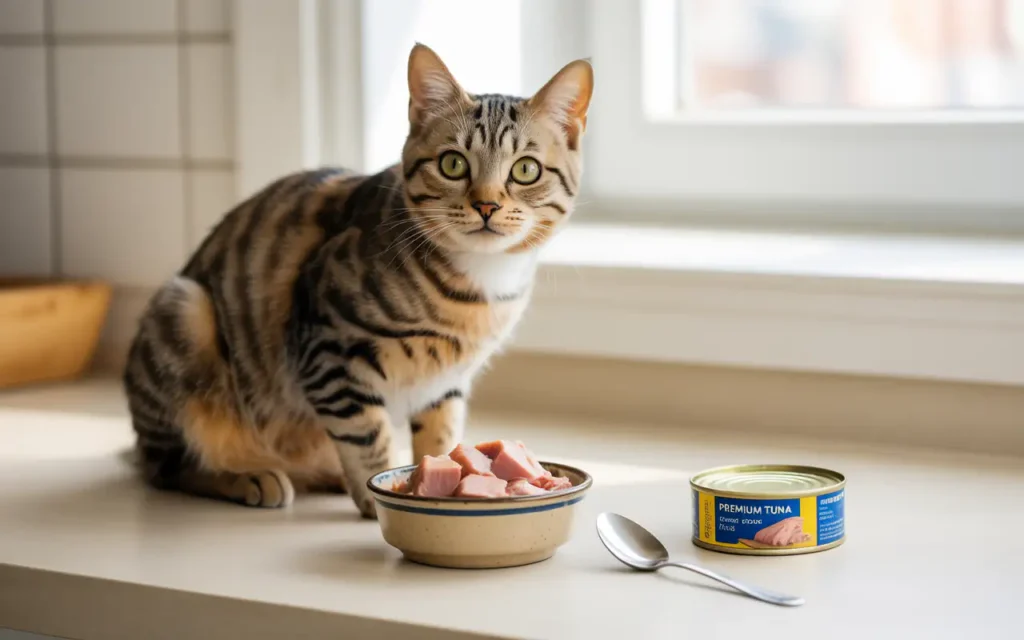
Nutritional Imbalance and Thiamine Damage
Tuna contains an enzyme called thiaminase. This enzyme breaks down thiamine, which is vitamin B1. Thiamine is essential for your cat’s nervous system and energy use. When a cat eats tuna every day, thiamine gets destroyed faster than the cat can replace it.
Thiamine deficiency causes:
- Weakness
- Vomiting
- Weight loss
- Seizures
- Even death in severe cases
Commercial cat foods are fortified with thiamine, but tuna is not. So feeding tuna daily throws off the whole nutrient balance. That is why you should never think “can cats eat tuna every day” is a good idea.
Heavy Metal Build Up Over Time
Besides mercury, tuna also contains other heavy metals like selenium and lead. These metals do not leave the body quickly. They stay in the tissues and accumulate. Over months of daily feeding, the metal levels become toxic. The kidneys and liver suffer the most damage because they filter these toxins.
Dr. Lisa Pierson, DVM and feline nutrition expert, warns, “Many people do not realize that even ‘safe’ amounts of tuna add up over time. Daily feeding, even in small amounts, creates a heavy metal burden that can lead to chronic kidney disease.”
Table 1: Tuna Feeding Frequency Guide for Cats
| Cat Age/Health Status | Safe Tuna Frequency | Portion Size |
|---|---|---|
| Healthy adult cat | Once every 10-14 days | 1 teaspoon or small bite |
| Kitten (under 1 year) | Avoid completely | None |
| Senior cat (over 10 years) | Once monthly | Half a teaspoon |
| Cat with kidney issues | Do not feed | None |
| Cat with known metal allergy | Do not feed | None |
This table helps you see clearly that daily tuna is never safe. When people search “can cats eat tuna every day,” this table gives a quick visual answer.
What About Canned Tuna for Cats?
Many owners buy canned tuna for themselves and share with their cat. But canned tuna made for humans is even worse for daily feeding. It often contains added salt, vegetable oils, or seasonings that are harmful to cats. Salt can cause sodium poisoning, and certain spices like garlic or onion powder are toxic.
If you choose to give canned tuna as a rare treat, follow these rules:
- Pick tuna packed in water, not oil or brine
- Look for low sodium or no salt added
- Never give tuna in sauce or with spices
- Rinse the tuna under water to remove extra salt
- Give only a tiny piece, not the whole can
Even with these steps, the question “can cats eat tuna every day” still gets a no. Canned tuna is not healthier than fresh tuna. It still has mercury and thiaminase.
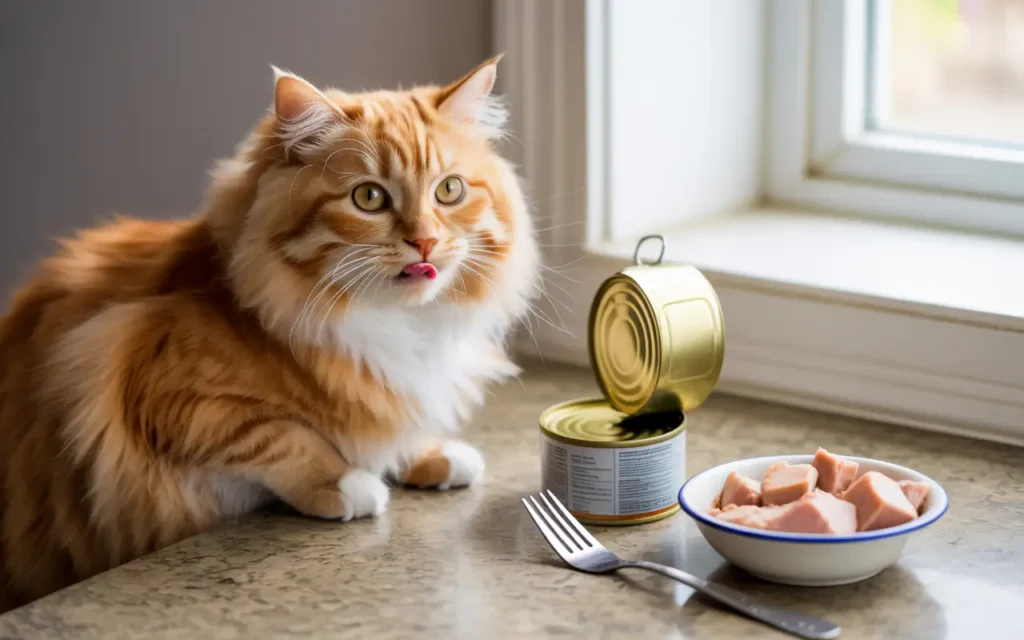
Signs Your Cat Has Eaten Too Much Tuna
If you have been feeding tuna daily without knowing the risks, watch for these warning signs in your cat. Stop feeding tuna right away and call your vet if you see:
- Your cat refuses regular food but still wants tuna
- Vomiting or diarrhea after eating
- A swollen or painful belly
- Your cat seems weak or wobbly when walking
- The skin feels sore to touch
- Your cat hides more than usual
- Weight loss even though eating
These symptoms can appear slowly over weeks or months. That is why daily feeding is so dangerous. The damage builds up silently. So when anyone asks me “can cats eat tuna every day,” I always say no because you cannot see the harm until it is serious.
Dr. Marty Becker, a well known veterinarian, explains, “Cats are masters at hiding illness. By the time you see symptoms from too much tuna, the problem is already advanced. Prevention is the only real answer.”
How Much Tuna Is Safe for Cats?
Now you know daily tuna is unsafe. But you can still give tuna sometimes. The key is very small amounts, very rarely. Here is how to do it safely.
Occasional Treat Guidelines
For a healthy adult cat, the safe limit is:
- No more than one small bite (about 1 teaspoon) per week
- Or one teaspoon every 10 to 14 days is even better
- Never give tuna two days in a row
- Never replace a meal with tuna
Remember, treats including tuna should make up less than 10% of your cat’s daily calories. The other 90% must come from complete and balanced cat food.
Choosing the Right Type of Tuna
If you want to give tuna, pick the safest option:
- Skipjack or light tuna (lower mercury than albacore or white tuna)
- Fresh or frozen cooked tuna (no seasonings)
- Canned tuna in water, low sodium, rinsed well
Avoid albacore tuna, yellowfin tuna, and bigeye tuna because they have more mercury. Also avoid any tuna with added flavors, sauces, or salt.
Even with these choices, never ask “can cats eat tuna every day” and expect a yes. Even safe tuna is only safe as an occasional treat.
Table 2: Safe Fish Options for Cats (Better Than Daily Tuna)
| Fish Type | Mercury Level | Safe Frequency | Notes |
|---|---|---|---|
| Salmon (cooked) | Low | Once weekly | Remove bones and skin |
| Sardines (in water) | Very low | Twice weekly | Fresh or canned no salt |
| Mackerel (Atlantic) | Low | Once weekly | Cooked plain |
| Whitefish | Very low | Twice weekly | Baked or boiled |
| Tilapia | Very low | Twice weekly | Cooked thoroughly |
| Tuna | High | Once every 2 weeks | Only as rare treat |
This table shows that other fish are safer than tuna. But even safe fish should not be fed every day. Variety is important. No single food should be a daily habit.
Healthy Alternatives to Daily Tuna
Instead of wondering “can cats eat tuna every day,” shift your thinking to better daily foods. Your cat needs a high quality commercial cat food that is labeled “complete and balanced” by AAFCO (Association of American Feed Control Officials). These foods have the right amounts of protein, fat, vitamins, and minerals.
For treats, try these healthy options:
- Small pieces of cooked chicken (no skin or bones)
- Cooked plain turkey
- Freeze dried meat treats made for cats
- Small bits of cooked salmon (once a week)
- Commercial cat treats with limited ingredients
If your cat loves fish, rotate between small amounts of sardines, mackerel, or salmon. Never feed the same fish every day. Rotation prevents buildup of any single toxin.
Also make sure your cat always has fresh, clean water. Dry cat food can cause dehydration, so many vets recommend wet food as the main diet. Wet food also helps with kidney health.
Frequently Asked Questions
1. Can cats eat tuna every day if it is mixed with regular cat food?
No. Even mixed with regular food, daily tuna adds mercury, thiaminase, and unhealthy fats. The risks remain the same. Only give tuna mixed with food on rare occasions, not daily.
2. What happens if my cat accidentally eats tuna every day for a week?
One week of daily tuna is unlikely to cause permanent damage, but stop immediately. Watch for vomiting, diarrhea, or lethargy. If your cat seems normal, just return to regular food. Do not continue daily feeding.
3. Can kittens eat tuna every day?
Absolutely not. Kittens are smaller and more sensitive to mercury and nutritional imbalances. Their growing bodies need complete kitten formula food. Avoid tuna entirely for kittens under one year old.
4. Is tuna juice or tuna water safe to pour on cat food every day?
No. Tuna juice contains the same mercury, thiaminase, and salt as the solid tuna. Pouring tuna juice on food every day causes the same problems. Use tuna juice very rarely, and only a teaspoon at most.
5. Why does my cat act like tuna is the only food she wants?
Tuna is highly palatable and smells strong. Cats can become addicted to the taste and smell. This is dangerous because they will refuse balanced food. Break this habit by stopping tuna completely for several weeks. Offer only regular cat food.
6. Can cats eat tuna every day if it is cooked fresh?
No. Cooking does not remove mercury or thiaminase. Fresh cooked tuna is not safer than canned. Occasional only, not daily.
7. What are the first signs that tuna is hurting my cat?
The earliest signs are subtle: less interest in regular food, slight weight loss, softer stools. Later signs include vomiting, sore skin, and wobbliness. If you notice any change after feeding tuna, stop and see your vet.
8. Is there any cat food that contains tuna as a daily ingredient?
Some commercial cat foods include tuna, but it is usually a small part of a balanced recipe. These foods are tested to be safe for daily feeding because they contain other ingredients that balance the risks. However, giving extra plain tuna on top of that food is still unsafe daily.

Conclusion
So can cats eat tuna every day? The clear answer is no. Daily tuna puts your cat at risk for mercury poisoning, vitamin E deficiency, thiamine damage, and heavy metal buildup. These problems cause real pain and can shorten your cat’s life.
Your cat may beg for tuna. Your cat may love the smell. But as the responsible owner, you must say no to daily feeding. Give tuna only as a very rare treat, no more than once every 10 to 14 days, and in very small amounts. Choose low mercury options like skipjack tuna in water, rinsed well. Better yet, offer other safe fish like salmon or sardines once a week instead.
Focus on feeding a complete and balanced commercial cat food every day. That is the true answer to keeping your cat healthy. Your cat needs you to make smart choices, not just tasty ones. So put away the tuna can, give your cat a healthy meal, and save the tuna for a special occasional moment. Your cat will thank you with a longer, happier life.
If you ever feel unsure about your cat’s diet, ask your veterinarian. They know your cat’s specific health needs and can give you personalized advice.
Related posts
 Best Pet Supplies Online: 2026 Essentials for Every Companion
Discover the best pet supplies online for 2026. We review top-rated toys, grooming tools, and walking gear to help you make the right choice for your…
 Best Pet Care Products for Beginners in 2026
Discover the best pet care products for beginners to keep your home clean and your pets comfortable. Simple, effective solutions for daily grooming and hygiene. Welcoming…
 Best Pet Care Kit for Home Use: 2026 Grooming Essentials
Find the best pet care kit for home use in 2026. Compare top-rated clippers, grooming vacuums, and scissor sets to keep your pets clean and comfortable.…