
How To Jump-Start A Car Safely
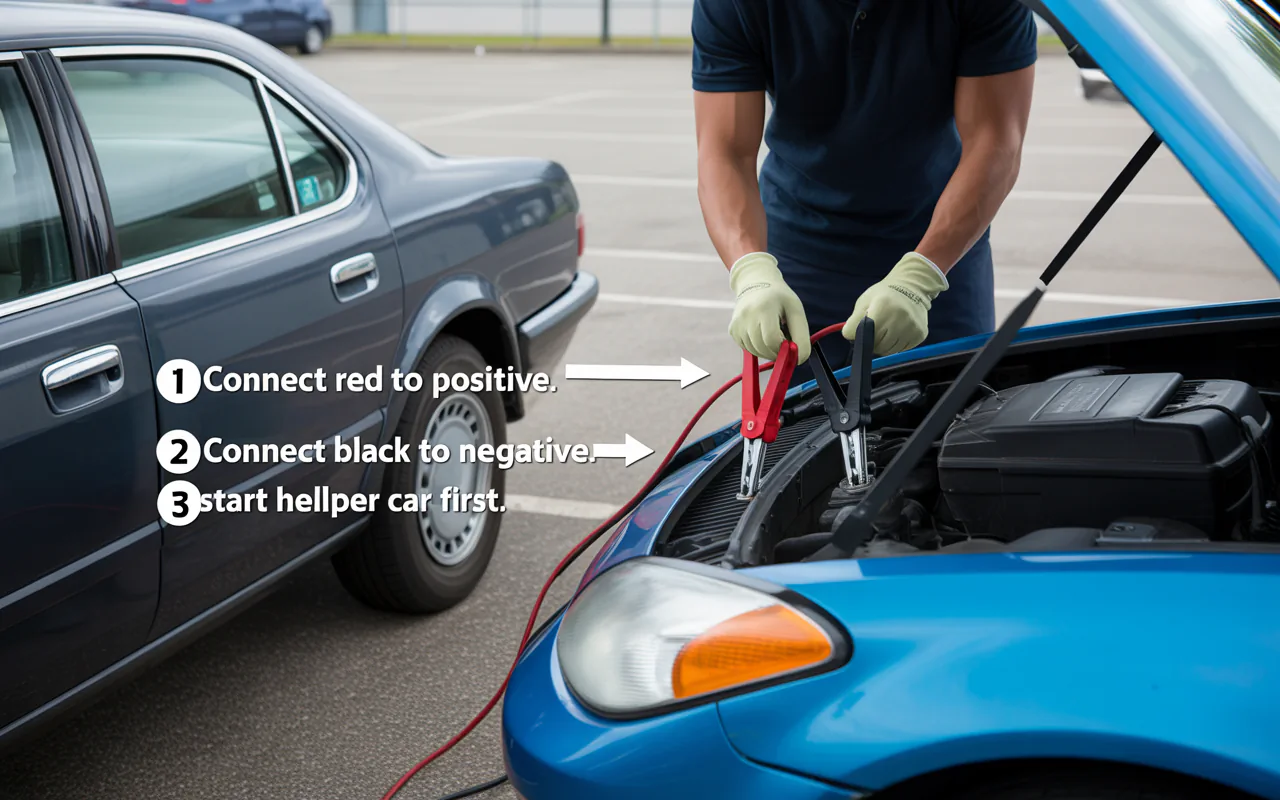
Need to jump-start a car safely? This guide shows you the correct method, from cable connections to safety checks. Avoid damage and get moving again.
A dead car battery can happen to anyone. Maybe you left your headlights on overnight. Or the cold weather drained your battery. Whatever the reason, you feel stuck and frustrated. But don’t worry. Learning how to jump-start a car safely is simple. You just need the right steps and a little patience. This guide will walk you through everything. By the end, you will feel confident and ready to help yourself or a friend. Let’s get started.
What Does It Mean to Jump-Start a Car Safely?
Jump-starting means using another car’s battery to give your dead battery a short boost of power. This lets your engine start again. But doing it the wrong way can be dangerous. You might damage your car’s electronics. Or worse, you could cause a battery explosion. That is why you need to jump-start a car safely every single time. Safety comes first. The good news is that the process is easy to learn. You just have to follow a clear order of connections and take a few precautions.
“A dead battery is rarely an emergency if you know the right steps. Most people make mistakes because they rush.” – Mary Jackson, Automotive Safety Instructor
Essential Tools You Need Before You Start
Before you try to jump-start a car safely, gather your tools. You don’t want to run around looking for things when your battery is dead. Here is what you need.
Jumper Cables: What to Look For
Jumper cables are thick wires with clamps on each end. The clamps are usually red (positive) and black (negative). Look for cables that are at least 10 to 12 feet long. Shorter cables make it hard to connect two cars. Also, check the wire gauge. A lower number means thicker wire. For example, 4-gauge cables are better than 8-gauge cables. Thicker wires carry more power safely.
Safety Gear
You don’t need much. But a pair of work gloves can protect your hands. Safety glasses are also a good idea. Battery acid can be dangerous. Also, keep a small flashlight in your car. It helps you see the battery terminals at night.
Table 1: Items You Need to Jump-Start a Car Safely
| Item | Why It Helps |
|---|---|
| Jumper cables (10-12 feet long) | Reach between two cars easily |
| Work gloves | Protect hands from acid or sparks |
| Safety glasses | Keep battery fluid out of your eyes |
| Flashlight | See battery terminals in the dark |
| Owner’s manual | Check special instructions for your car |
Step-by-Step Guide: How to Jump-Start a Car Safely
Now we get to the main part. Follow these steps exactly. Do not skip any. This is the best way to jump-start a car safely without harming your vehicle or yourself.
Step 1: Position Both Vehicles
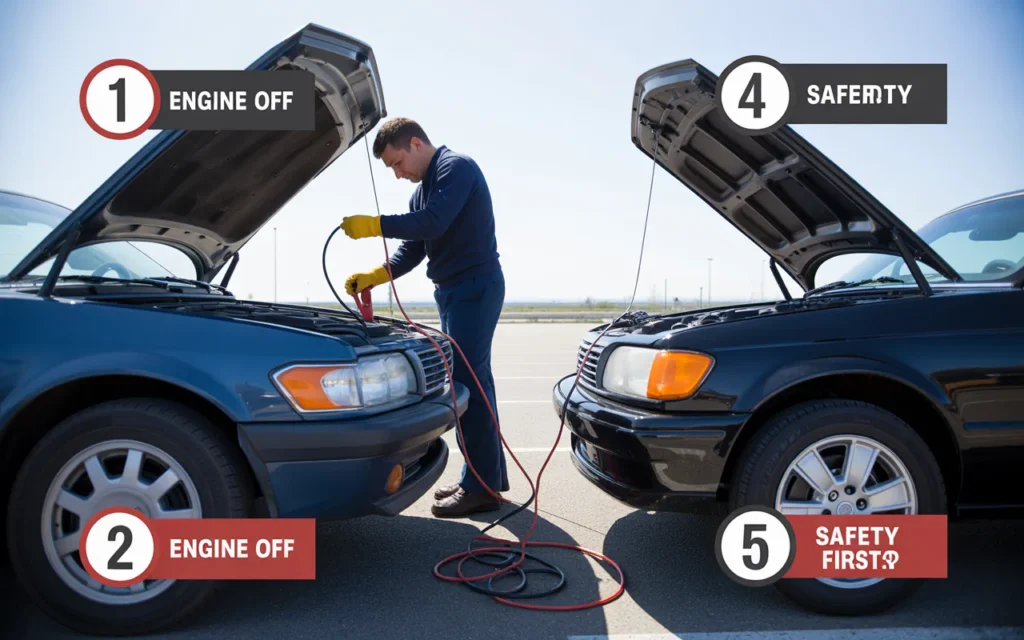
Park the working car close to the dead car. They should face each other or stand side by side. Make sure the two cars do not touch. Keep enough space to open both hoods. Put both cars in park (or neutral for manual transmissions). Engage the parking brakes. This stops any movement while you work.
Step 2: Turn Off Everything
Turn off both engines. Remove the keys from the ignition. Then turn off all lights, radios, air conditioners, and chargers. Any device that uses power should be off. This prevents a power surge when you connect the cables.
Step 3: Connect the Red Cable (Positive)
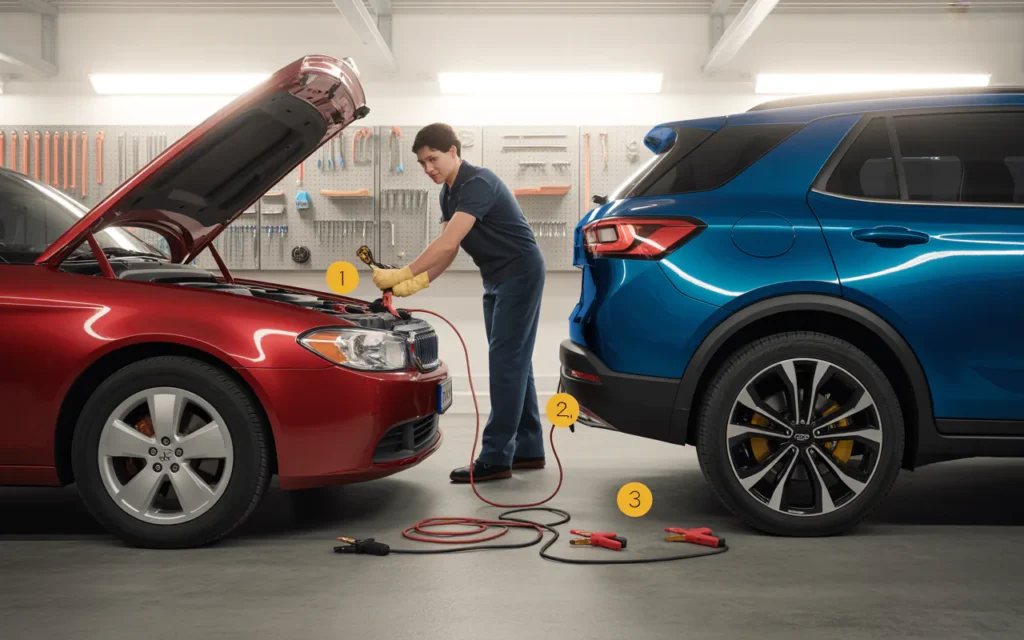
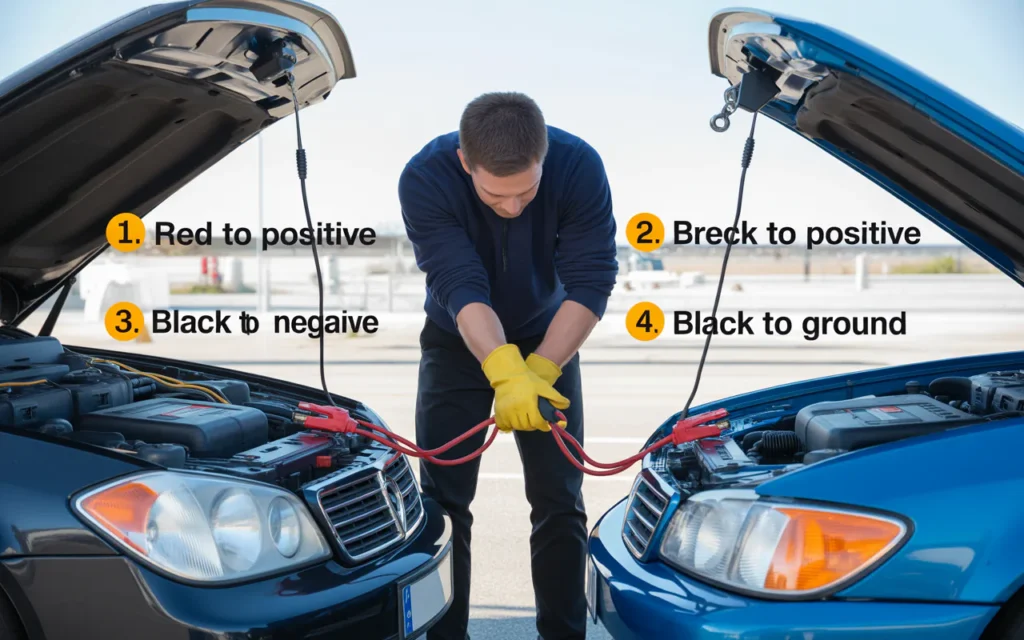
Open both hoods. Find the batteries. Look for the positive (+) and negative (-) terminals. They are usually marked with red and black colors or a plus/minus sign. First, take one red clamp. Attach it to the dead battery’s positive terminal. Make sure it grips firmly. Then attach the other red clamp to the working battery’s positive terminal.
Step 4: Connect the Black Cable (Negative) – The Important Order
Now take one black clamp. Attach it to the working battery’s negative terminal. Here is the key part. Do not attach the last black clamp to the dead battery’s negative terminal. Instead, find a clean metal surface on the dead car’s engine block or chassis. Look for an unpainted bolt or bracket. Attach the last black clamp there. This is called a ground connection. It reduces the risk of sparks near the dead battery. Sparks near a dead battery can cause hydrogen gas to explode. So always ground the final clamp away from the battery.
“The single biggest mistake people make is putting the last black clamp on the dead battery’s negative post. That small change can prevent a fire.” – Tom Boyd, AAA Roadside Technician
Step 5: Start the Working Car
Start the working car’s engine. Let it run for about two to three minutes. This sends a small charge into the dead battery. Rev the engine a little to increase the charge. But do not go overboard. A gentle rev is enough.
Step 6: Start the Dead Car
Now try to start the dead car. If it does not start right away, wait another two minutes. Then try again. If it still does not start, you may have a bigger problem. The battery could be completely dead, or your alternator might be bad. But most of the time, the car will start on the first or second try.
Step 7: Remove Cables in Reverse Order
Once the dead car runs, remove the cables. Do this in the reverse order you put them on. First, remove the black clamp from the ground spot on the dead car. Second, remove the black clamp from the working battery’s negative terminal. Third, remove the red clamp from the working battery’s positive terminal. Finally, remove the red clamp from the dead battery’s positive terminal. Be careful not to let any clamps touch each other during this step.
Important Safety Warnings
You can jump-start a car safely only if you respect a few warnings. These are not optional. They protect you and your car.
Risks of Battery Gases
Car batteries produce hydrogen gas. This gas is explosive. Any small spark can ignite it. That is why you attach the last cable to a ground away from the battery. Also, never smoke or use a lighter near a battery. Keep open flames away.
Avoiding Electrical Surges
Modern cars have sensitive computers. A power surge can fry your car’s electronics. To prevent this, always turn off both cars before connecting cables. Do not let the red and black clamps touch each other. Also, never jump-start a frozen battery. If the battery case looks swollen or cracked, do not attempt a jump. Call a tow truck instead.
Table 2: Do’s and Don’ts for a Safe Jump-Start
| Do | Don’t |
|---|---|
| Do wear gloves and safety glasses | Don’t let cable clamps touch each other |
| Do connect red to positive first | Don’t attach black to dead battery’s negative |
| Do keep the working car running | Don’t jump-start a damaged or frozen battery |
| Do remove cables in reverse order | Don’t smoke near the battery |
| Do check your owner’s manual | Don’t rush the process |
When Not to Jump-Start a Car
Sometimes you should not even try to jump-start a car safely. Knowing when to stop can save you from injury or costly repairs.
Signs of a Damaged Battery
Look at the battery before you start. If you see cracks, leaks, or bulging sides, do not jump it. A damaged battery can explode. Also, if the battery is very old (more than five years), it might not hold a charge. You are better off replacing it.
Hybrid and Electric Vehicles
Many hybrid and electric cars have special batteries and systems. Do not jump-start them like a regular car. Some hybrids have a dedicated jump-start terminal under the hood. Others should never be used as a donor car. Always read your owner’s manual first. If you are unsure, call a professional.
“I have seen people ruin their hybrid’s electronics just by connecting cables wrong. When in doubt, call roadside assistance.” – Lisa Green, Certified Mechanic
After You Jump-Start the Car
You got the car running. Great job. But your work is not done yet. You need to make sure the battery stays charged.
Keep the Engine Running
Do not turn off the dead car right away. Drive it for at least 20 to 30 minutes. This lets the alternator recharge the battery. Avoid short trips. If you only drive for five minutes, the battery may die again.
Check Your Alternator
If your battery dies again within a day or two, your alternator might be failing. The alternator charges the battery while you drive. A bad alternator means the battery never gets recharged. Visit a mechanic to test your alternator and battery. Many auto parts stores offer free testing.
Frequently Asked Questions (FAQ)
1. Can I jump-start a car safely by myself without another car?
Yes, you can use a portable jump starter. These are small battery packs with built-in cables. Follow the same safety steps: connect red to positive, black to a ground. Portable starters are very convenient. Keep one in your trunk.
2. How long should I let the dead car charge before starting?
Usually two to five minutes is enough. If the battery is very dead, wait up to ten minutes. But if it does not start after three tries, something else is wrong.
3. Is it safe to jump-start a car in the rain?
Yes, it is generally safe. Car batteries and jumper cables are designed to handle moisture. Just make sure your hands are dry when connecting cables. Avoid standing in puddles. The voltage from a car battery is low, so the risk of shock is small.
4. What happens if I reverse the cables?
Reversing the cables (connecting red to negative and black to positive) can cause a short circuit. You might blow a fuse or damage the car’s computer. In some cases, the battery can explode. Always double-check your connections before starting the donor car.
5. Can I jump-start a car with a completely dead battery?
Sometimes yes, sometimes no. If the battery has no charge at all, a jump might not work. The donor car may not provide enough power. In that case, you need a new battery or a professional charger.
6. Do I need to replace my battery after a jump-start?
Not always. If your battery died because you left lights on, a good drive will recharge it. But if the battery is old or weak, consider replacing it. Most car batteries last three to five years.
7. How many times can you jump-start a car safely?
You can do it several times, but each jump puts stress on the battery and alternator. If you need more than two jumps in a week, get your battery tested. Something is wrong.
8. Is it okay to jump-start a car with a different voltage?
No. Only use a 12-volt battery to jump-start another 12-volt battery. Most cars use 12 volts. But some trucks or heavy equipment use 24 volts. Never mix voltages. You will destroy your car’s electronics.
Conclusion
Now you know how to jump-start a car safely. It is not hard. You just need the right tools, a calm mind, and a clear set of steps. Remember to position the cars, turn everything off, connect red first, then black to a ground on the dead car. Start the working car, then the dead one. Remove cables in reverse order. And always wear gloves and glasses for protection.
A dead battery can feel like a big problem. But with this guide, you can turn a stressful moment into a simple fix. Keep a set of jumper cables in your trunk. Practice the steps in your mind. And share this knowledge with your family and friends. The next time someone asks for help, you will be ready to jump-start a car safely and confidently. Stay safe on the road.
Related posts
 2026 Torque Wrench Reviews: Choosing the Right Tool for Precision Fastening
Explore our 2026 torque wrench reviews to find the right tool for your automotive, bike, or gunsmithing projects. Compare top models for accuracy and value. Finding…
 Top Automotive Tools for Beginners: Essential Gear for 2026
Discover the top automotive tools for beginners in 2026. Compare essential pry kits, wrench sets, and repair gear to start your DIY car maintenance journey. Starting…
 Top Rated Mechanic Tool Brands for 2026
Explore top rated mechanic tool brands for 2026. Compare reliable socket sets and hand tools to find the right equipment for your home garage or auto…