
How To Take Care Of Hair With Accessories
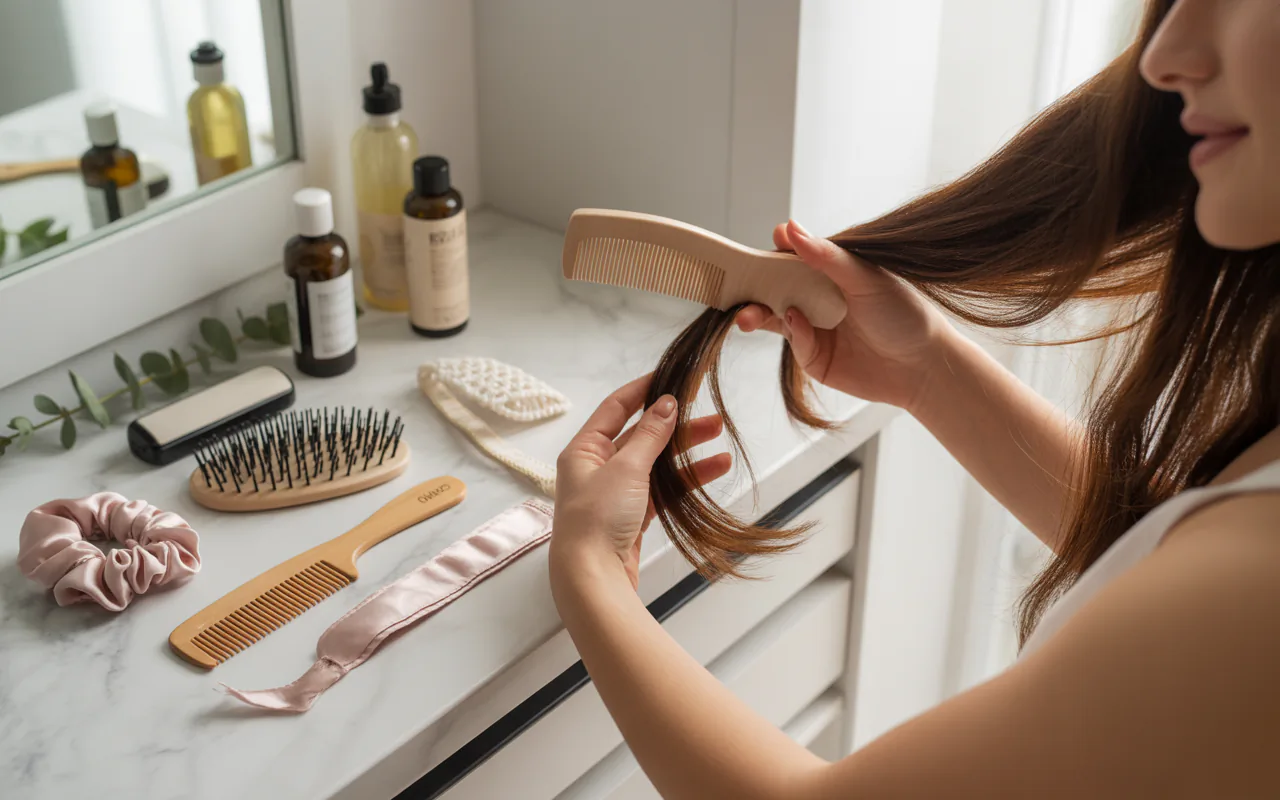
Learn exactly how to take care of hair with accessories so you avoid breakage, tangles, and scalp stress. Get simple daily routines, cleaning tips, and safe styling methods for healthy, happy hair.
You love using hair clips, bands, scrunchies, and headbands. They make you look put together in seconds. But have you noticed more broken strands lately? Or maybe your scalp feels sore after a long day. The truth is, even cute accessories can harm your hair if you don’t use them right.
I have been there. I used to pull my hair into tight ponytails every morning. Then I saw little broken hairs around my forehead. That is when I learned that knowing how to take care of hair with accessories is just as important as picking the right shampoo. You do not need to give up your favorite clips or pretty pins. You just need a few smart habits.
In this guide, I will walk you through everything I have learned from hairstylists, my own mistakes, and years of trial and error. You will get clear steps, simple tables, and honest advice. No fancy words or hard routines. Just real help for real people who want great hair without giving up their favorite accessories.
Let us start with why this even matters.
Why You Need to Know How to Take Care of Hair With Accessories
Think of your hair like a delicate fabric. Every time you put on a clip or wrap a band around a ponytail, you create friction and pressure. Over time, that adds up. Bad accessory habits cause split ends, thinning edges, and even headaches.
The good news? Once you learn how to take care of hair with accessories, you can wear them every day without damage. I promise it is easier than you think. Small changes like switching to softer materials or loosening your grip make a huge difference.
Most hair damage from accessories comes from repetitive stress on the same spots. Rotating your styles and using gentle fasteners prevents 90% of breakage.”
— Cassie Thompson, Certified Hair Stylist
Your hair also changes with seasons, heat styling, and even your mood. So learning these skills means you can adapt. Whether you have curly, straight, fine, or thick hair, the same basic rules apply. Let me break down the common culprits first.
Common Hair Accessories and Their Hidden Risks
Not all accessories are made the same. Some look cute but secretly harm your strands. The table below shows what to watch for.
| Accessory Type | Hidden Risk | Safe Alternative |
|---|---|---|
| Elastic rubber bands | Snag strands, cause breakage | Fabric scrunchies or spiral hair ties |
| Metal claw clips | Pull hair, create tension points | Plastic-coated metal clips or smooth resin clips |
| Thin plastic headbands | Friction at temples, hair loss over time | Cushioned or velvet-lined headbands |
| Bobby pins with rough edges | Scratch cuticles, split ends | Seamless bobby pins (smooth coating) |
| Velcro rollers | Tangles, rips out hair when removing | Foam rollers or satin-covered rollers |
You see, many common accessories have small flaws that hurt your hair. The metal part inside a cheap bobby pin has rough edges. That rough edge cuts your hair shaft each time you slide it in. Over months, those tiny cuts become split ends.
So the first step in how to take care of hair with accessories is to inspect every piece you own. Run your finger over the surface. Does it feel rough or sharp? Throw those away. Your hair deserves smooth, gentle tools.
Simple Steps to Take Care of Hair With Accessories Every Day
Let me give you a practical routine. These steps take less than five minutes total. But they will save you from years of hair frustration.
Choose the Right Material
Look for accessories made from satin, silk, soft plastic, or smooth metal with a coating. Avoid anything with visible seams, sharp edges, or rough plastic. Satin scrunchies are your best friend. They slide over hair instead of gripping it tightly.
Also, check the weight. Heavy clips pull down on your roots. That leads to tension alopecia over time. Lightweight options are always better.
Don’t Pull Too Tight
This is the biggest mistake I see. People yank their hair back until their eyes lift. That feels bad, and it damages follicles. Your ponytail should feel secure but not tight. You should be able to wiggle it with a finger.
When you learn how to take care of hair with accessories, you realize loose is better. Looser styles let your scalp breathe. They also reduce the friction that causes breakage along the hairline.
Give Your Hair Breaks
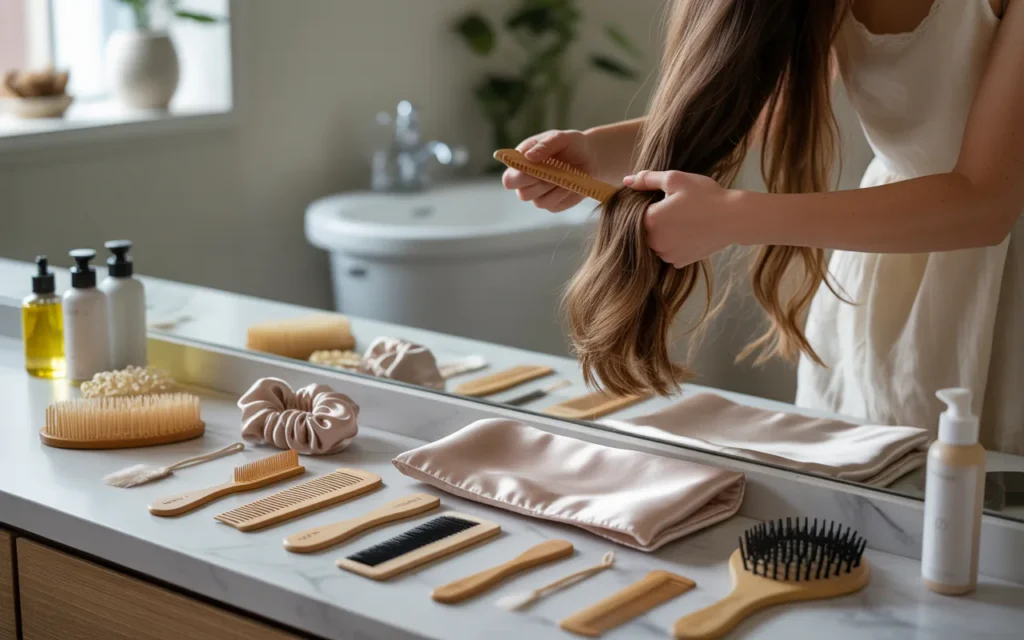
Do not wear the same accessory in the same spot every single day. Move your ponytail higher one day, lower the next. Use a clip on the left side, then the right side. This gives stressed areas time to recover.
I also suggest going accessory-free at home. Let your hair down when you cook, watch TV, or relax. Your strands need moments without any pressure.
“Your hair follicles are living structures. Constant tension from tight accessories suffocates them. Give your scalp at least six hours of rest every day.”
— Dr. Elena Marquez, Trichologist
Put Accessories on Dry Hair Whenever Possible
Wet hair is weak. It stretches and breaks much easier than dry hair. So if you just got out of the shower, let your hair air dry for 15 minutes first. Then put on your clip or band. The only exception is soft silk scrunchies on damp hair for sleeping. That is fine because silk creates almost no friction.
Remove Accessories Gently
Do not yank. Do not pull. Do not rip. I know you are in a hurry. But take three extra seconds to carefully unwind a band or unclip a claw. For spiral hair ties, twist them the opposite way to loosen. For bobby pins, slide them out in the same direction they went in.
How to Clean and Store Your Hair Accessories
Dirty accessories transfer oil, product build up, and bacteria back to your clean hair. That causes greasy roots and even scalp irritation. So washing your tools is a key part of how to take care of hair with accessories.
Here is a simple cleaning table to follow.
| Accessory Type | How to Clean | How Often |
|---|---|---|
| Fabric scrunchies | Hand wash with mild soap, air dry | Every 2 weeks |
| Plastic clips & claws | Soapy water soak, scrub with old toothbrush | Weekly |
| Metal bobby pins | Rinse with rubbing alcohol, dry completely | After every 3 uses |
| Headbands | Wipe with damp cloth and a drop of shampoo | Weekly or when greasy |
| Silk/satin items | Hand wash in cool water, lay flat to dry | Every 2 weeks |
Store your accessories in a clean, dry drawer or a small fabric bin. Do not throw them loose into a purse or gym bag. They will collect lint, dust, and crumbs. Then you put that mess onto your hair.
I also recommend separating sharp or metal items from soft scrunchies. A small jewelry pouch with dividers works great. Or use an old ice cube tray to organize smaller pins and clips.
Nighttime Care: Sleeping with Hair Accessories
Sleeping is when your hair rubs against pillows. That friction causes tangles and breakage. Many women sleep with accessories to keep hair out of their face. But you need to be smart about it.
The best option is a loose top-of-head ponytail with a silk scrunchie. Place it very high, almost at your forehead. That way you do not roll onto it. Use a scrunchie that is loose enough to slide easily.
Never sleep with:
- Metal clips (they dig into your scalp)
- Tight elastic bands (they cut hairs overnight)
- Bobby pins (they poke and create pressure points)
- Hard plastic headbands (they cause tension headaches)
If you want to learn how to take care of hair with accessories for sleep, remember this rule: softer is safer. A silk scarf wrapped around your edges is even better than any band. It protects your hairline and reduces frizz.
“Sleeping on a satin pillowcase with a loose silk scrunchie reduces friction by over 70% compared to cotton with a tight band.”
— Marcus Lee, Sleep & Hair Health Researcher
Special Tips for Different Hair Types
Your hair type changes which accessories work best. Let me give you specific advice for each.
Fine or Thin Hair
You have the highest risk of breakage. Use only soft fabric scrunchies or spiral plastic ties. Avoid heavy clips because they pull on your roots. Put your hair up only when necessary. And always use the smallest, lightest accessory possible.
Thick or Coarse Hair
You need strong accessories that do not snap. Look for extra-large fabric scrunchies and metal-free claw clips with wide teeth. Do not overstuff your ponytail. Split your hair into two sections if one band feels too tight. Also, avoid thin rubber bands at all costs. They snap and take strands with them.
Curly or Coily Hair
Your hair shrinks when dry and expands when wet. So put accessories on damp hair with leave-in conditioner to reduce friction. Use only seamless bands that will not catch on curls. And never brush curls into a ponytail. Finger comb instead to keep your curl pattern intact.
Straight or Wavy Hair
Your hair shows every dent and crease from accessories. Switch to spiral hair ties that do not leave marks. Use smooth metal clips instead of plastic ones that slip. And change your part often to avoid flat spots from headbands.
What to Avoid When Using Hair Accessories
I want to give you a clear list of “never do” actions. These habits ruin hair fast.
Never reuse dirty bands. Sweat and product build up on elastics. That gunk sticks to your hair and makes it greasy faster. Buy a pack of 20 scrunchies and rotate them.
Never wear a ponytail in the same spot for months. That creates a permanent weak line where hair breaks off. You will see short, frizzy pieces sticking up around your crown.
Never use accessories with broken parts. A cracked claw clip can snap and pull out a clump of hair. A bent bobby pin has sharp edges. Throw damaged items away.
Never share hair accessories with others. Lice, fungus, and bacteria spread this way. Keep your own clean set.
Never put accessories on sunburned or irritated scalp. Let your skin heal first. Any pressure on inflamed skin makes it worse.
Learning how to take care of hair with accessories means knowing when to skip them too. Some days, your hair needs a complete break. Listen to your scalp. If it feels sore or tender, go without.
How to Take Care of Hair With Accessories During Workouts
Exercise makes you sweat. Sweat mixes with hair products and creates a sticky paste. Then your accessories rub against that paste and pull hairs out.
Here is my workout routine:
First, put your hair in a loose ponytail. Use a fabric scrunchie. Then wrap a soft headband around your forehead to catch sweat. After your workout, remove the headband immediately. Let your ponytail down and rinse your hair with water. Do not keep the sweaty band on for hours.
If you wear a hat or cap for sports, choose one with a satin lining. Regular cotton hats soak up sweat and rub against your hairline. A satin lining slides instead of pulls.
For swimming, use a silicone swim cap. But first, put your hair in a very loose bun on top of your head with a silk scrunchie. Then put the swim cap over everything. Rinse your hair right after swimming. Chlorine damages accessories too, so wash your swim cap with fresh water each time.
A Simple Weekly Routine for Accessory Care
Let me put everything together into a weekly schedule. This takes 10 minutes total.
Monday: Inspect all accessories. Throw away any with cracks or rough edges.
Tuesday: Wash fabric scrunchies in a small bowl with mild shampoo. Rinse and hang dry.
Wednesday: Soak plastic clips in warm soapy water for 5 minutes. Scrub with an old toothbrush.
Thursday: Wipe metal bobby pins with a cotton ball dipped in rubbing alcohol.
Friday: Check your go-to headband. If it feels greasy, wash it with a drop of dish soap.
Saturday: Go accessory free for the whole day. Let your hair rest.
Sunday: Organize your storage box. Separate clean items from dirty ones.
That is it. This simple routine keeps your tools safe and your hair happy.
Frequently Asked Questions
Can I wear hair accessories every day without damage?
Yes, if you follow the rules in this guide. Use soft materials, keep styles loose, rotate positions, and clean your accessories weekly. Your hair can handle daily accessories when you practice how to take care of hair with accessories correctly.
Do silk scrunchies really make a difference?
Yes. Silk creates almost no friction. Cotton or polyester bands grab onto hair cuticles. Silk scrunchies slide. This reduces breakage by a large amount. Many people see less frizz and fewer split ends after switching.
How tight is too tight for a ponytail?
If you feel any pulling at your temples or forehead, it is too tight. If you get a headache within an hour, it is definitely too tight. A safe ponytail allows you to slide two fingers under the band easily.
What is the best accessory for sleeping?
A loose silk scrunchie in a high ponytail. Or a silk wrap around your edges. Avoid anything with metal, hard plastic, or tight elastic.
How often should I replace hair accessories?
Replace fabric scrunchies every 3 to 4 months. Replace plastic clips when they feel rough or develop cracks. Replace bobby pins as soon as they bend. Metal headbands can last years if you clean them.
Can hair accessories cause hair loss?
Yes, if used incorrectly. Constant tight tension causes traction alopecia. This is a form of hair loss from pulling. But you can prevent it completely by learning how to take care of hair with accessories the right way.
Are spiral hair ties better than regular elastics?
Yes for most people. Spiral ties look like old phone cords. They grip without crushing the hair shaft. They also leave no dent. They are much safer than thin rubber bands.
What should I do if I already have breakage around my hairline?
Stop using tight accessories for two months. Wear your hair down or in a very loose braid. Apply a growth serum or castor oil to the area at night. Be patient. New hair will grow back if the follicle is not permanently damaged.
Conclusion
You do not need to throw away your favorite hair clips or stop wearing cute ponytails. You just need to be smarter about how to take care of hair with accessories. Choose soft materials. Keep styles loose. Clean your tools weekly. Give your scalp breaks. Rotate where you place bands and clips.
These small changes take almost no extra time. But they save your hair from years of hidden damage. I have seen women transform dry, broken ends into shiny, strong hair just by switching to silk scrunchies and loosening their ponytails by one inch.
Your hair works hard for you every day. It grows, it shines, it shows your personality. Treat it with kindness. The accessories you wear should add to your beauty, not subtract from your health. Start today. Go through your drawer right now. Find one bad accessory and replace it with something gentle. Your future hair will thank you.
Remember: every time you reach for a band or a clip, ask yourself one question. “Is this helping my hair or hurting it?” When you know the answer, you know exactly what to do. Keep this guide bookmarked. Share it with a friend who always wears tight buns. And enjoy your beautiful, healthy, accessory-friendly hair for years to come.
Related posts
 Best Compact Powder for Women: 2026 Buyer Guide
Finding the best compact powder for women in 2026. We compare top-rated matte, mineral, and lightweight pressed powders to help you choose the right finish. Finding…
 Best Casual Wear for Women: 2026 Style and Comfort Essentials
Discover the best casual wear for women in 2026. We compare top-rated trousers and versatile tops to help you build a comfortable, stylish everyday wardrobe. Finding…
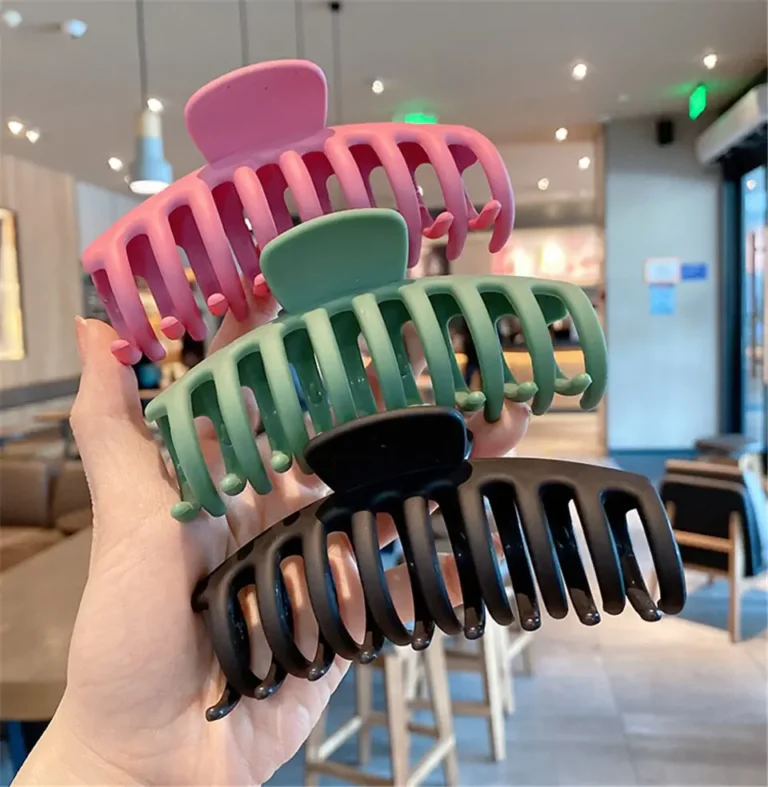 Best Claw Clips for Thick Hair in 2026
Finding the best claw clips for thick hair requires a balance of grip and size. Explore our top 2026 recommendations for secure, stylish, and reliable styling.…