
How To Clean Rusty Hand Tools
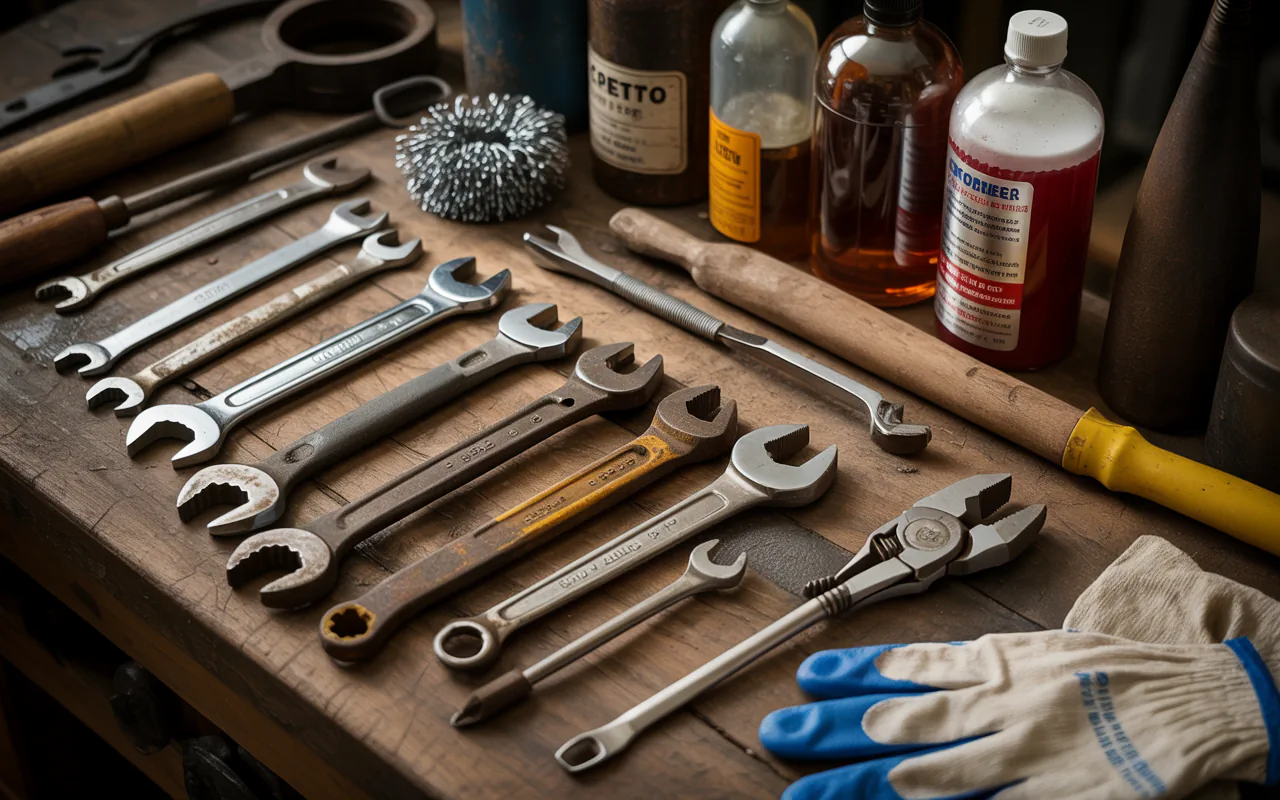
You can clean rusty hand tools with vinegar, baking soda, or sandpaper. This guide gives simple rust removal steps for pliers, wrenches, and saws. Bring old tools back to life in minutes.
Do you have old wrenches, pliers, or screwdrivers covered in orange rust? I have been there. You open your toolbox, and instead of shiny metal, you see brown flakes. It feels bad. But do not throw them away. You can clean rusty hand tools with stuff you already own at home. No special shop needed. In this guide, I will show you five easy methods. Each one works. I will also tell you how to stop rust from coming back. Let us get started.
Why Do Hand Tools Get Rusty?
Rust happens when iron or steel meets water and oxygen. That is a simple chemical reaction. Most hand tools are made of steel or iron. So they rust fast if not protected. You leave a wrench outside overnight after rain? Rust. You store a hammer in a damp basement? Rust. Even the sweat from your hands can cause rust over time.
Common Causes of Rust on Tools
- High humidity in your garage or shed
- Leaving tools wet after cleaning
- Touching tools with greasy or sweaty hands
- Poor storage (tools piled on concrete floors)
- Small scratches in the metal finish
Humidity and Storage Issues
I once kept all my tools in a cardboard box under my workbench. That bench sat on a concrete floor. After a few months, every single tool had rust spots. Why? Concrete holds moisture. Cardboard traps that moisture. And my garage had no air flow. So learn from my mistake. Where you store your tools matters as much as how you use them.
“The most valuable tool in your workshop is the one you take care of.”
— Paul Sellers
What You Need to Clean Rusty Hand Tools
Before you start, gather a few basic supplies. Most of these are in your kitchen or bathroom already. You do not need expensive machines or chemicals.
Table 1: Common Household Items for Rust Removal
| Item | How to Use |
|---|---|
| White vinegar | Soak tools for 12 to 24 hours |
| Baking soda | Make a thick paste with water |
| Steel wool (fine grade) | Rub off loose rust |
| Sandpaper (120 to 220 grit) | Smooth the metal after soaking |
| Dish soap | Clean grease before rust removal |
| Old toothbrush | Scrub small parts and crevices |
| Potato | Cut in half, dip in dish soap, scrub rust |
| Clean rags | Dry tools completely after cleaning |
You may also buy a commercial rust remover. But start with vinegar and baking soda. They work great for most rusty hand tools.
5 Simple Ways to Clean Rusty Hand Tools
Here are five methods. Pick the one that fits your time and the rust level. Light rust needs only a few minutes. Heavy rust may need a full day soak.
Method 1: White Vinegar Soak
White vinegar is cheap and safe. It has weak acid that eats rust. This is my favorite way to clean rusty hand tools because you just set it and forget it.
Steps:
- Pour enough white vinegar into a plastic bucket or glass jar to cover the tool.
- Put the rusty tool inside. Make sure it is fully under the vinegar.
- Wait 12 to 24 hours. Check after 12 hours. If rust is soft, you are ready.
- Take the tool out. Use steel wool or an old toothbrush to scrub away the rust.
- Rinse with clean water.
- Dry with a rag right away. Then apply a thin coat of oil (cooking oil or machine oil works).
Caution: Do not leave tools in vinegar for more than 48 hours. The acid can start to eat good metal.
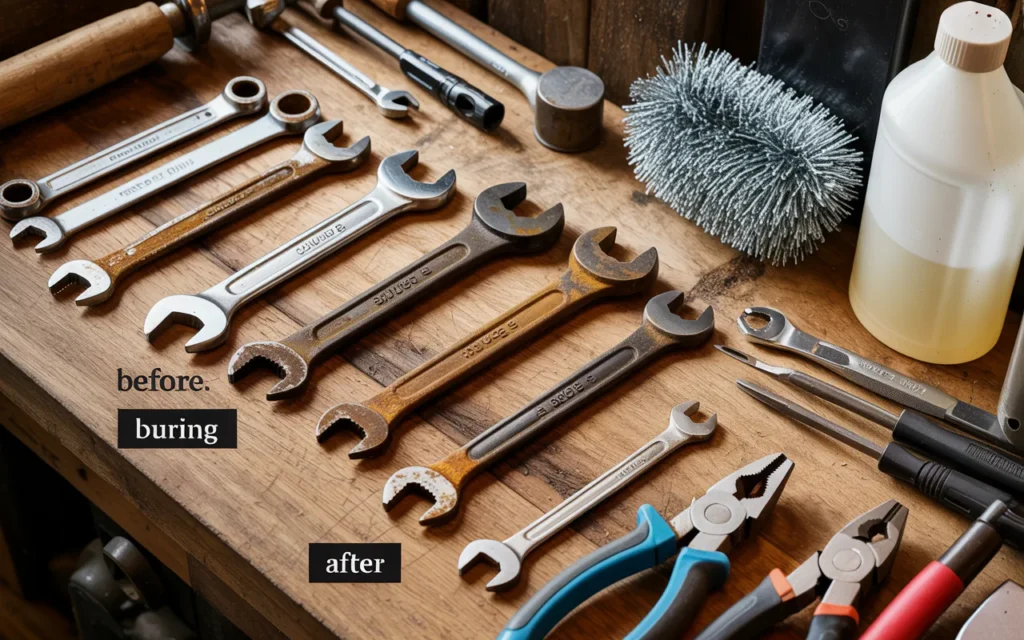
Method 2: Baking Soda Paste
Baking soda is a mild abrasive. It does not soak rust off. Instead, you scrub with it. This works best for light rust or for tools with moving parts like pliers or shears.
Steps:
- Mix three parts baking soda with one part water. Use a small bowl.
- Stir until you get a thick paste. It should look like toothpaste.
- Spread the paste on the rusty areas.
- Let it sit for 1 to 2 hours.
- Scrub with an old toothbrush or a rag.
- Rinse with water and dry fully.
- Oil the tool to prevent new rust.
I use this method for my garden shears. The baking soda does not hurt the metal or the plastic handles.
Method 3: Sandpaper and Steel Wool
This is the fastest method. But it takes some elbow grease. Use it when you have only a few rust spots, not a whole tool covered in rust.
Steps:
- Start with medium grit sandpaper (120 grit). Rub the rust off in one direction.
- Switch to fine grit (220 grit) to smooth the metal.
- For curved parts or tight spots, use steel wool (grade 00 or 000).
- Wipe away dust with a dry rag.
- Clean with a little dish soap and water to remove metal dust.
- Dry thoroughly and oil.
“Rust is a reminder that neglect has a cost.”
— Tom Lipton
Method 4: Potato and Dish Soap
This sounds strange, but it works. A raw potato has oxalic acid. That acid breaks down rust. My grandfather taught me this trick. It is safe, cheap, and fun to try.
Steps:
- Cut a raw potato in half.
- Put dish soap on the cut side.
- Rub the soapy potato half directly on the rusty spots.
- Let the juice sit for one hour.
- Scrub with steel wool or a brush.
- Rinse and dry.
- Oil the tool.
This method works best for small rust spots. Do not use it for heavy rust. It takes too long.
Method 5: Commercial Rust Removers
Sometimes rust is very deep or the tool is expensive. Then you might buy a product like Evapo-Rust or Rust-Oleum Rust Dissolver. These liquids work in 30 minutes. They are safe for most metals. But they cost more than vinegar.
Steps:
- Follow the bottle instructions exactly.
- Wear gloves and work in a well aired area.
- Soak the tool for the time listed.
- Rinse with water, dry, and oil.
I use commercial remover only for my best chisels or antique tools. For regular wrenches and hammers, vinegar is just fine.
Step by Step Guide to Clean Rusty Hand Tools
Now let me walk you through the full process. Read this before you pick a method. These steps will help you get the best results the first time.
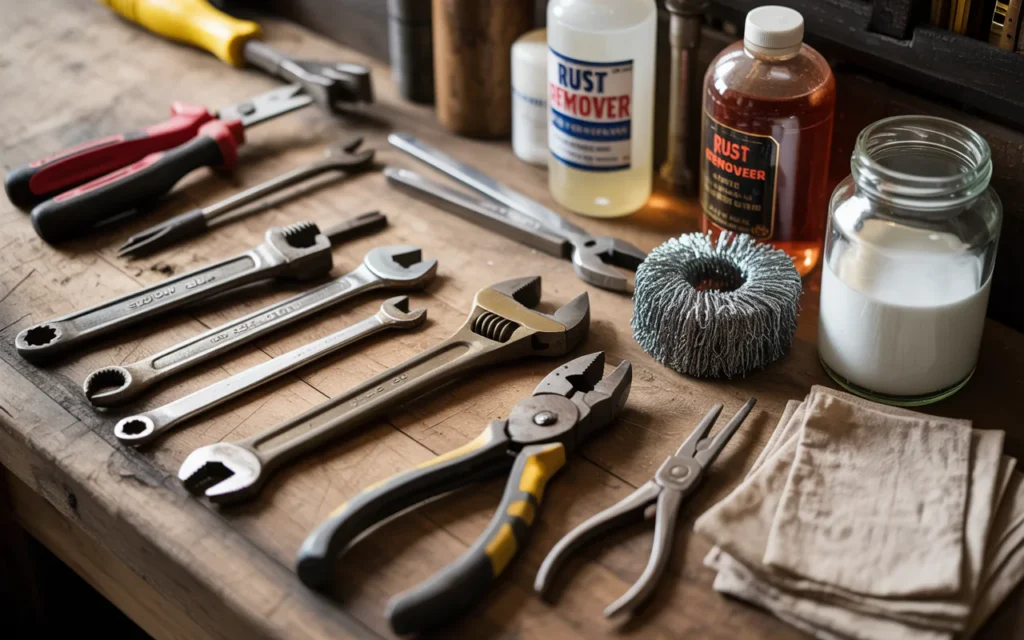
Step 1: Prep Your Workspace
Pick a spot with good light and air flow. A garage with the door open works well. Lay down old newspaper or a plastic sheet. You will get some mess from rust flakes and vinegar. Wear rubber gloves to keep your hands clean.
Step 2: Remove Loose Rust
Before you soak or scrub, knock off big chunks of rust. Use a wire brush or a stiff nylon brush. Hold the tool over a trash can. Brush away flakes. This step saves time later.
Step 3: Apply Your Chosen Method
Pick one method from above. For heavy rust, use the vinegar soak. For light rust, use baking soda paste or sandpaper. Soak or scrub as directed. Do not rush.
Step 4: Rinse and Dry Completely
This step is very important. Many people skip it. After you remove rust, you must rinse off all acid, baking soda, or soap. Use plain tap water. Then dry the tool with a clean cotton rag. Get into every crack and joint. If you leave any water, new rust will form within hours.
Step 5: Prevent Future Rust
Once the tool is dry, protect it. Wipe a thin layer of oil on all metal parts. Use mineral oil, 3-in-1 oil, or even vegetable oil. Do not use too much. Just a few drops on a rag. Rub it on. The oil blocks air and moisture from the metal.
“Clean tools do better work.”
— Christopher Schwarz
How to Prevent Rust After You Clean Rusty Hand Tools
You worked hard to clean rusty hand tools. Do not let them rust again next week. Prevention is easy. It takes five minutes after each use.
Table 2: Quick Prevention Tips
| Action | Why It Helps |
|---|---|
| Wipe tools with an oily rag after each use | Leaves a protective film on metal |
| Store tools in a dry box or tool chest | Lowers exposure to humid air |
| Put silica gel packets in your toolbox | Absorbs moisture from the air |
| Hang tools on a pegboard | Air circulates around them |
| Avoid leaving tools on concrete floors | Concrete wicks moisture from the ground |
| Spray a light coat of WD-40 monthly | Displaces water and prevents rust |
I keep a small spray bottle of mineral oil in my workshop. After every project, I spray a little on a rag and wipe down the tools I used. It takes less than one minute per tool. That simple habit saves me hours of rust cleaning later.
Also, think about your storage location. If your garage is very humid, buy a small dehumidifier. Or move your tool chest into a closet inside your home. The air inside your house is much drier than a garage or shed.
Frequently Asked Questions (FAQ)
1. Can I clean rusty hand tools without chemicals?
Yes. Use sandpaper, steel wool, or a wire brush. These are physical methods. They take more effort but no chemicals.
2. How long does vinegar take to remove rust?
Usually 12 to 24 hours. Check after 12 hours. If rust wipes off easily, you are done. Do not leave for more than 48 hours.
3. Will cleaning rust damage my tools?
No, if you do it right. Gentle scrubbing and short soaks remove only rust. But stay away from power tools like wire wheels on a drill. They can scratch good metal.
4. Can I use Coca-Cola to clean rusty hand tools?
Yes. Cola has phosphoric acid. It works like vinegar. Soak for 24 hours, then scrub. But vinegar is cheaper and less sticky.
5. How do I clean rusty hand tools with moving parts (like pliers)?
Use baking soda paste or spray with vinegar and scrub. Do not soak pliers for a long time. The acid can eat the grease inside the joint. After cleaning, add a drop of oil to the pivot point.
6. What should I do after I clean rusty hand tools?
Dry them completely. Then coat with oil. Store in a dry place. Check them once a month for new rust spots.
7. Is rust harmful to touch?
Rust itself is not toxic. But it can make cuts dirty. Also old tools may have lead paint or other chemicals. Wear gloves when cleaning old tools.
8. Can I use a rust remover on chrome plated tools?
Yes, but be careful. Soaking chrome tools in acid can lift the plating. Use baking soda paste or a commercial remover made for chrome. Test on a small spot first.
Conclusion
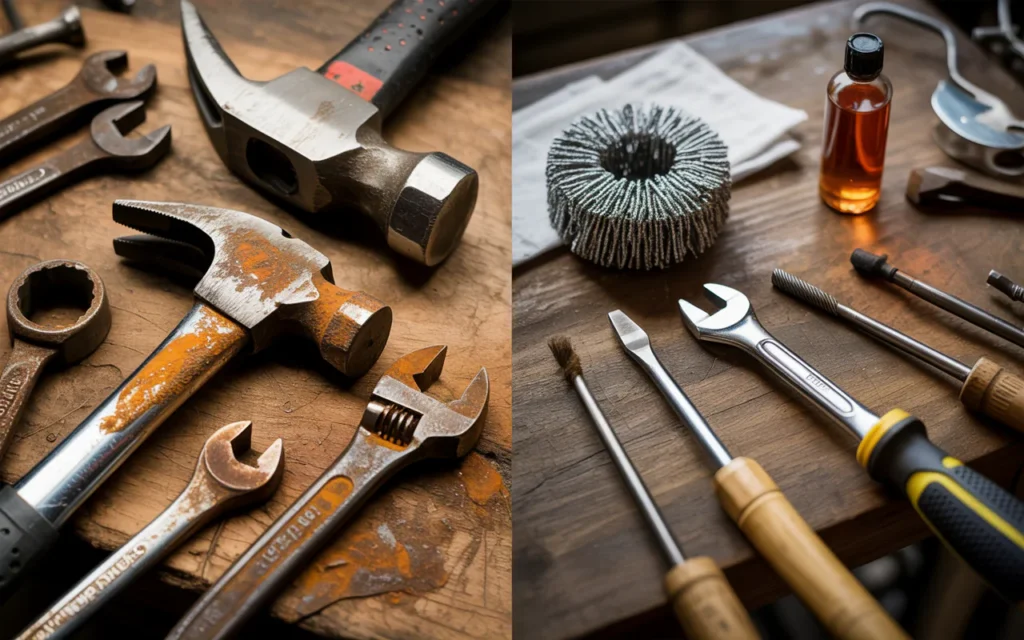
You do not need to throw away rusty tools. With a few simple steps, you can clean rusty hand tools and make them work like new. White vinegar, baking soda, sandpaper, and even a potato can remove rust fast. The key is to pick the right method for your rust level. Light rust needs a quick scrub. Heavy rust needs a long soak.
Remember to dry and oil your tools after cleaning. That stops rust from coming back. Store them in a dry place. Wipe them down after each use. Those small habits save you hours of work later.
I hope this guide helps you save money and keep your tools for years. Now go look in your garage. Find that old rusty wrench. Give it a vinegar bath. Scrub it clean. And feel good about fixing something instead of replacing it.
Take care of your tools, and they will take care of you.
Related posts
 2026 Torque Wrench Reviews: Choosing the Right Tool for Precision Fastening
Explore our 2026 torque wrench reviews to find the right tool for your automotive, bike, or gunsmithing projects. Compare top models for accuracy and value. Finding…
 Top Automotive Tools for Beginners: Essential Gear for 2026
Discover the top automotive tools for beginners in 2026. Compare essential pry kits, wrench sets, and repair gear to start your DIY car maintenance journey. Starting…
 Top Rated Mechanic Tool Brands for 2026
Explore top rated mechanic tool brands for 2026. Compare reliable socket sets and hand tools to find the right equipment for your home garage or auto…