
Common Automotive Tool Sizes Explained
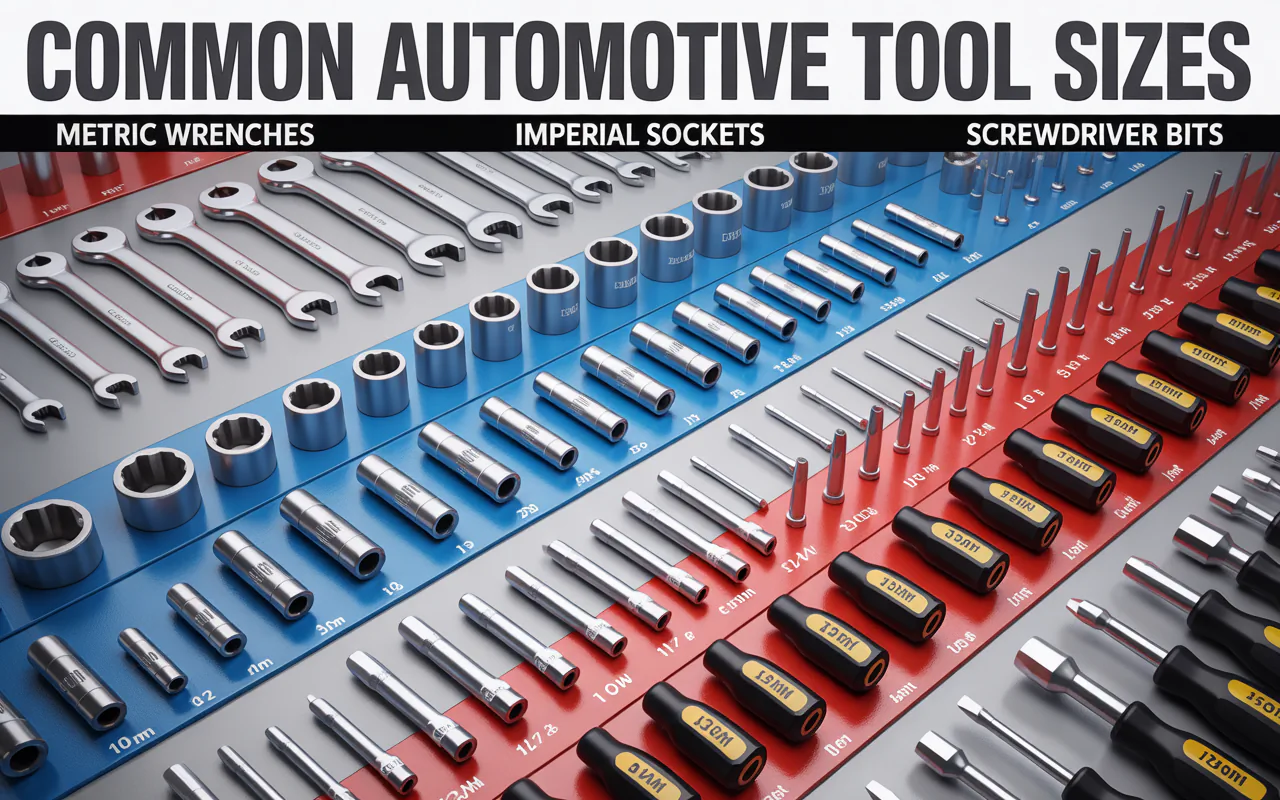
If you work on cars, this guide has common automotive tool sizes explained simply. Learn which socket, wrench, and hex key sizes are most used for repairs, plus metric vs SAE differences and what to buy first.
Have you ever opened a tool box and felt lost looking at all the different sizes? You are not alone. Many people who start fixing their own cars get confused by tool sizes. Which one do you pick for that bolt? Why does one socket fit and another does not? This post will make all of that clear. I will show you the common automotive tool sizes explained in a way that is easy to remember. No hard words. No confusing charts. Just real help for real people.
Let me tell you a quick story. When I first tried to change my car’s battery, I grabbed a wrench that looked “about right.” It slipped, and I hurt my knuckles. That is when I learned that using the wrong size is not just annoying. It can be dangerous. So I spent time learning the basic sizes that cars use. Now I want to share that with you. After reading this, you will know exactly which tool to grab for most jobs.
“The right tool is half the job. The right size is the other half.”
— John S., veteran mechanic and shop owner
Why Tool Sizes Matter for Car Work
Cars are made of thousands of parts held together by bolts, nuts, and screws. Each of those fasteners has a specific size. If you use a tool that is too big, it will slip and round off the edges of the bolt. If you use a tool that is too small, it will not fit at all. That is why learning common automotive tool sizes explained properly is the first step to working on any car safely.
You might think that all bolts on a car are the same. But they are not. Different parts of the car need different sizes. For example, the bolts holding your engine are bigger than the ones holding your dashboard. Also, cars from different countries use different measurement systems. Some use metric, some use SAE (inches). Most modern cars use metric, but older American cars use SAE. That means you need to know both.
Here is a simple rule: Always try a tool on a spare bolt first if you can. Or test it gently on the actual bolt. Do not force anything. If it feels loose, stop and try a smaller size. If it does not slide on, try a larger size. A good fit means the tool goes onto the bolt head with no wobble and no force.
Metric vs SAE: The Two Main Systems
When we talk about tool sizes, there are two families. Metric is measured in millimeters (mm). SAE stands for Society of Automotive Engineers, and it uses inches and fractions like 1/4, 3/8, 1/2. You will see both in many tool boxes. Knowing which system your car uses saves you a lot of time.
Most cars made after 1990 use metric sizes. That includes Toyota, Honda, Ford, Chevrolet, BMW, and almost every brand you see on the road today. But some older American cars from the 70s and 80s use SAE. Also, some parts like trailer hitches or accessory bolts might still be SAE. So a good mechanic keeps both types.
Let me show you a table of common sizes in both systems. These are the ones you will see most often.
Table 1: Common Metric and SAE Sizes (approximate matches)
| Metric (mm) | SAE (inches) | Notes |
|---|---|---|
| 8 mm | 5/16″ | Very close |
| 10 mm | 3/8″ | Almost the same |
| 11 mm | 7/16″ | Slightly different |
| 13 mm | 1/2″ | Very common |
| 14 mm | 9/16″ | Often used for brakes |
| 15 mm | 19/32″ | Less common SAE |
| 17 mm | 11/16″ | Engine bolts |
| 19 mm | 3/4″ | Suspension work |
Do not try to force a metric tool onto an SAE bolt, even if they look close. A 10 mm socket is not exactly the same as a 3/8 inch socket. Using the wrong one can strip the bolt. So always check which system your car needs. Look at your owner’s manual or search online for your car model.
Now let me give you a very useful tip. Common automotive tool sizes explained by mechanics often start with the 10 mm size. Why? Because the 10 mm bolt is everywhere on modern cars. It holds bumpers, fenders, interior panels, and many engine parts. And that size is famous for getting lost. So buy two or three 10 mm sockets and wrenches.
Socket Sizes You Will Use Most
Sockets are the round tools that attach to a ratchet. They come in different drive sizes: 1/4 inch, 3/8 inch, and 1/2 inch. The drive size is the square hole where you attach the ratchet. But the socket’s opening size is what fits the bolt. So when people ask about common automotive tool sizes explained, sockets are usually the first thing they want to know.
Common Metric Socket Sizes
For metric sockets, these are the sizes you will use week after week:
- 8 mm – Small bolts on trim and lights
- 10 mm – The most common size on most cars
- 12 mm – Seat belts and some brackets
- 13 mm – Many engine bolts and suspension parts
- 14 mm – Brake calipers and some engine mounts
- 15 mm – Some Honda and Toyota bolts
- 17 mm – Bigger engine and suspension bolts
- 19 mm – Lug nuts on many cars
- 21 mm – Larger lug nuts on trucks
Common SAE Socket Sizes
If you work on older cars or American vehicles, keep these SAE sizes:
- 1/4 inch – Very small bolts
- 5/16 inch – Carburetor and small brackets
- 3/8 inch – Many interior and accessory bolts
- 7/16 inch – Alternator and starter bolts
- 1/2 inch – Motor mounts and larger brackets
- 9/16 inch – Brake and suspension parts
- 3/4 inch – Older lug nuts
Here is a second table showing the most useful socket sizes for a beginner. Buy these first.
Table 2: First Socket Sizes to Buy (Metric and SAE)
| System | Most Used Sizes | Where You Use Them |
|---|---|---|
| Metric | 8, 10, 12, 13, 14, 15, 17, 19 mm | Most modern car repairs |
| SAE | 1/4, 5/16, 3/8, 7/16, 1/2, 9/16, 3/4 in | Older cars, trucks, lawn equipment |
“I tell my students to start with a 3/8 drive ratchet and a set of metric sockets from 8 to 19 mm. Skip the big sets with sizes you will never touch.”
— Maria G., auto shop teacher
Wrench Sizes That Come Up Often
Wrenches are different from sockets. A wrench has an open end and a box end. You use them when a socket does not fit because there is not enough room for a ratchet. Like sockets, wrenches come in metric and SAE. The same common automotive tool sizes explained for sockets also apply to wrenches. But wrenches have one extra thing: they are often double-ended with two different sizes.
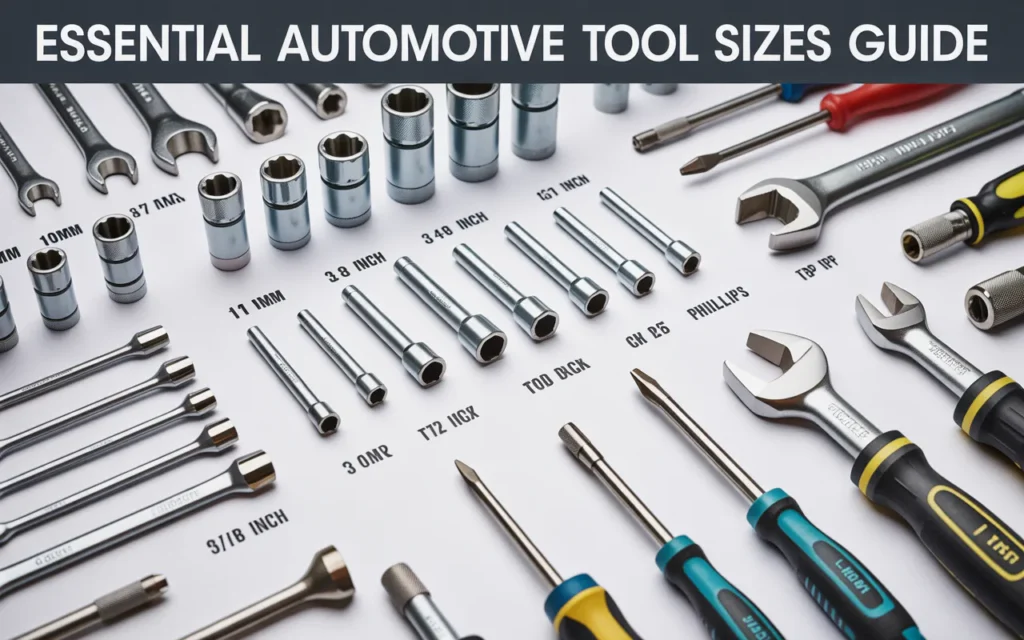
The most useful wrench sizes for cars are:
- 10 mm wrench – Use this more than any other
- 12 mm wrench – Good for many interior bolts
- 13 mm wrench – Very common on GM and Ford cars
- 14 mm wrench – Brake jobs need this often
- 15 mm wrench – Some Japanese cars use this
- 17 mm wrench – Engine work and suspension
- 19 mm wrench – Lug nuts on many cars
For SAE wrenches, start with 3/8, 7/16, 1/2, 9/16, and 5/8 inch. Those five sizes cover most old car repairs.
One mistake many people make is buying wrench sets that skip sizes. For example, a cheap set might give you 10 mm, then 12 mm, but skip 11 mm. That is fine because 11 mm is rare. But do not buy a set that skips 13 mm or 14 mm. Those are critical. Also, look for wrenches with a slight angle on the open end. That helps you reach bolts in tight spots.
When you use a wrench, always pull it toward you. Do not push it away. If you push and it slips, your hand can hit something sharp. Pulling is safer. And keep the wrench flat on the bolt. If it tilts, it can round the corners.
Hex Key (Allen) Sizes for Cars
Hex keys, also called Allen wrenches, are L-shaped metal bars that fit into hexagonal holes in screws. You see them on brake calipers, bicycle parts, some engine sensors, and interior trim. The sizes are small compared to sockets. Most car hex keys are metric. SAE hex keys are more common on furniture and older American machinery.
Here are the hex key sizes you will find on cars:
- 2.5 mm – Very small trim screws
- 3 mm – Some interior panels
- 4 mm – Brake bleeder screws on some cars
- 5 mm – Common on Japanese car brake calipers
- 6 mm – Engine covers and some suspension parts
- 8 mm – Larger caliper bolts on trucks
A good set of metric hex keys from 2 mm to 10 mm will do almost every car job. Buy the type with a ball end on the long side. That ball lets you use the key at an angle. It helps a lot in tight spaces. Also, get keys that are made of S2 steel or high quality alloy. Cheap hex keys can twist or snap.
Now here is a useful tip: Before inserting a hex key, clean out the hole. Dirt or rust can block the key from going all the way in. If the key slips, you can ruin the screw. And that screw might be very hard to remove later. So take a small pick or a paper clip to clean the hex hole first.
“Most people strip hex screws because they use the wrong size or a worn out key. Always push the key all the way in before turning.”
— Dave R., mobile mechanic for 20 years
Screwdriver and Torx Sizes
Not every fastener is a bolt. Cars also have many screws. Most are Phillips head (cross shape) or flat head (straight line). But newer cars use Torx screws. Torx has a star shape with six points. You need a special Torx bit or screwdriver for those.
Phillips screw sizes are numbered from #0 to #3. For cars, you mostly need #2 Phillips. That is the medium size. A #1 is smaller for dash parts. A #0 is for very tiny electronics. A #3 is for big screws on battery terminals or heavy brackets. So buy a #2 Phillips first. Then add a #1 and #3 as needed.
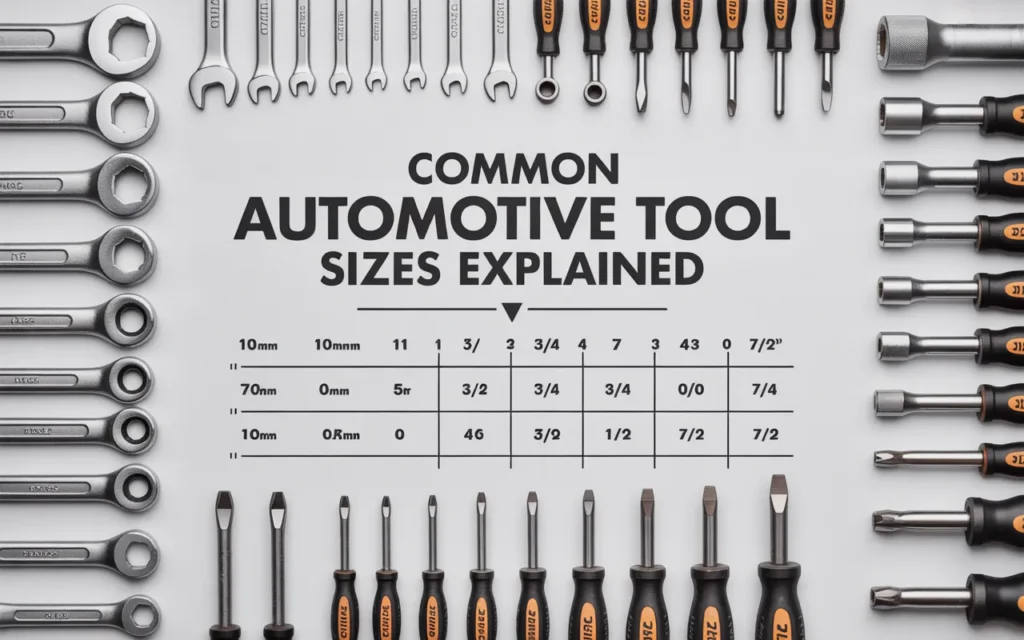
Flat head screwdrivers are less common on cars now. But you still see them on hose clamps and some old switches. The sizes are measured by the blade width. Common sizes are 3 mm, 5 mm, and 6 mm. A 5 mm flat head works for most old car clamps.
Torx sizes are a whole different thing. They are labeled with a T and a number. Common automotive Torx sizes are:
- T10 – Small interior screws
- T15 – Trim and some sensors
- T20 – Door panels and seat belt bolts
- T25 – Many GM and Ford engine parts
- T30 – Brake caliper bolts on some cars
- T40 – Larger suspension bolts
You can buy a set of Torx bits that go from T10 to T50. That will cover almost everything on a car. Some German cars use Torx Plus, which looks similar but has different splines. But for most people, regular Torx is fine.
When you use a Torx bit, make sure it goes all the way into the screw head. If it sits on top, you will strip the star shape. Push firmly and keep the bit straight.
How to Pick the Right Tool Size
So you have a bolt in front of you. How do you know which tool to grab? Here is a simple step by step process that uses everything we have learned about common automotive tool sizes explained.
First, look at the bolt head. Does it have lines on the inside? That is a hex key hole. If yes, grab your metric hex keys and try 4 mm, 5 mm, or 6 mm. If it has a star shape, use Torx.
Second, if the bolt has a regular six sided head, decide if you will use a socket or a wrench. If you have lots of room above the bolt, use a socket with a ratchet. If the bolt is in a tight spot, use a combination wrench.
Third, try to guess the size. For metric, start with 10 mm. It fits so many bolts. If 10 mm is too loose, try 9 mm or 8 mm. If 10 mm does not fit at all, try 11 mm or 12 mm. For SAE, start with 3/8 or 1/2 inch.
Fourth, test the tool gently. Put it on the bolt head. It should slide on with no wiggle. If it wiggles, it is too big. If it will not go on, it is too small. Do not force it.
Fifth, once you have a good fit, turn the tool. Use steady pressure. If the tool slips, stop. You might need a different size or a better quality tool.
One more thing: Rusty bolts can be tricky. A size that fits a clean bolt might not fit a rusty one. Spray some penetrating oil and wait a few minutes. Then clean the rust off with a wire brush. After that, try the tool again. The right size will fit.
Also, keep a set of “test tools” near your work area. These are old sockets or wrenches that you do not mind getting dirty. Use them to find the size, then get your good tool for the real work.
Frequently Asked Questions (FAQs)
What is the most common automotive tool size?
The 10 mm size is the most common. It is used on many bolts and nuts in almost every modern car. This is why any guide on common automotive tool sizes explained will always put 10 mm at the top.
Do I need SAE tools for a modern car?
Most modern cars use metric only. But some parts like battery terminal clamps or aftermarket add-ons may use SAE. It is smart to have a small set of SAE tools just in case.
What drive size ratchet should I buy first?
Buy a 3/8 inch drive ratchet first. It is the middle size. It works for most car jobs. Later you can add a 1/4 inch drive for small work and a 1/2 inch drive for big jobs like lug nuts.
Can I use a 10 mm socket on a 3/8 inch bolt?
No. They are close but not the same. A 10 mm socket is about 0.394 inches. A 3/8 inch bolt is 0.375 inches. The socket will feel loose and can slip, damaging the bolt.
Why do I keep losing my 10 mm tools?
This is a real joke among mechanics. The 10 mm size gets used so often that people set them down in odd places. They roll under cars or get left on bumpers. Buy extras.
What is the difference between a 6 point and 12 point socket?
A 6 point socket grips the flat sides of a bolt. A 12 point socket grips the corners. For car work, use 6 point sockets. They are less likely to strip bolts. Save 12 point sockets for special cases.
How do I know if a bolt is metric or SAE?
Look for a number on the bolt head. Metric bolts often have a number like 8.8 or 10.9. SAE bolts have lines or a brand name. Also, if the car was made outside the US after 1990, it is almost certainly metric.
Conclusion
Now you know the most important tool sizes for working on cars. We started with why sizes matter, then covered metric and SAE systems. We looked at sockets, wrenches, hex keys, and Torx bits. We also gave you tables to use as quick reference. The goal was to make common automotive tool sizes explained feel simple and useful, not confusing or scary.
Remember these key points. Buy metric tools first if your car is from the 1990s or newer. Get a 3/8 drive ratchet with sockets from 8 mm to 19 mm. Add a set of combination wrenches in the same range. Keep a 10 mm socket and wrench in a special place so you do not lose them. For hex keys, buy a metric set from 2 mm to 10 mm. For Torx, a T10 to T40 set is plenty.
Start with a small, good quality set. You do not need 200 tools. You need the right sizes. Add tools as you do more jobs. And always test the fit before you turn hard. A few seconds of checking can save you hours of frustration with a stripped bolt.
“Buy once, cry once. A cheap tool that fails will cost you more in time and anger than a good tool from the start.”
— Patricia L., DIY mechanic and blogger
Go look at your car. Open the hood. Find a bolt and try to guess its size. Then check with a wrench. You will get better every time. And soon, choosing the right tool will feel like second nature. Happy fixing.
Related posts
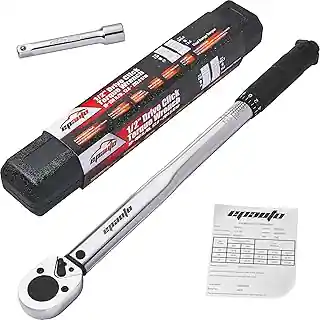 2026 Torque Wrench Reviews: Choosing the Right Tool for Precision Fastening
Explore our 2026 torque wrench reviews to find the right tool for your automotive, bike, or gunsmithing projects. Compare top models for accuracy and value. Finding…
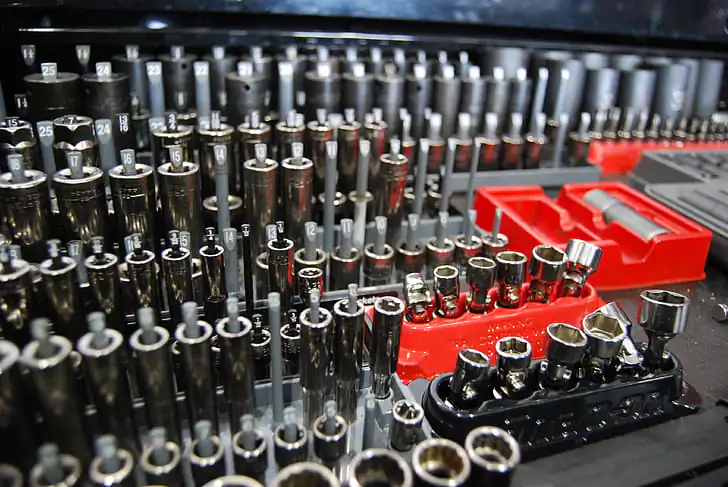 Top Automotive Tools for Beginners: Essential Gear for 2026
Discover the top automotive tools for beginners in 2026. Compare essential pry kits, wrench sets, and repair gear to start your DIY car maintenance journey. Starting…
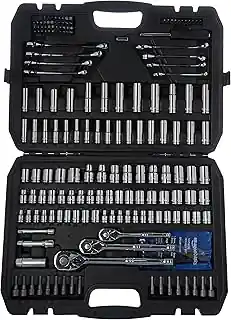 Top Rated Mechanic Tool Brands for 2026
Explore top rated mechanic tool brands for 2026. Compare reliable socket sets and hand tools to find the right equipment for your home garage or auto…