
How To Use Service Manual For Car Repair
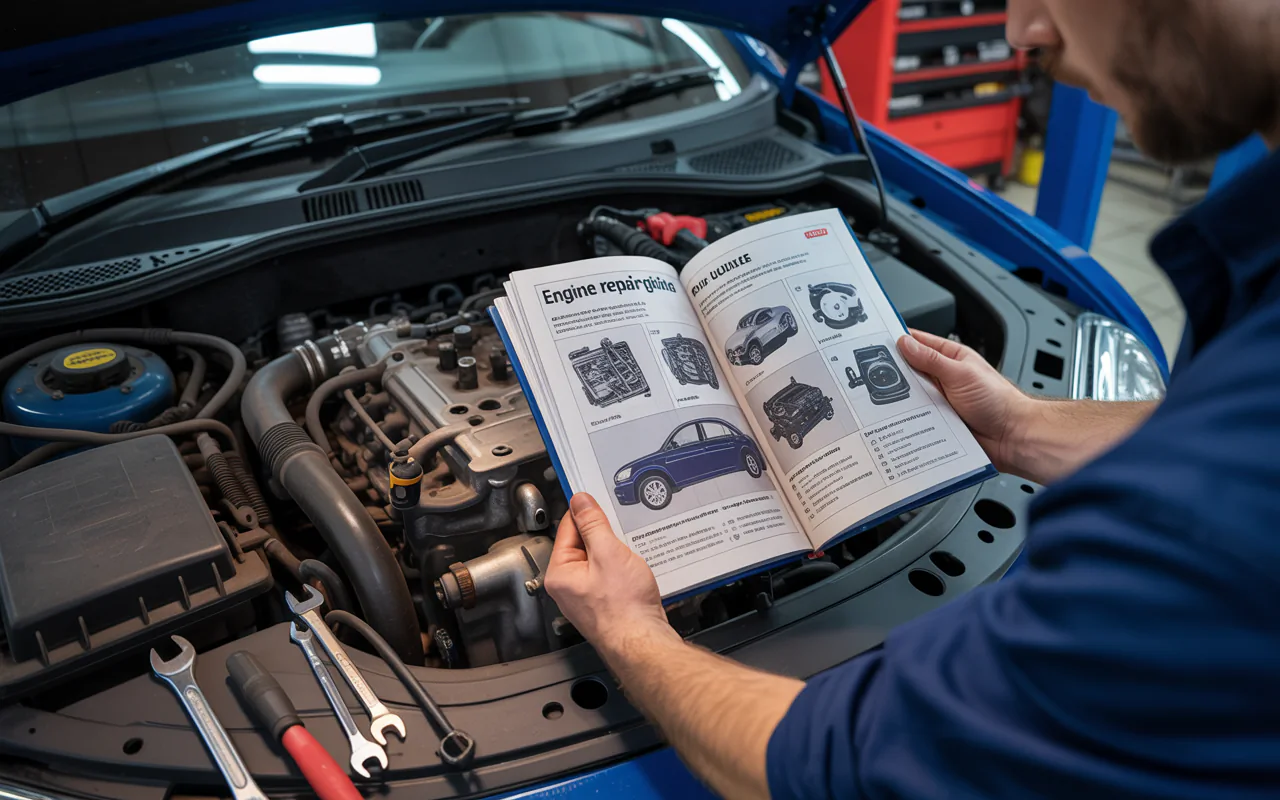
Learn how to use service manual for car repair correctly. This guide shows you step by step methods to fix your own car, save money, and avoid common mistakes. Perfect for home mechanics.
Fixing your own car can feel like a big challenge. But with the right help, it becomes much easier. That help is a service manual. Many people own a service manual but do not know how to read it well. They flip pages, get lost, and give up. I want to change that for you.
In this guide, I will show you exactly how to use service manual for car repair in simple steps. You do not need to be a professional mechanic. You just need some patience and this guide. By the end, you will feel ready to open any service manual and start fixing your car with confidence.
Let me share a quick story. When I first bought a used car, I had no clue about repairs. A friend gave me a service manual. I opened it and felt lost. But I kept trying. Slowly, I learned how to find the right pages, read the diagrams, and follow the steps. That manual saved me thousands of dollars. Now I want to help you do the same.
“A service manual is the map to your car’s hidden secrets. Without it, you are working blind.” – John Muir, author of How to Keep Your Volkswagen Alive
What Is a Service Manual and Why You Need One
A service manual is a book or digital file made by the car manufacturer. It contains every repair procedure for your specific car model. It tells you how to take parts apart, fix them, and put them back together. It also gives you torque specs, fluid capacities, wiring diagrams, and trouble codes.
Many people confuse a service manual with an owner’s manual. The owner’s manual tells you how to use the car. The service manual tells you how to repair the car. You need the service manual for any real repair work.
Why should you use service manual for car repair instead of watching a YouTube video? Because videos can be wrong or incomplete. A service manual comes from the engineers who built your car. It is the most trusted source. Also, one manual covers your exact year, engine, and transmission. Videos might show a different model.
Types of Service Manuals
There are three main types of service manuals. Each has good and bad points. Look at the table below to decide which one fits you.
| Type | Good Points | Bad Points |
|---|---|---|
| Factory (OEM) manual | Most accurate, complete details, official from car maker | Expensive, hard to find for old cars |
| Aftermarket paper manual (Haynes, Chilton) | Cheaper, easier to read, good for common repairs | Less detail on special tools, some steps missing |
| Digital PDF manual | Searchable, can zoom diagrams, often free or cheap | Need a device or print pages, can be low quality scans |
For most home mechanics, I suggest starting with an aftermarket paper manual. They are simple to read and cost about 20 to 40 dollars. Once you get more skilled, you can buy a factory manual.
Step-by-Step: How to Use Service Manual for Car Repair
Let me walk you through the exact process. Follow these steps every time you open a manual. You will save time and avoid breaking things.
Step 1: Find Your Car’s Correct Manual
This sounds easy, but many people get it wrong. You need the manual that matches your car’s year, make, model, and engine size. For example, a 2015 Honda Civic with a 1.8 liter engine uses a different manual than a 2015 Honda Civic with a 2.0 liter engine.
Check your car’s VIN number. You can find it on the driver side dashboard near the windshield. The VIN tells you everything about your car. Use it to confirm you have the right manual.
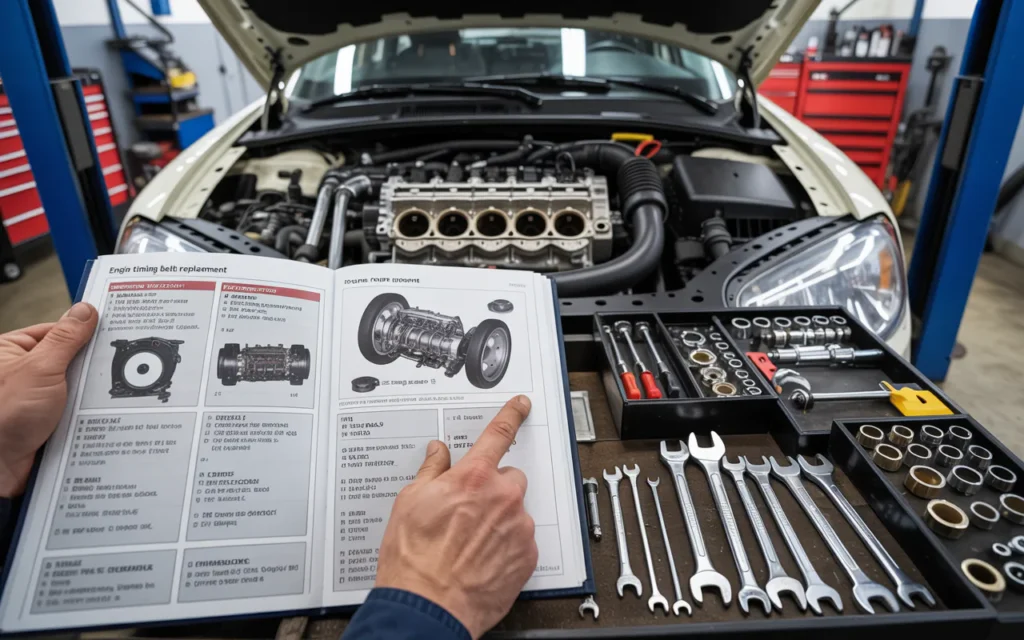
“Precision in preparation prevents poor performance. Get the right manual before turning a single bolt.” – Carroll Smith, race car engineer and author
Step 2: Understand the Manual’s Layout
Every service manual has a similar structure. Take five minutes to flip through yours. Look for these sections:
- Index at the back or front. Use it to find page numbers.
- Table of contents in the front. It groups repairs by system (engine, brakes, suspension).
- Specifications section. It lists torque values, fluid types, and clearances.
- Wiring diagrams near the end. These show electrical circuits.
- Troubleshooting charts. They help you find the cause of a problem.
When you use service manual for car repair, always start with the index. Do not guess where a repair is. Look up the part name. For example, search for “brake pad replacement” in the index. It will give you a page number.
Step 3: Locate the Right Section for Your Repair
Once you have a page number, go to that section. But do not stop there. Read the first paragraph. It often says “See also” other pages. For example, changing a water pump might also need you to remove the timing belt. The manual will tell you this.
Also, look for warning boxes. They have words like “CAUTION” or “NOTE”. These are not optional. A caution prevents damage to your car. A note gives helpful tips.
Step 4: Read the Instructions Carefully
Now read the whole repair procedure before you pick up any tool. Read it from start to finish. This helps you see the big picture. You will learn what parts need to come off first. You will see if you need special tools.
Many people skip this step. They read one sentence, then run to the garage. That leads to mistakes. For example, the manual might say “disconnect negative battery cable” at step 1. If you skip that, you could short out an electrical part.
Take notes on a piece of paper. Write down the steps in your own words. Draw small sketches if that helps you.
Step 5: Gather Tools and Parts Listed
Most service manuals have a “Tools required” list for each repair. Look for this list. It might say “10mm socket, flathead screwdriver, torque wrench.” Gather every tool before you start. Nothing is worse than stopping mid repair to find a tool.
Also check for special tools. Some repairs need a tool you do not own. For example, removing a harmonic balancer often needs a puller. You can buy or rent these from auto parts stores.
The manual also lists replacement parts. It will tell you the part number for a gasket, seal, or filter. Write down those numbers. Bring them to the store.
Step 6: Follow the Torque Specs and Diagrams
Torque specs are very important. A torque spec tells you how tight to turn a bolt. Too loose and the bolt falls out. Too tight and you strip the threads or break the bolt. Every service manual has a torque spec table.
When you use service manual for car repair, always use a torque wrench on critical bolts like cylinder head bolts, wheel lug nuts, and suspension bolts. Do not guess by feel.
The manual also has diagrams. These are drawings that show which bolt goes where. Some diagrams are exploded views. They show parts in order of assembly. Study these diagrams closely. They save you from putting a part on backwards.
“The difference between a good repair and a bad one is often just 10 foot pounds of torque.” – Robert Bosch, automotive engineering pioneer
Common Repairs You Can Do Using a Service Manual
You do not need to be a master mechanic to use service manual for car repair for common jobs. Here are three repairs that beginners can do with a manual.
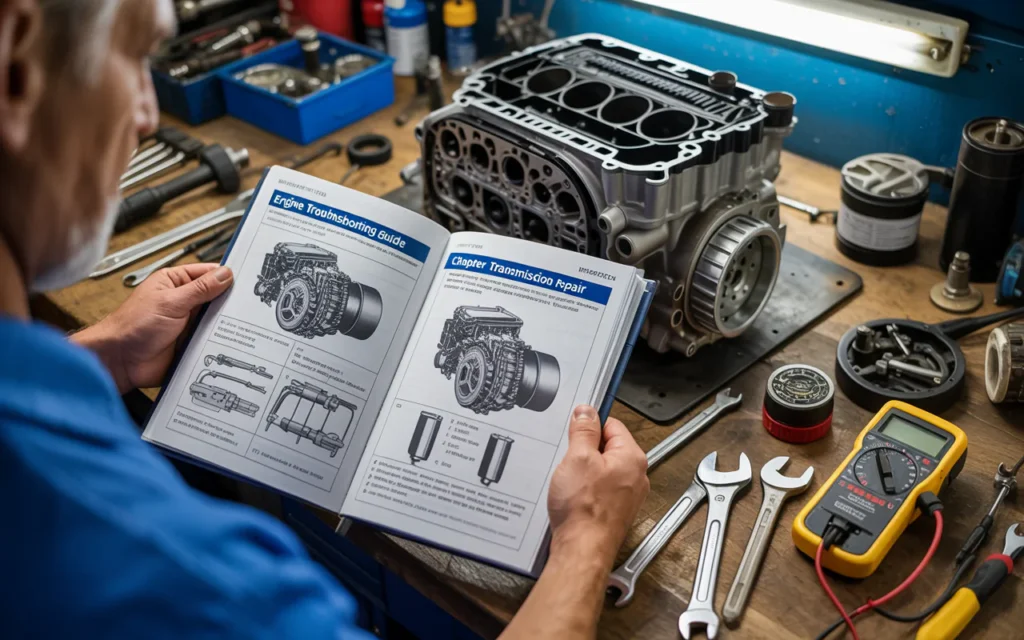
Oil Change
An oil change looks simple, but many people get it wrong. The manual tells you the correct oil type (like 5W-30), the exact oil capacity (like 4.2 quarts), and the torque spec for the drain plug (like 25 foot pounds). It also shows you where the oil filter is and how to remove it without spilling.
Brake Pad Replacement
Brake pads wear out over time. A service manual shows you how to remove the caliper, take out old pads, compress the piston, and install new pads. It also gives you the torque for caliper bolts. Without the manual, you might install the pads backwards or forget to grease the slides.
Serpentine Belt Replacement
A serpentine belt drives your alternator, power steering pump, and AC compressor. The manual has a belt routing diagram. This diagram is a picture that shows exactly how the belt wraps around each pulley. If you put the belt on wrong, it will shred in seconds.
Here is a table of tools you should own before trying any repair.
| Tool | Why You Need It |
|---|---|
| Torque wrench | To tighten bolts to the correct spec from the manual |
| Jack and jack stands | To lift the car safely as shown in manual |
| Socket set (metric and standard) | To remove most bolts described in manual |
| Multimeter | To test electrical circuits using manual wiring diagrams |
| Repair manual for your car | Your main guide for every step |
Tips to Use Service Manual for Car Repair Like a Pro
After using service manuals for many years, I have learned some smart tricks. These tips will save you time and frustration.
Tip 1: Use sticky notes to mark pages. When you find a repair, put a sticky note on that page. Also mark the torque spec page and the fluid capacity page. You will flip back and forth a lot.
Tip 2: Print digital pages for dirty work. If you have a PDF manual, print the pages you need. Then bring the paper into the garage. You can get grease and oil on the paper without ruining your computer or tablet.
Tip 3: Cross out steps as you finish. Take a pencil and mark each step when you complete it. This stops you from forgetting something. For example, cross out “drain oil” after you do it. Then you will not double drain.
Tip 4: Look up every warning sign. Your car might have a check engine light. The manual has a section for diagnostic trouble codes (DTCs). It tells you what each code means and how to test the parts. Do not just clear the code. Use the manual to fix the real problem.
Tip 5: Write your own notes in the manual. Did you find a shortcut? Write it in the margin. Did a bolt break? Note the replacement size. Your notes make the manual better for next time.
Tip 6: Compare the manual to your actual car. Cars change during production. Your manual might show a different bolt location than what you see. That is normal. Look for notes in the manual that say “except models with…” If you are unsure, take a photo of your car before taking things apart.
Frequently Asked Questions (FAQ)
Q1: Can I use a service manual for any car brand?
No. You must get a manual made for your specific car brand, model, year, and engine. A Ford manual will not work on a Toyota.
Q2: How do I use service manual for car repair if I have no tools?
Start with simple repairs like air filter or battery replacement. Buy tools slowly. A basic socket set and a torque wrench are good first buys. The manual tells you exactly what tools each job needs.
Q3: Is a digital PDF better than a paper manual?
Both work well. PDF manuals let you search for words like “alternator” instantly. Paper manuals do not need batteries and you can write on them. Many people keep both.
Q4: Where can I get a free service manual?
Some car forums share PDFs of old manuals. Check groups for your car model. Be careful with copyright laws. For new cars, you usually need to pay.
Q5: How often should I use service manual for car repair?
Use it every time you fix anything. Even professional mechanics look up torque specs. Do not trust your memory. The manual keeps you right.
Q6: What do I do if my manual does not match my car?
Your car might have been modified by a previous owner. Or the manual is for a different sub model. Check the VIN number again. If still wrong, buy the correct manual. Do not guess.
Q7: Can I use a service manual for electrical problems?
Yes. The manual has wiring diagrams. They show wire colors, connector pin numbers, and fuse locations. Follow the troubleshooting flow chart in the electrical section. It guides you step by step.
Q8: How do I store my service manual so it lasts?
Keep it away from oil and water. Do not leave it in the garage where it gets wet. A shelf inside your house is best. For paper manuals, put a plastic cover on it.
Conclusion
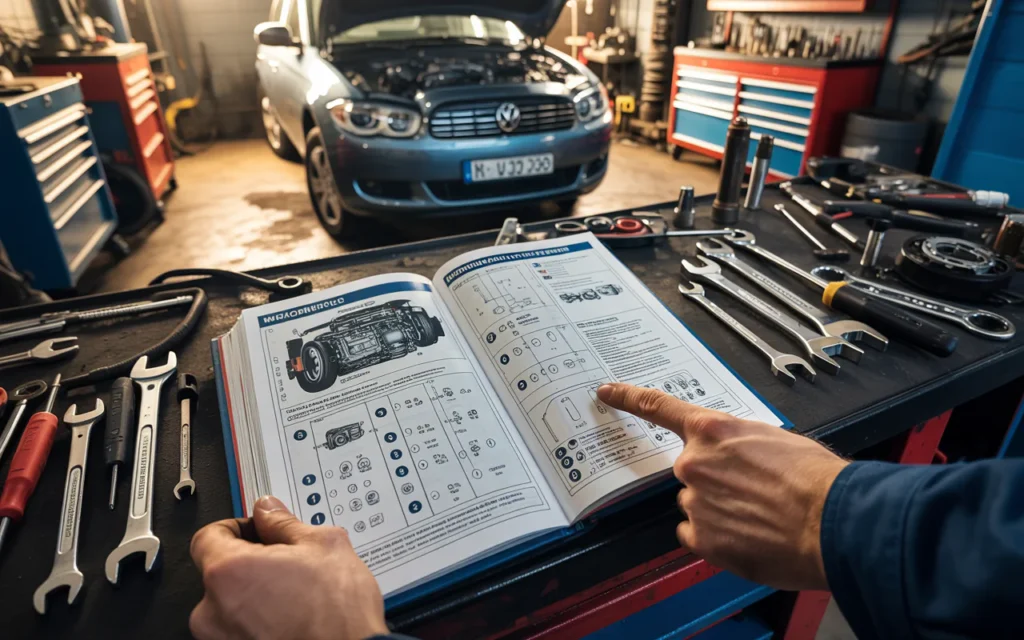
Learning to use service manual for car repair is one of the best skills for any car owner. You save money. You avoid bad repairs from guessing. You gain confidence every time you fix something yourself.
Start small. Pick an easy repair like changing your air filter. Open your service manual. Find the page. Read the steps. Gather the tools. Follow each step one by one. When you finish, you will feel proud. Then try a bigger repair.
Remember that every expert mechanic started as a beginner. They all used service manuals. They still use them today. There is no shame in reading the instructions. The shame is breaking your car because you did not read them.
So go get your service manual. Open it. Find one repair you want to try. And begin. Your car will thank you. And so will your wallet.
“Knowledge without action is useless. Read the manual, then turn the wrench.” – Anonymous mechanic saying
Related posts
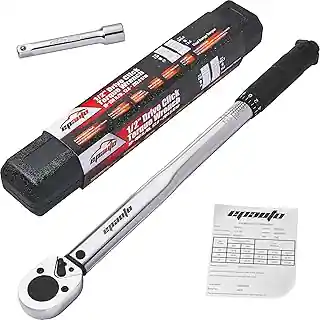 2026 Torque Wrench Reviews: Choosing the Right Tool for Precision Fastening
Explore our 2026 torque wrench reviews to find the right tool for your automotive, bike, or gunsmithing projects. Compare top models for accuracy and value. Finding…
 Top Automotive Tools for Beginners: Essential Gear for 2026
Discover the top automotive tools for beginners in 2026. Compare essential pry kits, wrench sets, and repair gear to start your DIY car maintenance journey. Starting…
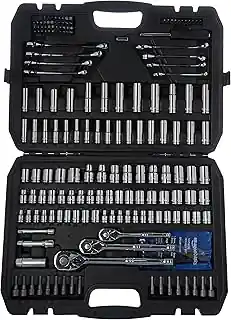 Top Rated Mechanic Tool Brands for 2026
Explore top rated mechanic tool brands for 2026. Compare reliable socket sets and hand tools to find the right equipment for your home garage or auto…