
How To Remove Stains From Clothes

How To Remove Stains From Clothes? Accidents happen all the time but you can remove stains from clothes easily using simple household items and proven techniques. These methods work on fresh spills like wine or grease as well as set in marks to restore your clothes without harsh chemicals or costly services. Save your favorite shirts pants and dresses with steps that deliver clear results every single time you face a new mess.
We all deal with spills and marks on our clothes from time to time. A drop of coffee during breakfast or a splash of sauce at dinner can leave behind a reminder that no one wants to keep. Remove Stains From Clothes. You do not need fancy products or special skills to fix most issues. Simple steps using things you already have at home can bring your garments back to their best look. People often feel upset when a nice outfit gets ruined but the good news is you can handle it fast. This guide walks you through what works based on years of real life trials and basic laundry knowledge shared by experts. You will feel more confident the next time something lands on your sleeve or lap.
Many folks search for ways to handle marks because clothes cost money and we want them to last. Fresh treatment makes a big difference. You can remove stains from clothes if you act right away and choose the right approach for the type of mark and the fabric. Cold water helps with many protein based spots while a bit of soap cuts through oils. We will cover the basics first then move into details for specific problems. You will pick up ideas that fit your routine and keep your wardrobe looking sharp without extra expense.
Quick Tips Before You Start to Remove Stains from Clothes
Take a moment to check the care label on your garment before you begin any treatment. Some fabrics like silk or wool need gentle handling while cotton can take more direct action. Blot the area with a clean cloth instead of rubbing because rubbing can push the mark deeper into the fibers. Work from the back of the fabric if possible so the stain lifts outward rather than spreading across the front. Always test your chosen solution on a small hidden spot first to make sure colors stay true. These small habits prevent bigger headaches later and help you remove stains from clothes with better success.
Keep your workspace clean and have paper towels or rags ready to catch any drips. Good lighting lets you see progress as you work. Patience matters here because some marks need time to break down before the wash cycle. Rushing often leads to incomplete results so give each step the time it needs. You will see how these habits turn a potential disaster into a simple fix.
Essential Supplies for Stain Removal
You probably have most of what you need already in your kitchen or laundry area. White vinegar cuts through many residues and helps lift colors back to normal. Baking soda acts as a gentle scrub that absorbs odors and extra moisture. Hydrogen peroxide works well on light fabrics for protein marks but skip it on dark colors to avoid fading. Dish soap breaks down oils and greases without damaging most materials. Enzyme based laundry detergents target food and body fluid stains by breaking them into smaller pieces that wash away.
Lemon juice and salt team up for brightening and drawing out liquids. A soft brush or old toothbrush helps work solutions into the fabric without harm. Plain cold water serves as the first rinse for many cases. Keep these items handy so you can respond quickly when accidents occur. You save time and money by using what sits on your shelves instead of buying new bottles every month.
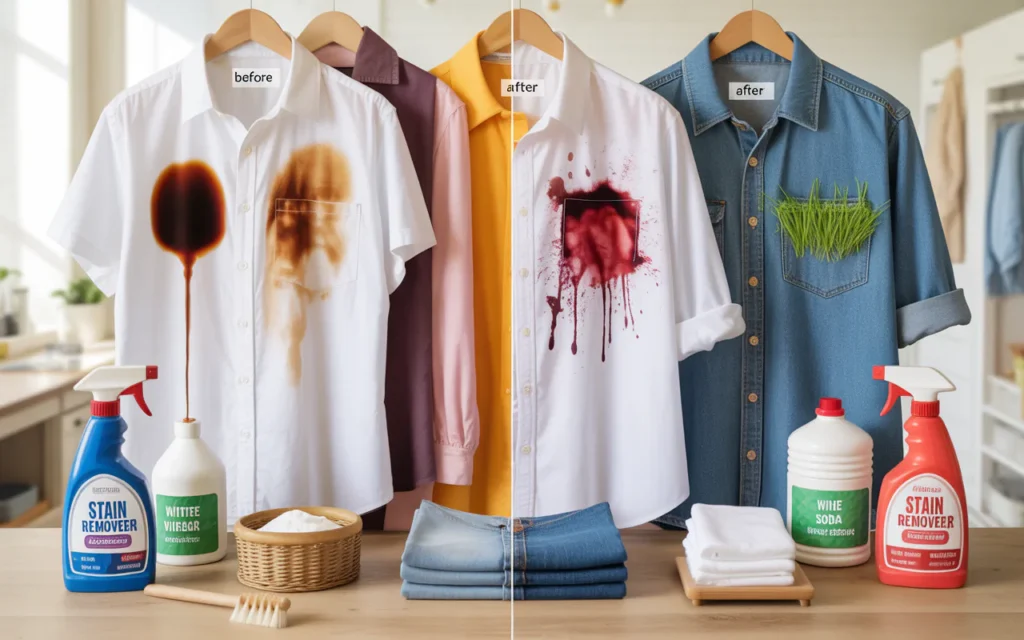
Here is a quick reference table for common items.
| Item | Use in Stain Removal |
|---|---|
| Dish soap | Cuts grease and oil |
| White vinegar | Lifts residue and brightens |
| Baking soda | Absorbs moisture and odors |
| Hydrogen peroxide | Treats protein marks on light fabrics |
| Lemon juice | Brightens and helps with food stains |
General Steps to Remove Stains from Clothes
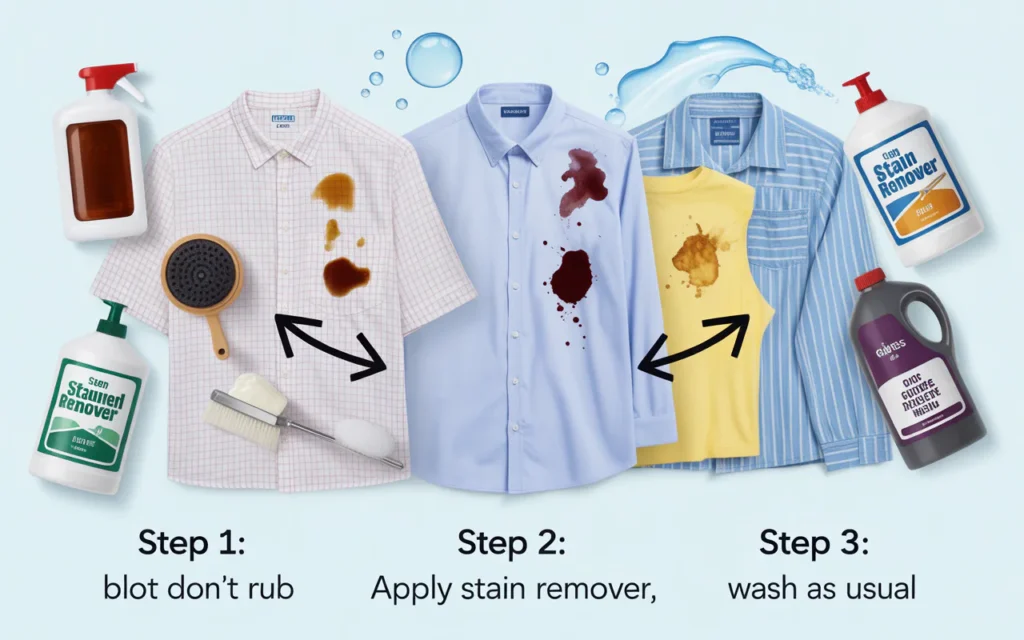
Start by scraping off any solid bits with a dull knife or spoon. Do this gently so you do not spread the mess. Next rinse the area under cold running water from the back side if the fabric allows. This step flushes out loose particles before they set. Apply your chosen solution and let it sit for five to fifteen minutes depending on how fresh the mark is. Gently work the liquid into the fibers with your fingers or a soft brush. Rinse again and then wash the garment in the machine using the recommended cycle. Check the spot after washing but before drying because heat can lock in any leftover trace. You can remove stains from clothes more reliably when you follow this sequence every time.
Air drying in the sun can add extra brightening power for white items. Repeat the treatment if needed but avoid overdoing it on delicate pieces. These steps form the foundation for every type of mark you might face. Practice them a few times and they become second nature.
Sarah Thompson, a cleaning specialist with over twenty years of experience, shares this advice. “Test any solution on a hidden spot first to keep colors safe and get the best outcome possible.”
How to Tackle Common Stains
Different marks respond to different treatments so knowing the source helps you choose the right fix. Food stains often need enzymes while ink calls for alcohol based solutions. Grass marks pull out with simple soap and water in most cases. You will build a mental checklist that speeds up the process each time something new appears.
Blood Stains
Blood is a protein stain so cold water is your best friend here. Rinse the area right away under a stream of cold water to flush out as much as possible. Avoid hot water at this stage because heat can cook the proteins and make the mark permanent. Apply a drop of dish soap or enzyme detergent and let it sit for ten minutes. For white fabrics a small amount of hydrogen peroxide can help lift the color but rinse quickly after it bubbles. You can remove stains from clothes like these when you stay cool and act fast.
Grease and Oil Stains
Grease from food or car work responds well to dish soap because it cuts through fats. Place the garment on a flat surface and cover the spot with a generous layer of soap. Let it sit for fifteen minutes then rinse with warm water if the care label allows. Follow with a regular wash using your normal detergent. For stubborn cases sprinkle baking soda over the soap to absorb extra oil before rinsing. This combination pulls the grease out without leaving a ring around the treated area.
Wine and Red Stains
Wine marks can look scary but salt or white vinegar handles them nicely. Blot the excess liquid first then cover the spot with table salt to draw out the color. Let the salt sit for ten minutes and brush it away. If the mark remains dab white vinegar on the area and rinse with cold water. You can remove stains from clothes of this type before they set if you reach for these pantry staples right away.
Coffee and Tea Stains
Coffee and tea leave tannin marks that rinse out with cold water and mild soap. Start by flushing the back of the fabric under cold water. Rub a little dish soap into the spot and let it work for five minutes. For extra power mix equal parts white vinegar and water then apply it next. Wash as usual after the treatment. These steps keep your morning mugs from leaving lasting reminders on your shirts.
Ink Stains
Ink from pens or markers needs rubbing alcohol or hand sanitizer in many cases. Place a clean cloth under the fabric to catch any transfer. Dab the alcohol on the mark and watch the color lift onto the cloth below. Repeat with fresh sections of the cloth until the ink stops coming out. Rinse well and wash normally. Test the alcohol first on a seam to protect the dye in your garment.
Grass and Dirt Stains
Grass stains come from chlorophyll and respond to simple soap or alcohol. Wet the area and apply dish soap then gently brush with an old toothbrush. Let it sit for ten minutes before rinsing. For heavier dirt marks pre soak in a mix of water and vinegar. These outdoor marks disappear fast when you treat them before they dry completely.
Dr. Michael Reed, a textile expert, notes this point. “Fresh treatment always beats waiting because time lets marks bond with the fibers.”
Natural Ways to Remove Stains from Clothes
You can remove stains from clothes using items straight from your kitchen without any store bought cleaners. White vinegar mixed with water makes a gentle spray that works on many food and drink marks. Baking soda paste lifts odors and residue when you spread it on and let it dry. Lemon juice brightens whites and helps break down organic stains under sunlight. These options feel safer for sensitive skin and they cost almost nothing to try.
Combine ingredients for stronger results. A paste of baking soda and hydrogen peroxide tackles tough spots on light fabrics. Vinegar and dish soap cut grease in one easy step. You save money and avoid strong smells when you choose these natural paths. Many people switch to them after seeing how well they perform on everyday messes.
Here is another helpful table for quick mixtures.
| Mixture | Best For |
|---|---|
| Vinegar and water | Food and drink marks |
| Baking soda paste | Odors and light residue |
| Lemon juice and salt | Brightening white fabrics |
| Dish soap and vinegar | Grease and oil spots |
Stain Removal Tips by Fabric Type
Cotton and linen handle most treatments well so you can use warmer water if the label says it is safe. Wool and cashmere need cooler temperatures and less agitation to keep their shape. Silk calls for extra gentle blotting and mild soap only. Synthetics like polyester rinse clean with standard methods but avoid high heat during drying. You can remove stains from clothes more successfully when you match the method to the material listed on the tag.
Always read the symbols before you begin. Delicate items may need hand washing after spot treatment. These small checks protect your investment and extend the life of each piece in your closet.
Handling Set-In or Old Stains
Older marks need a bit more effort but they can still come out with repeated gentle treatment. Soak the garment in a mix of warm water and enzyme detergent for thirty minutes. Follow with the standard steps for that stain type. You may need to repeat the process two or three times for full removal. Patience and steady action win here instead of strong scrubbing that could damage threads.
When to Seek Professional Help
Some stains on special occasion clothes or very delicate fabrics are better left to dry cleaners. They have tools and solvents that home methods cannot match. If the mark remains after two full treatments at home take the item in for expert care. This choice keeps expensive pieces looking their best without risk.
Preventing Stains on Your Clothes
Simple habits cut down on future problems. Wear an apron during messy cooking. Treat spills as soon as they happen instead of waiting. Store garments properly so dust does not settle into fibers. Choose fabrics that match your lifestyle such as stain resistant blends for kids clothes or work wear. These choices make daily life smoother and keep your laundry pile lighter.
Lisa Grant, a home economist, offers this thought. “Consistent small habits prevent most marks and make cleaning far easier when they do occur.”
Frequently Asked Questions
What is the first step when a spill happens on my clothes? Rinse the area with cold water from the back side as soon as possible. This flushes away loose particles before they set into the fabric. Blot gently with a clean cloth and avoid rubbing so the mark does not spread. Quick action at this stage improves your chances of complete removal later.
Can I use hot water on all stains? No. Hot water works for some grease marks but it can set protein stains like blood or egg. Stick with cold water for the initial rinse on most spots and check the care label for wash temperature. This choice keeps marks from becoming permanent.
How do I remove stains from clothes that are dry clean only? Blot the excess and take the item to a professional cleaner right away. Home treatments can damage special finishes or cause shrinkage on these fabrics. Point out the exact spot to the cleaner so they apply the right solvent.
Does sunlight help with stain removal? Yes for white and light colored items. Hang treated garments outside after washing to let the sun brighten any faint traces. Avoid direct sun on dark colors because it can cause fading.
What if the stain returns after washing? The mark was not fully lifted before drying. Rewet the area and repeat the treatment process. Air dry again and check before putting the garment in the dryer a second time.
Are natural methods as effective as commercial cleaners? They work very well for most everyday stains when you apply them promptly. Vinegar baking soda and dish soap handle coffee wine and grease with results that match many store products. You gain peace of mind knowing exactly what touches your clothes.
How long should I let a treatment sit on the fabric? Five to fifteen minutes is usually enough for fresh marks. Older stains may need thirty minutes or more. Check the area every few minutes so the solution does not dry out.
Conclusion
You now have a full set of tools and steps to handle marks on your wardrobe with confidence. From quick rinses to natural pastes each method fits into your daily routine and delivers clear results. You can remove stains from clothes without stress or extra cost when you keep supplies handy and act fast. Share these ideas with family and friends so everyone benefits. Your clothes will look better longer and your laundry days will feel lighter. Keep practicing these techniques and you will turn potential disasters into quick fixes every time. Enjoy the fresh look of your favorite pieces and the satisfaction that comes from simple home care.
Related posts
 Best Compact Powder for Women: 2026 Buyer Guide
Finding the best compact powder for women in 2026. We compare top-rated matte, mineral, and lightweight pressed powders to help you choose the right finish. Finding…
 Best Casual Wear for Women: 2026 Style and Comfort Essentials
Discover the best casual wear for women in 2026. We compare top-rated trousers and versatile tops to help you build a comfortable, stylish everyday wardrobe. Finding…
 Best Claw Clips for Thick Hair in 2026
Finding the best claw clips for thick hair requires a balance of grip and size. Explore our top 2026 recommendations for secure, stylish, and reliable styling.…