
Fire Safety Tips For Kitchen
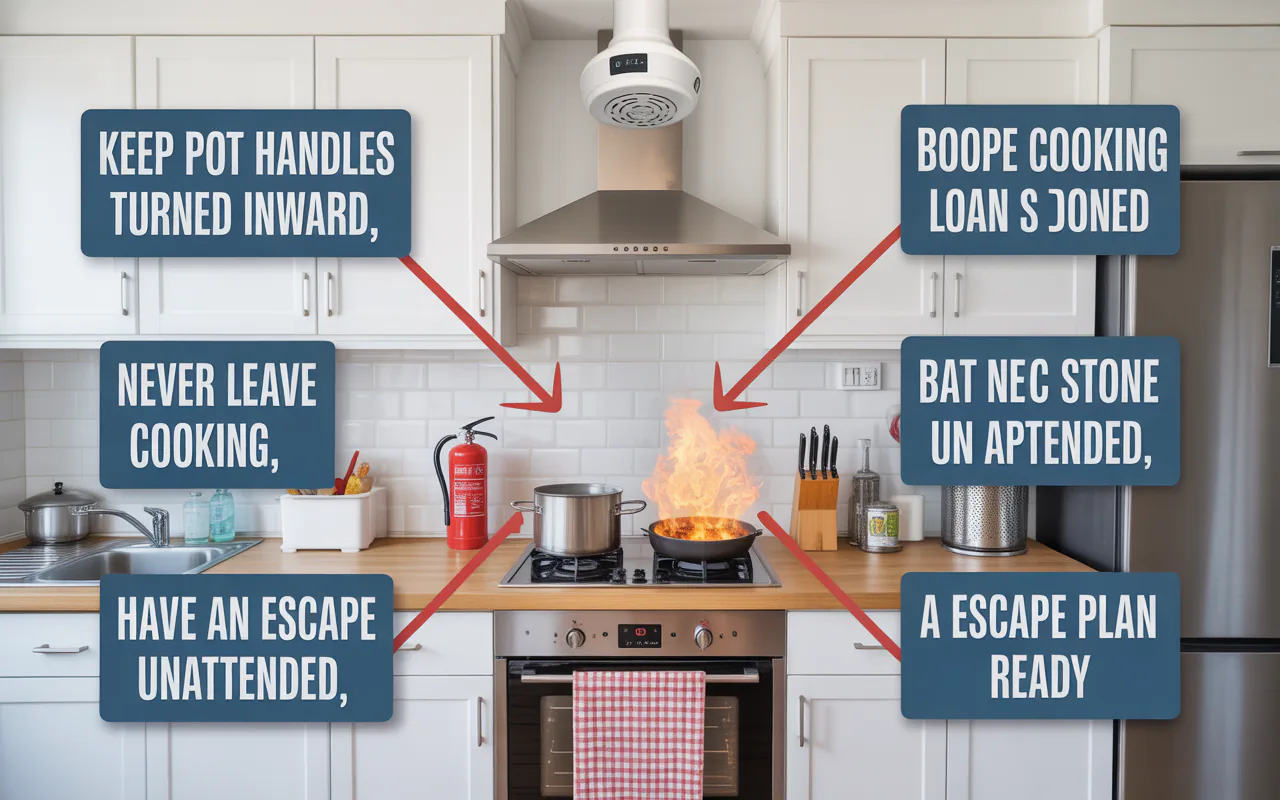
Cooking brings families together every day, but fire safety tips for kitchen can stop small mistakes from becoming big problems. Learn how to stay alert, clear clutter, handle hot oil safely, and use the right tools to keep your cooking area secure. Simple habits like these protect your home and loved ones so you can enjoy preparing meals without stress.
You spend a lot of time in the kitchen making meals for yourself and the people you care about. It feels good to create something tasty. Yet every year many fires start right there in the cooking space. These events cause injuries and damage that no one wants to face. That is why you need solid ways to keep things safe while you work. Fire safety tips for kitchen help you spot risks before they grow and give you clear steps to follow each day.
People cook all the time and often think nothing bad will happen. The stove or oven runs hot and things can change fast if you look away. A small spill or loose cloth near the heat turns into trouble quick. You want to make sure your routine includes simple checks that become second nature. When you build these habits your kitchen stays a place of joy instead of worry. Fire safety tips for kitchen fit right into busy schedules and make a real difference over time.
Why Kitchen Fires Happen So Often
Kitchens see more fires than any other room in the house. The main reason comes from the way we cook every day. Heat meets oil or food bits and things ignite without much warning. Busy lives pull your attention in many directions at once. You step out to answer a call or check on kids and forget the pan on the stove. Statistics show unattended cooking causes about thirty seven percent of these incidents. That number tells you how common the problem really is and why you need to pay close attention.
Many homes have open layouts now so the kitchen connects to living areas. Smoke spreads fast and gives less time to react. Grease builds up over weeks and acts like fuel once it gets hot. Electrical cords run near water sources and create extra chances for sparks. You see the pattern. Daily tasks mix with heat and electricity in a small space. Fire safety tips for kitchen address exactly these points so you cut the chances way down. When you know the reasons you can take action that fits your own setup and family needs.
Common Causes of Kitchen Fires
Several things lead to most kitchen fires and you can avoid them with care. Unattended cooking tops the list because pans left alone heat up and boil over. Grease or oil catches fire when it reaches a certain temperature and spreads quick. Electrical faults come next with old appliances or overloaded outlets causing sparks. Kids or pets knock things over and bring flammable items close to the burner. These causes happen in homes of all sizes and in every part of the country.
You can look at the numbers to see the picture clearly. Here is a short table that shows the main causes and basic ways to stop them.
| Cause | How It Starts | Simple Prevention Step |
|---|---|---|
| Unattended cooking | Pan left on hot stove | Stay in the room the whole time |
| Grease or oil | Oil heats past safe point | Keep lid ready and watch temperature |
| Electrical issues | Faulty cords or outlets | Check plugs and use right wattage |
| Clutter near stove | Towels or boxes too close | Clear three feet around cooking area |
| Children or pets | Reaching or bumping items | Set a kid free zone near heat |
This table gives you a quick look at what matters most. You can print it and stick it on the fridge as a reminder. Each line points to one change you can make today. When you tackle these causes one by one the risks drop fast. Fire safety tips for kitchen build on these facts so you feel ready no matter what meal you prepare.
Fire Safety Tips for Kitchen You Can Use Every Day
You want practical ideas that fit into your normal routine without extra effort. Fire safety tips for kitchen start with keeping the area clean and clear. Wipe counters after each meal and remove any grease that collects on the stove. Store towels and paper items far from the heat so they stay safe. Turn pot handles toward the back of the stove to keep them out of reach. These small moves add up and stop many problems before they begin.
Stay focused while you cook even if the recipe seems easy. Set a timer if you need to step away for a short time and turn off the burner completely. Wear short sleeves or fitted clothes so nothing dangles near the flame. Keep a fire blanket or lid close by for quick action. You build confidence when you follow these steps each time you enter the kitchen. Over weeks they become automatic and you cook with less worry.
How to Handle Grease Fires the Right Way
Grease fires happen fast and look scary but you can manage them if you stay calm. Never throw water on burning oil because it spreads the flames everywhere. Instead slide a lid over the pan to cut off the air and turn the burner off right away. Keep a box of baking soda handy because it helps smother small flames without making a mess. Move the pan off the heat once the fire dies down and let everything cool before you touch it.
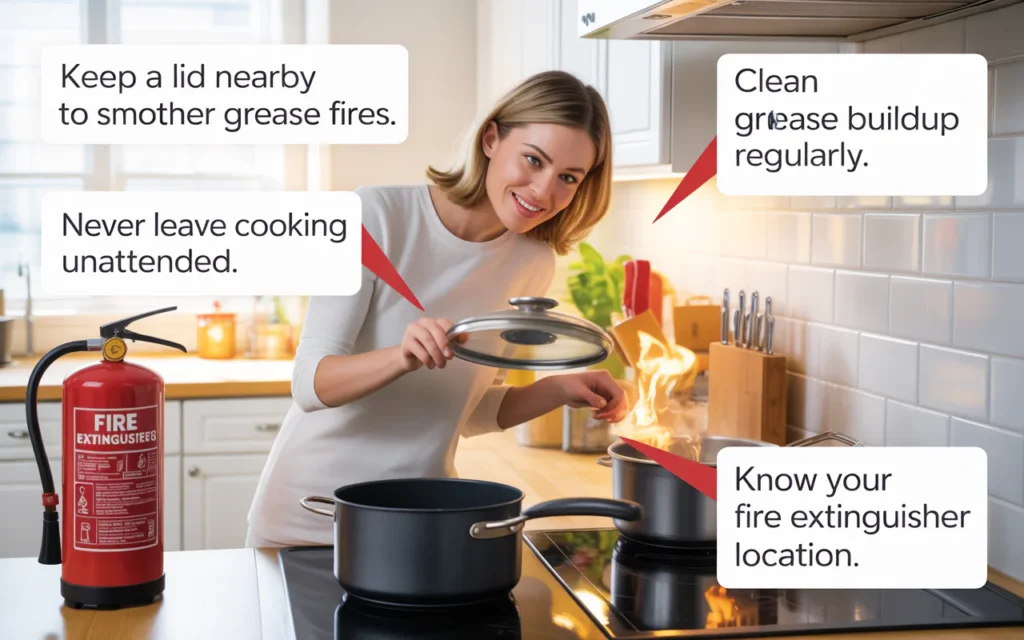
You practice this method in your mind so it comes natural if the moment arrives. Many people freeze when they see flames but a clear plan helps you act fast. Fire safety tips for kitchen always stress this point because grease causes more than half of cooking fires. Keep children away during frying and never leave the room. When you prepare ahead the outcome stays under control and no one gets hurt.
Appliance and Electrical Safety Tips
Your appliances work hard but they need regular checks to stay safe. Plug items directly into the wall instead of using extension cords that overheat. Replace any cord that looks frayed or cracked because even small damage can spark a fire. Keep the area around the toaster and microwave free of crumbs and dust. You run the self clean cycle on the oven only when you can watch it because heat builds high during that process.
Check your smoke alarms once a month and change batteries twice a year even if they seem fine. Place one near the kitchen but not right over the stove so it does not false alarm every time you broil. Fire safety tips for kitchen include these maintenance steps because they protect the whole house. You feel good knowing your equipment will not fail when you need it most. Simple routines like these keep everything running smooth and safe for years.
Here is another short table that helps you track appliance safety at a glance.
| Appliance | Quick Check Each Month | Why It Matters |
|---|---|---|
| Stove | Clean under burners | Removes grease that can ignite |
| Toaster | Empty crumb tray | Stops buildup from causing sparks |
| Microwave | Wipe inside and vents | Keeps heat from trapping |
| Refrigerator | Check door seals | Prevents overload on electrical circuit |
| Fire extinguisher | Test pressure gauge | Makes sure it works when you need it |
You can use this list to build a monthly habit. It takes only a few minutes but saves a lot of trouble later. When you combine these checks with fire safety tips for kitchen your space stays ready for anything.
Using Fire Extinguishers in the Kitchen
You should keep an ABC rated extinguisher mounted near the kitchen exit but not too close to the stove. The letters mean it works on wood paper oil and electrical fires so it covers everything you might face. Learn the PASS method before you ever need it. Pull the pin aim at the base of the flames squeeze the handle and sweep from side to side. Practice the motion with an empty can so your hands remember what to do.
“Stay focused when heat is involved because a quick distraction can change everything.” – Robert Hayes, Fire Safety Instructor.
This advice rings true every time you step near the stove. You keep the extinguisher charged and check the date on the label each year. If you use it even once replace it right away because it may not work the next time. Fire safety tips for kitchen always include knowing your tools so you act with confidence instead of panic.
Teaching Everyone in the House About Safety
Safety works best when the whole family joins in. Sit down with kids and show them how to stay three feet from the stove while you cook. Explain why they never touch knobs or pull on cords. Make it a game to point out hazards during dinner prep so they learn without fear. Older kids can help set the table but only after you review the rules together.
Pets also need their space so keep them out of the kitchen during busy cooking times. A jumping dog can knock a hot pan off the counter in a second. You repeat the same messages until everyone knows the plan. This shared knowledge turns your home into a team effort where each person looks out for the others. Fire safety tips for kitchen become part of family life instead of just one more rule.
“Cleanliness plays a huge role in stopping fires before they start.” – Anna Gomez, Home Fire Prevention Specialist.
You see the truth in those words when you look around a tidy kitchen. Everyone contributes to that clean look and the safety that comes with it.
What to Do If a Fire Starts
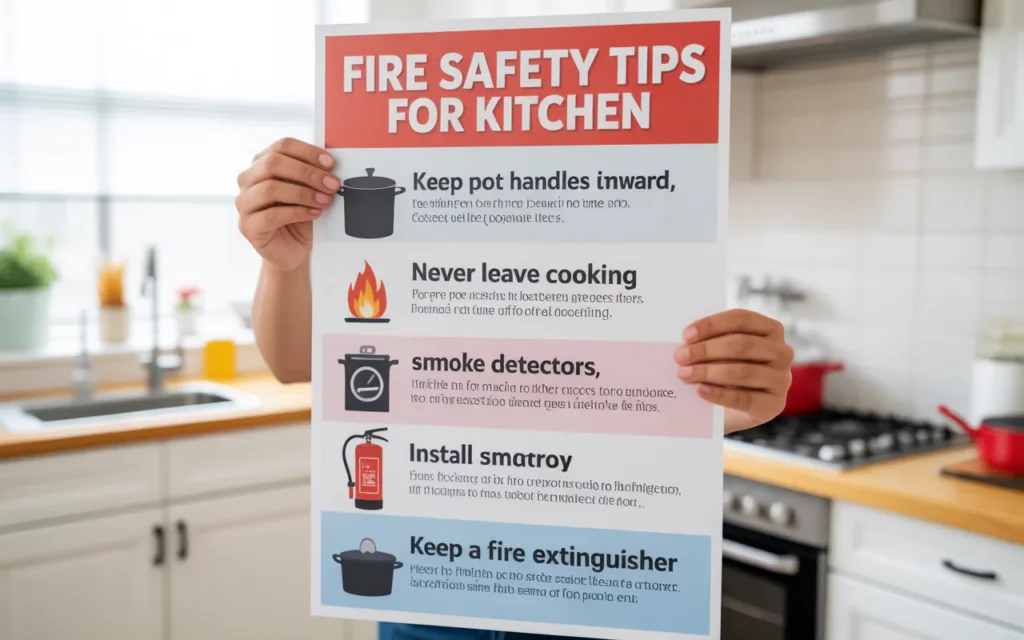
Smoke or flames appear and you need to act without delay. First get everyone out of the house if the fire grows larger than a small pan. Close doors behind you to slow the spread and call the fire department from outside. If the fire stays small and you feel safe try the lid method or extinguisher but only if the way out remains clear. Never go back inside for belongings once you leave.
You practice this response in your mind during quiet moments so it feels familiar. Tell your family the meeting spot outside like the mailbox or a neighbor yard. These steps give you a clear path when seconds count. Fire safety tips for kitchen prepare you for the moment but also remind you that getting out safely comes first every time.
Building a Fire Escape Plan for Your Home
Your kitchen safety plan connects to the full house escape route. Draw a simple map that shows two ways out of every room including the kitchen. Mark windows that open easily and doors that lead outside. Choose a spot everyone knows to meet once they leave the building. Run a drill twice a year so kids and adults move quickly and quietly without confusion.
You include the kitchen in every practice because that is where most fires begin. Teach everyone to crawl low under smoke and feel doors for heat before opening them. Keep a phone charger near the exit so you can call for help right away. These plans bring peace of mind because you know the steps by heart. Fire safety tips for kitchen tie directly into this bigger picture and keep your whole family protected.
“Practice your escape plan with your family twice a year so it becomes second nature when you need it most.” – David Kim, Emergency Responder.
That simple habit can make all the difference on a difficult day.
More Ways to Keep Your Kitchen Safe Year Round
You cook more during holidays and that means extra care is needed. Deep fryers and large pots add new risks so you place them on stable surfaces away from edges. Keep guests out of the cooking zone because extra people create distractions. Check smoke alarms before big meals because extra steam and smoke can test them early. These busy times test your routines but they also show why preparation matters.
You think about seasonal changes too. In winter you use the oven more for warmth and that means extra cleaning to remove dust. Summer barbecues move outside but indoor prep still happens in the kitchen. Each season brings its own small adjustments yet the core fire safety tips for kitchen stay the same. You adapt them slightly and keep the same level of care all year.
Frequently Asked Questions
What should I do first if I see a small fire on the stove? Stay calm and slide a lid over the pan to smother the flames. Turn the burner off and do not move the pan until it cools. Call for help if the fire grows or smoke fills the room. Fire safety tips for kitchen always put getting out first if things get out of hand.
Can I use water on a grease fire? No you should never use water on grease or oil fires. Water makes the burning liquid spread and the flames jump higher. Use a lid baking soda or the proper extinguisher instead. This rule saves many kitchens from bigger damage.
How often do I need to check my fire extinguisher? Look at the pressure gauge once a month and make sure the pin is in place. Replace the unit after ten years or right after any use. Fire safety tips for kitchen include keeping this tool ready because you never know when you might need it.
Should children help in the kitchen? Yes but only with age appropriate tasks and constant supervision. Teach them the three foot rule and let them stir or measure away from heat. Older teens can learn basic stove use after they show they understand the risks. This approach builds skills while keeping everyone safe.
Do I need special tools for kitchen fire safety? A good lid fire extinguisher and smoke alarms cover most needs. Add a fire blanket if you fry food often. These items cost little but give big protection. You place them where you can reach them fast without thinking.
What if my smoke alarm keeps going off while I cook? Move the alarm farther from the stove or use a model with a hush button for cooking. Clean the unit regularly so dust does not trigger it. The alarm still needs to work for real smoke so do not disable it completely.
Conclusion
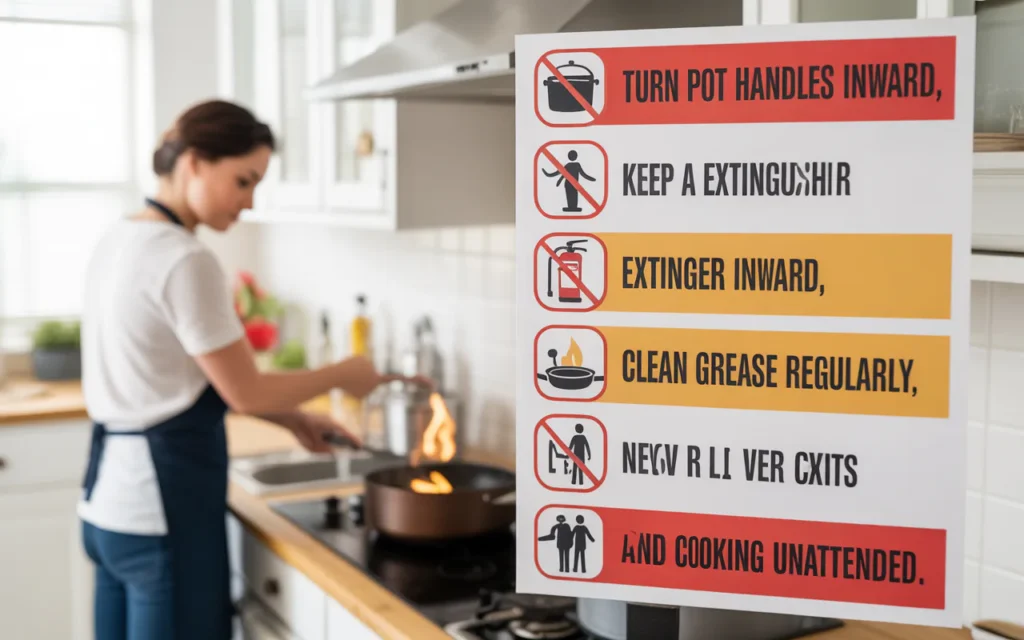
You have read many ideas that can make your kitchen a safer place. Each tip fits into daily life and takes only a moment to follow. When you stay alert keep the area clear and know your tools you cut the chance of trouble by a lot. Fire safety tips for kitchen help you cook with joy instead of worry because you know you prepared well. Share these ideas with friends and family so more homes stay protected.
Take one step today like clearing the counter or checking your extinguisher. Small actions add up to big safety over time. You create a space where meals bring people together and everyone leaves the table happy and unharmed. Keep learning and stay curious about new ways to improve. Your efforts matter and they show in the peace you feel every time you turn on the stove. Stay safe and enjoy every meal you make.
Related posts
 Best Under Sink Organizers Kitchen 2026: Practical Storage Solutions
Find the best under sink organizers kitchen in 2026. Compare top-rated pull-out bins, L-shaped racks, and protective mats to maximize your cabinet space. The space under…
 Best Kitchen Cabinet Storage Solutions for 2026
Organize your kitchen efficiently with our Best Kitchen Cabinet Storage Solutions. Compare the best organizers for lids, pans, and spices to maximize your space. A cluttered…
 Top Rated Kitchen Shelf Organizers for 2026
Discover the top rated kitchen shelf organizers for 2026. Compare durable racks, magnetic shelves, and tiered storage to maximize your pantry and counter space. A cluttered…