
Should Puppies Sleep In Crates
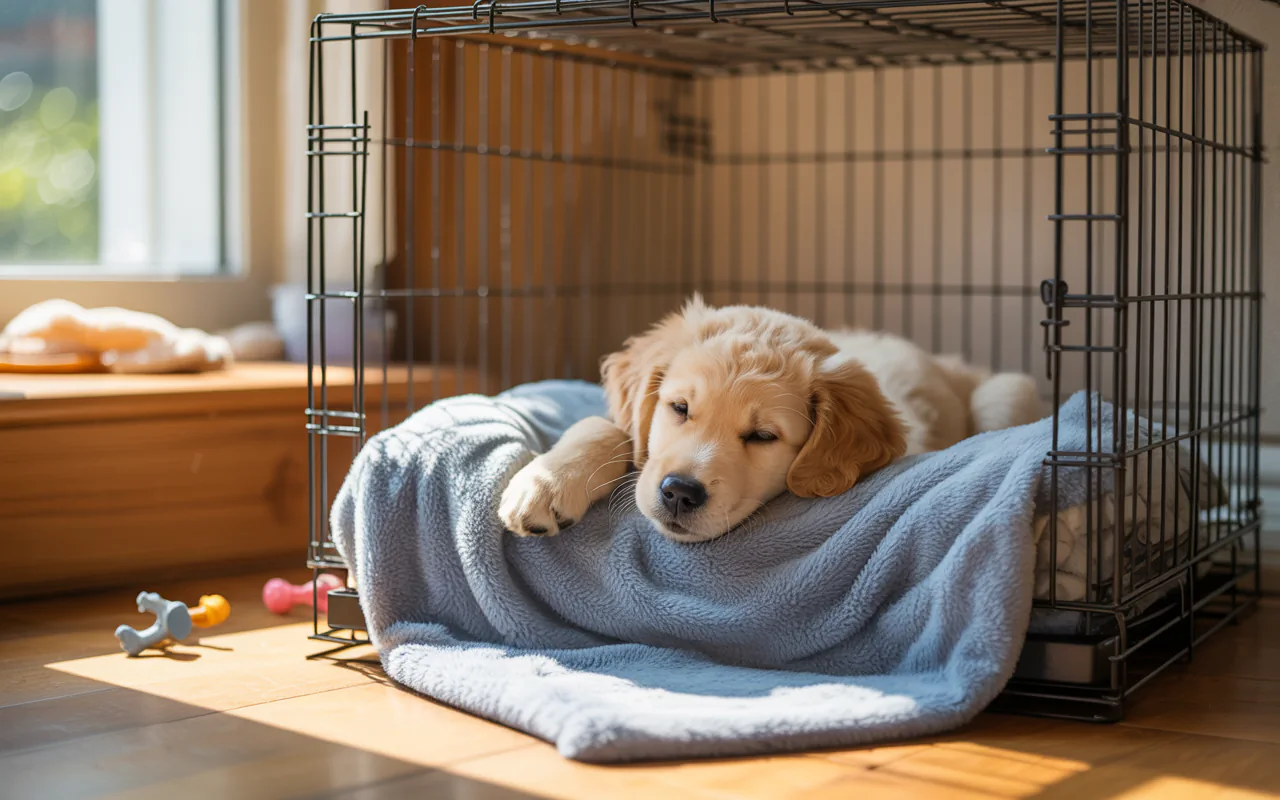
Wondering should puppies sleep in crates? Yes, with proper training. A crate offers safety, aids potty training, and gives your pup a calm den. Learn the right way here.
Bringing a new puppy home is pure joy. You see little paws, floppy ears, and sleepy eyes. Then night comes, and you ask yourself: should puppies sleep in crates? This question keeps many new pet parents awake.
The short answer is yes. But the full answer needs care, patience, and good methods. A crate is not a cage for punishment. It is a den. A safe spot. A place where your puppy feels relaxed. When used right, crate sleeping helps both you and your pup rest better.
Let me walk you through everything. I have raised puppies and worked with trainers. I will share real facts, simple steps, and kind advice. By the end, you will know exactly should puppies sleep in crates for your own furry friend.
What Is a Crate and Why Do Puppies Need One?
A crate is an enclosed space. It has walls, a door, and a floor tray. Most are metal or plastic. The idea comes from nature. Wild canines sleep in small dens. These dens keep them safe from danger. Your puppy still has that instinct.
A crate gives many benefits:
| Benefit | Why It Helps |
|---|---|
| Safety | Keeps puppy away from wires, shoes, or toxic items at night |
| Potty training | Dogs avoid soiling their sleeping area |
| Travel | Car rides become less stressful |
| Vet visits | Puppy stays calm in unfamiliar cages |
| Rest | Blocks loud noises or bright lights |
So should puppies sleep in crates for safety? Yes. Many vets and trainers agree. The American Kennel Club supports crate training. But remember: the crate must feel good, not scary.
“A crate is not a prison. It is a bedroom with a door. Your puppy will love it if you introduce it kindly.” – Dr. Ian Dunbar, veterinarian and animal behaviorist
How to Choose the Right Crate Size
Before you answer should puppies sleep in crates for your home, pick the right size. A huge crate gives too much space. Your pup might potty in one corner and sleep in another. A tiny crate is cruel and tight.
The correct size lets your puppy:
- Stand up without hitting the head
- Turn around easily
- Lie down flat on the side
- Sit without slouching
For growing puppies, buy a crate with a divider. You move the panel as the pup grows. This saves money and keeps training consistent.
| Puppy Weight | Crate Size (Length) |
|---|---|
| Up to 10 lbs | 18–22 inches |
| 11–25 lbs | 24–28 inches |
| 26–40 lbs | 30–36 inches |
| 41–70 lbs | 36–42 inches |
| 71+ lbs | 48 inches or more |
Measure your puppy from nose to tail base. Add 4 to 6 inches. That is the ideal crate length.
Step by Step: Teaching Your Puppy to Love the Crate
You now know should puppies sleep in crates is a yes. But how do you start? Follow these steps. Each step takes patience. Do not rush.
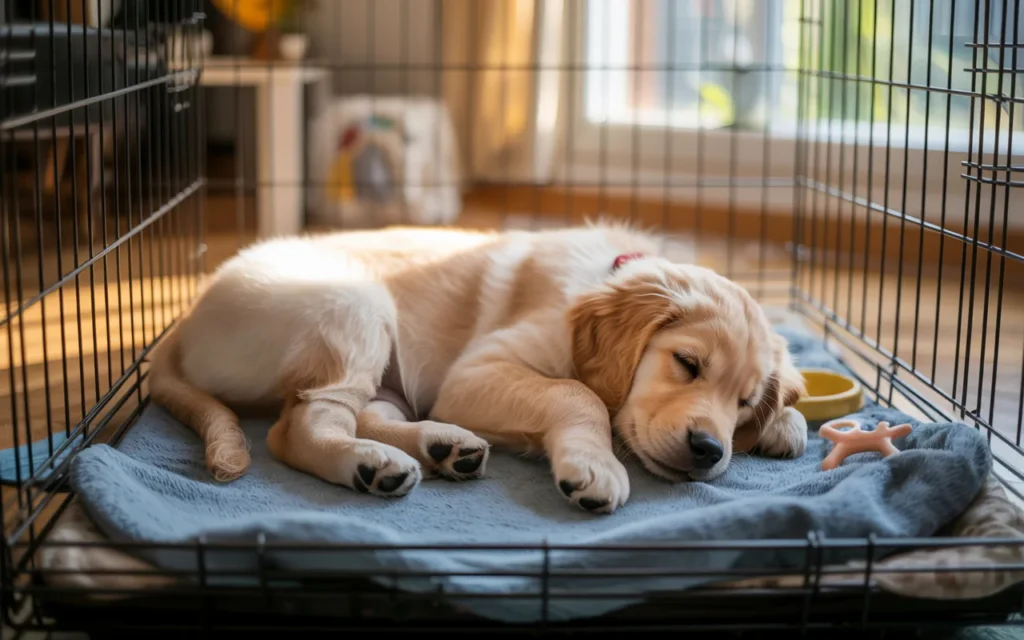
Step 1: Make the Crate Inviting
Put a soft blanket inside. Add a toy that smells like you. Rub a towel on the puppy’s littermates if possible. Leave the door open. Let your pup explore alone. Toss treats near the crate. Then inside the crate. Do not close the door yet.
Step 2: Feed Meals Inside
Place the food bowl just inside the crate. After two days, move the bowl to the back. Close the door while your puppy eats. Open it as soon as the meal ends. This builds a happy link.
Step 3: Short Closed-Door Sessions
Close the door for 1 minute. Stay nearby. Speak softly. Open the door. Do not react if your puppy whines. Wait for a quiet second before opening. Slowly increase time to 5 minutes, then 10.
Step 4: Leave the Room
Once your puppy stays calm with the door closed, leave the room for 1 minute. Return. Give a treat. Slowly extend your absence. This teaches that you always come back.
Step 5: First Night in the Crate
Place the crate in your bedroom. Puppies feel scared alone. Your presence soothes them. Let your puppy fall asleep outside the crate first. Then gently lift the pup inside. Close the door. If your puppy cries, tap the crate and say “quiet.” Do not take the puppy out unless it is potty time.
“The biggest mistake is moving too fast. Let your puppy set the pace. A scared puppy cannot learn.” – Victoria Stilwell, dog trainer and author
The Nighttime Potty Schedule
When you decide should puppies sleep in crates, plan for night breaks. Young puppies cannot hold their bladder all night. Here is a simple rule:
- 8–10 weeks old: every 2 to 3 hours
- 11–14 weeks: every 4 hours
- 15–16 weeks: every 5 to 6 hours
- 17+ weeks: many can sleep 8 hours
Set a gentle alarm. Wake up before your puppy cries. Carry the pup outside. Use a calm voice. Say “go potty.” Wait 5 minutes. If no potty, go back to the crate. Try again after 15 minutes.
Do not play at night. No treats for potty (save praise for daytime). Keep lights low. This teaches that night is for sleeping, not party time.
After your puppy potties outside, return directly to the crate. Close the door. Go back to sleep. Most puppies settle quickly.
Common Crate Problems and Easy Fixes
Even with good steps, you might hit bumps. Here are real problems and their fixes.
Problem 1: Constant Whining or Barking
First, check if your puppy needs potty. If not, the pup may want attention. Do not give in. Wait for a 2 second pause. Then open the crate. If you open while whining, you teach that whining works.
Cover the crate with a light blanket. Leave one side open for air. This mimics a den and reduces visual distractions.
Problem 2: Soiling the Crate
If your puppy potties inside, the crate may be too large. Reduce space with a divider. Also, your puppy might have a urinary infection. See a vet if accidents happen often. Clean the crate with an enzyme cleaner. Other cleaners leave smells that say “potty here.”
Problem 3: Refusing to Enter
Do not push or force. That breaks trust. Lure with a high value treat like chicken. Throw treats inside. Let your puppy run in and out. Close the door only after several days of voluntary entry.
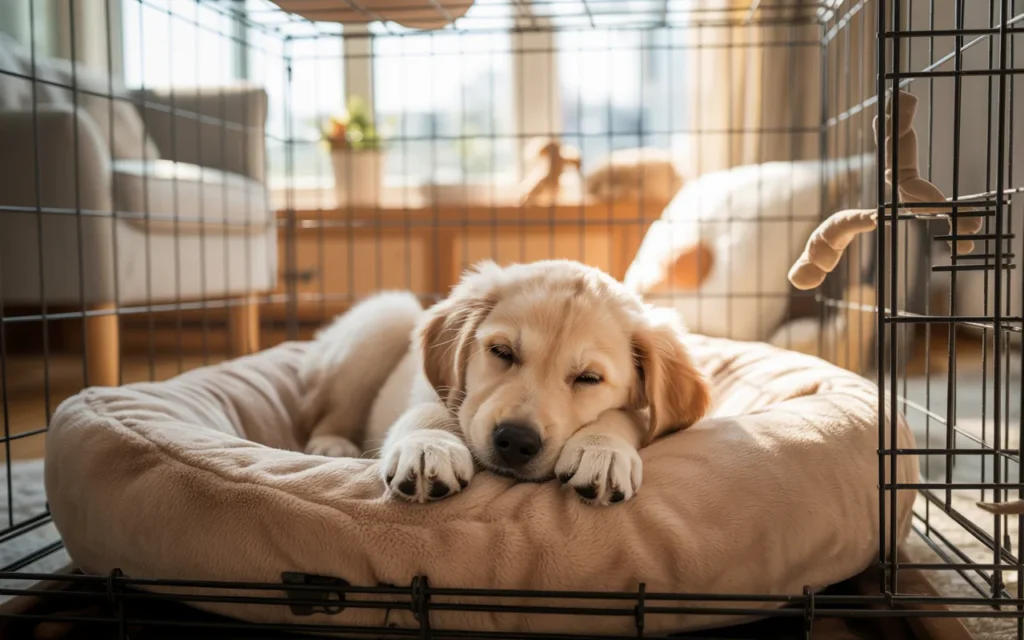
Problem 4: Escaping or Chewing the Crate
This means the puppy feels trapped and anxious. Go back to shorter sessions. Feed all meals in the crate with door open. Add a frozen Kong toy. The chewing and licking calm dogs. If escaping continues, buy a heavy duty crate.
“Every puppy is different. Some love the crate in one week. Others take a month. Your kindness makes the difference.” – Patricia McConnell, animal behaviorist
How Long Can a Puppy Stay in a Crate?
This is a critical part of answering should puppies sleep in crates. A crate is for sleeping and short breaks. Not for long hours alone.
Use this rule: Age in months + 1 = maximum hours during day.
Examples:
- 2 months old = 3 hours max
- 3 months old = 4 hours max
- 4 months old = 5 hours max
At night, puppies can stay longer because they sleep deeply. But a 10 week old puppy still needs a midnight potty break.
Never leave a puppy in a crate all day while you work. That is unfair and harmful. Hire a dog walker, use a playpen, or come home at lunch.
Should Puppies Sleep in Crates Forever?
No. The goal is independence. Once your puppy is fully house trained and does not chew dangerous items, you can stop using the crate at night. Many owners keep the crate as a “bedroom” with the door open.
Some dogs always prefer their crate. That is fine. Let your dog choose. Others will move to a dog bed on the floor. Watch for signs of readiness:
- No accidents for 2 full months
- Does not chew furniture or wires
- Sleeps through the night calmly
- Goes to the crate voluntarily for naps
If your puppy shows these signs, try one night with the crate door open but still in your room. Then move the crate out of the room. Then replace the crate with a bed.
What Experts Say About Crate Sleeping
Veterinarians and trainers widely agree should puppies sleep in crates is good practice. The British Veterinary Association supports crate training when done kindly. The American Society for the Prevention of Cruelty to Animals (ASPCA) lists crates as a top potty training tool.
However, some countries have rules. In Sweden and Finland, crates cannot be used during the day. Only for travel or vet care. At night, crates are allowed if the door is open. Always check your local laws.
The key is balance. A crate is a tool. Not a solution for laziness. Use it for rest, safety, and training. Not for punishment or long isolation.
Frequently Asked Questions
Q1: Should puppies sleep in crates from the first night?
Yes, but place the crate next to your bed. Your smell and voice calm the puppy. If the puppy cries a lot, let the pup fall asleep outside first, then move into the crate.
Q2: Should puppies sleep in crates with blankets?
Yes, use a washable blanket or crate pad. Avoid fluffy bedding for very young puppies who chew. Remove any loose threads or torn fabric.
Q3: Should puppies sleep in crates if they cry all night?
First, take the puppy out to potty. If no potty, wait for a 3 second break in crying. Then open the crate. Do not scold. Try again the next night with more daytime crate games.
Q4: Should puppies sleep in crates during the day?
For naps, yes. Keep daytime crate sessions under 3 hours for young pups. Always give a potty break before and after. Use a covered crate to block light.
Q5: Should puppies sleep in crates at what age to stop?
Most dogs stop needing a closed crate at 12 to 18 months. But some dogs always prefer their crate. Follow your dog’s comfort level.
Q6: Should puppies sleep in crates if I work from home?
Yes. It prevents accidents and gives you quiet work time. Keep the crate nearby. Take your puppy out every 2 hours.
Q7: Should puppies sleep in crates with a water bowl?
For night sleep, no. Water increases potty breaks. For daytime crate time longer than 2 hours, use a bowl that attaches to the crate door.
Q8: Should puppies sleep in crates in a separate room?
Not for the first 2 weeks. Keep the crate in your bedroom. After your puppy sleeps well, slowly move the crate a few feet each night toward the other room.
Conclusion
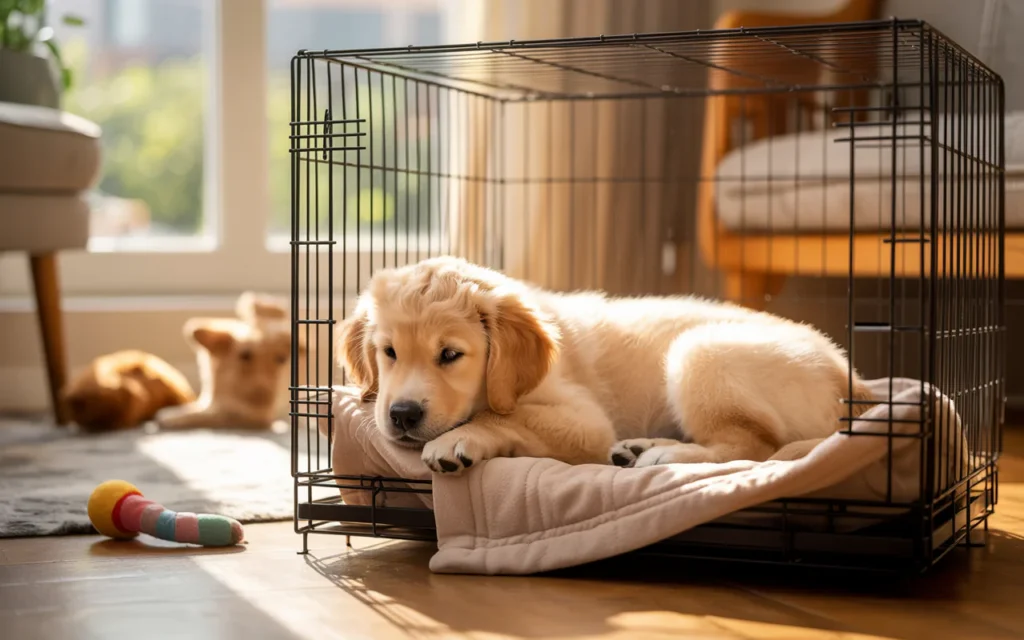
So should puppies sleep in crates for your new family member? Yes, when done with patience and care. A crate gives your puppy a safe den. It stops night accidents. It prevents chewing on electric cords or swallowing dangerous items. It helps you sleep knowing your pup is secure.
The right crate fits well. The right training uses treats, short steps, and never force. The right schedule respects your puppy’s age and bladder limits. Most puppies learn to love their crate within two weeks. Some take a month. Both are normal.
Remember the three quotes we shared. Dr. Ian Dunbar says the crate is a bedroom. Victoria Stilwell warns not to move too fast. Patricia McConnell reminds us that each puppy is different. Listen to your puppy. Watch body language. Adjust your plan.
You are not being mean. You are being a responsible pet parent. A crate trained dog is calmer at the vet, safer in the car, and more relaxed during storms or fireworks. The skill lasts a lifetime.
Start tonight. Put the crate beside your bed. Add a soft blanket. Toss in a treat. Let your puppy explore. And when you ask yourself again should puppies sleep in crates, you will answer with confidence: Yes, the kind way.
Related posts
 Buy Dog Toys Online: Top 2026 Picks for Every Play Style
Looking to buy dog toys online? Explore our 2026 guide to the best durable chews, interactive balls, and plush favorites to keep your pup happy and…
 Buy Dog Food Online: Top 2026 Selections for Every Breed
Looking to buy dog food online? Explore our top 2026 recommendations for dry and wet formulas tailored to different breed sizes, sensitivities, and nutritional needs. Choosing…
 Buy a Dog Harness Online in 2026
Looking to buy a dog harness online? Explore our 2026 guide to finding the right fit, style, and control features for your dog's daily walks. Finding…