
How To Choose Foundation For Skin Tone
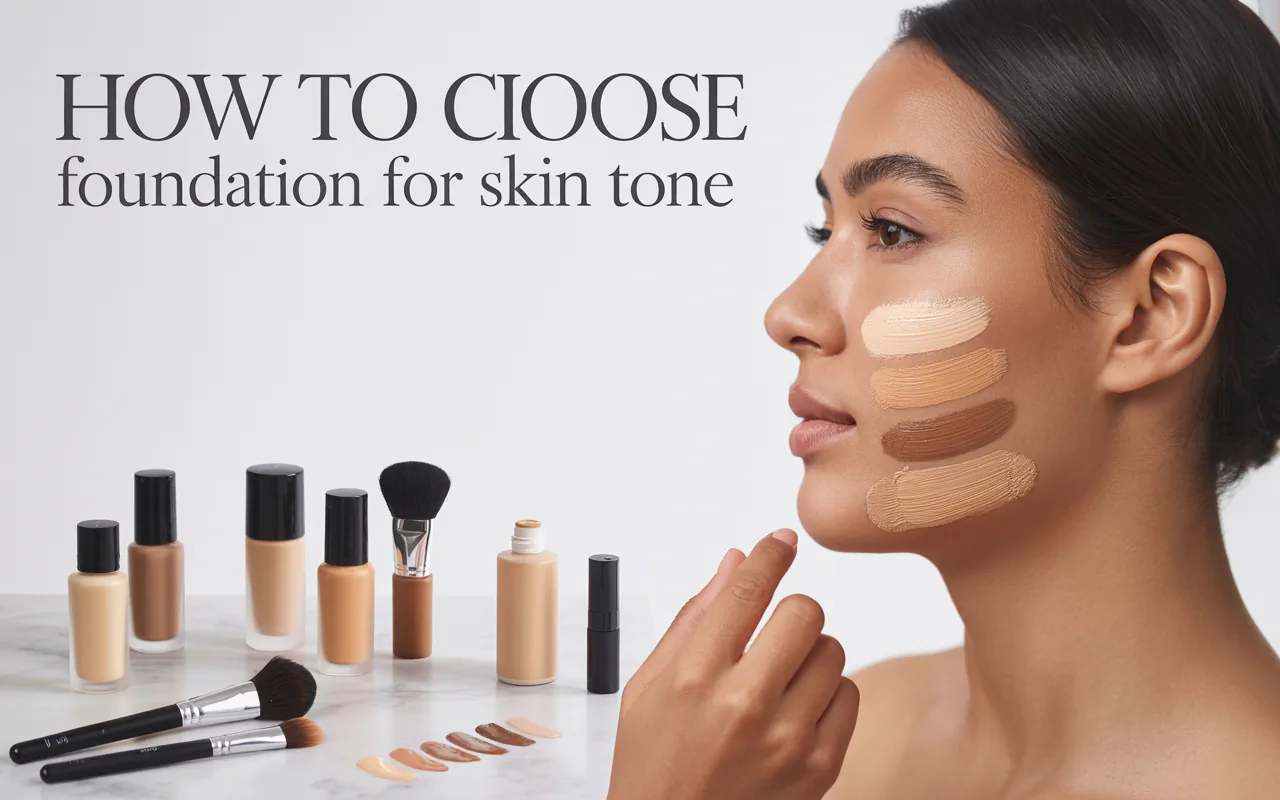
Do you want to know how to choose foundation for skin tone correctly? This guide helps you match undertones, test shades, and avoid common mistakes. Learn to choose foundation for skin tone like a pro.
Finding the right foundation can feel like a puzzle. You stand in a store with hundreds of bottles. Some look too pink. Some look too yellow. Many look orange after a few hours. I have been there many times. After years of testing products and helping friends find their perfect match, I learned a few simple rules. This guide will help you choose foundation for skin tone without stress or wasted money.
Let me be honest. Your skin changes with seasons. Summer makes you darker. Winter makes you lighter. A good foundation match works with your natural coloring. It does not hide your skin. It makes your skin look better. So let us learn the right way to find your match.
What Does “Matching Your Skin Tone” Really Mean?
Many people think skin tone means only light, medium, or dark. But that is just the start. Your skin has two parts. The surface color changes with sun exposure. The undertone stays the same your whole life. Undertone is the color under your skin. It can be cool, warm, or neutral. When you choose foundation for skin tone, you actually match the undertone first. Then you adjust for surface darkness or lightness.
Bobbi Brown, makeup artist and founder, once said: “Foundation should look like your skin, but better. If you see a line at your jaw, it is the wrong shade.”
This is true. The wrong foundation looks like a mask. The right foundation disappears into your skin. You should see your face, not your makeup.
Step 1: Find Your Undertone (The Most Important Step)
Before you buy any foundation, find your undertone. This is the secret to a natural look. Here are three easy tests you can do at home.
The Vein Test
Look at the veins inside your wrist.
- Blue or purple veins mean cool undertone.
- Green veins mean warm undertone.
- Blue and green mixed means neutral undertone.
The White Paper Test
Hold a plain white paper next to your face. Look in natural light.
- If your skin looks yellow or golden, you are warm.
- If your skin looks pink or rosy, you are cool.
- If you see both or neither, you are neutral.
The Jewelry Test
Think about metal colors on you.
- Silver looks best on cool tones.
- Gold looks best on warm tones.
- Both look good on neutral tones.
| Undertone | Vein Color | Best Jewelry | Skin Looks |
|---|---|---|---|
| Cool | Blue/Purple | Silver | Pink or rosy |
| Warm | Green | Gold | Yellow or golden |
| Neutral | Mixed | Both metals | Neither clearly pink nor yellow |
Once you know your undertone, you can choose foundation for skin tone much faster. Most brands label their shades with W (warm), C (cool), or N (neutral).
Step 2: Know Your Skin’s Surface Shade
Undertone is fixed. Surface shade changes. Your surface shade is how light or dark your skin looks right now. This depends on sun exposure, tanning, or even certain medications.
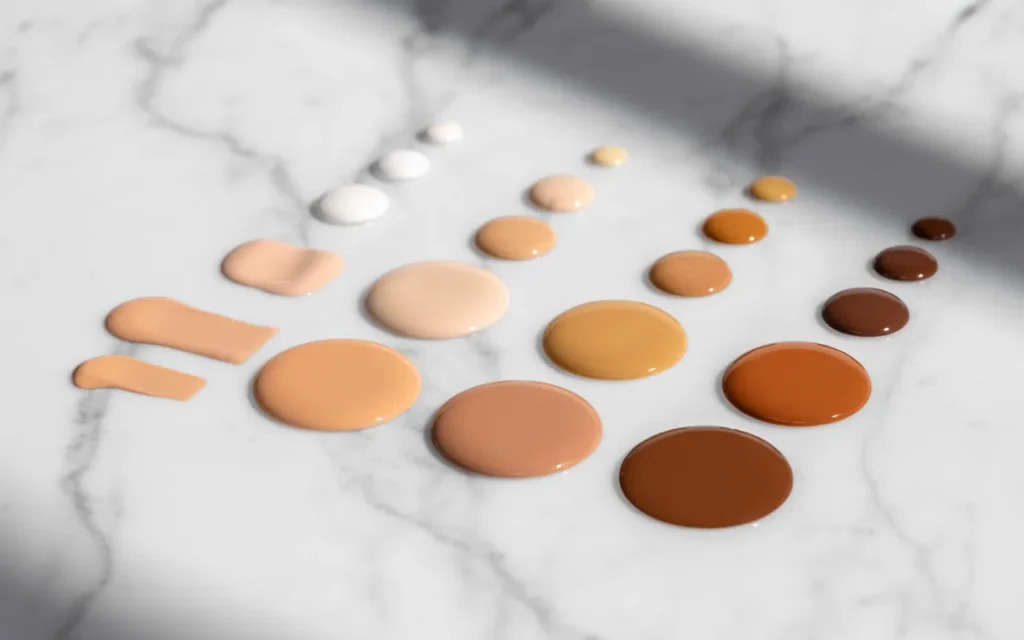
Foundation shades have names like “ivory,” “sand,” “tan,” or “deep.” But these names vary by brand. One brand’s “sand” may be another brand’s “beige.” So do not trust names alone. Always look at the actual color.
Here is a simple way to think about surface shades:
- Fair: Very light skin that burns easily
- Light: Light skin that may tan a little
- Medium: Olive or beige skin that tans well
- Tan: Brown skin with golden or red hints
- Deep: Dark brown to ebony skin
- Rich: Very dark skin with blue or red undertones
When you choose foundation for skin tone, you combine your undertone (cool, warm, neutral) with your surface shade (fair, light, medium, tan, deep, rich). For example, you could be “light with cool undertone” or “deep with warm undertone.”
Step 3: Test Foundation the Right Way
Testing is where most people make mistakes. I have made these mistakes too. Here is the correct method.
Where to Test
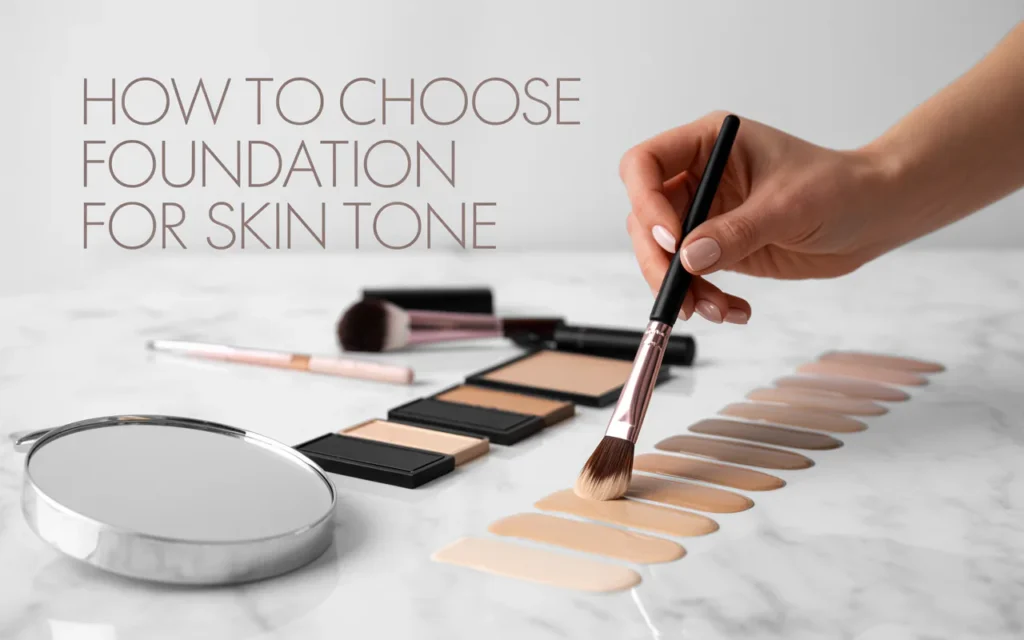
Do not test on your hand or arm. Your hand is often darker or lighter than your face. Test on your jawline or the side of your cheek. This area connects your face to your neck. A good match disappears on both.
How to Test
Put three small stripes of different shades on your jaw. Blend each one slightly. Step back and look in natural light. Store lights are often yellow or pink. They lie to your eyes. Walk to a window or go outside. The right shade will vanish into your skin. You should not see a line.
Pat McGrath, legendary makeup artist, said: “The best foundation match is the one you forget you are wearing. It becomes part of your skin, not a layer on top.”
Give It Time
Foundation changes after a few minutes on your skin. Some products oxidize. This means they turn darker or more orange. Apply a test stripe and wait 2 to 3 minutes. If it changes color, put that bottle back. A good foundation stays the same color it looks in the bottle.
| Testing Mistake | Why It Fails | Correct Method |
|---|---|---|
| Testing on hand | Hand color differs from face | Test on jawline |
| Testing under store lights | Lights alter color perception | Test in natural daylight |
| Rushing the decision | Oxidation changes the shade | Wait 2-3 minutes |
| Testing one shade at a time | No comparison available | Test 3 shades side by side |
Step 4: Consider Your Skin Type Along With Your Tone
Your skin tone is one thing. Your skin type is another. Both matter when you choose foundation for skin tone. The wrong formula can look bad even with the perfect color.
Oily Skin
Oily skin breaks down foundation faster. Look for oil-free or matte finish foundations. Powder foundations also work well. Avoid dewy or luminous formulas. They will slide off your face within hours.
Dry Skin
Dry skin needs hydrating formulas. Look for words like “dewy,” “luminous,” or “hydrating.” Cream and liquid foundations work best. Avoid powder or matte finishes. They will cling to dry patches and look flaky.
Combination Skin
Combination skin has oily and dry areas. A natural finish foundation works best. It is not too matte and not too dewy. You can also use different products on different areas of your face.
Sensitive Skin
Sensitive skin needs simple ingredients. Look for mineral foundations or hypoallergenic formulas. Avoid fragrance and alcohol. Always patch test on your neck before buying.
Charlotte Tilbury, makeup artist and brand founder, said: “When you find the right foundation, you feel more like yourself. It gives confidence without changing who you are.”
Step 5: Match Foundation to Your Neck and Chest
Many people match foundation to their face only. Then they look like their face is floating above a different colored body. Always check the match against your neck and chest. Your face may have more redness or darkness from sun exposure. Your neck often stays lighter. Match to the color of your neck and upper chest. This creates a seamless look.
If your face is slightly darker than your neck, do not worry. You can blend foundation down your neck. Or you can use a lighter shade in the center of your face. But the goal is to avoid a harsh line.
Step 6: Adjust for Seasonal Changes
Your skin tone changes with the seasons. Summer sun gives you a tan. Winter indoor life makes you paler. One foundation shade will not work all year. Keep two shades. One for summer and one for winter. Or buy a shade adjuster. These are small drops that lighten or darken any foundation. They save you money and space.
Check your match every few months. Hold the foundation bottle next to your jaw in natural light. If you see a clear difference, it is time to change.
Common Mistakes When You Choose Foundation for Skin Tone
Even experienced makeup users make these mistakes. Avoid them to save time and money.
Mistake 1: Matching to Your Inner Wrist
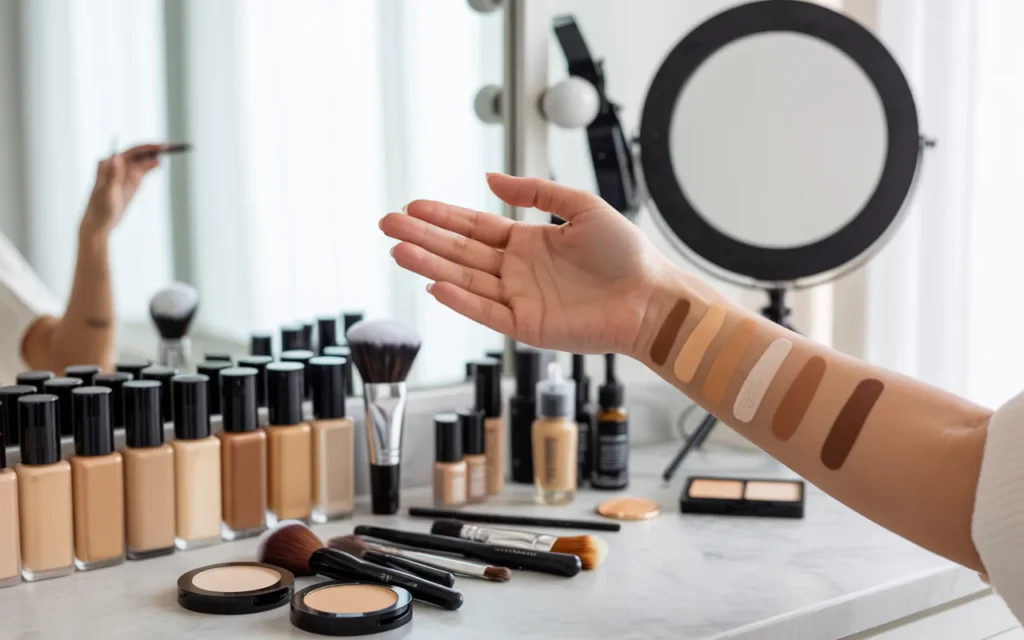
Your inner wrist is often much lighter than your face. Match to your jaw or cheek.
Mistake 2: Buying Based on Name Alone
“Porcelain” means different things across brands. Always swatch and test.
Mistake 3: Testing Only One Shade
You need comparison. Test three shades. The middle one is often correct.
Mistake 4: Ignoring Undertone
The wrong undertone looks gray or orange on your skin. No amount of blending fixes this.
Mistake 5: Testing on a Beard or Facial Hair
If you have facial hair, test on a clean-shaven area or your forehead. Hair changes how the color looks.
How to Use Online Tools to Choose Foundation for Skin Tone
Shopping online makes testing hard. But many brands offer virtual try-on tools. You upload a photo and see shades on your face. These tools are not perfect, but they help narrow choices. Another option is foundation finder quizzes. Brands like Sephora, Ulta, and MAC have these. You answer questions about your skin and get shade recommendations.
When you buy online, look for brands with free returns. Order two or three close shades. Test them at home in natural light. Return the ones that do not work. This takes more time, but you get the right match.
Drugstore vs. High-End Foundation: Does Price Matter?
You can choose foundation for skin tone well at any price. Expensive does not always mean better. Drugstore brands have improved a lot. Many now offer 30 to 50 shades. High-end stores have testers and trained staff. This helps you see colors before buying.
Here is a simple truth. The best foundation is the one that matches your skin and feels comfortable. If a $10 bottle works, use it. If a $50 bottle works, use it. Price does not equal match quality.
| Drugstore Pros | High-End Pros |
|---|---|
| Low cost to try multiple shades | Testers available in stores |
| Good shade ranges now available | Staff can help match you |
| Easy to return or exchange | Often longer wear time |
| Great for everyday use | Better for sensitive skin formulas |
Frequently Asked Questions
How many foundations should I own?
Most people need two. One for summer and one for winter. If your skin does not change much with seasons, one good match is enough.
Can I mix two foundations to get my perfect shade?
Yes. Many people mix a light and dark shade or a warm and cool shade. This is a smart way to choose foundation for skin tone when you fall between two colors.
Why does foundation look orange on me?
Your undertone is likely cool, but you bought a warm shade. Or the foundation oxidized. Look for “cool” or “neutral” labels next time.
How do I choose foundation for skin tone if I have redness?
Do not match to red areas like your cheeks. Match to your jaw or forehead where redness is less. A green color corrector under foundation also helps cancel redness.
Should foundation match my face or my body?
Match to your neck and chest. Your face and body should look connected. If your face is naturally darker, blend foundation down your neck.
What if I have both pink and yellow in my skin?
You likely have a neutral undertone. Look for foundations labeled N or neutral. These work well for people who do not fit clearly into cool or warm.
How long should a foundation test take?
At least 5 minutes. Apply three stripes. Wait 2 to 3 minutes for oxidation. Check in natural light. Walk away and come back to check again.
Can I use concealer to fix a wrong foundation?
Concealer helps small mismatches. But if the foundation is very wrong, you need a new shade. Concealer cannot fix a full face of the wrong color.
Conclusion
Learning to choose foundation for skin tone takes a little time, but the results are worth it. You save money on wrong products. You gain confidence in how you look. And you stop worrying about lines or orange patches on your skin.
Remember the key steps. Find your undertone with the vein or jewelry test. Know your surface shade. Test on your jawline in natural light. Wait a few minutes for oxidation. Match to your neck and chest. And adjust for seasons if needed.
Your perfect foundation is out there. Do not settle for “close enough.” A good match makes you look like you woke up with great skin. And that feeling is better than any makeup trend.
Now go look at your current foundation. Hold it next to your jaw in a mirror by a window. If it disappears, keep using it. If you see a line or a different color, use this guide to find a better one. Your skin will thank you.
Related posts
 Best Compact Powder for Women: 2026 Buyer Guide
Finding the best compact powder for women in 2026. We compare top-rated matte, mineral, and lightweight pressed powders to help you choose the right finish. Finding…
 Best Casual Wear for Women: 2026 Style and Comfort Essentials
Discover the best casual wear for women in 2026. We compare top-rated trousers and versatile tops to help you build a comfortable, stylish everyday wardrobe. Finding…
 Best Claw Clips for Thick Hair in 2026
Finding the best claw clips for thick hair requires a balance of grip and size. Explore our top 2026 recommendations for secure, stylish, and reliable styling.…