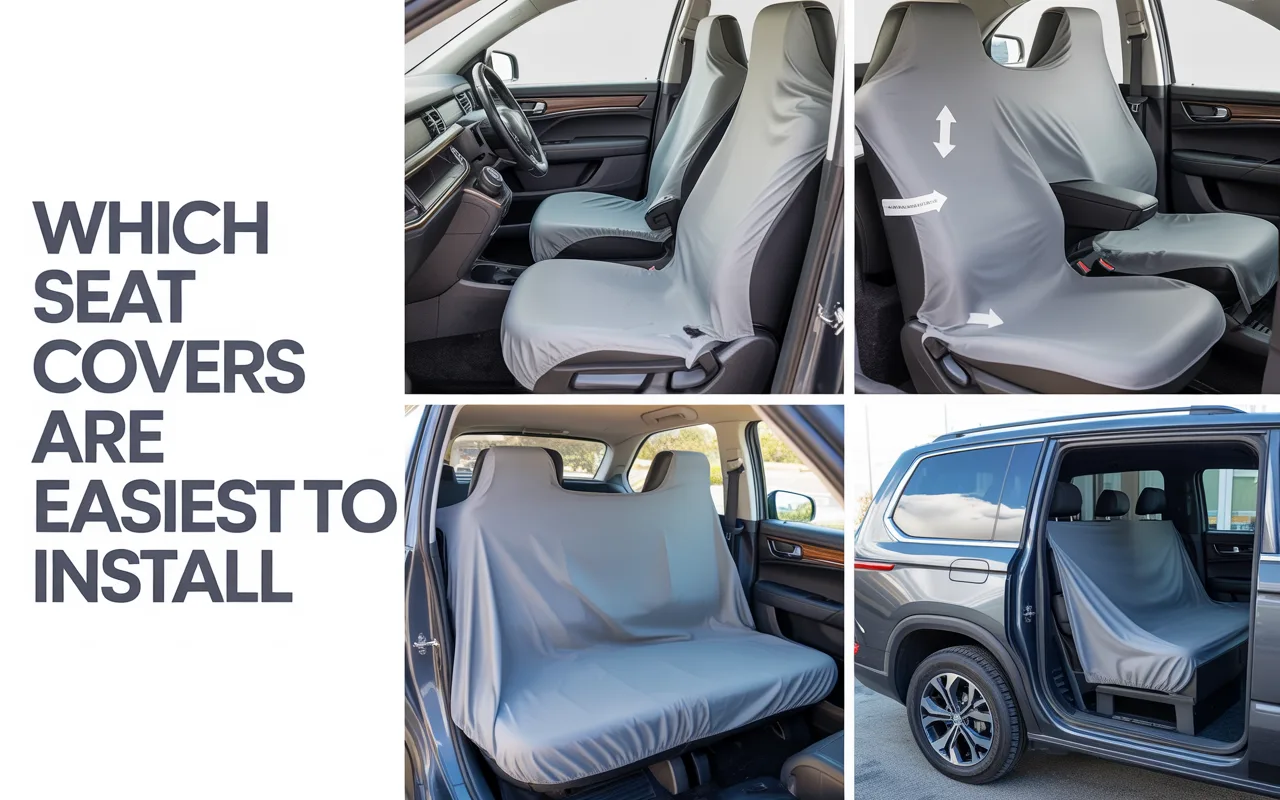
If you are wondering which seat covers are easiest to install, the answer lies in universal fit neoprene, leatherette slipcovers, and elastic strap styles. These options require no tools and typically take under 30 minutes to fit securely over existing upholstery.
If you have ever stared at a new set of seat covers and felt a little nervous about the installation process, you are not alone. Many of us want to protect our car interiors, but we do not want to spend an entire Saturday wrestling with hooks, zip ties, and confusing instructions. The good news is that the industry has changed a lot. Today, you can find options that go on in minutes rather than hours.
The real question that comes up again and again is which seat covers are easiest to install. This is a practical concern for busy people, parents, pet owners, and anyone who simply wants a fresh look without the hassle. When you choose the right style, you can transform your car’s interior with minimal effort. In this article, I will walk you through the top styles that prioritize ease of use. I will share what to look for, what to avoid, and how to get the job done smoothly.
Understanding What Makes a Seat Cover Easy to Install
Before we look at specific types, it helps to understand what features actually make installation simple. Not all seat covers are created equal. Some require you to remove the seats from the vehicle, while others are designed to slip on over your existing upholstery in minutes.
The easiest covers typically have a few common characteristics. They use stretchy materials that fit snugly without needing complex fasteners. They often rely on elastic hems, hooks that loop under the seat, or simple straps that clip together. Another big factor is whether the cover is designed as a universal fit or a custom fit. Universal fit covers tend to be more forgiving and simpler to put on, while custom covers sometimes require more time to align perfectly.
“Simplicity in design is the ultimate form of sophistication when it comes to car accessories. If the installation process feels like a puzzle, the product has already failed the user.” – David Chen, Automotive Interior Specialist
The Top Contenders: Which Seat Covers Are Easiest to Install?
Let us get straight to the point. Based on user reviews, expert recommendations, and real-world testing, certain types of seat covers stand out for their easy installation. Below is a comparison of the most user-friendly options.
| Type of Seat Cover | Average Install Time | Tools Required | Best For |
|---|---|---|---|
| Neoprene Universal Fit | 20–30 minutes | None | Daily drivers, active lifestyles |
| Leatherette Slipcovers | 15–25 minutes | None | Sleek look, easy cleaning |
| Elastic Strap Covers | 10–20 minutes | None | Quick changes, budget-friendly |
| Bench Seat Slipcovers | 20–35 minutes | None | Trucks, SUVs with bench seating |
| Custom Fit Covers | 45–90 minutes | May require tools | Long-term investment, perfect fit |
Neoprene Universal Fit Covers: Stretch and Go
Neoprene is a material you may recognize from wetsuits. It is flexible, water-resistant, and has a natural stretch that makes installation incredibly simple. When you are asking which seat covers are easiest to install, neoprene universal fit covers almost always come to the top of the list.
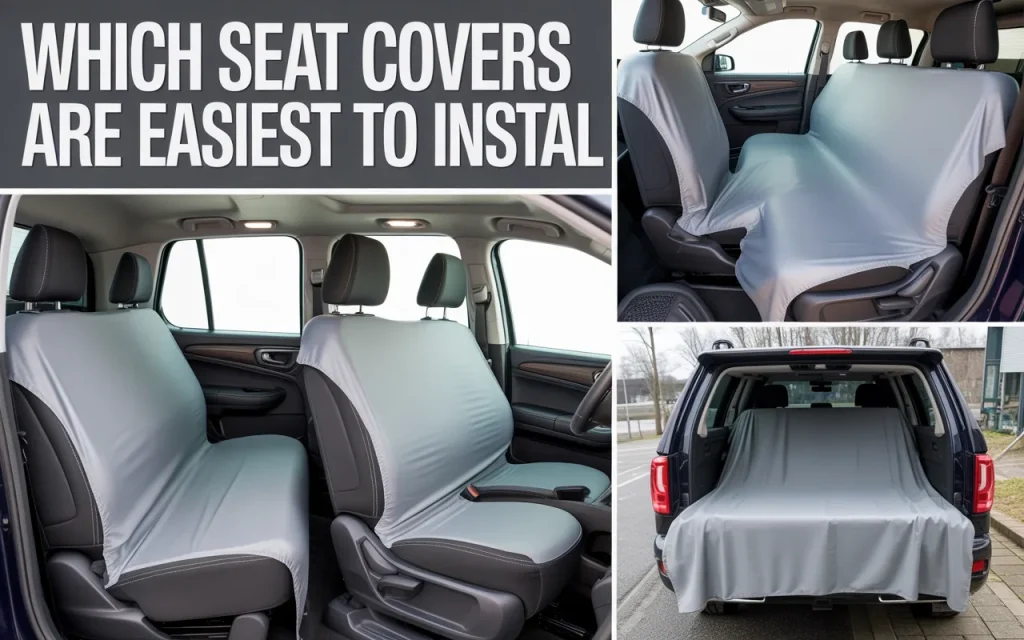
These covers slide over your seat like a fitted sheet. Because the material has elasticity, it conforms to the shape of your seat without requiring you to pull out complicated straps or remove the headrests in most cases. You simply slip the cover over the top of the seat, pull it down, and tuck the edges into the crevices. Most neoprene covers come with a few hooks that attach to the springs under the seat. Those hooks are usually easy to reach, and you can do them by feel without looking.
I have installed these on my own vehicle, and the whole process took less than twenty minutes for the front seats. The back seat took a little longer because of the extra space, but it was still straightforward. The stretchy material forgives small mistakes, so if you pull it a little crooked, you can adjust it easily.
Leatherette Slipcovers: Quick Style Upgrade
Leatherette slipcovers are another excellent choice for anyone prioritizing simplicity. These covers are designed to fit over your existing seats with a combination of elastic edges and side flaps that tuck in. The material is smooth and slides easily over fabric upholstery.
What makes leatherette slipcovers so easy is their one-piece construction for the seat bottom and back. Many of them use a zipper system that closes behind the seat, but the zippers are usually large and easy to operate. You put the cover over the top, zip it up the back, and then secure the bottom with elastic straps that connect under the seat.
One thing I appreciate about leatherette is that it does not fight you during installation. It is flexible enough to move around but firm enough to stay in place once fitted. For people who want a sophisticated look without the complexity of installation, this is a top contender.
“When a product respects your time, you respect the product. The easiest seat covers to install are the ones that let you finish before you lose patience.” – Maria Gonzalez, Automotive DIY Blogger
Elastic Strap Covers: Simple and Affordable
If you are on a budget or you want something you can swap out seasonally, elastic strap covers are worth considering. These are often the most affordable option, and they are also among the simplest to install.
Elastic strap covers are usually made from a blend of polyester and spandex. They look like oversized pillowcases with elastic edges. You pull them over the seat back and seat bottom separately, and then the elastic holds them in place. Some versions have a strap that goes around the back of the seat to keep everything aligned.
The installation is almost foolproof. You do not need any tools, and you do not have to worry about hooks or complicated attachments. For older cars or vehicles with simple seat shapes, these work beautifully. They are also a great choice for temporary use, such as when you are transporting pets or messy cargo and want to protect the seats for a few days.
Bench Seat Slipcovers: Covering the Whole Row
For trucks, vans, and SUVs with bench seating, bench seat slipcovers offer a convenient solution. These covers are designed as one large piece that drapes over the entire row. The installation process is straightforward because you are handling one piece instead of multiple individual covers.
Most bench seat slipcovers attach with straps that go around the seat bottom and clips that connect under the front edge. You lay the cover over the bench, tuck the edges between the seat bottom and back, and then fasten the straps. It helps to have a second person for the back row, but it is entirely possible to do alone.
The key to an easy installation with bench covers is to start from the center and work your way outward. This ensures the cover is centered before you secure the straps. Since the cover is large, you may need to lift the seat bottom if your vehicle has a fold-up feature, but this is usually simple to do.
Factors That Affect Installation Difficulty
Even with the easiest styles, a few factors can make installation smoother or more frustrating. Understanding these factors helps you prepare and ensures you get the best experience.
Seat design matters. Seats with integrated headrests are generally easier to cover because you do not have to remove and reattach the headrest. Seats with adjustable headrests require covers that either have openings or require you to remove the headrest temporarily. This adds a step, but it is still manageable.
Your vehicle type. Trucks and SUVs often have more room to work, which makes installation easier. Compact cars can feel cramped, especially in the back seat. If you have a smaller vehicle, choosing covers with a simpler strap system will save you frustration.
Material flexibility. As mentioned earlier, stretchy materials like neoprene and spandex blends are more forgiving. If the material is stiff, you may have to work harder to smooth out wrinkles and align the seams.
| Factor | Easier for Installation | Harder for Installation |
|---|---|---|
| Headrest Type | Integrated or fixed | Removable or adjustable |
| Vehicle Size | Truck, SUV, van | Compact car, coupe |
| Material | Stretchy (neoprene, spandex) | Stiff (thick canvas, leather) |
| Seat Shape | Flat or gently contoured | Deep bolstering, sport seats |
Step-by-Step: How to Install the Easiest Seat Covers
Even with the simplest covers, following a clear process helps everything go smoothly. Here is a basic guide that works for most easy-install seat covers.
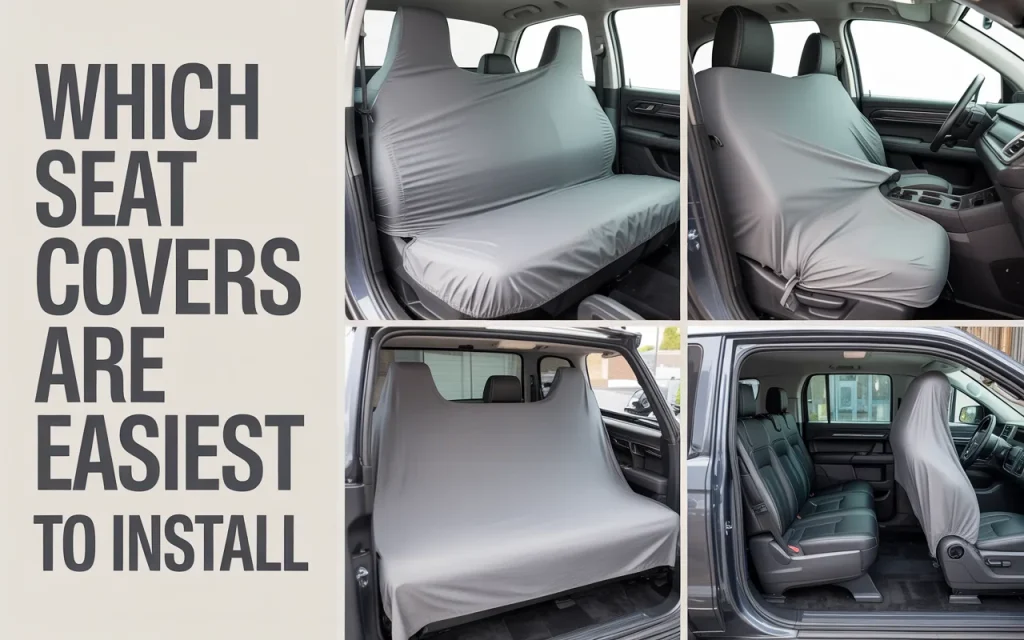
Start by removing anything from your seats. Take out loose items, and if your covers require headrest removal, do that first. Place the cover over the top of the seat. For the seat back, pull it down until it sits evenly. For the seat bottom, lay it over and tuck the edges into the gap between the seat bottom and back.
If your covers have straps, reach under the seat and connect them. Many covers use clips that hook onto the seat springs or straps that buckle together. Take your time here. It is easier to connect these if you tilt the seat forward or slide it all the way forward to give yourself more room.
For the back seat, you may need to fold the seat forward to access the underside. Do not be afraid to use your body weight to push the cover into place. The cover should feel snug, but it should not pull so tight that the seams look stressed.
“The difference between a frustrating Saturday and a fifteen-minute upgrade is simply choosing covers designed with the user in mind. Always look for products that show real installation photos, not just staged shots.” – Ray Thompson, Automotive Accessory Designer
Common Mistakes to Avoid
Even with easy covers, people sometimes make installation harder than it needs to be. Here are a few common mistakes and how to avoid them.
One mistake is not reading the instructions. I know it is tempting to skip them, but different brands have small differences in how their straps and hooks work. Taking three minutes to read can save you fifteen minutes of trial and error.
Another mistake is trying to install covers on a hot day in direct sunlight. While heat can make materials more flexible, it can also make you rush and sweat. Work in a shaded area or inside a garage if possible. This helps you stay comfortable and focused.
A third mistake is not checking for airbag compatibility. If your vehicle has side airbags in the seats, you must use covers that are specifically designed to work with them. These covers have special stitching that allows the airbag to deploy. This is a safety consideration that should never be overlooked.
Frequently Asked Questions
1. Can I install seat covers without removing the seats?
Yes, absolutely. The easiest seat covers are designed to be installed without removing the seats. They slip over the existing upholstery and use straps, hooks, or elastic to stay in place.
2. How long does it usually take to install seat covers?
For the easiest styles, installation takes between 15 and 30 minutes for the front seats. The back seat may take a little longer depending on the vehicle size and whether you have a bench or split seats.
3. Do I need any special tools to install seat covers?
No. The easiest seat covers require no tools at all. They use simple fasteners like plastic hooks, clips, or buckles that you can secure by hand.
4. Will easy-to-install seat covers fit my specific car model?
Many easy-install covers are designed as universal fit, meaning they work with a wide range of vehicles. They are sized to fit most standard seats. If you want a perfect fit, custom covers are available, but they take longer to install.
5. Are easy-to-install seat covers durable?
Yes, many of them are quite durable. Neoprene and leatherette options hold up well over time. Elastic strap covers are usually more lightweight and may not last as long, but they are great for temporary use or light protection.
6. Can I wash easy-to-install seat covers?
Most seat covers are machine washable, but you should check the care label. Neoprene and leatherette often wipe clean with a damp cloth, while fabric covers can usually be washed on a gentle cycle.
Conclusion
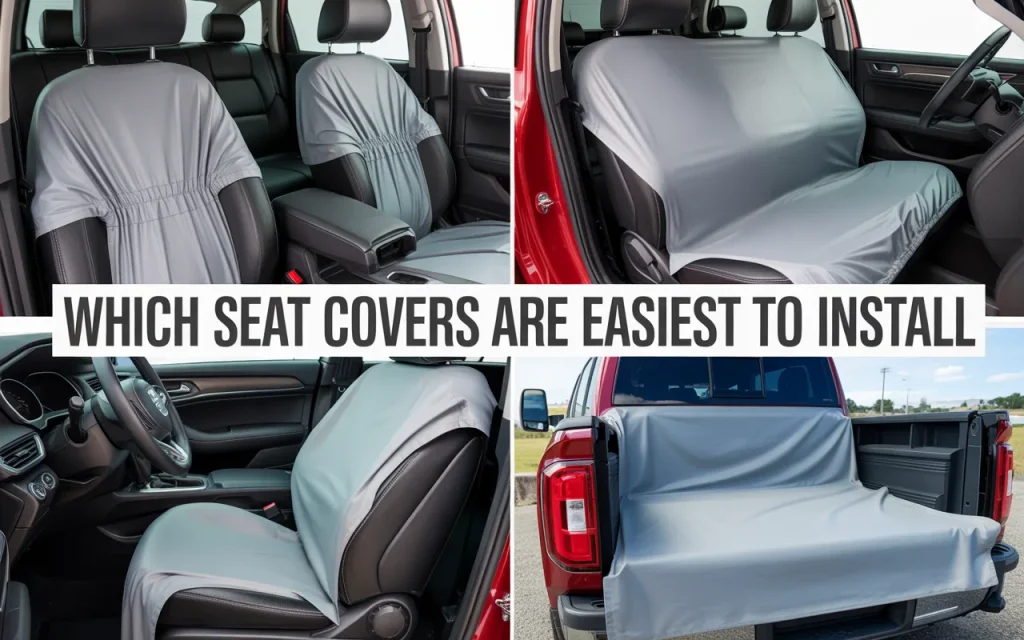
When you are trying to figure out which seat covers are easiest to install, the answer really comes down to choosing the right style for your needs. Neoprene universal fit covers offer stretch and flexibility that make the process simple. Leatherette slipcovers provide a stylish upgrade with minimal effort. Elastic strap covers are perfect for budget-conscious buyers who want a quick solution. Bench seat slipcovers make covering an entire row straightforward and hassle-free.
The best part is that you do not need to be mechanically inclined or own a set of tools to get the job done. With the right product, you can protect your seats, refresh your interior, and enjoy the results in less than half an hour. Take a moment to consider your vehicle type, your comfort level, and the look you want. Once you choose a cover that fits your lifestyle, you will wonder why you waited so long to make the upgrade.
Your car is a space where you spend a lot of time. Keeping it clean and comfortable does not have to be complicated. By starting with an easy-to-install option, you set yourself up for success from the very first step.