
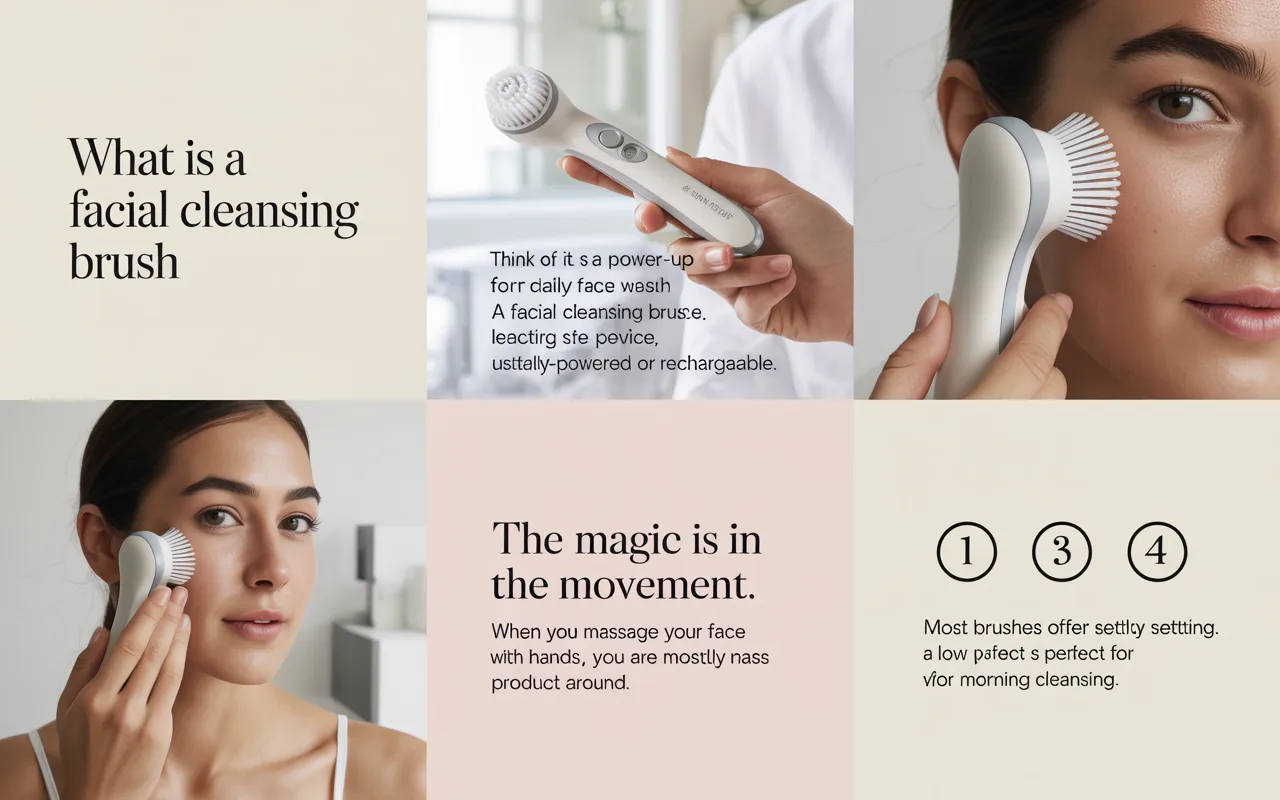
A facial cleansing brush is a handheld electric tool with soft bristles that spins or pulses to clean skin more deeply than hands alone. Find out how this gadget works, its real benefits, and if it’s right for your skin type.
Ever feel like your hands just aren’t enough to get your skin truly clean? You wash your face every day, but maybe you still see leftover makeup, or your pores look a bit clogged. You might have heard about a handy little gadget that promises to help. So, what is a facial cleansing brush, really? Let’s talk about it in plain, simple terms.
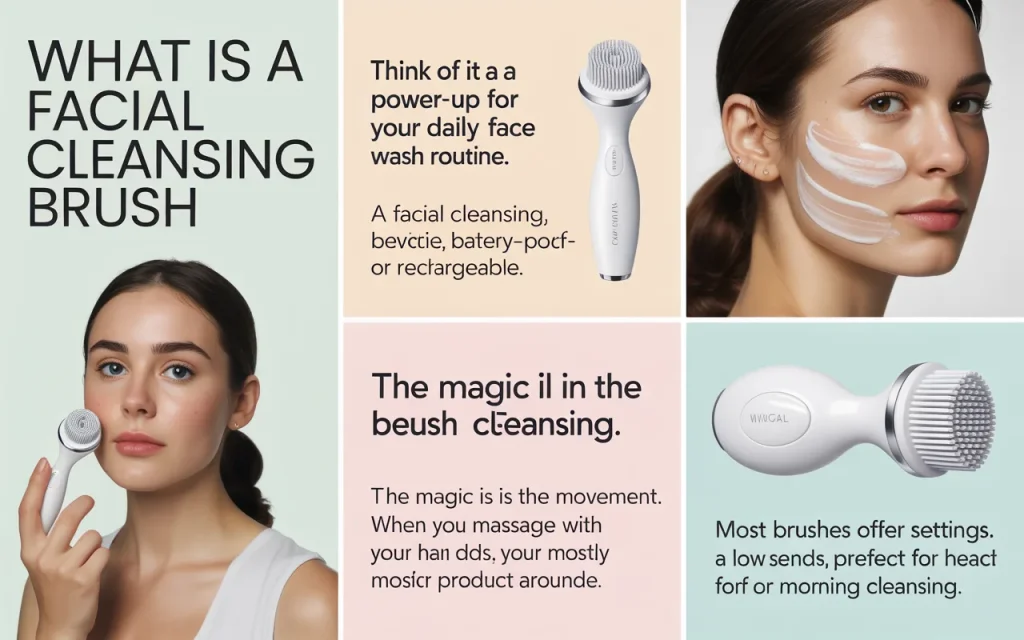
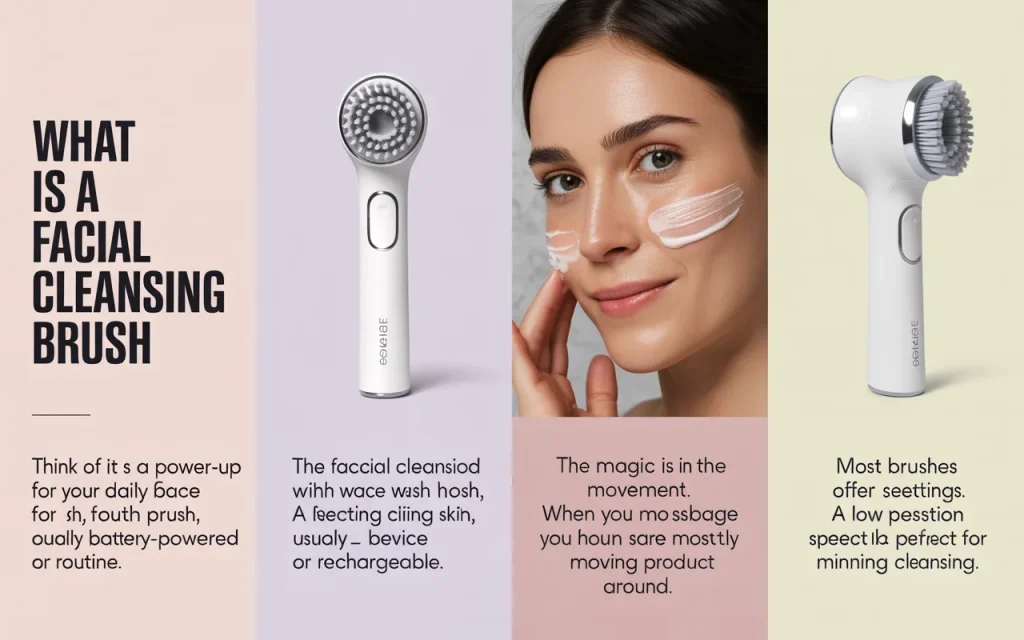
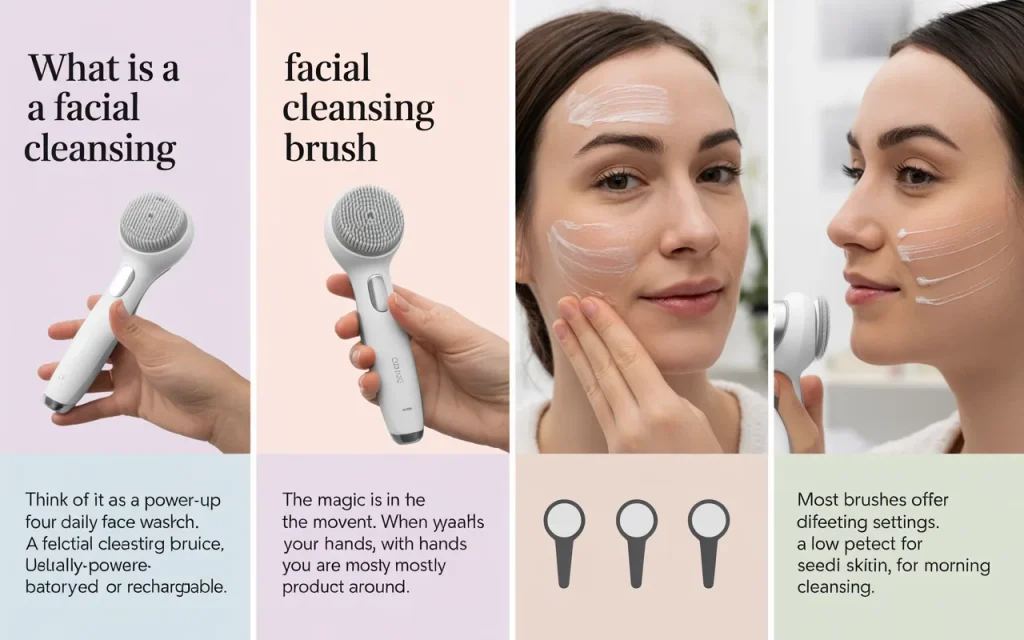
Think of it as a power-up for your daily face wash routine. A facial cleansing brush is an electric device, usually battery-powered or rechargeable. It has a small, round brush head made with super soft bristles. When you turn it on, the brush head moves in a gentle, circular motion. This motion helps to loosen dirt, oil, and dead skin cells from the surface of your skin and from inside your pores. It’s like giving your face a much deeper, more thorough clean than your fingers can provide on their own.
I remember first trying one years ago, feeling a mix of curiosity and hope. My skin felt different immediately after the first use: incredibly smooth and fresh. It was a clear sign that this tool was doing something my hands simply couldn’t. As one skincare expert noted, “Cleansing is the foundation of any effective skincare routine. Doing it well makes everything that follows work better.” – Dr. Harold Lancer. This tool aims to make that foundation stronger.
How Does a Facial Cleansing Brush Actually Work?
The magic is in the movement. When you massage your face with your hands, you are mostly moving product around. A facial cleansing brush uses gentle, consistent micro-motions. These tiny movements do two big things.
First, they help to break up and dislodge the daily grime that gets stuck. This includes sunscreen, pollution particles, and excess sebum (your skin’s natural oil). Second, the light physical exfoliation sweeps away the layer of dead skin cells that naturally build up on the surface. This leaves your skin looking brighter and feeling smoother right away.
Most brushes offer different speed settings. A low setting is perfect for sensitive skin or morning cleansing. A higher setting might be used for a deeper evening clean, especially if you wear a lot of makeup. The key is that the brush does the work for you with steady, gentle pressure.
Main Types of Facial Cleansing Brushes
Not all brushes are the same. Knowing the differences can help you pick the right one.
1. Sonic Brushes: These are very common. They vibrate at a high speed, moving the bristles side-to-side. This sonic vibration is designed to clean without being harsh on the skin. They are often very good at removing pore-clogging particles.
2. Rotating Brushes: These have a brush head that spins in a full circle. They provide a more direct exfoliating action. Some people find this type very effective for tackling rough or uneven skin texture.
3. Hybrid Brushes: Some modern brushes combine sonic vibrations with a gentle spinning action to try and give you the benefits of both types.
Here is a simple table to compare the two main kinds:
| Type of Brush | How It Moves | Best For |
|---|---|---|
| Sonic Brush | High-speed vibrations (side-to-side) | Deep cleaning, most skin types, gentle exfoliation |
| Rotating Brush | Full circular spinning motion | More noticeable exfoliation, tackling rough texture |
The Real Benefits: What Can You Expect?
Using a facial cleansing brush can offer some nice perks for your skin. Let’s look at the proven benefits.
Deeper Clean: This is the biggest win. The brush gets into pores and along skin folds better than fingers can. It effectively washes away impurities that can lead to breakouts and dullness.
Better Exfoliation: It gently removes dead skin cells every day. This helps to brighten your complexion and can make your skin look more radiant. It also allows your other skincare products, like serums and moisturizers, to soak in better.
Smoother Skin Texture: With regular use, many people notice their skin feels softer and looks more even. Fine lines can appear less noticeable because the skin’s surface is smoother.
Can Help with Breakouts: By keeping pores clear of excess oil and debris, a facial cleansing brush may help reduce and prevent acne for some people. It is important to use it correctly to avoid irritation.
As esthetician Joanna Vargas puts it, “The goal of good skincare is to support your skin’s health, not to attack it.” A good brush used properly supports your skin by keeping it clean and clear.
Is a Facial Cleansing Brush Right for Everyone?
Now, let’s be honest. A facial cleansing brush is a fantastic tool, but it is not a magic wand for every single person. Your skin type and how you use the brush matter a lot.
Who might love it?
- People with normal, oily, or combination skin.
- Those concerned with clogged pores or blackheads.
- Anyone looking for a deeper clean and gentle daily exfoliation.
Who should be careful or maybe avoid it?
- Very Sensitive or Rosacea-Prone Skin: The motion might cause redness or irritation.
- Active, Severe Acne or Cystic Breakouts: Brushing over inflamed bumps can make them worse and spread bacteria.
- Over-Exfoliated or Damaged Skin Barriers: If your skin feels tight, stings, or is peeling, stop using any brush and let it heal.
If you fall into a “be careful” category, it does not mean you can never use one. It means you must start slowly. Use the lowest setting, choose the softest brush head, and only use it once or twice a week to see how your skin reacts.
How to Use Your Brush the Right Way (And Avoid Mistakes)
Using a facial cleansing brush is simple, but doing it right keeps your skin happy.
A Simple Step-by-Step Guide:
- Wet your face and the brush head with lukewarm water.
- Apply your regular cleanser directly to your face or to the brush bristles.
- Turn the brush on to the lowest setting and gently move it in small circles over your skin. Do not press hard. Let the brush do the work.
- Spend about 10-15 seconds on each area (forehead, nose, each cheek, chin). Your whole routine should take about one minute.
- Rinse your face thoroughly and pat dry with a clean towel.
- Always remove the brush head, rinse it well, and let it air dry completely to prevent mold and bacteria growth.
Common Mistakes to Skip:
- Pressing Too Hard: This can damage your skin. Light touch only.
- Using It Too Often: For most people, once a day (usually at night) is plenty. Some may only need it 3-4 times a week.
- Using Harsh Cleansers: Pair your brush with a gentle, creamy or foaming cleanser. Avoid gritty scrubs.
- Not Changing the Brush Head: Brush heads wear out and collect germs. Change them every 3 months, or as the brand suggests.
Picking the Best Facial Cleansing Brush for You
With so many options on the shelf, how do you choose? Think about your skin and your budget.
| Consideration | What to Look For |
|---|---|
| Skin Type | Sensitive skin needs softer bristles and gentle settings. Oily skin can handle more frequent use. |
| Brush Head Options | Many brands offer different brush heads (sensitive, normal, massage). This lets you customize. |
| Speed Settings | Multiple settings (low, medium, high) give you more control. |
| Waterproof Design | This makes cleaning the brush easy and safe to use in the shower. |
| Battery Life | A long-lasting rechargeable battery is very convenient. |
Start by reading reviews from people with a skin type like yours. You do not need the most expensive model to see good results. A simple, well-made brush used correctly is better than a fancy one used wrong.
Your Questions, Answered
Let’s tackle some common questions.
How often should I use a facial cleansing brush?
Most skin types do well using it once per day, ideally during your evening cleanse to remove the day’s dirt and makeup. If you have sensitive skin, start with 2-3 times a week.
Can I use it with any face wash?
Yes, but it’s best to use a gentle, non-abrasive cleanser. Liquid, gel, or cream cleansers work well. Avoid cleansers with large, rough scrub grains as they can be too harsh with the brush motion.
Will it make my pores smaller?
Pores do not open and close, but they can appear smaller. A facial cleansing brush helps keep pores clear of debris, which can make them look less noticeable and clogged.
Is it better than manual exfoliation with a scrub?
It can be more consistent and gentle. Manual scrubs can lead to uneven pressure and over-scrubbing. A brush provides even, light exfoliation across the skin.
How do I keep it clean?
After each use, rinse the brush head under running water. Once a week, clean it with a drop of gentle soap or a quick soak in a mix of water and a little vinegar. Let it air dry fully.
The Final Word
So, what is a facial cleansing brush? It’s a smart helper. It is not an absolute must-have, but for many, it is a valuable upgrade to a daily routine. It offers a deeper clean and gentle exfoliation that can lead to brighter, smoother, and clearer-looking skin.
The real secret is not in the gadget itself, but in how you use it. Listen to your skin. Start slow, be gentle, and keep it clean. When used with care, a facial cleansing brush can be a wonderful way to feel like you are giving your skin a truly fresh start each day. It is about working with your skin, not against it.
In the end, good skincare is about consistency and kindness to yourself. As the famous beauty editor and author, Bobbi Brown, wisely said, “Good skincare is the foundation of beauty. It’s about health, not just color.” A facial cleansing brush is simply one tool to help build that healthy, clean foundation.

One Comment