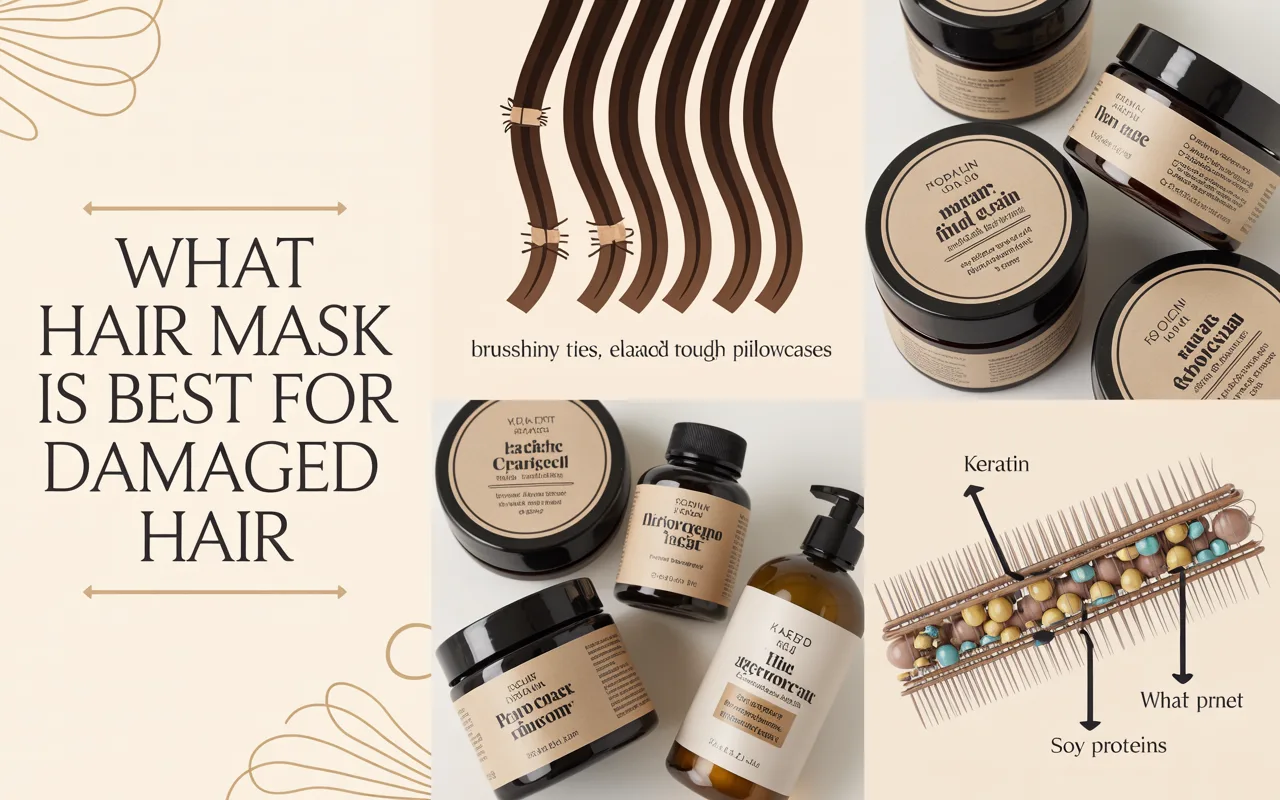
If you are searching for what hair mask is best for damaged hair, the answer depends on your hair type and specific concerns. Protein masks rebuild strength, while moisturizing masks restore softness. Look for ingredients like keratin, argan oil, and shea butter. This guide explains exactly how to choose and use the right mask.
Damaged hair is frustrating. You might notice split ends, brittleness, or a complete lack of shine. I have been there myself. After years of heat styling and chemical treatments, my hair felt like straw. I tried countless products before I understood one simple truth: there is no single miracle product. The answer to what hair mask is best for damaged hair is not one-size-fits-all. It depends on what your hair actually needs right now.
Some people need protein. Others need moisture. Many need both, but at different times. This article will help you stop guessing. You will learn how to read ingredient labels, match masks to your damage type, and avoid common mistakes that make hair worse. I have tested these methods on my own hair and researched recommendations from dermatologists and professional stylists. Let us find the right mask for you.
Understanding Hair Damage First
Before we talk about products, we need to understand what damaged hair actually looks like. Hair damage is not just one thing. It is a combination of structural and chemical changes.
Healthy hair has a smooth outer layer called the cuticle. When the cuticle lies flat, hair reflects light and feels soft. Damage lifts the cuticle. The inner cortex becomes exposed. This leads to dryness, tangling, and breakage.
There are three main causes of damage:
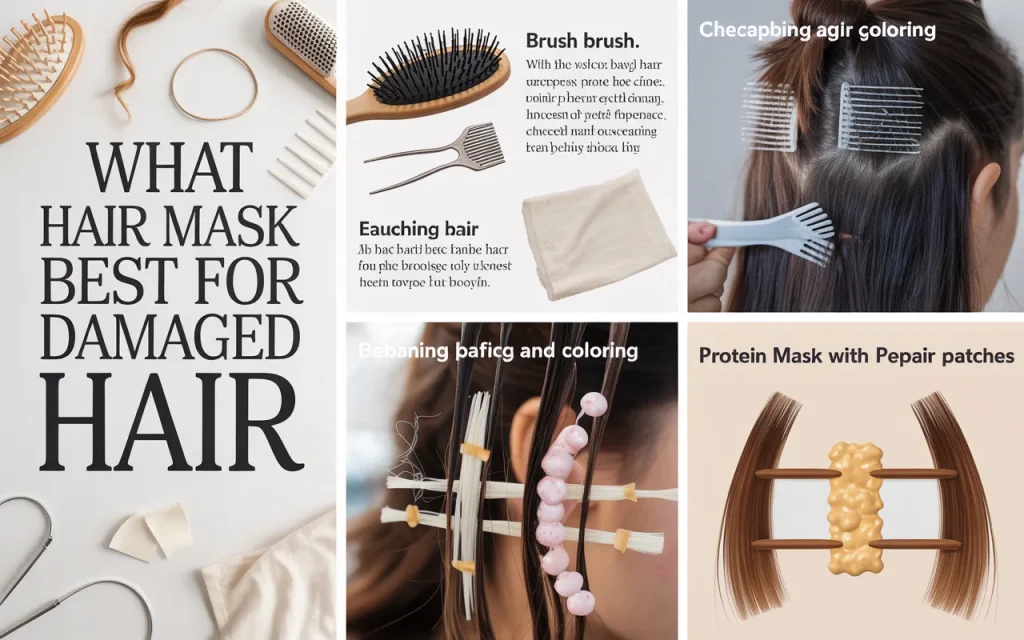
- Mechanical damage. This comes from brushing too hard, using elastic ties with metal pieces, or sleeping on rough cotton pillowcases.
- Chemical damage. Hair color, bleach, perms, and relaxers break the protein bonds inside the hair shaft.
- Heat damage. Flat irons, curling wands, and blow dryers without protectant boil the water inside your hair. This creates bubbles in the cortex. Those bubbles never fully heal.
Knowing your damage source helps you answer what hair mask is best for damaged hair for your specific situation.
Protein vs. Moisture: The Balance You Must Understand
This is the most important concept in repairing damaged hair. If you get this wrong, masks will not work. If you get this right, your hair will improve visibly within one or two washes.
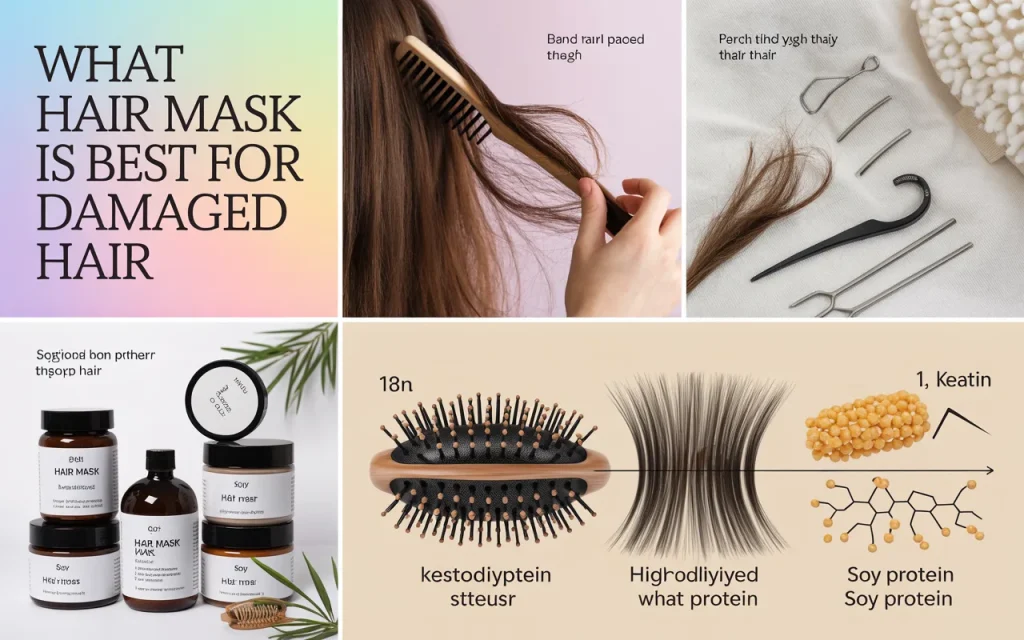
Protein masks fill gaps in the hair shaft. Think of them like spackle for a wall. They temporarily patch holes where protein has been stripped away. This makes hair feel stronger and less stretchy. But too much protein makes hair stiff and brittle. It snaps off easily.
Moisture masks add water and oil back into the hair. They smooth the cuticle and make hair flexible. But too much moisture with no protein makes hair limp, gummy, and weak. It stretches too far and then breaks.
Here is a simple way to decide:
| If your hair… | You need… | Look for ingredients like… |
|---|---|---|
| Stretches like a rubber band and feels mushy when wet | Protein | Hydrolyzed keratin, collagen, rice protein, wheat protein |
| Snaps immediately when pulled, feels rough, looks dull | Moisture | Glycerin, aloe vera, shea butter, argan oil, panthenol |
| Feels stiff and straw-like after protein treatment | Moisture | Same as above |
| Feels gummy and limp after deep conditioning | Protein | Same as protein list |
I learned this balance the hard way. I used a protein mask every week for a month. My hair became so brittle that it snapped while I was braiding it. Now I use protein every three weeks and moisture every week. That balance made all the difference.
Key Ingredients to Look For
When you ask what hair mask is best for damaged hair, you are really asking which ingredients work. Brand names matter less than the ingredients inside the jar.
Hydrolyzed proteins. These are proteins broken down into tiny pieces. They are small enough to actually enter the hair shaft instead of just sitting on top. Keratin is the most common, but wheat and soy protein also work well.
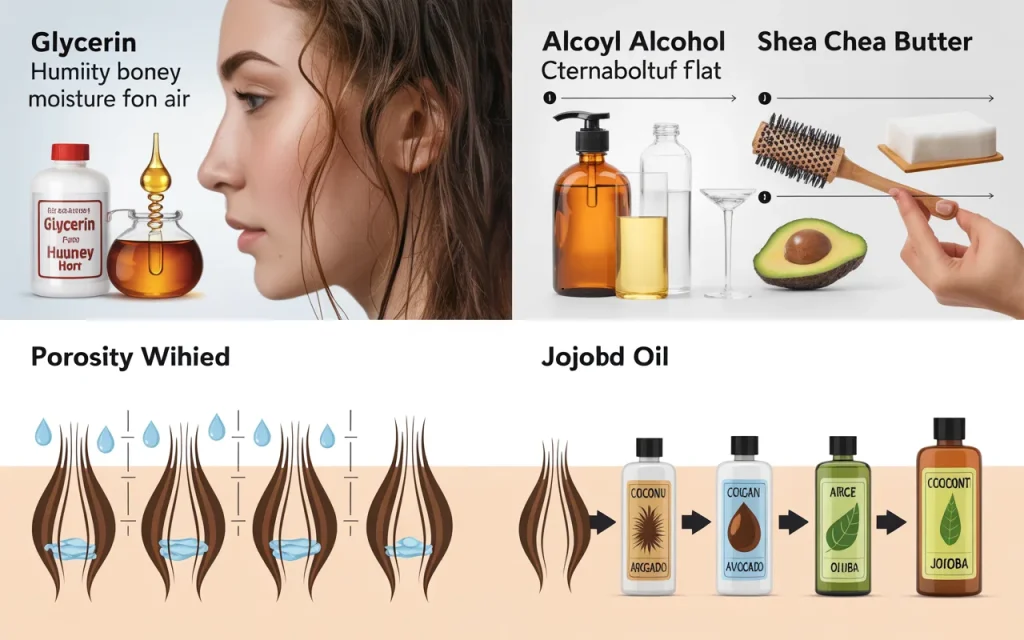
Oils that penetrate. Coconut oil is unique because it can go inside the hair strand. Argan oil and avocado oil also penetrate well. Olive oil works but is heavier. Jojoba oil mostly sits on the surface, which is good for shine but not deep repair.
Humectants. Glycerin and honey pull moisture from the air into your hair. These are excellent if you live in a humid climate. In dry climates, they can actually pull water out of your hair. Adjust based on your weather.
Ceramides and fatty alcohols. These rebuild the lipid layer that holds cuticles flat. Look for cetyl alcohol, stearyl alcohol, or shea butter.
Silicones. Some people avoid these. But in damaged hair, silicones provide slip and protection while your hair heals. Water-soluble silicones are easier to wash out. Dimethicone is heavier but works well for high-porosity hair.
How to Choose Based on Your Porosity
Porosity is your hair’s ability to absorb and hold moisture. It is the single best predictor of what hair mask is best for damaged hair.
Low porosity hair has tightly packed cuticles that lie flat. Water runs off. Products sit on top. This hair needs lightweight masks with humectants and little to no protein. Heavy oils and butters cause buildup.
High porosity hair has lifted cuticles with gaps. Water enters quickly but leaves just as fast. This hair needs protein to fill gaps and heavy butters to seal moisture in.
Medium porosity hair holds moisture reasonably well. Occasional protein and regular moisture masks are enough.
Test your porosity at home. Wash your hair and drop a clean strand into a glass of water. If it floats, you have low porosity. If it sinks slowly, medium. If it sinks immediately, high porosity.
Top Mask Types for Common Damage Scenarios
For Bleached or Color-Treated Hair
Bleach strips protein from your hair. This is non-negotiable chemistry. If you bleach your hair, you have structural damage. You cannot reverse it completely, but you can manage it.
The best mask here is a protein-moisture hybrid. Pure protein masks are too harsh. Pure moisture masks do not address the missing structure. Look for masks that list a hydrolyzed protein within the first five ingredients, followed by moisturizing oils.
I recommend masks labeled specifically for color-treated hair. These usually have UV protectants and lower pH levels that keep cuticles closed. Redken Extreme Lengths and Olaplex No. 8 are popular for good reason. They bond broken disulfide links while adding softness.
For Heat-Damaged Hair
Heat damage changes the shape of your hair. It cannot be fully reversed. But you can improve elasticity and prevent further damage.
Heat-damaged hair needs masks with ceramides and polymers. These create a flexible film over the hair that mimics a healthy cuticle. Shea butter and coconut oil help, but look for ingredients like polyquaternium-10 or hydrolyzed wheat starch.
Avoid heavy protein. Heat-damaged hair is often already brittle. More protein can make it snap.
For Dry, Frizzy Hair Without Chemical Damage
This is usually a moisture problem, not a structural problem. You do not need protein. You need hydration and sealing.
Look for masks with aloe vera, glycerin, and honey as top ingredients. Follow with a mask containing shea butter or mango butter. The humectant pulls water in. The butter locks it there.
Garnier Fructis Hair Mask Papaya is a drugstore option that works well here. It is lightweight but hydrating.
For Fine, Damaged Hair
Fine hair is easily weighed down. Heavy butters and oils cause flat, greasy results even when hair is damaged.
Choose spray-in leave-in masks or rinse-out masks labeled volumizing. These contain lighter oils like argan or grapeseed. They also contain small-molecule proteins that strengthen without coating the strand.
Briogeo Don’t Despair, Repair is a good example. It uses broccoli seed oil, which is much lighter than olive or coconut oil.
How to Apply Hair Masks Correctly
Buying the right mask is only half the answer to what hair mask is best for damaged hair. Application matters just as much. A great mask applied poorly will not work.
Step 1: Shampoo first. Masks penetrate clean hair. Product buildup blocks ingredients. Use a clarifying shampoo once a month if you use many styling products.
Step 2: Squeeze out excess water. Hair should be damp, not dripping. Water dilutes the mask and prevents absorption.
Step 3: Section your hair. Part your hair into four sections. Apply the mask starting two inches from the scalp. The roots do not need deep conditioning. They receive natural oils from your scalp.
Step 4: Use a wide-tooth comb. Distribute the product evenly. Fingertips miss sections.
Step 5: Apply gentle heat. Warmth opens the cuticle slightly. A shower cap with a warm towel works. A heated cap is better. Even sitting in a steamy bathroom helps.
Step 6: Rinse with cool water. Cold water closes the cuticle. This locks in moisture and increases shine.
Step 7: Do not oversaturate. If your hair still feels slippery after rinsing, you left too much product in. Some residue is okay. Slick, heavy hair means you need to rinse longer.
How Often to Use Hair Masks
Frequency depends on damage level and hair type.
| Damage level | Mask frequency | Protein frequency |
|---|---|---|
| Mild damage, occasional heat styling | Once every 1-2 weeks | Once a month |
| Moderate damage, regular coloring | Twice a week | Every 2-3 weeks |
| Severe damage, bleach or overprocessing | Every wash (3-4 times weekly) | Weekly, but watch for stiffness |
Listen to your hair. If it feels too soft and limp, reduce moisture and add protein. If it feels stiff and straw-like, reduce protein and increase moisture.
Common Mistakes People Make
I have made all of these mistakes. They are easy to make and easy to fix.
Using protein when you need moisture. This makes hair worse. Brittle hair breaks faster than weak hair.
Leaving masks on too long. More time is not always better. Most masks stop working after 20-30 minutes. Leaving them on for hours does not add benefit. It can cause buildup or over-conditioning.
Skipping shampoo. Co-washing is fine sometimes. But masks need a clean surface. Dirty hair repels moisture.
Applying mask to dry hair. Dry hair cannot absorb water-based ingredients. Always apply to damp hair.
Rinsing with hot water. Hot water lifts the cuticle. Everything you just put in rinses right back out.
Using coconut oil on low porosity hair. Coconut oil is heavy. It sits on low porosity hair and blocks moisture. Use it only on high porosity hair or as a pre-wash treatment.
What Professional Stylists Recommend
I spoke with several stylists and dermatologists to get their direct answers on what hair mask is best for damaged hair. Here is what they said.
Dr. Kari Williams, Trichologist:
“Hair masks are supplements, not replacements. They temporarily fill gaps in the hair shaft. If you have ongoing breakage, you need to look at your diet, stress levels, and how often you trim. No mask fixes hair that is already split. You have to cut the split end off.”
Michelle O’Connor, Celebrity Stylist:
“I tell my clients to rotate masks. Use a protein mask once a month. Use a moisture mask every week. Then use a bond builder every other wash. That rotation keeps hair strong but not stiff. Do not stick to one product forever. Your hair changes with the seasons and with your stress.”
Dr. Isfahan Chambers-Harris, Hair Scientist:
“The answer to what hair mask is best for damaged hair is always the one your hair tolerates consistently. You do not need a hundred dollar mask. You need consistency. A drugstore mask used properly twice a week will outperform a luxury mask used once a month.”
Budget Options That Actually Work
You do not need to spend a lot. Some of the best masks are affordable.
SheaMoisture Manuka Honey & Yogurt. This is excellent for high porosity hair. It has protein and moisture balanced well. It is thick and works for curly and coily textures.
Elvive Total Repair 5 Protein Recharge. This is a shot-glass style treatment. You use it once a week for five minutes. It is pure protein, so do not overuse it. But for a quick protein boost, it is effective and cheap.
Maui Moisture Heal & Hydrate + Shea Butter. This is silicone-free and lightweight. It works for low porosity hair that gets weighed down easily.
Aussie 3 Minute Miracle Moist. This is a classic for a reason. It uses Australian aloe and jojoba oil. It is not heavy and rinses clean. It is a good starter mask.
DIY Hair Masks: Do They Work?
Homemade masks can work, but they have limits. Kitchen ingredients lack the preservation and particle size of commercial products. Avocado and banana provide fats and moisture. Coconut milk provides protein. But these molecules are large. They mostly sit on top of the hair.
If you want to try DIY, use these combinations.
For moisture: Mash half an avocado with two tablespoons of plain yogurt. Apply for 20 minutes. Rinse with cool water.
For protein: Mix one egg with one tablespoon of olive oil. Apply to damp hair. Rinse with cool water. Never use hot water with egg. It will cook in your hair.
For shine: Blend one banana with honey and coconut milk. Strain through a sieve first. Banana chunks are very hard to remove from hair.
DIY masks are good for a quick boost. But they do not replace formulated products. The proteins are not hydrolyzed, so they cannot enter the hair shaft. They only coat the surface.
How to Build a Complete Hair Repair Routine
A mask is one step. You also need to adjust your daily habits.
Shampoo less often. Overwashing strips natural oils. If you wash daily, try every other day.
Use a silk or satin pillowcase. Cotton absorbs moisture and causes friction. Silk reduces tangles and breakage.
Avoid brushing wet hair. Wet hair is weaker. If you must detangle, use a wide-tooth comb and plenty of slip from conditioner.
Trim regularly. Even the best mask cannot reattach split ends. Trimming every 8-12 weeks prevents splits from traveling up the shaft.
Protect from heat. If you use hot tools, use a heat protectant spray every single time. 300 degrees is enough to damage hair. You do not need the highest setting.
Frequently Asked Questions
Can I use a hair mask every day?
Daily masks are too heavy for most hair types. Once or twice a week is enough. Over-moisturizing can make hair limp and weak.
What hair mask is best for damaged hair with split ends?
No mask repairs split ends. You must cut them off. After trimming, use a mask with protein and ceramides to prevent new splits from forming.
Should I use a mask before or after shampoo?
Always after shampoo. Shampoo opens the cuticle slightly. Conditioner and masks seal it. If you mask before shampoo, you wash the benefits away.
How long should I leave a hair mask on?
Most masks work in 5 to 20 minutes. Leaving it on longer does not add benefit unless you apply heat. Overnight masks are usually unnecessary unless specified by the brand.
Can I mix protein and moisture masks?
Yes. Some people apply a protein mask first, rinse, then apply a moisture mask. This is called the PPP method. Protein patches gaps. Moisture adds flexibility.
Is coconut oil good for damaged hair?
It depends on your porosity. Coconut oil penetrates high porosity hair well. It sits on top of low porosity hair and causes buildup. If your hair feels coated and dry, coconut oil may be the problem.
Do I need a leave-in conditioner after a mask?
Yes if your hair is very dry or damaged. A lightweight leave-in extends the benefits of your mask. Use a small amount on damp hair after rinsing.
What hair mask is best for damaged hair in humid weather?
Look for masks with anti-humectants like shea butter or castor oil. These repel excess moisture from the air and prevent frizz.
Can men use the same hair masks?
Yes. Hair is hair. The product does not care about gender. Choose based on your hair type and damage level.
How do I know if I need protein or moisture?
Take a strand test. Stretch a wet strand of hair. If it stretches and does not return to its original length, you need protein. If it snaps immediately, you need moisture.
Conclusion
The answer to what hair mask is best for damaged hair is not a single product. It is a strategy. You need to identify your damage type, understand your porosity, and balance protein with moisture. You need to apply masks correctly and consistently. And you need to adjust your routine as your hair improves.
I spent years buying expensive masks that did nothing. Once I learned to read ingredient labels and pay attention to how my hair responded, everything changed. My hair is not perfect. It never will be. But it is soft, strong, and no longer breaking.
Start with your porosity. Choose one mask for moisture and one for protein. Use them in rotation. Be patient. Hair grows slowly, but it responds quickly to the right care. You will see improvement in texture and shine within two weeks if you choose correctly.
There is no magic bottle. But with the right knowledge, you can make any good mask work for you.