
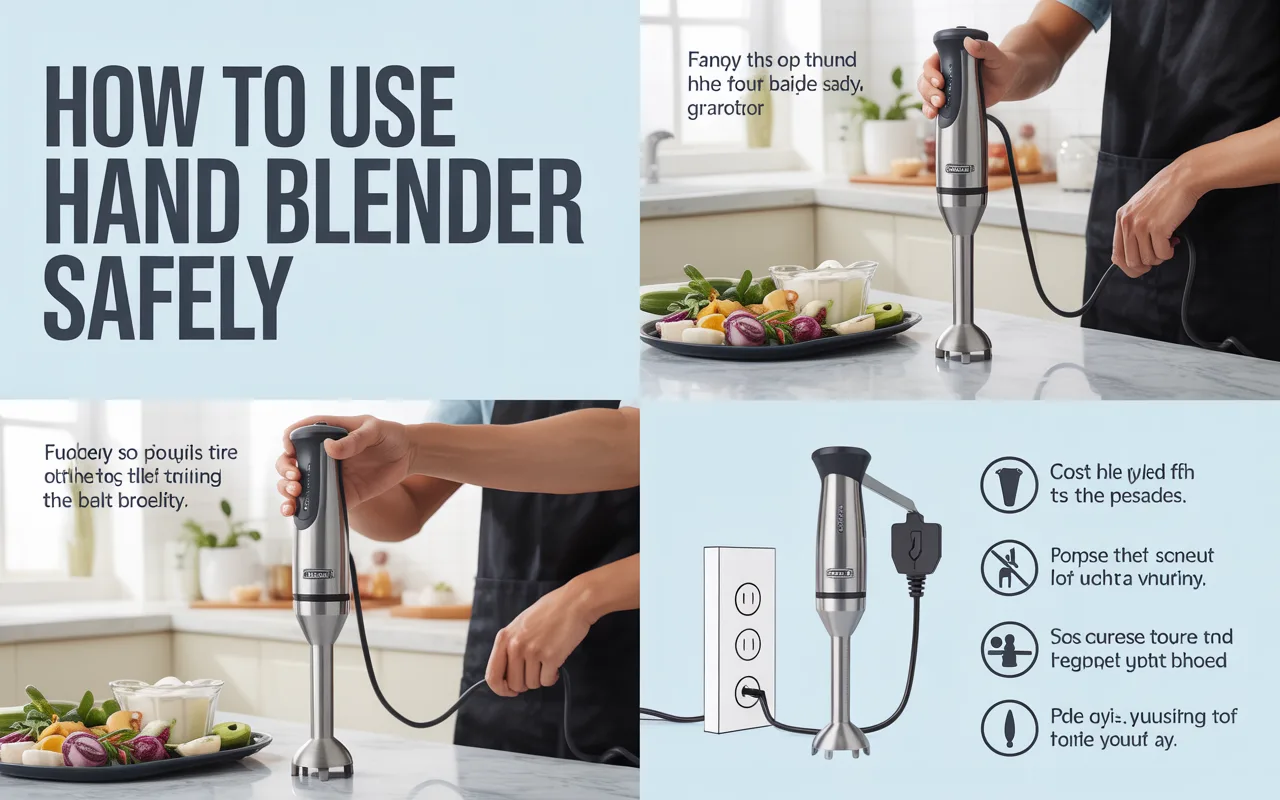
To use hand blender safely, always submerge blades before starting, choose a deep container, and never immerse the motor in water. This guide covers essential tips for accident-free blending every time.
Let’s talk about your hand blender. That handy tool that makes soup silky, whips cream in a minute, and blends a smoothie without the big cleanup. It’s a kitchen hero. But those sharp, fast moving blades can also cause a real mess or worse, an injury, if we’re not careful. I’ve used hand blenders for years, from cheap models to professional ones, and I’ve learned that safety isn’t just about following rules. It’s about building good habits that let you cook without worry. This guide will show you exactly how to use hand blender safely every single time.
Why Hand Blender Safety Matters
It might seem simple: you plug it in and press a button. But a hand blender, also called an immersion blender, is a powerful motor attached to a very sharp blade. It can move at thousands of revolutions per minute. Without proper care, it can splash hot liquid, chip your favorite bowl, or catch on something unexpectedly. Taking a few moments to learn safe practices protects you, your kitchen, and your appliance. It turns a potentially risky task into a smooth, confident part of your cooking routine.
Before You Even Plug It In: Setup for Safety
Safety starts before you press the “on” button. Good prep is your best friend.
First, read your manual. I know, it’s tempting to toss it in a drawer. But each model is a little different. Your manual has the specific dos and don’ts from the people who made your blender. It tells you how long you can run it before it needs a break and how to clean it properly.
Next, check your equipment. Make sure the blender shaft is firmly screwed into the motor body. A loose connection is a hazard. Look at the blades. Are they dull or bent? Dull blades can make the motor work too hard, and bent blades can cause unstable blending.
Now, choose your container wisely. This is a huge step to use hand blender safely. The container must be deep enough to prevent splashing. A tall, narrow vessel is better than a wide, shallow pan. It should also be stable. A lightweight plastic bowl might tip over. I prefer a heavy pot, a deep glass measuring jug, or the plastic beaker that often comes with the blender. Make sure the material is compatible. Don’t use a metal container if your blender has a metal shaft, as it could scratch or cause a loud grating noise.
As chef Julia Child once said, “Learn how to cook. Try new recipes, learn from your mistakes, be fearless, and above all have fun.” Being fearless in the kitchen starts with being safe, so you can truly enjoy the process.
Quick Pre-Use Checklist
| Step | Why It’s Important |
|---|---|
| Read the manual | Know your specific model’s limits. |
| Check blade attachment | Ensures everything is secure. |
| Select a deep, stable pot | Prevents dangerous splashes and spills. |
| Ensure ingredients are cool enough | Prevents steam pressure burns. |
| Plan your cord placement | Keeps it away from water and the blending path. |
The Golden Rules During Operation
This is the moment of action. Following these rules will become second nature.
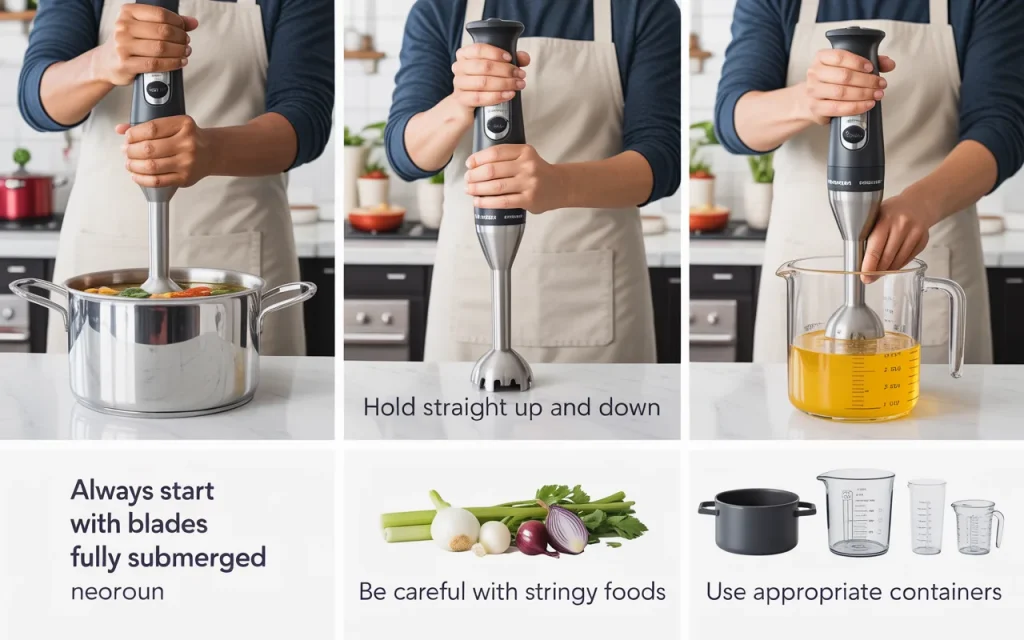
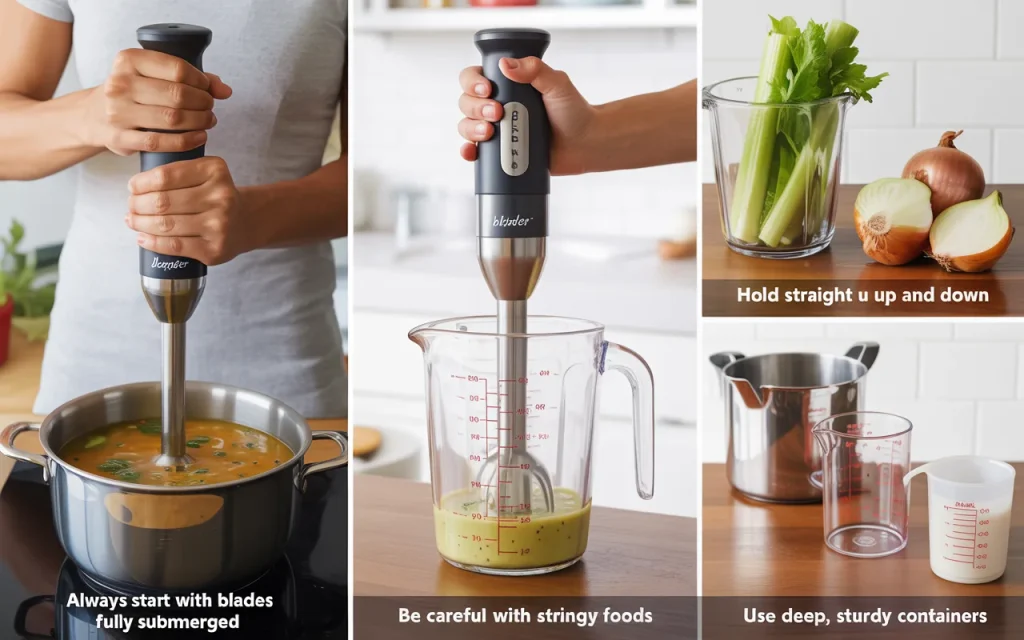
1. Keep the Blender Submerged. Always start with the blades fully dipped in the food or liquid before you turn it on. If you lift it out while it’s running, you will create a whirlwind of splatter. Turn the blender off before lifting it out of the container.
2. Mind the Angle. Hold the blender straight up and down. Tilt it slightly if you need to move it around, but avoid holding it at a sharp angle. This helps pull food down into the blades evenly and prevents splashing.
3. Start Slow, Then Ramp Up. Many hand blenders have speed settings. Always start on the lowest speed. This gives you control and prevents ingredients from exploding upward. Once things are combined, you can increase the speed.
4. Watch for Tangles. Be very careful with stringy or fibrous foods like celery, onion skins, or tough spinach stems. They can wrap around the blade shaft and cause the motor to jerk or stall. Chop these items smaller first.
5. Listen to Your Machine. Your hand blender has a sound. A smooth, steady hum is good. A labored, whining sound means it’s struggling. If you hear that, stop immediately. You might need to adjust the angle, add more liquid, or take a break to let the motor cool down.
Special Care for Hot Liquids
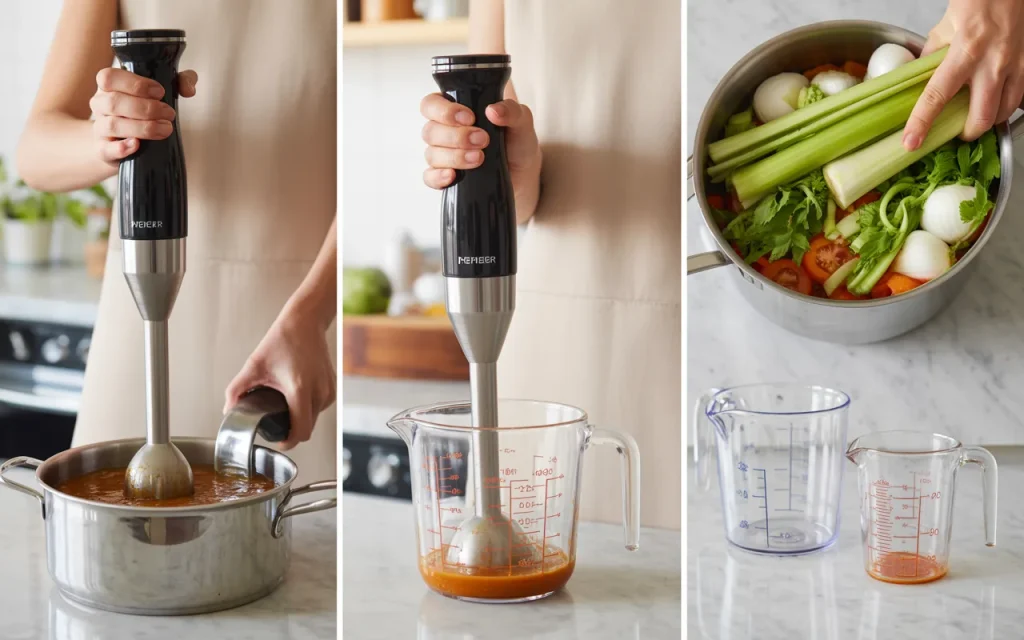
Blending hot soup is a classic job for a hand blender, but it’s also the most risky. Hot splashes can burn. To use hand blender safely with hot food, let it cool for a few minutes off the boil. The steam from very hot soup can build up pressure inside the blending cup. Transfer the soup to a tall, sturdy pot that is only half full. This gives plenty of room for movement. Hold the lid of the pot over the top with your free hand, using it as a shield. Leave a small opening for the blender shaft to fit through. This simple trick contains almost all splatters.
Cleaning and Storage: Safety After the Job
A clean blender is a safe blender. Food gunk left on the blades is not just unsanitary; it can harden and make the blades harder to handle next time.
Never, ever immerse the motor unit in water. This is the most common mistake that kills hand blenders. To clean, simply unplug the appliance. If the blade shaft is removable, detach it. Most blade shafts can be washed in warm, soapy water. Rinse and dry it thoroughly. For the motor body, wipe it down with a damp cloth. If food has splashed up into the blade assembly, you can carefully clean those crevices with a small brush or an old toothbrush.
Author Michael Pollan reminds us, “Don’t eat anything your great-grandmother wouldn’t recognize as food.” I’d add: don’t clean your tools in a way she wouldn’t recognize as safe! She’d never dunk an electrical gadget in a sink.
Store your hand blender in a dry place. Many come with a stand that holds the motor and the blades separately. If not, consider a drawer divider. Storing it loosely in a drawer with other utensils can dull the blades or damage the cord.
Common Mistakes to Avoid
We all develop bad habits sometimes. Here’s a quick list of things to stop doing right now.
- Blending in Non-Stick Pots: The blades can easily scratch and ruin the coating.
- Overfilling the Container: This guarantees a mess. Blend in batches if needed.
- Running it for Too Long: Most hand blenders are made for short bursts, not five minutes of continuous blending. Check your manual for guidance, and give it a rest.
- Using it to Crush Ice or Coffee Beans: This is too hard on the motor and can break the blades. Use a proper blender or grinder.
- Leaving it Plugged In: Unplug it as soon as you finish. This prevents any accidental starts.
Hand Blender Don’ts
| What to Avoid | The Safer Alternative |
|---|---|
| Blending in a shallow pan | Use a tall, narrow container. |
| Starting while blades are in air | Submerge blades first, then power on. |
| Ignoring the motor’s sound | Stop if it sounds strained. |
| Washing the motor unit | Wipe with a damp cloth; only wash detachable parts. |
| Storing it fully assembled | Detach blades and store separately if possible. |
Troubleshooting Simple Problems
What if something goes wrong? Don’t panic. Here are quick fixes.
- Blender Won’t Start: Check if it’s plugged in! Make sure the attachments are clicked in all the way. Some models have a safety lock that must be engaged.
- Leaking from the Shaft: This often means the seal is worn. Contact the manufacturer for a replacement part.
- Loud Grinding Noise: Stop immediately. You may have hit the bottom or side of the pot, or something hard like a fruit pit is stuck.
- Motor Smells Burnt: Unplug it right away and let it cool completely. You may have overworked it. If the smell persists after cooling, the motor may be damaged.
Hand Blender Safety with Kids
A hand blender can be a great way to get kids interested in cooking. But safety is extra important. Keep the appliance unplugged and out of reach when not in use. If you are letting an older child help, maintain full control. You hold the base of the motor unit, and let them place their hand on top of yours to feel the action. Explain each step you are taking to use hand blender safely. Never let a child operate it alone.
Frequently Asked Questions
Can I use a hand blender in a glass container?
Yes, but be very careful. Do not let the blades touch the sides or bottom, as they can chip or break the glass. Use a steady hand.
How do I know if my hand blender is powerful enough for what I want to do?
Check the wattage. For light jobs like smoothies and soups, 200 watts is fine. For tougher tasks like nut butters or thick doughs, look for 300 watts or more. When in doubt, start slow and pulse.
Is it safe to put the blending arm in the dishwasher?
This depends on the model. Many are dishwasher-safe on the top rack, but washing by hand is often safer for the blades and seals. Always check your manual.
Why does my hand blender keep splashing even when it’s submerged?
Your container might be too wide, or you might be lifting it too high. Keep it deep in the liquid and tilt it gently. Starting at a low speed also helps.
Can I use it to make mayonnaise or whipped cream?
Absolutely! These are perfect tasks. For mayo, start slow to emulsify the oil. For cream, use a deep, chilled bowl and start on medium speed.
Conclusion
Learning how to use hand blender safely is a simple set of habits that lead to a lifetime of easy, enjoyable cooking. It boils down to preparation using the right container, careful operation by keeping it submerged, and proper cleaning without wetting the motor. When you respect the power of those spinning blades, you remove fear from the equation. You get to focus on the fun part: creating delicious, smooth, homemade food with a tool that makes it quick and easy. So take these tips, blend with confidence, and enjoy every soup, sauce, and shake you make.
Remember the wise words of culinary educator Dorie Greenspan: “Good food is always a blessing, and good food that is easy to make is a double blessing.” A safely used hand blender is one of the easiest paths to that double blessing. Happy blending

3 Comments