Your cat is a sweet, loving friend. How to Stop Cat Biting Hands? Then, out of nowhere, those tiny teeth sink into your hand. It is not fun. You want to pet your cat, not fear it. Many cat owners face this. The good news is you can stop cat biting hands with patience and the right approach. This guide will help you understand why cats bite and give you clear, kind steps to fix it.
To stop cat biting hands, you must first learn why it happens. Cats do not bite just to be mean. It is how they talk and play. Here are the main reasons.
Play and Predatory Instinct Your hands move like prey. How to Stop Cat Biting Hands.Wiggling fingers look like mice or birds to a cat. When you play with your hands, you teach your cat that biting skin is okay. It turns into a game for them, but a painful one for you.
Overstimulation During Petting This is very common. You are petting your cat. It is purring. Then, it bites. This is called “petting-induced aggression.” Your cat gets too much feeling from the petting. The bite says, “I have had enough.” Watch for signs like a twitching tail, flattened ears, or skin rippling. Stop Cat Biting Hands.
Fear, Stress, or Pain A scared or hurt cat will bite to protect itself. If a cat feels trapped or startled, biting is its defense. A cat in pain may also bite if you touch a sore spot.
Seeking Attention Sometimes, a cat learns that a gentle nip makes you pay attention. Even if you yell “no,” you are still looking at and talking to them. For a cat, that is a win.
Your Immediate Reaction to a Bite What you do right after the bite is key. Do not pull your hand away fast. This can look like more prey movement. Do not yell or hit your cat. This makes them scared or more excited.
Stay calm and still. Say a firm, low “Ouch!” or “No.”
Withdraw your hand gently. Then, ignore your cat for a short time. Turn away and do not interact. This shows that biting ends all fun and attention.
Make Your Home Cat-Friendly A bored cat is more likely to play rough. Make sure your cat has outlets for its energy.
Provide plenty of toys. Have different types: ones you can wave (wand toys), ones they can chase (balls), and puzzle toys with treats inside.
Have scratching posts. Scratching is a natural stress reliever.
A simple setup can help a lot. Here is a basic list:
Essential Cat Items to Reduce Biting
Item
Purpose
Interactive Wand Toy
Lets you play safely, far from your hands.
Kickeroo or Stuffed Toy
Gives them a thing they can bite and wrestle.
Cat Tree
Provides climbing and a safe space to watch.
Puzzle Feeder
Makes mealtime fun and tires their mind.
Training Methods to Stop Cat Biting Hands
Now, let us get into the training. These methods use positive reinforcement, which means rewarding good behavior.
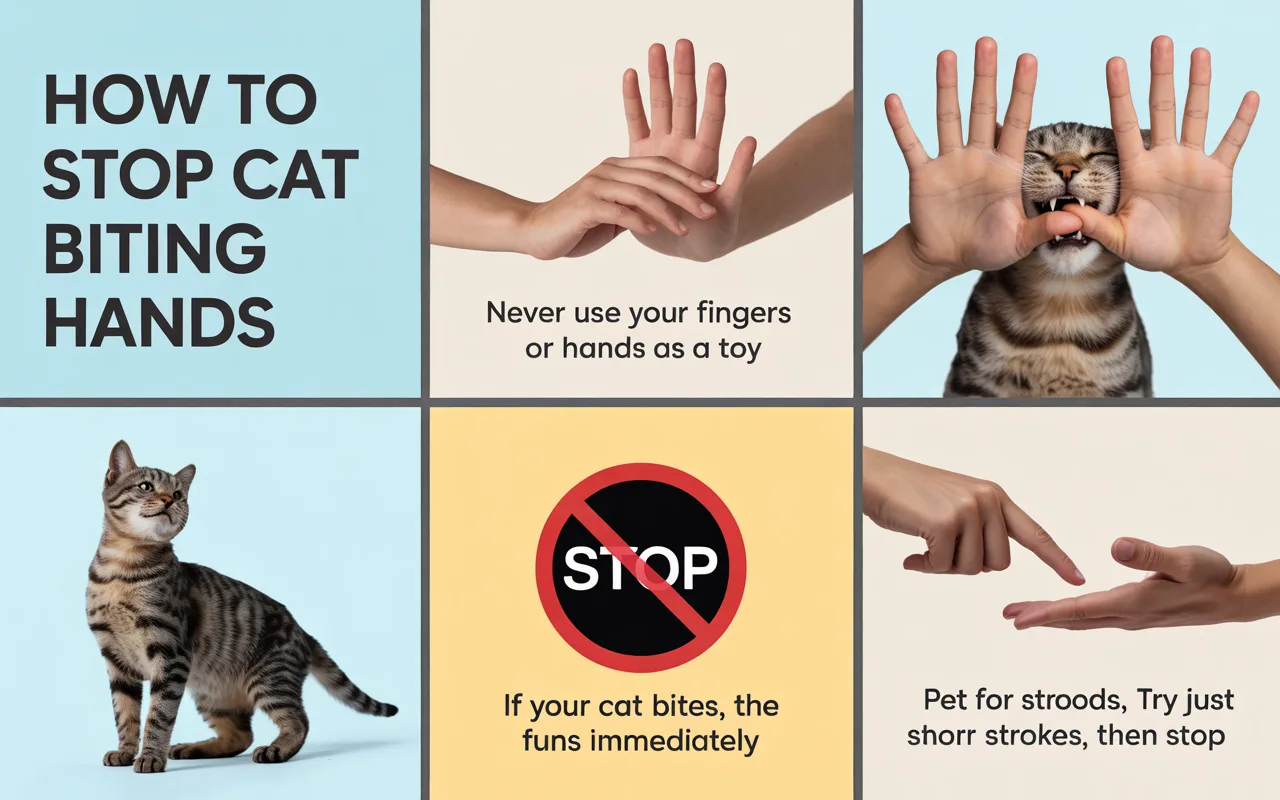
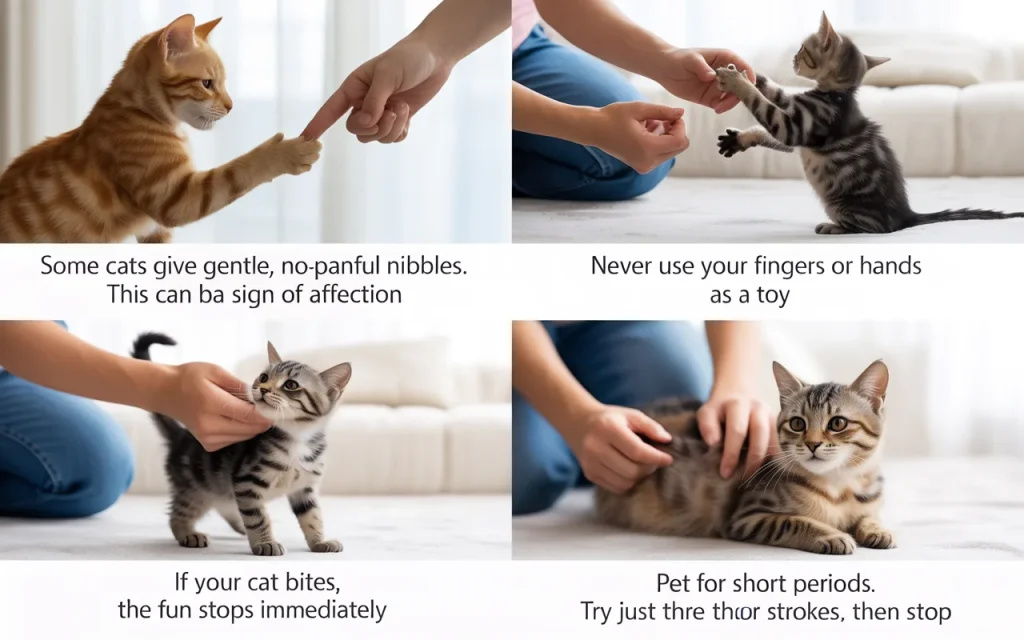
Use Toys, Never Hands, for Play This is the golden rule. Never use your fingers or hands as a toy. Always use a toy that keeps distance, like a feather wand. When you play, let your cat catch and “kill” the toy. This satisfies its hunting need. After play, give a small treat. This links play with toys to good things.
Read Your Cat’s Body Language Learn to see the bite coming before it happens. Stop petting or playing before your cat gets overstimulated. Look for these signs:
Tail twitching or thumping.
Ears turning back or flattening.
Dilated pupils.
A sudden turn of the head toward your hand.
Restlessness. As cat behaviorist Pam Johnson Bennett says, “Cats give signals. It’s our job to understand them.” By paying attention, you can prevent many bites.
The “Time-Out” Method If your cat bites, the fun stops immediately. Calmly put the cat in a boring room (like a bathroom) for 2-3 minutes. Do not yell. Just place them there and close the door. This is not a punishment, but a chance to calm down. After the short time, let them out and ignore them for a bit. This method clearly teaches that biting leads to no fun.
Dealing with Specific Biting Situations
Some biting needs special attention.
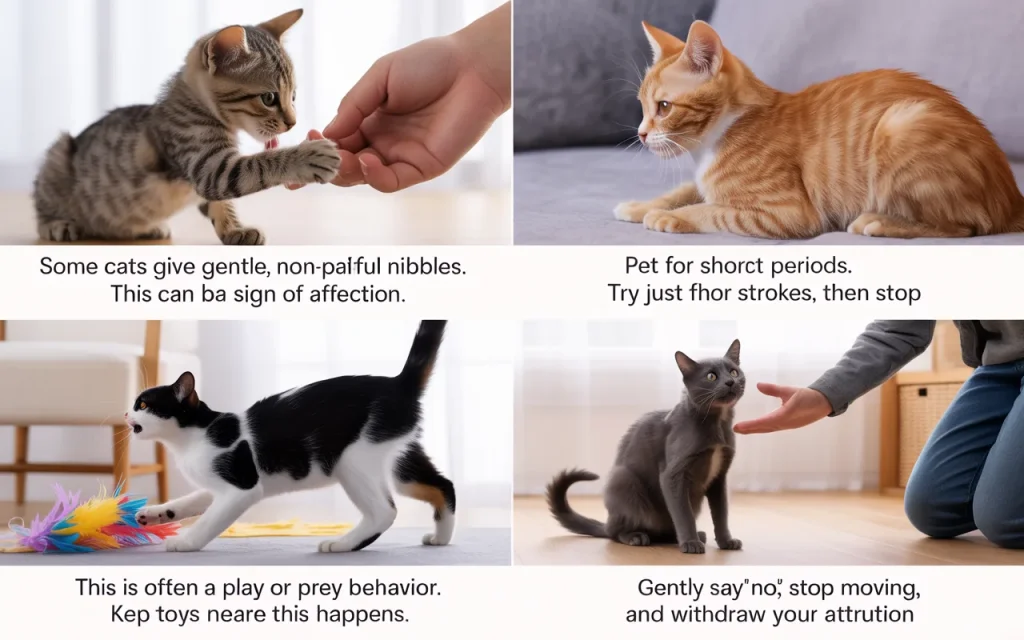
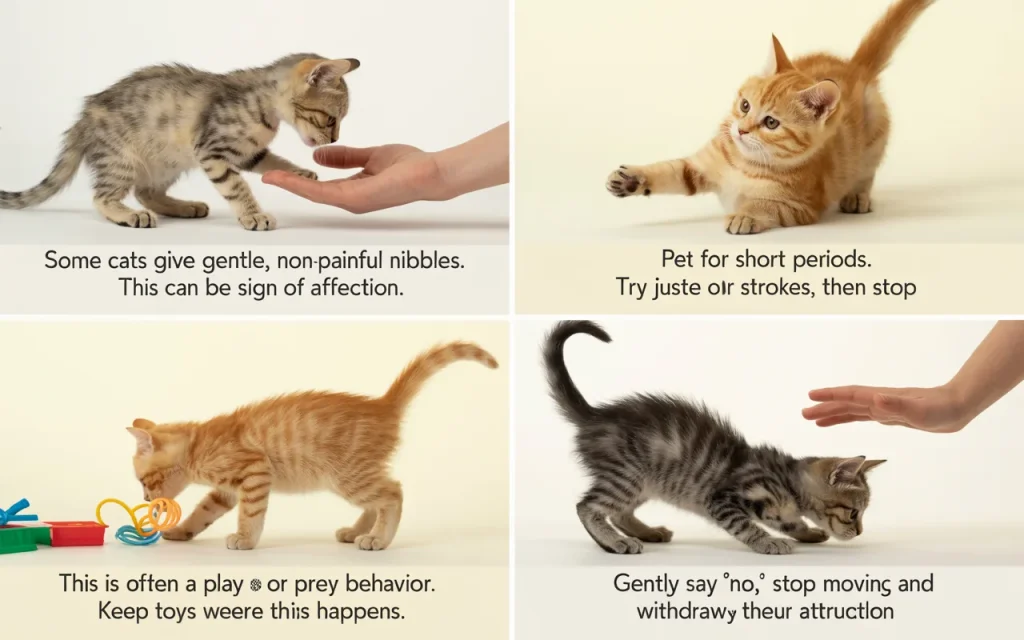
Biting During Petting Pet for short periods. Try just three or four strokes, then stop. See if your cat asks for more. Pay attention to where you pet. Most cats like the head, chin, and base of the tail. Avoid the belly. If the cat bites during petting, respect that. It means they are done.
Biting Ankles and Feet This is often a play or prey behavior. Keep toys near where this happens. If your cat ambushes your ankles, toss a toy away from you to redirect its energy. You can also try using a toy before you walk into a common ambush spot to tire them out first.
Love Bites or Nipping Some cats give gentle, non-painful nibbles. This can be a sign of affection. But if you do not like it, you can still discourage it. Gently say “no,” stop moving, and withdraw your attention. They will learn even soft mouthing is not wanted.
What Not to Do When Your Cat Bites
Some old ways can make things worse. Avoid these.
Do not physically punish your cat. Hitting or tapping their nose will only make them fear you or become more aggressive.
Do not scream or yell. Loud noises can scare your cat and add to the chaos.
Do not roughhouse with your hands. It confuses them about what is okay to bite.
When to Seek Professional Help
Most biting can be fixed at home. But sometimes, you need extra help.
If the bites are hard, break skin, or seem angry.
If your cat seems to attack without warning.
If there is a sudden change in behavior, like a friendly cat becoming a biter. In these cases, talk to your vet first to rule out pain or illness. Then, ask for a referral to a certified cat behavior consultant.
Signs You Should Call a Professional
Sign
What It Might Mean
Sudden, unprovoked attacks
Possible pain (like arthritis) or a neurological issue.
Biting paired with hissing/growling
High fear, stress, or territorial aggression.
Your cat seems confused or dazed
A medical problem needing a vet’s check.
As Jackson Galaxy, the cat behavior expert, puts it, “Meeting your cat’s needs isn’t spoiling them. It’s creating harmony.” A professional can help find needs you might have missed.
FAQ: Stop Cat Biting Hands
Q: Why does my cat bite me gently and then lick me? A: This is often called “love biting.” It is a social behavior cats use with each other. The gentle bite followed by grooming is a sign of affection, though you can still gently discourage it if it bothers you.
Q: My kitten keeps biting my hands. What should I do? A: Kittens learn bite control from their littermates. Since they are with you, you must teach them. Let out a high-pitched “yip!” when they bite too hard, like another kitten would. Then, pull your hand away and stop playing. Offer a toy instead. Be very consistent.
Q: How long will it take to stop my cat from biting? A: It depends on the cat and how long the habit has been going on. With steady training, you may see changes in a few weeks. Be patient and stick with the plan.
Q: Is it okay to blow air at my cat when it bites? A: It is better not to. Some cats find it very scary. Using fear can damage your bond and may not teach the right lesson. Using a firm “no” and withdrawing attention is safer and more effective.
Q: Could my cat be biting because of its food? A: It is not common, but a poor diet can make a cat cranky or hyper. Talk to your vet about the best food for your cat. A good diet supports overall good behavior.
Conclusion
Learning how to stop cat biting hands is about communication. You need to learn your cat’s language and teach them yours. Remember, your hands are for gentle pets, treats, and love, not for play-fighting. Use toys for play, watch for your cat’s signals, and always stay calm. Change will not happen in one day. But with time, your bond will grow stronger without the fear of nips and bites. Your home will be a more peaceful place for both you and your cat. The famous naturalist John Muir once wrote, “In every walk with nature one receives far more than he seeks.” The same is true with cats. The work you put into understanding them is rewarded with a deep, loving friendship.



One Comment