
Learn clear and safe steps to socialize an aggressive dog with patience and care. This guide explains causes, training steps, safety tips, and real progress signs.
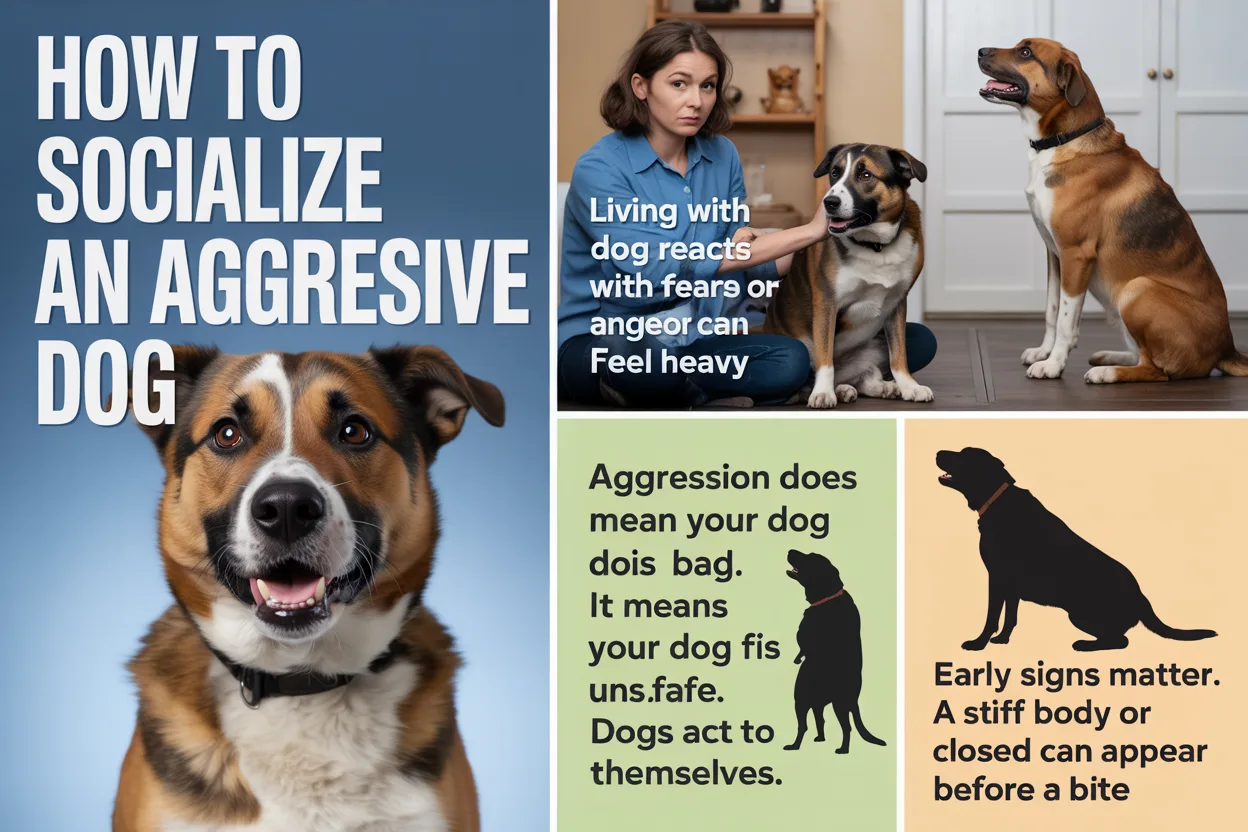
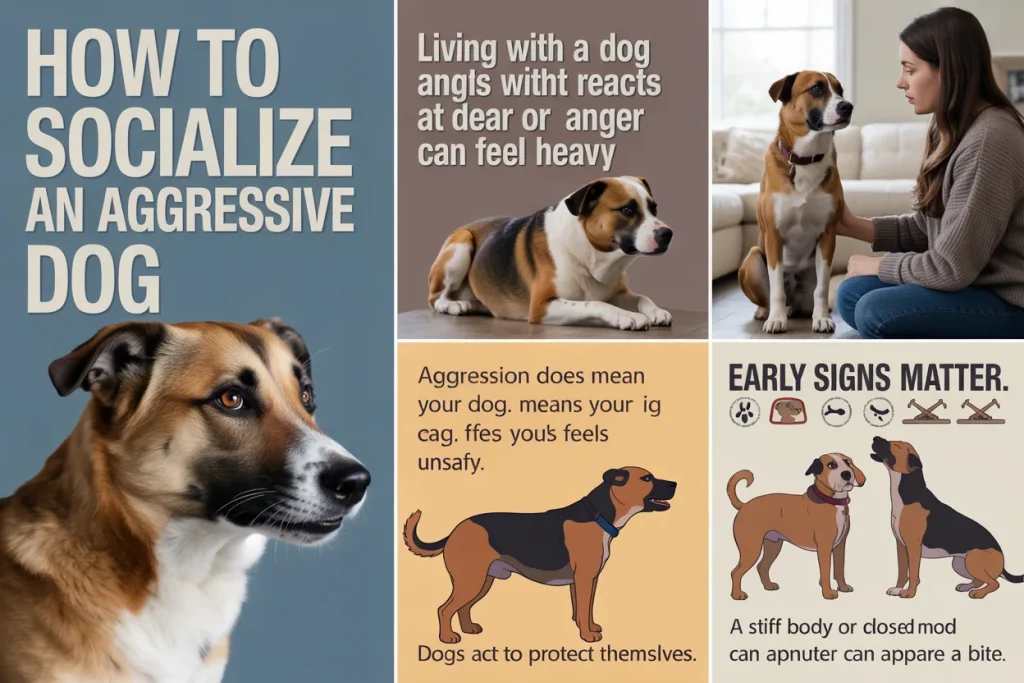
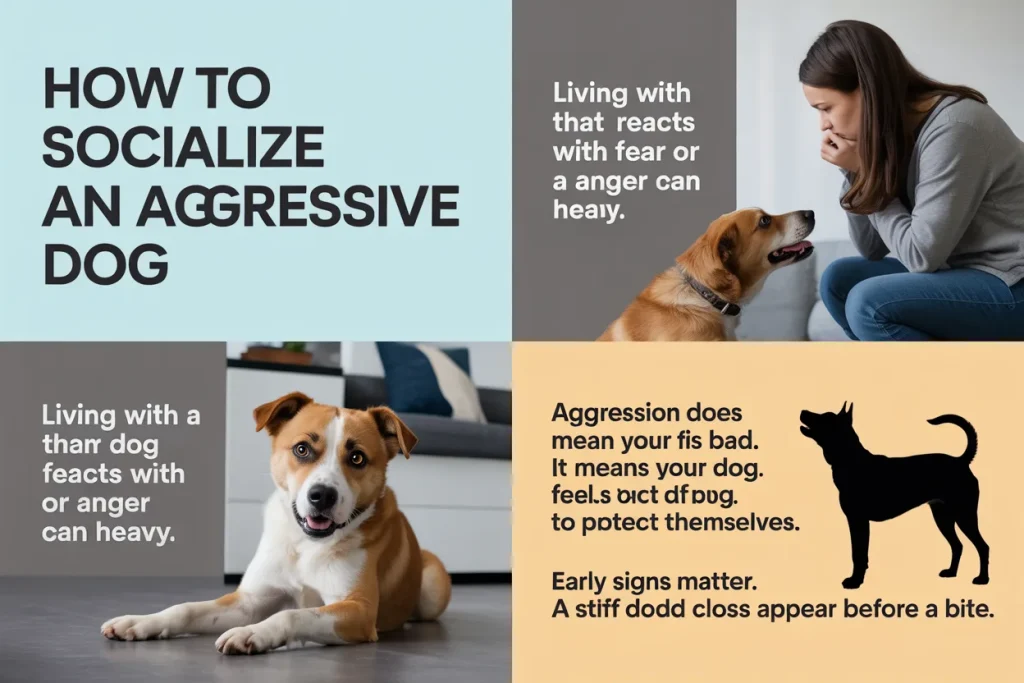
Living with a dog that reacts with fear or anger can feel heavy. Many people blame themselves. Others feel stuck. I have met many dog parents who love their dogs deeply but feel lost. Aggressive behavior can make daily life hard. Walks feel tense. Guests feel risky. Simple moments feel stressful.
Aggression does not mean your dog is bad. It means your dog feels unsafe. Dogs act to protect themselves. They react because they fear pain, loss, or danger. With the right steps, many dogs can learn calmer ways to cope.
This guide explains how to socialize an aggressive dog in a clear and kind way. It focuses on safety, trust, and slow progress. You will learn how to read your dog, how to plan social steps, and how to avoid common errors. The goal is not perfection. The goal is peace.
“Aggression is often fear asking for space.”
Dr. Sophia Yin
What Aggression Means in Dogs
Aggression is a form of communication. Dogs use it when they feel trapped or scared. They growl, snap, bark, or bite to create distance. These actions are warnings.
Common Signs of Aggression
Aggression shows in many ways. Some signs are loud. Others are quiet.
- Growling
- Snapping
- Lunging
- Freezing
- Hard staring
- Raised fur
- Tight mouth
Early signs matter. A stiff body or closed mouth can appear before a bite. Learning these signs keeps everyone safe.
Why Dogs Become Aggressive
Aggression has causes. Knowing them helps guide training.
- Fear from past events
- Poor early social time
- Pain or illness
- Guarding food or toys
- Leash stress
- Hormone changes
Each dog has a story. Respecting that story builds trust.
Why Socialization Helps Aggressive Dogs
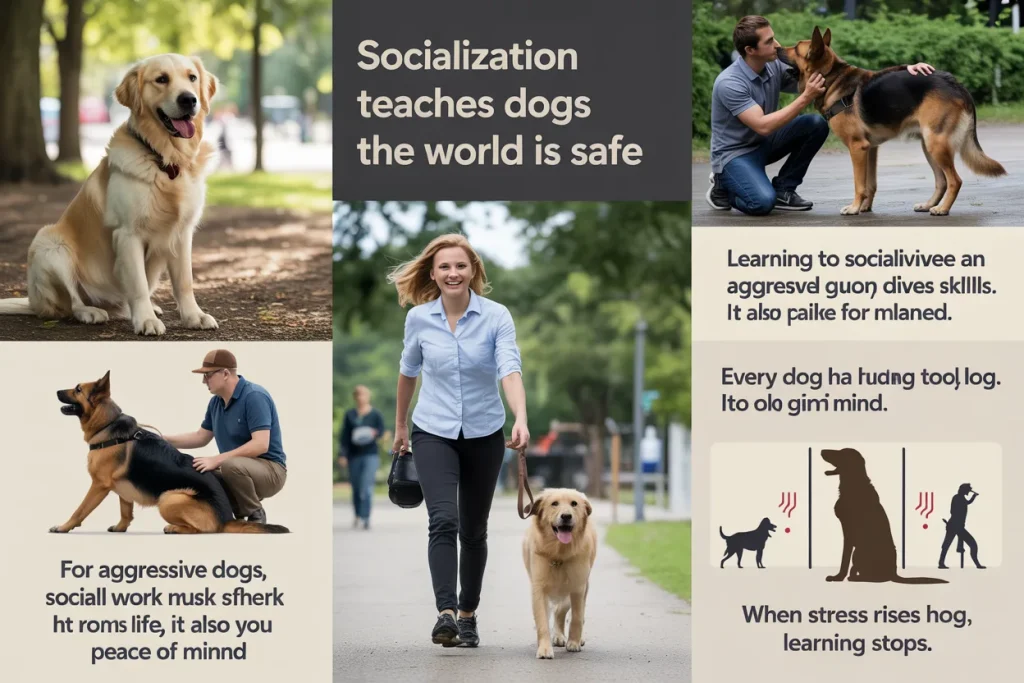
Socialization teaches dogs that the world is safe. It replaces fear with calm. For aggressive dogs, social work must be slow and planned.
Socialization does not mean forcing contact. It means safe exposure. Your dog learns to watch without panic. Over time, calm moments grow.
Learning to socialize an aggressive dog gives your dog skills for life. It also gives you peace of mind.
“Slow change lasts longer than fast force.”
Patricia McConnell
Safety Comes First Always
Safety protects your dog and others. Training cannot work without it.
Tools That Help Safety
- Strong leash
- Well fitted harness
- Secure gates
- Calm space at home
- Basket muzzle if needed
A muzzle is not a failure. It is a sign of care.
Know Stress Limits
Every dog has a limit. When stress rises too high, learning stops. Watch body language. Step back early. Calm always comes before progress.
Step One: Rule Out Health Issues
Pain can change behavior fast. A dog in pain may snap without warning.
Vet Check Matters
A full check can find:
- Joint pain
- Dental pain
- Ear pain
- Vision loss
- Hormone shifts
Treating pain can reduce aggression without training.
Step Two: Learn Your Dog’s Triggers
Triggers cause reactions. Finding them helps plan safe steps.
Common Triggers
- Strangers
- Other dogs
- Children
- Loud sounds
- Touch
- New places
Keep notes for two weeks. Write what happened before each reaction.
Trigger Tracking Table
| Trigger | Reaction | Distance | Notes |
|---|---|---|---|
| Dogs on walks | High | 15 meters | Bark and lunge |
| Visitors | Medium | Doorway | Growl |
| Grooming | Low | Close | Lip lick |
This table shows patterns and change over time.
Step Three: Build Trust at Home
A calm home helps learning.
Create a Predictable Day
Dogs feel safe with routine.
- Same meal times
- Quiet walks
- Rest breaks
- Calm play
Avoid chaos during training.
Strengthen Your Bond
Use rewards to build trust.
- Soft praise
- Treats
- Gentle touch if welcomed
Never punish fear. Fear grows with force.
Step Four: Controlled Social Exposure
This is the core of learning how to socialize an aggressive dog.
What Controlled Exposure Is
Your dog sees a trigger at a safe distance. Your dog stays calm. You reward calm. That is success.
Distance Is Key
Start far away. Farther than you think. Distance keeps stress low. Over time, reduce distance slowly.
Exposure Planning Table
| Situation | Start Distance | Reward | Calm Sign |
|---|---|---|---|
| Dog sighting | 20 meters | Treat | Loose body |
| Guest sound | Behind gate | Praise | Quiet |
Slow steps build real change.
Step Five: Use Positive Rewards Only
Rewards teach dogs what works.
Why Force Fails
Force may stop behavior for a moment. Fear stays. Fear often grows. Calm learning fades.
Reward Calm Choices
Reward your dog for:
- Looking away
- Checking in with you
- Relaxed posture
These moments shape new habits.
“Dogs repeat what feels safe and good.”
Karen Pryor
Step Six: Teach Simple Focus Skills
Skills help dogs stay grounded.
Useful Skills
- Name response
- Hand touch
- Sit
- Stay
- Look cue
Practice at home first. Use near triggers later.
Socialize an Aggressive DogStep Seven: Leash Skills Matter
Leash tension raises stress.
Walk With Calm
Keep the leash loose. Breathe slow. Walk away if stress rises.
Avoid Sudden Pulls
Pulling adds pressure. Pressure adds fear. Calm steps work better.
Step Eight: Guests and Home Social Time
Many dogs guard their space.
Set Up Guests for Success
- Use gates
- Ask guests to ignore the dog
- Allow quiet watching
Let your dog choose contact. Choice builds trust.
Step Nine: Dog to Dog Social Work
Dog social work needs care.
Parallel Walks
Walk two dogs at a distance. Same path. Same pace. No greeting. Calm sharing of space.
Play Is Optional
Some dogs never enjoy play. Calm presence is enough.
Step Ten: Professional Help Is Support
Some cases need expert care.
Signs You Need Help
- Bite history
- Rising fear
- Many triggers
- Little progress
Certified trainers and behavior vets can help guide safe plans.
Common Mistakes to Avoid
Mistakes slow growth.
Avoid These Errors
- Forcing greetings
- Punishing growls
- Moving too fast
- Ignoring stress signs
Growls are warnings. Respect them.
How Long Does Socialization Take
There is no fixed time. Some dogs need months. Some need years. Progress depends on history and care.
Small wins matter. A calm glance is success.
Can Older Dogs Learn Social Skills
Yes. Age does not stop learning. Older dogs may move slower. They still learn with kindness.
Emotional Support for Dog Parents
Caring for an aggressive dog can feel lonely. Support helps.
Helpful Support Options
- Trainer groups
- Trusted learning sources
- Friends who respect rules
You are not failing. You are trying.
Using the Focus Keyword in Real Life
Many people search for ways to socialize an aggressive dog because they want peace. This guide shares steps used by trainers and vets. Each dog is unique. Each step builds trust.
Learning how to socialize an aggressive dog takes time. The process to socialize an aggressive dog starts with safety. To socialize an aggressive dog well, calm must lead. When you socialize an aggressive dog with care, fear can soften. Many people learn to socialize an aggressive dog by moving slow. Each chance to socialize an aggressive dog safely matters. Patience helps you socialize an aggressive dog without harm. Trust grows when you socialize an aggressive dog with respect. Calm steps help socialize an aggressive dog over time.
Frequently Asked Questions
Can all aggressive dogs be socialized
Many dogs improve a lot. Some need life long care plans. Success means safety and calm.
Should I use a muzzle
A basket muzzle can add safety. Introduce it slowly with treats.
Is aggression a training failure
No. Aggression reflects fear or pain. Training supports change.
Can group classes help
Only with expert guidance and safe setup.
How often should I train
Short daily sessions work best. Five minutes is enough.
Conclusion
Learning how to socialize an aggressive dog is an act of patience and care. Aggression does not define your dog’s heart. It shows fear and need. With calm steps, safe plans, and steady support, many dogs learn better ways to cope.
Progress is personal. Compare your dog only to the past. Celebrate calm moments. Trust grows in small steps. With time, kindness, and support, you and your dog can share a calmer life together.

3 Comments