Learn how smart kitchen safety features help prevent fires, gas leaks, and burns. This guide covers sensors, auto shutoffs, and alerts for a safer home.
Every year, home fires start in the kitchen more than any other room. Burns, cuts, and gas leaks also happen too often. But new technology now gives us better ways to stay safe. I have spent years testing home safety devices, and I want to share what actually works. You do not need a full house renovation to add these tools. Many smart kitchen safety features are easy to install and use. They watch over your cooking when you get busy or distracted. Let me show you how they work, why they matter, and which ones you should buy first.
Why Your Kitchen Needs Smart Safety Upgrades
The kitchen is the busiest room in any home. You cook, eat, chat, and sometimes rush to answer the phone or help kids with homework. In that short distraction, a pot can boil over, oil can catch fire, or gas can leak without any smell. Traditional smoke alarms only go off after a fire starts. That is too late. Smart kitchen safety features act before danger grows. They detect heat changes, gas presence, water leaks, and even forgotten stoves. Then they send alerts to your phone or turn off appliances automatically. This early warning gives you time to fix the problem safely.
Quote 1: “Prevention is always cheaper than repair. A small sensor today can stop a kitchen fire tomorrow.” — Linda Graves, Home Safety Specialist
Top 7 Smart Kitchen Safety Features (With Comparison Table)
Not all devices are the same. Some focus on fire prevention. Others watch for gas or water. Below is a quick table to help you see the main types of smart kitchen safety features available right now.
| Safety Feature | What It Does | Best For |
|---|---|---|
| Smart smoke & heat sensor | Detects fast temperature rise and smoke | All kitchens |
| Gas leak detector | Senses natural gas or propane | Gas stoves and ovens |
| Automatic stove shutoff | Turns off stove if no motion detected | Elderly or busy families |
| Smart water leak sensor | Alerts for dishwasher or sink leaks | Near sinks and dishwashers |
| Smart plug with timer | Cuts power to appliances after set time | Coffee makers, toasters |
| Motion sensor for stove | Detects if you leave cooking area | Open floor plan kitchens |
| Smart carbon monoxide detector | Checks for CO from gas appliances | Gas cooking homes |
| Price Range | Typical Cost | Monthly Fees |
|---|---|---|
| Entry level | $20 – $50 | None |
| Mid range | $50 – $150 | $0 – $3 |
| High end | $150 – $400 | $0 – $10 |
You can start with one or two devices and add more later. Even one smart kitchen safety features device makes a real difference.
Smart Smoke and Heat Sensors: Better Than Old Alarms
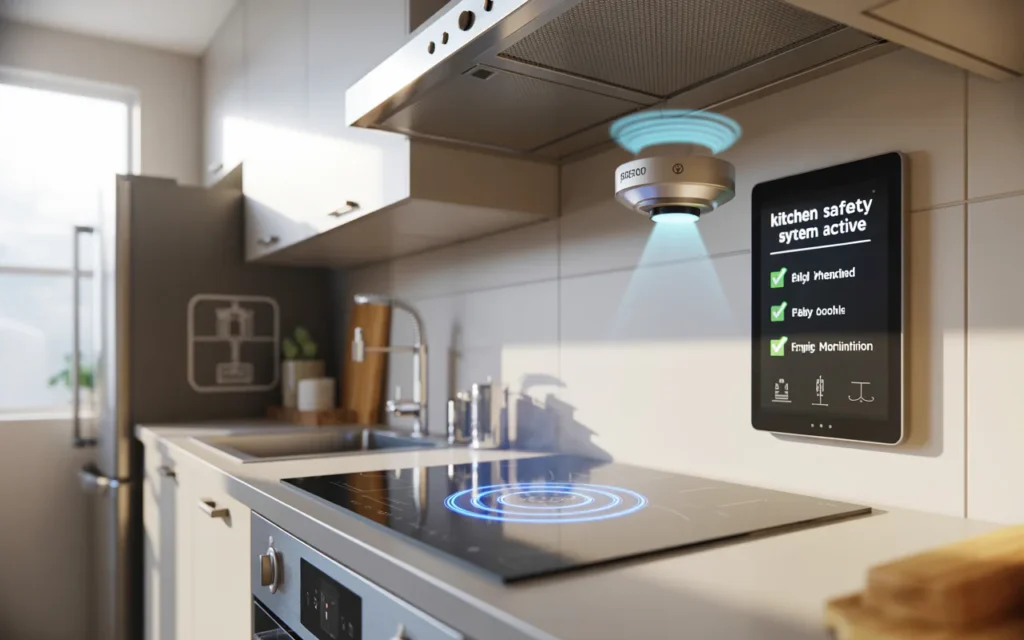
Old smoke alarms go off from burnt toast. That is annoying. But worse, they often fail to alert early enough for slow, smoldering fires. Smart smoke and heat sensors work differently. They check both smoke particles and temperature changes. If the heat near your stove rises faster than normal cooking, you get a phone alert. Some models connect to smart speakers and say exactly where the danger is, like “Heat spike near the oven.”
I recommend placing one sensor on the ceiling near your stove but not directly above it. Direct steam or smoke from normal cooking can cause false alerts. Keep it about 6 to 10 feet away. These sensors also test themselves and send battery alerts to your phone. You never have to guess if they work.
Quote 2: “A smart heat sensor saved my kitchen last year. I left a pan of oil on high heat and walked away. My phone buzzed before any smoke appeared.” — David Chen, Homeowner and Parent
Gas Leak Detectors for Stove and Oven Safety
Natural gas has no smell on its own. Gas companies add a chemical called mercaptan to give it that rotten egg odor. But some people cannot smell it well, especially older adults or those with sinus issues. Also, a slow leak might not reach your nose before it becomes dangerous. Smart gas leak detectors plug into an outlet near your stove. They sense even tiny amounts of gas and send alerts to your phone. High end models also trigger an automatic shutoff valve on your gas line.
Installing a gas shutoff valve requires a professional plumber. But the detector itself is plug and play. Place it 6 to 12 inches from the ceiling because natural gas rises. For propane (used in some homes and outdoor kitchens), place it near the floor since propane sinks. Check your appliance type before buying. These are some of the most useful smart kitchen safety features for gas stove owners.
Automatic Stove Shutoff Devices
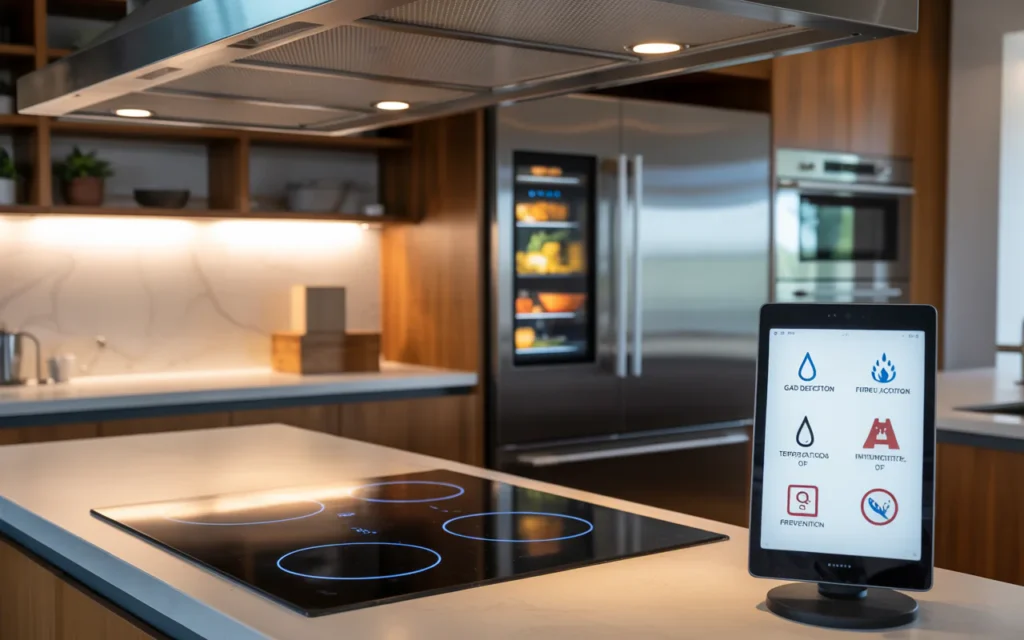
This is my favorite safety tool for busy families. An automatic stove shutoff device connects to your stove knob or power cord. For electric stoves, it uses motion sensors. If you walk away and do not return within a set time (like 5 or 10 minutes), it turns off the stove. For gas stoves, some models attach to the knob and physically rotate it to off position. Others use a timer that you set manually before cooking.
These devices help a lot for people with memory issues, parents of young kids, or anyone who often gets distracted. You can set the time limit yourself. For example, when boiling pasta, you might set 15 minutes. If you do not come back to press the reset button, the stove shuts down. No more finding a blackened pot hours later.
Smart Water Leak Sensors for Kitchen Floods
A burst dishwasher hose or forgotten running sink can cause thousands in damage. Smart water leak sensors are small discs that sit on the floor. They sense water instantly and send a loud alert plus a phone notification. Some models also shut off a main water valve if you buy an add on controller. Place these under your sink, behind the dishwasher, and near the refrigerator water line.
I suggest testing these sensors every three months. Just put a wet finger across the two metal prongs on the bottom. The device should beep or send a test alert. If it does not, change the battery. These sensors are cheap, often under 30 dollars. They pay for themselves the first time they stop a leak.
Quote 3: “Most kitchen floods happen from small, slow leaks. By the time you see water on the floor, the damage has spread to cabinets and subflooring.” — Nora Simmons, Water Damage Restoration Expert
Smart Plugs and Timers for Small Appliances
Coffee makers, toasters, slow cookers, and electric kettles cause many kitchen fires. People leave them on by accident or forget to turn them off before leaving the house. A smart plug solves this. You plug your appliance into the smart plug, then the plug into the wall. Using an app, you set a timer. For example, set your coffee maker to turn off automatically at 9 AM. Or set your slow cooker to shut off after 6 hours.
Some smart plugs also track energy use. You can see how much power each appliance uses. This helps spot faulty devices that draw too much current. Make sure your smart plug is rated for the appliance wattage. Most handle 15 amps or 1800 watts, which is fine for normal kitchen gear. Avoid using smart plugs with high heat devices like space heaters or toaster ovens unless the plug specifically says it is rated for them.
How to Set Up Smart Kitchen Safety Features Step by Step
You do not need to be a tech expert. Follow these simple steps.
Step 1: List your main risks. Do you have a gas stove? Young kids? Do you often forget to turn off the coffee maker? Write down what worries you most.
Step 2: Pick one device to start. Do not buy everything at once. A smart smoke sensor is a good first choice because it helps everyone.
Step 3: Check compatibility. Most devices work with Alexa, Google Home, or Apple HomeKit. Decide which system you use, or buy standalone devices with their own app.
Step 4: Install according to instructions. Place sensors at correct heights. For gas detectors, read if they are for natural gas or propane. They are different.
Step 5: Test each device after setup. Most have a test button. Make sure alerts reach your phone.
Step 6: Set up notifications. Choose which alerts go to your phone and which also play a loud sound. For smoke or gas, loud sound is best.
Step 7: Tell your family. Show everyone what the alerts mean. Practice what to do if an alarm goes off. This step is often skipped but very important.
Smart Kitchen Safety Features for Renters
Many people rent their home and cannot change appliances or wiring. That is okay. You still have good options. Smart plugs, water leak sensors, and battery powered smoke/heat sensors do not require permanent changes. Use adhesive strips or place sensors on countertops. For gas detection, buy a plug in model that does not need installation. When you move, take everything with you. Your landlord might even thank you for adding safety to their property.
Renters should also check if their building already has a central fire alarm system. If yes, you can still add smart sensors for extra protection. Just do not disable any existing alarms. Use both systems together for the best coverage.
Common Mistakes to Avoid
Buying smart kitchen safety features is good, but only if you use them correctly. Here are common errors.
Placing sensors too close to the stove. Direct steam, heat, or smoke from normal cooking causes false alarms. Keep a 6 foot distance if possible.
Ignoring battery alerts. Smart sensors send low battery warnings. Do not swipe them away. Change the battery within a few days.
Forgetting to test. Set a calendar reminder for the first of every month. Test all sensors. It takes five minutes.
Buying cheap no name brands. Stick with known brands like Google Nest, First Alert, Aegis, or D-Link. Cheap sensors may not work when needed.
Not having an escape plan. Sensors alert you, but you still need a plan. Know two ways out of your kitchen. Have a meeting spot outside.
Cost vs. Benefit: Are They Worth It?
Let me give you real numbers. A smart smoke and heat sensor costs about 50 to 120 dollars. A gas leak detector is 40 to 100 dollars. An automatic stove shutoff runs 100 to 300 dollars. Water leak sensors are 20 to 40 dollars each. So a full set might cost 250 to 500 dollars.
Now compare that to kitchen fire damage. The average kitchen fire repair cost is 20,000 dollars or more. A gas leak explosion can destroy a home. A water leak from a dishwasher can ruin floors and cabinets for 5,000 to 15,000 dollars. So spending 500 dollars to avoid a 20,000 dollar loss makes sense. Many insurance companies also give small discounts for smart safety devices. Call your agent and ask.
Frequently Asked Questions
Do smart kitchen safety features work without WiFi?
Some do, but you lose phone alerts. The local siren or alarm still works. For full protection, keep your WiFi on. Many devices also store data locally and send alerts when WiFi returns.
Can I use these with any stove type?
Yes. Gas, electric, and induction stoves all work with different devices. Read the product description. Automatic knob turners work on gas. Motion sensor shutoffs work on electric. Smart plugs work on any appliance with a standard plug.
How long do the batteries last?
Most sensors use coin cell or AA batteries. Expect 1 to 3 years. Smart plugs stay plugged in, so no batteries. Check each product for exact battery life.
Will my kids accidentally turn off the stove with these?
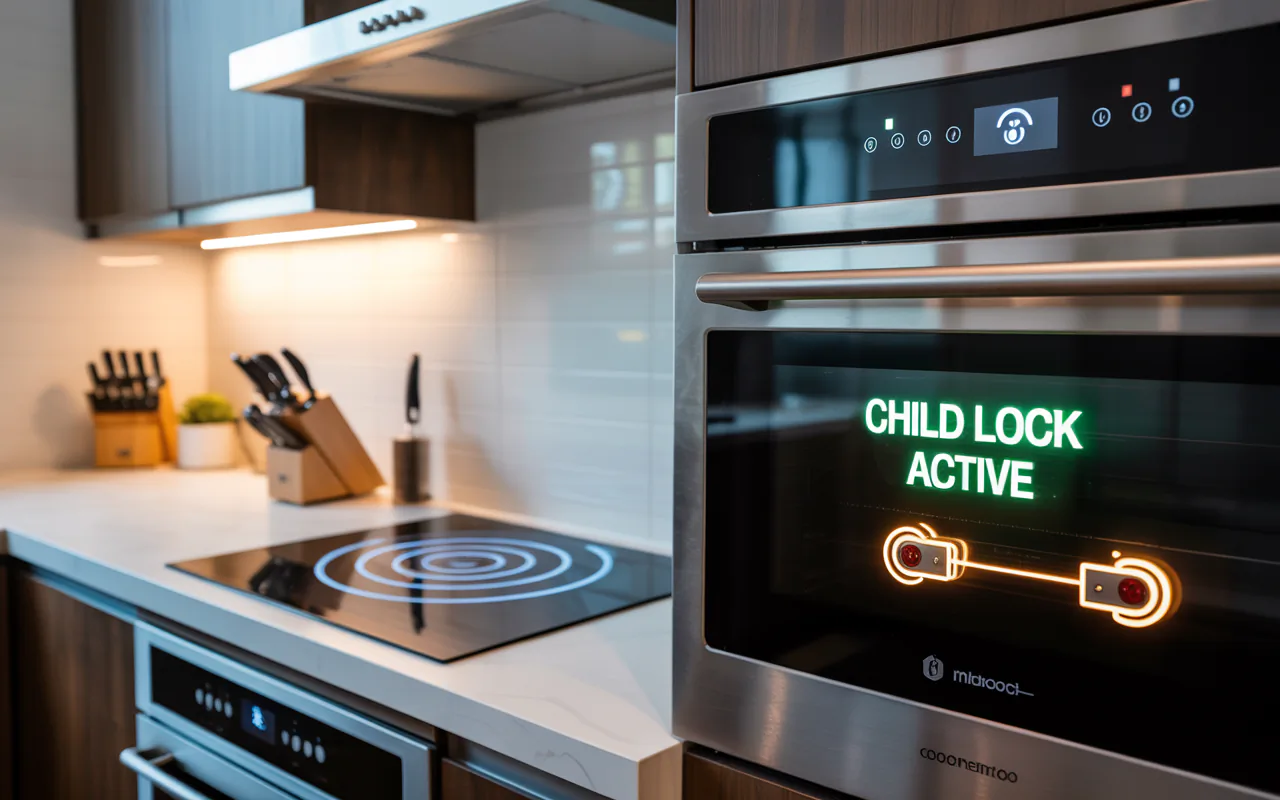
Good question. Most stove shutoff devices have a child lock or require a certain button press to reset. Read the manual. Teach older kids how the system works so they do not panic.
Are these hard to install for an older person?
Not at all. Most are plug and play. A few need two screws or adhesive tape. If you can change a light bulb, you can install these. Ask a family member to help if needed.
Do smart kitchen safety features replace regular smoke alarms?
No. Keep your regular smoke alarms. Add smart devices as extra protection. Do not remove existing alarms. Use both.
Final Thoughts
Your kitchen should be a place of joy, not worry. Adding smart kitchen safety features gives you peace of mind. You can cook a big meal while helping kids with homework. You can step outside to answer the phone. You can go to bed knowing that a sensor is watching for gas or heat. These devices are not expensive compared to the damage they prevent. Start with one sensor this week. Test it. Show your family. Then add another next month. Small steps lead to a much safer home.
Remember, no device replaces your own attention. But we all get distracted. We all make mistakes. Smart sensors catch those moments when our focus slips. They are like a second set of eyes. And that is something every cook can appreciate.