
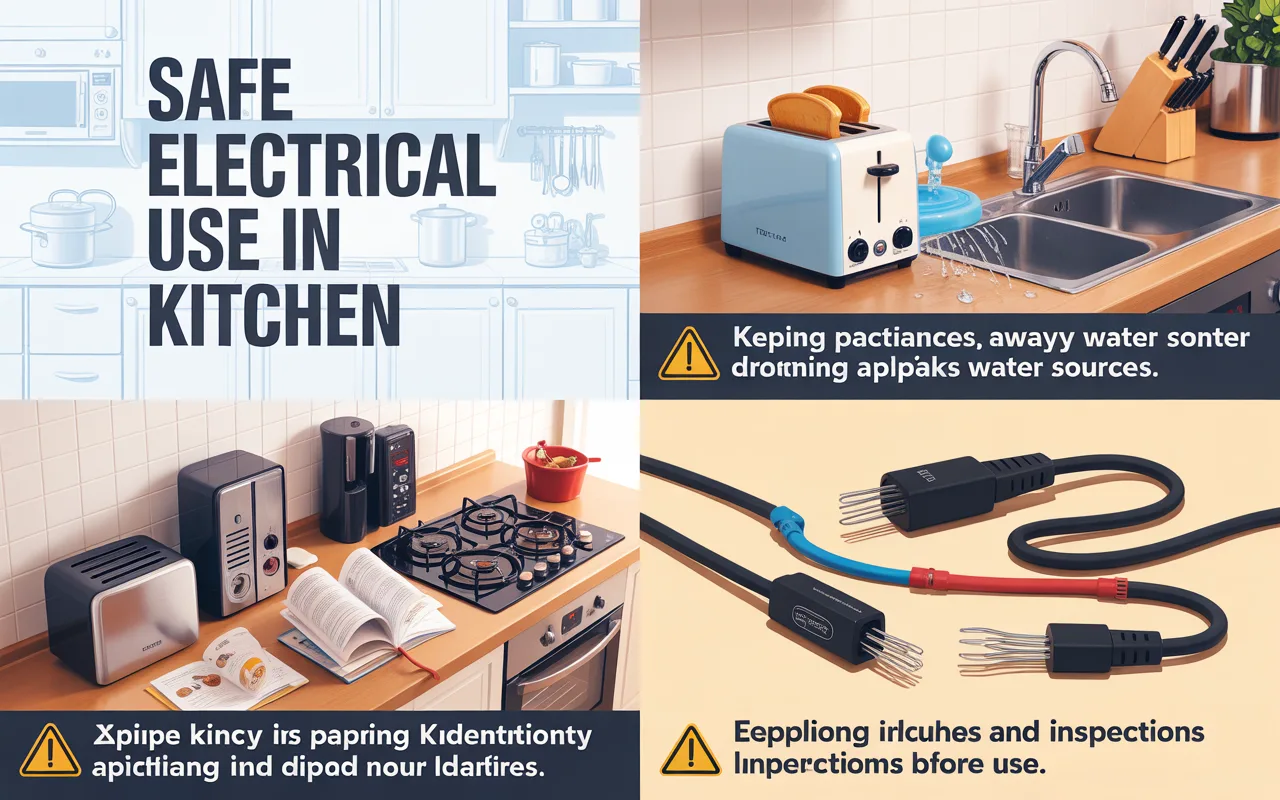
Learn the key rules for safe electrical use in kitchen areas. This guide covers appliance placement, outlet safety, cord management, and tips to prevent shocks and fires at home.
Electricity makes our kitchens work. It runs the fridge, the microwave, the toaster, and so many other helpful tools. But water and electricity are close friends in a kitchen. That mix can be risky. Learning about safe electrical use in kitchen spaces is not hard. It just takes some attention and good habits. This guide will help you keep your family and home safe while you cook and clean.
I have spent years teaching home safety to friends and family. I want to share what works. Let’s walk through the simple steps you can take today. We will look at outlets, cords, appliances, and what to do in an emergency. By the end, you will feel more confident about the electrical setup in your kitchen.
Why Safe Electrical Use in Kitchen Matters Most
The kitchen is a busy room. People cook, wash dishes, and use many gadgets at once. Water spills happen. Hands get wet. Crumbs fall into outlets. These small things can cause big problems if we ignore them.
“Electricity and water create one of the most dangerous combinations in any home,” says Maria Chen, a home safety consultant with 15 years of experience. “Kitchens have both elements constantly interacting, which is why basic precautions make such a difference.”
When we practice safe electrical use in kitchen areas, we stop accidents before they start. Fires, shocks, and damaged appliances can all be avoided. It also saves money on repairs and doctor visits. Most rules are simple common sense. But it helps to have a checklist.
Check Your Kitchen Outlets First
Outlets are where electricity enters your space. They need to be in good shape. Old or broken outlets can spark. Loose outlets can cause shorts. Here is what to look for.
Look for GFCI Outlets
GFCI stands for Ground Fault Circuit Interrupter. These outlets have two small buttons between the plug spots. One says “test” and one says “reset.” They cut power fast if water touches them. This prevents shock.
In many places, the law says kitchens must have GFCI outlets. Check yours today. If you see standard outlets near the sink, call an electrician. They can swap them out. It is a fast fix for better safe electrical use in kitchen spaces.
Watch for Signs of Trouble
Look at each outlet. Do you see black marks? Is the plastic cracked? Does a plug fall out easily? These are signs of wear. Do not use damaged outlets. Have them replaced.
Also, feel the outlet cover. If it feels warm when nothing is plugged in, that is a warning. Something may be wrong behind the wall. Get it checked soon.
Do Not Overload Outlets
Kitchens often have too many things and too few outlets. People use power strips or adapters. This can be risky. Each outlet is made for a certain amount of power. Too many devices draw too much power. Wires can overheat.
Spread your appliances around. Plug the fridge into its own outlet. Give the microwave its own spot. Avoid stacking adapters into one outlet. This simple habit improves safe electrical use in kitchen areas right away.
Appliance Placement and Usage Tips
Where you put things matters. How you use them matters too. Let’s go through some key points.
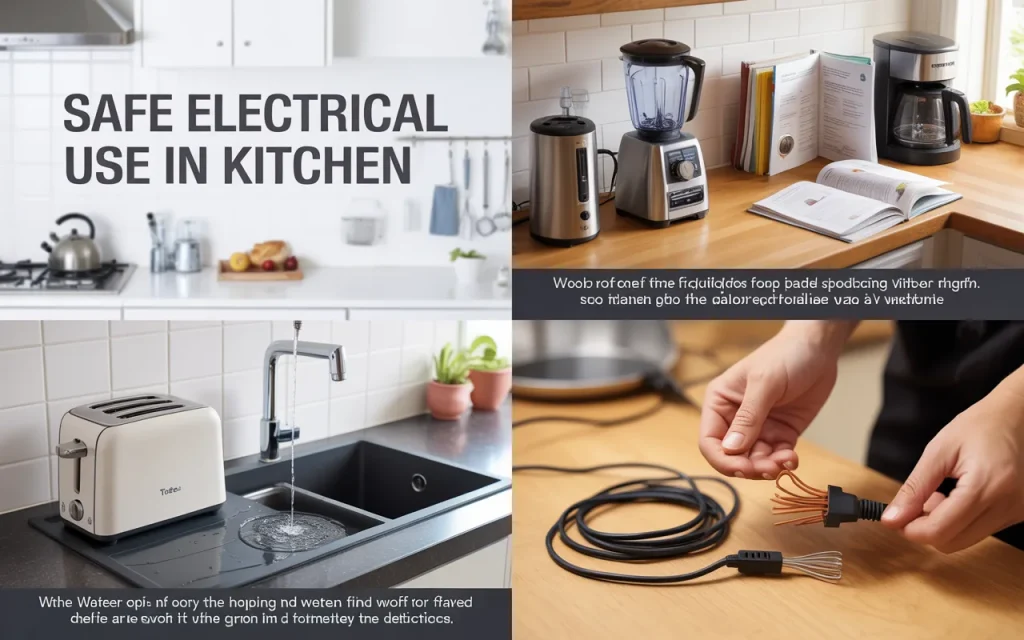
Keep Appliances Away from Water
This seems obvious, but it is easy to forget. Do not set the toaster next to the sink. Keep the mixer away from the faucet. Water splashes can reach cords and plugs. Even a few drops inside an appliance can cause a short.
When you wash dishes, be aware of what is nearby. Unplug small gadgets before you start cleaning around them. This is a core part of safe electrical use in kitchen routines.
Use Appliances the Right Way
Read the manuals for new gadgets. Each one has specific needs. Some need space around them for air flow. Others should not be covered while running.
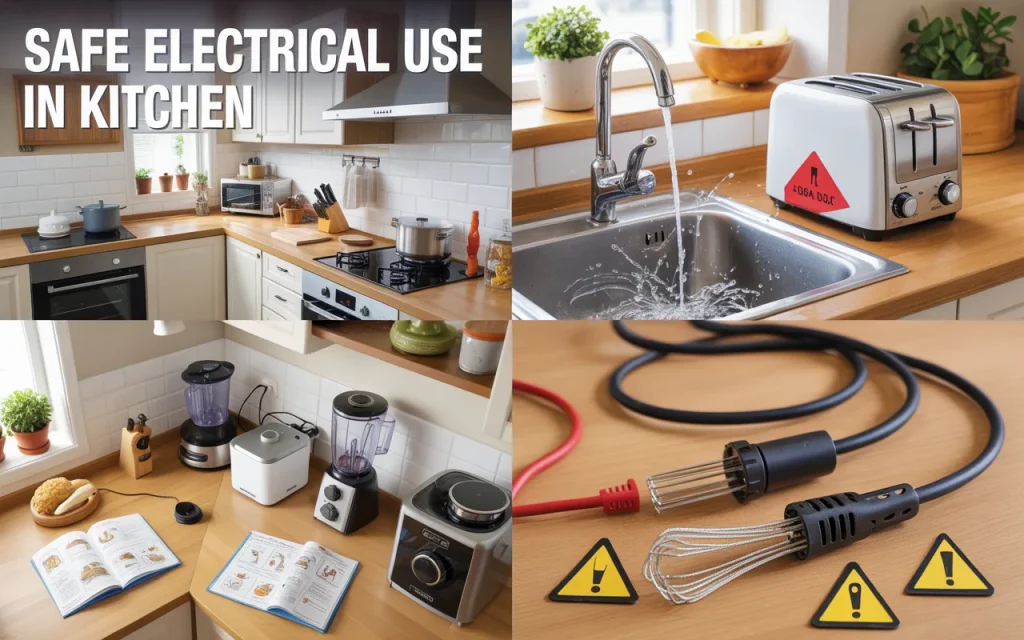
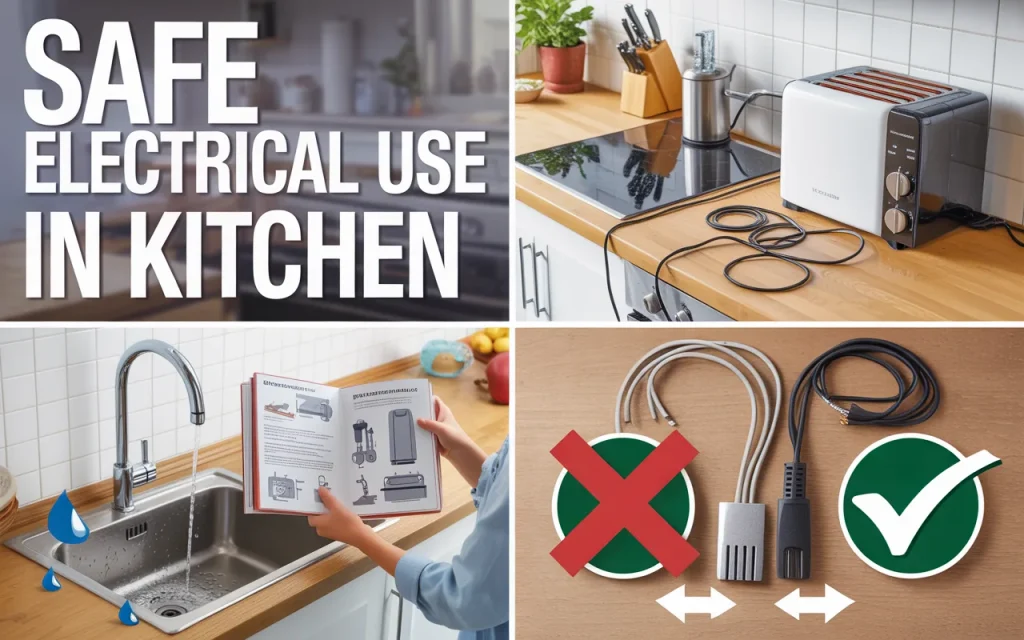
Check cords before you plug things in. Look for fraying or cuts. If a cord looks bad, stop using the item. Fix or replace it first. Damaged cords are a top cause of kitchen fires.
Unplug When Not in Use
Many people leave toasters and coffee makers plugged in all day. This is not needed. Unplugging saves energy and lowers risk. It also stops kids or pets from playing with cords.
Make it a habit. After breakfast, unplug the toaster. After coffee, unplug the maker. This small step supports safe electrical use in kitchen habits for the whole family.
| Appliance Type | Safe Practice | Common Mistake |
|---|---|---|
| Small Appliances | Unplug after each use. Store cords safely. | Leaving plugged in near sink. |
| Large Appliances | Keep cords away from heat. Clean coils yearly. | Blocking air flow with items. |
| Portable Heaters | Never use in kitchen. Too risky near water. | Using to warm the room quickly. |
Cord Management for a Safer Kitchen
Cords are everywhere in modern kitchens. They dangle from counters. They run across floors. Managing them well is key.
Keep Cords Away from Heat
Stove tops and ovens get hot. Cords near them can melt. Melted cords expose wires. This can start fires. Check where your appliance cords rest. Move them away from hot surfaces.
Also, keep cords away from the sink. Water on cords can travel to the outlet. This creates shock risk. A simple cord placement change boosts safe electrical use in kitchen areas.
Do Not Run Cords Under Rugs
Some people hide cords under mats or rugs. This is dangerous. You cannot see if the cord gets hot or damaged. Also, foot traffic wears down the cord over time. The insulation can break.
If you need a cord in a walkway, find another spot. Rearrange the room if needed. Safety comes first.
Use Cord Shorteners Correctly
Long cords can tangle. People sometimes wrap them tight to store. This can bend wires inside. Use cord wraps designed for this. Do not kink or pinch cords.
When you buy new appliances, check cord length. Get one that fits your space without extra slack. Less cord means less to manage. This helps with safe electrical use in kitchen setups.
Handling Small Kitchen Gadgets Safely
We all love kitchen gadgets. Blenders, air fryers, and electric kettles make life easier. But they need care too.
Clean Gadgets the Right Way
Unplug before cleaning. Always. Water and electricity do not mix. Wipe the outside with a damp cloth. Do not dunk the whole thing in water unless the manual says it is safe.
For parts that need washing, like blender jars, remove them first. Wash those parts separately. Let them dry fully before putting them back. This habit supports safe electrical use in kitchen cleaning routines.
Store Gadgets Properly
Put small appliances away when not in use. This keeps them clean and dry. It also stops them from getting knocked off the counter.
Make sure storage spots are dry. Damp cabinets can damage appliance parts over time. If you store things in a pantry, check for leaks or moisture.
Watch for Recalls
Sometimes products have safety issues. Makers recall them for fixes. Check online for recalls on your appliances. Sign up for alerts if you can. This catches problems early. It is a smart part of safe electrical use in kitchen practices.
“Most people never check for appliance recalls,” notes David Park, a product safety tester. “A quick search twice a year can catch faulty wiring or fire risks before they cause real harm.”
Power Strips and Extension Cords in the Kitchen
These items have their place. But kitchens need extra caution with them.
When to Use Extension Cords
Try not to use extension cords in the kitchen for permanent setups. They are for temporary use only. If you need one for a holiday meal, that is okay. But do not rely on one for your daily coffee maker.
If you must use one, pick a heavy-duty cord. Make sure it has its own circuit breaker. Keep it away from water and heat. Unplug it when done.
Power Strip Safety
Power strips help when outlets are far apart. But they are not magic. They do not add more power to the room. They just give more plug spots.
Do not plug high-power items into a strip. Things like microwaves, toasters, and fridges need direct wall outlets. They draw too much power for a strip. Overloading a strip can melt it. Follow these limits for safe electrical use in kitchen areas.
| Device Type | Use with Power Strip? | Better Option |
|---|---|---|
| Phone Charger | Yes, safe to use. | Wall outlet is fine too. |
| Toaster | No, too much power. | Direct wall outlet only. |
| Microwave | No, high wattage. | Dedicated outlet. |
| Coffee Maker | Maybe, check wattage. | Direct outlet if over 1000W. |
What To Do in an Electrical Emergency
Even with care, problems can happen. Know what to do. Stay calm. Act fast.
If a Fire Starts
Never use water on an electrical fire. Water can spread the fire or shock you. Use a fire extinguisher instead. Class C extinguishers work for electrical fires. Keep one in or near the kitchen.
If the fire is small, unplug the device if safe. If the fire grows, get out. Call for help from outside. Do not risk your safety.
If Someone Gets Shocked
Do not touch the person if they are still in contact with the electricity. You could get shocked too. Turn off the main power if you can reach it fast. Use a wooden broom handle to push them away from the source if needed. Wood does not conduct electricity well.
Once they are free, check if they are breathing. Call for medical help. Shock can cause hidden injuries. Always get checked out.
If You Smell Burning
A burning smell with no smoke needs attention. Unplug things one by one. See if the smell stops. Check outlets for heat or marks. If you cannot find the source, call an electrician. Trust your nose. It often finds trouble early. This is a key part of safe electrical use in kitchen awareness.
Teaching Kids About Kitchen Electrical Safety
Kids love to help in the kitchen. They also love gadgets. Teaching them early builds good habits.
Set Clear Rules
Tell kids not to touch plugs with wet hands. Show them how to pull a plug from the base, not the cord. Explain why outlets are not for toys.
Make it simple. Use words they understand. Practice together. Kids learn by watching you. When they see you practice safe electrical use in kitchen habits, they will copy you.
Use Outlet Covers
For homes with toddlers, outlet covers are a must. They stop little fingers from poking inside. Choose covers that are hard to remove. Some slide shut when not in use. These are easier for adults but still safe.
Check them often. Make sure they stay in place. As kids grow, teach them why the covers are there. Remove them when kids are old enough to understand the risk.
Supervise Young Helpers
When kids use small appliances, stay close. Help them plug things in. Watch while they use the mixer or toaster. Talk about what you are doing and why.
This time together builds skills and safety. It also creates good memories. Your guidance helps them grow into adults who value safe electrical use in kitchen spaces.
Regular Checks for a Safe Kitchen
Safety is not a one-time thing. It needs regular checks. Make a simple schedule.
Monthly Checks
Once a month, walk through your kitchen. Look at all outlets and cords. Feel for warmth. Look for wear. Test your GFCI outlets. Press the test button. It should cut power. Press reset to bring it back. If it does not work, replace it.
Check under the sink for leaks. Water near appliance cords is bad. Fix leaks fast. This monthly look keeps safe electrical use in kitchen habits strong.
Yearly Professional Checks
Once a year, have an electrician look things over. They can find hidden issues. They can update old wiring. They can check your panel and breakers.
This is worth the cost. It gives peace of mind. It also helps if you sell your home later. Buyers like a safe kitchen.
After Big Changes
Did you remodel? Get new appliances? Do a safety check after. New setups can change how power flows. Make sure everything still works safely. Adjust as needed.
“After any kitchen upgrade, take time to reassess your electrical habits,” suggests Anita Rao, a home improvement expert. “New appliances often have different power needs, and your old routines might need a small update.”
Frequently Asked Questions
Can I use an extension cord for my refrigerator?
No, it is best to plug a fridge directly into a wall outlet. Fridges need steady power. Extension cords can overheat or cause the fridge to work poorly.
How do I know if my outlet is a GFCI?
Look for two small buttons between the plug holes. They often say “test” and “reset.” Outlets without these are standard outlets. Kitchens should have GFCI outlets near water sources.
What should I do if an outlet sparks?
A small spark when plugging in can happen. If sparks are big or happen every time, stop using that outlet. Call an electrician to check it. Do not use it until fixed.
Is it safe to leave a slow cooker on when I leave home?
Modern slow cookers are often safe to leave on. But check the manual. Make sure nothing touches the outside. Place it away from the wall. Never leave old or damaged appliances running alone.
How often should I replace appliance cords?
Replace cords as soon as you see damage. Fraying, cuts, or exposed wires mean it is time. Do not wait. Damaged cords are a fire risk.
Conclusion
Keeping your kitchen safe from electrical problems is not hard. It takes a little time and some good habits. Start with the basics. Check your outlets. Manage your cords. Use appliances the right way. Teach your family what you learn.
Safe electrical use in kitchen spaces protects everyone in your home. It stops fires and prevents shocks. It also helps your appliances last longer. Small steps add up to big safety.
Look around your kitchen today. Move that cord away from the sink. Unplug the toaster after breakfast. Test your GFCI outlets. These simple actions make a real difference. You can do this. Your family will thank you. And you will have one less thing to worry about in your busy day.



One Comment