
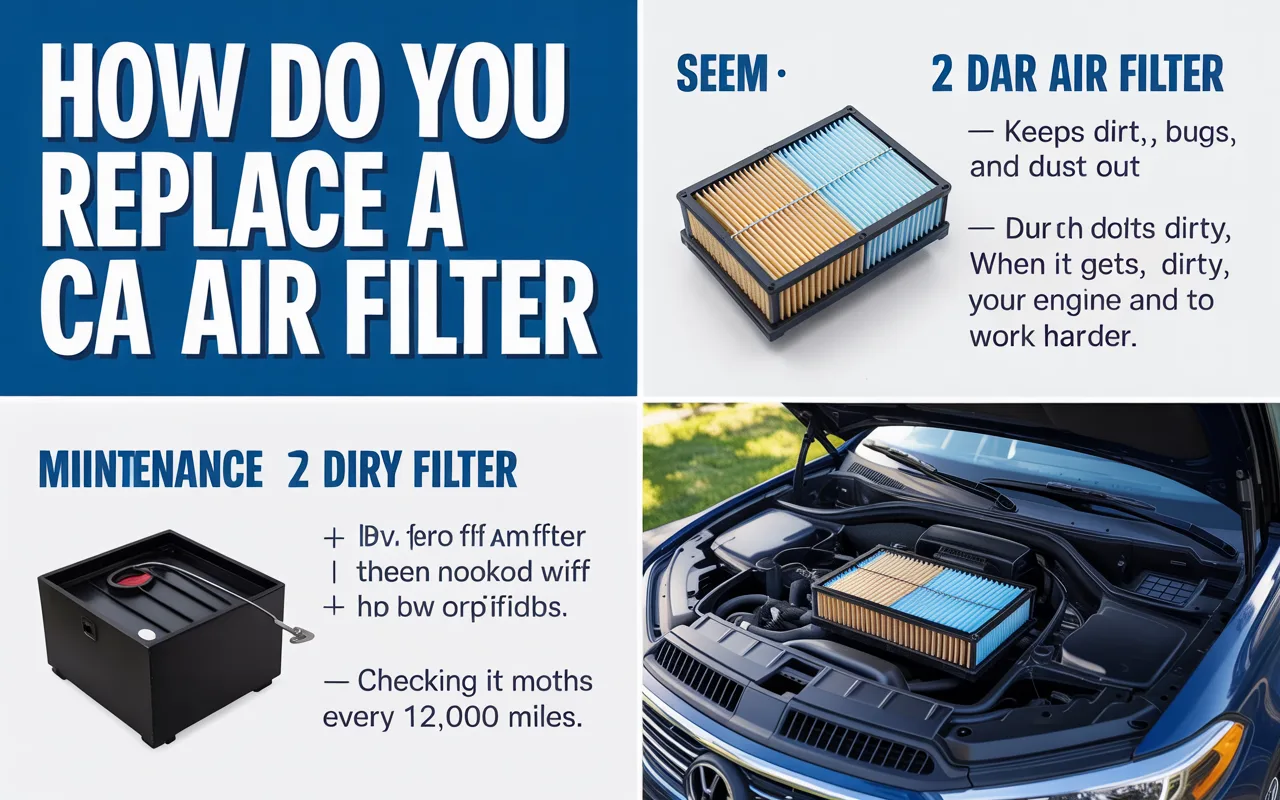
A clean air filter helps your car run better. Learn how to replace a car air filter yourself in just 15 minutes with our simple, step-by-step guide that anyone can follow.
Think of your car’s engine like a big, powerful lung. It needs clean air to breathe and work well. The air filter is like a mask for your engine. It keeps dirt, bugs, and dust out. When it gets dirty, your engine has to work harder. This can mean worse gas mileage, less power, and even damage over time. The good news is, learning how to replace a car air filter is one of the easiest car care jobs you can do. It saves you money, helps your car, and gives you the confidence to tackle other simple tasks. I have changed dozens of these over the years, and I promise, you can do this too.
As mechanic and author Kevin S. Bonsor once noted, “Routine maintenance is the key to long vehicle life, and it starts with simple things like the air filter.” It is a perfect first step.
Signs You Need a New Air Filter
How do you know it is time for a change? Here are the clear signs:
- Visual Dirt: The filter looks gray or black, not white or off-white.
- Poor Fuel Economy: You are visiting the gas station more often.
- Lack of Power: The car feels sluggish when you press the gas.
- Odd Engine Sounds: You might hear coughing or sputtering sounds.
- Check Engine Light: In some cars, a very dirty filter can trigger this light.
- Smell: A dirty filter can sometimes cause a fuel-like smell.
If you see any of these, it is likely time to learn how to replace a car air filter. Most experts suggest checking it every 12 months or 12,000 miles, but check your car’s manual for the best schedule.
What You Will Need to Get Started
You do not need a fancy toolbox. You probably have most of this at home. Here is your simple shopping and tool list:
Tools and Parts:
- A new air filter (make sure it fits your car!)
- A screwdriver (usually a standard Phillips head)
- A clean rag or towel
- A vacuum cleaner (helpful, but not required)
Finding the Correct Air Filter
| Method | How To | Best For |
|---|---|---|
| Owner’s Manual | Check the parts number in your car’s manual. | Accuracy guaranteed. |
| Auto Parts Store | Use their computer or ask staff for help by providing your car’s make, model, and year. | Getting help in person. |
| Online Retailers | Enter your vehicle details on a trusted website to filter options. | Convenience and price comparison. |
Your Step by Step Guide to Replace a Car Air Filter
This is the main event. Follow these steps, and you will be done before you know it.
Step 1: Find the Air Filter Box
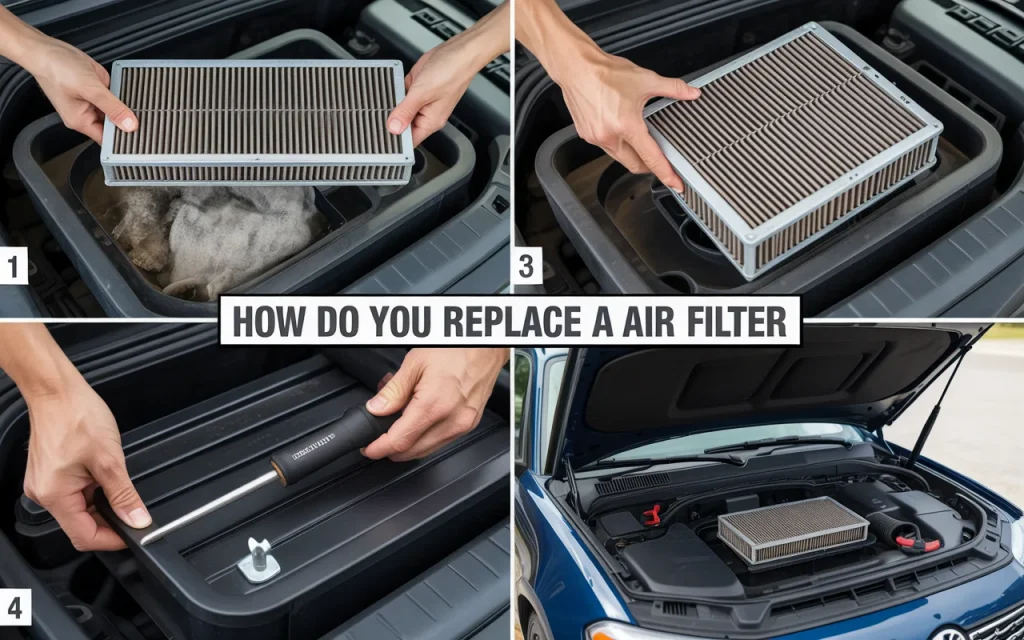
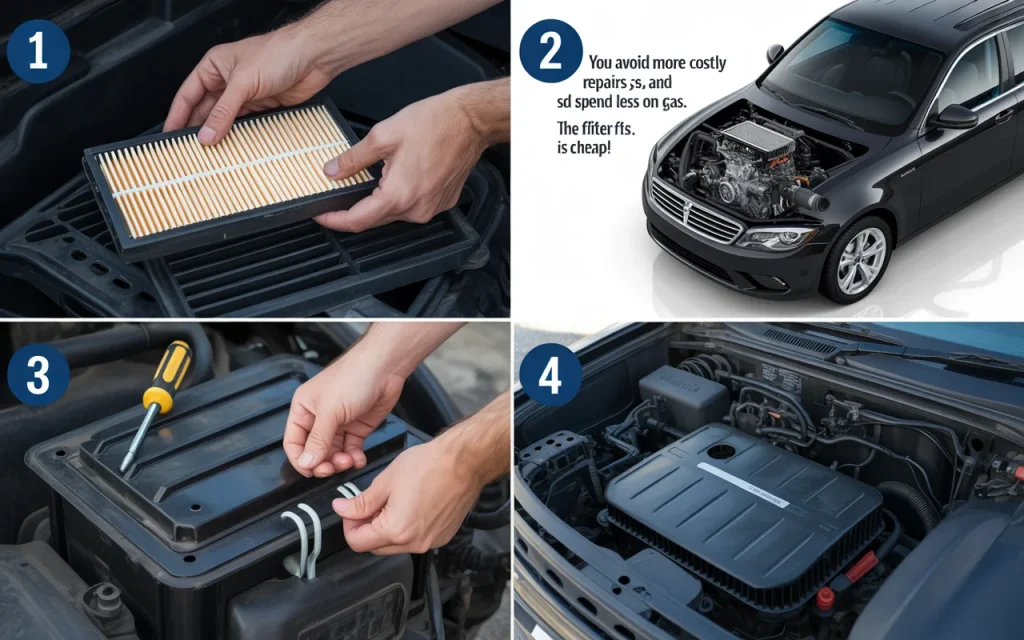
First, open your car’s hood and find the air filter box. It is a large black plastic box, usually on the top or side of the engine. It will have a large hose coming out of it. Do not worry if you are not sure. Your owner’s manual has a picture that shows where it is.
Step 2: Open the Air Filter Box
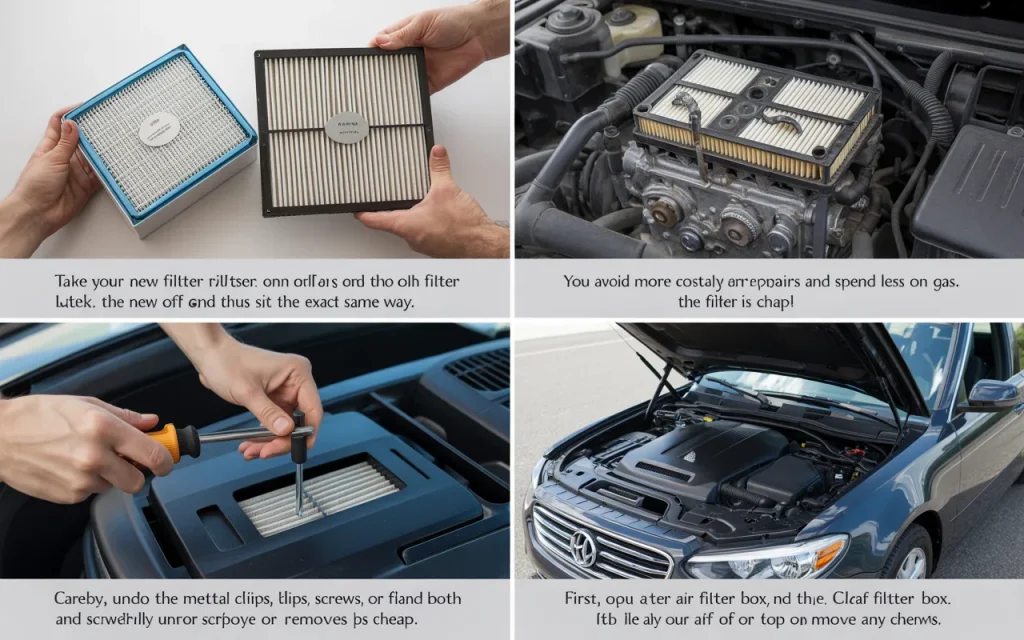
The box is held shut by metal clips, screws, or sometimes both. Carefully undo the metal clips by hand or use your screwdriver to remove any screws. Set the screws in a safe place so you do not lose them. Then, lift the top of the box off. You might need to gently pry it open if it is snug.
Step 3: Remove the Old Filter
Inside, you will see the old air filter. It is just sitting in the bottom half of the box. Lift it straight out. Take a look inside the empty box. If you see loose dirt or leaves, use your rag or a vacuum cleaner to clean it out. You do not want that junk going into your new filter.
Step 4: Check and Clean the Box (Important!)
This step is often skipped but is very helpful. Before you put the new filter in, take your clean rag and wipe out the inside of the air filter box. Get any dust or sand out. This makes sure only clean air goes through your new filter from the start.
Step 5: Insert the New Air Filter
Take your new filter out of its packaging. Look at the shape of the old one and the shape of the box. The new one must sit the exact same way. It will only fit correctly one way. Gently press it into the box, making sure the rubber sealing edges are sitting flat and even all the way around.
Step 6: Close the Box Back Up
Put the top of the air filter box back on. Make sure it is seated properly. Then, re attach all the metal clips or screws you removed. Make sure they are tight and secure. You want the box sealed up so no dirty air can sneak in around the edges.
The Benefits of a Fresh Air Filter
You just learned how to replace a car air filter. What does that fresh filter get you? A lot of good things.
- Better Gas Mileage: A clean filter lets air flow freely, helping your engine use fuel more efficiently.
- Improved Engine Performance: You will notice smoother acceleration and more responsive power.
- Fewer Emissions: A happy engine pollutes less, which is better for everyone.
- Engine Protection: It prevents harmful grit from wearing down the inside of your engine.
- Cost Savings: You avoid more costly repairs and spend less on gas. The filter itself is cheap!
It is a small act with big rewards. As automotive expert Lauren Fix says, “The air filter is the gatekeeper to your engine’s health. A few dollars and minutes can save hundreds in repairs.”
Common Mistakes to Avoid
Even with an easy job, it is good to know the pitfalls.
- Forcing the Filter: If it does not drop in easily, it is probably facing the wrong way. Do not force it.
- Leaving Debris: Always clean the box before installing the new filter.
- Not Sealing the Box: If the lid is not shut tight, unfiltered air gets in. Double check the clips.
- Using the Wrong Filter: A filter that is too big or too small will not work right and can cause damage.
Filter Change Intervals for Common Car Types
| Vehicle Use | Suggested Change Interval | Reason |
|---|---|---|
| Normal City/Highway Driving | Every 12-15 months or 12,000-15,000 miles. | Standard operating conditions. |
| Rural or Dusty Areas | Every 6 months or 6,000-10,000 miles. | More dirt and dust in the air clogs the filter faster. |
| Older Vehicles | Check every 6 months, replace as needed. | Older engines can be more sensitive to airflow changes. |
Frequently Asked Questions
Q: Can a dirty air filter drain my car battery?
A: Not directly, no. But a very dirty filter makes your engine work harder, which can put a slight extra load on the whole system. The main problems are with gas mileage and engine strain.
Q: How much does it cost to replace a car air filter?
A: If you do it yourself, a standard air filter costs between $15 and $30. If you have a mechanic do it, with labor, the total might be $50 to $100.
Q: Is there a difference between paper and cotton air filters?
A: Yes. Paper filters are standard, affordable, and very good at filtering. Cotton or “performance” filters can let more air through for a slight power boost and are often washable and reusable. For most daily drivers, a good paper filter is perfect.
Q: What happens if I never change my air filter?
A: It will become so clogged that your engine will struggle to get air. This leads to poor performance, very bad gas mileage, and, in severe cases, can cause the engine to stall or components to fail.
Q: Can I clean and reuse my car’s air filter?
A: Most standard paper filters are made to be replaced, not cleaned. Trying to clean them can damage the paper. Some aftermarket filters are specifically designed to be cleaned and re-oiled. Check the filter’s instructions.
Final Thoughts and Your Next Step
Learning how to replace a car air filter is a win. It is a fast, cheap, and satisfying way to care for your car. You do not need to be a mechanic. You just need a few simple tools and the willingness to try. This simple act shows you understand a key part of how your car works. That knowledge builds confidence.
The next time your car feels a little slow or you just hit that one year mark, pop the hood. Check that filter. Remember the steps: find the box, open it, swap the filter, and seal it up. In fifteen minutes, you are done. Your car will thank you with every smooth, efficient mile. Take pride in that.
To close, consider the words of Henry Ford, who believed in empowerment through understanding: “Anyone who stops learning is old, whether at twenty or eighty. Anyone who keeps learning stays young.” Changing your air filter is a small piece of that lifelong learning. It keeps you, and your car, running young. Now go give it a try.
One Comment