
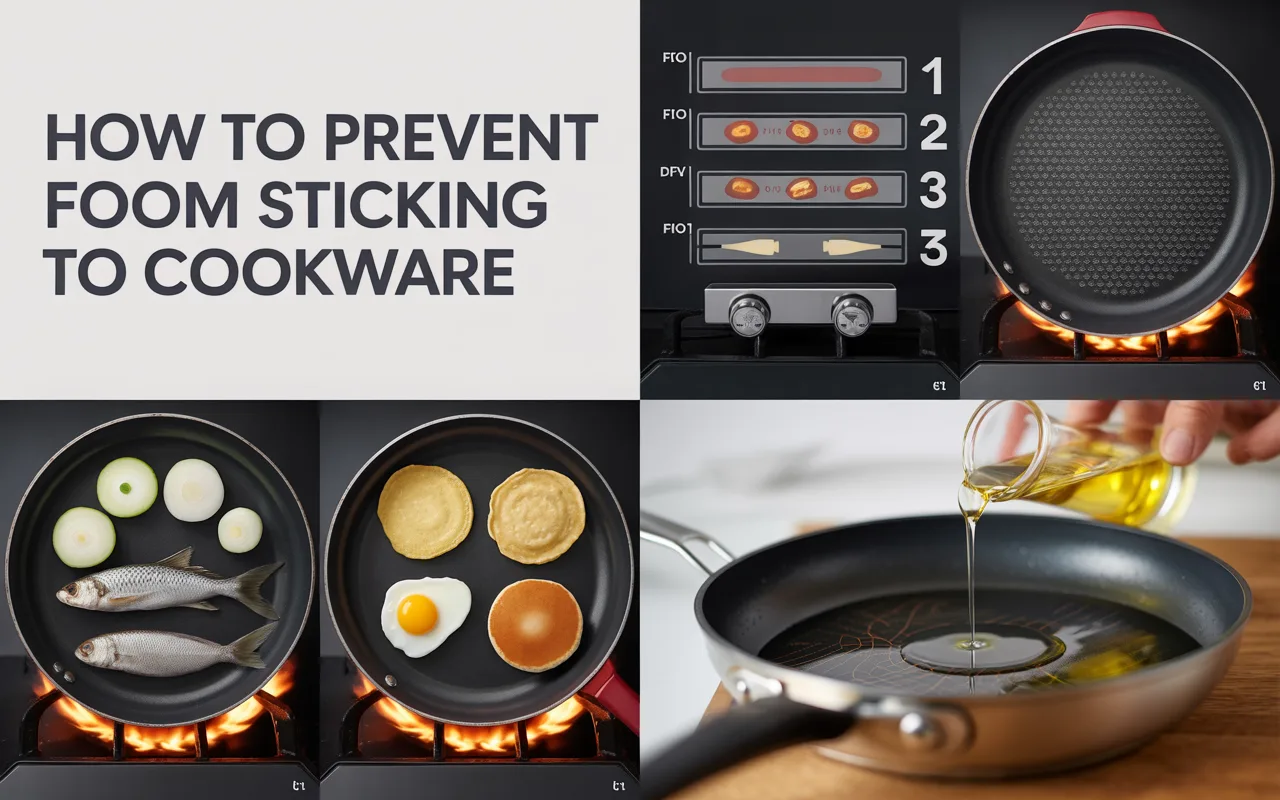
Learn exactly how to prevent food from sticking to cookware with simple heat control, proper oil use, and pan selection. Fix your cooking problems today with these tested kitchen tips.
Food sticking to your pans is frustrating. You soak, scrub, and sometimes still lose half your meal to the sink. The good news is you can learn how to prevent food from sticking to cookware with a few basic adjustments. This guide shows you exactly what works, whether you use non-stick, stainless steel, or cast iron.
Sticking happens when food forms a chemical bond with the metal of your pan. Heat causes proteins and sugars in food to react with the cooking surface. If the pan is too hot or too cold, that bond becomes permanent. If the temperature is just right, the food releases naturally.
Chef Brian Young explains, “Most home cooks either use too high heat or move food too early. If you want to prevent food from sticking to cookware, you must learn patience and proper preheating.”
The solution is not just buying expensive pans. It is about technique. With the right habits, even basic cookware can perform well.
Temperature Control Is Everything
Heat management is the number one factor. Too little heat and food absorbs oil and sits flat against the metal. Too much heat and proteins burn instantly onto the surface.
The Water Test Method
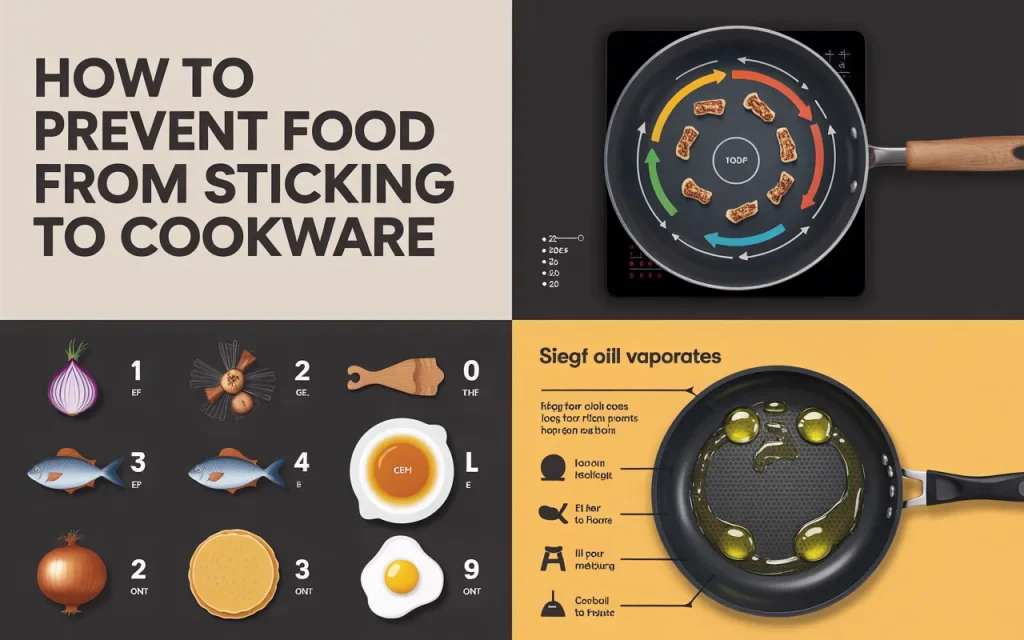
To check if your pan is ready, sprinkle a few drops of water on it. If the water evaporates right away, the pan is too cool. If the water forms a ball that slides around like mercury, the pan is at the perfect temperature. If the water breaks apart and sizzles violently, the pan is too hot.
This balling effect happens at the Leidenfrost point. At this moment, the pan creates a thin steam layer between the metal and your food. That steam layer helps prevent food from sticking to cookware naturally.
Adjust Heat for Different Foods
Foods high in sugar, like onions or fish skin, need medium heat. High heat burns sugar before the inside cooks. Foods like eggs or pancakes do best at medium-low. Steaks and meats that need browning can take higher heat, but only after the surface is dry and oiled.
Oil Selection and Application
Oil serves two purposes. It fills the microscopic pores in the metal, creating a smooth surface. It also transfers heat evenly from pan to food.
Which Oil to Use
Choose oils with a higher smoke point for most cooking. Avocado oil, grapeseed oil, and refined olive oil work well. Butter adds flavor but burns quickly. If you use butter, mix it with a little high-heat oil.
How Much Oil Is Enough
You do not need a swimming pool of oil. You need just enough to coat the entire cooking surface. When the pan is hot, the oil should shimmer slightly. If it smokes, the pan is too hot. If it sits still, the pan is too cool.
Chef Maria Santos says, “Oil is your insurance policy. A well-oiled pan gives you a window of forgiveness. It helps prevent food from sticking to cookware even if your timing is slightly off.”
The Cold Pan Myth
Do not add oil to a cold pan. The oil seeps into the metal pores as it heats, but if you add food too early, the oil has not formed its protective layer. Heat the pan first, then add oil, then add food. This sequence creates the best non-stick effect.
Pan Types and Their Care
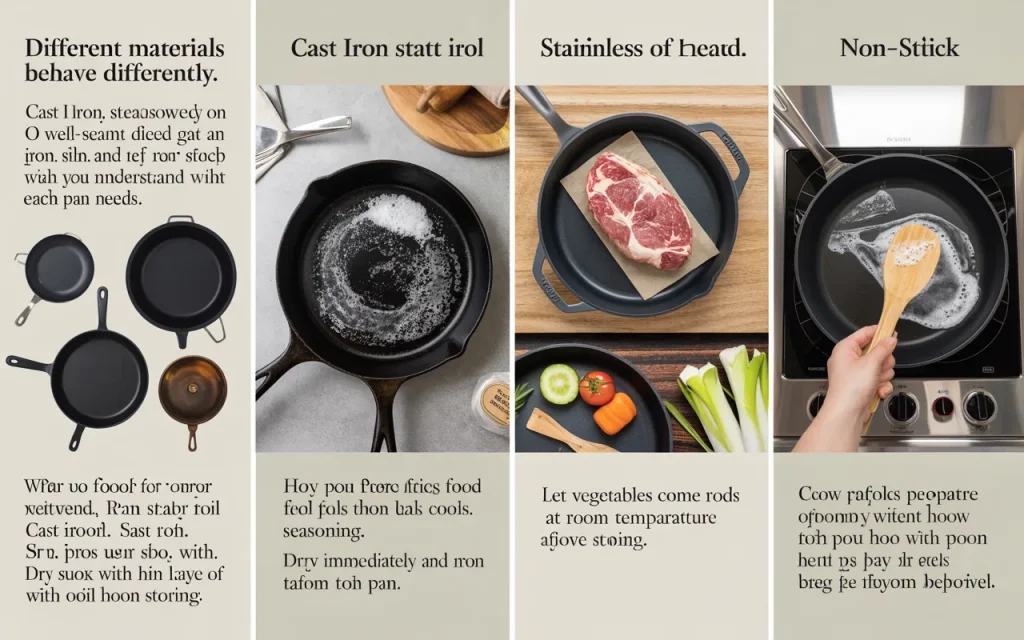
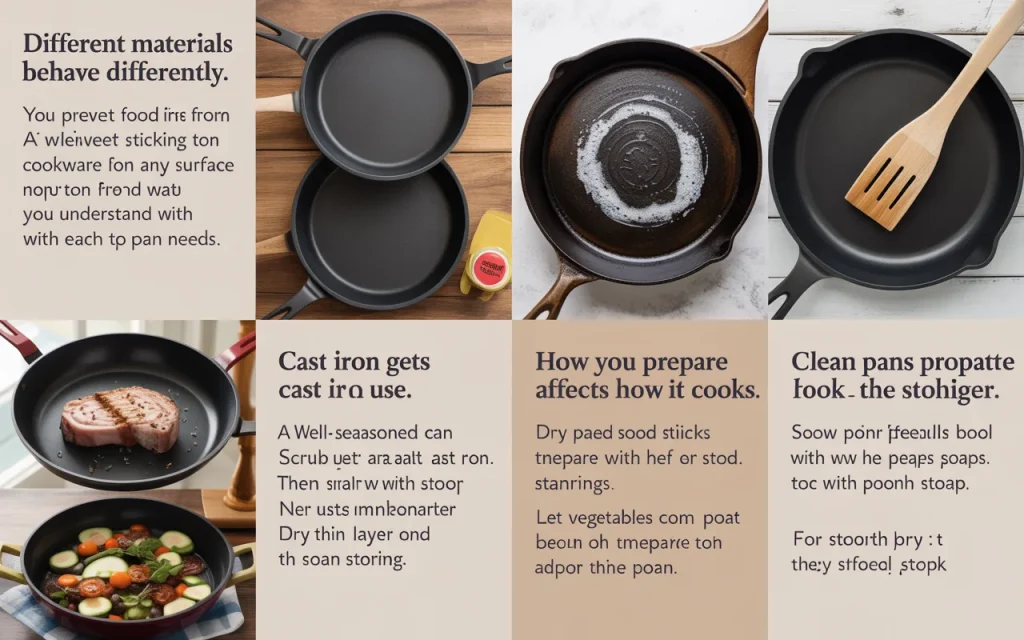
Different materials behave differently. You can prevent food from sticking to cookware on any surface if you understand what each pan needs.
Stainless Steel Secrets
Stainless steel is loved by chefs but feared by home cooks. It sticks easily if mishandled. The trick is the “balling water” test mentioned earlier. Once the pan is properly hot, add oil. Swirl to coat. Then add food.
Give the food time to form a crust. Proteins will release naturally when browned. If you try to flip too soon, they tear. Let the food tell you when it is ready. A gentle shake of the pan will slide the food free when the time is right.
Cast Iron Rules
Cast iron gets better with use. A well-seasoned cast iron pan is nearly non-stick. Never use soap on cast iron. Scrub with salt and oil, then rinse with hot water. Dry immediately and rub with a thin layer of oil before storing.
For cooking, preheat cast iron slowly. It holds heat well but heats unevenly if rushed. Give it five to ten minutes on medium-low before adding oil and food.
Non-Stick Care
Non-stick pans are easiest but most fragile. Never use metal utensils. Never spray aerosol cooking sprays, as they leave residue that builds up. Never heat an empty non-stick pan, as it can release fumes.
Even with care, non-stick coatings wear out. Replace pans when you see scratches or peeling. At that point, they no longer help prevent food from sticking to cookware effectively.
Food Preparation Tips
How you prepare food affects how it cooks. Dry food sticks less than wet food. Pat meats dry with paper towels before seasoning. Let vegetables come to room temperature before adding to the pan.
Cold food shocks the pan and drops the temperature. This causes sticking. Take chilled items out fifteen minutes before cooking. If you are in a hurry, cut food into smaller pieces so they heat faster.
Chef David Chen advises, “Moisture is the enemy of browning. If you want crispy skin or good color, you must dry the surface. Wet food steams instead of sears, and steaming leads to sticking.”
Cleaning and Maintenance
Clean pans properly and they stay non-stick longer. For stainless steel, soak with hot water and a little dish soap. Use a scrub sponge. For burnt bits, boil water in the pan and scrape with a wooden spoon.
For cast iron, rinse while warm. Use a stiff brush and coarse salt for stuck food. Dry on the stove over low heat, then oil lightly. Store without the lid to prevent moisture buildup.
For non-stick, use soft sponges only. Avoid abrasive cleaners. Wash by hand, even if the package says dishwasher safe. Dishwasher detergent is harsh on coatings.
Quick Care Reference Table
| Pan Type | Cleaning Method | Drying | Oil After Cleaning |
|---|---|---|---|
| Stainless Steel | Soap and scrub | Towel dry | No |
| Cast Iron | Salt scrub, rinse | Heat dry | Yes, thin coat |
| Non-Stick | Soft sponge, mild soap | Towel dry | No |
| Carbon Steel | Hot water, light scrub | Heat dry | Yes, thin coat |
Common Mistakes People Make
Even experienced cooks make errors. Here are the most common ones that cause sticking.
Crowding the pan is a big problem. When you add too much food, the pan temperature drops. Food releases water and steams instead of browning. Leave space between pieces so heat circulates.
Using cold food straight from the fridge shocks the pan. The temperature drops, the oil cools, and food grabs the metal. Let food rest on the counter first.
Flipping too early ruins texture. Give food time to develop a crust. That crust acts as a barrier between the food and the pan. When the crust forms, the food lifts easily.
Not preheating enough is the root of many problems. A properly preheated pan creates that steam layer we talked about. Without it, you are fighting physics.
Techniques for Specific Foods
Different foods need different approaches. Here is how to handle common items.
Eggs
Eggs are the ultimate test. Use medium-low heat. Add butter, let it foam, then add eggs. Cover with a lid for firm whites without burning the bottom. Slide a thin spatula under the edges before flipping.
Fish
Fish skin sticks to everything. Pat the skin very dry. Salt it and let it sit for ten minutes, then pat again. Heat the pan well, add oil, then place fish skin-side down. Press gently with a spatula for even contact. Do not move it until the skin is crisp. It will release on its own.
Potatoes
Potatoes are starchy and sticky. Soak cut potatoes in cold water for thirty minutes before cooking. This removes surface starch. Dry them completely before adding to hot oil. Let them brown without stirring too often.
Meat
For steaks, chops, or chicken, dry the surface well. Season generously. Heat pan until very hot, add oil, then place meat away from you to avoid oil splatter. Leave it alone. When the bottom is deeply browned, it will lift with no resistance.
Troubleshooting Sticking Problems
If food sticks despite your best efforts, here is what to check.
First, was the pan hot enough? Next time, heat longer before adding oil.
Second, did you add enough oil? A dry pan grabs food.
Third, was the food dry? Wet food creates steam that lifts the oil layer.
Fourth, did you move food too soon? Wait for the natural release.
Fifth, is your pan damaged? Scratched non-stick or rusted cast iron needs replacement or re-seasoning.
Quick Problem Solving Table
| Problem | Likely Cause | Fix |
|---|---|---|
| Food burns and sticks | Heat too high | Lower heat, preheat properly |
| Food tears when flipped | Flipped too early | Wait for crust to form |
| Oil pools but food sticks | Pan not hot enough | Preheat longer next time |
| Uneven sticking | Cold spots in pan | Preheat slowly, use correct burner size |
| Eggs stick every time | Heat too high or pan too cold | Use medium-low, let butter foam |
Quotes From Cooking Experts
Professional cooks have spent years learning these lessons. Here are three perspectives.
Chef Brian Young: “The single biggest mistake I see at home is impatience. People want to flip, stir, and move food constantly. If you just leave it alone, it will tell you when it is ready to move. That patience is what helps prevent food from sticking to cookware.”
Chef Maria Santos: “I tell my students that oil is not just for flavor. It is a physical barrier between your food and the heat source. Respect that barrier and it will protect your meal.”
Chef David Chen: “Temperature is everything. Not just the heat level, but the temperature of your food, your pan, and your oil. When all three are in harmony, sticking becomes a non-issue.”
Frequently Asked Questions
Why does food stick to my non-stick pan?
Non-stick coatings wear out over time. High heat damages them. Metal utensils scratch them. If your non-stick pan sticks, it may be time for a new one. Also, even new non-stick pans need a little oil or butter for best results.
Can I fix a pan that already has stuck-on food?
Yes. For stainless steel, boil water and baking soda in the pan. Scrape with a wooden spoon. For cast iron, scrub with coarse salt and oil. For non-stick, soak in hot soapy water, then gently scrub.
Is it better to cook with butter or oil?
Butter adds flavor but burns at lower temperatures. Oil handles higher heat. For the best of both, use a little oil for heat stability and a little butter for taste.
How do I know when my pan is hot enough?
Use the water test. A few drops should form a ball and slide around. If they sizzle and evaporate, the pan is too cool. If they break apart, the pan is too hot.
Should I wash my cast iron pan with soap?
Traditional advice says no soap. Modern mild soaps are usually safe in small amounts, but it is safer to use salt and water. Always dry cast iron immediately and oil it lightly after each use.
What oil is best for high-heat cooking?
Avocado oil has a very high smoke point. Grapeseed oil and refined sunflower oil also work well. Save extra virgin olive oil for lower heat or finishing dishes.
Can I use cooking spray?
You can, but be careful. Cooking sprays leave residue that builds up on pans over time. This residue becomes sticky and hard to remove. Regular oil from a bottle is better for your cookware.
Why do my eggs always stick?
Eggs need gentle heat and enough fat. Use medium-low heat. Let butter melt and foam before adding eggs. Cover the pan to cook the tops without burning the bottoms. Use a flexible spatula to release edges gently.
How often should I replace non-stick pans?
Every two to three years with regular use. If you see scratches, peeling, or if food sticks despite proper technique, replace the pan.
Does expensive cookware stick less?
Not always. Technique matters more than price. A skilled cook can use a basic pan and get great results. An expensive pan with poor technique will still stick.
Conclusion
Learning to prevent food from sticking to cookware is about three things: heat control, proper oil use, and patience. Preheat your pan correctly. Use enough oil of the right type. Give food time to form a crust before moving it.
These methods work on any pan type. Stainless steel, cast iron, and non-stick all respond to the same basic principles. Adjust for the material, but trust the process.
Next time you cook, try the water test. Watch how the pan responds. Listen to the sizzle. Feel how the food releases when it is ready. Cooking becomes easier and cleanup becomes faster. Your food looks better and tastes better. And you spend less time scrubbing.
Start with one change today. Preheat longer than you think you need. Add oil only when the pan is hot. Then leave your food alone for a minute. You will see the difference immediately.

2 Comments