
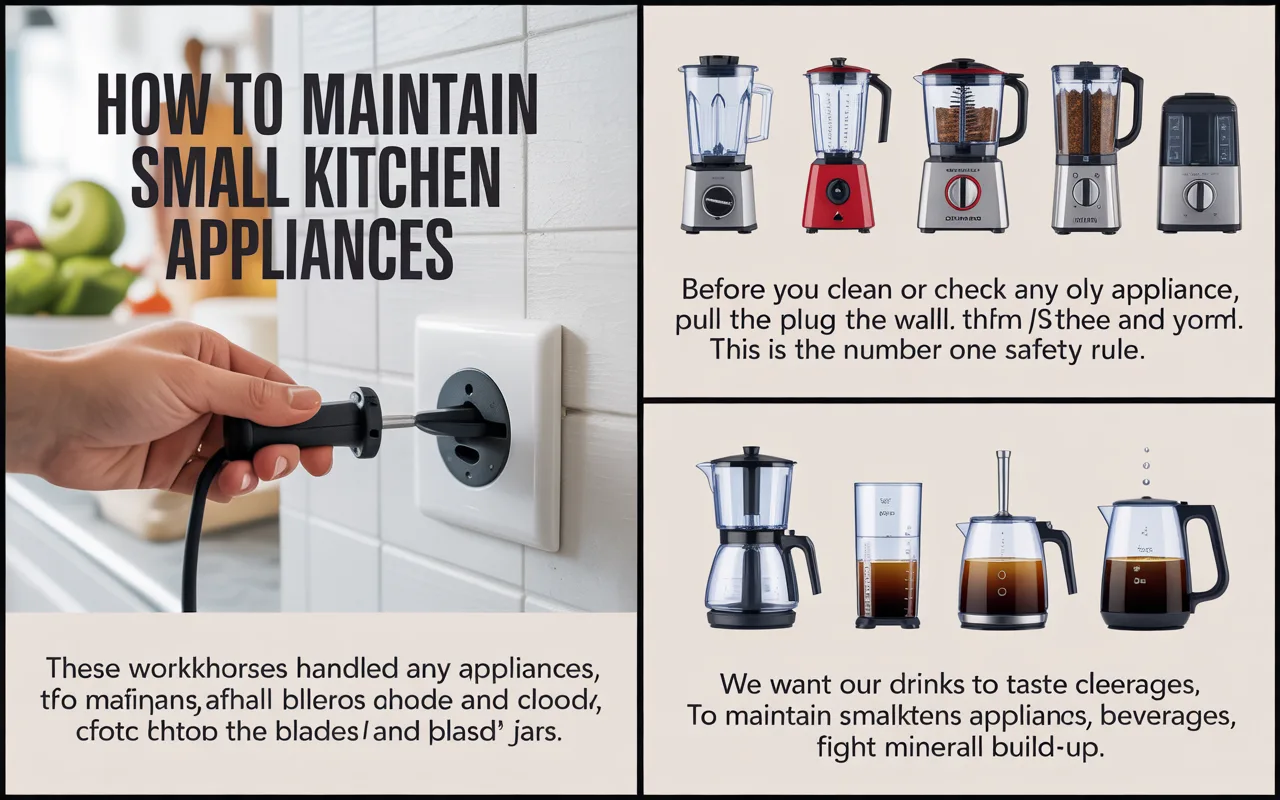
Discover simple steps on how to maintain small kitchen appliances. Our clear guide gives you direct tips to extend their life and keep them safe.
That blender you use for morning smoothies. The toaster that gives you perfect golden bread. Your trusty coffee maker that starts every day right. These small kitchen appliances are quiet helpers in our homes. But like any good helper, they need a little care to stay at their best. Learning how to maintain small kitchen appliances is not hard. It is a simple habit that saves you money, keeps your food safe, and makes your appliances last for years. This guide will walk you through easy, friendly advice to care for your machines.
Why Bother with Appliance Care?
You might think, “It still works, so why fix it?” Giving your appliances regular attention does three big things. First, it makes them last much longer. This means you get more value from your purchase and shop less often. Second, it keeps them working safely. Crumbs in a toaster can catch fire. Old oil in a fryer is a risk. Clean appliances are safe appliances. Third, they just work better. A clean coffee maker brews tastier coffee. A crumb-free toaster toasts evenly. A blender with a sharp, clean blade chops smoothly.
“The bitterness of poor quality remains long after the sweetness of low price is forgotten.” – Benjamin Franklin
This old saying fits well here. Spending a small amount of time on care prevents the “poor quality” of a broken machine.
Your General Care Rulebook
Most small kitchen appliances share common needs. Think of these as the basic rules for a happy appliance life.
- Always Unplug First: Before you clean or check any appliance, pull the plug from the wall. This is the number one safety rule.
- Wipe After Use: Get a soft, damp cloth and wipe the outside. This stops sticky spills from hardening. It keeps your appliances looking new.
- Check the Cord: Now and then, look at the power cord. If you see any fraying, cracking, or damage, stop using the appliance right away. You may need to repair the cord or replace the machine.
- Store with Care: Do not jam appliances into crowded cupboards. Give them space. If they have parts, keep them together. Store them in a dry place.
This simple table shows a quick plan for all appliances:
| Task | How Often | Why It Matters |
|---|---|---|
| Wipe exterior | After each use | Prevents build-up of grime and stains. |
| Check power cord | Once a month | Ensures electrical safety. |
| Deep clean | Depends on appliance | Removes internal grease and residue. |
Caring for Specific Appliances
Now, let us look at some common helpers and how to maintain small kitchen appliances of each type.
Keeping Your Blender and Food Processor Fresh
These workhorses handle a lot of food. To maintain small kitchen appliances that chop and blend, focus on the blades and jars.
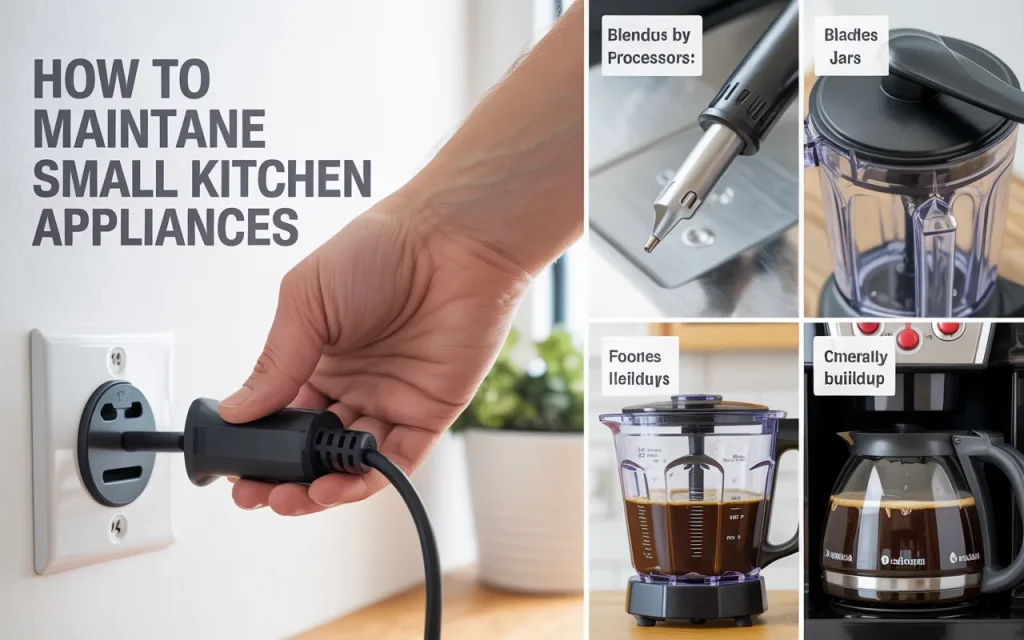
After use, fill the jar halfway with warm water and a drop of dish soap. Put the lid on and run the blender for 30 seconds. Rinse well. This cleans the blade base. For stuck-on food, mix baking soda and water into a paste, rub it on, then rinse. Always take the jar off the base to clean it. Dry the blade ring well to prevent rust. For the motor base, just a damp cloth. Never put it in water.
Coffee Maker and Kettle Upkeep
We want our drinks to taste clean. To maintain small kitchen appliances for beverages, fight mineral build-up.
For coffee makers, run a cycle with equal parts white vinegar and water. Then, run two cycles with clean water to rinse. Do this every month if you use it daily. Wipe the warming plate and outside often. For kettles, boil a mix of vinegar and water, let it sit, then scrub gently and rinse many times. Always empty leftover water from both appliances.
Toaster and Toaster Oven Care
Crumbs are the enemy here. To maintain small kitchen appliances that toast and bake, you must deal with crumbs.
Unplug and let the toaster cool. Take out the crumb tray and empty it. Turn the toaster upside down over a trash can and shake it gently. Use a soft brush to get crumbs from the slots. Wipe the outside with a damp cloth. Never use metal tools inside. For toaster ovens, let them cool, remove racks and trays, and wash them in soapy water. Wipe the inside carefully to remove grease.
Caring for Your Electric Mixer
Whether a hand mixer or a stand mixer, they need simple care. To maintain small kitchen appliances that mix, focus on the moving parts.
First, unplug. For a hand mixer, never put the motor part in water. Wipe it with a cloth. The beaters can go in the dishwasher or be washed by hand. For a stand mixer, lift off the bowl and any attachment. Wash them well. Wipe the main body and the area where the attachment locks in. A small brush can get dough out of the gears.
Air Fryer and Electric Pressure Cooker Care
These modern favorites need regular cleaning. To maintain small kitchen appliances like these, always follow the manual.
For air fryers, let them cool. The basket and pan should be washed with warm soapy water after each use. Wipe the inside heater coil gently with a damp cloth. Do not use harsh cleaners. For pressure cookers like an Instant Pot, the inner pot is dishwasher safe. Wash the sealing ring by hand, as it can hold smells. Check the steam release valve for food bits and clean it. Wipe the main unit with a damp cloth.
“Have nothing in your house that you do not know to be useful, or believe to be beautiful.” – William Morris
Caring for your appliances helps them stay both useful and beautiful parts of your kitchen.
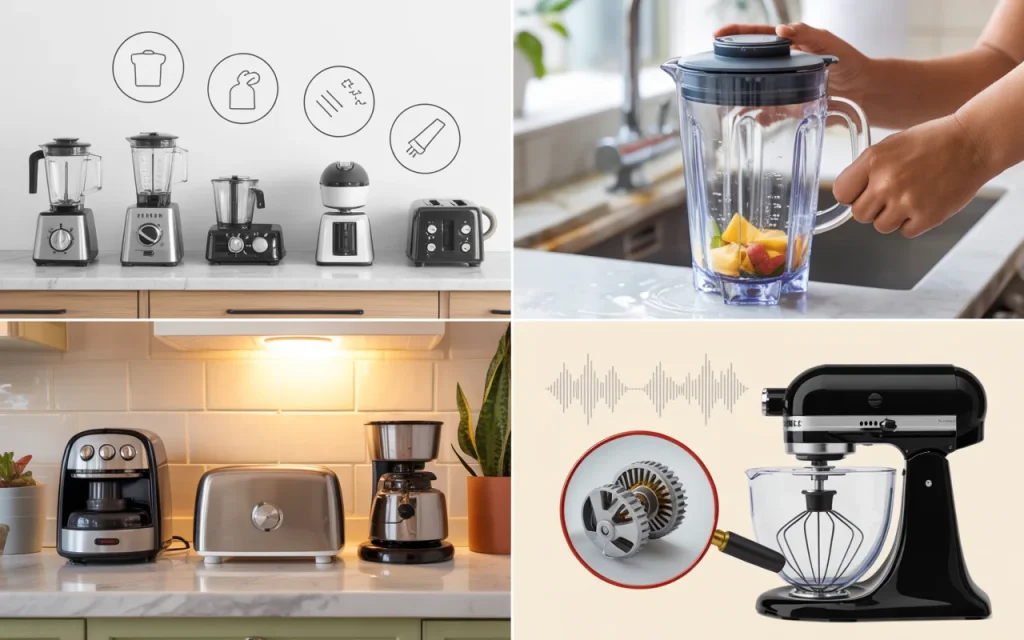
Fixing Common Problems
Sometimes, things go wrong. Here are simple fixes before you call for help.
- Appliance Won’t Turn On: Check if it is plugged in. Test the outlet with another device. Look for a reset button, often on the bottom.
- Poor Performance (Blender is weak, toaster uneven): This often means a part is worn or dirty. Check for dull blades in blenders. For toasters, deep clean to remove crumbs blocking the elements.
- Strange Smells or Smoke: Unplug right away. This usually means food or grease is burning inside. Let it cool, then do a full clean. If it continues, the appliance may be broken.
- Loud Noises: Grinding or rattling sounds can mean a loose part or something stuck. Check for foreign objects. If it is a mixer or blender, the gears or bearings might be worn.
This table helps you decide what to do:
| Problem | Likely Cause | Simple Fix |
|---|---|---|
| Won’t power on | Loose plug, tripped reset | Check plug, find reset button. |
| Strange smell | Food burn-on | Unplug, cool, clean thoroughly. |
| Gets too hot | Blocked air vents | Clean vents, ensure space around appliance. |
Building Good Habits
The best way to maintain small kitchen appliances is to make care a normal part of your kitchen routine. Clean as you go. After you make your smoothie, rinse the blender right away. While your coffee brews, wipe the counter and the coffee maker base. Once a month, pick one appliance for a deeper clean. Mark it on your calendar. Keep your appliance manuals in one folder, or save PDFs on your computer. They have brand-specific tips.
“We are what we repeatedly do. Excellence, then, is not an act, but a habit.” – Aristotle
Making appliance care a habit is a small act that leads to the “excellence” of a kitchen that works well for you.
Questions People Often Ask
How often should I really clean my coffee maker?
If you use it daily, clean it with vinegar once a month. If you use it less, clean it every 40 to 80 brew cycles.
Can I put my blender base in water to clean it?
No, never. The motor base should never be submerged. Wipe it with a damp cloth and dry it right away.
What is the best way to remove stuck-on food from a toaster oven pan?
Soak the pan in warm soapy water. For tough spots, make a paste of baking soda and water, apply it, let it sit, then scrub.
Is it safe to use dishwasher soap in my appliance’s self-clean cycle?
No. Only use the cleaners the manual says. For self-clean cycles, often just water or a bit of vinegar is needed. Harsh soaps can damage parts.
My appliance has a weird smell that won’t go away. What can I do?
For plastic parts, wash with baking soda and water. For rubber seals (like in a pressure cooker), leave them in the sun for a few hours. If the smell is in a coffee maker, run several water-only cycles.

Final Thoughts
Learning how to maintain small kitchen appliances is a gift you give to yourself and your home. It is not about being perfect. It is about taking a few minutes here and there to show care. This simple practice saves you from sudden breakdowns, keeps your family safe, and makes sure your favorite kitchen helpers are ready when you need them. Your appliances do a lot for you. With a little regular care, you can thank them by helping them last for many more meals to come. Start today with one appliance. Give it a good clean. You will see and taste the difference.



2 Comments